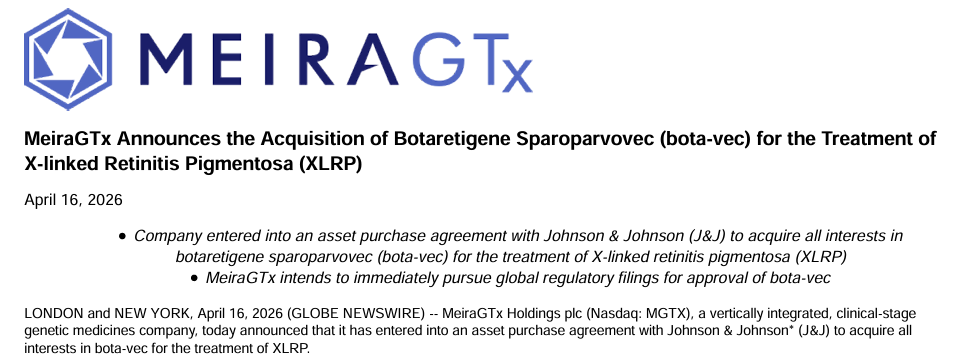
Note: This article does not constitute any investment opinions or recommendations; please refer to official/company announcements for accuracy. This article only provides an introduction to medical and health-related drugs, not a recommendation of treatment plans (if involved), and does not represent the platform's position.Any article reprinted needs to be authorized.April 16,Johnson & Johnson (J&J)Announced the decision to return the failed gene therapy botaretigene sparoparvovec (referred to as bota-vec) toMeiraGTx, the latter with$25 millionThe down payment has brought this asset, which once failed in Phase III clinical trials, back into the portfolio.The amount of this deal is less a "repurchase" and more biotech's last-ditch effort to salvage its own technology platform after big pharmaceutical companies cut their losses and exited.
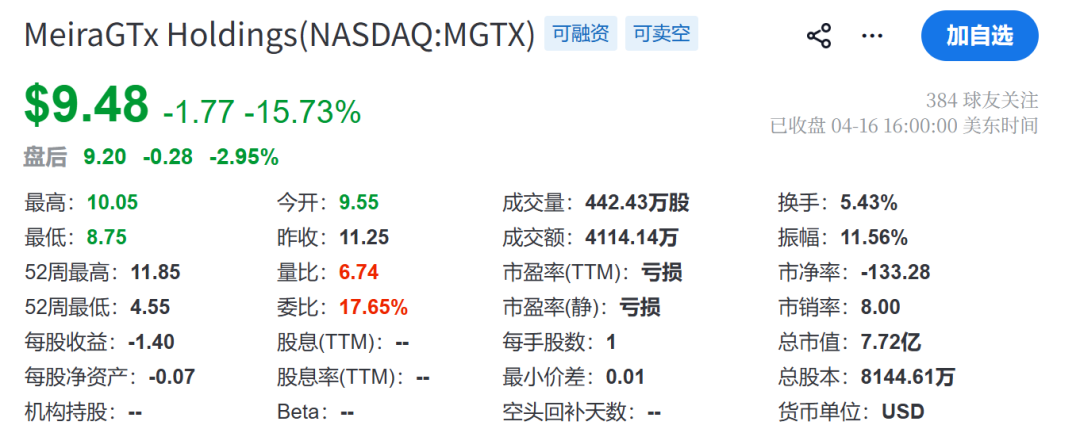
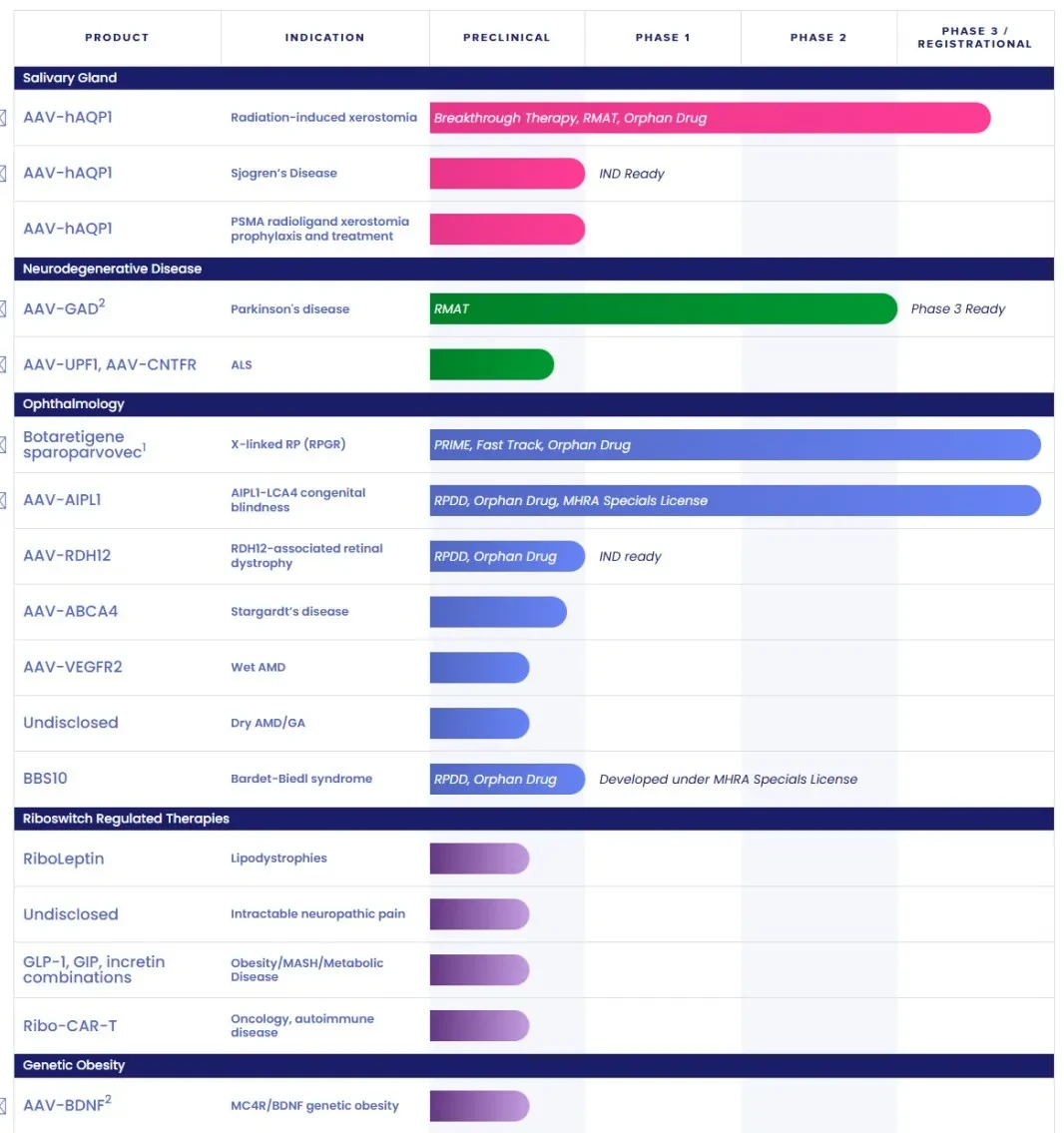
MeiraGTx's collaboration with Johnson & Johnson began at the end of 2023. Janssen Pharmaceuticals, a subsidiary of Johnson & Johnson, is involved with a maximum$415 millionThe potential deal amount, acquiring global development and commercialization rights for bota-vec, with an upfront payment of approximately 100 million USD.At that time, the AAV gene therapy was in Phase III clinical trials for the treatment of X-linked retinitis pigmentosa (XLRP), and the market had high expectations for it.XLRP is a rare hereditary eye disease that primarily affects males, caused by mutations in the RPGR gene. Patients typically begin to experience night blindness during adolescence and face legal blindness around the age of 40. Gene therapy is considered a potential cure that holds promise to fundamentally slow disease progression.However, the results of the Phase III clinical trial announced in May 2025 dashed these expectations.Bota-vec failed to reach the primary endpoint, which is the key functional indicator for improving vision-guided mobility in patients with XLRP. This failure directly led to Johnson & Johnson's decision to return the asset.MeiraGTx then regained all rights for a $25 million upfront payment, plus milestones and royalties. The company stated that it still plans to seek accelerated approval in the U.S. and EU, with a target of going public by 2027.Affected by this news, MeiraGTx's stock price fell nearly 16% in a single day, reflecting investors' concerns about this decision.Ophthalmology is the most commercially mature disease area for gene therapy. Luxturna (voretigene neparvovec), approved by the FDA in 2017 and developed by Spark Therapeutics (later acquired by Roche), is the world's first approved ophthalmic gene therapy, used to treat inherited retinal diseases associated with RPE65 gene mutations.Luxturna was once priced as high as $850,000 per pair of eyes, making it one of the most expensive drugs in history. Despite its mediocre commercial performance, its approval laid a regulatory foundation for the entire field.In the XLRP field, apart from bota-vec, there are also Biogen's timrepigene emparvovec and Nightstar Therapeutics' AAV2-REP1 projects under development. Nightstar was acquired by Biogen for approximately $800 million in 2019, but subsequently, multiple projects encountered setbacks, leading Biogen to ultimately announce the abandonment of its ophthalmology gene therapy business in 2024.MeiraGTx Announces Continued Pursuit of Accelerated Approval Amid Upcoming Personnel Changes at FDA’s Center for Biologics Evaluation and Research (CBER). Vinay Prasad, the current head, has announced his departure in 2025, sparking widespread attention in the gene therapy industry. During his tenure, Prasad adopted a relatively open stance toward the approval of gene therapies, facilitating the accelerated approval of multiple innovative treatments. However, his advocacy for randomized controlled trials as the gold standard also sparked controversy.The accelerated approval pathway is particularly important for the gene therapy field. Due to the small patient populations of rare diseases and difficulties in enrollment, traditional clinical trial designs face challenges. Accelerated approval allows for market authorization based on surrogate endpoints, with subsequent confirmatory studies providing additional efficacy evidence.However, rumors about this pathway narrowing have already spread within the industry. The attitude of the new regulator will directly impact the fate of projects like bota-vec that are currently under review. Whether MeiraGTx can achieve its commercialization goal by 2027 largely depends on the evolution of the regulatory environment.MeiraGTx Holdings is a vertically integrated clinical-stage gene therapy company with four ongoing clinical programs and a range of preclinical and research projects. It has core competencies in viral vector design and optimization, gene therapy manufacturing, and potentially transformative gene regulation technologies. In 2023, it received investment from Sanofi, and in 2025, it entered into a strategic collaboration with the international pharmaceutical giant Eli Lilly, valued at up to $475 million, to jointly advance the subsequent development and commercialization of an AAV gene therapy (rAAV8.hRKp.AIPL1) targeting Leber Congenital Amaurosis type 4 (LCA4).Figure:MeiraGTx Holdings PipelineMastering CAR-T Therapy, Stem Cell Therapy, and GeneTherapy,Comprehensive Information on Oncolytic Viruses and Nucleic Acid Drugs