

From Riding the Trend to Seizing the Momentum: Navigating the Challenges and Blue Ocean of Medical Innovation Translation
“Turning an idea into a product is already a remarkable achievement,”Executive Secretary-General of the China Medical Innovation AllianceZhang NingHe remarked, “Whether one is a renowned expert or an ordinary physician, the translation of medical research achievements must be accomplished step by step; there is no such thing as an overnight success.”
Currently, innovation and translation in the medical field are receiving unprecedented attention. Although this represents a blue ocean market, the challenges at hand are highly specific and thorny. Therefore, to help physicians correctly understand the translation of medical scientific and technological achievements and identify their own “niche areas for achievements,” Zhang Ning, Executive Secretary-General of the China Medical Innovation Alliance, starts fromTrends, Practices, and Pain Points in Medical InnovationIn-depth Interpretation and Sharing from Three Aspects.
The following areZhang Ningtranscript of the speech, for the convenience of readers,VBInsight Orange BureauThe text has been edited without altering its original meaning.
Going with the Flow: Understanding the “Five Major Trends” in Medical Innovation
Trend 1: The innovation and translation efforts of medical institutions have evolved from national policy advocacy into conscious action at the local and institutional levels.
With the successive issuance of policies such as the “Several Opinions of the General Office of the Shanghai Municipal People’s Government on Promoting the High-Quality Development of the City’s Biopharmaceutical Industry” and the “Beijing Action Plan for Accelerating Collaborative Innovation in Medicine and Health (2021–2023),” local governments and medical institutions have placed greater emphasis on the integration of clinical practice and industry.
This approach not only strengthens the translation of clinical research and collaboration between medical institutions and enterprises, accelerating incentives for clinical research translation, but also promotes the transformation of scientific achievements and technologies into industrial applications, accelerates the deep integration of clinical practice and industry, and fosters close collaboration among industry, academia, research, and medicine.
It is worth noting that the state has adopted policies for supporting a cohort of high-level hospitals that are equivalent to those for fostering innovation in universities and research institutes. These hospitals are encouraged to target cross-disciplinary fields at the global technological frontier and address substantial clinical needs, thereby taking a leading role in clinical medical research and the translation of scientific achievements, and gradually enhancing the level of medical care.
Trend 2: The Value of Physicians and Healthcare Institutions in the Medical Innovation Process Is Being Gradually Validated and Strengthened
"There is a joke circulating in the healthcare industry,"“95% of guidelines, 95% of innovative drugs, and 95% of high-end medical devices are from abroad.”。It must be acknowledged that the current landscape for the translation of international medical innovation achievements remains characterized by “Western strength and Eastern weakness.” The primary reason for this is that China’s medical innovation paradigm does not incorporate the R&D process, creating a hidden risk that R&D efforts cannot undergo iterative improvement.
In essence,The role of clinicians in innovation primarily involves ideation, research and development, and clinical trials; relying solely on underlying knowledge systems cannot fundamentally resolve the challenges of iterative advancement.
Therefore, it is crucial to develop proprietary solutions by aligning with domestic clinical needs, integrating medicine and engineering, building comprehensive knowledge systems, and maintaining steady iteration. Only in this way can we break the vicious cycle of “95% reliance on foreign products.”
Trend 3: Doctors and Medical Institutions Have Significant Potential in the Process of Translating Research Achievements
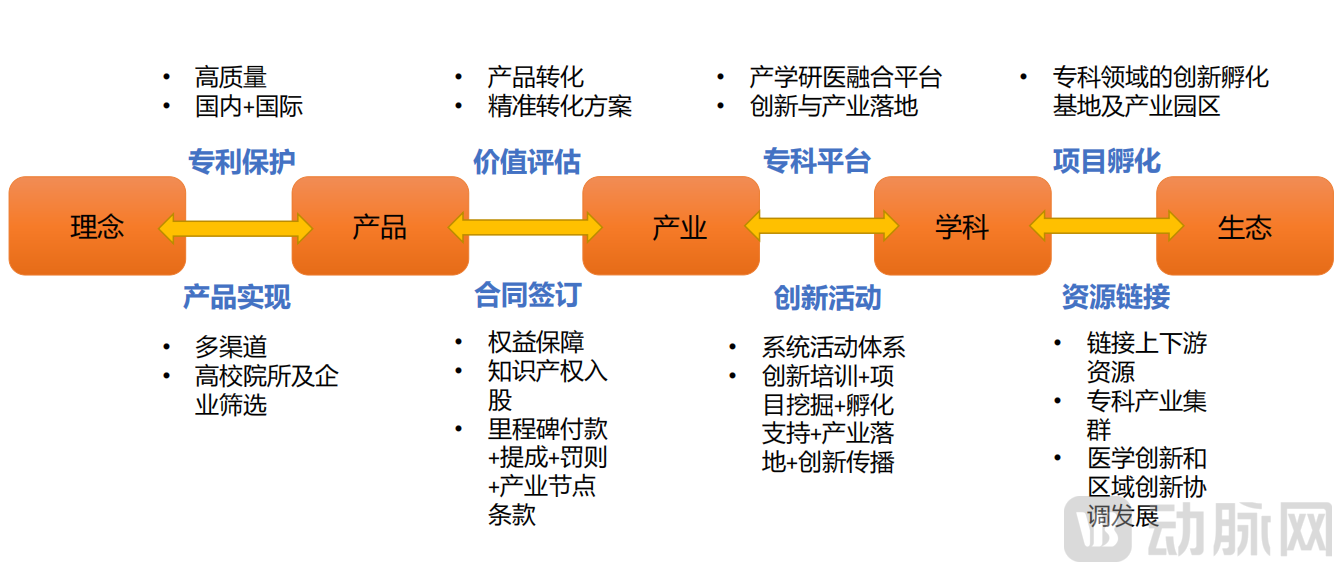
In a complete process of translating scientific achievements into practical applications, the steps for doctors and medical institutions can be simply broken down into five parts:Philosophy, Products, Industry, Discipline, and Ecosystem.
But generally speaking, how do innovative concepts transform into innovative products? First, high-quality patent protection is essential. Second, once a product is developed—whether by a small enterprise or a physician—it undergoes a valuation assessment. It is then either sold to an established company or, upon successful valuation, attracts expert equity investment to form a startup, ultimately evolving into an entire industry.
Overall, for most physicians, their reach extends only as far as concepts, products, and industry involvement; how to evolve this into a comprehensive industrial innovation ecosystem remains a question warranting further reflection in the future.
Trend 4: Industry and capital are returning to the essence of innovation, with greater focus on early-stage projects driven by clinical needs
Clinical needs are the starting point and ultimate goal of medical innovation. In the current landscape of capital and the market,Clinical Needs, Clinical Trends, Clinical ValueIt has become a core criterion for industry and capital when evaluating early-stage projects. Therefore, it is widely acknowledged in the translation of medical innovations that both physicians and scientists should pay close attention to clinical demand trends and value.
Trend 5: Steady Growth in Patent Grants and Commercialization Volume at Medical Institutions
Over the past one to two years, both medical institutions and individual physicians have witnessed a gradual upward trend in the volume of patent grants and assignments, particularly in the number of patents granted.
According to the "Patent Analysis Report of National Grade-A Tertiary Hospitals in the Past Decade (2011-2020)," the number of patents granted to national Grade-A tertiary hospitals in China steadily increased overall during the 12th and 13th Five-Year Plan periods, with a total of 77,388 valid patents. In terms of patent grants, there was rapid growth after 2018, reaching 39,271 in 2020.
Leveraging Momentum for Progress: From Concept to Innovation Translation Practice
Medical innovation translation models are primarily divided into two categories.
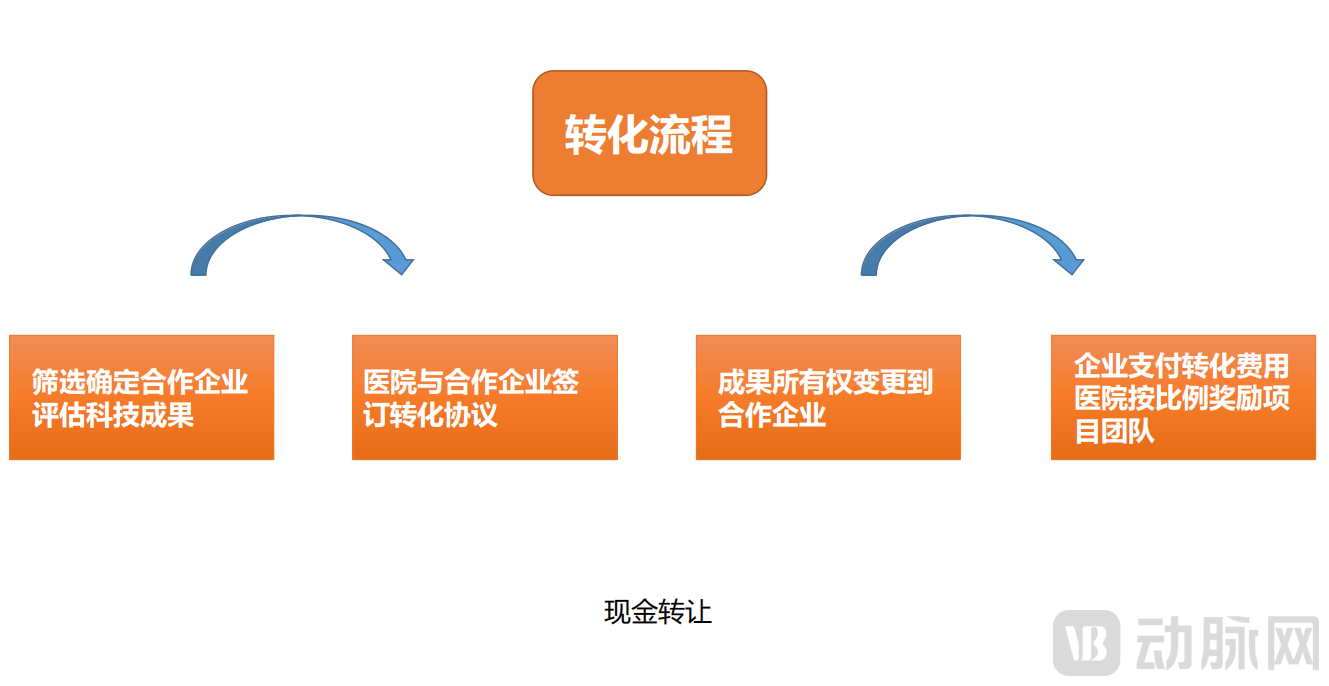
One category is cash transfer, i.e., the hospital signs a commercialization agreement with partner enterprises for the cash transfer of its scientific and technological achievements; alternatively, the ownership of such achievements is transferred to the partner enterprises, which pay the hospital commercialization fees based on milestones. Finally, the project team receives a share of the revenue generated from the commercialization of these achievements, distributed according to the prescribed proportions.
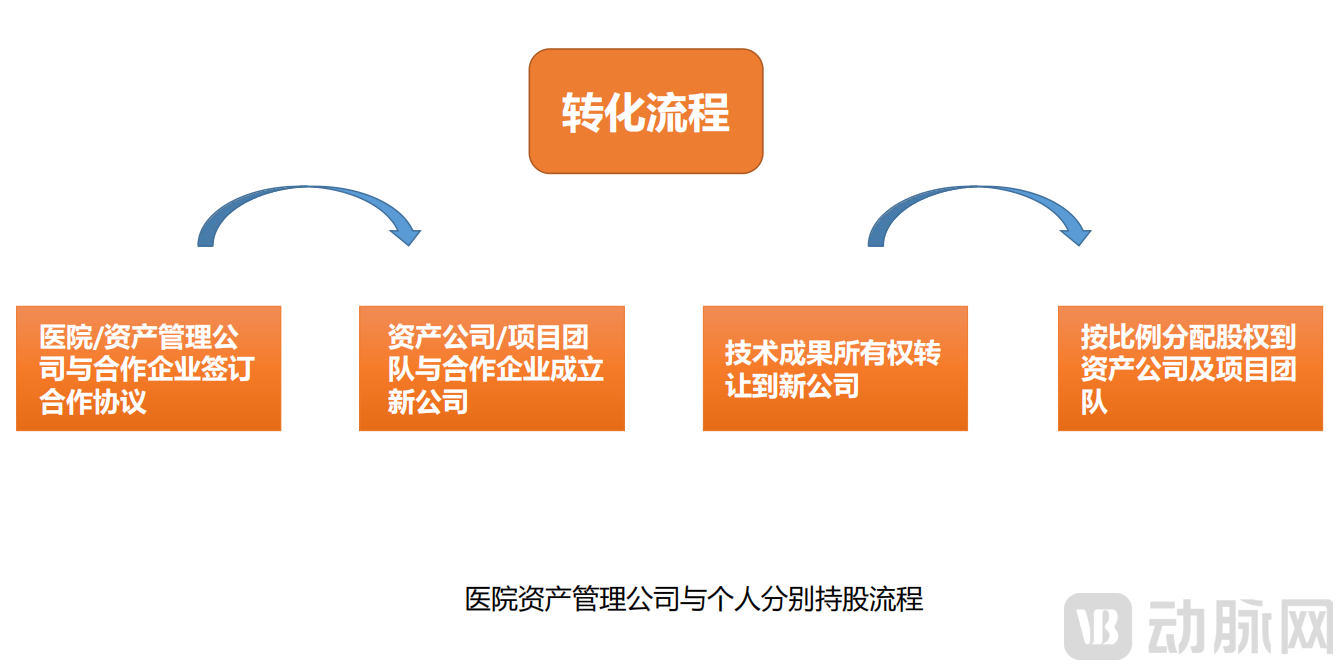
 The second category is equity contribution through asset valuation.It can be divided into two representative types:One model involves separate shareholding by hospital asset management companies, represented by West China Hospital, and individuals.
Under this framework, the hospital, the hospital’s asset management company, and the partner enterprise enter into a tripartite cooperation agreement that stipulates the transaction price for scientific and technological achievements and the respective equity shares. The hospital’s asset management company, the project team, and the partner enterprise jointly establish a new company, to which the hospital transfers ownership of the scientific and technological achievements. The new company then undergoes equity changes, allocating corresponding equity stakes to the asset management company and individual members of the project team in accordance with the valuation and shareholding ratios specified in the agreement.
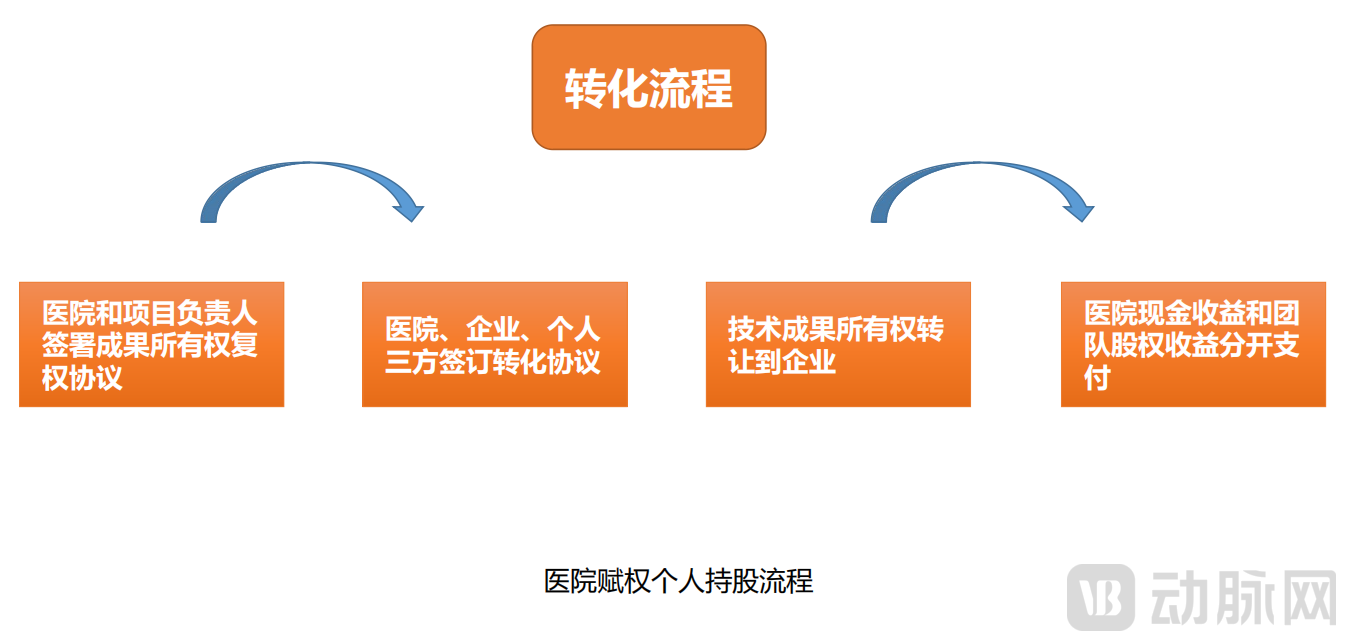
Another approach is hospital-empowered individual shareholding, as represented by Jishuitan Hospital.The hospital-empowered project team representative (individual) jointly holds the ownership of scientific and technological achievements with the hospital. The hospital, enterprise, and individual sign a tripartite transformation agreement to stipulate the overall transformation value of the scientific and technological achievements. In accordance with the hospital’s prescribed distribution ratio for proceeds from the transformation of such achievements, the portion attributable to the project team is converted into equity stakes in the cooperating enterprise based on the valued contribution of the scientific and technological achievements, while the portion attributable to the hospital is monetized in cash. The cooperating enterprise makes direct payments to the hospital according to predefined milestones.
It is worth noting that in the process of translating medical innovations into practical applications, physicians act as scientists and medical experts, and sometimes must also assume the role of entrepreneurs. However, these three roles differ in their perspectives and starting points. To effectively facilitate the translation of research findings, physicians may explore various models of technology transfer.
Overall, the commercialization of innovative achievements is primarily categorized into seven types.1. Small innovations that address clinical pain points, propose requirements for a specific step or issue in the clinical workflow;Second, Comprehensive Disciplinary Solutions, by integrating disciplinary strengths, to propose systematic solutions for clinical issues;Third, it is based on hospital data plus artificial intelligence., driving medical innovation and translation based on historical data and imaging information (expert insights).
4. Pharmaceutical and Medical Projects, Due to their unique nature, pharmaceutical projects entail stringent requirements for animal testing and quality control systems, making the translation process more complex compared to other stages;Fifth, reagent kit projects; sixth, consumable projects; seventh, interdisciplinary innovation projects.
Building Momentum: Targeting the Core Pain Points in the Translation of Medical Innovations
Currently, domestic hospitals in China are relatively conservative in implementing policies for the translation of scientific and technological achievements, and there are still some limitations in the process of translating medical innovation achievements.
First, the conversion rate of medical research achievements is low, with only a very small fraction developing into products or leading to the establishment of companies.
According to the report “Patent Analysis of Beijing’s Grade A Tertiary Hospitals over the Past Decade (2011–2020),” a total of 145 Chinese patents were assigned, accounting for 1.65% of the total patent applications filed during the ten-year period. Among these assigned patents, 104 were invention patents (representing 72% of all assignments), 37 were utility model patents, and 4 were design patents.
Meanwhile, among the 145 patents transferred, 95 were transferred once, 37 twice, 9 three times, and 4 four times. There were 24 patent transfers during the 12th Five-Year Plan period and 178 during the 13th Five-Year Plan period. These data indicate that the current rate of medical technology commercialization in China is generally low, and there is still a long and arduous journey ahead to improve this conversion rate.
Second, medical institutions and physicians lack a systematic understanding of the translation of medical achievements, and there is a severe shortage of specialized talent.
Currently, most healthcare professionals in China lack a systematic and in-depth understanding of the knowledge and processes involved in translating medical innovations. This has indirectly led to a year-on-year increase in disputes over achievement transformation. Furthermore, the mismatch between existing knowledge systems and the demands of medical innovation translation means that research outcomes are often based merely on written concepts and theories, overlooking genuine market needs.
Meanwhile, the process of translating medical scientific and technological achievements into practical applications is complex, requiring professionals with expertise in clinical practice, technology, management, and business. Compared to other fields, the translation of medical achievements demands significantly higher professional qualifications from personnel, thus creating an urgent need for interdisciplinary, multi-skilled talent.
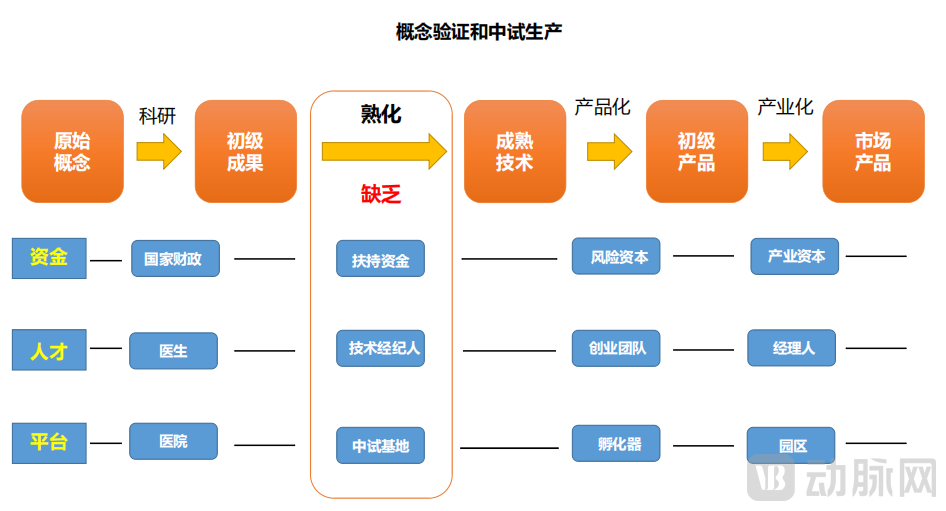
Third, proof-of-concept and pilot-scale production are bottlenecks in the process of translating scientific and technological achievements into practical applications.
During the project commercialization process, physicians generate initial concepts or ideas based on clinical needs in their practice. However, transforming these ideas into products requires not only clinical experience but also specialized professionals and institutions with engineering backgrounds to undertake proof-of-concept studies and pilot-scale trials.
However, in the current process of translating scientific achievements into practical applications, there has been a persistent lack of professional institutions involved in proof-of-concept and pilot-scale production stages. This is primarily due to two factors: first, during the maturation phase of medical innovation industrialization, there remains a shortage of effective support funding, technical broker teams, and pilot-scale production support platforms; second, a mature business model supporting the pilot-scale production stage has yet to be established, along with insufficient talent and capital resources to meet the demands of this phase. As a result, there is currently an industrial gap in the pilot-scale production stage.
Seizing the Momentum: A Pathway Guide to Translating Medical Innovations into Practice
Simple truths often stem from real-world practice.Therefore, in response to the aforementioned pain points, how can we develop a guideline for innovative pathways to facilitate the translation of medical innovation achievements? This can be broadly broken down into four key points.
First, develop a consensus and guidelines for the translation of scientific and technological innovation achievements in medical institutions.
Under the new policy requirements and innovation environment, distill point-case examples and services into systematic and structured value outputs. Starting from the management perspective of the "Consensus on the Transformation of Scientific and Technological Innovation Achievements in Medical Institutions" and the project perspective of the "Guidelines for the Transformation of Scientific and Technological Innovation Achievements in Medical Institutions," jointly guide the efficient and precise implementation of innovative projects.
Specifically, this is achieved by drawing on the technology transfer experiences of universities and research institutes, synthesizing time-consensus benchmarks among hospital administrators, analyzing practical pathways through project conversion case studies, and outlining key tasks and implementation steps, thereby facilitating the development of guidelines for the conversion of scientific and technological innovations in medical institutions.
Secondly, the transformation of medical and technological achievements requires extensive systemic support.
For physicians, identifying clinical pain points is not difficult; however, translating research findings into practical applications remains a significant challenge, with most efforts reaching their limit at the prototype stage.
On the other hand, the chain for translating medical scientific and technological achievements into practical applications is exceedingly long. From identifying clinical pain points to achieving market implementation, the translation process involves complex stages, including patent applications, prototype development, product manufacturing, clinical trials, regulatory registration, and marketing. Therefore, the successful commercialization of these achievements requires support from an extensive external ecosystem beyond hospitals, encompassing multiple critical links such as clinical evaluation, regulatory approval, and market access.
Then, there is the need to enhance the cultivation of talent for translating medical innovations into practical outcomes.
Talent is the key to the translation of medical science and technology achievements. However, for hospitals, most do not pay much attention to the translation of medical innovation achievements, lacking dedicated management departments and full-time staff. Most are managed part-time by other departments, with a lack of clear organizational support mechanisms and performance evaluation and reward measures. Even if third-party service institutions or internal hospital personnel are interested in the translation of medical innovations, their participation paths and methods remain unclear.
Therefore, in terms of talent development for the translation of medical and technological achievements, corresponding advanced seminars, training salons, or face-to-face events can be held to provide better guidance to relevant professionals in terms of professionalism, systematicity, and operability.
Finally, strengthen the project management for the transformation of medical and scientific achievements.
The scope of medical research project management is extensive, encompassing the science and technology planning system, project initiation and review management, the relationship between project inputs and outputs, and project management regulations, among other aspects.
Therefore, rigorous project management is key to the translation of medical scientific and technological achievements, and serves as an important guarantee for the smooth implementation of research plans and the practical application of research outcomes.
About CNIT
Initiated by Professor Zhang Hongqi, Director of the Department of Neurosurgery at Xuanwu Hospital of Capital Medical University, the China Neurointerventional Innovation and Translation Alliance (CNIT) is a coalition established jointly by various medical innovation entities. With the core missions of “building an innovation exchange platform in the field of neurointervention,” “conducting in-depth innovative research in neurointervention,” and “promoting the translation and implementation of achievements in neurointervention,” CNIT is committed to establishing a non-profit professional academic and industry-academia-research-application platform. This platform comprises high-level medical innovation talents in neurointervention, research-oriented medical institutions, higher education institutions, research institutes, professional academic societies, medical technology enterprises, and other innovation entities and partners. By fully stimulating the vitality of various medical innovation elements in the field of neurointervention, CNIT aims to drive the industrialization of innovative technologies in the discipline, establish clinical and industrial hubs for neurointerventional innovation, and lead the innovative development of the neurointervention industry.