

At Age 79, This Central South University Professor Embarked on an AI Healthcare Dream
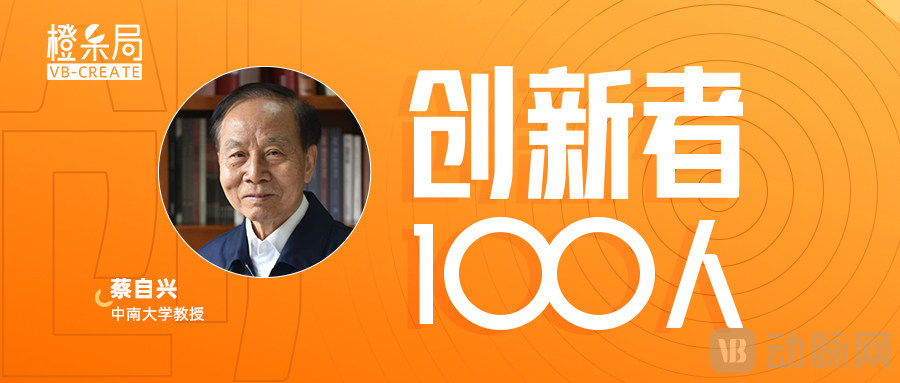
Expert Profile:Professor, Department of Automatic Control Engineering, Central South University; Former Vice President of the Chinese Association for Artificial Intelligence; Academician of the International Academy for Navigation and Motion Control; IEEE Life Fellow. Recipient of the Achievement Award of the Wu Wenjun Artificial Intelligence Science and Technology Award, the highest honor in artificial intelligence in China. His primary research areas include AI, intelligent systems, intelligent control, and intelligent robotics. He has made significant contributions to the development of AI science and technology in China and is hailed as the "founder of intelligent control discipline in China," the "founder of intelligent robotics discipline in China," and the "pioneer of AI education in China." In 2003, Cai Zixing was awarded the National Teaching Master Award for Higher Education Institutions at the inaugural national ceremony.
Research Focus:AI, intelligent systems, intelligent control, and intelligent robots.
Research Findings:Engaged in over 30 scientific and educational research projects, receiving two international awards, one national award, one first-prize at the provincial/ministerial level, one second-prize, two third-prizes, five first-prizes for outstanding provincial papers, one second-prize, and four other awards. Recipient of the inaugural National Teaching Master Award, the Xu Teli Education Award, the Wu Wenjun Artificial Intelligence Science and Technology Award Achievement Award, among others. Since 2003, has led and collaborated on major special projects funded by the National Natural Science Foundation of China. AsOne of the academic leaders in related disciplines,Some of his research achievements are at the forefront both domestically and internationally.
Professor Cai Zixing is 84 years old, but “retirement” remains a distant prospect.
Until the age of 80, Cai Zixing worked virtually year-round without breaks, typically not resting until after 10:00 p.m. each day. Upon entering his eighties, he seemed to recognize the need to slow down. While his daytime work schedule remained unchanged, he began turning on the television in the evenings “to see what young people are watching.”
Outside of work hours, he enjoys running. He has persisted in running every day since middle school, regardless of rain or snow. Even as he has grown older, he has maintained the habit of waking up early to exercise. He said, “To study hard and effectively, one must be in good physical condition; poor health undermines learning outcomes.”
After breakfast, he begins his day’s work in his home study. Although it has been many years since he left the university, he frequently returns to Central South University, the place that witnessed him dedicating half his life to the cause of AI.
In 1962, after graduating at the age of 24 from the Industrial Electrification and Automation program in the Department of Electrical Engineering at Xi’an Jiaotong University, Cai Zixing was assigned by the state to Central South Institute of Mining and Metallurgy (now Central South University), where he engaged in teaching and scientific research until his retirement in 2017. Thereafter, he shifted his focus to book writing, academic exchanges, andZIXING AIIn this tech startup. Now, he still maintains the pace of publishing 1-2 books every year, and published two English AI works in just two years from 2021 to 2022.
Since becoming involved with AI in 1983, Cai Zixing has been deeply engaged in the field for 40 years. For him, “youthfulness” has always been a concept unrelated to age. He says that despite his advanced age, he still wishes to work: “I have dedicated half my life to AI. Now that the AI wave is upon us, I can still contribute to the country to the best of my ability.” It is evident that when Cai Zixing chose to specialize in AI, the AI market had not yet taken shape. Nevertheless, he firmly believed at the time that “this emerging technology would inevitably play a significant role in China’s development.”
In 1950, after graduating from elementary school, Cai Zixing was admitted to Fujian Provincial Putian Middle School. After one semester, he dropped out due to financial hardship and returned home to engage in farming, tending cattle, cutting grass, and carrying firewood. “At times, I even had to go out to sea in the dead of night to harvest oysters, fish, and catch shrimp.” These laborious experiences during his youth forged a resilient character, subtly shaping the course of Cai Zixing’s life.
The first major turning point in Cai Zixing’s life occurred in 1952. With the certification and support of the County Peasant Association, Cai Zixing received a national state stipend, which enabled him to continue his education. In 1957, he enrolled as an undergraduate student at Jiaotong University (now Xi’an Jiaotong University), majoring in Industrial Electrification and Automation within the Department of Electrical Engineering.
In his youth, Cai Zixing was remarkably resilient. His college years coincided with the Three Years of Difficulty (1959–1961), during which grain rations were halved, leaving him frequently in a state of hunger. Due to financial constraints and an inability to afford train tickets, Cai did not return home even once throughout his five-year university education. At that time, the university operated under a semi-suspended academic schedule, with no classes held in the afternoons or evenings. Nevertheless, Cai devised a rigorous study plan and consistently engaged in reading professional literature. To comprehend certain original academic texts, he even taught himself German, enabling him to read materials in the language. This steadfast character remained with him throughout his subsequent career and personal life.
After graduating from university in 1962, Cai Zixing was assigned by the state to teach at Central South Institute of Mining and Metallurgy (now Central South University), where he undertook teaching and research responsibilities for the Department of Mechanical and Electrical Engineering, the Department of Automation, and the Department of Automatic Control Engineering. He successively served as a teaching assistant, lecturer, associate professor, and professor, making outstanding contributions to discipline development in the Department of Automatic Control and the College of Information Engineering at Central South University of Technology.
According to Liu Xiangyong, assistant to Professor Cai Zixing, Professor Cai often said, “Teaching is merely the means; nurturing talent is the ultimate goal. We should treat students as our own children, caring for their growth with love and holding them to high standards with a strong sense of responsibility to ensure they master knowledge and conduct research effectively.” The year 2008 marked the period when Professor Cai delivered the highest number of lectures. At the age of 70, he simultaneously taught four courses, one of which was fully recorded on video. One of his doctoral students recalled, “His lectures were witty and humorous, not confined to textbooks, yet standardized and systematic. Moreover, his bilingual Chinese-English multimedia teaching approach was highly engaging and well-received by students.”
Speaking of his father, Cai Yufeng, an automation graduate from Central South University, shared his “grievances”: “He is a typical scholar who devoted all his energy to teaching and scientific research. Even though I was his student at university, I never received any ‘special privileges.’” Cai recalled that throughout their childhood, his father rarely interfered with the academic or career aspirations of him and his brother. “He strongly supported our autonomy in decision-making. Although he hoped we would follow in his footsteps and pursue careers in AI research, he never imposed this expectation on us.”
In 2003, in recognition of his outstanding contributions to teaching, the Ministry of Education of China awarded Cai Zixing the inaugural national title of "National Teaching Master" for higher education institutions. In the same year, the Baosteel Education Foundation presented him with the Grand Prize of the National Outstanding Teacher Award. In 2009, the People's Government of Hunan Province awarded him the Xu Teli Education Award.
Cai Zixing’s journey with AI began in 1983 during his first study-abroad stint in the United States.
Cai Yufeng recalled that studying abroad demanded a high level of English proficiency, whereas Cai Zixing’s English skills were virtually nonexistent. He had studied Russian in middle school and university, later taught himself German, and now faced the requirement of English proficiency for studying abroad.
For a middle-aged individual of 40, achieving a level of English proficiency suitable for overseas study within a short period is no easy feat. “He believes that heaven rewards diligence and is someone who refuses to admit defeat. During that time, he would sit on a stool in his small kitchen every night to study English.” His day-and-night efforts elevated his English from a state of “mutual incomprehension” (where neither party could understand the other) to the point where he could naturally communicate with foreign experts and deliver lectures to international students.
From May 1983 to June 1985, Cai Zixing studied robotics at the Robotics Research Center of the Department of Electrical Engineering and Computer Science at the University of Nevada, before transferring to Purdue University.Studied under Professor K.S. Fu, the “Father of International Pattern Recognition” and Member of the U.S. National Academy of Engineering, as well as internationally renowned robotics experts Professors Paul and Lu Yangsheng, with a major in AI and Robotics.. Visiting scholars could have pursued advanced studies in only one discipline or course,However, Cai Zixing chose to study both disciplines simultaneously and applied fundamental AI theories and technologies to robotics research. In 1984, he pioneered the proposal of robotic planning expert systems on the international stage, achieving the integration of AI expert systems with robotic planning technology.。
Meanwhile, Cai Zixing also remains deeply committed to education in China.Under the collaboration and guidance of Professor King-Sun Fu, and together with Professor Guangyou Xu, co-authored the textbook *AI and Its Applications*., and was published by Tsinghua University Press in September 1987, becoming China’s first work on AI with independent intellectual property rights. Song Jian, then State Councilor and Director of the State Science and Technology Commission, pointed out: “I firmly believe that this new discipline, led by AI and pattern recognition, will make foundational contributions to humanity’s entry into the era of intelligent automation.”
Upon returning to China after completing his studies, Cai Zixing successively introduced courses such as Artificial Intelligence (AI), Intelligent Control, Robotics, Robot Control, and Principles and Applications of Intelligent Systems. During this period, he experienced a surge in scientific research achievements, publishing *Principles and Applications of Robotics* and *Intelligent Control*, the first systematic monographs in their respective fields in China. These works filled gaps in domestic publishing and addressed the urgent needs for research and teaching resources. Furthermore, he proposed a series of fundamental theories, including the quaternary intersection structure theory of intelligent control, the conceptual framework and architecture of evolutionary control, the preliminary framework and disciplinary characteristics of the discipline of intelligent science, the basic structure of robotics, and the core elements of AI. These contributions have played a significant role in advancing the development of AI science and technology both in China and internationally.
Cai Zixing stated that, as a member of the older generation of AI professionals, he should leverage his foundational expertise and strengths to contribute as much as possible. Over the years, he has disseminated fundamental knowledge of AI to readers and audiences across China through conference presentations and articles, while further revising monographs and textbooks on AI, intelligent control, and intelligent robotics, thereby continuing to provide scholarly works and educational materials to the nation. In 2018, Cai Zixing also published the popular science novel *Exploring the Kingdom of Robots*, aimed at spreading knowledge of robotics and AI to the general public, particularly among adolescents and teenagers.
On the other hand, he has never abandoned fundamental research in AI, authoring and publishing an English-language monograph on AI abroad, thereby making new contributions to the research and development of AI both domestically and internationally.In May 2021, Cai Zixing’s nearly 600-page English monograph on AI, *Artificial Intelligence: From Beginning to Date* (*AI: Exploring the Past and Present*), which took two years to complete, was published by World Scientific Publishing (WSP). In 2022, his similarly substantial English monograph on robotics, *Robotics: From Manipulator to Mobilebot* (*Robotics: From Manipulators to Mobile Robots*), was also released abroad.。
Over a 60-year career in scientific research and teaching, Cai Zixing and his research team have authored and published more than 1,000 papers on AI and robotics, and have compiled and published over 50 books on AI and robotics.
To avoid mere theoretical discussion and effectively apply AI technology in practice, Professor Cai Zixing’s team has undertaken a series of major scientific and technological projects since 2003, including key projects funded by the National Natural Science Foundation of China and major special research initiatives. For instance, in collaboration with the National University of Defense Technology and Jilin University, the team conducted a 15-year (2003–2017) research project on autonomous driving. This was one of the earliest and most representative autonomous driving projects in China, achieving numerous firsts nationwide.In 2014, Cai Zixing received the "Achievement Award" of the 4th Wu Wenjun AI Science and Technology Award.
In November 2014, Cai Yufeng accompanied his father, Cai Zixing, to Shanghai to receive the Achievement Award of the Wu Wenjun AI Science and Technology Award. While feeling immensely proud, Cai Yufeng also gained a deeper appreciation for his father’s perseverance. “For nearly 40 years, Professor Cai’s AI research was like sitting on a ‘cold bench’; many of his peers in the field abandoned AI for other areas, but he alone persisted.” It was after this event that the idea of commercializing his father’s decades of research achievements began to take root in Cai Yufeng’s mind.
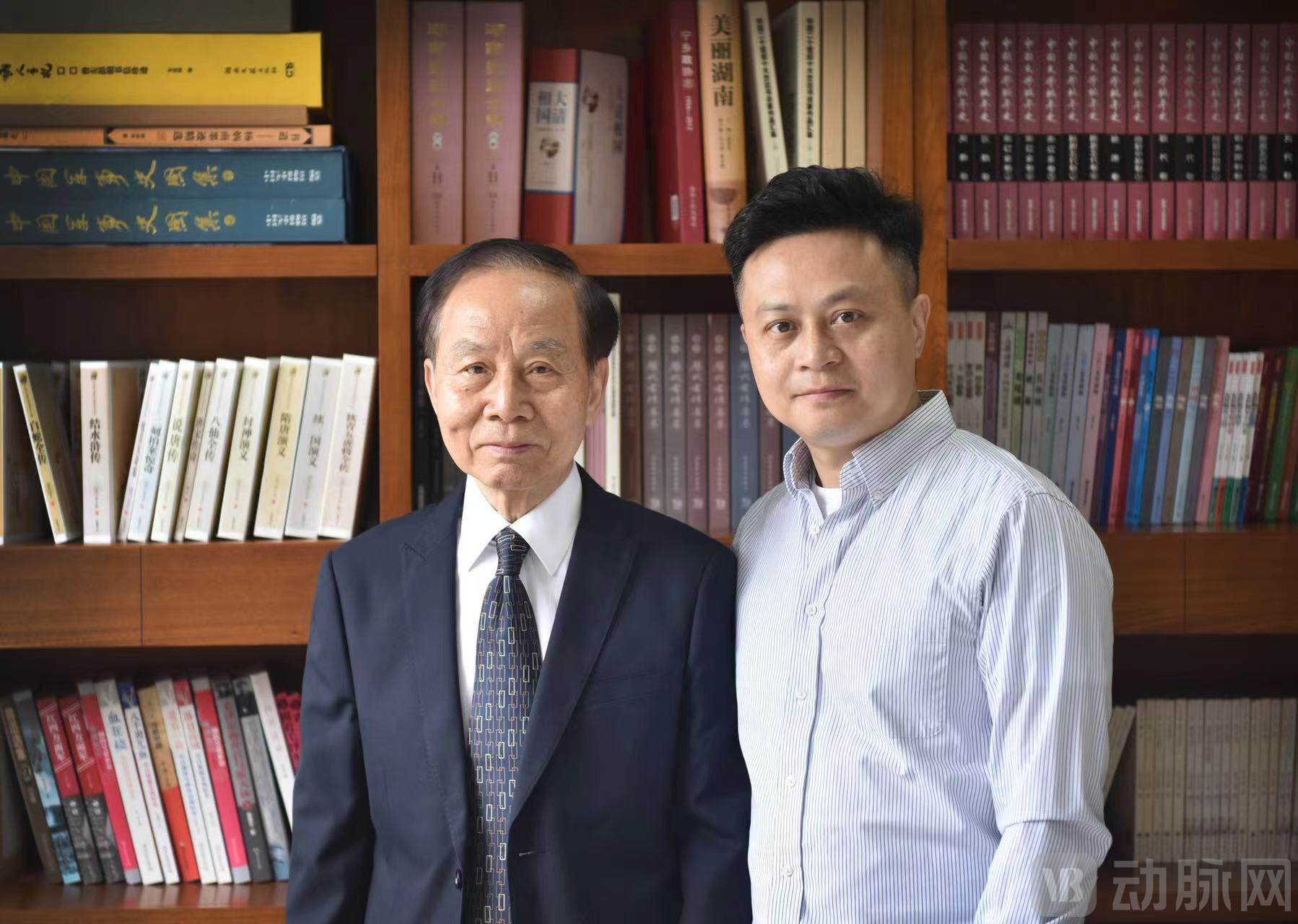
Photo of Professor Cai Zixing and Cai Yufeng
Upon learning that his son aspired to start a business in the field of artificial intelligence, Cai Zixing was delighted. “He can carry on the cause I have been dedicated to for over 40 years.” In 2015, Cai Zixing took Cai Yufeng to visit and learn from leading AI teams across China, including those at the University of Science and Technology of China, the Institute of Intelligent Machines of the Chinese Academy of Sciences, Shanghai Jiao Tong University, Shanghai University, Beihang University, Tsinghua University, Peking University, and Huazhong University of Science and Technology. “I wanted him to see what others were doing and gain insights from these prominent experts.”
“These teams have provided me with a great deal of pertinent advice; for instance, Professor Wang Tianmiao from Beihang University’s emphasis on ‘high-barrier awareness’ has been immensely beneficial to me.” After studying alongside university teams for one year,Cai Yufeng spearheaded the establishment of the Zixing Institute of Artificial Intelligence, with Cai Zixing serving as Chief Scientist.. Thanks to Cai Zixing's influence in the industry,ZIXING AIThe team has rapidly assembled a group of high-caliber talents in the field of AI, most of whom were once students of Cai Zixing.
The 2016 “man-machine match” made Cai Zixing realize that the AI era had arrived. In 2016–2017, Cai Zixing consecutively organized and convened the First and Second Hunan Province AI Summit Forums. At the Second Forum,Professor Lu Guangxiu, Expert in Genetics and Reproductive Medicine, and Dean of CITIC-Xiangya Hospital of Reproduction and GeneticsAs a conference attendee, she delivered an impromptu 15-minute presentation on “AI + Healthcare.” With vivid expression and emotional depth, she elucidated the transformative impact of AI on the field of reproductive genetics.
Shortly after the meeting,The two parties announced the establishment of the “Guangxiu–ZIXING AI Intelligent Healthcare Joint Laboratory” to conduct research on intelligent processing of human metaphase chromosome images, among other topics.
Human Chromosome Karyotype AnalysisHuman chromosome karyotype analysis focuses on chromosomes at metaphase of cell division. It involves the analysis, comparison, ordering, and numbering of chromosomes based on characteristics such as chromosome length, centromere position, the ratio of long to short arms, and the presence or absence of satellites, aided by banding techniques. Diagnosis is performed according to variations in chromosome structure and number. To date, nearly 10,000 types of human chromosomal numerical abnormalities and structural aberrations have been identified, along with more than 100 chromosomal disorder syndromes. Chromosomal disorders have become one of the most common causes of spontaneous abortion and birth defects, accounting for an incidence rate of 50%. Karyotype analysis technology has been widely applied in clinical laboratories, hematology departments, obstetrics and gynecology departments, reproductive centers, family planning research institutes, occupational disease prevention and control institutes, as well as universities and research institutions.
Currently,ZIXING AIThe AI-based chromosome karyotype analysis system developed has undergone testing with over 4 million chromosome images, achieving an automated recognition accuracy rate of more than 98%. It has reduced the workload that originally required 25 days to just one day, saving nearly 90% of working time. The system has issued auxiliary diagnostic reports for over 300,000 cases and has replaced traditional workflows in more than 100 top-tier tertiary hospitals across China.
ZIXING AIContinuous accolades, including being recognized as a “2018 MIIT Project for Innovative Integration of AI with the Real Economy” and a “2019 Hunan Provincial Department of Science and Technology Project for Technological Breakthroughs in Strategic Emerging Industries and Major Achievements in Scientific and Technological Transformation.”By the end of 2020, ZIXING AI’s Intelligent Karyotype Analysis System obtained a Class II Medical Device Registration Certificate. Its independently developed chromosome scanner is also scheduled to receive its Class II Medical Device Registration Certificate in May this year and will soon be launched on the market.。
Going forward,ZIXING AICanWe will focus on karyotype analysis and gradually integrate the entire chromosome industry chain to provide medical clients with the most professional and comprehensive intelligent karyotype analysis technical services.
Compared with his father’s focus on AI academia and scientific research,ZIXING AICo-founder Cai Yufeng places greater emphasis on the application and industrialization of AI. Cai Yufeng believes that this difference is related to their respective career paths and the historical contexts in which they came of age. “After graduating from university, I have been working in the business world, while my father has remained deeply engaged in academic research. When I decided to start a business, AI had already entered the window of opportunity for industrialization.” AndZIXING AIthe establishment of which has achieved a complementary integration of their respective strengths.
Looking back, the AI industry developed too slowly before 2016, to the point that most practitioners lost patience and left the field. Cai Zixing had no effective means to change the broader environment; he could only lead his students to persevere, remain committed to the AI domain, continuously accumulate strength in academic research, and wait for the right moment. After 2016, spurred by the AlphaGo event, the AI industry seemed to explode overnight. Public attention and expectations for AI surged dramatically, with an increasing number of individuals and institutions joining the fray, creating a veritable boom.
Since 2020, the development of the AI industry has not been as rapid as many had anticipated. The sector has undergone a process of deflation, leading many to once again express pessimism about its prospects. On this point, Cai Zixing remains calm: “I have always remained optimistic about the future of the AI industry. Over the years, industrial practice has demonstrated that current AI technologies can create significant value by improving efficiency and reducing costs. Over the past three decades, my books have influenced nearly one million practitioners. In the next 30 years, I hopeZIXING AI“Our medical products can serve hundreds of millions of patients worldwide, fulfilling our mission of leveraging AI to serve the people. The wave of AI industrialization has arrived; it may seem slow when viewed through a 2–3-year lens, but its pace is remarkably rapid when assessed over a 10-year horizon!”