

Ori-Medtech Builds a Degradable Magnesium-Based Biomaterial Platform and Files IPO Prospectus
“We aim to put our laboratory R&D outcomes into practical use, rather than letting them remain merely as papers or patents locked away in drawers.“Dr. Zhang Xiaonong told VCBeat that the original intention behind their startup was simple: ‘But since no similar innovative products were seen on the market, people inevitably perceived the risks as relatively high. As we recognized its value and were determined to translate it into reality, we decided to develop it ourselves.’”
Dr. Zhang Xiaonong is the Deputy Director of the Joint Research Center for Biomedical Materials at the School of Materials Science and Engineering, Shanghai Jiao Tong University, as well as the founder of Suzhou Origin Medtech Co., Ltd. (hereinafter referred to as “Origin Medtech”). In 2010, by chance, Origin Medtech was officially established in the Science and Innovation Park of the Changshu Economic and Technological Development Zone in Suzhou.
And “it in the lab” refers to the core focus of Origin Medtech—biodegradable metallic magnesium. In the field of biomedical materials, biodegradable and absorbable metallic magnesium has garnered significant attention. This metal material exhibits excellent biocompatibility, degradability, and favorable mechanical strength, holding great promise for applications in implantable medical devices.
Currently, Origin Medtech has established a technology platform for biodegradable magnesium metal materials and laid out the research and development of medical device products in multiple fields, including minimally invasive surgery, orthopedic sports medicine, medical aesthetics, and interventional medicine.
Dr. Zhang Xiaonong informed us that, from a materials perspective, the cycle for industrial product materials from research and development to application is approximately 10 years, whereas for medical materials, it is at least around 15 years. On a global scale, large-scale technological research and development focused on biodegradable magnesium metals commenced with the turn of the new century. Relevant exploratory research in China started relatively early; for instance, Dr. Zhang Xiaonong’s team began their investigations in 2002.
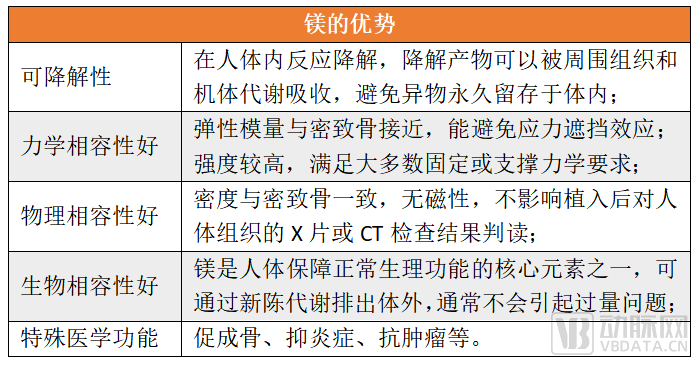
The emergence and development of new innovations are invariably accompanied by twists and turns. Biodegradable magnesium has experienced a trajectory from skepticism to fervor, evolving from early widespread disbelief that metallic implants could be degraded and absorbed within the body, to a rush of interest after preliminary studies confirmed their feasibility. However, the high technical barriers associated with research and development have dampened much of this enthusiasm. A critical challenge that cannot be circumvented is how to regulate the degradation rate of magnesium implants to ensure it matches the pace of tissue regeneration. For instance, in orthopedic applications, if the bone screw degrades completely before the bone has healed, the biodegradability offers no practical therapeutic benefit.
Around 2013, research on biodegradable magnesium metals in China hit rock bottom. Meanwhile, the industry underwent a rigorous process of natural selection. The enterprises and teams that have survived to date are employing various approaches, including different material preparation processes, surface modification treatments, and optimized product structural designs. As a result, the industry is once again entering a phase of gradual recovery and growth.
The industry is steadily advancing, and Origin Medtech is forging its own path.From a team perspective, backed by Shanghai Jiao Tong University, Origin Medtech had a solid technical team at its inception. Beyond that, this venture was essentially built from the ground up. In line with market dynamics and corporate development patterns, Origin Medtech has already established teams for R&D, production, quality control, and regulatory registration. As product registration advances, the company is currently preparing to expand its marketing team.
As Dr. Zhang Xiaonong puts it, “Team building should align with the company’s development needs; at a certain stage, it becomes natural to establish corresponding specialized teams, reflecting a process of progressive growth.” Currently, Origin Medtech’s team has grown to over 100 members and is divided into three main sectors: a materials team focused on the manufacturing of biodegradable magnesium metals; an R&D team dedicated to the design of innovative medical devices; and a medical team supporting each individual product.
From an R&D perspective, the journey from laboratory achievements in universities to commercial products is also lengthy. The focus of academic research lies in demonstrating feasibility, where a certain number of successes out of every hundred trials suffices to prove viability; however, medical products directly impact patients’ lives and health, demanding 100% quality stability. This requires a shift in mindset from the academic environment, involving extensive repeated testing and validation of products, along with stringent quality control. Bridging the gap between university research outcomes and enterprise-level products is an essential hurdle that must be overcome.
Specifically, this is first reflected in the material itself. Factors such as compositional design and fabrication processes influence the material’s final mechanical and degradation properties, which in turn lead to variations in biological evaluation. Only by meeting the criteria for biological evaluation can a material pass the initial hurdle of feasibility.
Secondly, the product design of medical devices must be integrated with material properties. Rigidly applying existing design and manufacturing standards is rarely suitable for products made from biodegradable magnesium alloys. This is particularly true for degradation performance, as variations in the usage environment—such as the implantation site and surgical procedures—can significantly affect the degradation behavior of the implant. Therefore, it is essential to define specific application scenarios and conduct targeted designs to ensure proper device adaptation.
As an R&D-driven innovative enterprise, Origin Medtech focuses on both materials and devices, leveraging its proprietary platform of biodegradable magnesium-based metals to establish a presence across multiple fields, including minimally invasive surgery, orthopedics, interventional medicine, and medical aesthetics.
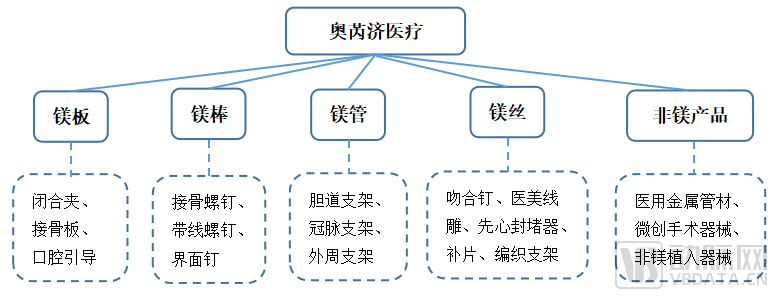
Source: Origin Medtech
In terms of product development, Origin Medtech is currently making the fastest progress in the surgical field. After more than a decade of dedicated R&D, its biodegradable magnesium metal ligation clips have completed clinical trials and are currently undergoing regulatory registration. According to Dr. Zhang Xiaonong, with the growth in the volume of minimally invasive surgeries, the consumption of ligation clips is increasing at an annual rate of 20%–30%, reaching approximately 30 million units in the Chinese market in 2021.
In addition to its self-developed medical device products, Origin Medtech also supplies materials to industry peers, leveraging its biodegradable and absorbable magnesium metal technology platform to support the research and development of related medical devices.
Material innovation is the foundational support for Origin Medtech.Two decades of dedicated technological development and a thorough understanding of medical-grade magnesium materials undoubtedly constitute its core competitiveness.Specifically, Origin Medtech maintains long-term collaborations with numerous hospitals across China and has published over one hundred papers in the field of biodegradable absorbable magnesium metal research, covering a wide range of areas including orthopedics, surgery, and anti-tumor therapeutic applications.
To date, the Company has been granted more than 60 international PCT, invention, utility model, and design patents, including over 20 invention patents. Furthermore,Origin Medtech also participated in the formulation of two national key R&D projects, three industry standards, and one regulatory review guidance principle.。
Zhang Xiaonong stated that, from the perspective of technical research, China has conducted extensive and high-quality foundational work on biomedical materials used in medical devices. However, there is still a notable gap in product development driven by clinical application and translation. Meanwhile, given the current vulnerability of many raw materials for medical devices to supply chain disruptions (“chokehold” risks), the security of raw material supply has become a critical factor for the sustainable development of the healthcare industry.
As a technological innovation capable of delivering substantial social and market value, biodegradable magnesium-based materials have already led to the global launch of various types of medical device products. Origin Medtech anticipates completing the regulatory registration of its biodegradable magnesium clips within approximately one year, while simultaneously advancing the research and development of multiple new biodegradable device products. Currently,The company is undergoing a new round of financing, primarily to fund its innovative R&D and market expansion.。