Twice-Delayed IPO: Can This PFO Occluder Upstart Survive Long Enough to Go Public?

Cardia
Transcatheter Septal Occluder Developer

White Paper + Awards + Forum | 2nd Global Cardiovascular Conference
Heart Future
On April 15, 2026, local time, it was originally planned to be listed on Nasdaq (stock code: EMI).Encore MedicalCardia, Inc. hits the "pause button" again,Postponed the launch date to April 22. This is already the structural heart disease device companyIn the nearly 9-month IPO processThe 2nd Extension。
In the global medical IPO market, where fundraising often reaches billions of dollars, Encore's current raise is onlyPlan to raise 15 million US dollars, with a small scale; more strikingly, this company, with only 16 employees, is attempting to enter a niche market segment—potentially worth billions of dollars—that has long been dominated by industry giants.PFO (Patent Foramen Ovale) Occluder Market。
Behind the seemingly ordinary delay of this IPO, it reflects not only the capital rhythm issue of a single company but also the real situation faced by global innovative device companies caught between "technological breakthrough" and "capital constraints."
# Twice Postponed: The Appearance and Essence of IPO "Stalled"
Encore's IPO path has not been particularly short.

September 2025: Initial confidential submission of S-1 to the SEC By the end of 2025: Transition to open application March 2026:Originally Scheduled Listing April 15, 2026:Time point after the first extension April 22, 2026:New Milestone After Another Postponement
The reasons behind the two postponements were not accidental.
From the publicly available information, the focus is on three key points:
First, regulatory scrutiny is becoming stricter.
The SEC's focus on Encore is concentrated inFinancial robustness, completeness of clinical data disclosure, and ongoing operational capability, especially its negative working capital and extremely tight cash flow, have become the focus of inquiries.
Second, underwriting and due diligence have not been fully completed.
Underwriters still need to supplement verification in aspects such as dealer compliance and the authenticity of the sales system, which is not uncommon in small device enterprises.
Third, the small-cap IPO market environment is under pressure.
In the current U.S. stock market environment, institutional investors' willingness to subscribe to small-scale, unprofitable medical enterprises has significantly declined, and companies often need to "time their actions."
If the first delay was more of a "market and regulatory resonance," then the second delay was more straightforward —The capital market's reconfirmation of its "ability to survive"。
# Who is Encore: A Device Company "Reborn with History"
Unlike a typical startup, Encore did not start from scratch.
Its technical origin comes from a well-established medical device company.Cardia, Inc.。

In 2017, Encore was established as its subsidiary and completed the spin-off in 2020 to officially operate independently, fully taking over the parent company in China.Technical Assets, Patents, and Commercialization Channels in the Atrial Septal Defect (ASD) and PFO Occlusion Fields。
This means:
? Encore is not "innovation from 0 to 1," but rather "the re-entrepreneurship of mature technology assets."
As of now, the company's products have been commercialized in more than 20 countries across Europe, the Middle East, and Latin America.Total completed approximately35,000 Implants, with a certain basis of real-world evidence.
This "path of bringing data into the capital market" is uncommon among small device companies and constitutes an important supporting logic for its IPO.
# Technical Route: Not Stronger, but a "Gentler" Occluder
In the field of structural heart disease, PFO occluders are not a new technology, but the market has long been dominated by a few companies.
Among them,Abbott LaboratoriesAndW. L. Gore & AssociatesDominant, relying on mature products, clinical evidence, and a well-established channel system, has built a high barrier.
Encore's attempt to enter this market is not through "performance dominance," but by proposing a different design logic:
? Reduce the "interference level" of instruments on the human body.
Its core technical features include:
Supports complete retrieval and repositioning before implantation Low metal content, reducing the risk of thrombosis and atrial fibrillation Flexible structure, self-adaptive cardiac anatomical morphology Preserve the future atrial septal access (for subsequent intervention)
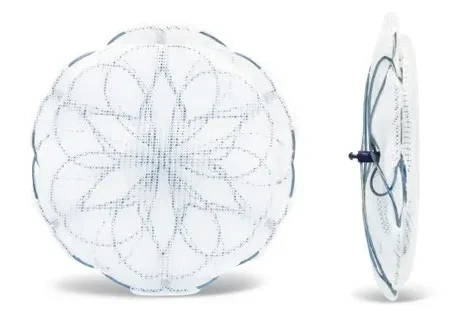
▲Encore PFO Closure Device
The idea behind this is very clear:
Not "stronger occlusion," but "safer and more controllable occlusion."
In the current clinical trend that increasingly emphasizes long-term prognosis and the possibility of multiple interventions, this design concept offers a certain differentiated value.
# An Underestimated Track: Why Has PFO Become the "New Gateway"?
PFO has long been regarded as a common but "harmless" anatomical variation.
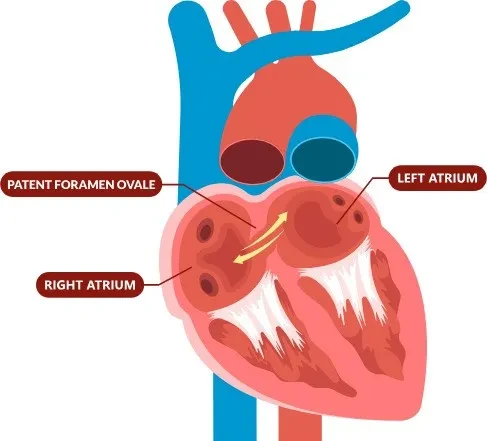
Data show,About25% of the population has PFO., in most cases, there are no symptoms. However, research in recent years has gradually revealed:
Approximately 50% of patients with cryptogenic stroke have a concurrent PFO.
The incidence of PFO is significantly increased in patients with migraine.
This discovery is changing the clinical positioning of PFO ——
? From "accidental discovery" to "intervention target".
From a market perspective:
Approximately 139,000 PFO-related stroke patients in the United States each year The price of a single instrument is approximately 10,000 USD. Corresponding potential market size exceeds 1.5 billion US dollars
Once the indication for migraine is validated, it will further expand the market space.
PFO is becoming a key node connecting "structural heart disease" with "neurological disorders."
# The Real Game-Changer: The U.S. Market and "Dual Indications"
Although Encore has been commercialized overseas, the market that determines its fate is still the United States.
Currently, the company is advancing the pivotal clinical trial (PerForm) to validate itsStroke PreventionEffectiveness in China.
More noteworthy is:
?Encore is laying out the "migraine" indication.
This point is crucial.
Currently, no PFO occluder has been approved for migraine treatment in the United States, which means:
This is an "undefined" market. It is also a potential "overtaking on a curve" opportunity.
In other words:
Encore is not directly challenging the giants but is looking for an "entrance that the giants have not yet fully occupied."
# Real Dilemma: Technically Correct, but Financially Risky
If we only look at the technical path, Encore has a certain logic.
But from a financial perspective, its situation is not optimistic:
Revenue in 2025: 2.58 million USD Net Loss: $920,000 Cash Balance: Only approximately 90,000 USD Working Capital: Negative
This means:
?The company is almost in a "must-finance-to-survive" state.
IPO fundraising is not only used for clinical advancement but also directly related to:
Repay Debt Maintain Operations Support R&D
For Encore,Time is another way of expressing cash flow.。
# Industry Snapshot: Why Do Small Device Companies Always Get Stuck in IPOs?
Encore's experience is not an isolated case.
Currently, global innovative device companies going public generally face "five major challenges":
Stricter Regulation (Especially for Unprofitable Enterprises) Decrease in Market Liquidity Fragile Financial Structure Long clinical cycle Due Diligence Complexity
These factors叠加, making the IPO a "systemic challenge" from a "matter of time."
The two extensions of Encore are essentially a concentrated manifestation of this structural issue.
# The Ultimate Question: Can a 16-Person Company Become the "Third Pole"?
The next three years will be a critical window period for Encore.
If everything goes smoothly, the path may be:
Complete Clinical Trials Obtained FDA Approval Achieve Commercialization in the United States Targeting Migraine Indications
Once achieved, it will have the opportunity to become the "third pole" in the field of PFO occlusion.
But the risks are equally clear:
Break of Capital Chain Clinical Failure Giant Counterattack
Therefore, the real question is not whether Encore will succeed,
But:
? Whether it can survive until the day of success.
# From Encore's Perspective: Innovation Opportunities Still Exist in the Industry
The significance of Encore may not lie in its ultimate success or failure.
But in that it reveals a more important fact:
Even in the structural heart disease track dominated by giants, there still exists "an overlooked space for innovation."
These spaces often come from:
New Indications Better Anatomical Fit Lower Risk of Complications More Flexible Instrument Design
For industry players, this type of company has another layer of value:
? Before they are marketed, they are oftenThe Most Cost-Effective Cooperation and M&A Targets。
# Conclusion
The delay of Encore's IPO is not an isolated event.
It is a mirror, reflecting the current situation of innovative device companies ——
In a market dominated by giants, small companies either disappear quickly or find an extremely narrow but viable path.
And Encore is trying to take this path.
As for where the endpoint is, the answer still lies with time.
Full Disease Solution for Cardiovascular Devices
Structural Heart Disease → ▌Medtronic
Vascular Disease → ▌Huamai Tech