

Zephyrm Bioscience: Pioneering Pluripotent Stem Cell Therapeutics with IND-Approved Off-the-Shelf Products

Zephyrm
Stem Cell Drug Developer and Manufacturer
On February 14, 2022, the pluripotent stem cell-derived cellular drug injection (Application No. CXSL2101443) developed by Beijing Zephyrm Biotechnology Co., Ltd. (hereinafter referred to as “Zephyrm”) officially received implicit approval for clinical trials from the Center for Drug Evaluation (CDE) of the National Medical Products Administration (NMPA). The indication for the clinical study is acute respiratory distress syndrome (ARDS). Previously, this investigational drug had successively obtained NMPA approval to conduct registrational clinical trials for treating ARDS caused by COVID-19, COVID-19-associated pulmonary fibrosis, and meniscal injury.
“As of the end of April 2022, there were 36 stem cell drug registration trials approved by China’s National Medical Products Administration (NMPA). With the exception of Zephyrm’s investigational drug and a newly approved pluripotent stem cell (PSC) trial drug from another company, all other sponsors’ investigational products are somatic stem cell (SSC) formulations derived from various tissue sources. Zephyrm is the first pharmaceutical company in China to receive approval for conducting registration clinical trials with pluripotent stem cells, and it remains the only pharmaceutical company formally carrying out such PSC registration clinical trials,” explained Dr. Jia Yi, Chief Medical Officer (CMO) of Zephyrm. As early as February 2020, one of Zephyrm’s cell injection products had already received approval and commenced registration clinical trials.
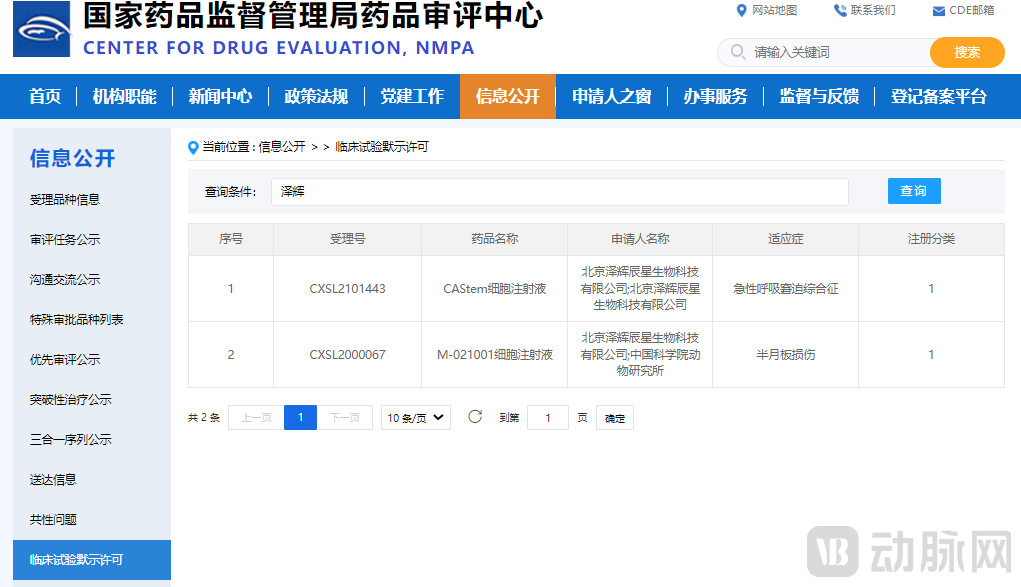
Zephyrm's Investigational Drugs Granted Implied Approval for Clinical Trials
The stem cell field is experiencing rapid development. According to a report by Transparency Market Research, the global stem cell market size is projected to reach $270.5 billion by the end of 2025, with a compound annual growth rate (CAGR) of 13.8% expected from 2017 to 2025.
According to the latest report from Frost & Sullivan, a global corporate growth consulting firm, 14 stem cell products have been approved for marketing in various countries worldwide, all of which are derived from adult stem cells. Dr. Jia Yi stated, “Unlike adult stem cell drugs sourced from various human tissues, Zephyrm’s pluripotent stem cell-derived cellular therapeutics use human embryonic stem cells as seed cells. These are differentiated into specific types of functional cells and formulated with excipients into ready-to-use (off-the-shelf) cellular therapeutics, offering distinct advantages in the development of stem cell-based medicines.”
What are the advantages of developing pluripotent stem cell-based therapeutics, particularly cell therapies derived from human embryonic stem cells? How will Zephyrm provide new solutions to address the pain points in stem cell drug development?
Currently, therapeutic stem cell products entering clinical trials worldwide mainly include pluripotent stem cell-derived cell therapies and adult stem cell therapies derived from human tissues. Among these, pluripotent stem cells primarily encompass human embryonic stem cells (hESCs) and induced pluripotent stem cells (iPSCs). Zephyrm has established a presence in the research and application of both hESCs and iPSCs, with its current focus primarily on the development of cell therapies based on human embryonic stem cells.
According to Dr. Jia Yi, since 2009, multiple adult stem cell drugs primarily based on mesenchymal stem cells that have been marketed abroad have failed to achieve widespread commercial promotion and clinical application. The main reasons are limitations inherent to the characteristics of adult stem cells: first, mesenchymal stem cells have limited proliferative capacity, making it difficult for a single donation from a donor to meet the demands of large-scale commercial production; second, biological variations exist among cells from different donors, which may lead to differences in clinical efficacy across cell preparations from different donor batches.
The development of cell therapies derived from pluripotent stem cells first requires the establishment of a stable pluripotent stem cell line. Whether it is a human embryonic stem cell (hESC) line derived from fertilized eggs or an induced pluripotent stem cell (iPSC) line generated through artificial reprogramming of somatic cells, these pluripotent stem cell lines are established as monoclonal cell lines via single-cell cloning technology and subsequent expansion. All cells originate from a common ancestral cell, ensuring high consistency in genotype and phenotype. This approach guarantees the homogeneity of the starting materials for cell therapy production at the source, thereby ensuring consistent biological characteristics and clinical efficacy across different batches of the final cell products.
Furthermore, pluripotent stem cells possess the capacity for self-renewal and unlimited expansion in vitro, providing an abundant source of seed cells for subsequent differentiation into functional cells. Coupled with mature in vitro expansion and induced differentiation technologies, as well as standardized manufacturing processes and quality control strategies, this enables the large-scale production and widespread clinical application of pluripotent stem cell-based therapeutics.
Meanwhile, Zephyrm considers that using human embryonic stem cell lines as seed cells is the optimal choice at this stage, as it avoids uncertainties in drug safety assessment arising from the reprogramming process and circumvents relatively complex manufacturing workflows.
Although cell therapies based on pluripotent stem cells face fewer limitations in drug development compared to adult stem cells, adult stem cells are derived from diverse sources, and the processes for isolating, culturing, and expanding them from donor tissues are straightforward. The entire workflow, from obtaining donor tissue to producing the final cell product, is simple and easy to control. In contrast, the preparation of pluripotent stem cell-derived therapeutics requires the prior establishment of a pluripotent stem cell line, such as human embryonic stem cell lines, which entails higher technical requirements and presents certain technological barriers. Consequently, since the 1990s, the earliest clinical stem cell research conducted abroad has utilized adult stem cell preparations from various tissue sources, leading to the subsequent approval and market launch of several stem cell drugs. The landscape of stem cell drug development in China is similar; currently, the vast majority of companies are focused on the adult stem cell therapeutic pipeline, with relatively few enterprises domestically or internationally truly engaged in the pluripotent stem cell sector.
“We do not wish to follow in others’ footsteps, but rather to develop truly original innovative drugs.” Guided by this vision, in May 2019, Zephyrm signed a strategic cooperation agreement with the Chinese Academy of Sciences (CAS) Institute for Stem Cell and Regenerative Medicine Innovation (Institute of Zoology, CAS) to jointly develop pluripotent stem cell therapeutics with independent intellectual property rights. Leveraging the human embryonic stem cell lines from the CAS Institute for Stem Cell and Regenerative Medicine Innovation, Zephyrm has addressed key pain points in stem cell drug development by ensuring batch-to-batch consistency of cellular products and enabling scalable manufacturing of stem cell-based therapeutics.
Currently, multiple companies in China have established a presence in the field of stem cell therapeutics, with the industry as a whole thriving. Compared to its peers, Zephyrm has developed a unique strategic layout tailored to the R&D requirements of drug development.
The team members have years of experience in drug development and stem cell research.
Zephyrm has assembled a team with outstanding educational backgrounds and extensive professional experience. The core members of the company all hold doctoral degrees from renowned universities both in China and abroad, are experts at the professorial level, and have overseas study and work experience. Key team members have long held senior R&D and management positions in large multinational pharmaceutical companies. For instance, Dr. Jia Yi himself has more than ten years of clinical surgical experience, followed by nearly a decade leading clinical development of biological drugs, chemical drugs, and drug-device combination products in China and multiple Asia-Pacific countries for multinational pharmaceutical firms. After joining Zephyrm as Chief Medical Officer (CMO), he led and secured approval for China’s first investigational new drug (IND) application for a pluripotent stem cell-derived cellular product. In early 2020, during the COVID-19 pandemic, he initiated the world’s first registered clinical trial using human embryonic stem cell-derived cellular preparations to treat COVID-19-related conditions.
The core technology demonstrates drugability and forward-looking application potential.
First, serum-free culture has been achieved throughout the entire production process of cell-based products.“Serum is a complex mixture that provides nutrients essential for cell growth, such as growth factors, hormones, proteins, and vitamins. However, all human- or animal-derived materials have ill-defined compositions, posing potential risks of exogenous factor contamination in final therapeutic products. Regulatory authorities require the use of well-defined medium components in raw materials for cell production whenever possible. ‘Building on extensive prior basic research, Zephyrm has achieved serum-free expansion of its pluripotent stem cells. Throughout the entire manufacturing process, functionally differentiated cells are produced using chemically defined serum replacements, thereby minimizing safety risks associated with serum and overcoming technical bottlenecks in drug development,’ said Dr. Jia Yi.”
Second, no genetic modification techniques were employed in the process of developing stem cells into pharmaceutical products.Genetically modified cells generally require more extensive safety evaluations and quality assurance during drug development, whereas Zephyrm’s human embryonic stem cell-based therapeutics completely circumvent this risk, thereby accelerating R&D progress to some extent.
Third, positioned as ready-to-use stem cell therapeutics.To maintain cell viability and function, ultra-low temperature long-term storage in liquid nitrogen is required. Prior to clinical administration, the cellular therapy product is retrieved from liquid nitrogen, and the cells are thawed and revived before dosing. Dr. Jia Yi explained, “Currently, there are variations in the clinical handling of stem cell preparations. Some stem cell products developed by certain companies require prolonged ex vivo culture after thawing from liquid nitrogen, and may even involve cell passaging. This process can take two to three days or even more than a week to achieve the cell quantity and viability required for clinical use, posing challenges to widespread clinical adoption after market approval. In contrast, Zephyrm’s cellular therapies consistently adhere to an off-the-shelf strategy. Healthcare professionals need only spend 2–5 minutes thawing and reviving the cells using a customized cell revival device immediately prior to patient use. The cells can then be formulated into a cell injection solution for clinical administration, mirroring the operational convenience of conventional clinical drugs.”
A well-established CMC R&D technology platform and quality management system have been implemented.
Zephyrm has established a secondary master cell bank for pluripotent stem cells and mastered technologies for their directed differentiation into endoderm, mesoderm, and ectoderm lineages. The company has successively built process platforms encompassing scalable expansion of pluripotent stem cells and their derivatives via both scale-out and scale-up strategies, formulation and process development, and controlled-rate freezing for off-the-shelf cellular products, along with a quality assessment technology platform.
Zephyrm has also developed the first standardized, scalable, and easily expandable manufacturing process for human embryonic stem cell-derived M cell therapeutics, with a batch production yield of no less than 1010units, with over 1,000 batches of cell-based drug products manufactured; the shelf life exceeds two years. Based on the established scale of the human embryonic stem cell production master cell bank, it is sufficient to support the commercial production of hundreds of millions of doses of cell therapy products.
Furthermore, Zephyrm has established a 2,400-square-meter cGMP production facility in the Zhongguancun Science Park in Beijing, meeting advanced international standards for the cell therapy industry in terms of design, construction, and operation. The company has implemented an effective quality management system that covers all factors affecting the quality of investigational medicinal products, including facilities, equipment, personnel, manufacturing, testing, storage, transportation, and comprehensive documentation systems.
Zephyrm has made rapid progress in the research and development of stem cell-based therapeutics. Currently, four Phase I–II registrational clinical trials have been approved by the National Medical Products Administration (NMPA). Among these, two Phase I/II trials for the treatment of COVID-19-related conditions have been completed; one trial for the treatment of meniscal injury was officially launched in March 2022; and one trial for the treatment of acute respiratory distress syndrome (ARDS) is scheduled to commence in mid-2022.

Zephyrm's 4 Indications Approved for Clinical Trial Registration
It is reported that Zephyrm has planned to expand its R&D pipeline into additional indications, such as inflammatory bowel disease, acute graft-versus-host disease, moderate-to-severe intrauterine adhesions, and refractory wounds, as well as to develop combination drug-device products featuring stem cells combined with various biomaterials. The company also plans to develop cell-based therapies derived from human embryonic stem cells, such as retinal pigment epithelial cells, to address unmet clinical treatment needs.
Regarding the company’s future plans, Dr. Jia Yi stated, “In the short term, we aim to secure regulatory approval and launch our first product as soon as possible, enabling patients in China to access Zephyrm’s universal, off-the-shelf pluripotent stem cell therapies at the earliest opportunity.”
Zephyrm has overcome the technical barriers spanning from research to clinical application for pluripotent stem cell-based therapeutics and is advancing toward the industrialization of stem cell drugs. With Zephyrm’s leadership, this niche sector of pluripotent stem cells is poised to become a new blue ocean in the field of cell therapies in the near future.