

Cook Medical's IPO Prospectus: The 'Cook-Style Innovation' That Transformed a Family Workshop into a Global MedTech Leader
How Difficult Is It for Scientists to Succeed in Entrepreneurship? The Answer IsOnly 5% of scientist entrepreneurs truly succeed., it is no exaggeration to call it a single-plank bridge.
Bill Cook(Bill Cook) is one of that 5%, who grew a small family workshop with just three simple products into a global business spanning 135 countries and regions.One of the World's Largest Private Medical Device Companies—Cook Medical.
This is no easy feat, as entrepreneurial success demands not only opportunity but also the desire and potential for sustained growth. Scientists, in particular, often face even greater challenges on their entrepreneurial journeys.
So, what exactly did Bill Cook get right?
Three Products Leveraging the Entire Market
“Times make heroes, and heroes also make times.” There is no better way to describe Cook Medical.
In the early 1950s, a medical breakthrough achieved minimally invasive percutaneous access, namely the technique invented by Dr. Sven-Ivar SeldingerSeldinger Technique(Seldinger technique) For the first time, it allowed radiologists to access the vascular system using only a needle, guidewire, and catheter.
At that time, however, the three basic instruments required for performing the Seldinger technique were completely unavailable on the market. Due to the lack of reliable tools for conducting the procedure, physicians were forced to improvise medical devices, with some even using piano wires as guidewires.
At this point, the issue had become evident. The Seldinger technique required a supplier, akin to an unclaimed island rich in resources, where the first discoverer held the initiative for development.
In 1960, Bill Cook, the founder of Cook Medical, learned during a meeting with his cousin, Dr. Van Fucilla, that physicians required proper tools to effectively perform the Seldinger technique, yet struggled due to the lack of suppliers capable of serving the entire market. Seizing this prime entrepreneurial opportunity, Bill Cook resolved to fill this gap in the medical industry.
In July 1963, Bill Cook and his wife, Gail Cook, established a small home-based workshop in their apartment in Bloomington, Indiana. Based on Dr. Van Fucilla’s description, they designed and manufactured three simple products:Puncture Needles, Guidewires, and Catheters, these products can help physicians access patients' blood vessels in a minimally invasive manner during the diagnostic process.
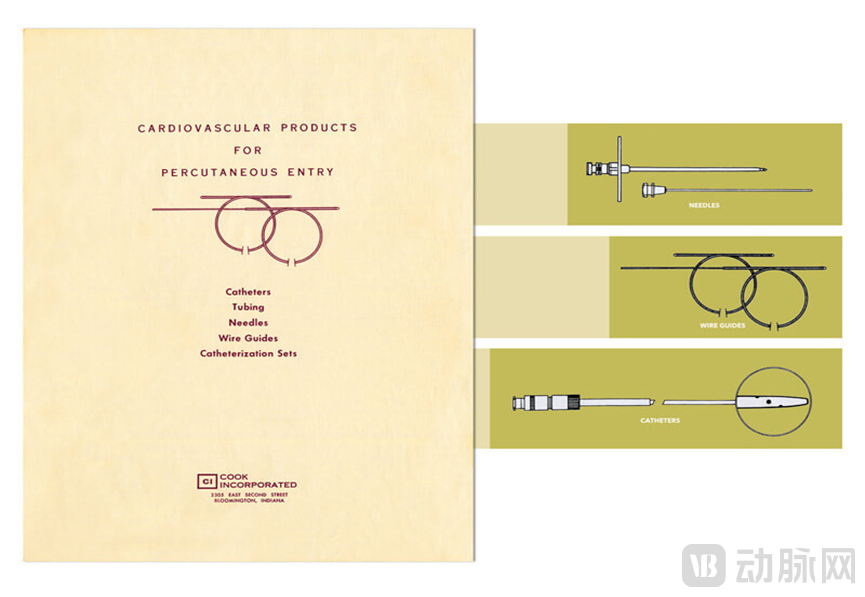
Figure 1: Cook’s Early Product Catalog (Source: Cook Medical Official Website)
Initially, Bill Cook intended to run a small business, selling only to physicians who required these three products during diagnostic procedures. However, this idea was soon abandoned. After learning from Dr. Charles Theodore Dotter that the Seldinger technique could be further developed to enable minimally invasive approaches, Bill Cook spared no effort in advancing the field of minimally invasive medicine, striving to transform it from an obscure domain into a standardized therapeutic modality.
It was this very transformation that propelled Cook Medical from a small family workshop to its present stature. Its three early products have become pioneers in the medical device industry, and Cook Medical now distributes millions of products to physicians worldwide. While achieving renown, it has also reshaped the entire landscape of the healthcare industry.
Cook-Style Innovation: Walking with Giants
At the outset of a startup, identifying opportunities is often the most critical factor; however, as one progresses further,How to Seize and Create Opportunities Is the Top Concern for Entrepreneurs.
In the field of medical devices and technology, physicians’ insights are indispensable to providing clinicians with the tools needed to improve patients’ lives. Guided by this understanding, Cook Medical has maintained frequent engagement with leading experts in the medical community throughout its nearly 60-year history.
In the late 1960s, Cook Medical collaborated with radiologist Dr. Cesare Gianturco to develop the first embolization coils for transcatheter embolization; in the 1970s, Cook Medical partnered with surgeon Dr. Pasquale Ciaglia to launch the first medical device for percutaneous (non-surgical) tracheostomy; subsequently, Cook Medical worked with leading vascular surgeons across three continents to pioneer the development of endovascular graft devices for the treatment of aortic aneurysms...
Undeniably, the involvement of physicians has provided clear direction for Cook Medical’s research and development. So, how does Cook Medical move forward by standing on the shoulders of giants?
This question is not difficult to answer, yet it remains a challenge that most companies fail to sustain. In the current healthcare industry, many established enterprises have already shifted their approach to innovation translation,Begin to acquire technologies through mergers and acquisitions instead of developing proprietary products.
In simple terms, when medical device and biotechnology startups secure seed funding from venture capital or angel investors, large biotechnology firms or multinational device manufacturers take notice, assess whether the new technology fits their product portfolios, and acquire the devices or products once a sufficient amount of risk has been mitigated.
However, Cook Medical’s approach to innovation translation remains strikingly similar to Bill Cook’s earliest product development methods.Specifically, rapid prototyping examples are created based on physicians’ actual feedback, followed by iterative development and modifications.
Having withstood the test of time and market validation, this R&D model has gradually become systematized and ultimately formedIterative Cook-style Innovation, namelyFrom clinicians’ concepts to benchtop testing, from engineering design controls, verification, and validation to clinical trials, and from regulatory submissions to final product market launch.
Specifically, before formally initiating the Cook model, physicians need to make preliminary preparations for innovation translation:First is market research,That is, to determine whether similar products exist in the market and, if so, what constitutes the core competitiveness of one’s own product.Second is patent application,This requires contacting a professional intellectual property attorney to consult on relevant legal issues.
Following these two “initial screening” stages, candidate technologies can proceed to"Upstream Product Management". Once Cook Medical meets with physicians, it gets straight to the point, aiming to understand the device’s attributes or functions, align them with the clinical requirements of the procedures in which the device is used, determine whether it is strategically suitable for the organization, and match the product with the appropriate engineering, regulatory, reimbursement, training, marketing, and sales teams.
Following this, it isEngineering Design Phase. Cook Medical began to design, develop, test, and validate products, identify failure modes in product designs, and make timely adjustments. After the product was fully and correctly designed, clinical research organizations conducted tests to verify the clinical therapeutic efficacy of the technology.
If all preceding steps are successfully completed, the physician must submit a regulatory application to the relevant authorities to obtain market authorization. Upon securing this approval, Cook Medical’s product management and marketing teams will re-engage to ensure the product is adopted by and widely recognized among key audiences.
It is through the continuous exploration of the “Cook Model” that, over the past half-century, Cook Medical has collaborated with clinicians to develop hundreds of innovative medical device products, providing solutions for tens of millions of patients worldwide. It is precisely on this foundation that Cook Medical’s forward momentum continues to reach new heights.
Unconcealed Ambition
With the right opportunities and an efficient R&D model, Cook Medical is no longer content with mere complacency.
At a time when U.S. companies paid little attention to international markets, Bill Cook had already set his sights on this vast opportunity. His passion for providing life-saving medical devices to physicians worldwide fueled the rapid global expansion of Cook Medical.

Figure 2: Cook Medical’s Global Footprint (Source: Cook Medical Official Website)
The first step is to expand the product library to achieve an absolute advantage in quantity.From 1963 to 1969, the six years of its early startup phase, Cook Medical’s product offerings expanded rapidly from an initial four-page catalog to a 100-page one, providing ample confidence and leverage for its entry into the international market.
In the 1960s, Cook Medical embarked on its first “expedition abroad,” primarilySelling medical devices to France and other European countries.In April 1969, Cook Medical’s Danish subsidiary was renamed William Cook Europe and was officially established in Copenhagen, marking Cook’s first manufacturing and distribution hub for its products in Europe and other non-U.S. markets outside the United States.
Step two is to adjust development goals in a timely manner during the expansion process.In 1979, Cook Medical ceased selling through external distributors and insteadMaximize Direct Sales of Medical Devices. In the same year, Cook Medical opened its first European sales subsidiary in Spain. By the early 1980s, the Spanish office had become a model for future European sales offices, which included branches in the United Kingdom, Germany, Italy, Sweden, and France.
In addition to sales, Cook Medical has also identified manufacturing sites.In 1996, Cook Ireland’s manufacturing facility was officially inaugurated. Since then, it has grown to account for 10% of Cook’s global manufacturing capacity and employs approximately 800 people. Over the decades, Cook has expanded its regional influence from its Danish operations launched in 1969 to collaborating with local physicians across many countries in Europe, the Middle East, and Africa (EMEA) to develop products that meet patient needs.
With Cook Medical devices being used throughout the Americas and Africa, Bill Cook aims to further expand Cook’s reach to physicians and patients in the Asia-Pacific region.
Step 3 is to have absolute execution capability.In 1978, Bill Cook and Ernie Hughes began distributing Cook’s catheters, sheaths, guidewires, and needles across multiple regions in Australia, New Zealand, and Southeast Asia through an informal handshake agreement, and started seeking distribution partnerships in Japan and Hong Kong.
Just one year later, Cook Medical acquired Hughes Medical and renamed it William Cook Australia, marking the beginning of its new expansion into the Asia-Pacific region. In 1986, Cook Southeast Asia was established in Singapore, representing one of Cook Medical’s first Asia-Pacific expansion initiatives outside of Australia. A year later, Cook Medical further established an Indian subsidiary to serve as the “right-hand man” of Cook Singapore.
Of course, Cook Medical has not overlooked the vast Chinese market. In 1988, Cook Medical established its first company in China and opened Cook Asia Limited in Hong Kong.
Today, Cook Medical’s commercial footprint spans 135 countries and regions worldwide, making Cook MedicalOne of the world's largest privately held medical device companies.
The Legend Has Not Yet Put Down the Pen
As a family-owned business, Cook Medical has achieved success through far greater challenges than those faced by startups backed by government and academic institutions. To this day, Cook Medical continues to move forward. It is reported that in January 2022, Cook Medical launched the Instinct Plus® endoscopic clipping device, featuring improved functionalities and expanded indications. This device is expected to save approximately 20,000 lives annually.
Currently, in addition to building a high-quality, inclusive team, Cook Medical is adapting to new virtual learning environments by developing high-tech studios at its corporate headquarters in Bloomington. The company is also devising methods to manage the world’s emerging healthcare systems, integrating supply chains for effective communication, and identifying product needs for patients in underserved clinical areas.
On the path of entrepreneurship and development, Cook Medical has never stopped moving forward, and its legend continues to be written.