

Is the Nanobody Platform—Acquired by Sanofi for $4.8 Billion—the Next Growth Frontier in Biologics?

Ablynx
Novel Antibody Developer
In January 2018, Ablynx, the global leader in nanobodies, was acquired by pharmaceutical giant Sanofi for €3.9 billion ($4.8 billion). This Belgian biotechnology company possesses a globally leading nanobody development technology platform,Its portfolio includes Cablivi (caplacizumab), the world’s first nanobody drug, which received marketing approval from the EMA and the FDA in 2018 and 2019, respectively.In addition, Ablynx has more than 40 nanobody-based products in its pipeline, covering the diagnosis and treatment of various diseases such as immuno-oncology, hematology, infectious diseases, inflammation, autoimmune diseases, and respiratory diseases. Through the acquisition, Sanofi aims to promote the transformation of its R&D strategy and expand its product pipeline, which has triggered a continuous wave of attention from global industry, academia, and research communities on the development and application of nanobodies.
Examining Current Industry Trends: Has Nanobody Drug Development Moved from a Desert to an Industrial Oasis, or Does the Journey Through the Desert Continue? This article reviews the development history of Ablynx, a leading nanobody company (now acquired by Sanofi), aiming to help industry professionals map out and reflect on the evolutionary trajectory of the nanobody drug development sector.
In 1989, Professor Hamers-Casterman, an immunologist at the Vrije Universiteit Brussel in Belgium, and her colleagues discovered a novel type of antibody in camel serum that differed from the structure of conventional antibodies: this antibody naturally lacks light chains and consists solely of two heavy chains, and is known as a heavy-chain antibody (HCAb). The variable domain of the heavy chain of heavy-chain antibody (VHH), prepared through in vitro recombination, exhibits structural stability and antigen-binding activity comparable to those of the original heavy-chain antibody. It is the smallest known unit capable of binding to target antigens, with a crystal diameter of 2.5 nm, a length of 4 nm, and a molecular mass of only 15 kDa. Its mass is approximately one-tenth that of conventional antibodies and about half that of antigen-binding fragments (scFv, VH-VL). It is referred to as a single-domain antibody, also known as a nanobody (Nb).
In 1993, Professor Hamers Casterman and his research team published their findings on the aforementioned scientific discoveries in Nature. Since then, the literature on the application of nanobody-related technologies has grown exponentially.Over the past two decades, numerous studies have demonstrated that nanobodies exhibit unique advantages over conventional antibodies in many aspects, such as overcoming the drawbacks of traditional antibodies, including lengthy development cycles, lower stability, and stringent storage requirements.
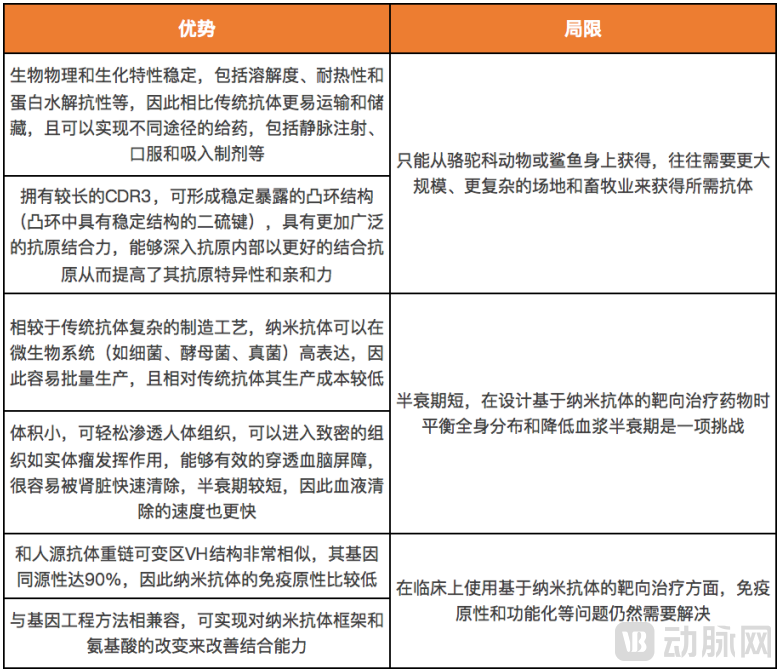
Advantages and Limitations of Nanobodies
According to publicly available research data, nanobodies are primarily obtained by isolating natural antibodies from species such as camelids and sharks, followed by in vitro recombinant preparation. Due to their small molecular weight and encoding by a single gene, nanobodies are relatively amenable to genetic engineering, thereby facilitating their development into therapeutic drugs. Nanobodies can be aggregated via short linker sequences to form multivalent or multispecific antibody structures.Overall, nanobodies can be classified into several categories, including monovalent nanobodies, multivalent/multispecific nanobodies, and fusion nanobodies.
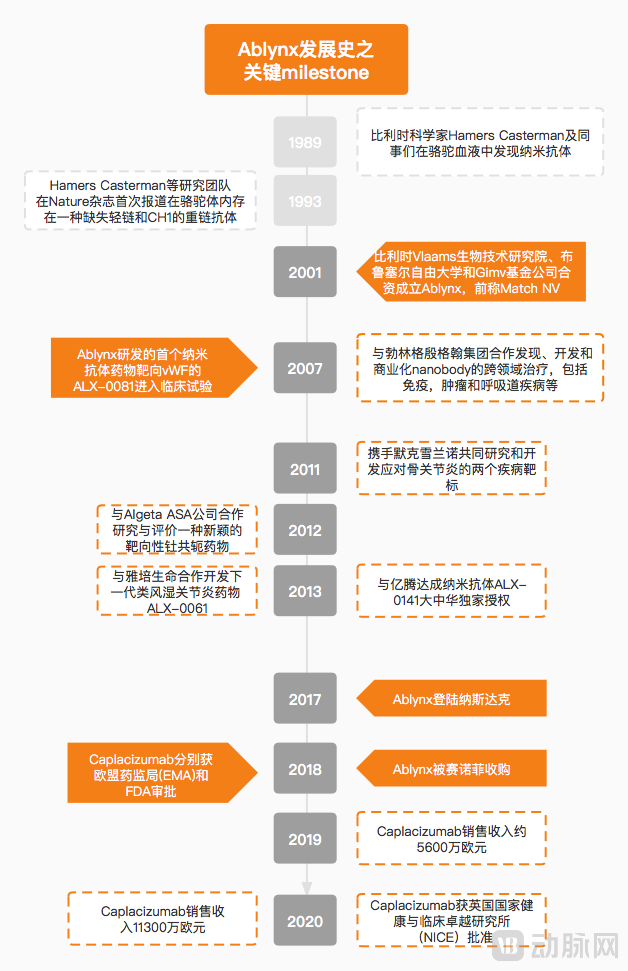
Key Milestones in the History of Ablynx
As a pioneer in the nanobody industry, Ablynx leverages its globally leading nanobody development technology platform to continuously develop or collaboratively create novel therapies for diseases with significant unmet medical needs. Founded in 2001, the company listed on the NASDAQ in 2017 and was acquired by Sanofi in 2018 for €3.9 billion ($4.8 billion).
After 17 years of arduous journey, Ablynx (acquired by Sanofi four years ago) has gradually propelled the nanobody drug industry to new heights.Cablivi (caplacizumab), a nanobody drug developed by the company, was approved for marketing in 2018. It is the world’s first marketed nanobody therapeutic and the first targeted therapy specifically indicated for adult acquired thrombotic thrombocytopenic purpura (aTTP).In addition, Ablynx has more than 40 nanobody drug candidates in development, spanning multiple therapeutic areas including immuno-oncology, hematology, infectious diseases, inflammation, autoimmune diseases, and respiratory diseases.
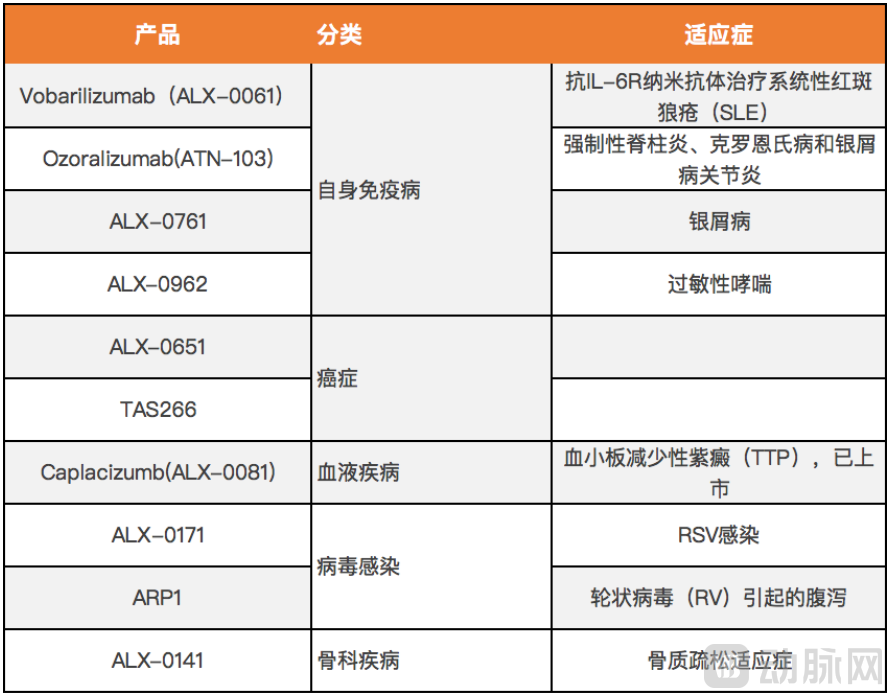
Ablynx’s Partial Product Pipeline
The star product Caplacizumab (brand name: Cablivi), which is already on the market, was approved by the EMA in 2018 for“Used in combination with plasma exchange and immunosuppression for the treatment of adults experiencing episodes of acquired thrombotic thrombocytopenic purpura (aTTP),” was approved by the FDA in 2019 for the treatment of adult patients with acquired thrombotic thrombocytopenic purpura (aTTP).
aTTP is a very rare, life-threatening condition characterized by widespread blood clotting in the small vessels throughout the body. This leads to insufficient blood and oxygen supply to vital organs, potentially causing stroke, heart attack, brain damage, or even death. The causes of aTTP are diverse and include cancer, HIV, pregnancy, lupus, infections, surgery, bone marrow transplantation, and chemotherapy. Patients with aTTP typically require daily plasma exchange therapy and immunosuppressive treatment. The disease has a high recurrence rate, and the mortality rate remains as high as 10–20%.
Cablivi is the first FDA-approved targeted therapy specifically for aTTP,It is a humanized immunoglobulin fragment containing only bivalent variable domains that targets von Willebrand factor (vWF), directly binding to the A1 domain of vWF to prevent its interaction with the platelet glycoprotein Ib-IX-V receptor, thereby reducing vWF-mediated platelet adhesion and consumption and preventing the formation of microvascular thrombi.
Apart from Cablivi, no other products in Ablynx’s pipeline have been approved for market launch. Among them, Ozoralizumab, a relatively representative candidate, has been licensed to Taisho Pharmaceutical for development in Japan and is currently at the marketing application stage; meanwhile, Vobarilizumab failed to meet its primary endpoint in Phase II clinical trials.
Ablynx holds an absolute leadership position in the field of nanobodies,The Company has established co-development or licensing collaborations with numerous renowned pharmaceutical companies, including Novartis, Novo Nordisk, Merck KGaA, MSD, AbbVie, Boehringer Ingelheim, and C-Triumph Pharmaceuticals.
According to data from AskCI Consulting, there are more than 50 approved bioengineered antibody-based drugs in China, and the domestic market for antibody-based pharmaceuticals has grown to exceed RMB 20 billion. Traditional antibody-based therapies have been dominated by monoclonal antibodies; in recent years, a series of innovative antibody drugs have emerged, including bispecific antibodies, multispecific antibodies, antibody-drug conjugates (ADCs), and antibody fusion proteins, with nanobodies also playing an important role.
To address the druggability challenges of nanobodies, relevant studies have demonstrated that genetic engineering and chemical modifications can be employed as effective solutions. By constructing diverse nanobody fusion molecules, such as Fc-fused nanobody fragments, it is possible to effectively activate antibody-dependent cellular cytotoxicity (ADCC) in vivo. Furthermore, fusion with human serum albumin (HSA) can significantly extend the in vivo half-life of nanobodies, thereby improving their pharmacokinetic profiles. Nanobodies can also be engineered into bispecific antibody formats while retaining their tissue penetration capabilities, leading to broad applications including bispecific nanobodies and multivalent multispecific antibodies.
Compared with traditional antibodies, nanobodies naturally lack light chains, which can greatly simplify steps such as separation and purification, significantly improve product quality, and therefore offer substantial advantages in process manufacturing.
According to incomplete statistics, global nanobody drug candidates are being developed across multiple therapeutic areas, including oncology, immunological diseases, inflammatory diseases, and antibody-neutralized toxins. Currently, the vast majority of these products are in Phase I or Phase II clinical trials, indicating that the industry as a whole is still in its early stages.
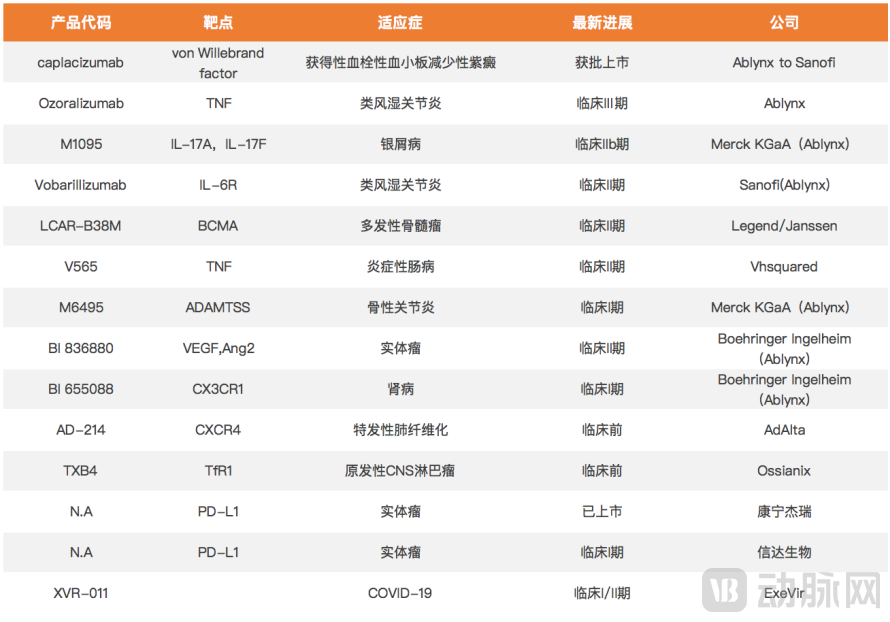
Representative Nanobody Drug Products and Their Development Progress
Currently, companies in China that are deploying nanobody applications mainly fall into three categories: the first comprises those developing nanobody-based therapeutics, with representative enterprises including Alphamab Oncology, Etern Medical, Nanjing Jingzhun Biotechnology, Beijing Shuoxing Biotechnology, and Shanghai Luqi Biologics; the second focuses on the application of nanobodies in CAR-T cell therapy, with representative enterprises including Nanjing Legend Biotech, Shenzhen Puruijin Biotechnology, Suzhou Boshengji Biotechnology, and Shanghai Cell Therapy Group; the third category consists of CDMO companies, including Chengdu Apac Biotechnology, Shenzhen Kangti Life Science, and Aikangde Biotechnology.
Furthermore, given the advantages of nanobodies—such as low production costs, minimal propensity for aggregation and mutual interference in multi-target settings, strong tissue penetration, and ease of engineering—they can be leveraged to develop low-cost, multi-target CAR-T products. This approach is also expected to address the challenges associated with CAR-T therapy for solid tumors.
The nanobody industry is currently experiencing rapid upward growth. Domestic companies interested in this field are welcome to contact VCBeat New Medicine for collaborative discussions, working together to support the development of the entire industry and accelerate China’s progress in catching up with international leaders in this area.