

Digital and AI Health White Paper Released: Core Driver of Future Industry Growth and Catalyst for Competitive Landscape Transformation
Editor’s Note: This article is from China Renaissance Capital. Authors: Li Rui, Zhang Yizhou, Yi Chuanqi, Hu Binyu, Hu Tianmou. Republished with permission by VCBeat.
Core Viewpoints
1. Digitalization will become the core driver of future growth in the healthcare industry, leading a new round of changes in the competitive landscape. Driven by a combination of factors—including policy support, technological iteration, market evolution, and the normalization of pandemic control measures—the healthcare industry is embracing digital technologies as never before, comprehensively advancing into the era of “digital governance.” Digital technologies are reshaping, or are poised to reshape, the healthcare industry. Over the past year, primary market transaction activity in the digital health sector has increased significantly, the number of companies filing for IPOs has surged, and initial public offerings have achieved remarkable growth.
2. Regulatory policies are accelerating the supply-side reform of healthcare into a critical phase, compelling the entire industry chain—upstream and downstream—to reduce costs, improve efficiency, and ensure strict legal and regulatory compliance. Key stakeholders, including pharmaceutical companies, hospitals, and insurers, must respond promptly and proactively to meet these regulatory demands. These demands range from implementing end-to-end digital traceability for pharmaceutical products targeting drug manufacturers, to advancing hospital informatization reforms led by the full coverage of electronic medical records (EMR) in Grade III hospitals, and encouraging the development of commercial health insurance as the primary secondary payment platform amid increasingly constrained basic medical insurance payments.
3. Cutting-edge technologies are flourishing and emerging in rapid succession, injecting a continuous stream of new momentum into the industry.
(1) AI-driven drug discovery in China is currently in the validation phase, having rapidly transitioned from the start-up stage to the growth stage, with future efforts gradually shifting toward the mid-to-late stages.
(2) Medical robots have reached a critical juncture for clinical validation, with surgical and rehabilitation robots gaining the highest industry recognition; commercial breakthroughs that further increase installation rates and utilization rates are highly anticipated.
(3) Extended Reality (XR) is gaining momentum and will gradually be applied to various scenarios, including disease treatment, clinical assistance, rehabilitation training, medical education and training, and medical nursing, thereby delivering unprecedented user experiences and innovative diagnostic and therapeutic pathways;
(4) The nascent emergence of digital twins is poised to drive commercialization in healthcare, with initial adoption occurring on both the pharmaceutical enterprise and patient sides—particularly in applications such as digital drug trial models, precision medicine, and health monitoring and management.
(5) As digital therapeutics (DTx) gradually mature, DTx companies that exhibit the “three haves and three highs”—namely, clear indications and mechanistic rationale, robust evidence-based medical support, and identified payers, coupled with a large patient base, high growth rates, and strong willingness to pay—will continue to attract capital attention. This is particularly evident in fields such as ophthalmology and mental health. The first-mover advantage of leading enterprises will enable them to rapidly widen their gap with competitors.
4. Frequent instances of IPOs breaking issue price and valuation inversions in the secondary market for healthcare have signaled a shift toward greater market rationality going forward.
First is the rational analysis of demand, specifically determining whether a sector represents genuine or pseudo-demand, assessing the rigidity of such demand, and evaluating whether the market size and growth ceiling are sufficiently large;
Second, a rational assessment of commercialization: whether the business model is theoretically viable and practically executable by the team, and whether stakeholders are genuinely willing to pay, along with the magnitude and sustainability of their willingness to pay;
Third, rational reflection on regulation: whether today’s logic will remain valid tomorrow, whether current policies will continue to apply in the future, and, against the backdrop of medical insurance cost containment and “vacating the cage to change the bird” (i.e., phasing out low-value services to make room for high-value innovations), what pathways offer sustainable long-term development.
5. Key Sectors Under Capital Spotlight and Worth Anticipating in 2022:
● Supply Side: AI-driven drug R&D, smart pharmaceutical enterprises, smart hospitals, and digital drug companions
● Demand Side: Myopia prevention and control in adolescents, adolescent mental health, smart rehabilitation for the elderly, early screening for lung cancer and Alzheimer’s disease, women’s health, and emerging sectors combining consumer services with healthcare
● Payer Side: Healthcare IT and health insurance technology companies, differentiated innovative commercial insurance products
I. What Major Changes Occurred in 2021
In 2021, driven by a confluence of factors—including policy support, technological iteration, market evolution, and the normalization of pandemic control—the healthcare industry is embracing digital technologies with unprecedented momentum, comprehensively advancing into an era of “digital governance.” Digital technologies are reshaping, or poised to reshape, the healthcare and medical industry. Never before has innovation, exemplified by digital technology, garnered such widespread attention, emphasis, and participation across the entire healthcare sector. Stakeholders throughout the industry appear to have tacitly reached a consensus: digitalization will become the primary driver of industrial scale growth and serve as a watershed moment in the new round of global industrial competition.
Due to its high compliance requirements and low level of digitalization, the healthcare industry has become one of the most important scenarios for the practical application of digital technologies. The industry itself is undergoing structural changes as its digital maturity increases. The enormous industrial value embedded in this transformation has successfully reignited capital interest in digital health.
(I) Digital Healthcare Seizes a Transaction Boom, Facilitating the Transition from Old to New Growth Drivers in the Industry
1. Looking back at the past year, 2021 marked the starting point of the capitalization upcycle for digital health.
(1) Significant Surge in Primary Market Transaction Activity in the Digital Health Sector in 2021
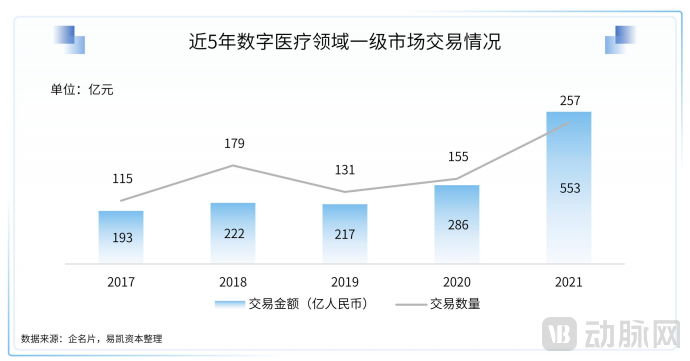
Based on market transaction data from the past five years, the average transaction amount in 2021 nearly doubled compared to the preceding four-year average. In 2021, China’s digital health sector recorded 257 financing deals, with a total funding amount of RMB 55.3 billion, representing year-on-year increases of 66% and 93%, respectively. The average size per financing round was approximately RMB 200 million.
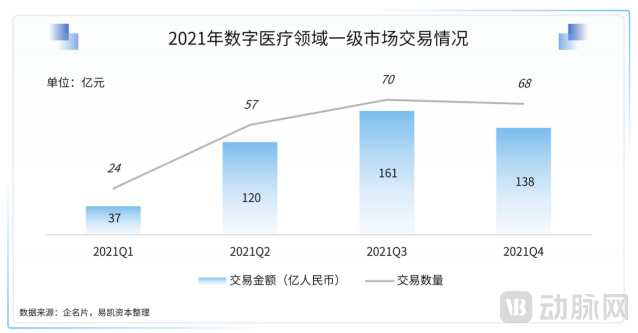
Quarterly, based on the timing of public relations announcements for financing events, the primary market for digital health has maintained strong momentum since the second quarter of 2021, with several large-scale financing deals occurring.
On the one hand, amid the pandemic, the contactless nature of remote digital healthcare and its system automation continued to play a significant role in addressing strained medical resources and avoiding crowd gatherings. This rapidly educated the user base, allowing the market to recognize the convenience and efficiency brought by healthcare digitization, thereby sustaining its utility in the post-pandemic era. On the other hand, the first wave of internet healthcare companies capitalized on the dividends of this market shift. After four to five years of development, by 2021 they had entered the mid-to-late stages, with their businesses nearing maturity. Naturally attracting strong investor interest, they drove the overall financing pace across the digital healthcare sector. Meanwhile, as some financing activities were delayed due to the pandemic, certain deals initially planned for 2020 were completed in 2021, indirectly contributing to the overall growth in financing that year. Finally, benefiting from the continuous development and upgrading of digital infrastructure—such as 5G, smartphones, medical data, and AI—the digital healthcare sector has entered a fast lane of accelerated growth, garnering increasing market attention and laying the foundation for its explosive expansion.
(2) Digital Health Sector Sees Leap in IPO Issuances in 2021
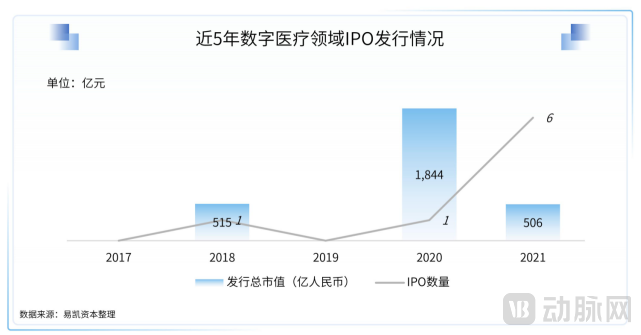
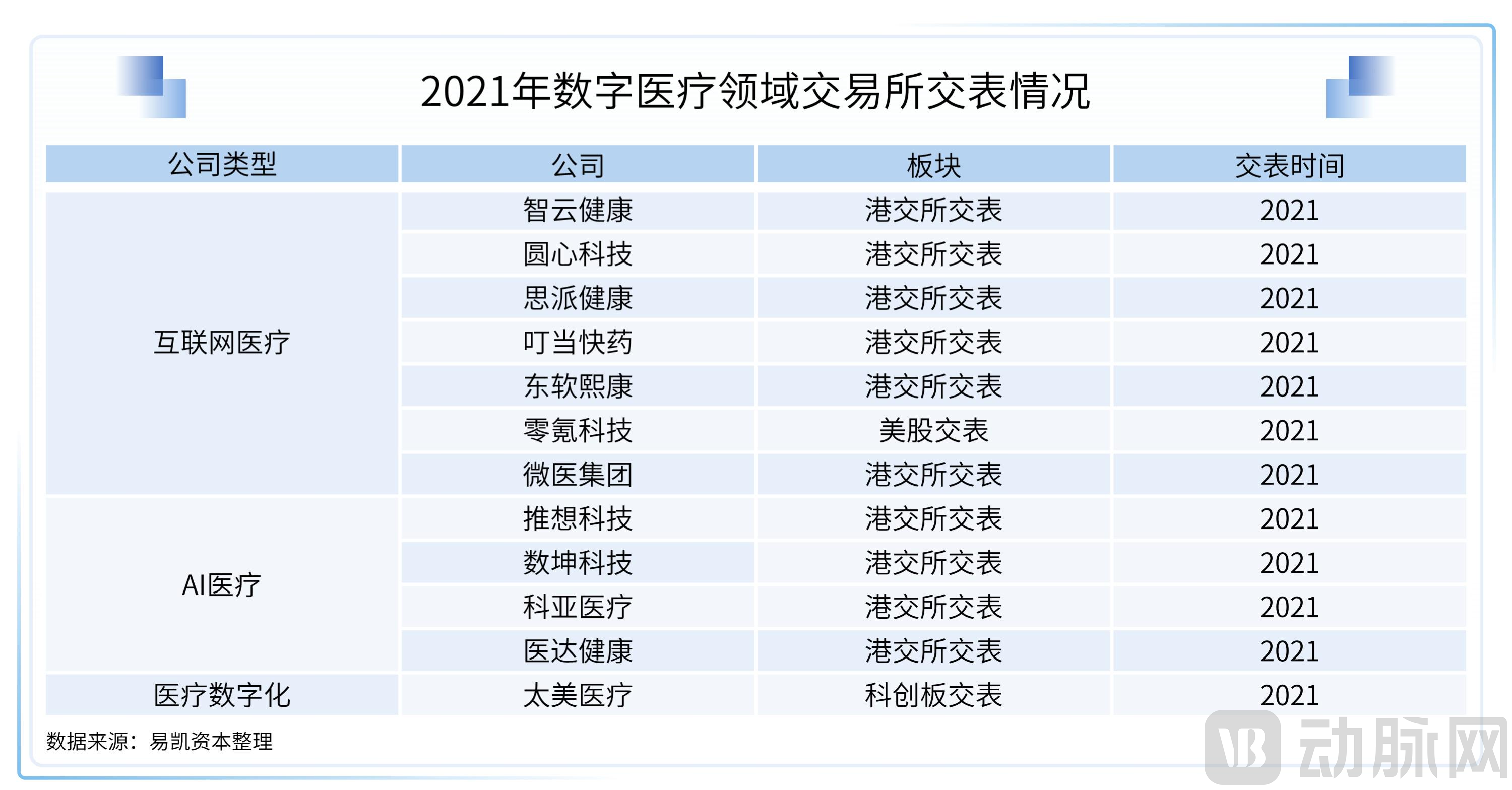
In 2021, six companies went public through initial public offerings (IPOs), with a combined issuance market capitalization reaching RMB 50.6 billion. The roster of IPOs in the digital health sector shifted from companies incubated by large platforms to independently market-oriented enterprises. This marks a validated pathway from the primary market to IPOs in the digital health sector, indicating on one hand that some companies in this field have matured and gained public recognition, and on the other hand providing venture capital funds with more certain expectations for market exit routes.
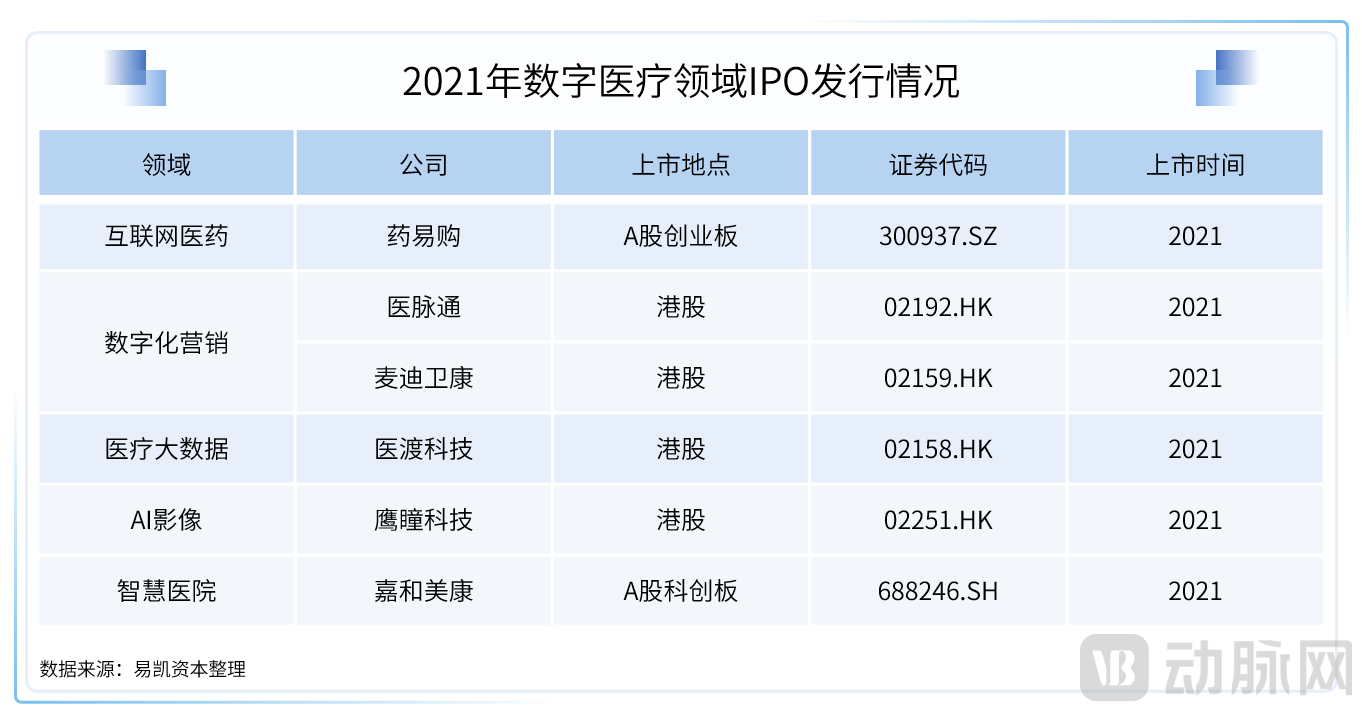
In terms of stock price performance, influenced by the overall cycle of the secondary market, the digital healthcare sector saw varying degrees of correction in the four companies listed on the Hong Kong Stock Exchange as of December 31, 2021, while the one company listed on the A-share market demonstrated a counter-trend rise. This situation will also have a certain impact on future IPO planning for companies.
3) In 2021, the number of IPO filings in the digital health sector experienced an explosive surge
In addition to the six companies that successfully went public, the number of digital health firms filing for initial public offerings (IPOs) in 2021 far exceeded the total from all previous years combined. A total of 12 companies submitted IPO filings, with 10 choosing the Hong Kong Stock Exchange, one opting for the U.S. stock market, and one listing on the STAR Market of China’s A-shares. This trend indicates that the first wave of companies in the digital health sector is gradually maturing and actively pursuing IPOs.
2. Digital Healthcare Is Gradually Evolving from “Internet + Healthcare” to “Healthcare Digitalization”
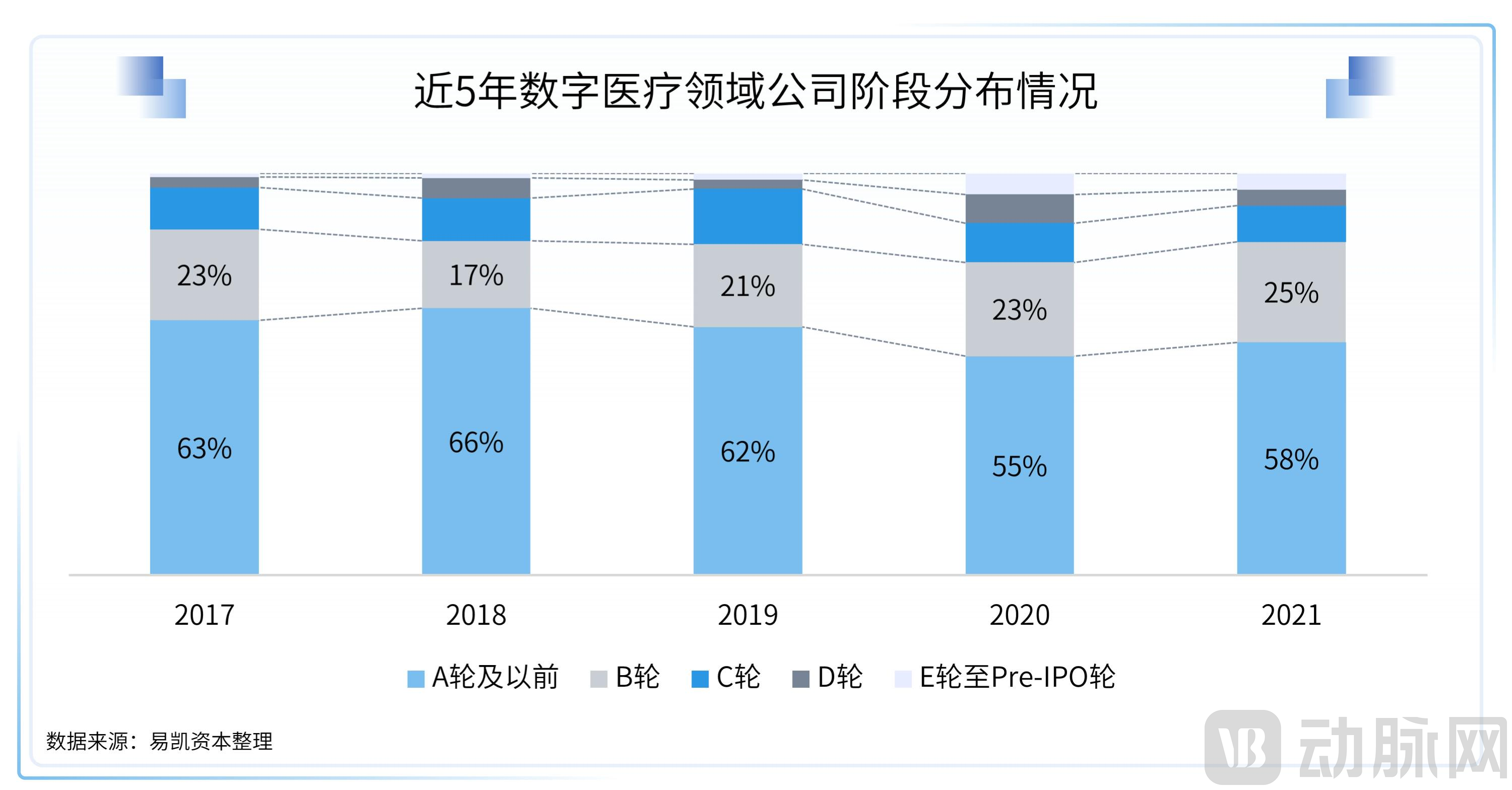
Most companies in China’s digital healthcare sector remain in the early to mid-stages, with the overall industry continuously maturing. While the competitive landscape in certain segments has gradually become clear, leading-tier companies are taking the lead in pursuing initial public offerings (IPOs). The year-on-year increase in the proportion of projects at Series D to Pre-IPO stages further underscores that the digital healthcare sector has transitioned from early-stage exploration onto a fast track toward maturity.
In the field of digital health, a cohort of companies founded and rapidly growing around 2015 became the first wave of digital health firms integrating the internet with healthcare. Typified by pharmaceutical e-commerce, these companies were the earliest to reap the dividends brought about by market shifts, while also sharing common characteristics:Leveraging internet technology as its foundation to enhance the efficiency of out-of-hospital processes, with the business model ultimately monetizing through “pharmaceuticals.”, achieving rapid growth in commercial revenue and subsequently going public or filing for IPOs within a few years. As pioneers of digital health, this wave of companies successfully brought the sector into the public spotlight and ignited an investment boom in the digital health field.
Since around 2019, market understanding of the first wave of digital health has continuously evolved. Further catalyzed by the subsequent pandemic, the second wave of digital health companies has garnered significant capital appreciation, gradually shifting toward “healthcare digitalization.” Typical representatives include AI-based medical imaging and departmental/clinical digitalization. These companies have moved away from the aggressive, high-profile “Internet Plus” approach, instead focusing more on the core essence of healthcare.Digitalization enhances the efficiency of in-hospital diagnosis and treatment processes. Payers are shifting their focus toward pharmaceutical companies or hospitals, while monetization models can be realized through services, software, or specific products.. Some of these companies have reached the mid-stage of development, beginning to demonstrate potential and trends in the scale of commercial revenue, and have become the backbone of the current digital health sector.
Over the past two years, numerous companies have continued to emerge in the market, further solidifying the essence of “medical digitalization.” Digital therapeutics (DTx), as a typical representative, delves deeper into the core of healthcare through digital means, supplementing or replacing traditional medical approaches to diversify treatment options and bring hope for symptom relief to patients. These companies are still in the early stages of development, and we look forward to their future progress.
(II) The Pandemic Has Catalyzed a Fundamental Transformation in the Digital Healthcare Industry
Digital healthcare has played a significant role in various scenarios to effectively support the prevention and control of the COVID-19 pandemic. An era represented by digital healthcare has quietly arrived with the normalization of the epidemic. The COVID-19 outbreak has greatly accelerated the development of digital healthcare within a short period and, to some extent, reshaped the regional landscape of the pharmaceutical and health industries.
1. Internet Healthcare
Over the past few years, relentless exploration within the industry has led to a flourishing of internet healthcare models, giving rise to diverse business formats such as digital health, health consulting, and pharmaceutical e-commerce. However, many of these services have remained on the periphery of core medical care. The first golden era of Chinese internet healthcare briefly faded from the spotlight of capital markets following the IPOs of numerous pharmaceutical e-commerce companies. Spurred by the pandemic, the internet healthcare sector has experienced a resurgence in investor interest, emerging as a valuable asset capable of addressing practical challenges in medical consultation and treatment. Influenced by COVID-19, the government has encouraged residents to seek online medical consultations to reduce physical gatherings. In 2021, user bases across all segments of internet healthcare platforms expanded, with the total number of users increasing by approximately 15 million. Among these, appointment and consultation platforms saw the largest absolute growth in users, adding around 5.7 million, while pharmaceutical e-commerce platforms recorded the highest growth rate at 38.5%.
However, digital healthcare still faces significant challenges. The ultimate indicator of qualitative transformation in service models and quality lies in how to integrate underlying digital capabilities with institutional innovation, streamline health insurance payment mechanisms, establish a closed-loop system for “pharmaceuticals and medical services,” and achieve synergistic coordination among these three elements within the institutional framework.
2. Hospital Digitalization
Amid the pandemic, digital transformation has profoundly impacted hospital service systems, with traditional film-based imaging diagnostics upgraded to digital films. During the COVID-19 outbreak, AI healthcare companies have developed an “AI + CT” model for medical imaging diagnosis. This approach helps reduce misdiagnoses and missed diagnoses, assists primary healthcare institutions in identifying infected individuals, serves as an effective tool for determining clinical cases of COVID-19, and buys critical time for the rapid isolation, diagnosis, and treatment of patients. AI-assisted imaging diagnosis is currently the most mature application area in AI healthcare and is poised for significant growth under the new normal of pandemic control.
3. Telemedicine
5G remote transmission technology has broken through the spatial limitations of medical resources and doctor-patient interactions, facilitating more efficient communication and exchange among healthcare providers. Currently, hospitals in Wuhan are interconnected via 5G technology, with the West Campus of Wuhan Union Hospital successfully establishing connections with Beijing Chaoyang Hospital and Beijing Friendship Hospital. In addition to remote consultations between Beijing and Hubei Province, regions such as Sichuan, Chongqing, Zhejiang, and Jiangsu have also leveraged 5G-enabled diagnostics and treatment during the pandemic, achieving comprehensive, barrier-free remote mobile consultations. The deployment of 5G network coverage in hospitals will be prioritized, accelerating innovative applications of 5G across a broader range of medical scenarios.
(3) Regulatory Policy Guidance to Promote Supply-Side Reform in Healthcare
2021 was a year of dramatic shifts in the policy landscape. The government introduced robust policies to strengthen industry regulation, targeting the primary payers in the digital healthcare sector: hospitals, pharmaceutical companies, and insurers. These policies were fundamentally guided by compliance and legality. Initiatives such as the full-process digital traceability of pharmaceuticals for drug manufacturers, and hospital informatization reforms led by the comprehensive coverage of electronic medical records (EMR) in all tertiary hospitals, established a compliance-driven foundation for digital transformation across the industry. Beyond compliance requirements, and in response to increasingly constrained basic medical insurance payments, regulatory policies have fully encouraged the development of a secondary payment platform dominated by commercial health insurance, designed to complement basic medical insurance effectively.
The development of industries related to digital healthcare is closely intertwined with policy; in certain sectors, policy serves as the core driver propelling industrial growth. For pharmaceutical companies, policies such as volume-based procurement and the consistency evaluation of generic drugs have fundamentally altered their profit models. Consequently, rather than increasing investment in sales and marketing, the paramount priority—akin to a corporate lifeline—has become controlling R&D, production, and manufacturing costs, while significantly enhancing efficiency in critical operations to ensure survival in a highly competitive market. For hospitals, the central theme in the second phase of healthcare informatization reform is how to meet the demands of this wave of change while leveraging digital tools to improve both management standards and clinical care quality.
1. Pharmaceutical Companies: The "Major Test" of Informatization Is Imminent; Regulatory Drivers Are Propelling All Types of Pharmaceutical Enterprises Fully into the "Era of Digital Governance"
Following the implementation of the Drug Administration Law of the People’s Republic of China and the Vaccine Administration Law of the People’s Republic of China, the National Medical Products Administration (NMPA) revised the Appendix on Biological Products in accordance with Article 310 of the Good Manufacturing Practice for Drugs (2010 Revision). This appendix was issued on April 23, 2020, as a supporting document to the Good Manufacturing Practice for Drugs (2010 Revision), and came into effect on July 1, 2020. With regard to Article 59 of the Appendix, enterprises that use information systems with real-time data acquisition for record-keeping were granted a transition period due to the time required for IT infrastructure development; they were required to meet the relevant requirements by July 1, 2022. For pharmaceutical companies specializing in biological products, 2021 marked the inaugural year for building such information systems, with the major assessment of IT infrastructure readiness approaching rapidly in July 2022.
The release of this revised appendix has imposed new requirements on the informatization of Chinese pharmaceutical enterprises, while also presenting fresh challenges and opportunities for China’s biologics industry, represented by vaccines. Prior to 2021, regulatory policies primarily focused on the drug distribution sector, yielding initial results in overseeing sales and procurement activities. As supervision over the distribution channel continues to improve, regulatory attention has increasingly shifted toward R&D traceability and production safety within pharmaceutical companies.
With the advent of the era of digitalized production, first, the primary medium for production records will change. Production lines and systems will need not only to collect real-time data through information technology but also to archive such data in electronic form, thereby creating reliable electronic batch records. Second, production informatization poses greater challenges to the management of manufacturing processes. In the past, due to the lagging level of informatization in pharmaceutical enterprises, real-time recording of production processes relied mainly on manual transcription, which raised concerns regarding data credibility, data security, and compliance, thus significantly affecting the quality of pharmaceutical production. This issue will be improved or even resolved with the application of continuous monitoring technologies, thereby prompting enterprises to continuously enhance their process management capabilities. Finally, production informatization challenges the quality management of pharmaceutical enterprises. New informatization systems and electronic record requirements will change the way quality events are communicated in production and testing operations: whereas previously communication relied solely on the transfer of paper records and verbal exchanges, there is now the business flow push functionality of informatization systems. To address this, enterprises need to establish new pathways for managing and handling quality events and ensure effective interaction of quality event data across multiple informatization systems, thereby guaranteeing timely recording and resolution of quality events during vaccine production and testing.
As the “top performers” in their sector, biological products will be the first to face the challenges of information technology (IT) infrastructure development. We believe that with the continuous improvement of regulatory mechanisms, production digitalization will become an imperative for pharmaceutical companies across more product categories. However, “Rome was not built in a day.” For manufacturing departments, particularly those in vaccine companies, implementing and testing new systems or upgrading existing systems, processes, and control measures, as well as coordinating relationships among functional departments such as quality assurance, quality control laboratories, and information technology, will entail a substantial workload. Meanwhile, for regulatory bodies overseeing quality compliance, strengthening the regulatory framework will also facilitate the standardized upgrading of the industry.
2. Hospitals: From Individual Products to Comprehensive Data Interconnectivity, Policy Guidance Drives the Construction of Fully Smart Hospitals
Since the official launch of the Hospital Smart Service Grading Assessment in August 2019, the National Health Commission has required hospitals across 31 provinces and municipalities to submit assessment data in phases. Hospitals in various regions have responded actively by advancing the development of smart hospital services. Furthermore, on September 17, 2021, the Bureau of Medical Administration and Hospital Management under the National Health Commission issued the Notice on Conducting the 2021 Hospital Smart Service Grading Assessment and Smart Management Self-Assessment. The Notice stated that it would comprehensively assess secondary-level and above hospitals that utilize information systems to deliver smart services and implement smart management, and assign grades for both hospital smart services and smart management.
In recent years, the National Health Commission of China has continuously refined its evaluation system for smart hospitals, with the core objective of guiding and directing medical institutions to comprehensively transition from informatization to intelligent upgrading. The national evaluation framework for “smart hospitals” comprises three major components: first, an assessment of the level of clinical informatization in hospitals, represented by the Electronic Medical Record (EMR) System Analysis and Evaluation Standards, which establishes a graded classification of EMR system application levels (revised in December 2018); this evaluation system covers all clinical information systems within hospitals. Second, a graded evaluation of patient services, namely the Hospital Smart Service Graded Assessment Standard System (released in March 2019). Third, a graded classification of smart hospital management, which evaluates and grades the level of managerial informatization in hospitals (draft released in August 2019). From the continuous evolution of these policies, it is evident that the smart hospital evaluation system has been refined into a three-pronged assessment and grading framework targeting smart services, smart medical care, and smart management. In fact, the rating results are directly linked to the performance appraisal of public hospitals, thereby compelling hospitals to place genuine emphasis on informatization development.
Currently, the information systems in most hospitals have entered a replacement phase, and traditional standalone IT modules will face significant challenges due to business upgrades. Furthermore, how hospitals leverage innovative digital tools to provide smart services to patients will become a critical pathway for their transition from informatization to intelligentization.
3. Payment: The CBIRC vigorously promotes industrial innovation and exploration; the next phase of health insurance still awaits a breakthrough following the era of million-yuan medical insurance
On January 16, 2022, the China Banking and Insurance Regulatory Commission (CBIRC) issued the “Report on Issues and Recommendations for the Development of Commercial Health Insurance in China” to life and health insurance companies. The Report pointed out that commercial health insurance has played a positive role in supporting the Healthy China initiative, facilitating the construction of a multi-tiered medical security system, and promoting the development of the health industry. However, it also acknowledged that China’s commercial health insurance sector remains in its early stages of development, with significant shortcomings in product supply and claims services. Major issues include inadequate risk protection capabilities, low levels of specialized operational expertise, and elevated business risks.
Since 2015, when a wave of insurers led by ZhongAn and Taikang rushed to launch innovative million-yuan medical insurance products, the health insurance industry has experienced six years of ups and downs. As the coverage of these policies reached a certain scale, their growth momentum has begun to wane, revealing signs of “waning stamina.” This trend is driven by multiple internal and external factors, including sluggish insurance consumption amid the pandemic, competition from city-specific supplementary medical insurance (Huiminbao), and product homogenization. Furthermore, due to the relatively extensive management practices of some market participants, issues such as misleading marketing, distorted product design, and unreasonable coverage terms have become increasingly prominent, leading to strict regulatory rectification and standardization.
The health insurance sector, encompassing policy and regulations, major insurers, and social medical resources, presents a complex commercial and social challenge. Designing relevant products and aligning supporting services constitute significant difficulties. The Report indicates that, in terms of risk coverage, commercial health insurance products suffer from severe homogenization. There is limited supply of mid-to-high-end medical services, and the coverage of certain popular products overlaps substantially with that of basic medical insurance, failing to provide an effective supplement. From an operational perspective, the level of specialized management in commercial health insurance remains low, with insufficient integration with health management and inadequate synergy with the broader health industry.
In January 2021, the China Banking and Insurance Regulatory Commission (CBIRC) issued the Notice on Regulating Issues Related to Short-Term Health Insurance Business. The Notice, comprising 13 articles, standardizes the operational and management practices of short-term health insurance from aspects including product design, renewal, sales, claims settlement, and discontinuation. It explicitly stipulates that short-term health insurance policies shall not guarantee renewability, strictly prohibits marketing short-term health insurance as long-term health insurance, requires insurance companies to disclose the overall loss ratio of their short-term health insurance business every six months, and strictly forbids the arbitrary discontinuation of short-term health insurance products.
In fact, since the implementation of new regulations on short-term health insurance, many insurance institutions have begun to explore and launch long-term versions of million-yuan medical insurance products. This move aims to establish differentiated competition with Huimin Bao (city-specific supplemental medical insurance) by highlighting the advantages and capabilities of long-term coverage. Notably, in addition to optimizing renewal terms, many million-yuan medical insurance policies are focusing on differentiated offerings in terms of coverage responsibilities, starting to address the healthcare protection needs of the mid-to-high-end market. In the future, to further enhance product competitiveness, insurers will continue to upgrade and innovate in value-added services, such as providing green channels for medical treatment, advance payment for medical expenses, and assistance in securing appointments with specialist physicians.
In the long term, the implementation of insurance products for non-standard and pre-existing condition populations will serve as a significant source of incremental growth and supplementation for the health insurance market. Data service companies that predict mortality and morbidity risks for specific populations, and based on these predictions provide product pricing for insurers and reinsurers, while also delivering risk control systems and refining risk management rules for these special groups, will become a key pillar of growth.
(IV) The Impact of Frontier Technologies on the Industry
1. Continuous Advancement of AI in Drug Discovery and Development
As an emerging interdisciplinary field that has gained prominence over the past three years, AI-driven drug discovery has attracted rapid capital deployment and significant attention against the backdrop of robust global growth in innovative pharmaceuticals. Global R&D investment in new drugs continues to grow steadily, with an annual growth rate projected to remain at 4%–5% over the next five years. In China, policy measures such as centralized volume-based procurement and national reimbursement negotiations have prompted pharmaceutical companies to accelerate their transition toward innovative drugs. Consequently, the proportion of Class 1 new drug applications has risen substantially, while leading pharmaceutical enterprises continue to increase their marginal investments in new drug R&D.
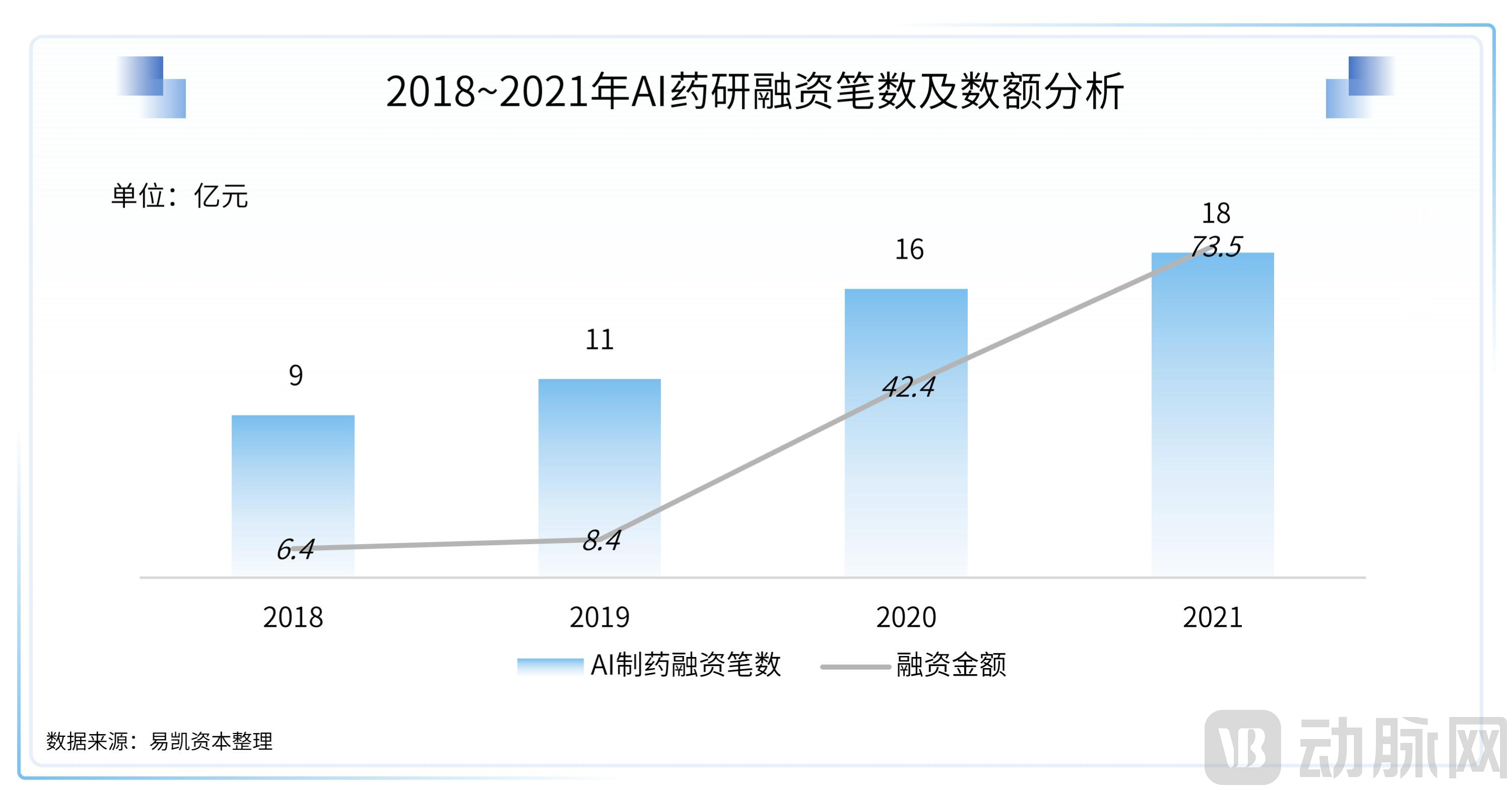
From 2018 to 2021, according to incomplete statistics, there were approximately 54 financing events in the AI-driven drug R&D sector across China, involving 190 participating institutions (including venture capital firms, funds, and industrial capital), with a total cumulative financing amount of nearly RMB 13 billion. The years 2020 and 2021 marked a significant turning point for China’s AI drug discovery industry, witnessing a doubling in both the number of financed projects and the overall financing volume. During this period, most AI drug development companies successfully transitioned rapidly from the startup stage to the growth stage, amid surging investor interest.
In terms of business models, China's AI-driven drug discovery industry remains in the validation phase, primarily encompassing:
1) AI-SaaS providers primarily offering software platform services: Delivering state-of-the-art computational software tools and leveraging extensive collaborations to accumulate larger datasets for algorithm iteration.;
2) AI-Biotech companies primarily focused on developing internal R&D pipelines: These companies mainly leverage AI to advance their proprietary pipelines, thereby accelerating the validation of their algorithmic platforms, and periodically license out maturing pipeline assets.;
3) AI-CRO companies that provide outsourcing services to pharmaceutical companies, CROs, and other drug R&D firms: They collaborate with numerous external enterprises to jointly advance pipeline development, charging fees and sharing revenues based on milestones, thereby sharing the risks of drug failure while enjoying the benefits of successful drug launches.。
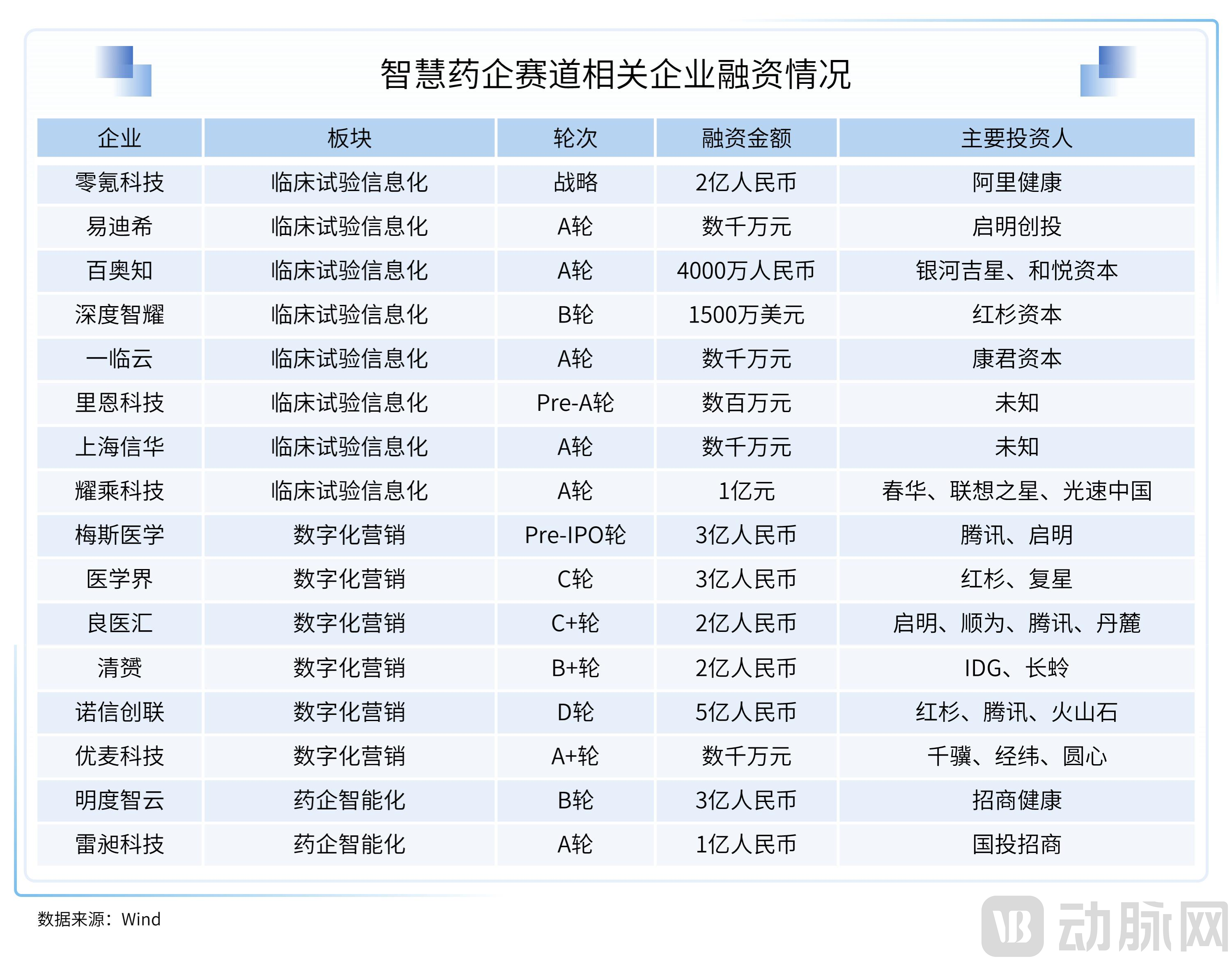
In terms of financing, capital in the industry is highly concentrated. In 2020, XtalPi secured over $300 million in funding, accounting for 70% of the total financing in China’s AI-driven drug discovery sector that year. In 2021, XtalPi completed its Series D round, raising $400 million—approximately 60% of the total AI drug R&D financing for the year—and achieving a valuation exceeding RMB 13 billion, thereby solidifying its status as a domestic industry unicorn. Other AI drug R&D companies, such as StarPharm and WisdomRock, have also successfully completed their Series B+ financing rounds. The rapid fundraising by leading companies has fueled capital enthusiasm and driven industry upgrades, prompting the emergence of more AI drug discovery startups within this niche segment. Currently, the sector remains in its early stages of development, with momentum expected to gradually shift toward the mid-to-late stages in the future.
2. Medical Robots Reach a Critical Juncture for Clinical Validation
In 2018, there were over 100 financing deals in the medical robotics sector alone, making it a hot spot for capital investment since then and maintaining its popularity to this day. From prototypes and concept machines at that time to varying clinical progress four years later, we have observed that many medical robotics companies (especially those focused on surgical robots) failed to reach a satisfactory stage of development. Many companies faced issues such as product instability and unsatisfactory clinical trial results. How to finalize concepts and truly manufacture stable medical robotic products that meet clinical needs remains a challenging question. The technical challenges of integrating hardware and software behind surgical robots test every startup team, while the vast gap between promising prospects and practical difficulties tests every investor and investment institution involved.
From the perspective of industry investment and financing, the investment enthusiasm in China's medical robotics sector showed a trend of first increasing and then decreasing from 2019 to 2022. Investment activity was relatively high in 2018, while it cooled down somewhat in 2022.
Medical robots widely recognized by the majority remain concentrated in surgical and rehabilitation robotics. Due to their direct involvement in surgical procedures, surgical robots demand exceptionally high levels of accuracy and precision, making them the most challenging category to manufacture. They are typically applied in orthopedic, abdominal, and other surgeries, helping to reduce postoperative pain and enhance operational precision. These medical robots can simulate surgical procedures and replace healthcare professionals in performing tasks that may cause harm to the human body. With advantages such as minimal error, high safety, and absence of physiological fatigue, they help reduce labor costs, assist healthcare workers, provide precise surgical services, and shorten postoperative recovery time.
Although the development prospects of medical robots are generally viewed favorably, and systemic investment opportunities in the medical robot industry are widely considered promising by capital markets, the contradiction between installation rates and utilization rates persists across the sector. Underutilization remains a significant challenge facing the entire medical robotics industry.
Although medical robotics face numerous challenges, some companies have successfully navigated these difficulties to establish leading positions in the industry. These enterprises have finalized their product designs, achieved satisfactory interim results from clinical trials, and garnered substantial support from industry experts. As healthcare reforms deepen and the pandemic induces profound industry transformations, medical robots remain essential tools for hospitals in the post-pandemic era. The implementation of volume-based procurement (VBP) policies has exceeded expectations; with high-value consumables for major conditions such as orthopedics and cardiovascular diseases included in VBP programs, the traditional hospital revenue model reliant on consumable sales will be fundamentally reshaped. Consequently, the proportions of drug and consumable revenues will decline significantly, creating an urgent need for hospitals to identify new revenue centers. Innovative medical services enabled by innovative medical devices, led by robotic systems, have continuously enhanced their efficacy and functionality through clinical accumulation in recent years. From the listing of Tinavi Medical Technologies to the spin-off of MicroPort MedBot, the capital market has demonstrated ample confidence and support for China’s medical technology innovations.
We believe that innovative medical services, represented by medical robots, will become the core hallmark and revenue center for hospitals. The adoption of innovative products will increasingly differentiate hospitals from one another. Patients are also more inclined to seek care at medical institutions equipped with innovative service capabilities. As pricing items for innovative medical services continue to be established, the procurement of innovative medical devices will significantly stimulate innovation within China’s medical device industry, driving its gradual transition from catch-up growth to global leadership in innovation.
3. Extended Reality Is Gaining Momentum
Video immersive technologies such as VR (Virtual Reality), AR (Augmented Reality), and MR (Mixed Reality) are collectively referred to as Extended Reality, or “XR.” XR is poised to further transform medicine.
Among these technologies, VR is the most mature, having been applied across various aspects of healthcare with remarkable success. Over the past few decades, scientists have gradually discovered the therapeutic effects of VR in ophthalmology and neuropsychiatry. As a significant complement to traditional pharmaceuticals, medical devices, and surgical procedures, VR has been increasingly utilized in disease treatment and clinical assistance scenarios. AR technology overlays virtual information onto real-world environments; for instance, by projecting holographic organs onto anatomical models to aid navigation, it provides clinicians with “X-ray vision” during clinical surgeries. MR technology offers surgeons the convenience of directly viewing patients’ computed tomography (CT) and magnetic resonance imaging (MRI) scans in 3D format. This helps surgeons identify specific anatomical structures relevant to the planned procedure, thereby facilitating more effective surgical outcomes. Additionally, smart glasses can record simulated surgeries and provide trainees with real-time vital signs data.
Currently, the application of XR in medical scenarios in China is still in its early stages. At present, the market penetration rate of XR remains significantly lower than that of other electronic devices. User education and market acceptance require long-term cultivation, while the technological maturity of the upstream and downstream supply chains and pricing factors are also key determinants influencing the large-scale adoption of XR.
We believe that XR will gradually permeate all aspects of the healthcare sector, delivering unprecedented user experiences and innovative diagnostic and therapeutic pathways. Based on value orientation and commercial feasibility across various scenarios, this integration can be broadly categorized into three tiers.The preferred approach is (1) XR+ disease treatment, such as vision impairment therapy (amblyopia, strabismus, myopia, presbyopia, etc.) and neuropsychiatric/mental health applications (autism spectrum disorder, attention deficit, Alzheimer's disease, depression, anxiety, etc.).Second is (2) XR + Clinical Assistance, such as sedation and analgesia (replacing the use of fentanyl/midazolam in scenarios like cancer pain, labor pain, surgical pain, and post-traumatic stress disorder) and surgical visualization systems (providing anatomical structures and intraoperative navigation). Then comes (3) XR + Rehabilitation Training, including 3D simulated limb training, cognitive function training, fitness scenarios & datafication, and virtual coaches;(4) XR+ Medical Education and Training, including panoramic video instruction and surgical simulation training; (5) XR+ Medical Nursing, such as urinary catheterization simulation, postoperative stoma care simulation for breast and colorectal cancer, perioperative pressure ulcer management, and cardiopulmonary resuscitation (CPR) simulation.
4. Early Signs of Digital Twins Emerge
Digital Twin is a virtual entity created digitally to represent a physical entity. It is a technological approach that leverages historical data, real-time data, and algorithmic models to simulate, validate, predict, and control the entire lifecycle of the physical entity.
Digital twins have been applied in multiple fields due to their characteristics such as interoperability, scalability, real-time capability, fidelity, and closed-loop functionality. The primary application demands for digital twins in the healthcare sector are:
1) For government: Enhance the coverage and efficiency of urban diagnosis and treatment, and promote the rational allocation of urban medical resources through intelligent technologies such as mobile monitoring, mobile clinics, wireless remote consultations, smart prescriptions, and cloud storage of medical information;
2) For pharmaceutical companies: Digital simulation of “virtual patients” may shorten the time required for new drugs to progress from the design phase to general availability and improve success rates;
3) Patient-Oriented: By leveraging patient health records, medical history, medication history, and monitoring data from smart wearable devices, a “medical digital twin” can be established for each patient in the cloud. Supported by technologies such as biochips, augmented analytics, edge computing, and artificial intelligence, this digital twin simulates human physiological processes to enable predictive analysis of individual health status and precise medical diagnosis.
Of course, digital twins still face numerous challenges in practical applications. The first challenge lies in data and security: for instance, ensuring consistency in multi-dimensional, multi-scale data acquisition; the inability to guarantee the stability and accuracy of data transmission; and deficiencies in processing efficiency and secure storage capabilities for massive datasets. The second challenge pertains to business models: such as insufficient application value, poor compatibility, and unclear profitability models. Additionally, there are challenges in the integration and interoperability of multiple systems: including data ambiguity, unclear data correlations, the need for improved data availability and quality, difficulties in fusing multi-source heterogeneous data, lack of uniformity in communication interface protocols and related data standards, and imperfect mechanisms for data sharing and openness.
We believe that the applications of digital twins with significant commercial potential in the healthcare sector will first be realized on the pharmaceutical company side and the patient side.
1) Digital Drug Trial Models: “Digital twins” of human organs and systems are becoming increasingly realistic, providing the theoretical and technical foundation for pharmaceutical companies to explore disease mechanisms and conduct drug trials through digital drug trial models, thereby avoiding costly human or animal studies. Initiatives such as the U.S. “Living Heart” project and the EU’s “NeuroTwin” project have introduced new paradigms and scenarios for drug development. In the future, a growing number of open-source digital drug trial models will be developed, optimized, and utilized, potentially replacing animal or human trials altogether.
2) Precision Medicine: Leveraging medical digital twins, physicians can collect and analyze patients’ health big data—including genetic information, lifestyle habits, family medical history, and clinical records—to develop personalized and targeted treatment plans and medications, thereby achieving precise diagnosis and therapy.
3) Health Monitoring and Management: In the realm of personal health monitoring and management, digital twins enable a clearer understanding of physiological changes and provide timely warnings for diseases or behavioral anomalies (such as stroke or abnormal postures indicative of falls in the elderly).
5. Digital Therapeutics (DTx) Gradually Maturing
Digital therapeutics offer a novel therapeutic option beyond existing conventional pharmacological treatments, non-pharmacological interventions (such as surgery, radiation therapy, and physical therapy), and psychological and behavioral therapies. As software applications (Apps), digital therapeutics (DTx) primarily treat diseases by modifying patients’ lifestyles and behaviors, exerting effects equivalent or similar to those of conventional medications in disease treatment and prevention. They can also be used in combination with other drugs or medical devices to enhance therapeutic efficacy. DTx not only serves as a complement to traditional treatments but also pioneers an entirely new therapeutic modality. Therefore, DTx can be regarded as “digital drugs,” which are essentially special “medicines” subject to stringent regulation comparable to that for conventional pharmaceuticals and medical devices, albeit delivered in the form of software applications. A defining feature of DTx is that its clinical safety and efficacy are substantiated by clinical evidence, and it has obtained certification and approval from regulatory authorities.
2021 marked the breakout of the “digital therapeutics” (DTx) concept. According to publicly available data, 59 DTx projects in China completed 127 transactions in 2021, with participation from 180 investment institutions and cumulative financing nearing RMB 4.3 billion. Financing activity was skewed toward early-stage investments, gradually gaining momentum in mid- to late-stage rounds. Based on relevant forecasts, the industry maintains a positive outlook on the future of DTx, with the overall market size expected to grow at a robust rate.
In certain sectors, where access to medical services is extremely limited and the breadth and depth of payer coverage are both weak, therapeutic digital therapeutics have been able to attract a substantial base of self-paying users. The purely essential self-pay segments primarily target the elderly and children, who demonstrate strong willingness and motivation to pay. Psychiatry, ophthalmology, and broader mental health are currently the key areas being explored for digital therapeutics. Digital therapeutics companies with core product pipelines focused on autism, Alzheimer’s disease, and pediatric strabismus and amblyopia received significant capital investment in 2021.
Of course, digital health has its inherent limitations. Self-paying users often exhibit high churn rates and low adherence, which may impose a ceiling on the addressable revenue scale for digital therapeutics (DTx) companies. In this context, leveraging new payers to expand revenue and achieving a comprehensive B2B2C transformation will be the primary direction for future exploration. Currently, China’s commercial insurance market remains relatively underdeveloped, and the standard medical insurance market has initially entered a "red ocean" stage of intense competition. Consequently, all health management and intervention-related services will become important customer acquisition tools for insurance capital, a trend that will substantially drive the development of digital therapeutics in the medium to long term. Furthermore, pharmaceutical companies are likely the most interested stakeholders in digital therapeutics. It is entirely possible for pharma companies to incorporate DTx services as adjunctive treatment plans for patients. However, whether pharmaceutical companies have sufficient profit margins to afford such procurement is difficult to generalize against the backdrop of centralized volume-based procurement.
We believe that digital therapeutics must satisfy three key characteristics to have the opportunity to develop a relatively mature and stable business model.First, digital therapeutics (DTx) target conditions for which there are no effective specific pharmacological treatments; thus, DTx will serve as a critical component of diagnostic and therapeutic regimens. Second, there must be an appropriate payer structure for the conditions addressed by DTx, with out-of-pocket payment driven by essential medical needs currently serving as the primary reimbursement mechanism. Third, DTx must demonstrate genuine clinical efficacy, validated through both clinical trials and real-world use cases. In 2022, the DTx sector—characterized by clear out-of-pocket payment models, proven efficacy, and validation—will continue to attract significant capital attention. Leading companies will rapidly widen their competitive advantage over peers through first-mover benefits while further refining their profitability models.
II. Key Transactions in the 2021 Market
(I) Major IPOs in the Digital Health Sector in 2021
1. Medlive
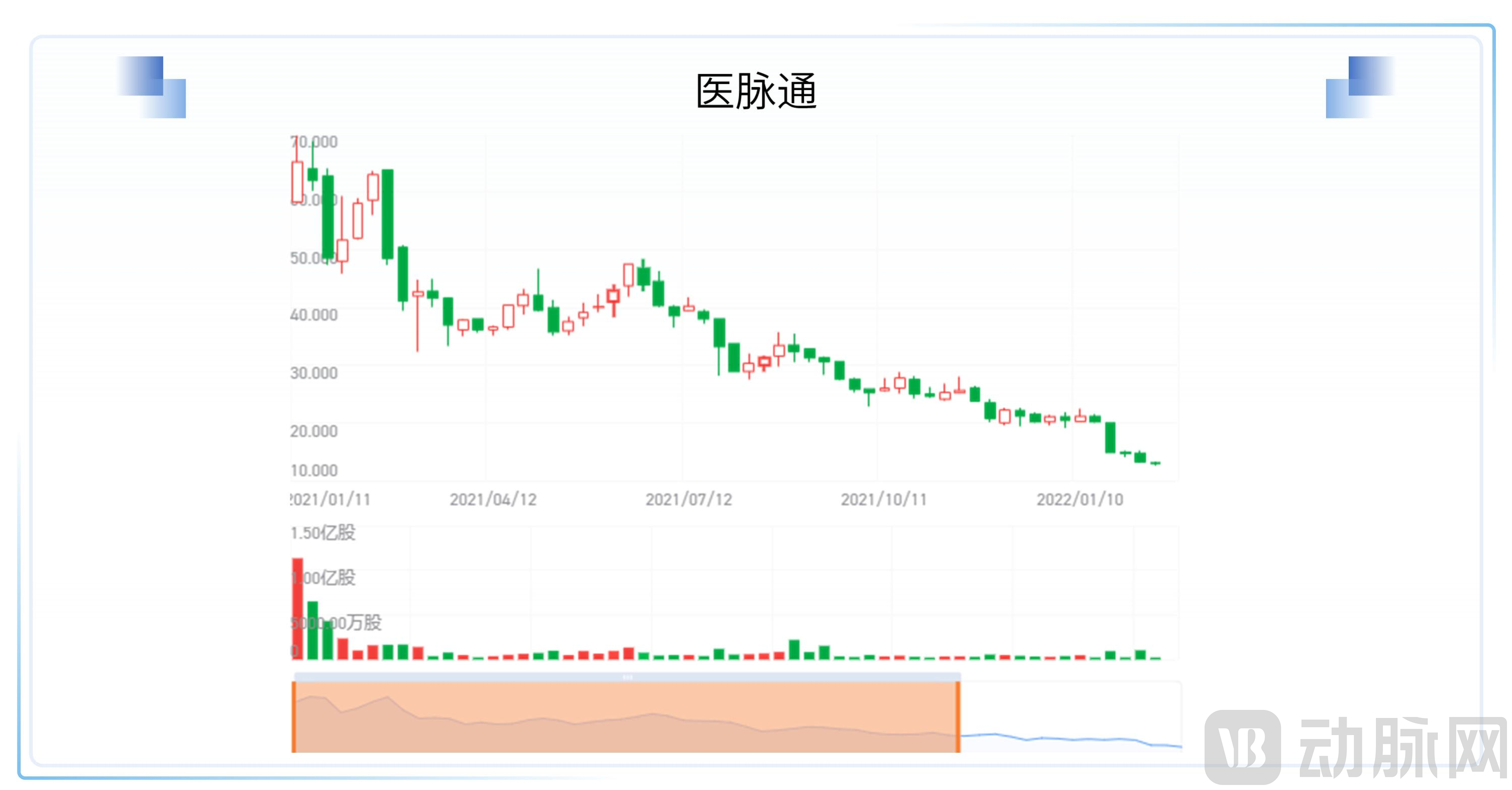
Medlive Technology Co., Ltd. (Stock Code: 02192.HK) successfully listed on the Main Board of the Hong Kong stock market on July 15, 2021. The company offered 155 million shares at an issue price of HK$27.2 per share, raising net proceeds of approximately HK$4.001 billion.
Medlive is an internet-based physician platform company dedicated to precision education for doctors. While providing professional medical information and services to physicians, it also offers targeted promotional services for pharmaceuticals and medical devices to companies in these sectors. One of Medlive’s core platforms, the Medlive website, is among the largest physician platforms in China, serving over 2.4 million physician users with comprehensive resources including drug information, academic updates, and career development support.
The listing of Medlive marks the gradual maturation of industries related to pharmaceutical companies, which are emerging as core payers in the pharmaceutical sector. Amid the industry-wide push for cost reduction and efficiency enhancement, pharmaceutical companies, as core payers, demonstrate strong willingness and substantial capacity to pay across sales, clinical, and intelligent control domains. Consequently, business models targeting pharmaceutical companies are being increasingly validated and have gained support and recognition from the capital market.
Medlive’s successful listing has heightened capital market interest in the digitalization of pharmaceutical marketing. In 2021, multiple pharmaceutical companies’ digital marketing arms sequentially completed growth-stage financing, marking a new phase in their business development. Against the backdrop of cost reduction and efficiency enhancement in the pharmaceutical industry following healthcare reforms, coupled with shifts in collaborative models among pharmaceutical enterprises in the post-pandemic “new normal,” digital marketing has rapidly unleashed significant market opportunities and potential.
In the future, pharmaceutical company-funded industries will expand rapidly. With policy support, the intelligent transformation of pharmaceutical companies will extend to core areas such as production, R&D, and clinical trials, becoming a key investment hotspot.
2. Airdoc
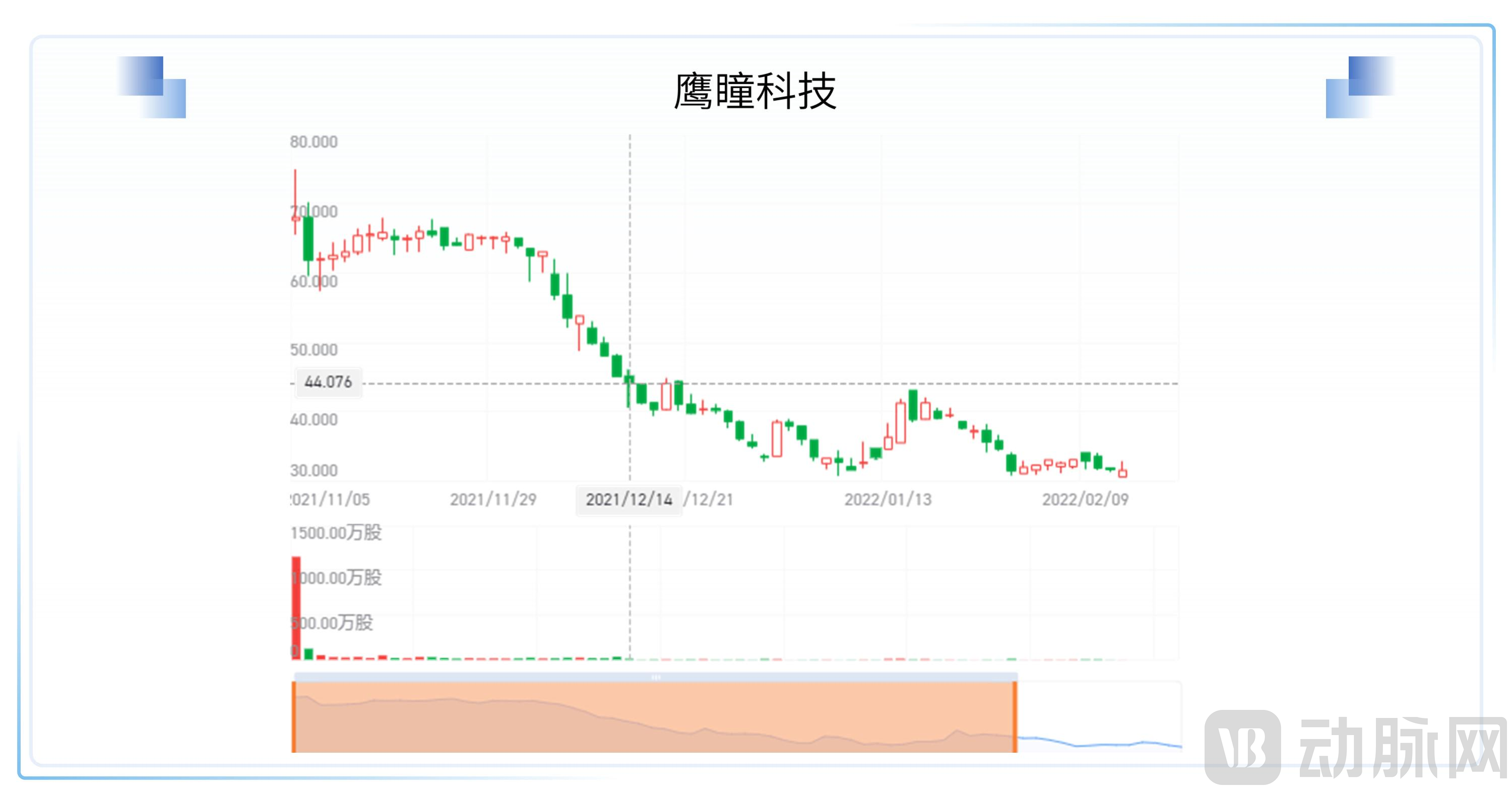
Airdoc Technology Inc. (stock code: 02251.HK) successfully listed on the Hong Kong Stock Exchange on November 5, 2021, marking the debut of the “first AI medical imaging stock.” Airdoc’s IPO price was HK$75.1 per share, with net proceeds from the Hong Kong listing amounting to HK$1.566 billion, and its market capitalization exceeded HK$7 billion.
Airdoc is one of the first companies in China to provide solutions for early detection, auxiliary diagnosis, and health risk assessment based on AI-powered retinal image recognition. By leveraging retinal imaging, multimodal data analysis, and deep learning algorithms, Airdoc enables non-invasive, accurate, rapid, effective, and scalable detection and diagnosis of chronic diseases for healthcare institutions and general health providers.
Since 2015, thanks to advancements in digital imaging and acquisition equipment, the availability of standardized medical data has become increasingly robust. The core competitive barrier of the industry has gradually shifted from initial data acquisition to innovation in algorithms and platforms. Although AI-driven segments such as digital eye, digital heart, digital liver, and digital brain have been progressively established and refined, and AI healthcare has developed rapidly, commercial competition has intensified accordingly, while commercial implementation remains a persistent challenge for these companies.
Fierce competition has propelled the emerging AI medical imaging industry into a consolidation phase ahead of schedule. From the current perspective, policy support and regulatory approval remain the two key enablers for the commercialization of AI enterprises’ products. Compared with 2020, supportive policies for AI have been successively introduced, and preliminary progress has been made in exploring reimbursement items for AI-based medical imaging services across various provinces and municipalities.
We believe that the AI medical imaging sector will continue to refine its focus around three key areas: “how to bring AI to more patients,” “how to address payment challenges,” and “how to effectively solve clinical problems.” From screening to diagnosis, and from diagnosis to population-wide screening, medical AI will deliver its core value to a broader population. Meanwhile, the dual drivers of approval and regulation are accelerating the reshuffling and upgrading of the AI medical imaging landscape. Only companies with truly robust products and viable business models will emerge as the ultimate leaders.
3. Yidu Tech
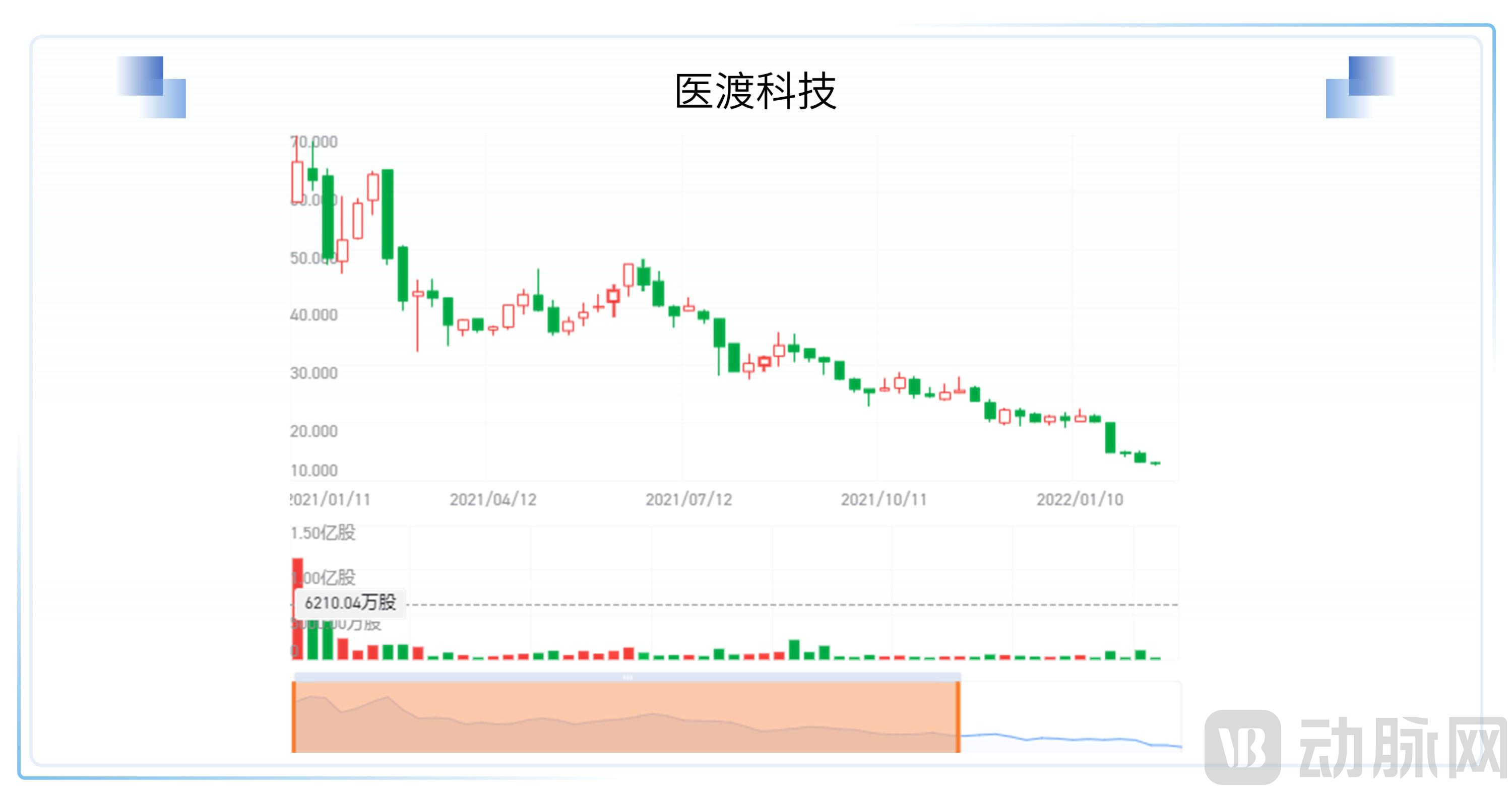
Yidu Tech (Stock Code: 02158.HK) successfully listed on the Hong Kong Stock Exchange on January 15, 2021. The global offering comprised approximately 156 million shares, with the offer price set at HK$26.3 per share, raising net proceeds of HK$3.9 billion. On its listing debut, Yidu Tech’s total market capitalization exceeded HK$58 billion, attracting significant attention from the capital markets.
Yidu Tech’s core product is its namesake platform, “Yidu Cloud,” which primarily provides healthcare solutions based on big data and artificial intelligence (AI) technologies to key stakeholders in the healthcare industry. The company delivers services to and collaborates with these major participants, including hospitals, pharmaceutical, biotechnology, and medical device companies, research institutions, insurance providers, physicians and patients, as well as regulatory authorities and policymakers.
As a next-generation provider of medical big data technology and artificial intelligence solutions, Yidu Tech has continuously iterated and upgraded its business model from the traditional single-sided approach serving hospitals and governments, expanding into digital CRO services for pharmaceutical companies and personal health management services. The success of this business transformation has garnered support from the capital market, while the innovative business segments have injected fresh growth momentum into Yidu Tech.
We believe that hospitals, medical communities, and medical alliances, as key stakeholders in the healthcare industry, urgently need to integrate and streamline their traditionally fragmented IT systems. The deep processing and analysis of large-scale, multi-source, heterogeneous medical data are critical, making the construction of next-generation digital intelligent cloud infrastructure a pivotal task. Against the backdrop of a promising long-term vision, the core challenge facing all stakeholders is how to systematically achieve the digital transformation of healthcare systems, represented by hospitals. On the path toward hospital digitalization, the era of traditional health IT vendors has come to an end, while competition among next-generation smart hospital product providers is just beginning. Product implementation and the development of flexible business models will become the focal points of competition in the hospital informatization market.
(II) Major Primary Market Transactions in the Digital Health Sector in 2021
1. Yuanxin Technology
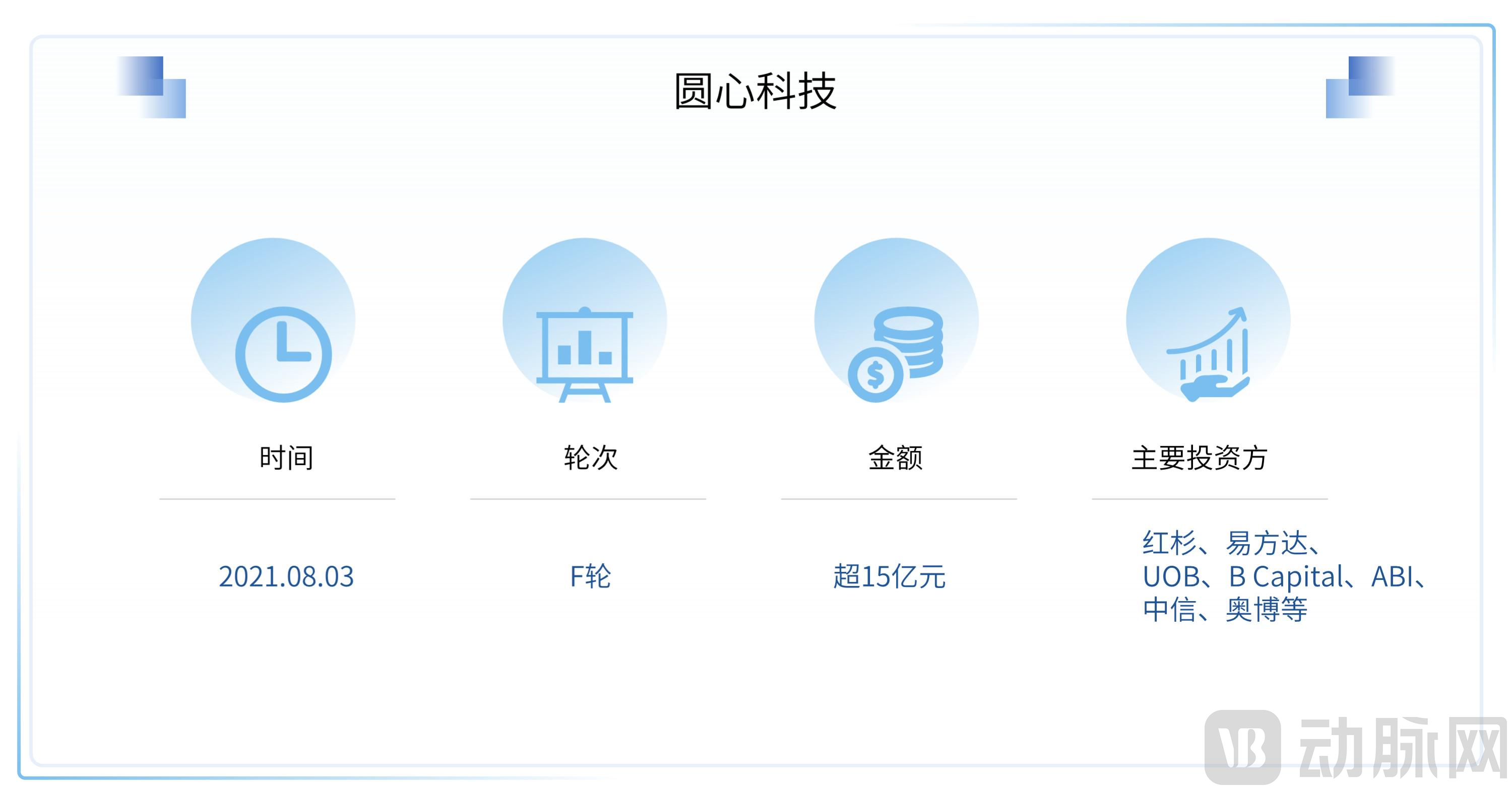
Yuanxin Technology is a comprehensive healthcare delivery platform focused on prescription drugs. Its current revenue is primarily driven by the sales of new and specialized drugs (i.e., innovative, highly complex, or high-diagnostic-and-treatment-demand medications), with a strategic presence in the pharmacy market adjacent to hospitals. This is complemented by the development of an online medical service platform to drive patient traffic to these hospital-adjacent pharmacies. The company has also made initial forays into the insurance business, positioning it as a key direction for future expansion. Under its umbrella, the internet healthcare brand Miaoshou Doctor operates as a nationwide professional online platform for follow-up consultations between doctors and patients, as well as a safe medication dispensing platform. By integrating segments such as Miaoshou Internet Hospital, the Miaoshou Doctor APP, DTP (Direct-to-Patient) chain pharmacies, and Yuanxin Huibao, the company leverages internet technology to create a closed-loop pharmaceutical service ecosystem encompassing “medical care, patients, pharmaceuticals, and insurance.”
Amid the broader trend of China’s healthcare reform to separate pharmaceutical prescribing from dispensing, Miaoshou Doctor, which had previously explored areas such as patient registration and consultations, was among the first companies to recognize the direction of healthcare policy changes and successfully establish a presence in the out-of-hospital pharmacy sector, pioneering China’s earliest DTP (Direct-to-Patient) pharmacy business model. The success of Yuanxin has truly broken new ground in integrating internet-based healthcare with pharmaceutical sales, establishing it as a viable and practical business model.
2. Mingdu Zhiyun
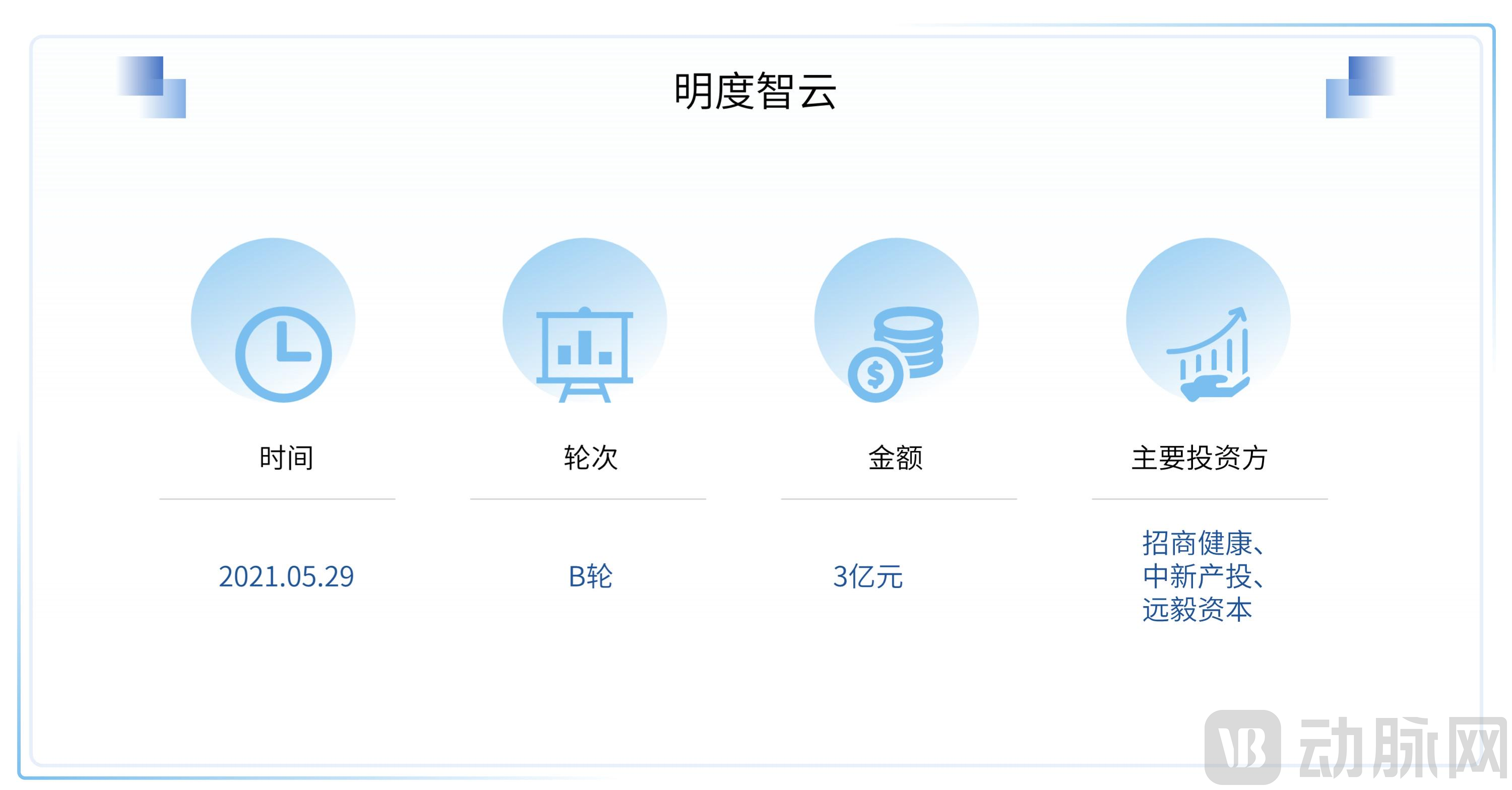
Mingdu Zhiyun is a high-tech enterprise dedicated to the comprehensive digital transformation of the life sciences sector. It provides pharmaceutical companies with full-lifecycle solutions spanning from R&D to production, helping them enhance R&D efficiency, ensure compliant and stable manufacturing, establish end-to-end traceability systems for smart pharmaceutical operations, and elevate their digitalization and intelligence capabilities, thereby contributing to the healthy development of the industry.
Mingdu Zhiyun is a leading vertical industrial internet platform in China, specifically tailored for the pharmaceutical manufacturing sector. Its forward-looking digital platforms for R&D, production, and logistics have become powerful tools accelerating the development of China’s pharmaceutical industry. Amidst the wave of healthcare reform and upgrading in China, Mingdu leverages its deep industry insights to assist Chinese pharmaceutical companies in gradually modernizing and upgrading their operations, thereby facilitating the comprehensive digital transformation of China’s pharmaceutical manufacturing sector.
3. Senyi Intelligence
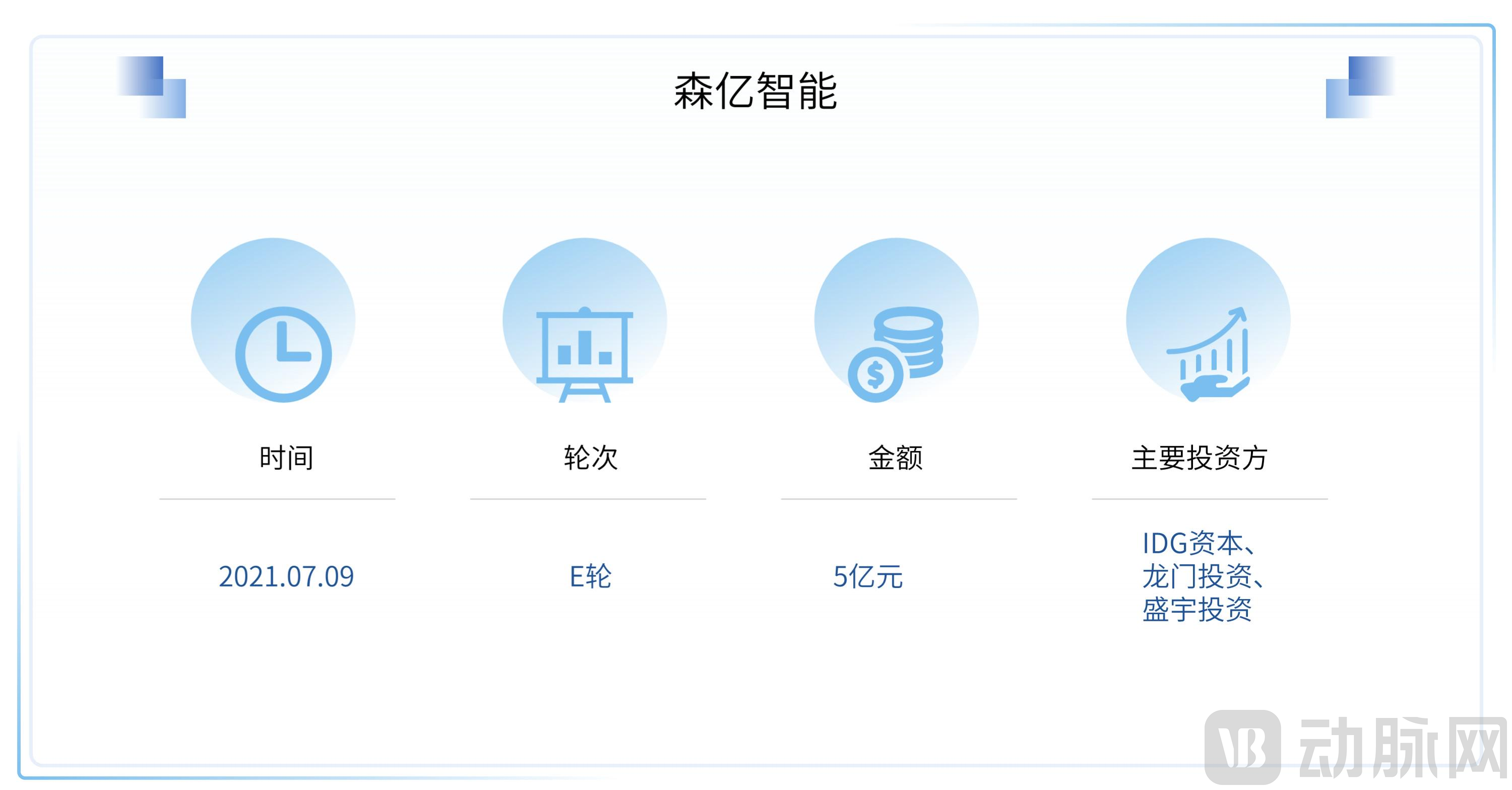
Senyi Intelligence is a provider of comprehensive solutions for smart hospitals in China. The company specializes in delivering professional and efficient digital and intelligent infrastructure solutions for hospitals, including intelligent clinical research, disease management platforms, lean clinical management, data governance, data integration, and real-world studies.
Against the backdrop of the 14th Five-Year Plan, hospitals are rapidly transitioning from informatization to an era characterized by datafication and intelligence. The future high-quality development of public hospitals will undoubtedly center on information technology infrastructure, refined management, and more precise medical care, all of which require deep integration of artificial intelligence. Data is paramount; it serves as the core component of informatization initiatives. Data quality is critical to the research and application of key data models and artificial intelligence. A new wave of smart hospital service providers, led by Senyi Intelligence, is progressively enhancing the digital and intelligent capabilities of hospitals. In the future, these providers will better empower the high-quality development of public hospitals.
4. Fourier Intelligence

Fourier Intelligence is a high-tech enterprise that leverages its independently developed core rehabilitation robotics technology as a foundational platform to provide globally leading, comprehensive intelligent rehabilitation solutions for medical institutions and patients worldwide.
Intelligent rehabilitation is a critical solution to address the current shortages of resources and manpower in the rehabilitation sector, and it will serve as a core strategy for coping with an aging society in the future. As a pioneer in the rehabilitation robotics industry, Fourier Intelligence boasts a portfolio of rehabilitation robots that feature leading-edge technology, complementary functionalities, and interconnected data systems. Its successful financing round in 2021 has drawn significant capital attention to the field of intelligent rehabilitation robotics, laying a solid foundation for the development of China’s intelligent robotics enterprises. The advancement of intelligent rehabilitation will provide robust support for the implementation of the national tiered diagnosis and treatment system. In the future, home-based and community-based rehabilitation are poised to replace traditional rehabilitation models, extensively bringing rehabilitation services and concepts into every household.
5. Infervision
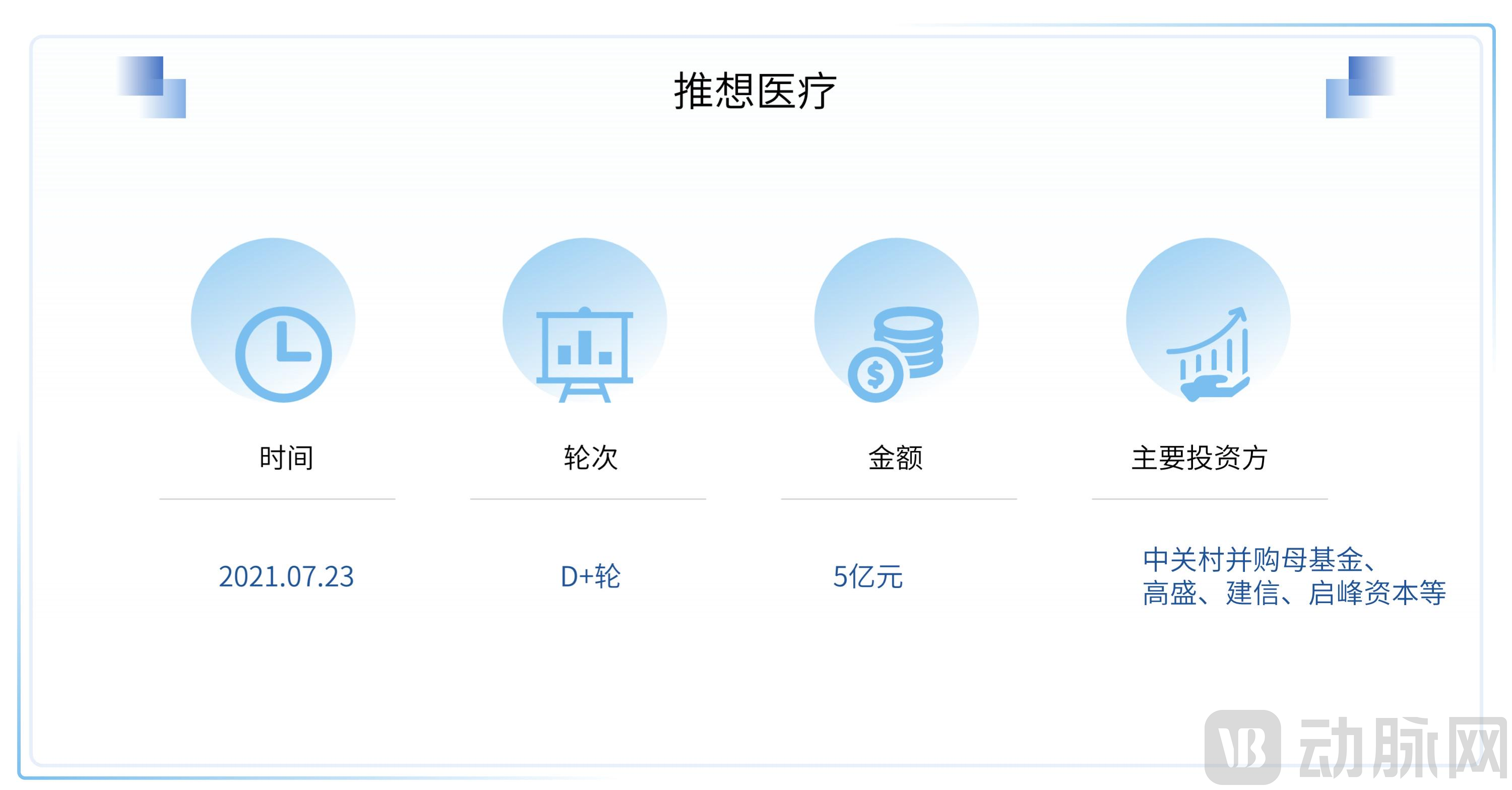
Infervision is an AI company specializing in AI-powered medical imaging interpretation, with comprehensive coverage of major diseases affecting multiple sites and organs, including the lungs, heart, brain, blood vessels, breasts, and bones and joints. It provides hospital clients with intelligent solutions spanning the entire healthcare workflow—screening, diagnosis, treatment, management, and research—with its products deployed in over 400 medical institutions across nearly 20 countries worldwide.
Infervision is among the first batch of AI medical imaging companies in China and has launched the country’s first FDA-cleared AI-assisted diagnostic product for lung diseases. The attention Infervision Medical has garnered in the capital market, along with its completion of Series D+ financing, undoubtedly represents a milestone in the AI diagnostics sector. However, the sector still broadly needs to address challenges related to business models and profitability. We believe that the AI medical imaging sector is entering the second half of its competitive landscape, where companies with genuine implementation capabilities and viable business models will still have opportunities to overtake their competitors.
6. Jianhai Technology
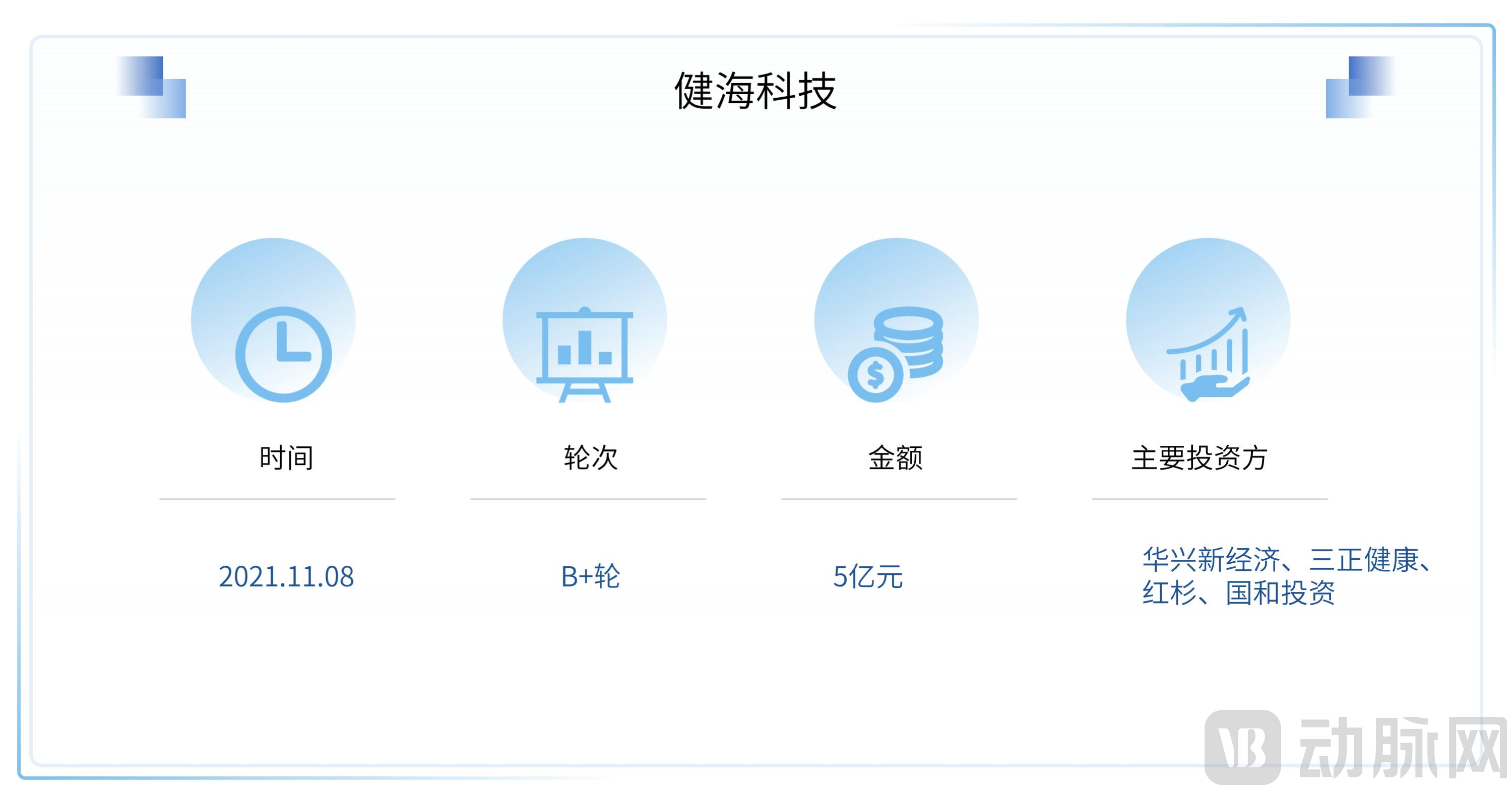
Jianhai Technology is a provider of cloud-based post-discharge follow-up services for patients. By deploying its cloud follow-up platform within hospitals, the company optimizes medical resources, assists physicians in managing patients outside the hospital setting, and supports pharmaceutical companies in delivering more precise and effective patient education and services.
Jianhai Technology specializes in the development and operational management of post-diagnosis disease management services. It is one of the few emerging modern enterprises in the industry capable of focusing on the post-hospital market to provide comprehensive, AI-driven whole-course disease management solutions. Post-diagnosis disease management and long-term care have always been critical components of case management. The Jianhai model has successfully transformed out-of-hospital patient management into a clinically effective, implementable, and sustainable business model. It addresses the multifaceted needs of patients, pharmaceutical companies, and hospitals, while enabling effective feedback of patient data. The company’s visionary mission—“Making Care a Potent Remedy”—has thus become a reality.
III. Key Investment Themes and Market Outlook for 2022
Reviewing the investment hotspots in the primary market and the overall performance of the secondary market in 2021, we believe that the keyword for investment this year is “rationality,” which encompasses several implications:
1. Rational reflection on needs analysis,Specifically, whether a sector represents genuine or pseudo-demand, the rigidity of such demand, and whether the market size and ceiling are sufficiently large;
Second, a rational approach to commercialization.Namely, whether the business model is theoretically viable and whether the team can practically execute it; whether stakeholders are genuinely willing to pay, as well as the magnitude and sustainability of their payments;
Third, rational reflection on regulation.Will today’s logic hold true tomorrow? Will current policies remain applicable in the future? Against the backdrop of healthcare cost containment and structural optimization (“swapping old for new”), what pathways offer sustainable long-term growth? In light of these fundamental considerations, we have conducted systematic analyses and in-depth comparisons to identify the most significant and promising investment themes and market forecasts for 2022, presented from the perspectives of supply, demand, and payment.
(I) Supply Side: The Trend of Domestic Substitution Persists, Digitalization Promotes Intensification, and Homogenization Drives Differentiation
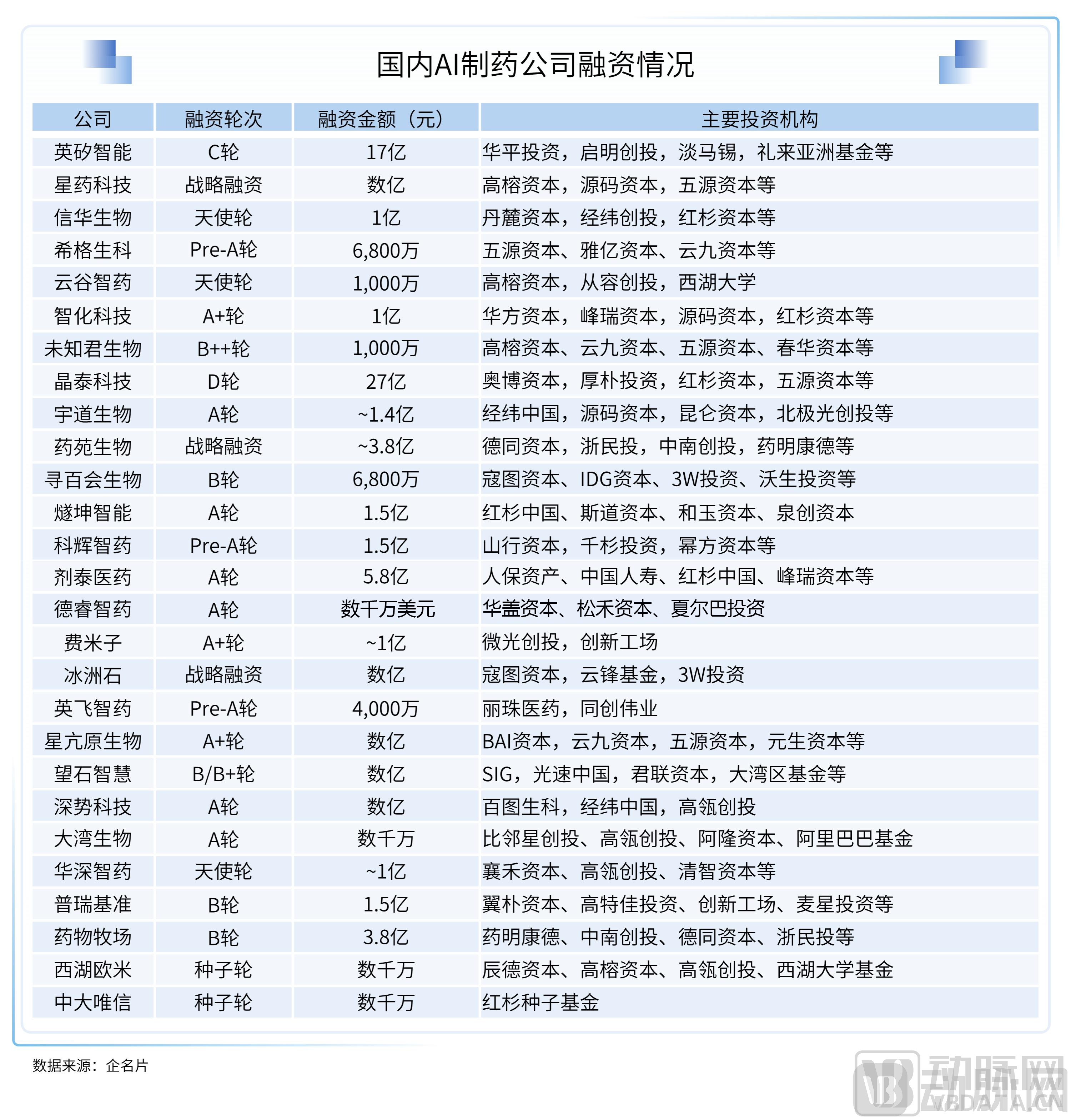
1. AI Drug Discovery and Development: Enhancing Success Rates and Shortening Development Cycles
Currently, AI-driven drug discovery remains in its early stages, with varying degrees of penetration across all phases and aspects of the drug development process. It has seen extensive applications ranging from basic research to target identification, biochemical activity assessment, and clinical trials. Among these, target discovery and compound synthesis are the most representative areas and constitute the primary focus of artificial intelligence (AI) adoption in new drug development. Nevertheless, there is still significant room for improvement in current AI applications, requiring substantial breakthroughs both in methodologies and in their integration with the pharmaceutical industry.
Externally, with the 2015 reform of the drug review and approval system as a starting point, the state has encouraged the development of innovative drugs through various measures, including registration and approval, medical insurance reimbursement, market launch regulations, talent policies, and patent protection, thereby significantly compressing the value space for “me-too” innovative drugs and generics. Internally, the need for pharmaceutical companies to reduce costs and increase efficiency has become pronounced, with the low efficiency of traditional R&D driving both pharmaceutical enterprises and capital to rapidly embrace AI.
China’s AI-driven drug discovery sector has evolved from its nascent stage in 2014–2015, through a period of stagnation in 2016–2017, to the substantial boom witnessed in recent years. This trajectory reflects the industry’s gradual maturation, with an increasing number of companies establishing stable and sustainable business models through iterative exploration. In terms of specialized segments, most AI-powered drug R&D firms currently focus primarily on small molecules. However, as algorithmic models and R&D paradigms continue to innovate and evolve, AI applications are beginning to take hold in the fields of large molecules and RNA, attracting growing attention. Looking ahead, companies capable of truly breaking through the industry’s ceiling will need not only to achieve substantive progress in their operational development but also to adapt their business models in response to the dynamics of China’s drug R&D market. Only by doing so can they successfully overtake competitors on the curve and emerge as the next unicorns.
Candidate drugs developed through overseas AI-driven R&D have entered clinical trials. The public listings of AI computational drug discovery companies, represented by Schrödinger and Relay Therapeutics, along with the involvement of multiple multinational pharmaceutical companies and internet giants, have served as catalysts for the surging interest in this field. On the other hand, the pandemic has driven unprecedented attention from capital markets toward the biopharmaceutical industry. As a sector with immense market potential, AI-enabled drug discovery continues to attract significant investment.
Regarding the pace of financing, as more companies move past their startup and growth phases, overall funding in 2022 shifted toward later stages. However, due to the impact of XtalPi’s listing timeline and the valuations of AI-driven healthcare and pharmaceutical companies in the secondary market, capital will continue to pay attention to the sector. Nevertheless, the industry is becoming more rational, leading to a corresponding slowdown in the financing pace for AI drug discovery. This broader trend poses greater challenges to companies’ business progress and their ability to generate internal cash flow.
2. Smart Pharmaceutical Enterprises: Policy-Driven, in the Post-Pandemic Era, Pharmaceutical Companies Are Fully Embracing the “New Era of Digital Governance”
The digital economy occupies a pivotal position in national strategy, with digital innovation emerging as a new growth engine and driving force for the pharmaceutical industry. For a long time, Chinese pharmaceutical companies have lagged significantly in digital maturity. However, driven by the profound shifts in the industrial landscape brought about by the pandemic, coupled with the continuous implementation of digitalization policies, pharmaceutical enterprises are now comprehensively stepping into a new era of data governance, whether proactively or reactively.
Pharmaceutical companies are facing the most stringent digital regulatory environment in the post-pandemic era, with policies extending from distribution oversight upstream to core links such as production and R&D. In this era of strict regulation, pharmaceutical enterprises need digital tools to address compliance requirements and achieve comprehensive cost reduction and efficiency gains, thereby mitigating the significant impact on product sales caused by policies such as volume-based procurement and the consistency evaluation of generic drugs. In the post-pandemic era, pharmaceutical companies are confronted with the reconstruction and innovation of multi-party collaboration models, making digital tools a critical weapon for adapting to the new normal.
Digital transformation is an inevitable path for the survival and development of pharmaceutical companies. It significantly enhances their concurrent processing capabilities, enabling them to transition from a single-core era to a multi-core era. Digital innovation will become a new growth point and driver for the development of the pharmaceutical industry. In 2021, the digitalization and intelligentization of pharmaceutical companies developed rapidly. As a key link in China's pharmaceutical industry, the digital market driven by their own development needs has ushered in vigorous growth. Among these, digital marketing services, digital clinical services, and digital intelligent upgrades are the core tracks for smart pharmaceutical enterprises, with digitalization continuously driving the intelligent upgrade of the pharmaceutical manufacturing industry.
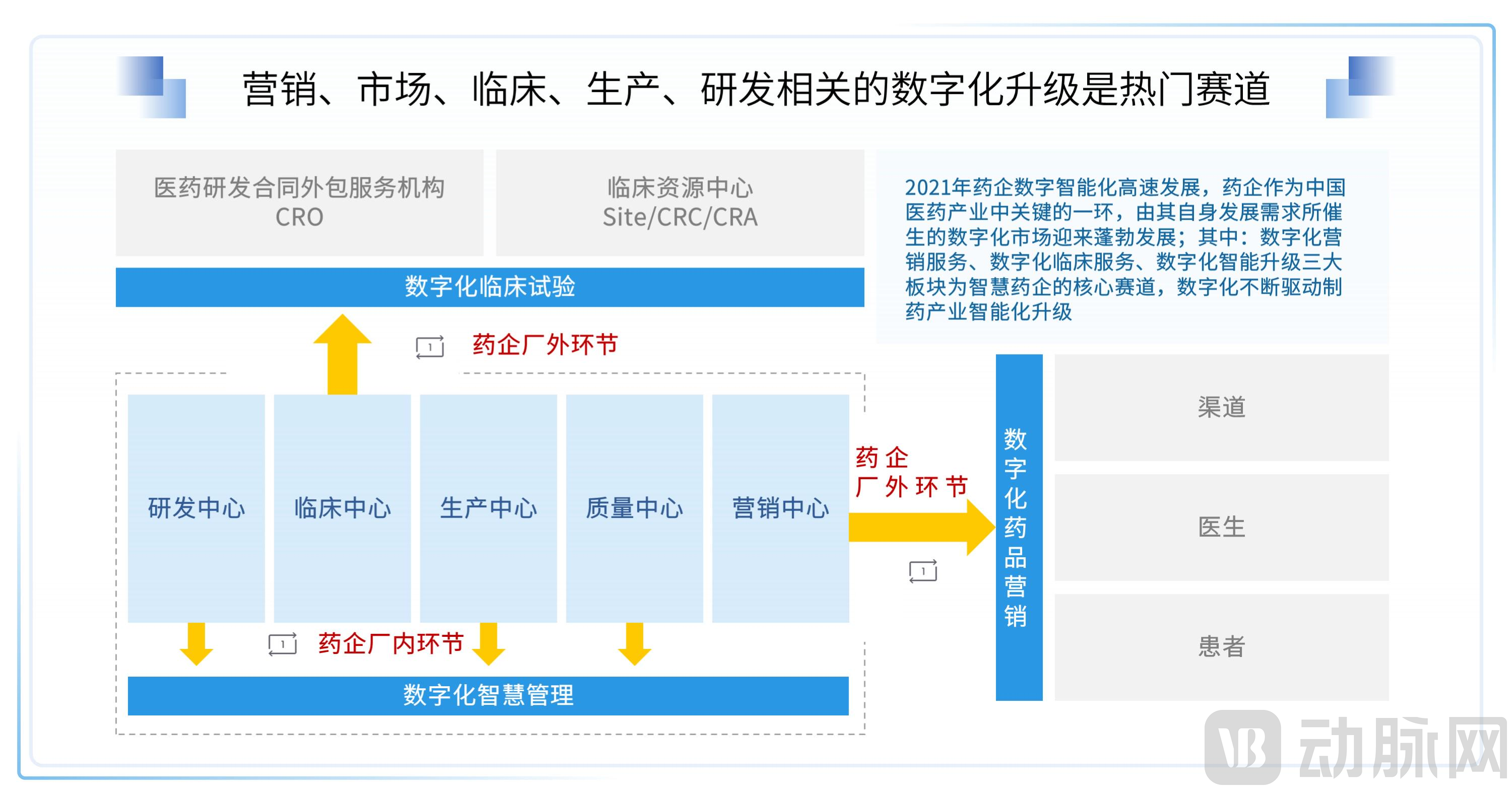
The three sectors with the strongest payment momentum in pharmaceutical companies, ranked by demand gradient, are marketing, clinical operations, and management. Among these, digital marketing and digital clinical trials have already undergone the first wave of development, with several leading enterprises emerging. With the most abundant funding available on the marketing and clinical trial sides, these areas will be the primary high-growth tracks. Furthermore, to meet the needs of refined management and enhance R&D and production efficiency, the production and R&D sectors will also become key areas of investment for pharmaceutical companies.
As the core payer, pharmaceutical companies’ strong payment capacity and willingness collectively determine that business models centered around them will exhibit greater feasibility and profitability. The commercial environment for industries where pharmaceutical companies serve as payers is more market-oriented compared to other B2B segments within the industry. Sub-sectors with pharmaceutical companies as the core payer are entering a phase of rapid growth and are expected to maintain high-speed expansion, given that the majority of demand remains unmet. Medlive’s successful listing in Hong Kong serves as a benchmark case for enterprises in this segment, thereby bolstering primary market investors’ confidence to strategically position themselves in the digitalization track targeting pharmaceutical companies.
We believe that the digital transformation of pharmaceutical companies will gradually shift from providing electronic tools to offering data middle-platform services. The core objective is to ensure the consistency and reusability of various types of data within pharmaceutical enterprises, thereby accumulating data assets and empowering their technological innovations in medical technology. Requirements for product suppliers in vertical sectors will become more diversified. In response to the distinct needs of pharmaceutical companies for data accumulation and application across different domains, specialized service providers will emerge to deliver targeted solutions. These suppliers will be required to possess strong professional expertise. Purely electronic tool systems will either be phased out or integrated by middle-platform providers, as the value delivered by standalone products will become extremely limited.
Meanwhile, there is a gradual transition from information governance to data application: As business operations deepen, service providers will increasingly leverage the data accumulated from their own operations and those of their clients to develop relevant applications, thereby feeding back into and empowering the pharmaceutical industry itself.
3. Smart Hospitals: At the Crossroads of Product Strength and Business Models
After more than two decades of health information system development, most hospitals operate multiple disparate systems that manage data and information across different dimensions, such as Hospital Information Systems (HIS), Picture Archiving and Communication Systems (PACS), Laboratory Information Systems (LIS), and Electronic Medical Record (EMR) systems. Against the backdrop of the 14th Five-Year Plan, hospitals are rapidly transitioning from informatization to a new era characterized by data-driven operations and intelligence, as traditional information systems increasingly fail to meet the growing demand for diversified, intelligent management and clinical care.
Smart hospitals also represent a market strongly driven by policy. Regulatory frameworks and assessment criteria for hospital informatization are gradually being refined, and the level of digital intelligence will become one of the key metrics for hospital accreditation in the future, creating an urgent and rigid demand for IT upgrades among hospitals. From a management perspective, hospitals currently face tight IT coupling caused by the parallel operation of multiple vendor systems, which leads to data fragmentation across various business modules, hindering interoperability and resulting in data silos. From a clinical care perspective, hospital clinical departments currently have limited data processing capabilities and lack data-driven applications that can effectively address critical clinical pain points.
In addition to meeting internal demands, the development of smart hospitals aligns with the broader framework of China’s tiered diagnosis and treatment system. At present, significant progress has been made in building the primary healthcare service system across China, basically establishing a relatively comprehensive urban and rural primary healthcare service network. However, constrained by factors such as the level of economic development, the construction of the primary healthcare service system still falls short of public expectations. “Smart Healthcare” can provide remote solutions to address the insufficient service capacity of primary medical institutions. By advancing hospital informatization and upgrading infrastructure, medical service processes can be optimized, further promoting the extension of medical resources from within hospitals to external settings and from large hospitals to primary healthcare institutions, thereby facilitating the downward distribution of high-quality medical resources.
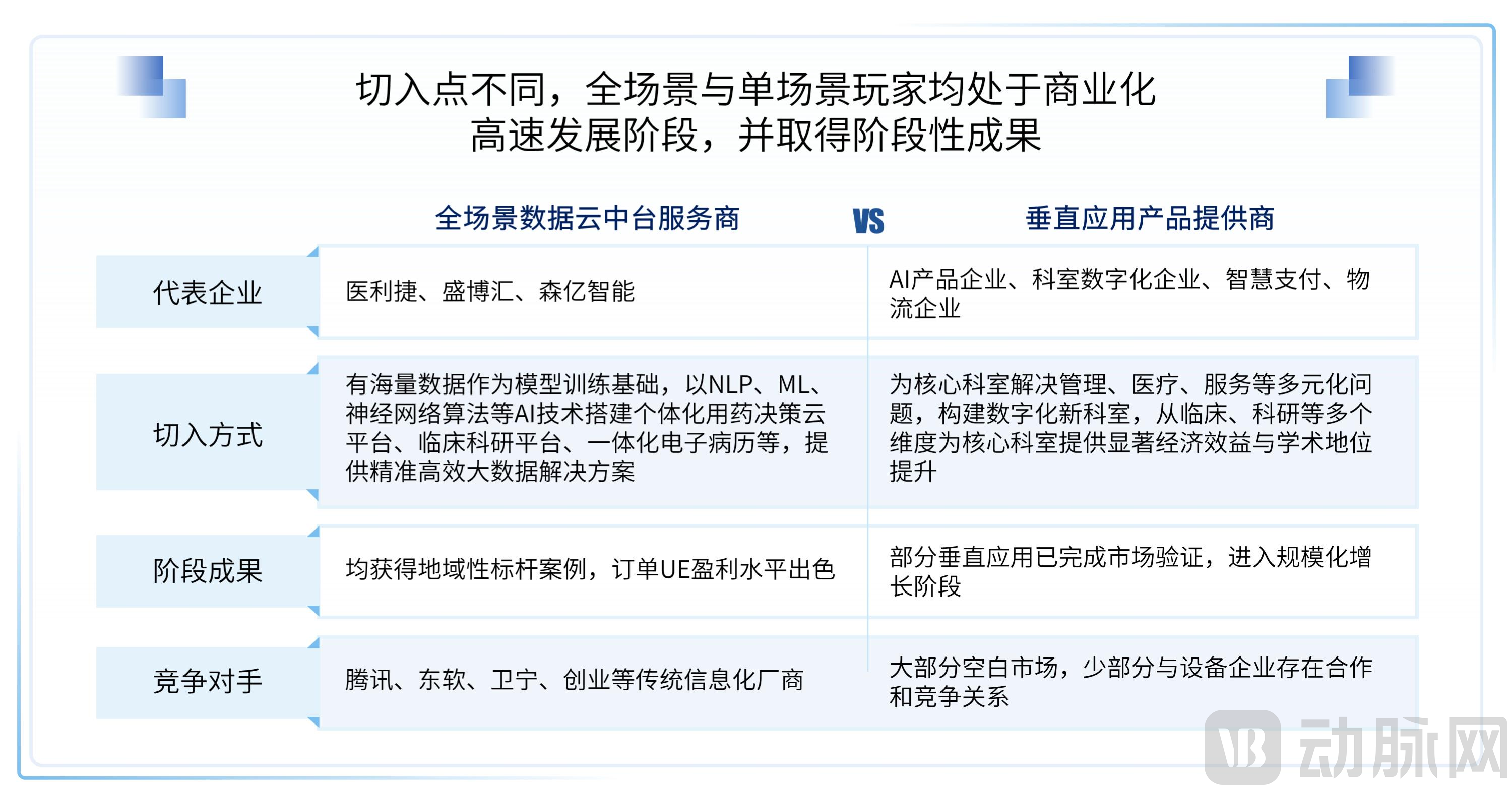
Next-Generation Smart Service Providers for Pharmaceutical Companies Are Categorized as:
1) Underlying data cloud middle-platform service provider—connecting core hospitals with their affiliated hospitals through private cloud deployment to form a tightly integrated consortium, thereby achieving data interoperability and integration to establish a smart hospital group;
2) Vertical Application Product Providers — Empowering core clinical departments, medical technology departments, and middle- and back-office functions of hospitals by providing management and clinical application mid-end platforms to facilitate departmental digitalization.
Judging from current development trends, the demand for and drivers of digital intelligence in core clinical departments are significantly stronger than those in other niche sectors. Product vendors must compete based on their deep understanding of the industry. Core clinical departments deliver strong economic returns and serve as revenue centers for hospitals; therefore, their need for cost reduction, efficiency improvement, and enabling tools represents the highest priority in the hospital’s overall digital and intelligent upgrade. In this sector, suppliers are still in a phase of product competition: products and systems that meet clinical needs, feature low learning curves, and demonstrate clear economic benefits will become the focus of hospital procurement.Non-core departments are primarily medical technology units, where the demand for cost reduction and efficiency improvement in areas such as radiology, laboratory medicine, and sterilization will continue to drive the growth of the third-party service market. As the earliest sector to undergo digital and intelligent upgrades, the radiology department has yet to establish a viable business model. The next two years will be a critical period of transformation for this sector. How companies can achieve this transformation without being able to charge patients directly will be a key focus.Finally, regarding the transformation of IT departments, while there is strong momentum for overall hospital information system upgrades, levels of informatization vary widely across institutions, and stakeholder interests are complex. How to coexist or compete with traditional health IT vendors will be the primary challenge these enterprises face after achieving scaled expansion.
From the perspectives of business model and core value, the central focus remains the competition for influence within key clinical departments, with “comprehensive” and “vertical” solutions poised for intense rivalry. Regardless of the entry point into smart hospital development, the ultimate objective is still to secure influence over core departments by fostering strong stickiness and continuously providing products that solve problems and generate revenue for these departments. Providers of full-scenario data cloud middle platforms aim to build Windows-like platforms, intending to supply hospitals with an overarching underlying operating system. However, such operating systems typically suffer from low bargaining power, limited standardization, and complex利益 conflicts. In the future, these Windows-like platforms will likely seek to bundle sales with Office-like applications, leading to direct competition with providers of vertical application products.
The business models of smart hospital service providers mainly face two issues:
1) Significant regional characteristics—how to break through regional barriers, and even achieve breakthroughs in the traditional strongholds of health IT companies, will become the core of corporate value;
2) Lagging Standardization—Currently, smart hospital vendors still deliver solutions on a project-by-project basis, and the average contract value for full-scenario surgical cloud middle-platform providers is significantly higher than that of traditional healthcare IT enterprises;
However, as the business expands, it remains reliant on front-end business development (BD) and back-end delivery. With new competitors entering the market, average revenue per user (ARPU) will face intense competition; consequently, current unit economics (UE) per order do not reflect the average level expected at a mature stage of development. The core key to upgrading the business model lies in establishing deep stickiness and sustained collaboration with hospitals. However, given the difficulties in implementing subscription-based pricing models in China, driving product repurchases and innovating the business model will become central priorities.
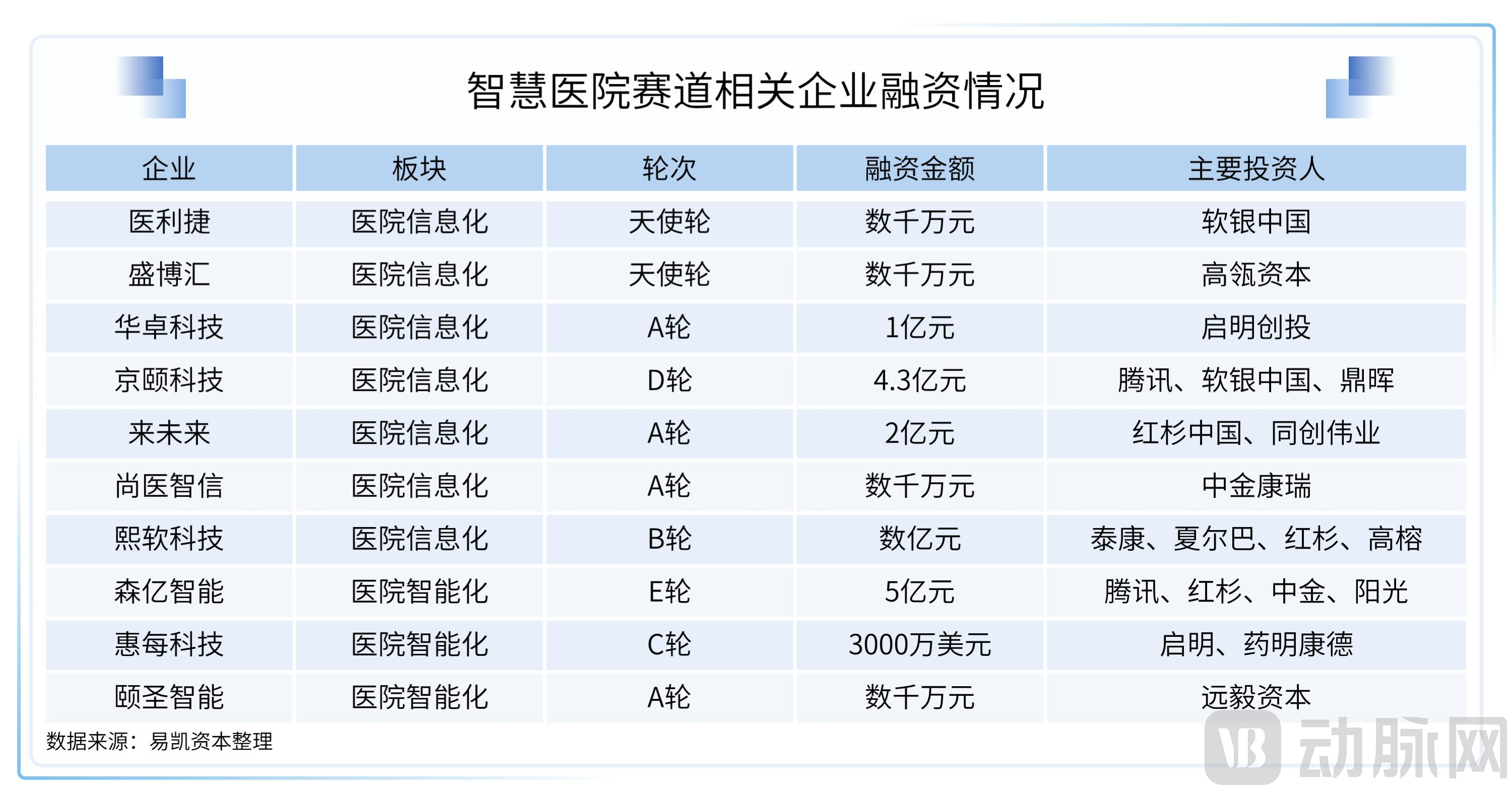
4. Digital Drug Companion: A Potent Tool for Enhancing Differentiation and Upgrading of Traditional Pharmaceuticals
Digital Medication Companions are an important application branch of digital therapeutics. Digital therapeutics typically refer to a novel therapeutic approach that utilizes clinically validated software applications or software-driven interventions to actively intervene in and treat diseases or symptoms, thereby promoting and maintaining health. Unlike another category of digital therapeutics that possesses independent therapeutic properties (often referred to as "digital drugs"), Digital Medication Companions require concomitant use with traditional pharmaceuticals or medical devices to achieve therapeutic efficacy through combination therapy, rather than functioning as standalone treatments.
The core value proposition of digital drug companions lies in helping pharmaceutical and medical device companies achieve product differentiation by generating more personalized dosing regimens and treatment durations, or by delivering a more satisfying and enjoyable user experience. This enables these companies to avoid direct competition with generic drugs or similar products amid increasingly homogeneous markets, thereby driving greater sales returns through multiple pathways:
1) Enhance user stickiness during patient use;
2) Physician prescriptions hold greater academic research value;
3) Possess more differentiated competitive advantages in tender procurement;
4) Provide effective real-world data to support drug development and evaluation.
Therefore, pharmaceutical and medical device companies are the primary payers for digital drug companions, facilitating transfer payments to digital companion providers through their marketing or sales expenditures. At present, patients’ willingness to pay for such services remains low, resulting in a business model where patients pay for the medication while the pharmaceutical company provides the accompanying app free of charge.
Beyond empowering pharmaceutical companies, digital medication companions hold significant importance for patients. It is well established that at least 30% of patients require personalized guidance to overcome challenges associated with timely medication adherence, particularly for specialty drugs that necessitate prior authorization and care coordination. The “companion effect” of digital medication companions can help patients achieve optimal therapeutic outcomes, akin to the synergistic effect of two combined medications. There is clinical evidence supporting the role of digital medication companions in improving adherence and persistence: for instance, in the management of therapies such as warfarin (an anticoagulant), insulin, or antiretroviral drugs, missing a single dose can significantly compromise overall treatment efficacy, and patients lacking access to guidance resources may even make life-threatening decisions. Furthermore, digital medication companions not only provide real-time interventions but also deliver personalized treatment reminders and facilitate access to necessary professional medical resources.
As the market gains a deeper understanding of how digital medication companions augment traditional medical practices—particularly by empowering patients to master these tools and actively engage in self-managing their treatment regimens—the ability of digital medication companions to meet the personalized needs of patients or consumers becomes increasingly prominent. They provide support and coaching through digital guidance, enabling patients to remain actively engaged and maintain close communication with their physicians, even in the context of complex disease management. Digital medication companions are not a substitute for existing pharmacological therapies; rather, they enhance therapeutic outcomes or enable more effective medical care through digital connectivity.
We believe that in the short to medium term, pharmaceutical companies will vigorously drive the development, implementation, and promotion of digital drug companions, transforming traditional sales and R&D practices and making them a widespread “standard” offering. In the medium to long term, patients will gradually recognize their value and form usage habits, with patients paying for certain value-added services or essential features.
(II) Demand Side: The Elderly and Children, Front-Loaded Prevention and Control, Consumer Healthcare, and Scenario Expansion
1. Children and Adolescents: Myopia Prevention and Control, as Well as Mental Health, Are Core Priorities
(1) Myopia Prevention and Control
According to the "2018 Survey Results on Myopia among Chinese Children and Adolescents" released by the National Health Commission, the myopia rate among children and adolescents in China reached 53.6%. Specifically, the rates were 36% for primary school students, 71.6% for junior high school students, and 81% for senior high school students. Among senior high school students in their final year, those with high myopia (refractive error exceeding -6.00 diopters) accounted for 21.9% of all myopic cases. High myopia can lead to various serious complications, significantly increasing the incidence of ocular conditions such as cataracts, retinal detachment, macular holes, and glaucoma. In severe cases, it may cause irreversible blindness.
The Chinese government has elevated the prevention and control of myopia in children and adolescents to an unprecedented strategic height, with a flurry of policies being intensively rolled out since last year and continuing into this year.
1) “Work Plan for the Bright Action to Prevent and Control Myopia in Children and Adolescents (2021–2025)”:In April 2021, the Ministry of Education and fourteen other departments jointly issued a document requiring the establishment of a health monitoring database for vision among children and adolescents. The document mandates annual dynamic nationwide monitoring of vision in this population, striving to achieve full coverage of myopia surveillance at the county (district) level. It also calls for mobilizing the enthusiasm of the medical industry, universities, research institutes, and enterprises to conduct in-depth scientific research on myopia prevention and control. This includes accelerating research on the factors influencing myopia, as well as on intervention, correction, and education, and promptly improving strategies, technical standards, and intervention measures for myopia prevention and control.
2) “Service Specifications for Eye Health Care and Vision Screening in Children Aged 0–6 Years (Trial Implementation)”:In June 2021, the National Health Commission issued a document explicitly stipulating that primary healthcare institutions—such as township health centers and community health service centers—or county-level maternal and child health institutions and other qualified county-level medical institutions shall provide services including health education, screening for eye diseases and visual acuity assessment, health guidance, referral services, and the establishment of children’s eye health records. The document also proposed five indicators to promote strengthened work evaluation across regions: coverage rate of eye care and visual acuity screening for children aged 0–6 years; abnormality rate in eye care and visual acuity screening for children aged 0–6 years; referral rate for abnormalities detected in eye care and visual acuity screening for children aged 0–6 years; detection rate of poor vision among 6-year-old children; and rate of establishment of eye health records for children aged 0–6 years.
3) "14th Five-Year National Plan for Eye Health (2021-2025)":In January 2022, the National Health Commission issued a document requiring that by 2025, efforts should be made to achieve an annual coverage rate of over 90% for eye care and vision screening among children aged 0–6 years, continuously improve the overall level of eye health in children and adolescents, steadily increase the coverage rate of effective correction of refractive errors, and gradually reduce the number of individuals with visual impairment caused by high myopia.
4) “Notice on Further Standardizing Campus Vision Screening and Myopia Prevention and Control Services”:In February 2022, the Ministry of Education, the National Health Commission, and the State Administration for Market Regulation jointly issued a document requiring that unqualified institutions be strictly prohibited from entering schools to conduct vision screenings. It also mandated strict legal penalties for marketing campaigns promoting myopia prevention and control products for children and adolescents that use misleading terms such as “rehabilitation,” “restoration,” “degree reduction,” “myopia cure,” “myopia nemesis,” and “degree correction.”
We believe that the market for myopia prevention and control in children and adolescents has a substantial overall capacity, with high levels of attention from the government, schools, and parents, resulting in strong rigid demand. Commercial application scenarios are diverse and well-defined, while the current supply of myopia prevention and control products lags far behind the vast market demand. The industry is on a fast track to development and is expected to produce several blockbuster products. Overall, key areas of focus should include:
1) Compliance:Amid the current landscape of heightened attention toward myopia prevention and control, characterized by intensive efforts, broad coverage, and high prioritization, the previously chaotic mix of products and promotional practices within the industry will undergo thorough improvement and comprehensive restructuring. Institutions and products lacking relevant qualifications and licenses will find it difficult to participate as mainstream players. Therefore, compliant qualifications and licenses represent regulatory approval and medical endorsement, serving as the basic entry ticket for legitimate entities to engage in the myopia prevention and control market.
2) Differentiation:Traditional medical devices, such as orthokeratology lenses (OK lenses), suffer from limited fitting channels, low wearing comfort, poor patient compliance, and safety concerns. Emerging medical devices, such as light therapy instruments, face issues like product homogenization and poor patient compliance. In contrast, innovative VR-based myopia prevention and control devices, which comprehensively address the aforementioned challenges, offer significant differentiated advantages. They not only enhance the efficacy of myopia prevention and control but also better resolve issues related to patient compliance and safety. Furthermore, they are more conducive to large-scale promotion and application, demonstrating substantial commercial potential.
3) Execution:The myopia prevention and control market is currently experiencing a period of rapid growth. Whether a team possesses sufficient promotional channels, industry resources, and accumulated experience will determine its ability to quickly penetrate the market and capitalize on the dividends of this golden opportunity. Furthermore, the nature of the myopia prevention and control market dictates that medical and educational channels play a significantly larger role than consumer channels.
(2) Mental and Psychological Health
In July 2021, the General Office of the Ministry of Education issued the "Notice on Strengthening Student Mental Health Management," pointing out the need to comprehensively enhance students' mental health literacy and vigorously cultivate positive psychological qualities. First, effective mental health assessments must be conducted. The psychological assessment system should be equipped with various types of psychological scales to meet the needs for different forms of student psychological evaluations and regular mental health screenings. By improving screening and early warning mechanisms, student psychological issues can be identified promptly, corresponding psychological reports generated, and precise interventions implemented at an early stage. Second, psychological counseling and guidance services should be strengthened. Higher education institutions must enhance the construction of psychological counseling service platforms by establishing facilities such as psychological development counseling rooms, positive psychology experience centers, group activity rooms, and comprehensive quality training rooms, thereby providing high-quality, real-time, on-site services for individual psychological counseling and group psychological guidance.
We believe that mental health interventions for children and adolescents started relatively late, with methods and approaches still in the early stages of exploration. The field faces challenges such as high demand for personalized care but limited effective intervention tools, a heavy systemic workload, and a shortage of practitioners. Traditional methods are unable to address these issues quickly and efficiently; therefore, digital interventions may become one of the important solutions. Overall, attention should be focused on several key areas:
1) Professional Handling of Key Issues:Interventions are being implemented for disorders with severe clinical manifestations and significant harm, such as autism spectrum disorder (ASD), attention-deficit/hyperactivity disorder (ADHD), major depressive disorder (MDD), and generalized anxiety disorder (GAD). Although many offline institutions have accumulated years of industry experience in serving children and adolescents with these special needs, they continue to face challenges including high treatment costs, lengthy training cycles for practitioners, and difficulties in scaling operations. In the past two years, an increasing number of innovative companies focused on digital screening and intervention for mental health have emerged, bringing novel solutions to the industry. However, these enterprises still need to address issues related to regulatory compliance for certification and commercialization.
2) Efficient Resolution of General Issues:Psychological counseling is not a core function of schools, which have also accumulated limited practical experience in this area over the years. Meanwhile, the numerous psychological counseling agencies in the market are ill-suited for large-scale deployment among children and adolescents due to their offline clinical models and high-priced structures. Consequently, multiple internet-based psychological counseling platforms are delivering services to schools, parents, and students by combining digital screening with online counseling, leveraging tools such as mood-tracking apps, AI-driven analysis and monitoring, and virtual counselors. This approach not only expands service coverage but also reduces costs, demonstrating significant potential for application.
2. Middle-aged and Elderly Individuals: Smart Rehabilitation May Be on the Verge of a Breakthrough
Rehabilitation is a vital component of modern medicine. With increasing life expectancy and improved quality of life, societal demand for rehabilitation services is growing significantly, presenting promising prospects for substantial development in the field of rehabilitation medicine. Historically, the focus was primarily on traditional exercise-based rehabilitation and neurological rehabilitation. In recent years, the scope has gradually expanded to include oncology rehabilitation, cardiac rehabilitation, psychological rehabilitation, and chronic disease management. Today, the rapid advancement of information technologies—such as the internet, the Internet of Things (IoT), artificial intelligence (AI), 5G communications, and virtual reality (VR)—is empowering rehabilitation with intelligent capabilities, driving the field toward higher levels of development.
Frequent Policy Releases in Rehabilitation Medicine Accelerate Industry Development
1) “Notice on Issuing the Opinions on Accelerating the Development of Rehabilitation Medical Services”:In June 2021, eight ministries and commissions, including the National Health Commission and the National Development and Reform Commission, jointly issued a document proposing to gradually establish a rehabilitation medical workforce of reasonable size and high quality, striving to achieve 6 rehabilitation physicians and 10 rehabilitation therapists per 100,000 population by 2022.
2) “Notice on Launching Pilot Programs for Rehabilitation Medical Services”:In October 2021, the National Health Commission issued a document requiring that pilot programs for rehabilitation medical services be launched in 15 provinces in 2022 to proactively address population aging. The pilot provinces and municipalities are to take the lead in testing these initiatives, forming replicable and scalable local experiences, thereby driving the rapid development of rehabilitation medical services across China through a point-to-area approach.
China’s rehabilitation medical demand is being unleashed, maintaining robust long-term growth. Report data indicate that the market size of China’s rehabilitation industry increased from RMB 57.5 billion in 2016 to RMB 122 billion in 2020, representing a compound annual growth rate (CAGR) of 20.69%. Of this, the rehabilitation medical device market reached RMB 38 billion, with a CAGR of 21.39% from 2016 to 2020; the rehabilitation medical services market amounted to RMB 84 billion, with a CAGR of 20.38% over the same period. By 2025, the market size of China’s rehabilitation industry is projected to reach RMB 292 billion, reflecting a CAGR of 16.59% from 2021 to 2025. Specifically, the rehabilitation medical device market is expected to reach RMB 81 billion, with a CAGR of 13.97% from 2021 to 2025, while the rehabilitation medical services market is forecast to attain RMB 211 billion, with a CAGR of 17.68% from 2021 to 2025.
We believe that, driven by the rapid development of converging technologies such as intelligent technology, information technology, and virtual reality, the era of smart rehabilitation has arrived. In particular, the integration of wearable devices with information technologies represented by the Internet, big data, cloud computing, and artificial intelligence has made smart rehabilitation possible, enabling individuals to access high-quality rehabilitation services anytime, anywhere, and on the go. Overall, attention should be focused on several key aspects:
1) Population and Disease:Diseases affecting populations in three key areas—neurological disorders and disabilities, musculoskeletal and joint disorders and disabilities, and cardiovascular and respiratory diseases—will be the first to achieve scaled adoption, driven by their strong essential demand and large patient populations.
2) Scenario Extension:Home-based rehabilitation is a major trend and will capture an increasing market share, with product iterations moving toward miniaturization and wearability;
3) Smart IoT:Smart rehabilitation will progressively evolve through four stages: digital rehabilitation, connected rehabilitation, visualized rehabilitation, and intelligent rehabilitation. It will also integrate with multiple disciplines, leveraging technologies such as brain-computer interfaces, intelligent robotics, extended reality, biochips, and biometrics.
3. Early Disease Screening: The Next Frontier Lies in Lung Cancer and Alzheimer’s Disease
(1) Early Screening for Lung Cancer
Lung cancer is the malignant tumor with the highest mortality rate worldwide. Each year, more than 2.2 million people are newly diagnosed with lung cancer globally, accounting for 11.1% of all new cancer cases. Among the 10 million cancer-related deaths worldwide, nearly 1.8 million are attributed to lung cancer, representing 18% of the total. In 2020, China reported approximately 816,000 new lung cancer cases and around 715,000 lung cancer-related deaths, which accounted for 23.8% of all cancer deaths in the country, ranking first in both incidence and mortality. Early screening, early diagnosis, and early treatment constitute the most critical breakthroughs for improving the overall cure rate and reducing the mortality rate of lung cancer.
Currently, there are numerous issues in lung cancer screening, primarily manifested in several aspects.
1) Lung cancer is highly insidious, with diverse but non-specific clinical manifestations:Lung cancer is predominantly non-small cell lung cancer (NSCLC), accounting for approximately 80%–85% of all lung cancer cases. Most patients with early-stage lung cancer exhibit no obvious symptoms or signs, such as cough, hemoptysis, or dyspnea; over 87% of patients are diagnosed with lung cancer only after symptom onset, while merely 6% are identified through proactive screening during routine health examinations.
2) Patients exhibit low initiative in screening, resulting in missed optimal treatment windows:From the perspective of clinical treatment outcomes, the 5-year survival rate for Stage I patients is as high as 84%, yet they account for only 19% of cases. In contrast, the 5-year survival rate for patients with Stage IV lung cancer is merely 6.9%, while outpatient cases exceed 36%. This indicates that the general population in China lacks proactivity in lung cancer screening.
3) Low-dose spiral CT (LDCT) is a lung cancer screening technology that can reduce mortality:The National Lung Screening Trial (NLST) in the United States and the Dutch-Belgian Randomized Controlled Lung Cancer Screening Trial have demonstrated that low-dose computed tomography (LDCT) screening can reduce lung cancer mortality by 20%–24%. As the most effective screening method recognized internationally, it has been incorporated into screening guidelines and recommended by multiple organizations, including the Fleischner Society and the U.S. Preventive Services Task Force. Regarding cost, the price of LDCT in public hospitals in China currently ranges from 120 to 360 yuan.
4) However, LDCT has limited capability in differentiating pulmonary nodules and is associated with a high false-positive rate:The average detection rate of pulmonary nodules via low-dose computed tomography (LDCT) exceeds 20%. Among the screen-positive population, the majority of nodules are benign, with over 90% of positive cases being non-lung cancer patients. To determine the nature of these pulmonary nodules, patients typically require extensive follow-up examinations, such as bronchoscopy, thoracoscopy, percutaneous lung biopsy, PET-CT, and even surgical intervention.
5) LDCT consumes medical resources and has low patient acceptance:Even for individuals at high risk of lung cancer, reducing mortality through low-dose computed tomography (LDCT) screening incurs substantial medical costs; on average, 5,276 individuals with a lower risk of death need to be screened to prevent one death. The significant limitations of LDCT are a major contributor to its low screening uptake. According to statistics from the American Cancer Society, among 6.8 million high-risk individuals, only 260,000 underwent LDCT screening, resulting in an overall screening rate of less than 4%.
We believe that the pioneering efforts in the colorectal cancer early screening sector have paved the way for exploring business models and accumulating valuable industry experience for lung cancer early screening. The population at high risk for lung cancer is equally substantial, and compared to colorectal cancer, the market pain points are more pronounced. Once related technologies mature, lung cancer is poised to become the most promising candidate for nationwide universal screening, following breast and cervical cancer screenings; its market potential should not be underestimated. Particularly noteworthy is the recent approval by the National Medical Products Administration (NMPA) of the world’s first three-gene methylation detection kit for lung cancer, which has injected breakthrough confidence into the entire industry and made large-scale commercialization of lung cancer early screening possible.
(2) Early Screening for Alzheimer's Disease
Alzheimer’s disease (AD), commonly known as senile dementia, is characterized by cognitive decline and memory impairment. In severe cases, patients develop language disorders and ultimately lose the ability to live independently. The disease is primarily driven by pathological changes such as diffuse cortical atrophy, neurofibrillary tangles, and the extensive formation of senile plaques between nerve cells. According to estimates from the Chinese Center for Disease Control and Prevention, China currently has approximately 10 million Alzheimer’s patients, a figure projected to exceed 30 million by 2050, making it the country with the largest number of Alzheimer’s patients worldwide. However, public awareness and attention toward Alzheimer’s disease remain low in China, resulting in generally low diagnosis rates (particularly for early-stage diagnosis) and low treatment rates.
The current “gold standard” for diagnosis is costly and highly invasive. Current treatments for Alzheimer’s disease (AD) primarily involve medications such as cholinesterase inhibitors to alleviate symptoms in patients with mild to moderate AD. Clinically, the most characteristic pathological features of AD are extracellular deposition of β-amyloid plaques and intracellular neurofibrillary tangles composed of hyperphosphorylated tau protein. Therefore, amyloid-β (Aβ) and tau protein serve as typical diagnostic targets for AD and have become the mainstream biomarkers in current AD diagnostic products. In conventional MRI-based diagnosis, findings related to these two AD diagnostic targets often resemble those observed in normal aging, making it difficult to determine the onset of early AD symptoms. Consequently, cerebrospinal fluid (CSF) analysis is required for further confirmation. Thus, the combined pathological diagnosis using magnetic resonance imaging (MRI) and CSF analysis has become the clinically recognized gold standard for diagnosing Alzheimer’s disease. However, CSF testing is highly invasive, requiring lumbar puncture for sample collection, and is expensive, which often makes it unacceptable to patients. This is one of the main reasons for the low rate of early AD diagnosis in China. Facing the increasingly large population of AD patients, the current “gold standard” diagnostic approach is not feasible for large-scale screening. Therefore, convenient, rapid, and cost-effective non-invasive early screening has emerged as a new breakthrough in AD detection in recent years and is expected to be widely adopted in the future market.
Currently, the main non-invasive alternatives for early screening of Alzheimer's disease on the market are IVD test kits and VR/AR digital screening.
1) IVD Kits:Currently, the non-invasive early screening products for Alzheimer’s disease approved in China achieve simple and rapid non-invasive early screening for high-risk populations by quantitatively detecting the concentration of Alzheimer’s disease-associated neuronal thread protein (AD7C-NTP) in urine. The assay has a short turnaround time, requiring only 2.5 hours in total, and demonstrates high sensitivity (80%–85%) for diagnosing Alzheimer’s disease, enabling detection during the early stages (stages 1–3).
2) VR/AR Digital Screening: With the iterative advancements in technologies such as artificial intelligence and big data, some companies are now evaluating patients for Alzheimer’s disease by analyzing human physiological parameters, including hand and gait movements and errors, eye tracking and pupil dilation, and voice characteristics. For instance, Altoida’s VR/AR AI software for the predictive diagnosis of Alzheimer’s disease and dementia has received the Breakthrough Device Designation from the U.S. FDA. Similarly, Sea Hero Quest, a VR game jointly developed by game developer Glitchers, Alzheimer’s Research UK, and Deutsche Telekom, has also been featured in authoritative American journals.PNASrecommendation.
We believe that early screening for Alzheimer’s disease via digital VR/AR technologies offers unparalleled application advantages. Digital screening boasts distinctive features unattainable by other methods, including scalability for large-scale deployment, high-frequency follow-up assessments, comprehensive data acquisition across the entire disease course, compatibility and integration with interventional therapies, and cost control. Looking ahead, we anticipate continuous algorithm optimization to further enhance screening accuracy, while extending into digital behavioral intervention therapies. This approach will establish an integrated, whole-course management system encompassing early screening, diagnosis, and treatment, thereby driving both commercial success and positive reputation in this field.
4. Women's Health: A Continuously Growing Priority
Women's health is characterized by a large patient population, significant efficacy of non-surgical treatments (often eliminating the need for surgery), and high sensitivity regarding privacy. Furthermore, women's health issues are closely intertwined with other health conditions such as obesity, as well as lifestyle factors including diet and sleep, necessitating long-term follow-up and out-of-hospital guidance. Consequently, digital therapeutics and consumer healthcare companies in this sector warrant close attention.
Women’s health encompasses issues related to contraception, physiological well-being, pregnancy, childbirth, gynecology, and menopause. Among these, 40% of all women suffer from gynecological disorders, with the prevalence exceeding 70% among married women. In China, the incidence of postpartum conditions such as pelvic organ prolapse and urinary incontinence among women of childbearing age rises significantly with age. It was estimated that by 2020, the number of women experiencing postpartum health issues would reach 237 million. Only 10% of patients with severe symptoms receive hospital treatment, while healthcare institutions lack comprehensive treatment protocols and services for the 90% of patients with mild to moderate postpartum conditions. Meanwhile, there is a demand among users for trustworthy consultation channels, effective evidence-based treatment plans, and high-frequency, immediate, and long-term standardized services.
Scientific postpartum rehabilitation plays a vital role in helping women restore physiological functions and sustain breastfeeding. As China’s national economy continues to improve, the postpartum rehabilitation market is expected to expand steadily. Factors such as the full implementation of the two-child policy, rising household consumption power, and the widespread adoption of postpartum healthcare services are driving rapid growth in China’s postpartum rehabilitation industry.
Traditional brick-and-mortar hospitals and postpartum care centers have limited service radii for gynecological treatments and postpartum rehabilitation. The efficacy of single-session surgical or device-based interventions is also limited, as patient issues often require long-term, high-frequency management. We believe that by creating an integrated solution encompassing diet, exercise, pharmaceuticals and medical devices, psychology, and sleep, combined with in-hospital treatments, patients can achieve guaranteed outcomes. Companies providing such standardized, scalable, digitalized, and intelligent end-to-end health management services are well-positioned to become leaders in this niche sector.
5. Medical Consumption: A New Frontier of Consumerism and Healthcare
China’s consumer healthcare sector has undergone three waves of development to date. The first wave began a decade ago, starting with segments possessing distinct consumer service attributes, such as medical aesthetics, dentistry, and hair transplantation. This period gave rise to a cohort of star companies, including Bloomage Biotech, Angelalign, and Yonghe Hair Transplant, thereby establishing the foundation for China’s first wave of consumer healthcare.
Subsequently, leveraging the wave of medical digitalization, the second wave of consumer healthcare—characterized by “Internet+”—has given rise to universal health management solutions, spawning representative companies such as Keep, Boohee Health, and Ping An Good Doctor. According to a Frost & Sullivan report, the market size for online consumer healthcare services is projected to reach RMB 128 billion by 2025, with a compound annual growth rate (CAGR) of 66.5% from 2019 to 2025.
Meanwhile, we are also witnessing a new intersection among consumption, healthcare, and digitalization, which has given rise to a third wave of business models in consumer healthcare. If traditional “consumer healthcare” places greater emphasis on the consumption attributes of the target population, then this new intersection—termed “healthcare consumption”—focuses more on the “medical condition” attributes of the target population. Built upon the foundation of serious medical care, it targets patients with clear medical needs and the ability to pay out-of-pocket. By leveraging the convenience and accessibility brought by healthcare digitalization, it enables certain issues that would traditionally require a “medical” setting to be addressed in a more “consumer-oriented” scenario.
From the perspective of clinical manifestations, what we refer to as “medical consumption” is primarily concentrated in fields with inherent out-of-pocket payment characteristics, such as mental health, ophthalmology, dentistry, and rehabilitation. From the perspective of target demographics, it focuses on groups with strong willingness to pay, including women, children, and the elderly, which forms the commercial foundation of medical consumption. For instance, regarding Alzheimer’s disease, a mental disorder prevalent among the elderly, we have observed outstanding enterprises that achieve scaled revenues through digital early screening and early intervention, as well as star companies that leverage digital technologies in collaboration with psychiatric departments of top-tier (Grade 3A) hospitals to treat and alleviate symptoms. Similarly, in the area of postpartum physical and psychological rehabilitation for women, we have seen solutions employing digital exercise, psychological counseling, and dietary interventions to help mothers achieve comprehensive recovery, demonstrating robust commercial viability. In these niche markets, specifically within the female digital health sector, Global Market Insights predicts that the Femtech market size (encompassing technologies, software, products, and diagnostics that use technology to improve women’s health and well-being) exceeded $22.5 billion in 2020 and is expected to grow at a compound annual growth rate (CAGR) of 16.2% from 2021 to 2027.
The core driver propelling the development of the medical consumer industry is China’s healthcare payment system. On one hand, although basic medical insurance accounts for over 50% of residents’ medical expenditures in China, it primarily covers essential healthcare services. Out-of-pocket payments still constitute approximately 40%, while the commercial health insurance system remains underdeveloped, with coverage rates significantly lagging behind those in developed countries. Consequently, it fails to cover wellness and preventive services that align with consumer demands. On the other hand, China has a vast population with uneven development, leading to varying levels of health awareness and highly differentiated individual needs. Meanwhile, digitalization has introduced new approaches to diagnosis and treatment, generating novel demands that are not covered by either public medical insurance or commercial insurance. These services are more likely to be paid for out-of-pocket by individuals seeking symptom management and improved quality of life. Collectively, these factors have resulted in certain diagnostic and therapeutic modalities being funded exclusively through out-of-pocket payments driven by individual needs. The rigidity of this demand serves as a powerful engine for medical consumption. We have reason to believe that various niche sectors within China’s medical consumer market will witness remarkable rapid growth in the coming years.
(3) Payment Side: Cost Control as the Long-Term Theme, Technology as the New Growth Driver, and Out-of-Pocket Spending as a Blue Ocean Market
1. The Profound Impact of DRG/DIP on the Healthcare Industry
Deepening the reform of healthcare insurance payment methods is a major strategic deployment made by the CPC Central Committee and the State Council, as well as an inevitable requirement for the self-development and improvement of the medical security system and the continuous enhancement of fund utilization efficiency. The year 2021 marked the conclusion of the pilot programs for two healthcare insurance payment reforms—Diagnosis-Related Groups (DRG) and Big Data Diagnosis-Intervention Packet (DIP)—and was also a critical year for summarizing and promoting the pilot experiences. Nearly seven years have passed since the initiation of DRG pilots and the subsequent exploration of DIP payment reform. At its core, this transition reflects the urgent need to reform the traditional “à la carte” payment model for diagnosis and treatment. Against the backdrop of rising healthcare expenditures and an accelerating aging population, healthcare insurance funds are facing unprecedented payment pressures. From 2013 to 2017, China’s total health expenditure rose from RMB 3.2 trillion to RMB 5.2 trillion, with an average annual growth rate of 13%, far exceeding the GDP growth rate during the same period. The imbalance between healthcare insurance revenues and expenditures is expected to worsen further.
As a wholly imported concept, the promotion and development of Diagnosis-Related Groups (DRG) in China closely paralleled the pace of the Reform and Opening-up policy. Entering the 21st century, the rapid development and widespread adoption of electronic medical records provided the data foundation for DRG implementation, ushering in a period of accelerated growth for DRG. However, at the “National Pilot Cities Payment Reform Forum on DRG-Based Payment” held in Wuhan on November 11, 2020, the performance results of the 30 national pilot cities were less than satisfactory. Eight pilot cities failed to pass the assessment by the national expert panel. Regarding the indicator of “concordance rate” with the CHS-DRG grouping scheme (core groups), only eight cities achieved a concordance rate above 90%, while three cities recorded rates below 30%, exposing numerous issues. Consequently, the exploration of a “DRG model with Chinese characteristics” was placed back on the agenda, giving rise to Big Data Diagnosis-Intervention Packet (DIP). The primary distinction between DIP and DRG lies in the fact that DIP encompasses a significantly larger number of disease categories—exceeding 10,000 items—and covers more than 90% of cases. All samples are derived from local data within medical insurance pooling areas. Furthermore, as the sample size continues to accumulate, DIP disease categories and their assigned point values can achieve self-correction through data updates and accumulation without requiring substantial manual adjustments. This approach better aligns with local realities and facilitates smooth localized operation.
Whether DRG or DIP, they are both means rather than ends. The ultimate goal is not only to “save money” for the national medical insurance and increase the funds in this “reservoir,” but also to ensure that patients receive more reasonable healthcare services with a greater sense of gain. The implementation of DIP is beneficial to promoting refined hospital management. On one hand, medical institutions will tend to improve the overall quality and value of medical services, proactively identify and eliminate inefficient practices, enhance the efficiency of medical insurance fund utilization, and continuously strengthen self-regulation—for example, by shortening length of stay and reducing the proportion of pharmaceuticals and consumables. However, for medical institutions whose service capacity is already underutilized, the motivation to improve efficiency may be insufficient.
On the other hand, it facilitates comprehensive “cost reduction and efficiency improvement” for medical institutions. With the implementation of zero markups on drugs and consumables, the proportion of low-efficiency costs associated with Western medicines, Chinese patent medicines, and medical consumables will be compressed. Meanwhile, due to reduced fee schedules for diagnostic and laboratory tests, these services will further shift out of inpatient settings, or there will be a greater preference for cost-effective consumables and equipment. This transformation will benefit multiple stakeholders: it will mitigate over-treatment, lower patients’ medical expenses, and alleviate the regulatory burden on healthcare security authorities.
The calculation of DIP/DRG scores and point values relies on comprehensive support from healthcare information systems. To meet the requirements of DIP/DRG, healthcare institutions will proactively undertake centralized upgrades of their information systems. Meanwhile, the implementation of DIP/DRG will also increase the demand for informatization construction by the Healthcare Security Administration. The upgrade and configuration of medical information systems will benefit leading local healthcare IT enterprises, while offering fewer opportunities for new IT vendors. However, in the long run, this demand may only represent a short-term surge without generating sustained business growth; therefore, IT vendors still need to seek other commercial opportunities.
Furthermore, the implementation of Diagnosis-Intervention Packet (DIP) payment is closely tied to the standardization of clinical documentation by physicians and the accuracy of information on medical record face sheets, including primary and secondary diagnoses and treatments. Some healthcare IT vendors are gradually developing and iterating intelligent medical record audit functions to alleviate the burden of manual review. According to industry insiders, medical institutions with Electronic Medical Record (EMR) systems at Level 4 or above have largely adopted intelligent medical record audit systems. This trend also presents business expansion opportunities for companies specializing in health insurance technology.
2. Commercial Insurance Urgently Needs a Way to Break Through the Deadlock
Where Lies the New Growth Momentum for Commercial Health Insurance? The 2020 "Opinions on Promoting the Development of Commercial Insurance in the Social Services Sector" projected that the market size of commercial health insurance would exceed RMB 2 trillion by 2025. However, the growth rate of individual critical illness insurance has slowed to single digits, while the scales of million-yuan medical insurance and Huimin Bao (inclusive supplementary medical insurance) remain limited. Markets such as group insurance and long-term care insurance for the elderly await further exploration. Compared with developed countries, the out-of-pocket expenditure ratio in residents' medical spending in China remains relatively high. Approximately 41% of individuals filing commercial health insurance claims have social security reimbursement rates below 50%, indicating that the protective capacity of social security in covering Chinese residents' medical expenses is relatively limited. Therefore, it is essential to unlock the supplementary role of commercial health insurance, and there is an urgent need to develop commercial health insurance products integrated with medical services and offerings.
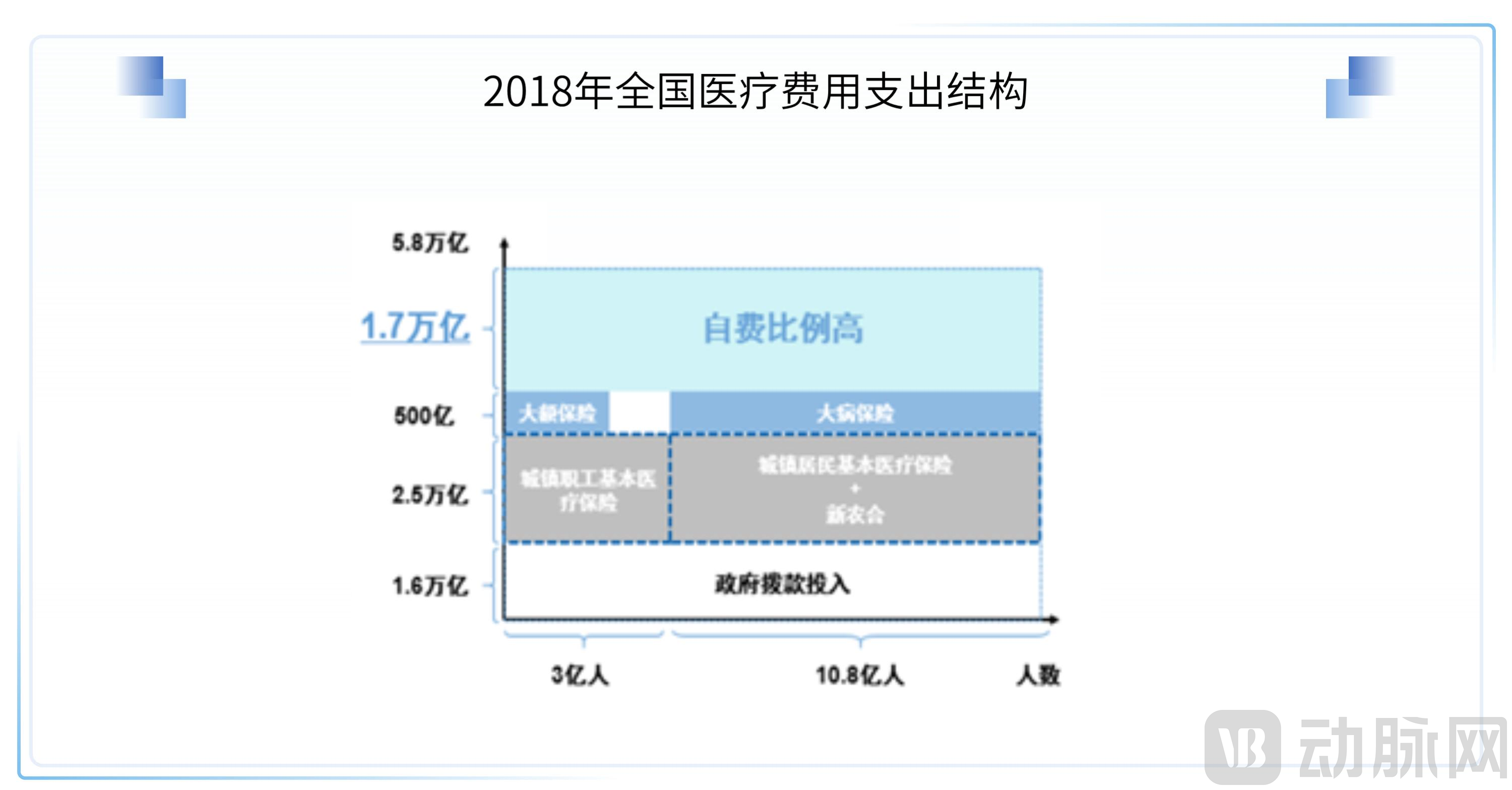
The penetration rate of critical illness insurance in the individual life insurance sector is already high. Currently, sales of critical illness policies in China account for 60% of the market, indicating excessive saturation and limited room for further expansion. The cumulative new premium potential for critical illness insurance is projected to range between RMB 1.25 trillion and RMB 1.86 trillion. Based on current trends, cumulative new premiums before 2018 amounted to approximately RMB 420 billion, with 2019 expected to reach nearly RMB 130 billion. In subsequent years, growth rates are anticipated to gradually decline due to factors such as workforce constraints, pricing, and penetration levels. Critical illness insurance is expected to achieve a relatively high coverage level by 2023–2025, with the growth rate of new premiums potentially slowing down to single-digit figures.
Limited Scale of Million-Yuan Medical Insurance and Huiminbao: 1. The million-yuan medical insurance market was projected to reach RMB 50 billion in 2020, with a clear trend of slowing growth in the future. Customer acquisition through costly consumer-facing traffic generation has hit a bottleneck, while offline agents have already achieved a certain penetration rate for million-yuan medical insurance products. 2. Huiminbao products in the market can only cover the most basic portion of major disease medical expenses beyond social health insurance, limiting their future market size to the tens of billions of yuan. Assuming a 30% enrollment rate among China’s 1.4 billion people (current enrollment rates in most regions are only 5%-10%, while Shanghai, having just launched its program, has set a government target of 30%-50%), and an average premium per policy of RMB 100, the total premium volume for Huiminbao is estimated to reach RMB 42 billion.
Group Insurance Opportunities: The segment of the healthcare system that policymakers most wish to decouple is medical coverage for middle-class and higher-income individuals. For this demographic, reducing public health insurance expenditures through private health insurance is the most viable approach. Group health insurance inherently addresses issues related to medical payment and reimbursement. By leveraging B2B commercial insurance to meet healthcare financing needs, and facilitating B2C penetration, it resolves challenges associated with limited access to purchase channels and excessively high policy costs.
In terms of insurance products, the homogenization of health insurance products has long been an issue, with few innovative new products achieving significant scale. We are seeing a growing number of health insurance policies bundling unique medical services and products, such as specialty drugs and CAR-T therapy; however, patient utilization rates for these added services and products remain low. Commercial health insurance requires higher-frequency, high-quality service offerings to better engage users. Currently, the loss ratio for health insurance stands at approximately 30%–40%, which is relatively low, indicating room for increase. A substantial portion of health insurance expenditures is allocated to customer acquisition, with marketing and channel costs accounting for a significant share, while the amount actually spent on claims and medical services is limited. Cost control and risk management capabilities need improvement. We believe that commercial insurance products linked to medical services, rehabilitation, elderly care, and nursing services, which can meet individuals’ needs for high-frequency, high-quality care, hold considerable future potential.
Regarding insurance distribution channels, offline insurer agents and bancassurance channels will remain the primary channels in the short term. The growth of the insurer agent channel will be constrained, while the intermediary and brokerage channel is expected to achieve notable growth rates. In 2021, the health insurance market grew by only 3.35% year-on-year, indicating a significant slowdown in growth. Within this context, the agent system has become less effective than in the past at acquiring and retaining new customers. Meanwhile, online health insurance channels have experienced sluggish growth due to regulatory requirements for brokerage licenses. As of 2019, more than 60 million people had engaged in insurance sales. The attrition rate among low-quality agents is high, and customer acquisition is challenging. Consequently, high-performing agents and brokers are playing an increasingly important role by delivering sustained value and high-quality services to users.
Regarding third-party services, underwriting and claims adjudication services need to be improved by leveraging the infrastructure development of commercial insurance’s fast-track and direct-payment systems. Meanwhile, integrating claims settlement processes with hospitals and insurers is a substantial undertaking that requires sustained efforts over an extended period and continuous government support. The infrastructure for direct and fast-track claims payments can accelerate the upgrading of claims operations by insurance institutions, simplify reimbursement procedures for patients seeking medical care, and meet the innovative service needs of healthcare providers, thereby holding significant importance for the products and services of commercial health insurance.
3. Out-of-pocket sectors such as ophthalmology, dentistry, mental health, and rehabilitation remain key focus areas
Guided by the basic medical insurance principle of “ensuring essential coverage with broad reach,” and amid the worsening deficit between medical insurance revenues and expenditures, it is difficult for public medical insurance to cover consumer healthcare and digital health products and services outside public hospitals. Within the commercial health insurance sector, high-end health insurance offers significant growth potential, primarily linking to mid-to-high-end medical care and out-of-pocket medical services. Due to factors such as the immaturity of commercial insurance and corporate payment mechanisms, along with low public awareness of proactive health management, the optimal approach is to start with essential, high-demand services to accumulate a core base of paying users and related data. This will facilitate a smooth expansion into full-cycle digital health management as the payment system evolves in the future.
In the realm of out-of-pocket medical services, specialties such as dentistry, obstetrics and gynecology, and ophthalmology have achieved considerable development due to low technical and policy barriers and manageable risks. In contrast, fields like psychiatry and psychology, pediatrics, and rehabilitation face limited enthusiasm for expansion among public hospitals, owing to factors such as minimal medication use, fewer diagnostic tests, and high clinical complexity, thereby creating opportunities for differentiated growth in the premium healthcare sector.
Ophthalmology and dentistry exhibit strong consumer-driven characteristics, with patients demonstrating a greater willingness to pay: 1. In the field of ophthalmology, non-public eye hospitals are rapidly increasing, experiencing swift growth driven by robust industry demand and policy encouragement for private healthcare provision. The sector holds significant consumption potential; for instance, the high-end optometry segment, particularly orthokeratology lenses, has seen annual industry growth rates exceeding 30% in recent years. Additionally, the average per-capita pharmaceutical and medical expenditure for cataract treatment has risen from RMB 5,004 to RMB 6,536. 2. In the field of dentistry, following the implementation of centralized procurement for dental implants in 2022, restrictions on implant availability in public hospitals have led to the release of some mid-to-high-end demand from the public system. Out-of-pocket payment remains the preferred choice for mid-to-high-income populations.
Psychological counseling is primarily self-paid and has not yet been formally included in the national medical insurance system. However, some local governments have launched pilot programs to incorporate psychological counseling into medical insurance coverage, such as in Beijing and Shenzhen. Due to widespread gross margin declines in psychiatric specialty hospitals driven by medical insurance cost-containment measures, high-end demand will increasingly spill over into the self-pay segment.
Private rehabilitation institutions have grown from 118 to 545 over the past decade, representing a compound annual growth rate (CAGR) of 18.53%. Alongside this absolute increase, the proportion of private hospitals has expanded from below 50% to 75%. The “Notice on Including Certain Medical Rehabilitation Items in the Scope of Basic Medical Insurance” issued in 2010, and the “Notice on Adding Certain Medical Rehabilitation Items to the Scope of Basic Medical Insurance Payment” promulgated in 2016, successively incorporated 9 assessment items and 20 treatment items into the scope of medical insurance coverage. Although specific payment methods and coverage scopes for rehabilitation services remain undetermined and vary across regions, out-of-pocket payment continues to be the predominant mode.
Following the inaugural year of digital healthcare in 2020, the primary market in 2021 presented opportunities across more specialized segments. On the supply side, the application of technology has enhanced R&D efficiency and manufacturing informatization in pharmaceutical development and production. Meanwhile, “digital therapeutics” are poised for growth, with the diversification of disease treatment methods and the shortening of new drug development cycles accelerating the overall development of the medical and health industry. However, it remains to be seen whether AI, as a tool for drug discovery, can consistently succeed in generating new pharmaceuticals.From the demand perspective, myopia prevention and control, along with mental and psychological health, are core priorities for children and adolescents. For middle-aged individuals, andrological and gynecological issues constitute a significant proportion of health concerns. Among the elderly, there is substantial demand for rehabilitation, Alzheimer’s disease (AD) management, and early cancer screening. Addressing these persistent and high-intensity health challenges requires not only in-hospital treatment but also the integration of out-of-hospital settings, including home care. Wearable devices and smart IoT technologies will further advance remote digital healthcare.On the payment front, both public medical insurance and commercial health insurance underwent continuous changes in 2021. In terms of public insurance, measures such as centralized procurement and payment method reforms aimed at cost containment and efficiency improvement will deepen further. Conversely, the commercial insurance sector has experienced slowed market growth and increasingly stringent regulations, placing it in a position of uncertainty within its development cycle. Out-of-pocket expenditures will remain a significant proportion of total healthcare spending in the short term. Consequently, digital healthcare business models must first achieve breakthroughs in the out-of-pocket market before expanding to other payment channels.
IV. Companies Worth Watching in 2022
>>>>
Aier Medical
Aibo Medical Robotics focuses on the research and development of vascular interventional surgical robots. Its product portfolio covers multiple indications, including neurointerventional, coronary interventional, and peripheral interventional procedures, addressing a market with an annual volume of over 5 million surgeries in China and a substantial patient population. Aibo’s products enhance surgical precision and safety while reducing or even eliminating occupational risks for physicians, such as radiation exposure and chronic spinal and joint injuries. This innovation has the potential to benefit a large number of patients and clinicians, simultaneously addressing critical clinical pain points for both parties and delivering significant social value. The core R&D team consists of masters and doctoral graduates specializing in biomedical engineering, robotics, and control engineering from top universities in China and abroad. In 2017, the team successfully completed human clinical trials at Beijing Tiantan Hospital, becoming the first domestic R&D team in this field to achieve this milestone.
Bosteng
Bositeng is a technology company dedicated to leveraging artificial intelligence and cognitive science to provide world-leading, full-course digital solutions for cognitive impairment. Since 2016, it has provided cognitive risk assessment and intervention training services to over 12 million cumulative users, covering mainstream online platforms such as Alipay, WeChat, ByteDance, and Ping An, as well as select offline government platforms. The company has established exclusive strategic partnerships with top-tier brain science research and medical institutions, including the Institute of Neuroscience of the Chinese Academy of Sciences. It operates the world’s largest data management platform for cognitive impairment risk and China’s only digital center for cognitive impairment intervention training, making it the only company globally to achieve a commercial closed loop integrating AI-based quantitative assessment and precise prevention of dementia.
Joyous Health
Dayue Health is an innovative high-tech enterprise integrating independent research and development, production, and marketing. Centered on the needs of female consumers in pelvic floor health and sexual health, Dayue Medical is committed to becoming China’s leading provider of mobile healthcare solutions for women’s pelvic floor and sexual health. It has currently launched three Class II medical device products: a home-use pelvic floor rehabilitation therapy device, a postpartum rehabilitation therapy device, and a low-frequency therapy device for treating diastasis recti abdominis. The target population extends from postpartum women to non-postpartum women, covering 400 million adult women, with cumulative sales exceeding 30,000 units within two years of product launch.
FitTime Ruijian Era
Ruijian Shidai is China’s leading digital health management service platform, offering postpartum rehabilitation and fat-loss services for women, as well as men’s health solutions for men. The company generates personal health profiles based on user data, creates multi-dimensional prescriptions using indicator-matching principles, and delivers scientific, long-term, personalized health management solutions. To date, it has accumulated over 37 million dietary and 18 million exercise behavioral data points from users. By integrating a service mini-program, an AI-powered operational backend, and a team of health managers, the company provides intelligent customized plans, supervised guidance, smart outcome tracking, and review analysis, delivering high-frequency, real-time, end-to-end services. Empowered by its intelligent system, multiple service lines are interconnected at the backend, enhancing the efficiency of health managers.
Fourier Intelligence
Fourier Intelligence is a global leader in rehabilitation robotics and rehabilitation solutions. Leveraging its proprietary technology platform, the company has achieved complete domestic manufacturing of core robotic components, ranging from control boards and chips to motors. Fourier Intelligence’s rehabilitation robots currently enjoy dominant market coverage and have established a strong brand reputation. Looking ahead, the robotics technology industrial platform will serve as Fourier’s core foundation, enabling the company to replicate its successful experience in the rehabilitation sector across other fields. A comprehensively leading, multi-sector industrial robotics platform will unlock greater growth potential and opportunities for Fourier Intelligence.
Guanglang Shijing
Guanglang Shijing is China’s leading digital technology company in the field of digital ophthalmology, providing innovative solutions for areas such as the treatment of strabismus and amblyopia in children and adolescents, as well as myopia prevention and control. Its independently developed product portfolio includes a telemedicine platform for vision therapy, VR wearable smart devices, eye-tracking technology, an AI-based visual acuity screening system, and an AI-powered intelligent solution planning system. The company has successfully secured project approvals and completed acceptances from the Ministry of Science and Technology of China, the Guangzhou Municipal Bureau of Science and Information Technology, and the Tianhe District Bureau of Science and Information Technology, and has maintained its status as a National High-Tech Enterprise for nine consecutive years. It has obtained ISO 13485 certification, Intellectual Property Management System certification, Information System Security Level Protection filing, CE certification, and EN ISO 13485 certification, and has been granted more than 17 patents. The company has established stable cooperative relationships with over 2,000 hospitals across China.
Huiyi Huiying
Huiyi Huiying, established in 2016, is a high-tech enterprise specializing in artificial intelligence for medical imaging. It is dedicated to providing leading end-to-end solutions for medical data analysis to healthcare institutions at all levels worldwide. The company offers various cloud-based services rooted in medical image analysis for healthcare professionals and patients, driving the digitalization, mobilization, and intelligent transformation of medical imaging, and establishing a closed-loop system encompassing screening, diagnosis, and treatment decision support.Huiyi Huiying has launched a product matrix tailored to the differentiated needs of hospitals at various tiers and medical institutions both domestically and internationally. Unlike competitors that enter the market through application-layer products in radiology departments, Huiyi Huiying builds underlying data middle platforms based on medical imaging for hospitals. This approach not only meets their research requirements but also continuously delivers clinically relevant products addressing critical pain points in diagnosis, screening, treatment, and prognosis, thereby demonstrating strong business scalability.Among comparable companies in the same sector, Huiyi Huiying ranks in the first tier in terms of commercial revenue scale. Notably, it was among the first to enter the international market, providing AI-powered medical imaging products to healthcare institutions globally. Its AI products have been exported to more than 50 countries and are utilized by over 80 hospitals.
Jialiang Medical
Jialiang Medical is a high-tech enterprise dedicated to the fields of neurosurgery and brain science research. Its core technology platforms include BCMod brain-computer modulation technology, iSBS (intracranial subdural brain stimulation) technology for fully intracranial implantation of deep brain stimulation, and magnetic resonance-guided laser ablation minimally invasive surgical systems, providing innovative medical device solutions for the treatment of various neurological disorders. Jialiang Medical operates under the brands Nuowei Medical and Newton Technology. Through years of intensive R&D, the company has established innovative medical device solutions for drug-resistant epilepsy, brain tumors, Parkinson’s disease, depression, and other conditions, aiming to become a trusted global leader in neuromedicine solutions. Additionally, Jialiang Medical offers research services and comprehensive solutions based on neurocognition and disease-related brain-computer interfaces, including optogenetics research equipment and consumables. Its subsidiary, Nuowei Medical, jointly developed and manufactured the Epilcure responsive neurostimulator for drug-resistant epilepsy in collaboration with Zhejiang University; the first clinical implantation in Asia was successfully completed in March 2021, demonstrating significant therapeutic efficacy. Multiple company projects have received support from national initiatives such as the National 863 Program, Zhejiang Province’s Major Science and Technology Special Projects, and Zhejiang Province’s Key R&D Programs. To date, the company has filed for or been granted over one hundred patents and has received honors such as inclusion in the “Top 100 Future Healthcare Companies 2020–2021.”
66Brain
Liu Liu Brain is a pioneer company dedicated to the innovative application of cutting-edge achievements in brain science. The company is committed to integrating advanced brain science discoveries with internet technologies and has established professional collaborations with numerous domestic and international research and medical institutions. Together, they have developed multiple brain function assessment and cognitive rehabilitation training systems tailored to patients with various conditions. These offerings primarily include the Brain Function Information Management Platform Software System, the Basic Cognitive Ability Assessment System, and the Cognitive Decision-Making and Behavioral Performance Measurement Platform. The products enable dynamic data analysis based on individual patient profiles, automatically adjusting treatment plans to deliver personalized diagnostic and therapeutic services, thereby enhancing treatment efficacy.
The Lancet
Lancet Robotics, founded in 2018, is a technology-driven enterprise dedicated to advancing the intelligence, minimally invasive nature, and precision of orthopedic and dental implant surgeries. The company’s vision is to become a leader in technological innovation for orthopedic and oral surgical procedures. Its independently developed robotic systems for knee arthroplasty, hip arthroplasty, and dental implant surgery have entered clinical trials, while its software products offering digital orthopedic and digital oral intelligent surgical solutions are already being utilized in multiple hospitals. Leveraging substantial technical barriers to entry and cross-disciplinary capabilities, the company aims to expand across medical specialties and create greater value in broader markets.
Mingdu Zhiyun
Mingdu Zhiyun is a service provider for the digital transformation of China’s pharmaceutical industry, offering integrated digital intelligence solutions that cover the entire value chain—from R&D and manufacturing to logistics. As the undisputed leader in this sector, Mingdu Zhiyun has successfully executed end-to-end product development and delivery for pharmaceutical enterprises, establishing robust product and market moats. Its collaborations with numerous industry benchmark clients, such as Pharmaron, Walvax Biotechnology, Reikoo Biologics, Livzon Pharmaceutical Group, and Porton Biopharma, demonstrate its exceptional technological prowess and delivery capabilities. The smart upgrade segment for pharmaceutical companies represents a new blue-ocean market for domestic substitution, previously monopolized by foreign firms. As a leading enterprise, Mingdu Zhiyun holds a dominant industry position and competitive advantage. The company is committed to growing and co-creating value alongside the top-tier pharmaceutical enterprises it serves and partners with.
Mijian
Mi Jian is China’s largest and most active online community for cancer and critical illness patients, as well as an out-of-hospital rehabilitation management platform, providing patients with precise, one-stop rehabilitation services. The company operates based on specific disease categories and currently features 14 disease-specific sections. Patients can use the Mi Jian APP, official website, WeChat Official Account, or WeChat Mini Program to select their specific condition, connect with fellow patients, and access tailored services. By combining a peer-support community with the delivery of the latest professional medical information, Mi Jian helps patients efficiently learn about disease knowledge and rehabilitation experiences, while gaining access to precise physician and medication resources. Mi Jian provides patients with a comprehensive, end-to-end service loop, including early tumor screening, referrals and consultations with top domestic hospitals and experts, overseas medical services in countries such as the United States, Japan, and Singapore, as well as genetic testing, rehabilitation insurance, clinical trials, and out-of-hospital nutritional support, all aimed at helping patients achieve optimal treatment outcomes.
BrainLand Technology
BrainLand Technology is a platform company specializing in breakthroughs in the underlying technologies of brain-computer interfaces (BCI), their industrialization, and the integrated application of BCI with artificial intelligence. It is one of the enterprises participating in the "China Brain Project." Guided by its mission to "enhance human well-being through brain science," the company leverages real-time EEG analysis algorithms to provide comprehensive BCI solutions for sectors including healthcare, workplace safety, and entertainment devices. BrainLand has successfully implemented projects in Hangzhou, Ningbo, Zhuhai, Jinan, and other cities. Boasting an industry-leading team, the company appoints Academician Zhang Bo, Dean of the Institute for Artificial Intelligence at Tsinghua University, as its Chief Scientist. The core founding team hails from prestigious institutions such as Harvard University, MIT, Stanford University, the University of Oxford, Tsinghua University, and the Chinese Academy of Sciences, bringing extensive industry experience and a well-structured division of labor. The company possesses a fully independent intellectual property rights system, focusing on brain science, BCI technology, and open EEG data platforms, with particular expertise in core underlying technologies such as EEG computational analysis algorithms and intelligent BCI integrated circuits.
PreciseDx
PreBiome is a novel platform company driven by “multi-omics + data mining,” focusing on differentiated R&D strategies for innovative drugs. Centered on advanced multi-omics technologies, bioinformatics, and AI algorithms, the company leverages its independently developed AI-driven massive multi-omics data mining system, AIBERT.®, providing pharmaceutical and biotechnology companies with world-class innovative services, including drug mechanism research, biomarker development, clinical differentiation R&D strategies based on biomarkers and precision medicine, clinical statistics, central laboratory services, and co-development of companion diagnostics. The company has established in-depth collaborations with many leading domestic and international pharmaceutical and biotechnology firms, facilitating the R&D and approval of multiple new drugs. Meanwhile, in the clinical setting, the company works alongside partner pharmaceutical companies and physicians to provide patients with advanced and precise testing services, thereby supporting the clinical practice of precision medication. As a high-quality enterprise in China’s multi-omics sector, Purui Benchmark will help innovative drugs and medical devices better establish differentiated strategies, elevating China’s innovative drug research to a higher level.
Wholehearted
Quanxin Quanyi is a one-stop procurement platform for medical supplies, dedicated to serving the life sciences and pharmaceutical R&D industries. It is committed to building an end-to-end supply chain from manufacturers to users, encompassing a one-stop management platform (SPM) for the procurement, logistics, and inventory management of laboratory consumables, reagents, and equipment. In the third quarter of 2017, the Quanxin Quanyi online marketplace was officially launched. Currently, the company serves nearly several hundred biomedical R&D institutions and global pharmaceutical companies’ R&D centers, with key clients including BeiGene, Hutchison MediPharma, Zai Lab, Boehringer Ingelheim, Novartis, and Covance.
DeepNexus
DeepNexus was founded by a top-tier technical team from the University of Oxford, UK, and is dedicated to the research, development, and manufacturing of AI-powered, medical-grade smart wearable devices. Focusing on the intersection of AI and healthcare, the company aims to address many of the current constraints in chronic disease management by leveraging its leading technologies in biosensors, flexible electronics, wireless transmission, data analytics, and deep learning algorithms. By collecting and analyzing biochemical indicators related to chronic diseases through its self-developed multi-dimensional smart hardware and deep learning algorithms, DeepNexus provides users with cost-effective, personalized disease management solutions, making in-depth health management smarter, more precise, and more comprehensive.
Shengbohui
Shengbohui is a high-tech software enterprise dedicated to providing comprehensive hospital informatics solutions. Guided by informatized operations and sustainable development, the company has developed CoorHealth, a next-generation hospital informatics business platform built on cloud computing and microservices architecture. The platform encompasses six core modules: Hospital Information System (HIS), Electronic Medical Record (EMR), Hospital Resource Planning (HRP), integration platform, medical data center, and internet hospital. It offers optimal solutions for unified management of medical services, cross-campus sharing of medical resources, and integrated planning and control of human, financial, and material resources across multi-campus group hospitals, medical alliances, and medical consortia. This provides stable support for high-quality operational performance and rapid expansion in group-based healthcare settings. To date, Shengbohui has delivered high-quality services to nearly 30 clients across more than 10 regions, including Shanghai, Zhejiang, Jiangsu, Hubei, Guangxi, Gansu, Yunnan, Hebei, and Xinjiang, earning widespread market recognition.
Terhofen
Tehoffen is an AI-driven digital therapeutics developer dedicated to improving brain health, having created an AI-based screening and digital therapeutics system. The company has established a long-term, stable partnership with the Shanghai Mental Health Center to carry out screening, diagnosis, and treatment for Alzheimer’s disease (AD), as well as interventions for conditions such as attention-deficit/hyperactivity disorder (ADHD) in children and postpartum depression (PPD). By integrating voice, imagery, and physical activity into immersive scenarios powered by AI adaptive algorithms, the system engages brain neurofeedback loops to modulate neurotransmitter secretion and alter the physical connectivity of neural networks, thereby achieving therapeutic effects for brain disorders. Committed to the “gaming + healthcare” model, the company focuses on the development of digital therapeutics products to improve the quality of life for patients with brain disorders.
Tengchen Bio
Tengchen Bio is a high-tech biotechnology enterprise founded by PhD holders who returned to China after studying in Germany, dedicated to developing next-generation in vitro diagnostic technologies and products for cancer. The company possesses leading proprietary technologies in early cancer detection, prognosis assessment, treatment efficacy evaluation, and recurrence monitoring, and has secured investment from top-tier Chinese venture capital firms. Its product for differentiating benign and malignant pulmonary nodules, “Feijieming,” utilizes DNA methylation diagnostic technology. It enables precise detection of DNA methylation sites using only 2 mL of blood, thereby achieving differentiation between benign and malignant pulmonary nodules. With a specificity exceeding 95%, the differentiation accuracy reaches 80–92%. The company holds internationally advanced next-generation in vitro diagnostic technologies for cancer and was awarded the High-Tech Startup Award by the German Federal Ministry for Economic Affairs, recognized as a technology with disruptive industry potential. Currently, its product for differentiating benign and malignant pulmonary nodules, “Feijieming,” has entered the market via Laboratory Developed Tests (LDTs) and achieved commercialization.
Yaocheng Health
Yaocheng Health Technology was founded in August 2020. It empowers the experimental design, data management, and operations of life sciences R&D through cloud computing, big data, AI, and enterprise-grade B2B SaaS technologies. This ensures clinical data consistency, enhances design and execution efficiency, controls cost investments, and accelerates the commercialization of innovative drugs and novel medical devices. In May 2021, Yaocheng Health Technology officially launched the AuroraPrime Clinical Research Platform. Unlike other clinical research management systems, the AuroraPrime platform offers a comprehensive suite of interconnected functional modules. It incorporates a powerful clinical logic engine as a unified underlying foundation, enabling seamless and efficient interoperability among multiple modules. This allows information to flow across different dimensions, thereby improving the efficiency of trial design and execution, optimizing collaboration, and reducing costs.
MediLink
As a leading enterprise in the field of healthcare informatization, Yilijie began exploring new service models in 2014. It pioneered the “Middle-Platform Solution,” represented by integration platforms and data centers designed to address hospital IT architecture challenges and data silos, serving as the “architectural backbone” for building smart hospitals. By leveraging the “Dual-Wheel Strategy”—focusing on achieving high ratings in the “Interconnectivity Evaluation” and the “Electronic Medical Record (EMR) System Grading Assessment”—Yilijie has promoted the standardized development of smart hospitals. Using data as the connecting link, the company has developed a wide range of complex applications for medical institutions, including management tools for policy-based regulation, cost control, and connotation quality control, as well as clinical decision support systems and observational research data platforms based on healthcare big data. To date, Yilijie has provided integration platform and data center solutions, along with a comprehensive suite of smart hospital products centered on EMRs, to more than 200 Grade A tertiary hospitals across China. Its clientele includes three of the top 10 hospitals nationwide: The First Affiliated Hospital of Sun Yat-sen University, Ruijin Hospital affiliated with Shanghai Jiao Tong University, and Huashan Hospital affiliated with Fudan University. Its services cover over 17 provinces across East, Central, South, Southwest China, as well as the Shandong and Hebei regions.
YiXinLi
Yi Xinli was established in July 2011 as a professional platform for psychological services. It currently boasts 22 million registered users across 120 countries and regions, including 2.8 million paying subscribers. Its matrix of official WeChat accounts has accumulated 6 million followers, and its Q&A community has provided 640,000 free responses to individuals seeking help. Guided by the brand philosophy “The World and I Love You” and the vision of “helping users find solutions to significant life challenges,” Yi Xinli primarily offers five product service lines: counseling, courses, assessments, FM audio content, and e-commerce, with courses, assessments, and counseling serving as its three core business segments. Additionally, the company has established close collaborations with more than 200 psychological institutions and over 200 psychology authors across China.
Yongliu Technology
Yongliu Technology is a platform-based enterprise dedicated to providing personalized disease course management solutions for patient groups in specific disease areas, as well as one-stop clinical, research, and educational services for physicians, through the application of advanced artificial intelligence (AI) technologies and comprehensive professional services in vertical disease specialties. Yongliu has currently expanded its offerings to include an AI-assisted diagnosis and treatment integrated platform for dermatological conditions, a disease course management platform targeting specific skin diseases, and an intelligent professional academic interaction platform designed for institutions, departments, and industry partners. Leveraging Yongliu Technology’s leading technological applications, high-quality professional services, and collaborative models that create mutual benefits for all stakeholders, physicians can conduct clinical, research, and educational work with greater efficiency and effectiveness. In August 2020, Yongliu Technology partnered with Deepwise Medical to launch the new generation of AI-assisted dermatology diagnosis and treatment system, “Ruifu Recognition.” Ruifu Recognition will continue to serve the broader physician community with more efficient AI-assisted capabilities, a more open application architecture, and enhanced scalability.
UMAI Technology
UMed Technology is an internet healthcare company specializing in online education for dermatologists, AI systems for dermatology, and the development of internet-based information systems. Deeply rooted in the dermatology sector, UMed Technology has established a “D+B+C” value realization model and is progressively integrating the full-chain pathway encompassing clinical data collection, doctor-patient education, market promotion, diagnosis and treatment services, and disease-specific course management. On the D-side (Doctor), through its flagship app, UMed Doctor, it provides extensive original professional learning content to support lifelong learning for dermatologists. It also co-initiates and promotes projects such as the “China Dermatology Imaging Capacity Building Project” and the “Chinese Population Dermatology Imaging Resource Bank (CSID),” facilitating scientific innovation and translation of research outcomes among dermatologists. On the B-side (Business), UMed Technology offers enterprises an integrated digital marketing platform along with comprehensive omnichannel marketing solutions. These include combined PGC (Professionally Generated Content) and UGC (User-Generated Content) media dissemination across the entire internet, medical support, and market strategies tailored to product characteristics designed to capture consumer mindshare. Its clients currently include over 20 top multinational pharmaceutical companies and leading cosmetic brands. On the C-side (Consumer), it has built a one-stop skin management platform that provides professional science popularization to consumers, establishes personalized skin profiles, and achieves a closed-loop skin management system through long-term solutions combining one-stop online consultations and prescriptions with daily skincare recommendations. To date, its core product, the UMed Doctor app, has accumulated over 100,000 users, covering more than 95% of dermatologists in China. Additionally, the company provides digital marketing solutions to hundreds of dermatological pharmaceutical companies and skincare consumer goods companies. In April 2021, UMed Technology obtained an internet hospital license, and thousands of dermatologists are now practicing on the UMed Cloud Hospital, jointly promoting widespread access to professional dermatological education.
Youlai Doctor
Youlai Doctor is a leading precision health science education platform in China, serving as an authoritative producer and supplier of medical intellectual property. It is committed to building an open-loop ecosystem integrating “health education, medical services, and health management,” maximizing the value of physicians and health science knowledge, and empowering the national health industry. The platform has collaborated with over 30,000 physicians from more than 3,000 public hospitals across China, producing a cumulative total of 3.5 million pieces of health science content, including over 400,000 short-video episodes. On average, 25 million users visit the Youlai platform daily, with a monthly reach of 700 million impressions.
Zhongda Weixin
Zhongda Weixin is an AI-driven biopharmaceutical company specializing in macromolecular drug discovery. By integrating artificial intelligence, biophysics, high-performance computing, and generative biology, the company has developed a distinctive platform for drug molecule generation, design, and simulation. It is committed to revolutionizing traditional drug discovery methods and accelerating the R&D of innovative therapeutics, including proteins, antibodies, and mRNA-based drugs. The core team comprises experts from internationally renowned AI pharmaceutical companies, leading pharmaceutical enterprises, major internet technology firms, and top-tier Chinese universities (Project 985 institutions), bringing extensive cross-disciplinary experience in pharmaceuticals, life sciences, artificial intelligence, and software development. Wecomput has independently developed WeMol, an intelligent digital molecular computing platform with proprietary intellectual property rights. WeMol supports digital computation and AI modeling for proteins, antibodies, nucleic acids, small-molecule chemical drugs, biomaterials, and natural products. The core algorithmic modules of the WeMol platform surpass or match international mainstream commercial software in key performance indicators such as speed, accuracy, and storage efficiency. The company has already achieved partial commercial revenue, with promising prospects for future commercialization.
General Advisors | Wang Ran, Hong Ailin, Li Gang
Authors | Li Rui, Zhang Yizhou, Yi Chuanqi, Hu Binyu, Hu Tianmou
Editors | Guo Banghui, Wu Jing, Gao Dawei
Graphics | Li Xin, Han Linfeng