

EvoEndo, Founded by Pediatric Specialists, Enters the Multi-Billion-Dollar Market with FDA-Cleared 3.5mm Single-Use Nasal Endoscope

EvoEndo
Medical Device Developer
Endoscopes are a category of commonly used yet expensive equipment in clinical settings. A traditional endoscopy system typically includes at least one processor unit and two flexible endoscopes, with a total hospital procurement cost of approximately RMB 2 million. Meanwhile, robust demand has fostered a multi-billion-yuan market for endoscopes. From 2019 to 2021, global financing in the endoscopy industry surged from USD 93 million to USD 869 million, representing a nearly tenfold increase over two years.
Traditional endoscopes, which cost hundreds of thousands to millions of yuan per unit, are certainly not designed for single-use; rather, they are engineered as reusable devices that require thorough cleaning and disinfection after each procedure. However, due to their high precision and complex structure, achieving adequate disinfection is challenging. Consequently, cross-infection associated with endoscopes has consistently appeared in the annual “Top 10 Health Technology Hazards” report published by the Emergency Care Research Institute (ECRI) in the United States.
Endoscopes can be broadly divided into the main unit and the scope body. Currently, the image sensor on the scope body is the primary cost driver. As lower-cost CMOS sensors gradually replace CCDs, single-use endoscopes are increasingly entering the market.
Pediatric Gastroenterologist Founds EvoEndo to Address Challenges in Pediatric Endoscopy
EvoEndo is a U.S.-based medical device company specializing in the development of single-use, non-sedated endoscopes. Founded in 2017 and headquartered in Colorado, USA, the company is currently led by CEO Heather Underwood, a Stanford University graduate and seasoned entrepreneur with extensive experience in the medical device industry. Recently, EvoEndo’s EvoEndo® Single-Use Endoscopy System received FDA 510(k) clearance.
EvoEndo was co-founded by the Division of Pulmonary and Gastroenterology team at Children’s Hospital Colorado, including pediatric gastroenterologist Dr. Joel Friedlander and pulmonologist Dr. Robin Deterding. A group of pediatricians came together to develop an endoscope, with the primary aim of addressing the clinical needs of children.
In recent years, the number of pediatric patients with upper gastrointestinal disorders has been steadily increasing. Endoscopy is a critical diagnostic and therapeutic modality for pediatric digestive system diseases, enabling visualization of the entire upper gastrointestinal tract from the pharynx, esophagus, and stomach to the proximal duodenum. Although imaging techniques such as CT are more comfortable for patients, endoscopy remains the preferred method for evaluating the digestive system due to its invasive nature, which provides direct, clear visualization and facilitates tissue sampling for pathological examination.
Currently, conventional electronic endoscopes are more commonly used in clinical practice, with their probe and scope outer diameters generally ranging from 9 to 11 mm. These conventional endoscopes are inserted orally in clinical settings; contact with the base of the tongue can trigger the gag reflex, and patients under stress, such as anxiety and pain, are also prone to cardiovascular and cerebrovascular accidents.
In recent years, painless endoscopy and ultra-thin transnasal endoscopy have gradually become widespread. The primary difference between painless endoscopy and conventional endoscopy is that painless endoscopy utilizes intravenous anesthesia, which effectively enhances patient compliance and comfort.
However, painless endoscopy also has drawbacks. First, the cost of general anesthetic agents is relatively high. Second, both pre-anesthesia preparation and emergence from anesthesia require time. Most importantly, anesthesia necessitates the establishment of an additional intravenous access, which increases the burden on patients; while it reduces cardiovascular and cerebrovascular risks, it concurrently heightens anesthesia-related risks.
The overall incidence of complications associated with painless endoscopy is low, at less than 5‰, but the majority are related to anesthetic agents.
For children, ultra-thin transnasal endoscopy is an excellent option. Conventional transnasal endoscopes have an outer diameter of 4–6 mm and are inserted through the nasal cavity, bypassing the base of the tongue to directly enter the digestive tract. This approach reduces discomfort, thereby eliminating the need for intravenous anesthesia.
EvoEndo® Disposable Endoscope System with a 3.5mm Outer Diameter Shaft
The FDA-approved EvoEndo® Disposable Endoscope System by EvoEndo is an ultra-thin transnasal endoscope, primarily comprising four components: the distal sensor, insertion tube, control handle, and image processing unit.
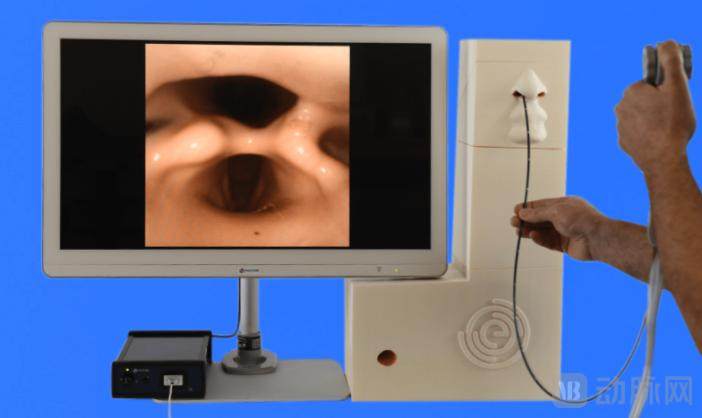
EvoEndo® Single-Use Endoscope System Product Image. Source: EvoEndo Official Website
First is the front-end sensor component. If the diameter of a transnasal endoscope is too large, it may irritate or even damage the nasal mucosa. The probe and shaft of the EvoEndo endoscope have an outer diameter of 3.5 mm. EvoEndo considers this outer diameter sufficiently small to allow passage through nearly all nasal cavities, enabling a comfortable experience during endoscopic examination without the need for intravenous anesthesia.
Some physicians and patients remain skeptical about the performance of standard disposable endoscopes, believing that “traditional reusable endoscopes are preferable unless there are specific indications.” This hesitation is even more pronounced given that EvoEndo’s disposable endoscope is a transnasal model with a 3.5 mm diameter, which entails greater technical complexity. Although EvoEndo claims on its official website that its imaging quality is comparable to that of traditional reusable endoscopes, no specific data supporting this assertion are provided on the site.
The section from the front-end sensor to the handle is the insertion tube. The insertion tube of the EvoEndo endoscope is 1.1 m in length, which is sufficient for a complete pediatric transnasal upper gastrointestinal examination.
An endoscopic insertion tube typically comprises a water/air channel (to clear the field of view for optimal visualization), a suction (biopsy) channel, a light guide bundle for illumination transmission, an image guide bundle for image transmission, and angulation control wires. Integrating this complex structure within a 3.5-mm diameter poses a significant engineering challenge. To address this, EvoEndo has integrated the water/air channel with the suction channel and incorporated distinct activation buttons on the handle to independently control water and air delivery.
The EvoEndo endoscope handle features a 2-mm biopsy channel. Typically, endoscopes with smaller outer diameters are equipped with narrower biopsy channels, necessitating the use of specialized and expensive biopsy forceps. However, the 2-mm biopsy channel of the EvoEndo can accommodate standard-diameter, cost-effective pediatric biopsy forceps, eliminating the need for specialized and costly instruments.
The EvoEndo endoscope can deflect in four directions, allowing physicians to perform examinations with a 120° field of view. This functionality is supported by three knobs located at the center and both ends of the handle.
A cable extends from the rear of the handle to the EvoEndo controller, which processes video and images from the endoscope and outputs them directly to a medical monitor or computer system via HDMI or USB. The system is compatible with industry-standard endoscopy reporting software. Measuring only 6×8 inches, the processor is portable and easy to carry.
Partner with VR entertainment devices and collaborate with Nanwei Medical for distribution
The above outlines the hardware innovations of the EvoEndo endoscope. For pediatric patients, fear of endoscopy is primarily a psychological barrier. To help patients relax, EvoEndo equips each patient with VR entertainment devices. Furthermore, as patients remain conscious during the procedure, physicians can communicate with them to alleviate anxiety. Patients can report any discomfort at any time, allowing physicians to make timely adjustments.
This endoscope is primarily designed for children, but it is also suitable for certain adults, such as elderly or frail individuals, or those with cardiopulmonary diseases who cannot tolerate conventional gastroscopy.
According to the EvoEndo official website, due to the reduced need for intravenous anesthesia, preoperative fasting time has been shortened from 6–8 hours to 2–4 hours, and postoperative recovery time has decreased from at least one hour to allowing immediate resumption of daily activities.
This undoubtedly enhances the comfort of medical visits for patients with various upper gastrointestinal disorders—such as eosinophilic esophagitis (EoE), dysphagia, celiac disease, and gastroesophageal reflux disease—who require frequent endoscopic examinations.
A study published in 2021 in The Journal of Allergy and Clinical Immunology: In Practice reported that the use of VR devices enables earlier detection of eosinophilic esophagitis. Joel Friedlander, one of the founders of EvoEndo, also participated in this study.
EvoEndo endoscopes are single-use, disposable devices. While this may seem wasteful, let us calculate the overall economic cost.
For hospitals, single-use endoscopes eliminate cleaning and disinfection requirements, offering a use-and-dispose model with no wear-and-tear costs. For society, the “one patient, one scope” approach prevents cross-infection and reduces disease transmission. For patients, it eliminates the risk of cross-infection and lowers costs associated with managing complications. EvoEndo states that their endoscopes enable immediate examination upon symptom detection, allowing patients to resume normal activities right after the procedure without needing to take time off work.
Following its market launch, the EvoEndo single-use endoscope is distributed by Micro-Tech Endoscopy USA, a wholly-owned subsidiary of Nanwei Medical specializing in device sales. This collaboration forms part of Nanwei Medical’s strategic expansion into the single-use endoscope sector. To further promote the EvoEndo endoscopy system, EvoEndo also provides educational and training components.
Recently, EvoEndo secured $8.4 million in Series A financing, led by its founding investor TLP Investment Partners LLC (TLP), with participation from the Sunshine Charitable Foundation and others. According to EvoEndo, the proceeds will be used to launch the initial commercialization plan for its single-use endoscopy system, specifically to expand team capacity and manufacturing capabilities, as well as to fund clinical and post-market surveillance studies.
Global Disposable Endoscopes Are in the Early Stages of Development, with China Poised to Overtake
According to data from the China Health and Family Planning Statistical Yearbook (2019), the number of discharged patients with digestive system diseases in China reached 9.0214 million in 2018, with a five-year compound annual growth rate of 17.64%. As the number of patients with digestive system disorders increases, the demand for endoscopes continues to rise.
From 2015 to 2019, the global scale of investment and financing in the endoscopy sector remained relatively stable. It was not until 2020 that the industry entered a period of explosive growth, with a significant surge in both the number of financing deals and the total amount raised. In 2021, there were 32 financing deals globally, with a total funding amount of approximately USD 869 million, representing a 46% year-on-year increase.
In 2021, the disposable endoscopy sector witnessed seven financing rounds, attracting investments from institutions such as Tencent Investment, Lilly Asia Ventures, and Hillhouse Capital. Institutions including Yuanhe Yuandian, Lilly Asia Ventures, and Cowin Capital had already established their presence in the field, repeatedly increasing their stakes in the same companies to support long-term project growth.
Leading global players in the single-use endoscopy market include Boston Scientific and Ambu. Ambu launched the world’s first single-use bronchoscope in 2009, followed by the gradual introduction of single-use laryngoscopes, cystoscopes, gastroduodenoscopes, colonoscopes, and duodenoscopes. In recent years, companies such as Olympus, which have traditionally focused on the reusable endoscopy market, have also entered the single-use endoscopy sector.
Currently, at least 12 companies in China have entered the single-use endoscope market. Examples include Ruipai Medical, Huaxin Medical, New Optic Vision Medical, Pusheng Medical, Anqing Medical, Lainsert, and Youkang Technology.
Both domestic and overseas companies are largely in the early stages of development in the field of single-use endoscopes, with Chinese manufacturers even poised to overtake their international counterparts. For instance, most single-use endoscope products currently marketed by companies such as Ambu and Boston Scientific received regulatory approval between 2019 and 2021. During the same period, single-use endoscope products from domestic companies such as Ruipai Medical and Pusheng Medical also obtained approval from the National Medical Products Administration (NMPA).
Currently, products developed or approved by domestic companies are primarily single-use cystoscopes and ureteroscopes, with limited progress in single-use laryngoscopes, gastroscopes, and colonoscopes. This is mainly due to considerations of clinical necessity, promotion challenges, and cost-effectiveness.