

Weimai Releases Latest Nursing Data on International Nurses Day, Driving High-Quality Development Through Innovative Service Models
Weimai
Digital Health Service Platform Provider
Today (May 12) is International Nurses Day. As a vital force on the front lines of healthcare, nurses play a crucial role in advancing the Healthy China initiative and actively responding to population aging.
Recently, the National Health Commission released the "National Nursing Development Plan (2021-2025)," emphasizing the enhancement of the nursing service system through innovative service models and the development of "Internet + Healthcare," further underscoring the state's commitment to promoting the healthy development of nursing work.
In recent years, nursing care in China has developed rapidly. A large number of public hospitals have leveraged more technical and innovative third-party professional internet healthcare service platforms to deeply integrate big data, internet, and information technologies with nursing services, achieving significant results in innovating nursing service models and improving nursing service efficiency.
Focusing on Patient Needs, Expanding the Reach of Nursing Services
In a survey on the needs of hospital patients upon discharge, 82.7% of respondents indicated that they still required professional nursing guidance and services after leaving the hospital. There was an urgent demand for home-based nursing care, particularly among postoperative patients, postpartum women, critically ill patients, those undergoing rehabilitation, and elderly individuals with total or partial disability.
In response to the demand for transitional care services after hospital discharge, some public hospitals, under the guidance of national policies, have partnered with third-party internet healthcare service platforms to launch “Internet + Home Nursing” services. By adopting a model of “online appointment and home-based service,” these initiatives extend nursing care from hospital wards into communities and households.
It is reported that since 2017, Weimai has collaborated with local public hospitals in provinces such as Zhejiang, Shandong, Hubei, and Sichuan to provide “Internet + Home Nursing” services, achieving a patient satisfaction rate as high as 95%.
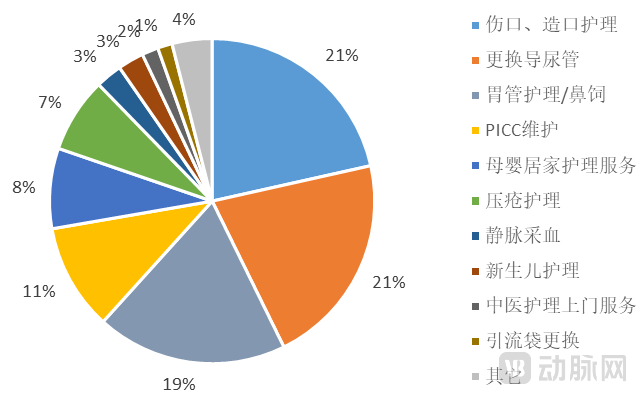
Weimai Platform Home Nursing Service Program
Data from the Weimai platform shows that patient demand is highest for wound and stoma care and urinary catheter care services, each accounting for 21% of the total service volume. These are followed by nasogastric tube care services and PICC maintenance services, which account for 19% and 11% of the total service volume, respectively.
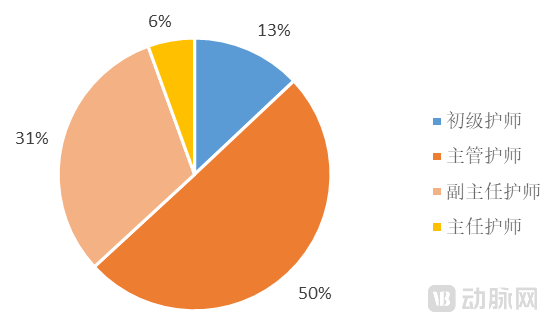
Weimai Platform’s “On-Demand Nurse” Title
“To ensure the quality of home-based nursing services, over 94% of the ‘on-demand nurses’ on the Weimai platform hold professional titles at or above the level of Supervisor Nurse, and all have undergone hospital qualification reviews. Meanwhile, to effectively safeguard the personal safety of nursing staff and mitigate medical risks, Weimai equips home-visit nurses with body-worn cameras, enabling full-process documentation and traceability of service delivery,” stated Yang Leigang, General Manager of the Whole-Course Disease Management and Digital Therapeutics Center at Weimai.
Uphold Technological Innovation to Alleviate the Burden of Nursing Care
As an integral component of healthcare service delivery models, follow-up is a critical measure for ensuring the quality of post-diagnosis recovery and a vital part of medical standards. However, hospitals have historically relied primarily on nurse-led telephone follow-ups, which demand substantial time and energy from nursing staff, often resulting in follow-up practices becoming merely perfunctory.
In response, public hospitals have begun digital upgrades, leveraging new technologies and operational models from internet companies to conduct numerous beneficial explorations in hospital follow-ups and patient management. By building patient management systems, they have achieved effective follow-up and out-of-hospital management for patients.
Taking the patient management system developed by Weimai as an example, for discharged patients, primary nurses can develop personalized follow-up records based on the patients’ nursing needs, covering aspects such as medication, diet, exercise, and psychological care. This enables efficient and convenient completion of tasks including compassionate follow-ups, disease-specific follow-ups, satisfaction surveys, outpatient visit reminders, and chronic disease management.
Meanwhile, when patients raise home care questions during follow-up visits, nurses can push relevant health education materials to them online via the hospital’s official WeChat account. This approach effectively addresses patient needs, reduces nurses’ workload, and increases the coverage of home care services.
Li Xue, head nurse at a Grade A tertiary hospital in Wuhan, stated, “The launch of the patient management system has not only significantly reduced repetitive tasks in our follow-up processes but also truly leveraged technological means to minimize physical visits by patients while maximizing data transmission, thereby allowing more patients to tangibly benefit from the health advantages brought about by the development of nursing informatics.”
Leveraging “Internet+” to Promote High-Quality Development of Nursing Care
Nowadays, “Internet + Healthcare” has transitioned from an “optional” component to a “mandatory” element of China’s healthcare service system. The traditional fragmented and decentralized medical care model in hospitals can no longer meet current demands. Healthcare services must be precise, continuous, and tailored to patients’ individualized needs, which places higher demands on nursing practice while simultaneously presenting new opportunities for the development of the nursing profession.
To meet patients’ actual needs and deepen the substance of medical services, public hospitals have increasingly embarked on exploring “Internet Plus Full-Course Disease Management” systems, launching a cross-team, continuous, and comprehensive patient service model.
Taking the Affiliated Hospital of Yanbian University as an example, with technological and operational support from Weimai, the hospital has established a multidisciplinary team (MDT) comprising attending physicians, nurses, dietitians, Weimai online case managers, and offline health stewards. Through the implementation of “Internet Plus Full-Course Disease Management” services, the hospital maximizes the value of specialized nurses in patient disease management.
Upon admission, medical staff will assist patients in establishing comprehensive case management records covering the entire course of disease and develop personalized, full-cycle health management plans. Throughout the subsequent rehabilitation process, nurses will have full access to patients’ health information and provide professional online nursing guidance, complemented by standardized health education materials. After discharge, nurses will continue to monitor patients’ conditions through post-discharge follow-ups and offer home nursing services to those in need, thereby accelerating recovery and significantly enhancing patients’ overall healthcare experience and satisfaction.
Yang Leigang stated, “With socioeconomic development, public demand for primary care nursing and caregiver services continues to rise. In the future, guided by national policies, Weimai will continue to empower public hospitals and healthcare professionals, leverage new technologies and innovative approaches to enhance high-quality nursing care, broaden and deepen the scope and substance of nursing services, and promote the high-quality development of the nursing profession through management and model innovation.”