

Zhenbao Island Reports Robust Growth in Traditional Chinese Medicine Revenue Amid Market Challenges
ZBD Pharmaceutical
Traditional Chinese Medicine (TCM) Product Developer
Amid the pandemic and uncertainties in the broader economic environment, some pharmaceutical companies have experienced a decline in revenue. In contrast, ZBD Pharmaceutical has maintained steady and sustained revenue growth despite the sluggish market conditions.
In late April, ZBD Pharmaceutical released its 2021 annual report and first-quarter 2022 financial results. The annual report showed that ZBD Pharmaceutical achieved operating revenue of RMB 4.127 billion in 2021, a year-on-year increase of 21.24%. Amid the rapid growth in overall revenue, it is evident that traditional Chinese medicine (TCM) preparations and TCM herbal material trading accounted for a significant proportion of its core business, based on product category breakdown.
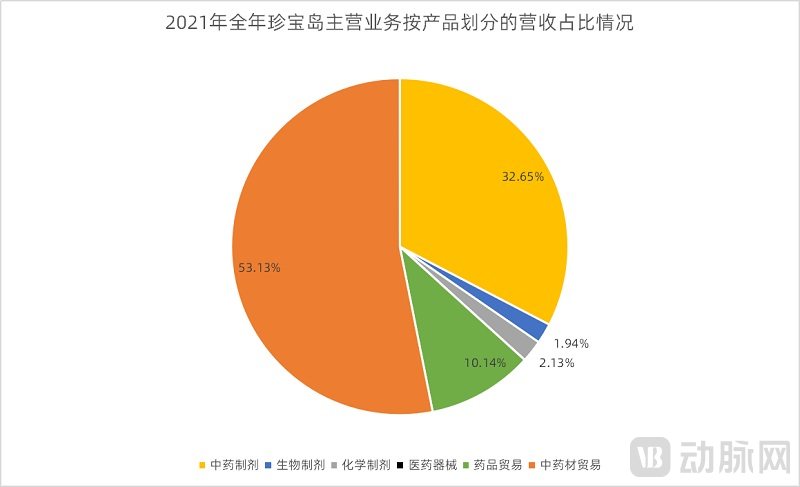 Note: The relevant revenue figures shown in the chart are expressed in hundreds of millions, calculated to two decimal places.
Amid the recurring waves of the pandemic, how has ZBD Pharmaceutical sustained the growth of its core traditional Chinese medicine (TCM) business? Behind its impressive financial reports, has the company developed its own proprietary methodology? We attempt to unravel this by examining ZBD Pharmaceutical’s TCM operations.
Strong Sales Growth in Proprietary Chinese Medicines; Steady Enhancement of Product Pipeline
FromZBD Pharmaceutical’s Overall Product PipelineCurrently, the company has established a product portfolio encompassing active pharmaceutical ingredients (APIs), chemical preparations, traditional Chinese medicine (TCM) preparations, and biological products. It continuously refines its product line through research and development, providing diversified product combinations for clinicians and patients. At present, ZBD Pharmaceutical offers 45 medicinal products for the treatment of cardiovascular, cerebrovascular, respiratory, pediatric, and orthopedic conditions, including 12 essential medicines and 25 products covered by medical insurance.
Focus onTCM Product PipelineCurrently, ZBD Pharmaceutical is primarily focused on the secondary development of its existing major products and potential candidates, while advancing the filing and registration of in-house hospital preparations, the filing of traditional Chinese medicine (TCM) formula granules, and the continued development of innovative TCM drug projects such as the Qingjiang Hewei Formula.In terms of the number of proprietary Chinese medicine products, ZBD Pharmaceutical currently has three innovative TCM drug projects, 49 in-hospital preparation projects, over 600 filed formula granule products under its subsidiary Jiuzhou Fangyuan, and more than 10 secondary development projects for existing varieties.
Financial reports may well illustrate the importance of proprietary Chinese medicine products to ZBD Pharmaceutical. In 2021, ZBD Pharmaceutical’s industrial operating revenue reached RMB 1.51 billion, of which RMB 1.346 billion came from proprietary Chinese medicines, accounting for 89.1% of the total.
Behind the revenue achievement, ZBD Pharmaceutical's proprietary Chinese patent medicine products are playing a key role.
Regarding specific product categories, ZBD Pharmaceutical has established a portfolio of core injectable products, including Xuesaitong for Injection and Shuxuening Injection, as well as core oral formulations such as Xueshuantong Capsules, Compound Qinlan Oral Liquid, and Xiao’er Resuqing Syrup. The market share of these related products ranks among the industry leaders. Notably, Xueshuantong Capsules, an exclusive product of its wholly-owned subsidiary Haizhenbao, has maintained rapid growth in recent years, with sales revenue increasing by over 36% year-on-year in 2021. This product has become another promising offering for ZBD Pharmaceutical in the cardiovascular and cerebrovascular disease medication market.The outstanding performance contributed by the exclusive product, Xueshuantong Capsules, directly drove a 101.24% year-on-year increase in the revenue of ZBD Pharmaceutical’s nervous system drugs (cerebrovascular drugs) segment.
These products have also been repeatedly included in various rankings and relevant expert consensus statements. For instance, Xuesaitong for Injection/Shuxuening Injection was honored on the “2021 Brand List of Chinese Patent Medicines with Clinical Value”; Xuesaitong for Injection/Xuesaitong Capsules were incorporated into the “Chinese Expert Consensus on the Clinical Application of Panax Notoginseng Saponin Preparations”; Pediatric Resuqing Syrup was included in the “Expert Consensus on Integrated Traditional Chinese and Western Medicine for the Prevention and Treatment of Upper Respiratory Tract Infections in Children”; and three varieties—Xueshuantong Capsules, Compound Qinlan Oral Liquid, and Pediatric Resuqing Syrup—were featured in the “Traditional Chinese Medicine Exhibition Area at the Zhangjiakou Chongli Zone of the Winter Olympics.”
In terms of preparation technology, ZBD Pharmaceutical has also obtained three scientific and technological certificates, including "A Notoginseng Total Saponins Composition and Its Preparation Method and Use," "A Shuanghuanglian Pharmaceutical Composition and Its Preparation Method," and "An Enteric-Coated Formulation of Notoginseng Total Saponins and Its Preparation Method and Application."
In addition to continuously expanding its product portfolio through in-house R&D, upgrading product standards, and optimizing its product structure—thereby establishing a product layout centered on Xuesaitong for Injection 100mg, Xueshuantong Capsules, and Compound Qinlan Oral Liquid, supplemented by other generic drugs—ZBD Pharmaceutical is also diversifying its product pipeline through other means.
In September 2021, ZBD Pharmaceutical entered into a "Transfer Agreement for Drug Marketing Authorization Holder" with Heilongjiang Songhuajiang Pharmaceutical Co., Ltd. Under the agreement, Songhuajiang Pharmaceutical transferred the marketing authorization holder status for 37 proprietary Chinese medicine products to ZBD Pharmaceutical, while concurrently changing the manufacturing site to GMP-compliant facilities designated by ZBD Pharmaceutical. Previously, ZBD Pharmaceutical had received the "Notice of Approval for Supplemental Drug Application" issued by the National Medical Products Administration (hereinafter referred to as the "NMPA"), marking further enrichment of ZBD Pharmaceutical’s proprietary Chinese medicine product pipeline.
The year-on-year growth of ZBD Pharmaceutical’s flagship proprietary Chinese medicine products, coupled with the further expansion of its product pipeline, will undoubtedly drive high-quality development in the proprietary Chinese medicine sector and further boost the company’s overall revenue.
How Does ZBD Pharmaceutical Maintain Its Competitive Edge in the Development of Proprietary Chinese Medicines?
Behind the sustained competitive advantage of ZBD Pharmaceutical’s proprietary Chinese medicine products lies its unwavering commitment to excellence across research and development, manufacturing, and distribution.
First, from the perspective of research and development, the “One Center, Four Institutes” R&D system established by ZBD Pharmaceutical is demonstrating significant efficacy.“One Center” refers to the Beijing R&D Management Center, and “Four Institutes” refer to the Beijing Institute of Pharmaceutical Research, Harbin Institute of Pharmaceutical Research, Bozhou Institute of Pharmaceutical Research, and Hangzhou Institute of Pharmaceutical Research. With the “One Center” as the hub and link, and the “Four Institutes” as bases, ZBD Pharmaceutical adopts a strategic layout of “developing one generation while planning for the next.” It engages in deep collaboration with renowned universities, research institutions, and CRO companies, focusing on innovative R&D across three major product systems: traditional Chinese medicine, chemical drugs, and biological drugs. The company is transitioning from an R&D model primarily focused on generic drugs to one centered on advanced formulations and innovative drugs, while simultaneously expanding onto the international stage.
Focusing on the Field of Proprietary Chinese MedicinesZBD Pharmaceutical has collaborated with over a dozen research institutions, including Peking University, Zhejiang University, China Academy of Chinese Medical Sciences, Shanghai Institute of Pharmaceutical Industry, and Shanghai University of Traditional Chinese Medicine, to conduct in-depth research on the material basis of pharmacodynamic effects, quality control methods, evidence-based medicine, and the introduction of exclusive product varieties. In the realm of formula granules, the company actively participates in the formulation of national standards and has established a platform for consistency evaluation between formula granules and decoctions. Regarding hospital preparations, ZBD Pharmaceutical replaces similar products on the market after demonstrating their efficacy and safety.
Furthermore, with the introduction of new national policies, certain proprietary Chinese medicines can bypass Phase II clinical trials and proceed directly to Phase III clinical trials, resulting in a shorter development cycle and lower R&D costs compared to innovative chemical drugs and biologics.ZBD Pharmaceutical has also established a tiered R&D product portfolio., plan the registration of product candidates in accordance with the R&D cycle to ensure a continuous pipeline of registrations, thereby sustaining strong market competitiveness for the products.
Secondly, from a production perspective, ZBD Pharmaceutical further reduces operational risks by adopting a "production based on sales" model.
On the one hand, production processes must consider market supply and mitigate risks such as inventory overstock.The Production Department of ZBD Pharmaceutical formulates production plans based on sales forecasts, finished goods inventory, inventory of raw materials and packaging components, material procurement lead times, production cycles, testing cycles, new product handover schedules, and equipment capacity. It organizes and convenes production-sales coordination meetings to align production and sales on a product-by-product basis. Once the production plan is finalized, it is approved and issued for implementation. Meanwhile, the company mitigates associated risks by establishing standard inventory levels for finished goods and implementing early-warning mechanisms for the expiration dates of both materials and finished products.
On the other hand, the pharmaceutical manufacturing process must ensure that product quality is uniform, stable, and reliable.ZBD Pharmaceutical organizes production in strict accordance with Good Manufacturing Practice (GMP) requirements, rigorously implementing national regulations across raw material procurement, personnel allocation, equipment management, production processes, quality control, and packaging and transportation to comprehensively ensure product quality. The company has established an independent Quality Control Center and Metrology Center, both of which have obtained accreditation from the China National Accreditation Service for Conformity Assessment (CNAS) as testing and calibration laboratories. This accreditation covers all testing items for its entire product portfolio. Furthermore, in collaboration with Zhejiang University, ZBD Pharmaceutical has established a CMC-certified smart factory for traditional Chinese medicine, enabling precise research and control throughout the entire drug lifecycle.
"In the production process of proprietary Chinese medicines, there are also specific requirements for the raw medicinal herbs themselves."To further secure high-quality authentic medicinal materials, ZBD Pharmaceutical, with support from Anhui Province, has established and operates the Bozhou Chinese Herbal Medicine Commodity Trading Center. Through its “N+50” origin-based strategic layout, the company plans to deploy 50 local offices across China’s 50 core medicinal material-producing regions, covering 200 major and routinely stocked key medicinal varieties. This initiative aims to source authentic medicinal materials and better ensure drug efficacy from the source.
Furthermore, from the perspective of circulation, ZBD Pharmaceutical has established a market development strategy centered on “self-operated sales + omnichannel + all-terminal coverage.” By accelerating the optimization and adjustment of production capacity and product portfolios across its manufacturing bases, the company achieves regional resource integration, complementary advantages, and cost control.
In the product market, on the one hand, ZBD Pharmaceutical continues to optimize its product structure and maintain its existing market base; on the other hand, by actively advancing in-hospital preparations and traditional Chinese medicine decoction piece projects, and implementing policies for medical insurance reimbursement and dispensing use, it is cultivating new revenue growth points.
In terms of raw material circulation, ZBD Pharmaceutical has further transformed the traditional trading model of traditional Chinese medicinal (TCM) materials by leveraging two major TCM industry platforms—the Bozhou TCM Commodity Trading Center in Anhui Province in the south and the Harbin TCM Commodity Trading Center in Heilongjiang Province in the north. This initiative addresses issues such as information asymmetry between upstream and downstream industry clients, difficulties in buying and selling, and lack of product quality assurance, thereby reducing costs in the TCM circulation process.
For example, the Bozhou Chinese Herbal Medicine Commodity Trading Center can rapidly and effectively achieve full-category coverage and supply of Chinese herbal medicines through the construction of the N+50 supply chain platform. A recent case in point is Stephania japonica (Qianjin Teng), a niche variety within traditional Chinese medicine that has garnered significant market attention and is distributed across relatively extensive regions. Currently, the Bozhou Chinese Herbal Medicine Commodity Trading Center maintains offices in seven major regions across China, covering most production areas of Stephania japonica. Once cepharanthine enters industrialized pharmaceutical production, the supply and demand for this herb will expand rapidly. Leveraging the ZBD Pharmaceutical Bozhou Chinese Herbal Medicine Commodity Trading Center’s supply chain platform will effectively facilitate the procurement and supply of Stephania japonica at rational costs.
Furthermore,In terms of sales, ZBD Pharmaceutical is also vigorously expanding sales at retail terminals on the basis of enhancing sales at medical terminals, establishing a comprehensive commercial system and distribution network, leveraging its academic leadership, further improving the quality of sales services, and better serving its target audience.
Favorable Policies and Expanding Market Space Brighten ZBD Pharmaceutical’s Prospects
In fact, the growth of ZBD Pharmaceutical is also closely tied to the rapid development of the current traditional Chinese medicine market.
First, the continuous introduction of policies favorable to the development of Traditional Chinese Medicine (TCM) has promoted the rapid advancement of the industry.The national policy document “Several Policy Measures on Accelerating the Characteristic Development of Traditional Chinese Medicine” proposes 28 supportive policies across seven key areas. The continuous release of these policy dividends is steadily driving the inheritance, development, and innovation of Traditional Chinese Medicine (TCM), undoubtedly ushering in a new wave of growth for the TCM industry.
Guided by the Healthy China 2030 strategy and to promote the inheritance and innovation of Traditional Chinese Medicine (TCM), the state has issued a series of favorable policies supporting TCM in areas such as innovative drug development, registration, and medical insurance reimbursement. The approval process for new TCM drugs has been accelerated; in 2021, a total of 12 new TCM drugs were approved, surpassing the combined total approved over the previous five years.
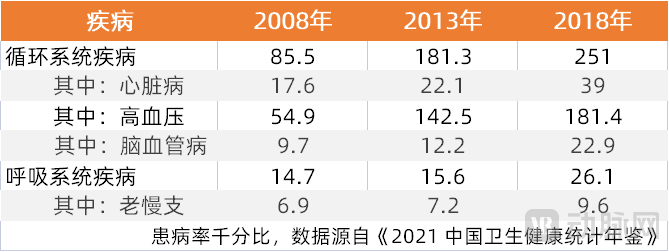
Second, the number of patients with related diseases continues to rise, and the growing clinical demand has further expanded the market.ZBD Pharmaceutical’s TCM products primarily focus on core therapeutic areas with high disease burdens, including cardiovascular and cerebrovascular medications, respiratory system medications, and gynecological and pediatric medications. As the prevalence, consultation rates, and hospitalization rates for these related conditions continue to rise, the market prospects for these product categories are undoubtedly vast.
From the perspective of industry development, according to IQVIA statistics, Chinese patent medicines still rank first in terms of market share in hospitals across major therapeutic areas, with MAT annual sales of approximately RMB 145.2 billion, a year-on-year increase of 12.6%.
Driven by policy support and the prospect of further market expansion, ZBD Pharmaceutical is poised to achieve continued growth. While proprietary Chinese medicines will contribute a larger share of revenue, the company’s overall product pipeline—encompassing proprietary Chinese medicines, chemical drugs, and biologics—will also fuel its future development.