

UC Berkeley’s Triad Innovation Model: Incubating 1,225 Startups and Raising $36.3 Billion
The primary mission of a university is education, but in the 19th century it underwentThe First Academic RevolutionAfterwards,Scientific ResearchHas become the second mission of universities, equally important as education.
early 19th centuryHumboldt Reformsparked the first academic reform since the Middle Ages; following this reform,Universities are transitioning from a teaching-oriented model to a research-oriented one., research universities first emerged in Germany,United StatesResearch-oriented universities have innovated on the basis of the German model, forming a successful model suited to their own development.
From the end of World War II to the mid-21st century, U.S. higher education witnessed rapid development, characterized by the simultaneous advancement of scientific research innovation and mass education. To date,U.S. Research UniversitiesLong since departed fromMimicbecameLeader。
AsWorld-Class Public Research University, located in the San Francisco Bay AreaUniversity of California, Berkeley(University of California, Berkeley, abbreviated as UCB) is the oldest campus in the University of California system and one of its strongest, ranking first among public research universities in the United States.
As a flagship academic institution in the western United States, it is mentioned together with Stanford and Caltech as America's ““Large-Scale Development of Intelligence in Western China”This base has given rise to the “Silicon Valley” technology hub and, together with private universities in the East such as Harvard and Columbia, forms the academic backbone of higher education in the United States.
As of October 4, 2021, a total of 114 Nobel laureates, 14 Fields Medalists, and 25 Turing Award winners have emerged among UC Berkeley alumni, faculty, and researchers.
Achieving such accomplishments was not merely a matter of passion for UC Berkeley; rather, the university established various specialized institutions to ensure the smooth progress of scientific research, innovation, and entrepreneurship. What factors have contributed to UC Berkeley’s rapid rise as a top-tier university in the United States? And what lessons can Chinese higher education institutions draw from this experience?VCBeat Orange BureauConducted an in-depth analysis of this.
BEGIN: The Integration of Scientific Research Innovation and Entrepreneurship
The University of California, Berkeley has achieved remarkable success in building its innovation ecosystem, serving as a model for many higher education institutions to study and emulate. To help students, faculty, staff, researchers, and other innovators understand the resources available at Berkeley to support entrepreneurship education, research commercialization, and entrepreneurial promotion, the university has established a dedicated entrepreneurship community—Berkeley Innovation Gateway (BEGIN)。

Berkeley Entrepreneurship Gateway for Innovation and Networking (BEGIN) serves as the portal to the entrepreneurial community at the University of California, Berkeley. UC Berkeley provides entrepreneurs with unparalleled education, top-tier research centers, and distinguished faculty, along with opportunities to engage in the innovative culture of the San Francisco Bay Area and Silicon Valley. Its goal is to help students, faculty, staff, researchers, and other innovators navigate available resources at Berkeley to support educational entrepreneurship and facilitate the translation ofResearch Commercialization and Entrepreneurship Promotion。
BEGINCovers the four key stages of the Berkeley innovation and entrepreneurship pathway:Campus Life—Innovation and Entrepreneurship Education—Accelerator—Financing and Fundraising, with each stage linked to several on-campus institutions or support programs, providing comprehensive guidance and support for innovators and entrepreneurs.
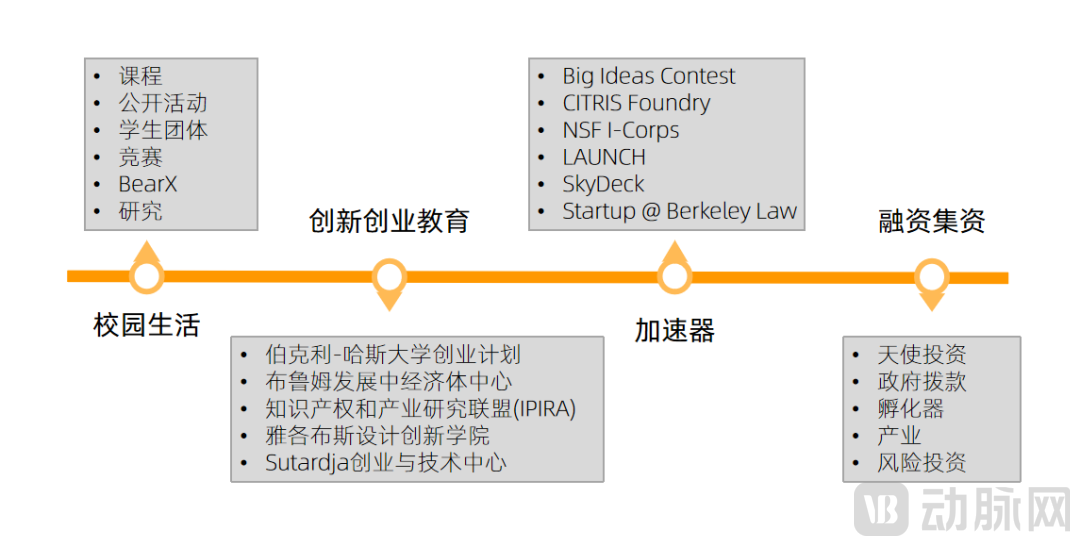
UC Berkeley Entrepreneurship and Innovation Roadmap
The innovation and entrepreneurship education component includes programs and institutions such as the Berkeley-Haas Entrepreneurship Program, the Intellectual Property & Industry Research Alliances (IPIRA), the Center for Responsible Business (formerly the Center for Emerging Markets), the Jacobs Institute for Design Innovation, and the Sutardja Center for Entrepreneurship & Technology.
Among them,UC Berkeley Haas Entrepreneurship Program(Berkeley-Haas) was launched to integrate entrepreneurial thinking into the student experience, assisting students at Haas School of Business and the University of California, Berkeley in launching new ventures. The program provides multidisciplinary experiential learning opportunities and seed funding to selected startups, thereby facilitating their integration into the Bay Area’s entrepreneurial ecosystem.
In terms of curriculum, senior faculty at Haas provide participating students with theoretical frameworks, experiential learning, and practical opportunities. Beyond the classroom, entrepreneurial services offered by both UC Berkeley and Haas are integrated and expanded, connecting students with startups and innovative companies through an extensive alumni network, campus competitions, accelerators, and multidisciplinary activities.
Within Berkeley’s entire innovation ecosystem, there is a consistent emphasis on cultivating students’ “entrepreneurial spirit,” fostering a mindset that “questions the status quo” and “drives change,” reshaping campus culture around innovation and entrepreneurship, and channeling this creativity toward broader social impact.
The Stable Technology Transfer Tripod Under Dynamic Capabilities: Mechanisms, Institutions, and Culture
In fact, in addition to education and scientific research, universities also undertake a third mission.
Since the late 20th century, as universities have played an increasingly prominent role in innovation and social change, some in Europe and the United StatesResearch UniversityStart toEntrepreneurial UniversityTransformation, or the Second Academic Revolution.
In this academic revolution, public policy has sought to transform universities from ivory towers into organizations with greater economic engagement and accountability. The most significant change among these is theIntegration of University Academic Achievements with Industrial Development。
Transfer, translate, and commercialize basic research conducted within universities into new technologies, thereby enabling university inventions to exert greater social and economic impact., has become, in addition to education and scientific research, universities'The Third Mission. ThroughEntrepreneurshipIt has become an important trend in the development of universities in the 21st century to apply their knowledge and technological resources to serve national or local economic and social development.
University of California, Berkeley asWorld-Renowned Entrepreneurial University, ranked second globally in 2020 by PitchBook for producing the most entrepreneurs, trailing only Stanford University. Among them, undergraduates who founded companies and received first-round venture capital investment between 2006 and 2020 cumulatively established 1,225 companies, raising a total of $36.3 billion.
By the end of 2020, over $1 billion in corporate sponsorships had been raised, and more than $250 million in technology licensing revenue had been generated; over 600 technological inventions had been commercialized, including treatments for malaria and cancer, biofuels, DNA sequencing, surgical tools, internet security software, and search engines.
Dynamic CapabilitiesIt refers to an organization’s ability to create, integrate, and reconfigure internal and external resources to respond to a rapidly changing environment. Such capabilities constitute valuable, rare, inimitable, and non-substitutable resources owned by enterprises, serving as the source of their competitive advantage. While dynamic capabilities have garnered widespread attention in the corporate sector, universities have also gradually begun to emphasize them, particularly in the field of technology transfer, driven by the Second Educational Revolution and the development of entrepreneurial universities.
Currently, technology transfer has become an administrative function of entrepreneurial universities and is widely accepted, much like academic research was formally recognized as a mission equally important to education in the past. In this context, universities also face many areas of uncertainty, such as competition for government-funded research and shifts in the talent demand market. Meanwhile, university-industry collaborations entail varying requirements depending on the maturity of the industries involved.
As a globally renowned entrepreneurial university, the University of California, Berkeley leverages its three dynamic capabilities to provide critical support for technological innovation in scientific research.
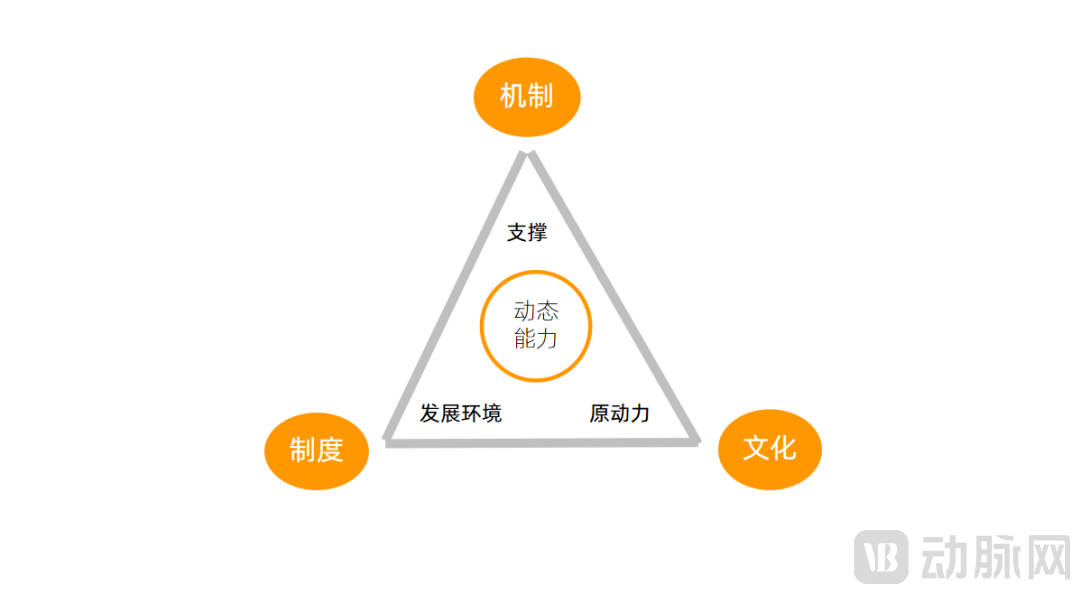
Three Aspects of Technology Transfer in Entrepreneurial Universities under Dynamic Capabilities
Mechanism: Providing Core Support for Technology Transfer
Technology transfer is a relatively lengthy process. It typically takes 2.5 years from invention disclosure to securing a technology license. Eighty-five percent of licensing deals are not formally executed until six years after the invention disclosure, with some requiring even more time.
Berkeley Branch Was Established in 2004Intellectual Property and Industry Research Alliance(Intellectual Property & Industry Research Alliances, abbreviated as IPIRA), with the aim of strengtheningSchools and Industrythe connection, establish a multi-faceted cooperation mechanism, expand sources of research funding, and support economic development through technology transfer, enterprise creation, and other means. Meanwhile, adopt“Push-Pull Bidirectional Development”Mechanism: On the one hand, licensing technology to companies; on the other hand, securing corporate funding to support research projects.
IPIRA is divided into two departments:Office of Technology Licensing(Office of Technology Licensing, abbreviated asOTL) and the Industry Alliance Office (hereinafter referred to asIAO). The OTL primarily manages matters related to patents and licenses, while the IAO is mainly responsible for contract and donation negotiations with corporate partners.
The two offices collaborate to strengthen university-industry partnerships, facilitating the effective translation of Berkeley’s scientific research achievements into commercial products, thereby fostering corporate growth and benefiting the public.
OTL facilitates the commercialization and non-commercial application of inventions from UC Berkeley through advanced intellectual property management practices, and promotes the commercialization of these inventions by executing technology licensing agreements with companies. In addition, OTL provides faculty, researchers, and students with advice on intellectual property-related matters, including research collaborations, technology licensing, and the formation of startup companies.
IAO boasts a robust historical legacy in technology transfer and collaborates with the Office of Technology Licensing (OTL). IAO has established a bidirectional perspective on technology transfer, wherein industry-sponsored research focuses on intellectual property (IP) and technology licensing, while simultaneously fostering subsequent sponsored research with licensees to further develop existing IP.
In 2015, IPIRA received a total of 218 invention disclosure submissions, 68% of which were patented. In 2016, it received 203 invention disclosure submissions, with 75% resulting in patents. The patent application success rate has increased eightfold since IPIRA’s establishment in 2004 and exceeds that of universities such as Stanford and MIT. This achievement is attributed to IPIRA’s highly efficient operational mechanism.
System: Ensuring a Fair and Appropriate Environment, Providing Ample Room for Development
The system at UC Berkeley is highly human-centered.
First, the University has established clear regulations regarding the appropriateness of faculty members’ external professional activities and the scope of such activities permissible during their employment. It has also provided explicit definitions for inappropriate conduct. These well-defined policies provide faculty with clear guidelines to follow and strictly mitigate institutional risks for the University of California, Berkeley.
Secondly, the regulations regarding the time teachers spend on off-campus professional activities are relatively reasonable, allowing them ample time to engage in such activities without affecting their primary duties. Furthermore, schools do not mandate participation in off-campus professional activities; involvement is entirely voluntary and based on individual interest. Additionally, off-campus professional activities can serve as supporting materials for promotion.
This system fully embodies a human-centric approach while placing significant emphasis on risk control, a principle reflected in every stage of the process.
First, it is explicitly stipulated that faculty members’ off-campus professional activities must be of value to the university and must not conflict with their duties at the institution. The unauthorized, extensive use of university resources and facilities for private, commercial, political, or religious purposes is deemed “unacceptable conduct.” These policies mitigate risks at the source.
Secondly, faculty members are required to disclose their inventions in a timely manner. Upon being informed of a faculty member’s invention at the earliest stage, the relevant institutional bodies will track its development progress and conduct comprehensive risk assessments along with full-process monitoring of all potential risks involved.
Finally, when entering into external agreements, teachers must ensure that the other party clearly acknowledges the university’s rights to inventions, while also providing specific explanations for several potential scenarios, thereby completely eliminating risks.
Culture: The Driving Force Behind Teachers' Creativity and Innovation
Dynamic capability is the ability to respond to changes in the external environment, and more importantly, it represents a potential. Only by fully unleashing employee potential can organizations enhance their dynamic capabilities and effectively adapt to environmental changes.
The driving force behind the entrepreneurial culture at the University of California, Berkeley, lies in fully tapping into faculty members’ spirit of innovation and entrepreneurship, supported and cultivated through appropriate measures to maximize their academic research potential. The most significant incentive is linking technological inventions and achievements to faculty promotions.
Encouraging academic sabbaticals also enables faculty members to devote more time and energy to understanding the latest industry demands and cutting-edge developments. Furthermore, licensing revenue is utilized to support the development of individual departments, thereby stimulating entrepreneurial initiative across all units. These incentive measures are directly linked to faculty members’ immediate interests; for inventors, they serve not only as effective compensation but also as a powerful motivator, representing one of the most cost-effective approaches to investing in innovation.
The three dimensions of mechanisms, institutions, and culture form a powerful synergy that enhances dynamic capabilities, enabling the full integration of internal and external resources, in-depth exploration of market opportunities, and rigorous risk control, thereby contributing to scientific research and economic development.
Lessons from Abroad: What Can Chinese Universities Learn?
Compared with developed countries, China’s universities exhibit a significant deficit in scientific research and innovation capabilities. This shortfall stems from multiple factors, including uneven allocation of resources for technological innovation, the need to optimize innovation evaluation systems, misalignment between the direction of capacity-building efforts and market demands, and weak ties between universities and enterprises. These deficiencies hinder universities from accurately understanding enterprises’ real needs and meeting them through on-campus education and research activities.
In addressing the existing challenges, what lessons can we draw from the “Research + Entrepreneurship” model at the University of California, Berkeley?
First,Standing at the Forefront of Demand, Establishing a Closed-Loop for Product and R&DThe close integration of university research with industry is a critical factor in forming a closed-loop ecosystem. In response to market demands, the University of California, Berkeley emphasizes entrepreneurship and corporate collaboration, establishing connections with startups through a series of programs and activities within its innovation and entrepreneurship education framework, while providing accessible funding to selected startups.
Second,Basic Research and Applied Research in Parallel. The integration of basic research and applied research is an effective approach to achieving scientific and technological innovation. American research universities persist in conducting organizational research for application-oriented development alongside basic research, and allocate resources between the two in a rational and effective manner.
Scientific research at the University of California, Berkeley achieved breakthrough progress during World War II, undergoing a developmental trajectory from basic research to the parallel pursuit of both basic and applied research. The ongoing engagement in wartime application-oriented development attracted substantial funding.
● Encourage Interdisciplinary Integration to Stimulate Academic Innovation. The University of California, Berkeley has established an extensive research project system, providing a scientific research platform for faculty and students across all academic disciplines on campus.
More importantly, most of these research platforms encourage interdisciplinary collaboration and prioritize the development of “research platforms” by establishing research projects that facilitate cross-disciplinary work. They implement various measures, such as offering research awards and funding support, to attract faculty and students from diverse disciplines across the university to participate, thereby fostering intense intellectual exchange and seamless integration among different disciplinary perspectives.
●Creating a Flexible and Effective Technology Transfer SystemAn efficient operational mechanism is the core support for universities to conduct technology transfer, and it is also the fundamental guarantee for the success of technology transfer.
UC Berkeley has its own unique approach to technology transfer, establishing specialized professional institutions. This is reflected not only in policy formulation and cultural cultivation but also, more importantly, in the comprehensiveness of its operational mechanisms. The main features of the university’s technology transfer mechanism include a streamlined organizational structure with efficient operations; keeping pace with the times while emphasizing innovation; and adopting a “push-pull” development strategy to deeply expand into the market.
In fact, during the first 30 years of its foundational period at the University of California, Berkeley, although its academic research and funding were not sufficient to be praised among many higher education institutions in the United States, itsEstablishment of the University’s Own Institutional Positioningdemonstrated significant effectiveness in fulfilling its functions, and under the influence of the educational philosophy championed by outstanding school principalsEstablished the tone for its own development, incorporate scientific research as a primary development goal into the university's development plan.
Therefore, from the perspective of Chinese universities, conducting scientific research and innovation inevitably entails certain difficulties. While the experiences of others serve as a valuable reference during the process of research and innovation, the most critical factor remains achieving technological breakthroughs through one’s own efforts. Only by gaining a thorough understanding of their own capabilities can institutions engage in external collaborations more effectively.