

Overseas Pharma Advances into Global Markets with 30 IND-Approved Sustained-Release Drugs and a Pivotal Phase III Candidate
If the value of Class 1 new drugs lies in going from 0 to 1, then that of Class 2 innovative drugs is about scaling from 1 to N.
A single active ingredient can be developed into multiple new drugs.For example, ibuprofen is a commonly used antipyretic and analgesic nonsteroidal anti-inflammatory drug (NSAID), with the molecular formula C13H18O2, first launched in the UK in 1968, developed by Boots under the brand name Brufen™. Due to its favorable efficacy and minimal side effects, many multinational corporations have developed numerous new drugs based on its active ingredient, such as GSK’s Fenbid ibuprofen sustained-release capsules, Johnson & Johnson’s Motrin ibuprofen sustained-release tablets, Abbott’s ibuprofen suspension, AbbVie’s combination tablets of ibuprofen and hydrocodone bitartrate, and Horizon’s combination tablets of ibuprofen and famotidine. Other companies have also developed improved formulations, including ibuprofen dispersible tablets, ibuprofen chewable tablets, and intravenous ibuprofen injections, all of which are modified-release or reformulated drugs.
Improved drugs, also known as Class 2 innovative drugs in China, have numerous successful cases both domestically and internationally.For instance, after nifedipine was upgraded from conventional formulations to novel sustained- and controlled-release formulations, its annual sales in China reached RMB 4.89 billion; similarly, felodipine’s annual sales in China amounted to RMB 1.78 billion following its transition from conventional formulations to novel sustained- and controlled-release formulations; as an iterative product of metoprolol, metoprolol sustained-release tablets achieved annual sales of RMB 2.34 billion in China. Internationally, Advair Diskus recorded annual sales of USD 4.5 billion; albumin-bound paclitaxel nanoparticles generated annual sales of USD 1 billion; oxycodone hydrochloride sustained-release tablets reached annual sales of USD 2.4 billion; and dexmethylphenidate sustained-release capsules achieved annual sales of USD 1.3 billion.
Improved drugs are secondary developments of existing medications, based on known active pharmaceutical ingredients, through modifications such as changing salt forms or bases, introducing new dosage forms or routes of administration, developing new combination formulations, and expanding to new indications. These innovations aim to address unmet clinical needs and enable more patients to benefit from pharmacotherapy. Compared with new chemical entities (NCEs), improved drugs offer several advantages, including relatively shorter development cycles, lower risks, reduced investment, and higher success rates, thereby yielding competitive returns on investment.
In 2016, referencing the FDA’s NDA 505(b)(2) pathway, the National Medical Products Administration (NMPA) issued the Work Plan for Reform of the Registration Classification of Chemical Drugs. The Plan readjusted the registration classification categories for chemical drugs. Under the new classification system, the official designation for “improved drugs” is “Class 2 Innovative Drugs.” The NMPA emphasized that China’s Class 2 new drugs are not entirely equivalent to the FDA’s NDA 505(b)(2) pathway and possess distinct Chinese characteristics.
In recent years, as policies related to Class 2 innovative drugs have become increasingly clear, enthusiasm for the registration of such drugs in China has surged rapidly. According to Sina Medicine’s Baijiahao account, the total number of accepted applications for Class 2 innovative drugs rose from 188 in 2019 to 418 in 2021, representing an annual growth rate of nearly 49%. Among these, the number of accepted applications for new drug clinical trial approvals increased from 141 in 2019 to 304 in 2021, with an annual growth rate of nearly 47%.1
The popularity of Class 2 innovative drugs is evident.
Industry giants are making strategic moves,
Countless Success Stories
Class 2 innovative drugs are highly favored because, in contrast to the high risks associated with Class 1 new drugs—epitomized by the widely cited “80/20 rule” and the “double-ten cost” (i.e., ten years and $1 billion)—they involve simplified preclinical research and clinical trials, resulting in lower capital investment and a relatively shorter R&D cycle. Furthermore, building on novel dosage forms, these drugs can continuously extend their market lifespan through ongoing formulation upgrades. These characteristics collectively underpin the advantages of improved drugs: high returns and a long lifecycle.
Leveraging the established market presence of originator drugs, Class 2 innovative drugs can enable relatively clear predictions of their future market potential during the drug development phase, owing to their clinical advantages.
Johnson & Johnson’s risperidone has continuously extended its product lifecycle through multiple formulation upgrades. Building on risperidone, Johnson & Johnson made several improvements to the drug’s formulation, launching five different formulations of the same active ingredient. As a result, after the patent for conventional risperidone formulations expired, Johnson & Johnson’s risperidone business remained largely unaffected, with its improved risperidone products continuing to capture a significant market share. Bayer’s Adalat GITS is another successful example of an improved drug. Nifedipine was Bayer’s first-generation conventional formulation. After the compound patent for nifedipine expired, Bayer launched its second-generation product, nifedipine controlled-release tablets—Adalat GITS. By modifying the drug’s formulation to achieve sustained-release effects, Adalat GITS rapidly replaced conventional nifedipine in the market. To this day, Adalat GITS remains one of the most popular antihypertensive medications worldwide.
Among large pharmaceutical companies, cases similar to those of risperidone and nifedipine are numerous. Pfizer’s tofacitinib and sildenafil; Novartis’s tobramycin; Merck’s metformin; and GSK’s bupropion, among others, have all successfully extended their market exclusivity through drug reformulation. Developing reformulated drugs enables these major pharmaceutical companies to maintain a dominant position in specific therapeutic areas over the long term with relatively low investment, largely insulating them from the impact of the patent cliff.
“Since physicians and patients already have a clear understanding of originator drugs, the cost of academic promotion for Class 2 innovative drugs is significantly reduced after their market launch. As soon as physicians and patients become aware of the clinical advantages of Class 2 innovative drugs over first-generation products, they will quickly switch to these agents with significant clinical benefits,” said Dr. Wen Xiaoguang, Founder, Chairman, and CEO of Overseas Pharmaceutical, Ltd.
Large pharmaceutical companies and small platform technology-driven biotech firms are on the same starting line,
Sharing the International Market Pie
Therefore, in terms of both the clinical benefits to patients and the investment and control of capital, time, and risk for pharmaceutical companies, Class 2 innovative drugs represent a favorable option. Given that large pharmaceutical companies possess abundant resources and robust pipelines, are there limited opportunities remaining for small platform technology-based pharmaceutical firms?
Dr. Wen Xiaoguang has previously participated in the development of multiple new modified-release drug products at GSK and Pfizer.He told VCBeat’s editorial team that, during his tenure at GSK, he had been beaten to the punch by small platform-technology pharmaceutical companies.“At that time, our company’s four R&D teams across the United Kingdom, the United States, and Canada were simultaneously developing a modified-release new drug for the same product, while three other small platform-technology pharmaceutical companies were also working on it. For large pharmaceutical companies, new drugs originate from both internal research and development (R&D) and external business development (BD). As a result, products from both inside and outside the company entered clinical trials. After several rounds of clinical studies, a product from a small French platform-technology pharmaceutical company ultimately prevailed, ‘defeating’ ours.”
Large pharmaceutical companies boast extensive drug pipelines, which serve as both an advantage and a disadvantage. Due to the sheer number of pipelines they must manage simultaneously, these companies cannot devote substantial resources to the development of each one. Furthermore, as the source of their drug pipelines gradually shifts from in-house R&D to acquisitions, their R&D departments continue to shrink, resulting in declining efficiency in launching second-generation products internally. This trend creates significant opportunities for platform technology companies specializing in the development of improved drugs (such as modified new drugs). For these platform technology companies, commercializing their own products is only one option; seeking acquisition by large pharmaceutical firms is also an attractive strategic alternative.
Compared to first-generation products, improved drugs generally demonstrate a significant enhancement in patient compliance. Once physicians and patients understand the advantages of these improved drugs, they quickly abandon first-generation products in favor of the improved versions. For instance, with the availability of nifedipine sustained-release tablets, most patients opt for the sustained-release formulation over conventional tablets; similarly, with ibuprofen sustained-release capsules, most patients prefer them over conventional formulations. Consequently, improved drug products are mostly capable of replacing first-generation products within three to five years, becoming the new market favorites.
Currently, the research and development of Class 2 innovative drugs in China is in its early stages. Companies involved in this market can be primarily categorized into two types:One category comprises traditional enterprises of a certain scale, represented by Hengrui Medicine and Chia Tai Tianqing; the other category consists of innovative companies featuring novel drug platforms, represented by Overseas Pharmaceutical and Lipin Pharmaceuticals. Among them, Hengrui Medicine has obtained the highest number of approvals for clinical trial applications for Class 2 innovative drugs in China, followed by Chia Tai Tianqing, Overseas Pharmaceutical, and Lipin Pharmaceuticals. Additionally, companies such as Jiangsu Hansoh Pharmaceutical, CSPC Pharmaceutical Group, and HEC Pharm have also received approvals for clinical trials of Class 2 innovative drugs.
However, improved drugs are not merely competing with first-generation products for market share; in addition to capturing the market space of originator drugs, they have the capacity to expand the overall market.Improved drugs can expand their indications or patient populations beyond the original scope by addressing unmet clinical needs, thereby enlarging the market.
“For instance, our independently developed product, ‘Weiya®’, utilizes a sustained- and controlled-release formulation of dihydropyridine calcium channel blockers to address morning hypertension,” continued Dr. Wen Xiaoguang. “Clinically, approximately one-quarter of hypertensive patients experience a blood pressure surge between 7:00 and 9:00 a.m., a condition known as morning hypertension. Currently, there are no suitable medications available in clinical practice specifically indicated for this condition. ‘Weiya®’ is designed to release the drug on the morning following administration, thereby preventing the early-morning blood pressure spike. By introducing this novel dosage form, we have addressed an unmet clinical need and captured market share from non-dihydropyridine antihypertensive agents, thereby expanding the overall market for dihydropyridine-based antihypertensive drugs.”
Overseas Study, Overseas Work,
Returning to China to launch a startup, with technology and products expanding globally
Dr. Wen Xiaoguang said that his idea of starting a business had actually been in the making for a long time: “When our new sustained- and controlled-release drug was defeated by that French company, I felt very frustrated at the time, as if I had lost a competition. But at the same time, I also felt that I could develop new sustained- and controlled-release drugs on my own. So from that moment on, the idea of starting a business to develop new sustained- and controlled-release drugs began to take root.”
After returning to China, Dr. Wen Xiaoguang served as the Director of the State Key Laboratory of New Drug Formulation Technologies (hosted by Yangtze River Pharmaceutical Group). During this period, he had the opportunity to advocate to relevant authorities for adjusting China’s new drug classification strategy by referencing the NDA 505(b)(2) pathway, thereby clarifying the new drug status of improved drugs.
In late 2011, Dr. Wen Xiaoguang founded Overseas Pharmaceutical.“We crossed the ocean to study abroad, then returned across the ocean to start our business, and in the future, we will also sell our new drug products globally across the ocean. Therefore, the company was named Overseas Pharmaceutical,” said Dr. Wen Xiaoguang.
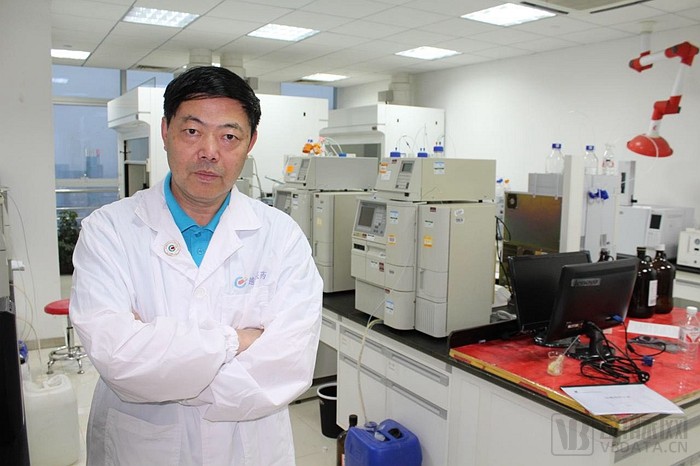
Dr. Wen Xiaoguang in the laboratory. Image courtesy of Overseas Pharmaceutical, Ltd.
Overseas Pharmaceutical went through a very difficult phase in its early days, as the national regulatory framework had not yet clearly defined the classification of Class 2 innovative drugs, and there were virtually no investment firms interested in the NDA 505(b)(2) pathway. Following the introduction of the new drug classification system in 2016, growing investor attention has been directed toward the field of Class 2 innovative drugs, leading to a significant transformation in the financing landscape. The company has gained recognition and support from numerous domestic investment institutions and completed a new round of financing amounting to RMB 330 million two years ago. Its current shareholders include Jiuzhou Pharmaceutical, GF Qianhe, Sichuan Venture Capital, Yuexiu Industrial Fund, Hengqin Le San Wu Hao, Tuojin Capital, Shanghai Pharmaceuticals, Huamei Group, and Qiandao Group, among others.
With capital support, Overseas Pharmaceutical has rapidly developed and currently assembled a management team comprising six full-time Ph.D. holders who returned from Europe and the United States. These core team members previously engaged in new drug and generic drug development at major overseas pharmaceutical companies, possessing extensive familiarity with the research, development, and commercialization processes of improved drugs.
30 new drugs approved for clinical trials in China and the United States,
One new drug is undergoing an international multicenter Phase III clinical trial,
One Extended- and Controlled-Release Product Approved for Marketing in the United States
Currently, 18 oral extended-release and controlled-release new drug candidates from Overseas Pharmaceutical have received Investigational New Drug (IND) approval for clinical trials in China (including Taiwan).(Accounting for approximately 50% of the total number announced by the CDE, far ahead), 12 new drugs have received Investigational New Drug (IND) approval for clinical trials in the United States. In addition, Overseas Pharmaceutical has completed preclinical pharmacokinetic studies for 15 new drugs and human pharmacokinetic studies for more than 30 new drugs; all trial results met expectations, significantly reducing the risks associated with the next stage of drug development. Among them,The new drug "Wei'an" has launched an international, multi-center Phase III clinical trial involving over 500 patients in the United States and other regions. Additionally, several other new drugs are undergoing NDA batch production; upon completion, they will proceed to efficacy trials.
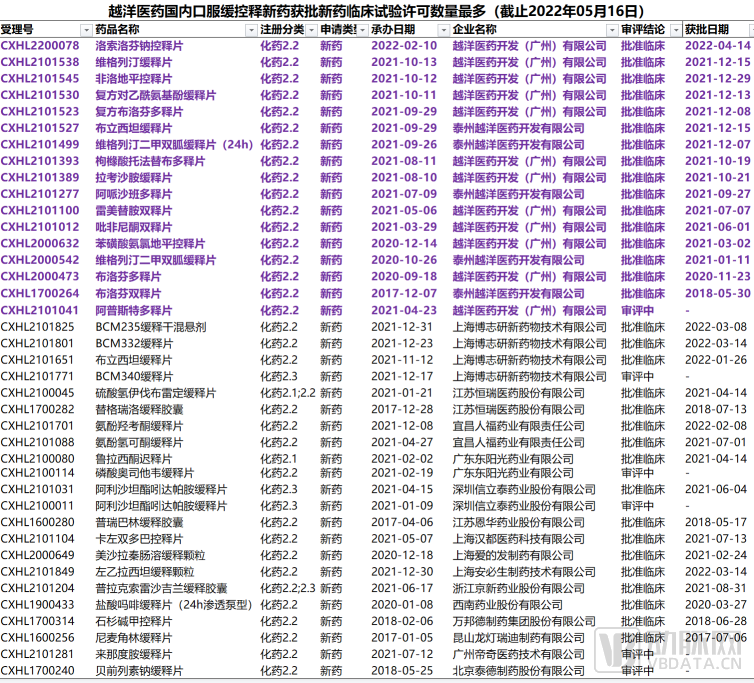
Overseas Pharmaceutical, Ltd. Has the Highest Number of Approved Investigational New Drug (IND) Applications for Domestic Oral Sustained- and Controlled-Release Novel Drugs
(As of May 16, 2022; image source: Overseas Pharmaceutical)
In December 2021, Overseas Pharmaceutical successfully held the inaugural shipment ceremony for its Levetiracetam Extended-Release Tablets destined for the U.S. market. Dr. Wen Xiaoguang stated, “The first shipment of our extended-release and controlled-release products to the United States marks a breakthrough for the company in achieving overseas product commercialization from zero. This serves as a successful validation of the company’s strategy emphasizing asset-light, technology-intensive operations, independent R&D, and contract manufacturing. The significance of this shipment and subsequent sales lies in marking the completion of the company’s closed loop from R&D to commercialization, signaling its transformation from an innovative R&D enterprise into a commercial pharmaceutical company.”
Due to Overseas Pharmaceutical’s leading position in the development of Class 2 innovative drugs, it has been recommended by the China Pharmaceutical Industry Association as the chair entity of the Special Committee on Class 2 New Drugs, garnering widespread acclaim and recognition within the industry. However, in Wen Xiaoguang’s view,“High volume only signifies that we have gained an early advantage; our goal is to succeed in the long run, which requires greater support and collaboration.”
Overseas Pharmaceutical, Ltd. plans to advance multiple new drugs into the NDA registration and commercial production phase this year, with several others entering Phase III clinical trials next year. In the coming years, more candidates from its robust pipeline are expected to reach the NDA submission stage. The company aims to successfully bring more novel therapeutics to market by raising additional capital and pursuing collaborative development partnerships, thereby delivering healthcare solutions for humanity.
References:1Sina Medicine, “Sina Medicine Annual Review | 2021 Sees a Surge in R&D of Class 2 Improved New Chemical Drugs”