

Frost & Sullivan Releases 'Pharmaceutical 3D Printing Industry Report': 3D Printing Drives a Paradigm Shift in Drug Manufacturing
Looking back at the evolution of the pharmaceutical industry, new drug development has progressed through distinct stages involving botanical drugs, chemical drugs, and biologics in both R&D and manufacturing. The deciphering of the human genome draft in 2000 ushered pharmaceutical companies into the era of translational medicine and precision medicine. Since 2010, the emergence of AI technology has triggered a paradigm shift in drug screening and development. Drug development and production constitute a rigorous and protracted process; overall, the birth and iteration of disruptive technologies in the pharmaceutical sector have been relatively slow.
Frost & Sullivan (hereinafter referred to as “Sullivan”) has continuously monitored emerging technologies in the field of drug development and manufacturing, and has officially released the Industry Report on 3D Printing of Pharmaceuticals.This report is the first multi-dimensional industry analysis focused on 3D printing of pharmaceuticals, providing the most comprehensive and in-depth insights into technological advancements, industry trends, and commercial potential. The report highlights that 3D printing technology for drugs will drive digitalization and intelligence in the pharmaceutical industry, serving as an accelerator for modern R&D and an advanced manufacturing method for pharmaceutical companies.Sullivan looks forward to leveraging this emerging technology in the future to provide patients with better medication options.
This article delves into technological and industry developments, analyzing 3D drug printing technology—a transformative innovation with the potential to revolutionize current approaches to drug design, manufacturing, and utilization.
Technological Advancement: Over 20 Years of Development, Multinational Pharmaceutical Companies Have Actively Engaged in Strategic Layouts
3D printing technology, also known as additive manufacturing, is a process that directly fabricates three-dimensional physical objects from materials such as metals, polymers, and viscous fluids by “layer-by-layer printing and stacking” under computer control, based on digital 3D models of the objects. Compared with traditional manufacturing techniques, 3D printing can streamline complex processing steps and produce objects with unique external shapes or intricate internal structures at higher production efficiency. Initially used to produce simple plastic prototypes, 3D printing technology has now expanded its applications to the pharmaceutical field.
1Overview of 3D Printing Technology for Pharmaceuticals
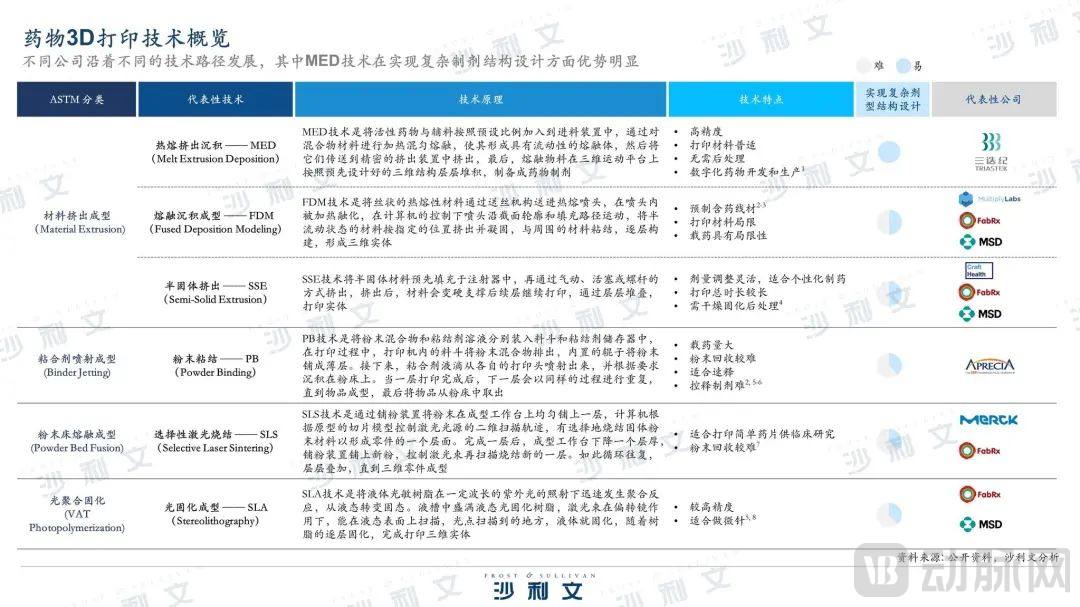
According to the classification standards of the American Society for Testing and Materials (ASTM) Committee F42 on Additive Manufacturing Technologies, six 3D printing technologies based on four principles—material extrusion, binder jetting, powder bed fusion, and vat photopolymerization—are applied in the pharmaceutical field. These six technologies are Melt Extrusion Deposition (MED), Fused Deposition Modeling (FDM), Semi-Solid Extrusion (SSE), Powder Binding (PB), Selective Laser Sintering (SLS), and Stereolithography (SLA).
2Development History of 3D Printing Technology for Pharmaceuticals
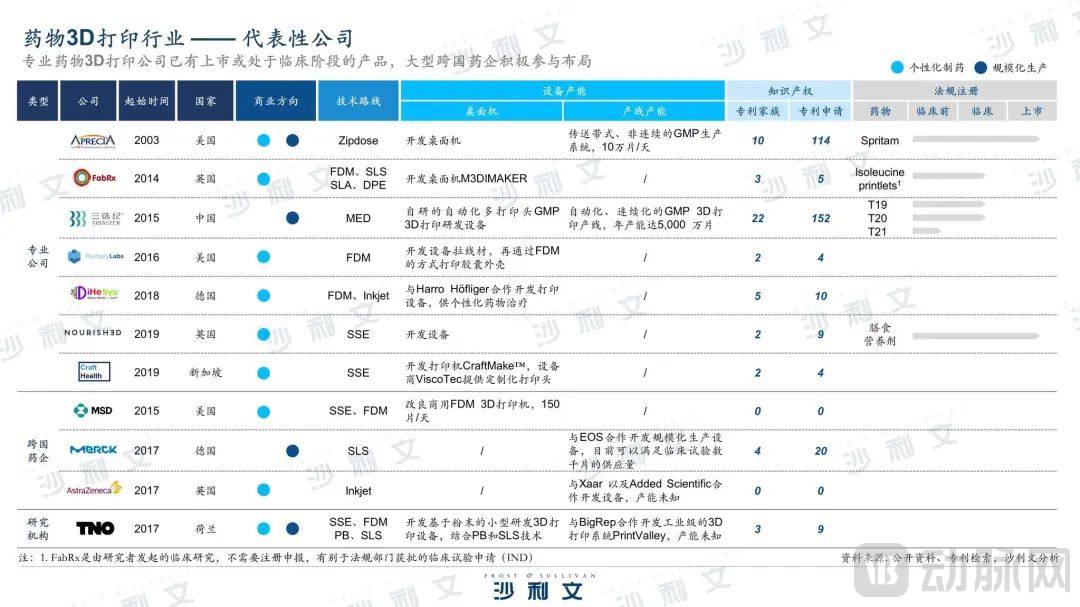
In the late 1980s, various 3D printing technologies emerged in rapid succession. In 1996, Therics, the world’s first pharmaceutical 3D printing company, was established, boldly attempting to introduce 3D printing technology into the traditional pharmaceutical industry. In 2015, 3D-printed drugs became a reality. Aprecia Pharmaceuticals’ anti-epileptic drug, Spritam, received FDA marketing approval. This drug utilizes 3D printing technology to create an internal porous structure that enables rapid disintegration, addressing the clinical need for patients with swallowing difficulties. The launch of the world’s first 3D-printed drug marked regulatory recognition of this emerging 3D pharmaceutical printing technology and simultaneously sparked a surge in research on 3D-printed medications. Currently, approximately fifty companies and institutions worldwide have entered the field of pharmaceutical 3D printing, including dozens of multinational pharmaceutical companies. The report summarizes information on representative specialized pharmaceutical 3D printing companies, multinational pharmaceutical firms, and research institutions regarding their business directions, technical routes, equipment capacity, intellectual property, and regulatory registration, as shown in the figure below.
3Analysis of 3D Printing Technology for Pharmaceuticals
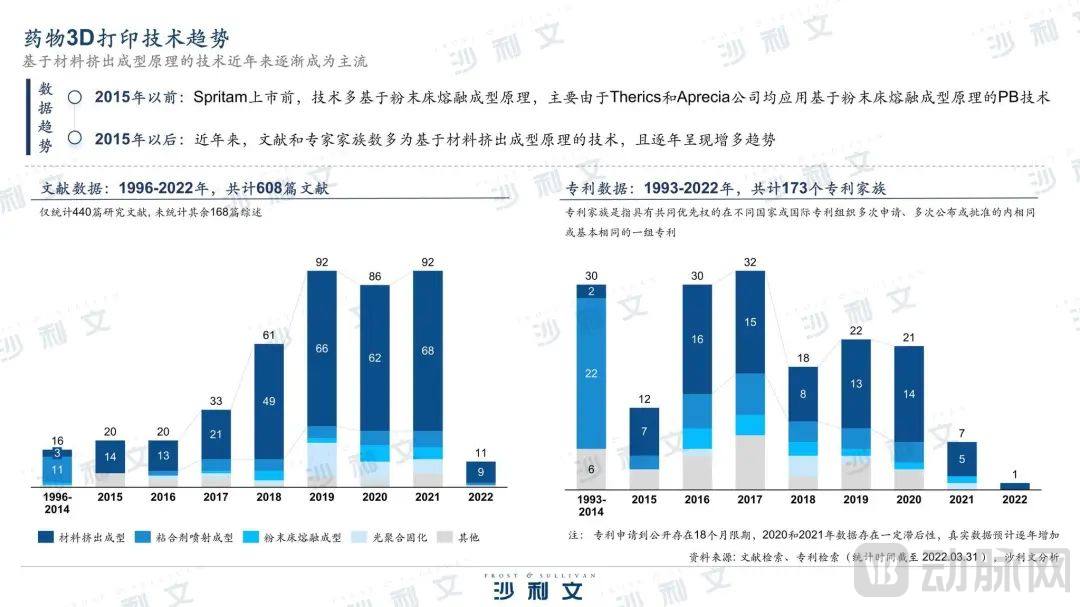
The report analyzes the literature and patents on 3D printing technology for pharmaceuticals. Before the launch of the world’s first 3D-printed drug, most technologies were based on the powder bed fusion principle, as both Therics and Aprecia pursued development along the lines of powder bed (PB) technology. In recent years, 3D printing technologies based on material extrusion have gradually become mainstream, primarily due to their ability to produce drugs with satisfactory appearance, design complex formulation structures, achieve precise drug release, shorten formulation development time, and reduce drug production costs.
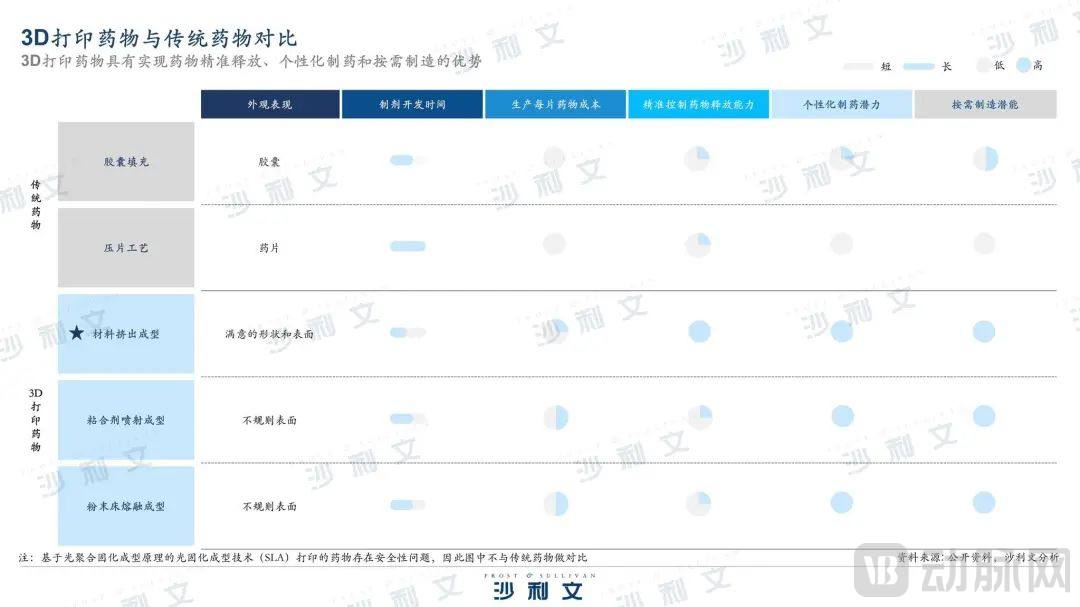
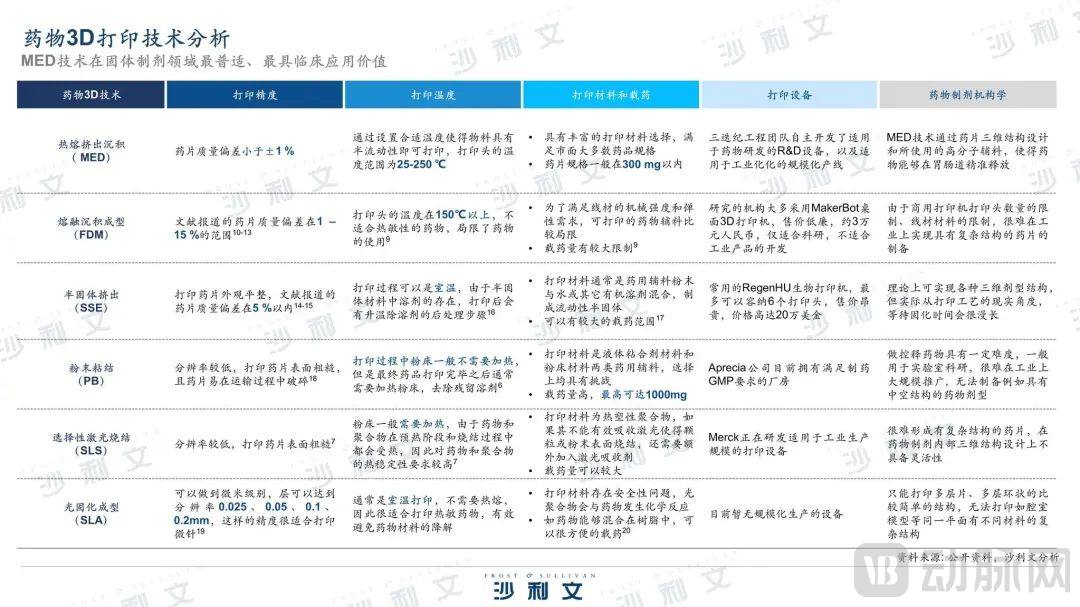
The report summarizes the performance of six drug 3D printing technologies in terms of printing precision, printing temperature, printing materials and drug loading, printing equipment, and pharmaceutical structural formulation.Among these, MED technology demonstrates universal applicability in the field of solid dosage forms and holds significant clinical value.
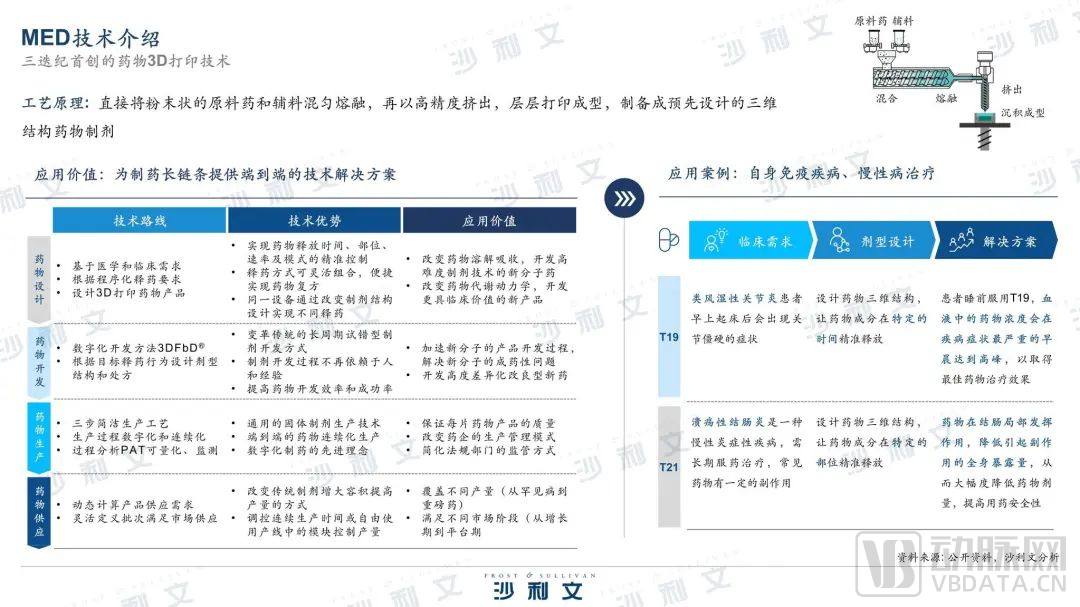
MED directly blends and melts powdered active pharmaceutical ingredients (APIs) with excipients, followed by high-precision extrusion and layer-by-layer printing to fabricate pre-designed three-dimensional structured pharmaceutical formulations.MED employs a mixing extrusion device to effectively achieve the blending, melting, and conveying of active pharmaceutical ingredient (API) and excipient powders, thereby enabling continuous feeding and printing. The use of precision extrusion devices facilitates high-precision printing. Furthermore, through innovative engineering techniques such as coordinated multi-station printing and print head arrays, MED constructs complex internal three-dimensional drug structures using multiple materials. This approach enables efficient, high-throughput, large-scale production, addressing the limitations of Fused Deposition Modeling (FDM), Semi-Solid Extrusion (SSE), and other 3D printing technologies based on material extrusion principles in pharmaceutical manufacturing.
MED enables the design of dosage forms with complex structures and precise control over drug release.TriMedica’s T19, a product leveraging MED technology, enables precise control over the timing of drug release for the treatment of rheumatoid arthritis. When taken at bedtime, T19 ensures that plasma drug concentrations peak in the morning when disease symptoms are most severe, thereby alleviating morning joint stiffness, pain, and functional impairment. The company’s T21 product provides precise control over the site of drug release for the treatment of ulcerative colitis. By exerting its therapeutic effect locally in the colon, T21 limits systemic exposure, reduces adverse reactions, and enhances both medication safety and treatment efficacy.
4Advantages of 3D Printing Technology in Pharmaceuticals
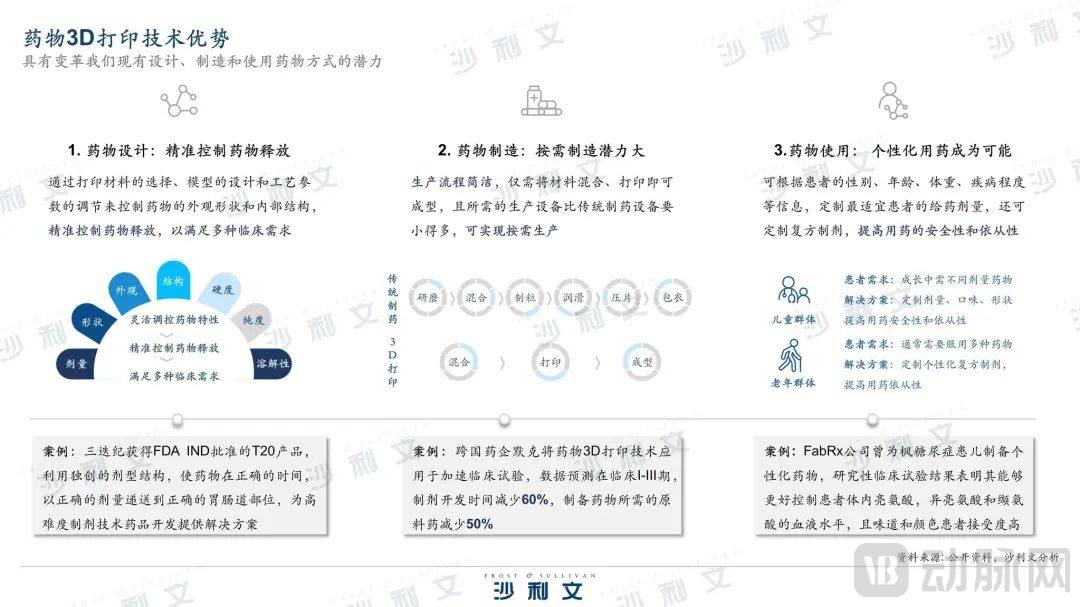
Throughout the historical development of the pharmaceutical industry, despite optimizations in manufacturing processes and costs, traditional methods have lacked flexibility and are not necessarily compatible with drug development or diverse clinical needs. In contrast, 3D printing of pharmaceuticals offers high flexibility, featuring a digitalized and continuous production process with the potential to transform how drugs are designed, manufactured, and used. In terms of drug design, 3D printing enables control over the external shape and internal structure of medications through the selection of printing materials, model design, and adjustment of process parameters. This facilitates better regulation of drug release profiles, including duration, location, and rate, thereby addressing various clinical requirements. Regarding drug manufacturing, compared with traditional pharmaceutical processes, 3D printing involves simpler production workflows, requires smaller equipment, and supports on-demand production. In terms of drug usage, the high flexibility of 3D printing makes personalized medication possible; by individually setting dosages or customizing combination therapies for each patient, it enhances medication safety and adherence.
5Market for the Application of 3D Printing Technology in Pharmaceuticals
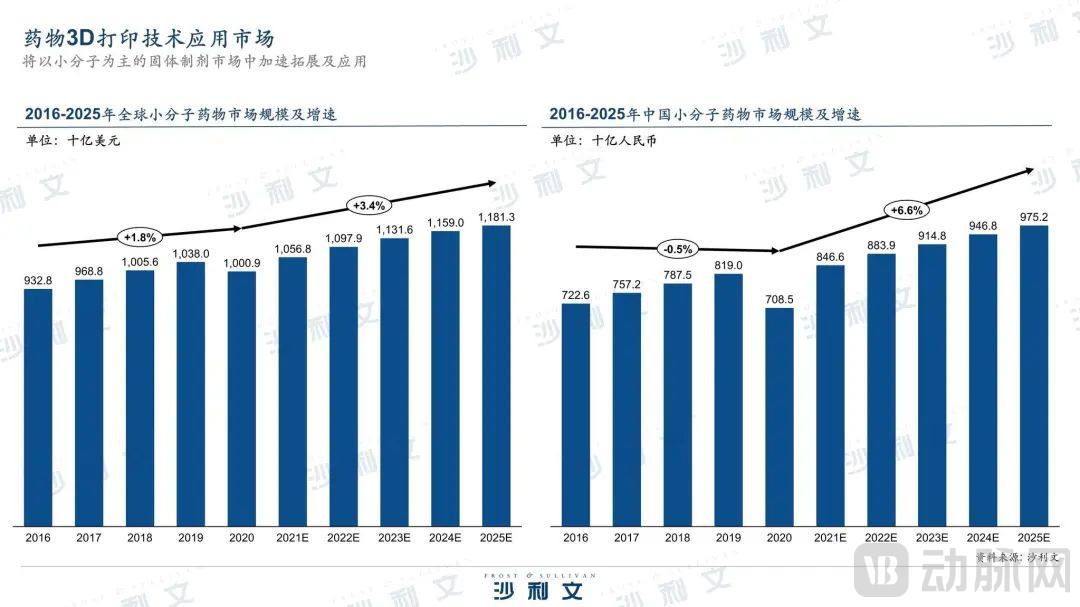
3D printing technology for drugs, as an emerging technology, can be applied in the field of solid dosage forms,Solid dosage forms are dominated by small-molecule drugs. In recent years, the small-molecule drug market has experienced rapid growth. According to Frost & Sullivan data, the global market size increased from USD 932.8 billion in 2016 to USD 1.038 trillion in 2019, while the Chinese market size grew from RMB 722.6 billion to RMB 819.0 billion over the same period. In 2020, the COVID-19 pandemic disrupted pharmaceutical distribution, leading to slight declines in both the global and Chinese market sizes. The market is expected to continue its growth trajectory, with the global market size projected to reach USD 1.1813 trillion by 2025, and the Chinese market size expected to attain RMB 975.2 billion by 2025.Compared with traditional solid dosage forms, 3D-printed drugs enable better control of drug release, enhance therapeutic efficacy, reduce adverse effects, and decrease dosing frequency. Currently, several 3D-printed drug candidates have received Investigational New Drug (IND) approval to enter clinical trials. In the future, as more 3D-printed drugs achieve commercialization, they will provide patients with improved medication options and accelerate their expansion and application in the solid dosage form market, which is predominantly composed of small-molecule drugs.
Industry Development: Large-Scale Production and Personalized Medicine, with Broad Application Prospects
In the pharmaceutical industry, new technologies require decades or even longer of trial-and-error, improvement, and development to progress from discovery to clinical application. Since the establishment of the world’s first 3D-printed drug company in 1996, the industry has undergone more than 20 years of development, transforming 3D-printed drugs from a scientific hypothesis into reality. Today, leveraging digital and personalized manufacturing methods, 3D printing is injecting new momentum and novel models into the development of solid dosage forms, which account for half of the global pharmaceutical market.
1Current Development Status of the 3D-Printed Drug Industry
Currently, companies in the 3D-printed pharmaceuticals industry adopt diverse technological pathways, each with its own technical preferences and development strategies aligned with their respective commercial directions. The primary development trajectories for the 3D-printed pharmaceuticals industry are scaled-up manufacturing and personalized medicine.
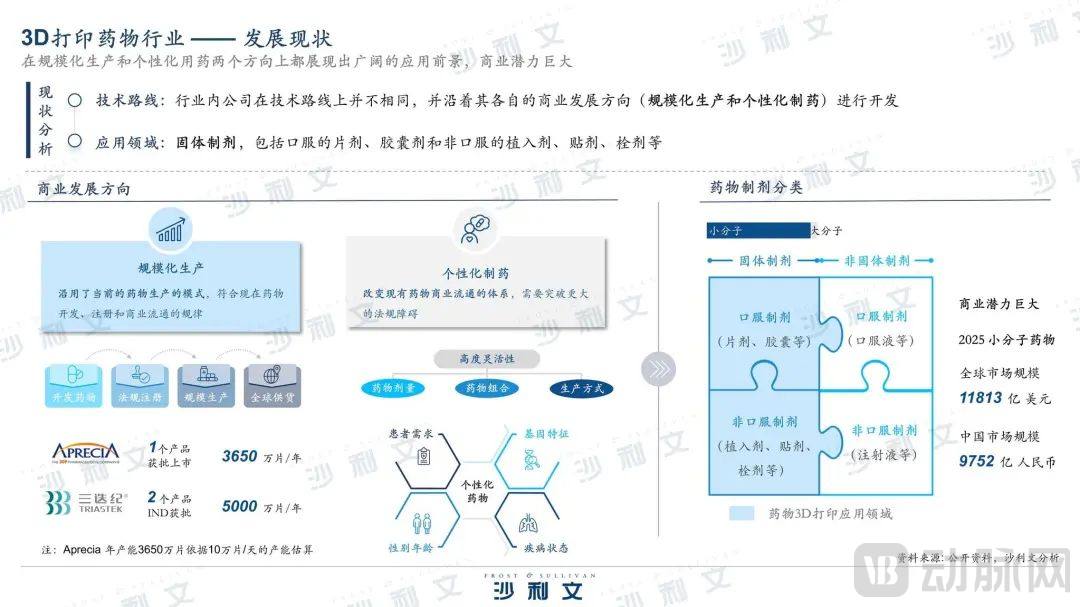
Large-Scale Production:Adopting the current model of pharmaceutical manufacturing, which aligns with the prevailing norms for drug development, regulatory registration, and commercial distribution, we sequentially develop fixed-dose drug products, complete regulatory filings, and scale up production to supply markets across various countries.
Specialized pharmaceutical 3D printing companies, Aprecia from the United States and Triastek from China, have advanced along this trajectory, effectively applying 3D printing technology to the drug development and commercialization stages. Aprecia has developed a large-scale production system compliant with Good Manufacturing Practice (GMP) requirements, capable of producing 100,000 tablets per day, and has already launched one 3D-printed drug on the market. Triastek operates an automated, continuous GMP-compliant 3D printing production line with an annual capacity of 50 million tablets; two of its drug candidates, T19 and T20, have received Investigational New Drug (IND) approval from the U.S. Food and Drug Administration (FDA) for clinical trials. Furthermore, Merck, a major multinational pharmaceutical company, is also exploring scalable manufacturing by initiating a pharmaceutical 3D printing innovation project. It currently uses 3D printing technology to produce drugs for clinical trials, with plans to adopt it for large-scale production in the future.Data projections indicate that during clinical Phase I–III trials, formulation development time is reduced by 60%, and the amount of active pharmaceutical ingredient (API) required for drug preparation is reduced by 50%.
Personalized Medicine: Due to the flexibility of 3D printing technology in adjusting drug dosage, drug combinations, and production methods, it enables customized drug manufacturing based on individual patient needs, genetic profiles, disease status, gender, and age.
FabRx, a specialist in 3D printing of pharmaceuticals, is at the forefront of personalized medicine. The company has investigated various technologies suitable for 3D printing of drugs, including Fused Deposition Modeling (FDM), Selective Laser Sintering (SLS), Stereolithography (SLA), Semi-Solid Extrusion (SSE), and Direct Powder Extrusion (DPE). FabRx has previously developed personalized medications for pediatric patients with maple syrup urine disease (MSUD). Results from investigative clinical trials indicated that these formulations enabled better control of blood levels of leucine, isoleucine, and valine, while demonstrating high patient acceptance in terms of taste and color. Currently, FabRx has partnered with the Gustave Roussy Cancer Center in France to develop personalized medicines for the treatment of early-stage breast cancer.
2Challenges in the Development of the 3D-Printed Drug Industry
3D Printing of Pharmaceuticals: The Most Promising Next-Generation Technology to Transform Drug Manufacturing, Yet Facing Significant Challenges in Development and ApplicationIn terms of technical development, although there are various commercial 3D printers available on the market, most cannot be directly “adapted” for pharmaceutical applications. It is necessary to develop specialized equipment from scratch to meet pharmaceutical requirements and drug regulations. Additionally, excipient research must be conducted on pharmaceutical processes and drug dosage form design, while in vitro and in vivo studies and validation are required to elucidate the release mechanisms of novel three-dimensional structural dosage forms. The overall technological development is highly challenging and demands stringent personnel qualifications, necessitating close collaboration among experts from multiple disciplines, including engineering, materials science, and pharmacy.
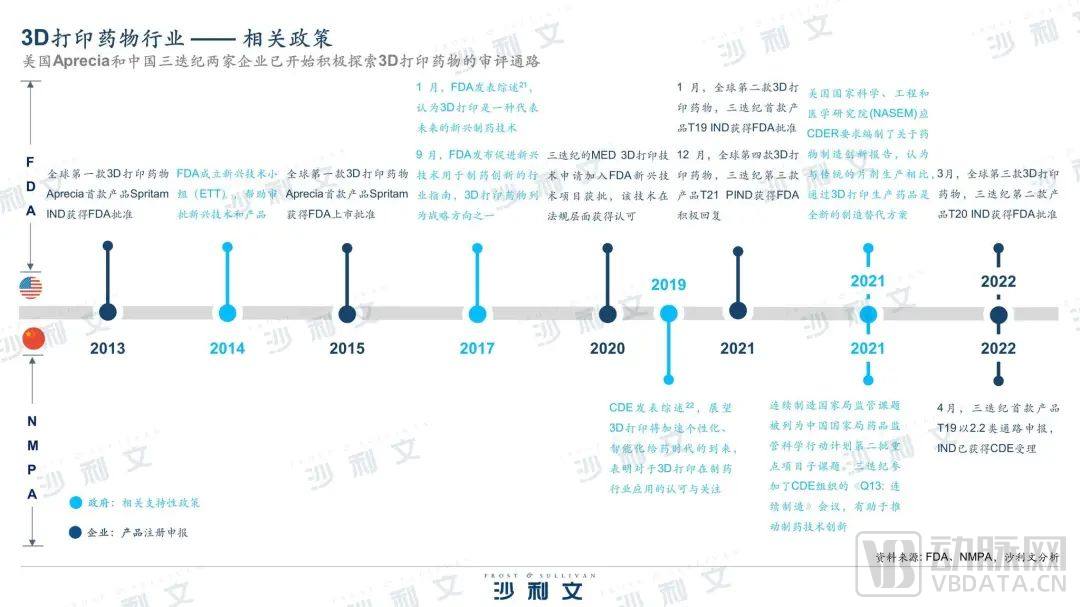
In terms of technological application, as 3D-printed pharmaceuticals utilize entirely novel manufacturing technologies, companies engaged in 3D printing of drugs must navigate the regulatory pathways of specific countries to ensure the future commercialization of their products. Regulatory agencies need to adapt to and accept 3D printing as a method for drug manufacturing and prepare for the transformations brought about by this new technology. The continuous and digital nature of the 3D printing production process for pharmaceuticals aligns with the direction of industrial reform promoted by regulatory authorities worldwide. In 2017, the U.S. Food and Drug Administration (FDA) issued industry guidance on promoting the use of emerging technologies for pharmaceutical innovation, identifying 3D-printed drugs as one of its strategic priorities. In 2022, China’s Center for Drug Evaluation (CDE) accepted the Investigational New Drug (IND) application for Triastek’s product T19, reflecting heightened attention to the application of 3D printing in the pharmaceutical industry.
3Development Trends in the 3D-Printed Drug Industry
3D printing technology for pharmaceuticals will accelerate toward greater sophistication and widespread application.After years of technological accumulation, leading companies in the field of 3D-printed pharmaceuticals have emerged, boasting interdisciplinary talent and independent capabilities in research, development, and manufacturing. Leading firms in 3D drug printing, multinational pharmaceutical companies, startups, and research institutions will leverage their respective strengths to establish their unique positions, build a new ecosystem, and collaboratively explore broader scenarios for R&D, production, and commercial applications, thereby accelerating the refinement and widespread adoption of this emerging technology.
3D-printed drugs will achieve commercialization earlier in the direction of large-scale production.3D printing of pharmaceuticals has demonstrated significant commercial potential in both mass production and personalized medicine. In the realm of mass production, one 3D-printed drug has already received market approval, with a clear regulatory registration pathway established. In contrast, personalized medicine faces greater regulatory hurdles and requires a transformation of the existing pharmaceutical distribution system. Currently, regulatory authorities in the United States and Europe are actively collaborating with pharmaceutical companies to explore guidelines for personalized medicine, aiming to leverage new technologies to address diverse clinical needs arising from individual patient differences. The era of personalized medicine is expected to emerge within the next 10 to 20 years. Overall, commercial success for 3D-printed pharmaceuticals is likely to be achieved earlier in the mass production sector.
3D Printing of Drugs Will Propel the Pharmaceutical Industry into a New Era of Intelligent Drug Manufacturing. 3D printing of pharmaceuticals is a digital manufacturing technology based on computer models, laying the foundation for digital pharmaceutical production. It facilitates integration with advanced information technologies such as big data, artificial intelligence, and the Internet of Things, as well as precise online physical and chemical testing technologies, to enhance drug manufacturing processes and quality management. The substantial process and testing data generated during the research, development, and production of 3D-printed drugs, combined with models and algorithms established in technological development, can provide feedback to optimize the entire workflow, thereby enabling intelligent pharmaceutical manufacturing.
4Company Profile: 3D Printing of Pharmaceuticals
ApreciaFounded in 2003, Aprecia Pharmaceuticals is a pioneer in the field of 3D-printed medicines and developed the ZipDose pharmaceutical technology based on powder bed binder jetting 3D printing. Following the FDA approval of Spritam (levetiracetam), an antiepileptic drug product, as the world’s first 3D-printed medication in 2015, a surge of research interest in 3D-printed drugs emerged. However, market response was modest due to the substantial number of commercial competitors for the active pharmaceutical ingredient levetiracetam. Subsequently, leveraging its technological strengths, Aprecia transformed into a pharmaceutical formulation technology platform company, focusing its business model on collaborative development and manufacturing of new drug products, and engaging in global commercial partnerships with large multinational pharmaceutical companies and biotechnology firms.
TriassicCo-founded in China in 2015 by Dr. Cheng Senping, an entrepreneur with venture experience in both China and the United States, and Professor Xiaoling Li, an expert and educator in the U.S. pharmaceutical formulation industry, the company is a global leader in the field of 3D-printed pharmaceuticals. Triastek pioneered the world’s first MED (Melt Extrusion Deposition) technology and has developed a proprietary 3D printing technology platform covering the entire chain from drug dosage form design and digital product development to intelligent manufacturing. It boasts the world’s most extensive pipeline of 3D-printed pharmaceutical products. Globally, there are only four 3D-printed drug products that have entered or completed regulatory submission, three of which are from Triastek. Triastek is also the only Chinese pharmaceutical company selected for the U.S. FDA’s Emerging Technology Program and is participating in the establishment of industry standards for 3D-printed drugs in the United States Pharmacopeia (USP).
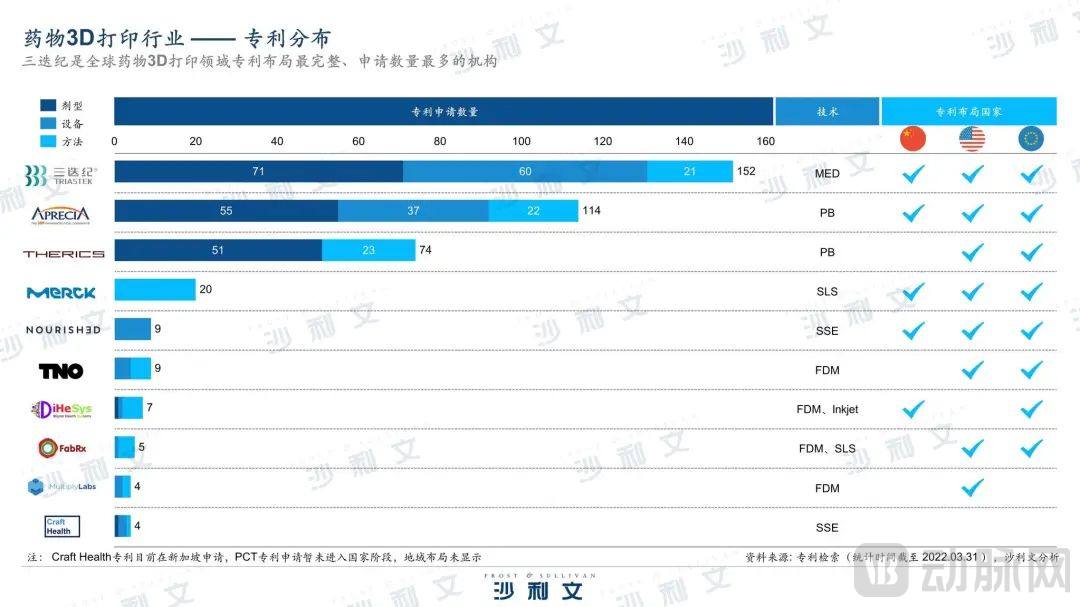
After years of technological development, Triastec has become the organization with the most comprehensive patent portfolio and the highest number of patent applications in the global field of 3D-printed pharmaceuticals.The patent applications cover three major categories: 3D structural dosage form design for pharmaceuticals, proprietary 3D printing equipment for drugs, and digital drug development methods using 3D printing. The portfolio includes 156 patent applications, 22 patent families, and 38 granted patents, with core patents filed in 10 countries and regions, including China, the United States, and Europe.
FabRx: Founded in 2014 by Professors Abdul Basit and Simon Gaisford from University College London (UCL), it is one of the most active companies in the field of 3D-printed pharmaceuticals. FabRx has comprehensively explored various technologies suitable for 3D printing of drugs, including Fused Deposition Modeling (FDM), Stereolithography (SLA), Selective Laser Sintering (SLS), Semi-Solid Extrusion (SSE), and Direct Powder Extrusion (DPE). With a clear commercial focus on personalized medication, FabRx has developed the desktop 3D printer M3DIMAKER and the software M3DISEEN. The company’s newly developed Direct Powder Extrusion (DPE) technology enables the rapid and flexible fabrication of various drug dosage forms, making it better suited for applications in personalized pharmaceutical manufacturing.
Multiply Labs: Founded in 2016 by engineers from the Massachusetts Institute of Technology (MIT) and pharmaceutical scientists from the University of Milan, it is a startup based in South San Francisco, USA. Multiply Labs prepares personalized dosage forms through a two-step process. In the first step, capsules with adjustable compartments are printed using Fused Deposition Modeling (FDM) technology. By designing the filaments and capsule compartments, drug release can be delayed, achieving multi-time-point efficacy from a single dose. The second step involves an automated filling production line that fills the capsule shells with drugs or nutrients. To improve patient compliance, multiple medications are placed in different chambers of a single capsule to achieve the effect of combination formulations.
More Details
Please scan the QR code below to view the full report.

*References:
1. Zheng Y, Deng F, Wang B, et al. Melt Extrusion Deposition (MEDTM) 3D Printing Technology- A Paradigm Shift in Design and Development of Modified Release Drug Products[J]. International Journal of Pharmaceutics, 2021, 602.
2. Karalia D, Siamidi A, Karalis V, et al. 3D-Printed Oral Dosage Forms: Mechanical Properties, Computational Approaches and Applications[J]. Pharmaceutics, 2021, 13.
3. Pitzanti G, Mathew E, Andrews G P, et al. 3D Printing: an appealing technology for the manufacturing of solid oral dosage forms[J]. Journal of Pharmacy and Pharmacology, 2021.
4. Seoane-Viao I, Januskaite P, Alvarez-Lorenzo C, et al. Semi-solid extrusion 3D printing in drug delivery and biomedicine: Personalised solutions for healthcare challenges[J]. Journal of Controlled Release, 2021, 332.
5. Cui M, Pan H, Su Y, et al. Opportunities and challenges of three-dimensional printing technology in pharmaceutical formulation development[J]. Acta Pharmaceutica Sinica B, 2021, 11.
6. Sen K, Mehta T, Sansare S, et al. Pharmaceutical applications of Powder-based Binder Jet 3D printing process- A Review[J]. Advanced Drug Delivery Reviews, 2021, 177.
7. Charoo N A, Ali S F B, Mohamed E M, et al. Selective laser sintering 3D printing – an overview of the technology and pharmaceutical applications[J]. Drug Development and Industrial Pharmacy, 2020, 46.
8. Economidou S N, Douroumis D. 3D printing as a transformative tool for microneedle systems: Recent advances, manufacturing considerations and market potential[J]. Advanced Drug Delivery Reviews, 2021, 173.
9. Parulski C, JeNnOtte O, Lechanteur A, et al. Challenges of Fused Deposition Modeling 3D Printing in Pharmaceutical Applications: Where are we now?[J]. Advanced Drug Delivery Reviews, 2021, 175.
10. Roulon S, Soulairol I, Lavastre V, et al. Production of Reproducible Filament Batches for the Fabrication of 3D Printed Oral Forms[J]. Pharmaceutics, 2021, 13.
11. Goyanes A, Allahham N, Trenfield S J, et al. Direct powder extrusion 3D printing: Fabrication of drug products using a novel single-step process[J]. International Journal of Pharmaceutics, 2019, 567.
12. Fanous M, Bitar M, Gold S, et al. Development of immediate release 3D-printed dosage forms for a poorly water-soluble drug by fused deposition modeling: Study of morphology, solid state and dissolution - ScienceDirect[J]. International Journal of Pharmaceutics, 2021, 599.
13. Chen D, Xu X Y, Li R, et al. Preparation and In vitro Evaluation of FDM 3D-Printed Ellipsoid-Shaped Gastric Floating Tablets with Low Infill Percentages[J]. AAPS PharmSciTech, 2020, 21.
14. Lafeber I, Tichem J M, Ouwerkerk N, et al. 3D printed furosemide and sildenafil tablets: innovative production and quality control[J]. International Journal of Pharmaceutics, 2021, 603.
15. Cotabarren I M, Cruces S, Palla C A. Extrusion 3D printing of nutraceutical oral dosage forms formulated with monoglycerides oleogels and phytosterols mixtures[J]. Food research international, 2019, 126.
16. Azad M A, Olawuni D, Kimbell G, et al. Polymers for Extrusion-Based 3D Printing of Pharmaceuticals: A Holistic Materials–Process Perspective[J]. Pharmaceutics, 2020, 12.
17. Fang D, Yang Y, Cui M, et al. Three-Dimensional (3D)–Printed Zero-Order Released Platform: a Novel Method of Personalized Dosage Form Design and Manufacturing[J]. AAPS PharmSciTech, 2021, 22.
18. Fina F, Goyanes A, Gaisford S, Basit A W, et al. Selective laser sintering (SLS) 3D printing of medicines[J]. International Journal of Pharmaceutics, 2017, 529.
19. Wang J, Goyanes A, Gaisford S, Basit A W. Stereolithographic (SLA) 3D printing of oral modified-release dosage forms. International Journal of Pharmaceutics, 2016, 503.
20. Martinez P R, Goyanes A, Basit A W., Gaisford Simon. Fabrication of drug-loaded hydrogels with stereolithographic 3D printing. International Journal of Pharmaceutics. 2017, 532.
21. James Norman, Rapti D. Madurawe, Christine M.V.Moore, Mansoor A.Khan, Akm Khairuzzaman. A new chapter in pharmaceutical manufacturing: 3D-printed drug products. Advanced Drug Delivery Reviews. 2017, 108:39-50.
22. Shi J, Wang ZM, Zheng AP. Application and Challenges of 3D Printing Technology in Pharmaceutical Preparations. Progress in Pharmaceutical Sciences, 2019, 43(3): 164-173.