

Post-85s Medical PhD Sells House to Found Genomics Firm, Now Nears IPO with Tumor NGS Leader GeneCast Biotech

Geneseeq
Genetic Testing Product Developer
On May 16, the tranquil domestic gene sequencing industry witnessed a long-awaited major development: Geneseeq Technology, the leading provider of tumor next-generation sequencing (hereinafter referred to as “tumor NGS”) services, finally filed its prospectus with the STAR Market of the Shanghai Stock Exchange after numerous rumors, drawing widespread attention from the industry.
As a genetic technology company at the forefront of clinical innovation and application of tumor NGS in China, Shihe Gene has long been a highly sought-after star project in the primary market. Public information reveals that Shihe Gene previously completed multiple rounds of private equity financing, accumulating over RMB 1 billion, and garnered favor from numerous leading investment institutions, including Lilly Asia Ventures, SoftBank China, Longma Peak Venture Capital, Huatai Ruihe, E Fund, and Guoxin Capital. According to the prospectus, in the final pre-IPO financing round completed in April 2021, Shihe Gene’s overall valuation had reached as high as RMB 6.199 billion, significantly exceeding the RMB 3 billion expected market capitalization stipulated by the fourth set of listing standards on the STAR Market it selected.
Emerging from the nascent and rapidly expanding phase of China’s tumor NGS industry, Geneseeq has established a comprehensive suite of molecular diagnostic services and diversified products for precision oncology. These offerings cover the entire patient journey, including early screening and diagnosis for at-risk populations, genomic profiling to guide clinical treatment selection, identification of drug resistance mechanisms, and post-operative monitoring for recurrence. According to Frost & Sullivan data, in 2020, Geneseeq ranked among the top three players in China’s tumor NGS market, holding approximately 10% of the market share.
Born in 1987, Shao Yang was the quintessential “model child” praised by parents. He entered elementary school at age four, went abroad for high school at 13, and enrolled in the Immunology program at the University of Toronto at 16. After graduating from university at 20, he was admitted directly into a combined master’s and doctoral program. During his most vigorous years, Shao Yang immersed himself in cutting-edge scientific knowledge, coinciding with the explosive emergence of gene sequencing technology—a development that would later profoundly transform human clinical practice.
During his medical doctoral studies, Shao Yang observed that the cost of high-throughput sequencing was declining at an accelerating pace. Recognizing the dawn of this technology’s clinical application, he embarked on an entrepreneurial venture. To raise startup capital, he sold his property in Canada, took out bank loans, and worked closely with several co-founders to focus on technological research and development. In the early stages of the startup, Shao Yang made a strategic trend assessment that would profoundly influence the subsequent development of Nanjing Shihe Gene Biotechnology Co., Ltd. (Shihe Gene). At that time, Foundation Medicine, which would later become a dominant leader in cancer diagnosis and treatment, had already gained significant prominence and launched its commercial products. Shao Yang realized that Shihe Gene, with its limited track record, stood little chance of competing head-on with Foundation Medicine in overseas markets. Consequently, he decided to return to China, optimizing and upgrading the team’s tumor next-generation sequencing (NGS) technology to suit the physiological characteristics of the Chinese population, thereby aiming to capture the then-untapped domestic market.
Thus, in March 2013, Nanjing Shihe Gene Biotechnology Co., Ltd. was officially established, with Shao Yang serving as Chairman. The company focused on the clinical translational applications of high-throughput gene sequencing technologies. Two years later, Shao Yang and Shihe Gene entered the anticipated fast lane of growth in China’s tumor NGS market. By 2017, the newly established Shihe Gene had surpassed most competitors across multiple dimensions, including revenue, number of tested samples, and number of collaborating physicians.
A significant turning point occurred in 2018. That year, the “EGFR/ALK/ROS1/BRAF/KRAS/HER2 Gene Mutation Detection Kit (Reversible Terminator Sequencing Method),” independently developed by Shihe Gene, received registration approval from the National Medical Products Administration (NMPA), becoming one of the first high-throughput genomic testing products for tumor companion diagnostics to be approved for market launch in China during that period. This product comprehensively covers common genes associated with targeted therapies for lung cancer, enabling simultaneous detection of multiple gene loci and mutation types, with a detection sensitivity as high as 1%. For China’s NGS industry in oncology, which was still in a state of intense competition and uncertainty at the time, the importance of obtaining product registration credentials cannot be overstated.
According to Shao Yang’s statement in a 2019 media interview, China’s tumor NGS industry has transitioned from an initial ranking phase to an elimination round. Subsequent events have validated Shao Yang’s prediction: by 2020, tumor NGS companies that secured product registration approvals early, such as Burning Rock Biotech, Nanjing Shihe Gene Biotechnology Co., Ltd., and Genetron Health, captured approximately 30% of the domestic tumor NGS market. According to Frost & Sullivan data, the market shares held by these three leading enterprises were 13%, 10%, and 10%, respectively, indicating a clear trend toward industry consolidation.
Since then, Nanjing Shihe Gene Biotechnology Co., Ltd. has maintained an annual R&D investment exceeding 20%. Building on its existing genetic testing service system, the company has actively pursued the development of standardized commercial test kits, continuously expanding its business scope and customer base to cultivate new profit growth drivers.
In 2020, the tissue-based Tumor Mutational Burden (TMB) detection kit for non-small cell lung cancer developed by Geneseeq became the first and only high-throughput large-panel genetic testing kit in China to enter the Special Review Procedure for Innovative Medical Devices, and it is currently undergoing technical review by the National Medical Products Administration. In the same year, amid a surge of interest in early cancer screening in China, Geneseeq independently developed a multi-omics early cancer screening technology based on liquid biopsy and initiated clinical validation of this pan-cancer early screening approach. The company plans to conduct large-scale clinical trials for its early screening kit products in the future, consistently remaining at the forefront of clinical translation in precision oncology in China.
After years of development, leveraging its profound technological expertise, extensive experience accumulation, stringent quality management system, strong brand reputation, and mature channel terminals, Nanjing Shihe Gene Biotechnology Co., Ltd. has become a leading enterprise in China specializing in high-throughput genetic testing for precision oncology.
Unlike traditional third-party medical testing laboratories and IVD companies, which excel in providing standardized instruments, reagents, and R&D services, Geneseeq’s primary revenue source is highly innovative clinical testing services. According to its prospectus, Geneseeq’s operating revenue maintained stable and rapid growth over the past three years, rising from RMB 394 million in 2019 to RMB 516 million in 2021, with a compound annual growth rate (CAGR) of approximately 9.4%. Among this, sales revenue from clinical testing accounted for about 70% of its core business revenue.
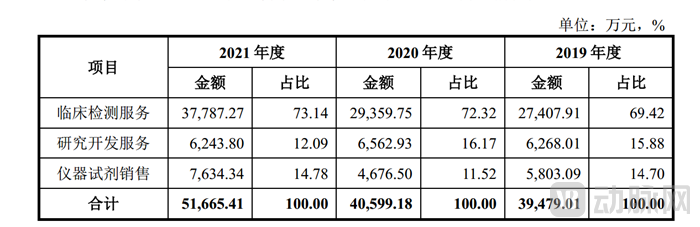
Revenue Structure of Nanjing Shihe Gene Biotechnology Co., Ltd. from 2019 to 2021 (Source: Prospectus)
This is because, with advances in life sciences, human understanding of cancer, tumor classification, and treatment is no longer based solely on the anatomical site of the lesion but increasingly incorporates molecular genetic information. In recent years, anti-tumor therapeutic targets have emerged in rapid succession, and related targeted drugs have been continuously introduced. Immunotherapeutic agents, represented by PD-1/PD-L1 immune checkpoint inhibitors, have successively entered the market. As a result, options for cancer treatment have become increasingly diverse, marking a gradual transition from the era of traditional chemotherapy to the era of molecular targeted therapy and immunotherapy.
In this context, detecting tumor-associated genetic variations to determine which patients are more likely to benefit from specific therapeutic agents is of great significance for personalized precision medicine. To this end, Nanjing Shihe Gene Biotechnology Co., Ltd. provides a diverse range of clinical testing services for patients with major solid tumors and hematologic malignancies, including guiding clinical drug selection through genotyping, identifying mechanisms of drug resistance, and monitoring postoperative recurrence.
Certainly, Nanjing Shihe Gene Biotechnology Co., Ltd. has made significant efforts to continuously enhance its clinical testing service capabilities, establishing a capability system that is distinctly different from traditional industries.
On one hand, medical testing institutions with healthcare facility qualifications are essential infrastructure for providing services in the form of Laboratory Developed Tests (LDTs). To this end, Geneseeq has established a comprehensive medical testing service system, operating medical testing laboratories in Nanjing, Beijing, Shanghai, Guangzhou, and other cities. Geneseeq’s medical testing service system is effectively integrated, enabling rapid access to densely populated patient groups.
For example, during the COVID-19 pandemic, the medical laboratory testing service system was rapidly mobilized to conduct nucleic acid testing for SARS-CoV-2 and was designated by the Nanjing Municipal Health Commission as an approved institution for novel coronavirus detection. In July 2021, following the outbreak of COVID-19 in Nanjing and surrounding areas, the system once again responded promptly to government needs, rapidly establishing mobile cabin laboratories for nucleic acid testing and continuously expanding its testing capacity.
On the other hand, and more critically, Geneseeq possesses an iteratively evolving understanding of complex human tumors and the ability to rapidly respond to clinical innovation needs. Most notably, its large-panel genetic testing service has helped Geneseeq build a high competitive barrier.
Here is some additional background information. Typically, high-throughput gene testing panels for precision oncology comprise a selected set of genes or genomic regions associated with known or investigational diseases or phenotypes. Based on the number of genes tested, these panels can be categorized into small panels and large panels. Small panels target a limited number of genes, usually covering upstream and downstream genes in pathways relevant to a single cancer type as well as common tumor mutation genes; they can be implemented using either PCR technology or high-throughput gene sequencing. In contrast, large panels typically include dozens, hundreds, or even thousands of genes, providing broader coverage across cancer types and richer genetic information, which necessitates the use of high-throughput gene sequencing technologies.
As precision oncology technologies continue to advance in depth, large-panel genetic testing has gradually become the mainstream trend in the clinical application of tumor next-generation sequencing (NGS) technology. Compared with small-panel genetic testing, large panels can comprehensively cover rare mutation targets, systematically reveal tumor co-mutations, and significantly improve the efficiency of clinical detection, thereby effectively enhancing the efficacy of immunotherapy. One study indicated that for patients with advanced colorectal cancer, the positive detection rate is approximately 40% if only single hot-spot gene mutations are tested; this rate increases to 65% with small-panel genetic testing, whereas large-panel genetic testing can detect driver gene mutations in 99% of patients.
Currently, large-panel genetic testing products have been launched overseas, including MSK-IMPACT from the Memorial Sloan Kettering Cancer Center in the United States, “FoundationOne Liquid CDx” from Foundation Medicine, Inc. in the United States, and “PGDx Elio Tissue Complete” from Personal Genome Diagnostics (PGDx) in the United States. In China, although leading genetic technology companies have been striving to make breakthroughs, large-panel genetic testing remains at the laboratory-developed test (LDT) application stage.
Currently, Geneseeq’s core service offering, “GeneseeqOne,” is a globally leading comprehensive multi-gene large-panel testing product based on high-throughput sequencing platforms.According to the prospectus, Geneseeq’s large-panel genetic testing is widely applicable to patients with newly diagnosed solid tumors, as well as those with drug resistance or disease recurrence. It comprehensively covers 437 mainstream cancer driver genes, systematically encompassing upstream and downstream gene information within tumor-related pathways and rare mutation sites. The test accurately detects various genetic alterations, including point mutations, base insertions/deletions, copy number variations, and gene fusions, thereby guiding targeted therapy selection, monitoring treatment efficacy, indicating trends in drug resistance, and assessing hereditary tumor risk.
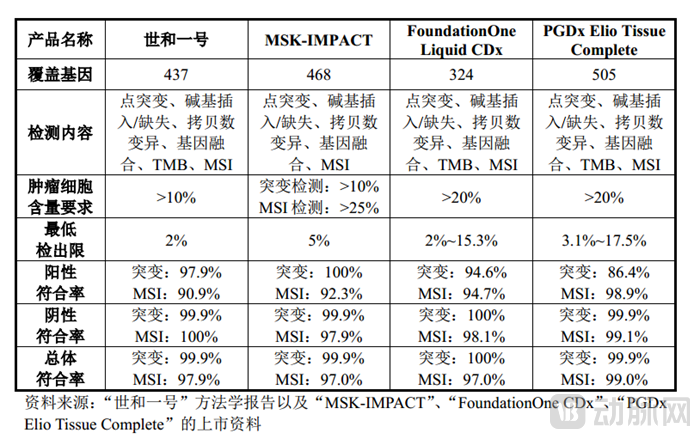
Comparison of Parameters Between Shihe One and Other Large-Panel Genetic Testing Products (Source: Prospectus)
Typically, the limit of detection (LOD), defined as the lowest mutant allele frequency that can be consistently detected, is used to evaluate the sensitivity of tumor next-generation sequencing (NGS) products; a lower LOD indicates higher sensitivity. Compared with the aforementioned products, “Shihe No. 1” achieves the lowest LOD of 2% and demonstrates superior performance in terms of required tumor cell content, positive percent agreement, negative percent agreement, and overall percent agreement, thereby laying the foundation for its broad clinical application.
In addition to its robust large-panel genetic testing, Nanjing Shihe Gene Biotechnology Co., Ltd. is continuously expanding the application scope of high-throughput metagenomic sequencing technology.
For instance, metagenomic next-generation sequencing (mNGS) has gained significant traction. According to the prospectus, Nanjing Shihe Gene Biotechnology Co., Ltd. provides genetic testing services for infectious pathogens. This approach does not require prior in vitro culture or rely on a priori information, enabling comprehensive and accurate acquisition of pathogen genetic sequences. It facilitates the identification of novel or rare pathogens and is suitable for both research and clinical applications involving infections of unknown etiology. By supporting precise diagnosis of infectious diseases and informing clinical medication choices, it offers particular advantages in managing opportunistic and polymicrobial infections, thereby constituting a key component of Nanjing Shihe Gene’s diversified business growth strategy.
From Burning Rock Biotech, Genetron Health to Shihe Gene, the once-dominant leaders in tumor next-generation sequencing (NGS) have all entered the capital markets, ushering in a new phase of corporate operations. This industry, once hailed with enthusiasm yet also met with skepticism, continues to struggle in the red ocean of tumor companion diagnostics. While it attempts to explore new growth points in niche areas such as immune response and recurrence detection, it seems difficult to rekindle the industry’s former luster. So, does Shihe Gene’s counter-trend IPO application suggest that the ceiling for the tumor NGS industry is actually higher than previously imagined?
The answer may well be yes.
First, China has a large population of cancer patients, but the penetration rate of genetic testing remains significantly lower than that in Europe and the United States. According to Frost & Sullivan data, based on newly diagnosed cases, the market penetration rate in China is approximately 10.6%, whereas it reaches as high as 36.1% in the United States. Currently, the domestic market is primarily concentrated in Grade A tertiary hospitals and specialized oncology hospitals in major cities, leaving substantial untapped potential in hospitals across small and medium-sized cities. With the continued widespread adoption of clinical education, the growing acceptance of precision oncology concepts, and the improving accessibility of targeted immunotherapies, there is significant room for future growth.
Furthermore, in addition to guiding clinical medication through companion diagnostics, technological iteration and innovation have further expanded applications into tumor recurrence monitoring and even early screening and diagnosis of tumors, covering the entire course of the disease and offering broad development prospects. According to Frost & Sullivan data, the market size of high-throughput genetic testing for tumors in China has increased from RMB 700 million in 2016 to RMB 4.1 billion in 2021, with a compound annual growth rate (CAGR) of 41.1%. The market size is expected to reach RMB 14.9 billion by 2025 and RMB 49.1 billion by 2030, demonstrating a trend of rapid growth.
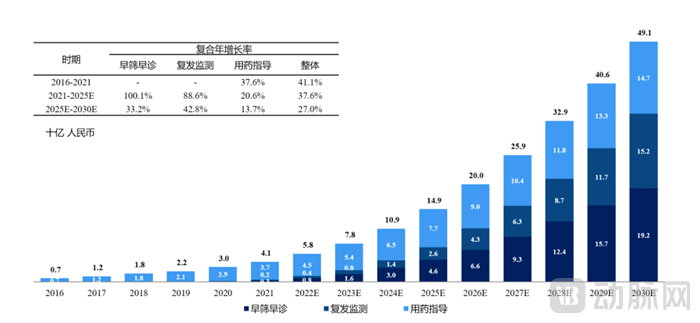
Market Size Growth Trend of Tumor Genetic Testing (Source: Prospectus)
It is estimated that the future market potential for tumor recurrence monitoring and early screening and diagnosis will surpass that of medication guidance, becoming a new driver for industry growth. Both markets are also experiencing rapid expansion. In particular, early diagnosis and screening have emerged as the hottest application areas in recent years. Driven by the sustained high R&D investment of domestic tumor NGS companies, technologies and products for tumor recurrence detection are maturing. For instance, Geneseeq has independently developed ATG-seq, an ultra-high-sensitivity liquid biopsy technology that effectively reduces various types of background noise during detection. Combined with ultra-deep sequencing, this technology enables highly specific sequencing of extremely low-abundance tumor DNA fragments, achieving a limit of detection (LOD) as low as 0.03%. This advancement addresses the previous issue of missed detections in postoperative follow-up for cancer patients, who relied primarily on imaging examinations.
As Shihe Gene enters its 10th year of entrepreneurship, it has embarked on the second phase of its growth. These past ten years have witnessed the tumultuous yet unceasingly forward-moving journey of China’s tumor NGS market. This experience heightens our anticipation that, in the coming decade, gene technology will deliver better solutions for human health.