

Siemens Healthineers Enters the Undervalued $10B+ Vascular Interventional Robotics Market

Eyebright Medical
Ophthalmic Medical Product R&D Provider

HAOYUE CAPITAL
Financial Advisory Service Agency
AOPENG INTELLIGENCE
Developer and Manufacturer of Endovascular Interventional Surgical Robots

Siemens Healthineers
Integrated Healthcare Service Provider

WeMed
Interventional Medical Device Provider
In the past two years, vascular interventional surgical robots have emerged as a prominent sector. Defying the capital winter, they have continued to attract significant investment. From 2021 to present, there have been 14 financing events in this field, with a total amount of approximately RMB 1.5 billion. The financing situation demonstrates sufficient confidence from investors in vascular interventional surgical robots.
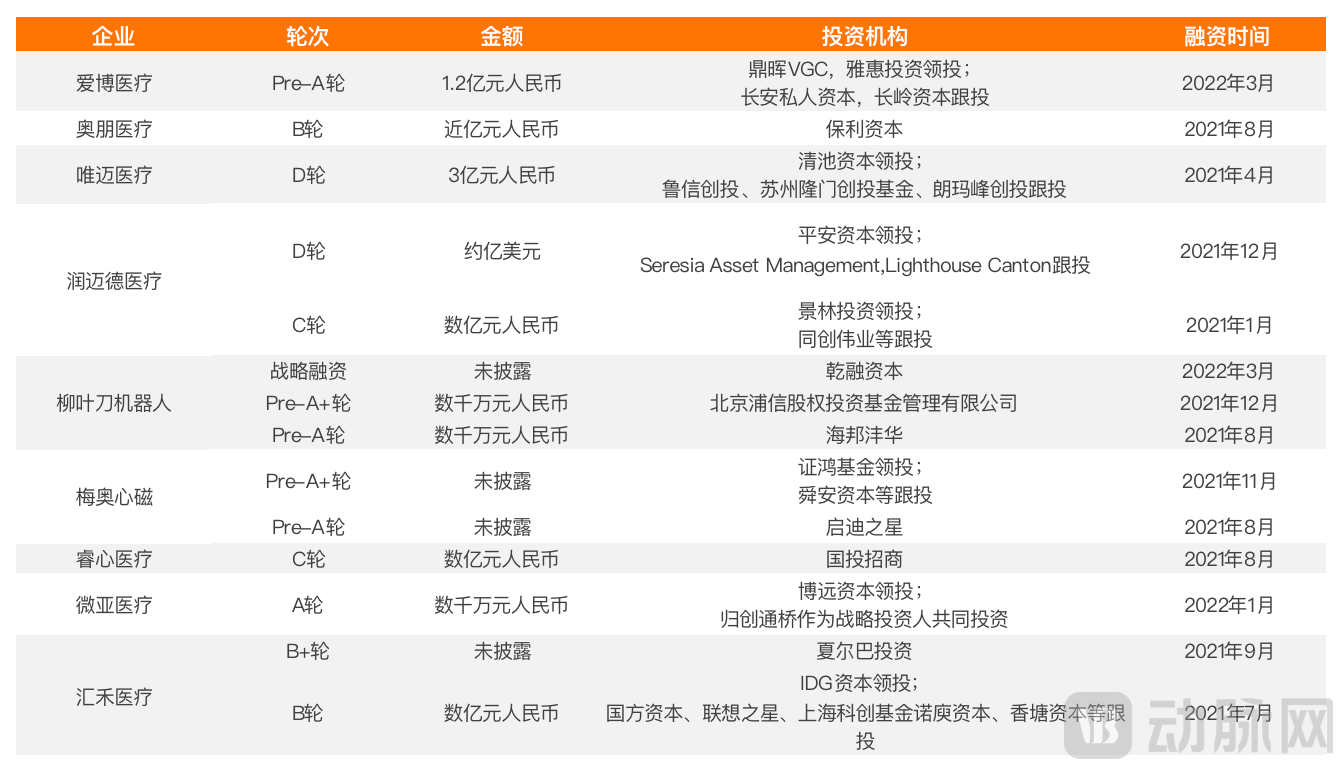
Financing Events in This Sector from 2021 to Present
However, regarding the surge in investment sentiment within the surgical robotics sector, some investors believe this is merely superficial, as the overall market environment remains pessimistic. This is because the development of surgical robots depends not only on the technology itself but is also influenced by factors such as regulatory policies, applicable surgical procedures, and reimbursement models.
Some media outlets, investors, and technology professionals have even begun to question whether vascular interventional surgical robots are merely a “bubble” in the making?
Is this truly the case? Through multi-party interviews, VCBeat will explore and answer this question in this article:
1. Is the value of vascular interventional surgical robots genuinely real?
2. Why Is the Development of Vascular Interventional Robots Still in Its Early Stages?
3. Are there any emerging technologies poised to replace vascular interventional surgical robots?
4. Is large-scale commercialization of vascular interventional surgical robots possible in the future?
What Is It Worth?
Before determining whether vascular interventional surgical robots are a "bubble" or a genuine need, three questions must be answered:
First, is there market demand?
Second, do hospital administrators have the incentive to address unmet resource needs—that is, can new technologies generate new revenue streams?
Thirdly, compared with non-robotic procedures, will the emergence of vascular interventional robots bring about disruptive changes to this procedure?
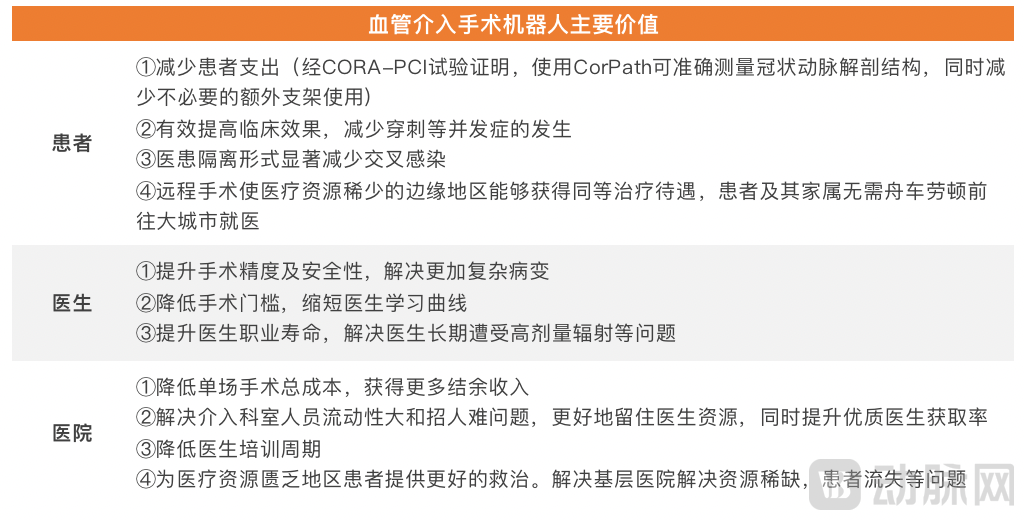
Summary of Value Assessment for Vascular Interventional Surgical Robots
From the perspective of the procedure itself, vascular interventional surgery is a highly precision-demanding task, andThis surgical procedure is highly dependent on the operator's technical skills, presenting a significant barrier to entry; therefore, medical personnel must invest substantial time and effort in learning to master it.
A single endovascular intervention requires the physician not only to determine the vascular access route preoperatively, perform the corresponding angiography, and confirm the location, nature, and severity of the lesion, but also to construct a three-dimensional model of the vasculature by integrating two-dimensional angiographic images with their own anatomical knowledge. Only then can they ultimately rely on tactile feedback and experience to maneuver catheters and guidewires through narrow, tortuous vessels with extremely thin walls within the patient’s body, reaching the lesion site for surgical intervention.
It poses a challenge for both large tertiary hospitals and primary care institutions with relatively scarce medical resources.At the primary care level, it is not uncommon for patients to travel with their entire families to Beijing, Shanghai, and Guangzhou for surgery, or for physicians to fly to various locations to perform procedures. However, given the large number of patients with cardiovascular and cerebrovascular diseases, which often present with acute onset, tertiary hospitals in major cities cannot meet the substantial and rapidly growing demand for interventional treatments. In these tertiary hospitals, the time cost of training an interventional physician is extremely high, typically relying on a master-apprentice model. It is common for senior physicians to struggle with imparting standardized and quantifiable surgical techniques to younger doctors.
In addition, vascular interventional procedures require physicians and bedside intervention staff to perform the surgery in close proximity to the X-ray tube.Due to prolonged exposure to high-dose radiation, physicians are experiencing a shortened career lifespan. According to a survey report by the Society for Cardiovascular Angiography and Interventions (SCAI), half of the physicians suffer from orthopedic occupational diseases, with lumbar spine injuries being the most prevalent at approximately 34.4%, followed by cervical spine-related disorders at 24.7%, and other musculoskeletal conditions at 19.6%.
Interventional departments have long faced high staff turnover and recruitment challenges, while radiation concerns have also influenced the career choices of medical students.With the advent of population aging, the continuing shrinkage of physician resources and the ever-increasing number of patients may ultimately lead to an unmet demand for the treatment of cardiovascular and cerebrovascular diseases.
Guo Fei, Associate Chief Physician in the Department of Neurology at Union Shenzhen Hospital of Huazhong University of Science and Technology, once told VCBeat:“For hospitals, the most valuable asset is their physician resources. However, technological advancements have yet to transform physicians’ working environment. We still wear lead aprons weighing 20–30 jin (approximately 10–15 kilograms) to shield against radiation generated during interventional procedures, working under rudimentary and primitive conditions. This significantly compromises the career longevity of interventional physicians. On one hand, there is substantial demand for cardiovascular and cerebrovascular procedures; on the other, it is challenging to train professionals in cardiovascular and cerebrovascular intervention—a critically serious issue. As healthcare providers, we strongly hope that surgical robots and related technologies can help address these challenges.”
The advent of vascular interventional surgical robots was designed to address the aforementioned pain points.
By leveraging robotics and intelligent technologies, it is possible to quantify and refine physicians’ experience and surgical data, thereby minimizing inter-operator variability in surgical procedures. This approach also shortens the learning curve for interventional physicians, facilitating their rapid professional development. Furthermore, it promotes the widespread adoption of interventional procedures across hospitals at all levels, reducing overall societal healthcare costs. With the aid of 5G technology, physicians can perform remote surgical interventions, enabling interventional specialists in different geographic regions to conduct high-precision procedures.
From the patient’s perspective, this technology holds value.
Corindus’s CorPath 200 series had already completed large-scale clinical trials around 2012, demonstrating its safety and efficacy to the FDA.
First, precise physician operations will effectively improve clinical outcomes and reduce the incidence of complications such as perforation or dissection. For patients, lesion localization becomes more accurate under image navigation and mechanically assisted manipulation, making millimeter-level precision a reality. With optimized device delivery, stent deployment positioning and anchoring become more accurate; catheters and guidewires can be controlled synchronously, thereby enhancing procedural precision and shortening the time required for device placement. Consequently, surgical quality and safety are improved, leading to a reduction in surgical complications.
Second, reduced disease-related expenditures for patients. In traditional interventional procedures, such as coronary stent angioplasty, inaccurate stent placement is an objective clinical pain point. This often leads to the implantation of additional stents and complications arising from inappropriate stent length, both of which increase patients’ treatment costs. The CORA-PCI trial demonstrated a 99.1% clinical success rate in complex cases, with comparable procedural times for PCI. The CorPath system enables accurate measurement of coronary anatomy while reducing unnecessary additional stent use by 8.3%.
Thirdly, the development of technologies such as 5G has made remote surgery and physician-patient isolation a reality. This technology not only reduces contact between healthcare providers and patients, thereby minimizing cross-infection, but also enables patients in underserved peripheral regions with scarce medical resources to receive better treatment.
Market demand is also continuing to rise. According to Frost & Sullivan data, the global number of pan-vascular procedures increased from 11.3 million in 2015 to 14.3 million in 2020, and is expected to expand further at a compound annual growth rate (CAGR) of 8.1%. In light of this, the pain points in vascular interventional procedures are real, and demand continues to grow.
Given the existing demand, do hospital administrators have the incentive to address unmet resource needs?
In summary, improved safety leads to a reduction in complications, thereby effectively controlling the total cost per surgical procedure. Under the DRG payment system, hospital administrators are incentivized to adopt surgical techniques and medical devices with lower costs and higher safety profiles to maximize surplus revenue.
Secondly, the PRECISE clinical trial targeting CorPath has validated that CorPath-assisted PCI can reduce radiation exposure for the primary operator by more than 95%. As the most valuable resources in hospitals, interventional physicians are in short supply due to their lengthy training periods and long-term health risks from radiation exposure and physical strain. Consequently, interventional departments have long faced high staff turnover and recruitment challenges, while radiation concerns also influence medical students’ career choices. Procuring such equipment helps protect physicians, thereby enabling hospitals to better retain their medical talent.
Finally, for patients in remote areas, the emergence of this technology eliminates the need to seek care at large tertiary hospitals, enabling them to address complex treatment challenges locally and providing better medical care to patients in underserved peripheral regions with scarce medical resources. This gives primary-care hospitals the incentive to adopt this surgical procedure, thereby addressing issues such as resource shortages and patient attrition.
When both physicians and patients have a demand, and the procedure can genuinely address their shared pain points, the technology has the potential for clinical implementation.
Why Are Vascular Interventional Surgical Robots Absent?
However, in an era of booming development in surgical robotics, the application of robot-assisted pan-vascular surgery technologies appears to be significantly “lagging behind.”
Among the three major sub-sectors of surgical robotics, orthopedics and laparoscopy have seen the emergence of giants such as Stryker, Tinavi Medical Technologies, Intuitive Surgical, and MicroPort Scientific Corporation, while vascular intervention remains in a relatively early stage of development. Currently, no vascular intervention surgical robots have received approval from China’s National Medical Products Administration (NMPA).
Pan-vascular surgical robots developed by companies such as Aopeng, Eyebright Medical, Runmaide, Realsim, and WeMed are still in the development stage. Globally, only CorPath 200 and CorPath GRX, developed by Siemens, have obtained FDA and CE certifications; R-One, developed by Robotcath (a collaborative project with MicroPort MedBot), has received CE certification; Johnson & Johnson’s Sensei X2 and Stereotaxis’ Genesis RMN have obtained FDA approval. This has led many to question the prospects of this technology.
Is this really the case?
Given the current development of the medical imaging industry and the catheter consumables materials sector, the development of vascular interventional surgical robots has just reached a new tipping point.
Interventional surgery itself is an emerging and rapidly growing surgical category. Meanwhile, the development of vascular interventional surgical robots requires the joint advancement of imaging, materials science, and robotics. As medical devices belong to the realm of hard-tech innovation under strict regulatory oversight, they face high technical barriers and stringent market entry requirements, necessitating extensive clinical validation based on evidence-based medicine. Consequently, the industry remains in its early stages of development.
After in-depth exchanges with various stakeholders, VCBeat has found that, in fact, most manufacturers and investment institutions see opportunities in vascular interventional surgical robots, which are still in the early stages of development. They believe that market demand exists and the competitive landscape remains unsettled, creating the potential for new industry giants to emerge. One phrase frequently mentioned by domestic manufacturers and investment institutions when discussing vascular interventional surgical robots is:“Although vascular interventional surgical robots started late and have low penetration rates, they are truly on the same starting line as the global market, eliminating the need to discuss ‘import surpassing’ and ‘domestic substitution’ technologies.”
Haoyue Capital believes:“Approval has already been granted for products in the two major surgical robotics sectors: orthopedics and laparoscopy. The intrinsic value of surgical robotics technology has been demonstrated through its clinical application. In the context of vascular interventional procedures, this modality not only demands high precision but also addresses critical pain points such as physicians’ shortened career longevity due to chronic radiation exposure. Given the continuously expanding base of cardiovascular patients, market demand is inevitable. Furthermore, vascular intervention robots have applicability beyond cardiovascular procedures, extending to neurointervention (cerebrovascular) and peripheral vascular interventions, thereby offering significant market potential.”
Will New Technologies Replace Vascular Interventional Surgical Robots?
However, prior to the advent of vascular interventional surgical robots, Digital Subtraction Angiography (DSA) technology had long been an integral component of vascular interventional procedures. These interventions are typically performed under the guidance and monitoring of DSA. Consequently, physicians operating within the DSA radiation environment are subjected to the dual burdens of wearing heavy lead aprons and exposure to ionizing radiation.
If DSA achieves technological innovation in the future, thereby reducing radiation dose,Will the value proposition of vascular interventional surgical robots be diminished compared to existing clinical modalities? Is there genuine application potential behind them?
E Dong, Head of the Turing Business at Siemens Healthineers, believes, while continuous technological innovations in DSA are inevitable in the future, they do not diminish the value of vascular interventional surgical robots. This is because radiation reduction is merely one of the advantages offered by robotic technology in vascular interventions. Enhancements in precision, automation, and acceleration of the physician learning curve still require digital solutions provided by surgical robots. Therefore, beyond policy and market factors, a rational assessment of the value and future application potential of vascular interventional surgical robots must comprehensively consider multiple dimensions—including precision, automation, and improvement of the physician’s operative environment—rather than evaluating the worth of a new technology based on a single factor. Different product forms often address problems from distinct perspectives and through varied implementation approaches.
Guo Jian, General Manager of Eyebright Medical, stated:“We have engaged in discussions with many top interventional physicians, and it is unlikely that there will be disruptive changes to the DSA-based interventional surgical treatment model in the next decade. Merely reducing radiation dose through imaging products alone cannot fundamentally resolve the dual burden on physicians during procedures: radiation exposure and the physical strain of wearing lead aprons. However, integrating robotic surgical systems into interventional procedures can fundamentally address these issues, while simultaneously optimizing the surgical experience for both physicians and patients. This approach offers advantages such as improved surgical quality and reduced personnel involvement.”
Returning to the vascular interventional surgical robot itself, most of the devices currently on the market are indeed not overly complex or bulky; they primarily take the form of robotic arms positioned beside the patient bed.
It is precisely for this reason that the technology has drawn skepticism from certain groups, who, from a medical device registration perspective, simplistically view it as an integration of “active + passive components + software,” arguing that it fails to surpass existing manufacturing and process systems and lacks both technical value and clinical significance.
However, tracing only the formal evolution of the technology itself may be somewhat biased.Because a vascular interventional surgical robot is itself an integrated solution, its development requires not only a deep understanding of surgical procedures but also careful consideration of how to address clinical needs through the integration of medicine and engineering, and what specific approaches should be adopted for implementation—whether through digital technologies, robotic arm motion control, precision motion control, or their comprehensive application. Furthermore, developers must conduct in-depth research and devote substantial effort to optimizing key aspects such as the visual system, force feedback system, image clarity, radiation dose, and system robustness, so as to ensure the safety of clinical procedures and enhance surgical precision.
It is precisely this technological composition that has, to some extent, revolutionized traditional surgical procedures and simultaneously disrupted the conventional ways in which surgeons perform operations.
From this perspective, vascular interventional surgical robots indeed possess technical value and have room for development. If they can be truly widely deployed, vascular diseases will be treatable both in large tertiary hospitals and in grassroots medical facilities with relatively scarce resources. Furthermore, challenges faced by vascular interventional physicians—such as limited career longevity, difficulties in ensuring procedural precision, and the challenge of passing on clinical experience—will be alleviated to some extent.
Is Large-Scale Commercialization Feasible?
Based on recent developments in the vascular interventional surgical robotics sector over the past two years, it is evident that this field has achieved a breakthrough from zero to one. Surgical robots developed by certain companies have already completed their first interventional procedures, indicating growing momentum in the sector. So, does this technology hold potential for future commercialization?
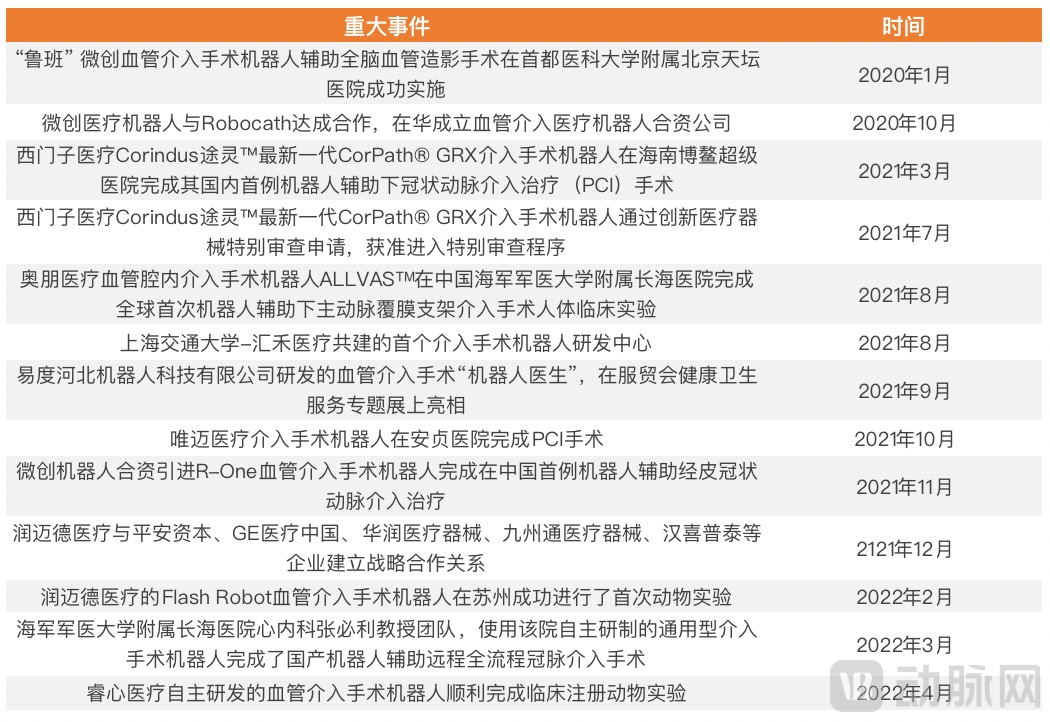
As the first company to have a vascular interventional robot pass the special review application for innovative medical devices, Siemens Healthineers has established the “Tuling Innovation Center” and is launching a scholar program and building a global physician resource platform. Leveraging expert resources, the company is strategically focusing on professional education and localization to accelerate the clinical adoption of its vascular interventional surgical robot. “As our first product launched on the market, while we enjoy the advantage of being first-to-market, we also bear significant responsibilities, including establishing industry procedural standards, facilitating reimbursement access, and educating both physicians and patients.”E Dong, Head of the Turing Business at Siemens Healthineers, candidly discussed the opportunities and challenges facing the new product.
Regarding the commercialization path for future vascular interventional surgical robots, Yang He, founder of WeMed, believes:“Reasonable pricing is crucial. Interventional robots will serve as a standardized tool for enhancing productivity in the field of interventional therapy. If this technology is priced too high in its early stages, it will certainly fail to achieve rapid market penetration. Therefore, during product development, companies must carefully calculate hospitals’ input and output costs, and even the revenue generated by specific departments. This approach will facilitate the broader adoption of the technology. Additionally, companies should avoid homogeneous competition and must possess complete independent intellectual property rights to establish unique competitive advantages and maintain controllable costs.”
Guo Jian, General Manager of Eyebright Medical, believes:“In addition to equipment sales, vascular interventional surgical robots can generate continuous and stable revenue through consumables such as sterile cassettes, as well as related software and services, representing a typical ‘razor-and-blades’ business model. Currently, the commercialization of the equipment, sterile cassettes, and their added functionalities are all viable monetization strategies.”
Liu Yikun, General Manager of Aopeng Medical, believes:“Vascular interventional surgical robots indirectly come into contact with human blood during procedures. The disposable consumables required for this aspect may generate future revenue for enterprises. In addition to market education and pricing, technological positioning is also critical to determining whether these systems can be successfully commercialized. There is a wide variety of vascular interventional procedures. Developing a separate robot for each specific procedure would not only impose high costs on hospitals but also exceed the spatial capacity of catheterization laboratories. Therefore, we believe that the focus of future product design should be on enabling surgical robots to integrate into a broader range of procedural workflows, allowing a single system to perform multiple types of interventions, including those that have not yet emerged.”
“Research Progress on Robot-Assisted Vascular Interventional Technology” highlights another future trend in endovascular surgical guidance: the application of intravascular imaging modalities, such as magnetic resonance imaging (MRI) and optical coherence tomography (OCT), to interventional catheterization procedures. It posits that continuously evolving and improving MR imaging and visualization software will further validate the advantages of this technology over X-ray fluoroscopy following clinical trials. At that time, MRI, OCT, and intravascular ultrasound (IVUS) will see broader application in endovascular interventional therapy.
Moreover, policies have also played a facilitating role in the development of vascular interventional surgical robots.
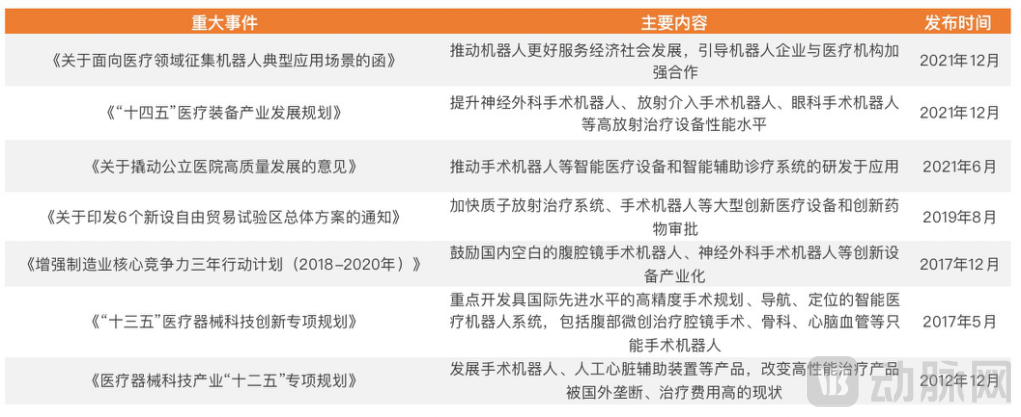
Relevant Policies
As a novel procedural approach, the development of vascular interventional surgical robots requires progressive refinement through long-term collaboration between enterprises and clinical experts. With market education, alignment with expert techniques, and the establishment of standardized norms, these systems will achieve rapid adoption, representing a positive developmental trajectory. Currently, companies in the market are strategically positioning themselves to address potential future challenges.
# Final Thoughts
The value of surgical robots has been validated in the fields of orthopedics and laparoscopy. Driven by multiple factors—including enhanced surgical precision, significant reduction in physician radiation exposure, shortened training cycles for surgeons, decreased patient costs, and more equitable distribution of medical resources—endovascular interventional robotic surgical systems are poised to break through in this sector. These systems will address more complex pathologies, disrupt the current paradigm of vascular intervention procedures, and create new value.
After all, the most profound conquest achieved by the machine system lies precisely in the entirely new modes of operation it has created.
Furthermore, Frost & Sullivan has outlined a J-shaped growth curve for the future development of robot-assisted pan-vascular surgery technology in China, based on statistical data and market trend forecasts.
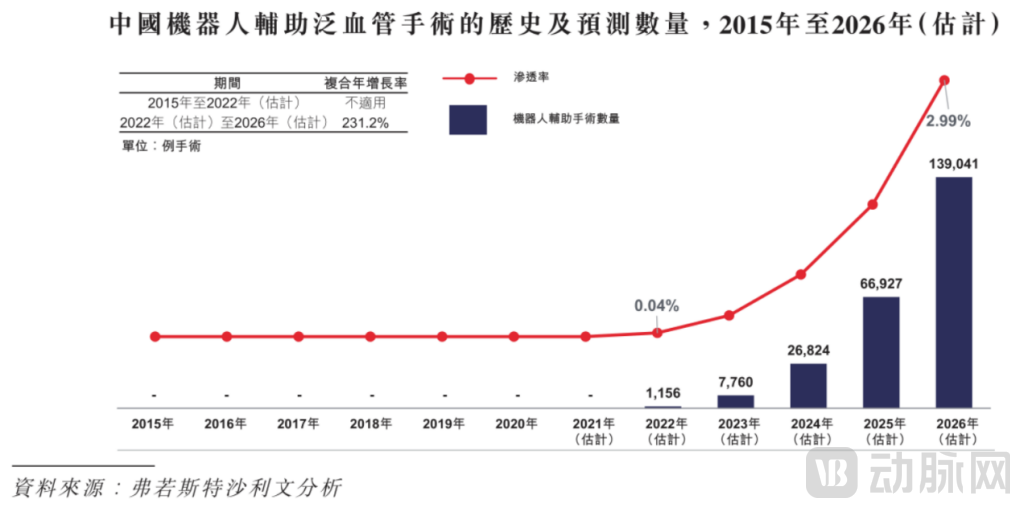
History and Projected Volume of Robot-Assisted Pan-Vascular Surgery in China
(The estimated number of robot-assisted pan-vascular surgeries performed annually in China is projected to increase to 13,941 cases in 2026,The compound annual growth rate (CAGR) from 2022 stands at 231.2%, with a penetration rate of 3.0% in 2026.)
Data Source: MicroPort Medical Prospectus
The assertion that surgical robots are a bubble may persist, but it is precisely these various “bubbles,” including AI and surgical robots, that constitute today’s healthcare industry and drive it to advance continuously into the frontiers of innovation.
Although vascular interventional surgical robots are still in the early stages of market promotion and may face a long road ahead, we remain confident that giants akin to the da Vinci Surgical System and Stryker’s MAKO will emerge in this field, thereby validating its value.
References:
"Research Progress on Robot-Assisted Technology in Vascular Intervention"