

Maidi Technology: Evaluating the Strategic Value of a Clinical IT Leader's Move into Assisted Reproductive Services
Recently, Medical System (stock code: 603990), a leading enterprise in clinical informatics, released its 2021 annual report and Q1 2022 quarterly report.
MedicalSystem listed on the Shanghai Stock Exchange in 2016. It is a high-tech enterprise centered on providing comprehensive CIS (Clinical Information System) solutions. In 2019, it entered the assisted reproductive medical services sector by acquiring Haikou Marie Hospital, thereby establishing a business layout encompassing both healthcare informatics and medical services.
Data shows that in 2021, Medical System Technology achieved an operating revenue of RMB 354 million, a year-on-year increase of 14.86%; the net profit attributable to shareholders of the listed company after deducting non-recurring gains and losses was RMB 33.06 million, up by 28%. In the first quarter of 2022, the operating revenue reached RMB 56.9665 million, representing a growth of 20.97%; the net profit attributable to shareholders of the listed company after deducting non-recurring gains and losses amounted to RMB 8.8215 million, surging by 80.36%.
Since its establishment in 2005, Suzhou MedicalSystem Technology Co., Ltd. has been deeply engaged in the field of clinical medical informatics, developing the DoCare series of clinical medical management information system software, the Dorico integrated digital operating room solution, and the Dorico integrated digital emergency and critical care platform solution. In 2019, the company explored a second growth curve by beginning to provide reproductive medicine medical services, exemplified by Haikou Mary Hospital.
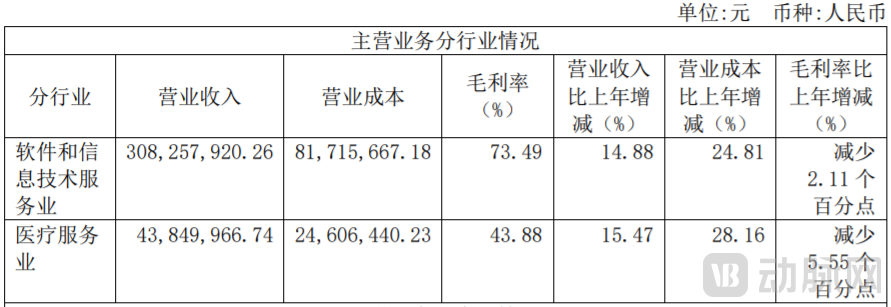
According to the financial report, Medical System Technology’s medical informatics business generated RMB 308 million in revenue in 2021, a year-on-year increase of 14.88%. This growth was driven by the significant effectiveness of domestic epidemic prevention and control measures, improved project implementation efficiency, increasing national emphasis on hospital informatization investment, and Medical System Technology’s proactive market expansion, all of which contributed to a year-on-year improvement in the operational performance of its medical informatics business.
Meanwhile,Medical System expanded its sales channels in 2021 by adding a distribution model, resulting in a year-on-year revenue increase of 39.01% compared to 2020.The gross profit margin decreased by 2.11 percentage points year-on-year, driven by an increased proportion of revenue from overall solutions, which carry a lower gross profit margin.
In the medical services business segment,In 2021, Medical System acquired the remaining 49% equity interest in Mary Hospital for RMB 110 million in cash, changing the proportion of Mary Hospital’s profits included in Medical System’s consolidated financial statements from 51% to 100%.
In 2021, Haikou Mary Hospital generated revenue of RMB 44.0253 million and a net profit of RMB 13.2187 million. In terms of specific operations, the hospital completed a total of 1,317 oocyte retrieval cycles, representing a year-on-year increase of 43.62%, and completed 919 embryo transfer cycles, representing a year-on-year increase of 36.75%.
In 2019, Medical System acquired a 51% equity stake in Hainan Mary Hospital for RMB 38.862 million, formally entering the field of reproductive medical services.
According to census data from the National Bureau of Statistics, China’s birth rate in 2019 was 10.48‰, representing a decrease of 580,000 newborns compared with 2018 and marking the lowest level on record. With declining fertility rates and an accelerating aging population, the relaxation of childbirth policies will become a consistent national strategy, and the obstetrics economy along with the related reproductive health industry is expected to experience substantial growth.
However, assisted reproductive services in China remain a scarce resource. The barriers to entry in the assisted reproduction sector are high, with licenses being the most critical asset. Mary Hospital holds a relatively advantageous position within Hainan Province, with its business continuing to grow and becoming a new driver of profitability. As of December 31, 2020, Haikou Mary Hospital was one of the 411 medical institutions approved by the National Health Commission to provide assisted reproductive technologies, possessing both IVF-ET and ICSI capabilities.
The acquisition of Marie Hospital marks a significant step for MedicalSystem in its transition from providing specialized IT solutions to building a comprehensive service ecosystem for specialized medical conditions.MedicalSystem’s over a decade of accumulation in the CIS field also helps boost the development of its assisted reproductive services.
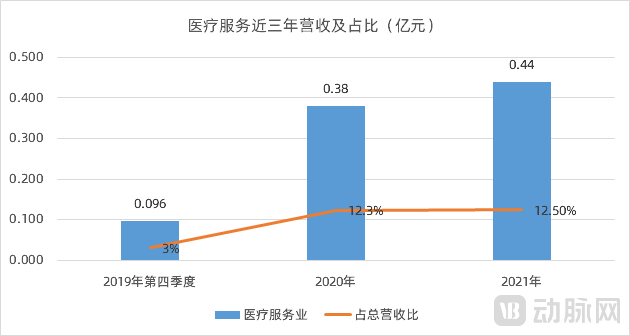
Medical System obtained actual control over Mary Hospital on October 10, 2019. For accounting convenience, September 30, 2019 was designated as the acquisition date, and Mary Hospital was included in the consolidated financial statements starting from October 1, 2019. From the acquisition date to the end of the year, the revenue generated by the acquired entity, Medical System, amounted to RMB 9.5563 million.
In 2020, the medical service revenue of Medical System Technology saw a significant increase. Mary Hospital completed 917 oocyte retrieval cycles, representing a year-on-year growth of 46.96%; it also completed a total of 672 embryo transfer cycles, up by 5% year-on-year, generating RMB 38.43 million in revenue.
In March 2021, Medical System completed the acquisition of the remaining 49% equity stake in Haikou Mary Hospital for RMB 111 million. In 2021, Mary Hospital reported operating revenue of RMB 43.85 million, representing a year-on-year increase of 15.47%, with a gross profit margin of 43.88%. The hospital completed a total of 1,317 oocyte retrieval cycles, a 43.62% increase from the same period last year, and 919 embryo transfer cycles, a 36.75% increase from the same period last year.
From 2019 to 2021, the revenue from medical assisted reproductive technology services accounted for a stable proportion of total revenue, hovering around 12.3%, and surpassed the outsourced software and hardware business in both gross profit margin and revenue.However, it should be noted thatIn 2021, Mary Hospital became a wholly-owned subsidiary of Medical System Technology, with the financial performance attributable to the remaining 49% equity interest also consolidated into Medical System Technology’s financial statements; however, compared to 2020, when it was a controlling subsidiary, there was no significant change in performance.
In April 2021, Medical System and Jinxin Fertility, the leader in the assisted reproductive technology industry, announced a pilot project to establish the “Jinxin-Medical System” Flagship Reproductive Center., leveraging the policy advantages of the Hainan Free Trade Port for pilot initiatives, to explore the establishment of a medical service industry base in Hainan and establish an assisted reproductive medicine consortium.
According to the financial report, Medical System Technology plans to use Hainan Mary Hospital as a starting point to continue expanding industry consolidation and strategic layout in reproductive medicine medical services. The company aims to empower reproductive medicine specialties through informatization, further integrate online and offline resources in the field, pursue external mergers and acquisitions, and build specialized project expert teams and operational management teams to establish a new ecosystem for reproductive health.
Medical System’s ambition to establish a presence in the medical services sector first emerged in 2018, with mergers and acquisitions serving as its primary expansion strategy.
In July 2018, Suzhou MedicalSystem Technology Co., Ltd. announced its plan to acquire Dacheng Healthcare, but the transaction ultimately fell through. Dacheng Healthcare, which was listed on the National Equities Exchange and Quotations (NEEQ) in 2015, is primarily engaged in healthcare services. It generates revenue by providing medical and health management services to customers through traditional Chinese medicine clinics, general hospitals, medical aesthetics facilities, and wellness centers. Additionally, MedicalSystem planned to acquire several other entities in 2020, including Guowei Reproductive Health Specialty Hospital, Heilongjiang Tianyuan Maternity Hospital, Jilin Lichuang, and Haikou Boda, but these deals also came to nothing.
In its 2018 annual report, Suzhou MedicalSystem Technology Co., Ltd. stated that it would focus on the reproductive health sector by establishing a “1+2+3+4” innovative assisted reproductive technology (ART) service system. This system comprises: one platform—an internet cloud platform for ART; two centers—big data and AI application service centers for ART; three product series—information technology solutions for ART departments, an internet hospital for ART, and an internet-based medical consortium for ART; and four physical business formats—preconception care clinics, reproductive medicine clinics, domestic ART institutions, and overseas ART clinics. By doing so, the company aims to integrate the entire ART industry chain, implement an online-to-offline medical consortium operation model, innovatively build a reproductive health ecosystem, and create a new growth engine for the company.
However, MedicalSystem still has a long way to go to achieve this strategic goal.
After hitting a wall in the field of assisted reproductive technology, MedicalSystem turned its attention to the booming medical aesthetics sector. In May 2021, MedicalSystem proposed to acquire no less than 80% equity interests in Suzhou Meibeier Cosmetic Hospital and Changshu Ruili Meibeier Hospital, both held by Meibeier Group, through cash payments. However, after six months of negotiations, the two parties failed to reach an agreement on the terms of the formal agreement.
Software and information technology services constitute the core business of MedicalSystem Technology. A further breakdown of its data reveals that the company’s revenue is primarily derived from four segments: proprietary software, integrated solutions, purchased hardware and software, and operation, maintenance, and technical services.
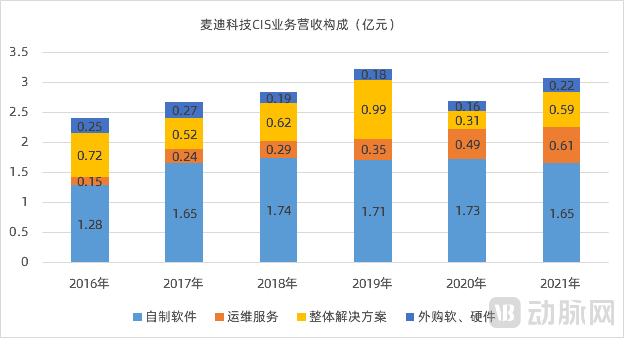
In-house software revenue declined but remains dominant.Self-developed software maintains high gross profit margins and short implementation cycles; although its proportion has decreased, it remains the primary revenue source for Medical System Technology.
MedicalSystem’s proprietary software includes the DoCare series of clinical healthcare management information system applications, such as the Anesthesia Clinical Information System, Intensive Care Unit (ICU) Clinical Information System, Pre-hospital Emergency Information System, In-hospital Emergency Information System, Blood Purification Information System, and Clinical Pathway Information System.
Currently, large and medium-sized medical institutions in China have established Hospital Information Systems (HIS) with basic functionalities, as well as foundational Clinical Information Systems (CIS) such as Picture Archiving and Communication Systems (PACS), Radiology Information Systems (RIS), and Laboratory Information Systems (LIS). The development of clinical medical management information systems is beginning to extend to departments with more intensive diagnostic and treatment activities, such as operating rooms and Intensive Care Units (ICUs). MedicalSystem, a company with a leading advantage, is also delving deeper into this field.
For in-house software, MedicalSystem performs installation and commissioning based on its mature products. Due to variations in medical documentation across different hospitals and the personalized requirements for management reports, customized development is necessary for some clients during the installation process. Through years of project implementation and practical application by hundreds of clients, MedicalSystem has accumulated a vast array of interface solutions for diagnostic and treatment equipment information, as well as insights into clients’ “personalized” needs. Building on this foundation, the company continuously enriches its product modules and enhances product functionality.
In 2021, Medical System built upon its ICU clinical information system to develop a digital and intelligent critical care platform, facilitating progressive data interoperability and sharing within the critical care clinical research network, and establishing a rapid, efficient, and broadly accessible emergency and critical care medical treatment system based on this intelligent platform.
As of the end of December 2021, MedicalSystem’s end-users had covered all 32 provinces across China, with its solutions being maturely deployed in over 2,000 medical institutions, including more than 500 Grade A tertiary hospitals. Among its non-medical institution clients are prominent domestic healthcare IT enterprises such as Winning Health Technology Group, B-Soft Co., Ltd., and Heren Health Technology Co., Ltd.
Strengthening O&M services can significantly boost the overall gross profit margin of medical IT companies.Operations and maintenance (O&M) services primarily provide customers with system maintenance, product upgrades, and technical support. In 2021, MedicalSystem’s O&M and technical service revenue reached RMB 61.61 million, with a gross profit margin of 85%. This highlights the urgent need for updates and maintenance in the healthcare informatics industry after more than a decade of development, as well as the characteristic requirement for periodic updates and maintenance following software installation and deployment.
Through years of project implementation and research and development activities, Medical System has developed a broad-spectrum medical device data acquisition platform, a medical information integration platform, and a medical audio-video integration platform, thereby addressing the key technical challenges in its primary application areas. Furthermore, by establishing a comprehensive and efficient version control mechanism, the company ensures that common hospital requirements are promptly incorporated into the main release. This approach guarantees the completeness and technological leadership of the baseline version’s functionalities, reduces secondary development costs, and enhances rapid response efficiency.
Overall solution revenue doubled, with benchmark projects demonstrating a strong exemplary effect.MedicalSystem’s overall solution revenue reached RMB 59.16 million, representing a 92.5% increase compared to 2020. One of the drivers behind this revenue growth was the effective containment of the pandemic, which led to an increase in the number of completed projects.
In 2021, the first project of the Huawei & MedicalSystem Smart Solution was successfully implemented, with a contract value approaching RMB 10 million. MedicalSystem’s new-generation integrated smart operating room solution actively strengthened its market promotion foundation through technological innovation and achieved successful pilots in two hospitals. The key project, “Jilin Province Medical Rescue Emergency Command Platform Construction Project,” also successfully passed acceptance. Additionally, MedicalSystem secured two new orders worth over RMB 10 million each in its digital emergency and critical care business.
As CIS construction gradually penetrates into secondary and primary hospitals, major projects undertaken by Medical System—such as the Suzhou Dushu Lake Hospital project, which sets a new benchmark for smart hospitals; the Suzhou “531” Smart Emergency Rescue Platform project; and the “Wuhan Emergency Center Integrated Pre-hospital and In-hospital Onboard Equipment” project—have demonstrated extensive exemplary effects. Replication in other regions is expected to unlock scalable incremental growth.
To unlock the potential of “Smart Clinical Care,” Medical System Technology increased its costs for products in the integrated digital operating room solution category by RMB 29.217 million year-on-year, representing a 106.9% rise. The deployment of digital operating rooms requires substantial hardware investment, which is a key driver behind the rapid growth in its operating costs.
In the chart, Medical System’s total solutions saw a substantial increase in 2019 compared with 2018, with a growth rate of 60.7%. This was because total solution products are engineering-type projects, and individual projects exhibit customized differences, leading to significant fluctuations in gross profit margins.
Steady Growth in Revenue from Outsourced Hardware and Software。Sales of purchased software and hardware by Medical System Technology are primarily conducted in response to customer requirements, whereby the company procures third-party software and hardware products to complement project implementation and subsequently sells them to customers. In 2021, other expenses within the purchased software and hardware business increased by RMB 522,500 year-over-year from 2020, representing a 2,318% increase, which was mainly attributable to incidental on-site procurement during project implementation.
In the field of software and information technology services, Medical System Technology plans to accelerate the development of its three core segments: operating rooms, intensive care units (ICUs), and emergency critical care. Driven by five specialized centers (chest pain, stroke, trauma, high-risk pregnant women, and high-risk newborns), the company aims to enhance regional emergency and critical care capabilities. It will progressively steer its products toward mobility, cloud-based solutions, intelligence, and platform integration, actively transitioning from a specialty-level healthcare IT service provider to a supplier of comprehensive regional collaborative healthcare IT solutions.
In May 2022, B-Soft and Heren Technology, two leading enterprises in healthcare informatics, successively announced significant developments. On the 12th, Philips made a strategic investment of RMB 1.225 billion in B-Soft; on the 16th, Heren Technology underwent a change in its controlling shareholder, with Topchoice Medical, known as the “Dental Mao,” taking over. This undoubtedly confirms the hypothesis we put forward during the attempted merger between Winning Health and B-Soft in 2021: an increasing number of listed informatics companies and large non-informatics enterprises are participating in the consolidation of industry resources.
In recent years, business integration and mergers and acquisitions among IT enterprises have become the norm, as companies strive to build comprehensive integrated solutions to acquire more valuable assets. This trend is irreversible. Amidst this shift, a major reshuffling is underway in the fragmented IT market.