

Broadx: Revolutionizing Clinical Molecular Diagnostics with Full-Scenario Automation Solutions
Molecular Diagnostics: The Fastest-Growing Segment in the In Vitro Diagnostics Industry in Recent YearsDriven by societal development, emerging trends in healthcare-associated infections, and the COVID-19 pandemic, molecular diagnostics has emerged as the most rapidly expanding sector within the in vitro diagnostics (IVD) industry in recent years.
First, in recent years, the aging trend of China's society has become increasingly pronounced, leading to a rise in the incidence of infectious diseases and tumors.China’s population aged 60 and above stands at 264 million, accounting for 18.7% of the total population, and is projected to reach 360 million by 2030. With advancing age, immune function declines, thereby increasing the risk of infectious diseases, cancers, and other conditions. This trend has driven growing demand for molecular diagnostics, including disease screening and early cancer detection.
Second, urbanization and emerging viruses have led to the epidemic of infectious diseases.By the end of 2021, China’s urbanization rate among the permanent resident population stood at 64.72%, and it is projected to reach 71.2% by 2050. The rapid growth of the urban population and the increasingly frequent close contacts resulting from high population density have inadvertently created favorable conditions for the transmission and epidemic spread of infectious diseases. The SARS outbreak in 2003, the Ebola epidemic in 2014, the Zika virus outbreak in 2016, the COVID-19 pandemic in 2020, and the recent emergence of acute hepatitis of unknown etiology in children have all posed new challenges to the global health system. The accelerated rate of viral mutation has further intensified the difficulty of controlling infectious diseases.
Third, the emergence of drug-resistant microorganisms poses a significant threat.Antimicrobial resistance has become a global public health crisis. Traditional bacterial culture requires prolonged detection times, and most viruses are difficult or even impossible to culture in vitro. Molecular diagnostics enable rapid assessment of microbial drug resistance. Cepheid’s Xpert® Carba-R Assay, launched in 2020, simultaneously detects and reports five major carbapenem-resistance genes: blaKPC, blaNDM, blaVIM, blaIMP, and blaOXA-48.
Finally,The COVID-19 pandemic has accelerated industry development, with PCR laboratories blossoming across China.Prior to the pandemic, PCR laboratories were primarily located in large tertiary Grade-A hospitals, Centers for Disease Control and Prevention (CDCs), and research institutes, all of which imposed stringent requirements on personnel qualifications, equipment, and laboratory environments. Since the outbreak, more than 10,000 new PCR laboratories have been established by secondary-level-and-above hospitals and third-party independent clinical laboratories (ICLs), significantly boosting China’s nucleic acid testing capacity in a short period and effectively reducing the time required for mass population testing. In the post-pandemic era, how to fully leverage these PCR laboratories, which were built at substantial cost, has become a new challenge. By implementing molecular diagnostics within hospitals, institutions can address turnaround time (TAT) issues and mitigate the problem of underutilized PCR laboratory capacity.
In addition to the above points, the development of the molecular diagnostics industry is also driven by favorable factors such as precision medicine, early cancer screening, and tiered diagnosis.
According to data from Guoyuan Securities, the market size of molecular diagnostics in China grew from RMB 2.54 billion in 2013 to RMB 13.21 billion in 2019, with a compound annual growth rate (CAGR) of 31.63%, approximately 2.6 times the global growth rate. The market size of the molecular diagnostics industry is projected to reach RMB 33 billion by 2024.By 2030, molecular diagnostics will surpass immunoassay diagnostics to become the largest market segment in the IVD industry.
The global market size has also demonstrated a steady growth trend. Data shows that the global molecular diagnostics market grew from USD 5.7 billion in 2013 to USD 11.36 billion in 2019, representing a compound annual growth rate (CAGR) of 12.18%. According to a BCC Research report, the global molecular diagnostics market is projected to reach USD 42.6 billion by 2026, up from USD 17.6 billion in 2021, with a CAGR of 19.3%.
Technological advancements are characterized by rapid progress, liquid reagent preservation, and multiplexing.
With the pronounced trend of population aging, new patterns in healthcare-associated infections, and the impetus from testing products related to the COVID-19 pandemic, the molecular diagnostics industry has been gaining momentum and is entering a period of explosive growth. This comprehensive industry boom has, in turn, driven technological innovation and iteration.
According toBroadx(hereinafter referred to as “broadx”) states that molecular diagnostic technologies currently available on the market are mainly categorized into four major types: PCR technology, gene sequencing, fluorescence in situ hybridization (FISH), and gene chips. Among these, PCR technology is the most mature in application and holds the largest market share. Among molecular diagnostic products approved in China,Over 90% of products are based on PCR technology. PCR technology, first developed by Kary Mullis in 1983, is widely used in numerous applications including prenatal diagnosis, early cancer screening, infectious disease testing, companion diagnostics, and drug resistance testing.
Broadx believes that the technological development trends in the molecular diagnostics industry exhibit the following characteristics:
I. Rapid.The COVID-19 pandemic has fully exposed the weaknesses of the molecular diagnostics industry, such as slow turnaround times and low levels of automation. A single PCR amplification cycle takes 1–2 hours, excluding time required for sample extraction and reaction setup. Nucleic acid testing must race against the virus; faster detection enables earlier interruption of transmission chains, thereby minimizing the spread of the virus.
Currently, rapid PCR technologies available on the market are primarily achieved through three approaches: First, improving the temperature control module to increase the rate of temperature changes; when combined with algorithm optimization, this can reduce the PCR reaction time to under 20 minutes. Second, enhancing the reaction vessels (i.e., PCR tubes) by reducing wall thickness, utilizing new thermally conductive materials to improve heat transfer rates, and modifying tube geometry to increase the surface area for heating. Third, reducing the reaction volume, as smaller PCR reaction volumes enable faster heating and cooling rates and higher precision.
In addition to the aforementioned improvements, there is a greater need for concurrent enhancement of reagent performance; rapid screening of Taq polymerases and optimization of reaction systems have become key steps in facilitating rapid PCR.
Broadx also stated,Speed must be achieved without compromising performance.
Common isothermal amplification methods often suffer from poor sensitivity and insufficient specificity. Primer design is less straightforward than that for PCR, and reagent costs are higher than those of PCR reagents. To address the performance limitations of isothermal amplification, combinations of isothermal amplification with CRISPR have emerged on the market; however, these approaches increase both cost and complexity. In contrast, combining isothermal amplification with lateral flow strips often compromises sensitivity, making it suitable primarily for the low-end market. Furthermore, while extraction-free direct amplification reagents simplify and facilitate operations by bypassing the nucleic acid extraction (enrichment) step, their detection sensitivity is inadequate, leading to a heightened risk of false-negative results in applications requiring high sensitivity.
Considering multiple factors such as comprehensive testing performance and reagent costs (including the maturity and price of raw materials),PCR offers unique advantages.Regarding the cost of PCR instruments, manufacturing costs have decreased significantly on one hand; on the other hand, the business model of the IVD industry renders instrument costs negligible in comparison to reagent consumption.
II. Storage of Reagent Liquids.Traditional PCR kits generally require cold-chain storage and transportation at approximately -20°C to ensure the biological activity of their active ingredients. Cold-chain transportation is costly, and many regions lack the necessary infrastructure. Furthermore, repeated freeze-thaw cycles can compromise the performance and shelf life of the testing reagents. An alternative approach is lyophilization (freeze-drying) of PCR reagents; however, variations in lyophilization parameters and processes can lead to inconsistent reagent performance. Additionally, the lyophilization process itself increases the production cost of the reagents.
Currently, manufacturers in the industry have developedPCR Reagents Stored at Room Temperature or 4°C,By screening for suitable enzymes or engineering and modifying them, as well as improving the stability of other components, itLiquid storage can be achieved without compromising performance.
III. Multiplicity.Simultaneous detection of multiple pathogens or target genes in the same reaction tube willSignificantly reduces time and reagent costs, providing clinicians with more abundant and accurate diagnostic information.To identify the specific pathogen causing a patient’s infection, traditional PCR kits can only detect 1–3 targets per test. If the result is negative, it is necessary to switch to PCR kits targeting other pathogens, which significantly reduces efficiency and makes the process highly indiscriminate, commonly referred to as “looking for a needle in a haystack.” To achieve faster confirmation, differential diagnosis, and exclusionary diagnosis, multiplex detection technologies should be adopted. Multiplex detection can be implemented through approaches such as increasing the number of fluorescence channels in instruments, melt curve analysis, chip hybridization, and mNGS.
Molecular diagnostic products will become more miniaturized, convenient, rapid, and integrated.
Broadx believes that product development and application scenarios are closely intertwined,Clinical molecular diagnostics differs significantly from other applications; for the clinical molecular diagnostics industry to truly develop, it mustOnly by gaining insight into the end-user needs of clinical application scenarios can we develop product forms that best suit clinical use.
First, samples are tested upon arrival.A critical factor constraining turnaround time (TAT) is the method of sample loading onto instruments. In previous clinical molecular diagnostics settings, characterized by low sample volumes and a limited number of test parameters, hospitals would consolidate samples to run PCR instruments only once or twice per week in batch mode. This practice often resulted in TATs extending to one or two weeks or even longer.
In recent years, as various hospitals have introduced new molecular markers and testing panels across different departments, patient sampling times have become increasingly random and test indicators more diverse, placing higher demands on the timeliness of testing. To improve sample processing efficiency through “test-upon-arrival” workflows and prioritization of emergency samples, it is urgent to move away from traditional 48/96-well PCR instruments designed for research laboratories, in order to develop products that better meet the requirements of clinical molecular diagnostics.
Next is portability and miniaturization.With the advancement of the tiered diagnosis and treatment system, molecular diagnostics are increasingly required in settings such as community outpatient clinics, secondary hospitals, and township health centers. However, these primary healthcare institutions often face a shortage of specialized professionals and limited medical staff. In emergency care scenarios, the collection and transportation of clinical laboratory specimens consume considerable time; therefore, minimizing turnaround time (TAT) has become a critical factor constraining rapid diagnosis and timely treatment in emergency medicine. Furthermore, in border entry-exit quarantine operations, the growing volume of import and export cargo has significantly increased the workload, while the continuous emergence of novel viruses has heightened the complexity of quarantine efforts, where even minor oversights can lead to severe economic losses. In addition, there is a pressing need for portable, miniaturized, moderately high-throughput, and user-friendly molecular diagnostic instruments in high-traffic, highly mobile environments such as airports, high-speed railway stations, and ports, as well as in field hospitals.
Third is molecular POCT.Molecular POCT eliminates the complex processing procedures required for specimens in laboratory testing, enabling sample analysis at the point of collection and rapid delivery of test results. Characterized by system integration, compact portability, ease of operation, speed, closed-system design, and suitability for diverse scenarios, it has become one of the most prominent fields in both domestic and international markets in recent years.
In the current international market, products from Cepheid (GeneXpert) and bioMérieux (FilmArray) offer strong performance and ease of use. Other notable products include Roche Liat & GeneMark, QiaStat-dx, and Visby. Among these, Visby is a device-free, microfluidic, handheld PCR test card that features simple operation and delivers results in 30 minutes.
In China, 50 to 60 molecular POCT companies have emerged in recent years. However, due to challenges such as difficulties in mass production, high costs, and complex regulatory approval processes, there remains a certain gap compared with foreign counterparts. The industrialization of domestically produced molecular POCT still has a long way to go.
Finally, there is the large-scale fully automated assembly line, which is fully integrated.Small-scale testing devices are often constrained by sample throughput and the level of automation; large, integrated, fully automated laboratory automation lines will represent the future trend. Full integration requires that all operations in nucleic acid testing be performed automatically, without any manual operation or intervention in between, including: automatic cap opening and closing, liquid handling and aliquoting, extraction and purification, reaction setup, and amplification detection. This achieves the concept of “one instrument equals one PCR laboratory.”
In other segments of the IVD industry, such as hematology, coagulation, clinical chemistry, and immunoassays, full automation has already been achieved. However, molecular diagnostics has not yet been fully automated or widely adopted due to high technical barriers and complex operational procedures, leaving the market as a blue ocean. Unlike other IVD products, nucleic acid analysis is extremely sensitive and has zero tolerance for sample cross-contamination and aerosol contamination. Therefore, in addition to the challenges of mechanical structure design, there are stringent requirements for airflow control and module sealing, which further raises the R&D threshold.
In the post-pandemic era, molecular diagnostics will ultimately return to routine clinical testing. Currently, automated workflows are predominantly based on 96-well plates, which fail to address the needs for random-access testing and diverse diagnostic markers. Consequently, their application scenarios may be limited to screening tests such as those conducted in blood banks or for COVID-19. Furthermore, development is constrained by issues such as inadequate aerosol containment and low throughput. The market anticipates automated workflows that support flexible, random-access sample testing, feature mechanical designs that more effectively prevent aerosol contamination, and offer higher throughput.
Establish a comprehensive molecular diagnostics product portfolio and develop automated solutions for all scenarios.
Founded in 2018 by a team of senior experts in the IVD industry, Broadx is a high-tech biomedical innovation company specializing in the R&D, manufacturing, and sales of molecular diagnostic instruments and reagents. The company currently operates an independent R&D center for instruments and reagents in Shenzhen and a dedicated μTAS chip R&D laboratory in Haizhu District, Guangzhou. It also plans to establish an R&D and production center for veterinary diagnostic reagents under its agricultural division in Tianfu International Bio-town, Chengdu, Sichuan Province.
The Company has secured investments from renowned medical venture capital firm Puhua Capital and the Chengdu Bio-town under the Chengdu High-Tech Zone Government, and has also received strategic investments from two listed IVD companies: Sichuan Maccura Biotechnology and Beijing Innovent Biologics.
Broadx believes that, for a long time, molecular diagnostics companies both domestically and internationally have predominantly been single-technology enterprises. The unilateral provision of either instruments or reagents has often resulted in limited industry growth potential, market fragmentation, and unfavorable conditions for long-term development. Motivated by this insight, Broadx was determined from its inception to transform this industry landscape, enhance market consolidation, and deliver superior comprehensive solutions to its customers.
To date, the company has independently developed three product lines, enabling on-demand sample testing and truly aligning with real-world clinical usage scenarios and needs. Notably, the company’s instruments can be modularly assembled according to specific requirements, thereby accommodating varying customer throughput demands.
1. Ultra-fast Portable Real-time PCR Instrument
To meet the demand for walk-in testing in hospitals, Broadx has developed portable, miniaturized PCR instruments with faster amplification speeds. Utilizing the world’s fastest TEC modules, these devices can complete 40 cycles in just 15 minutes.
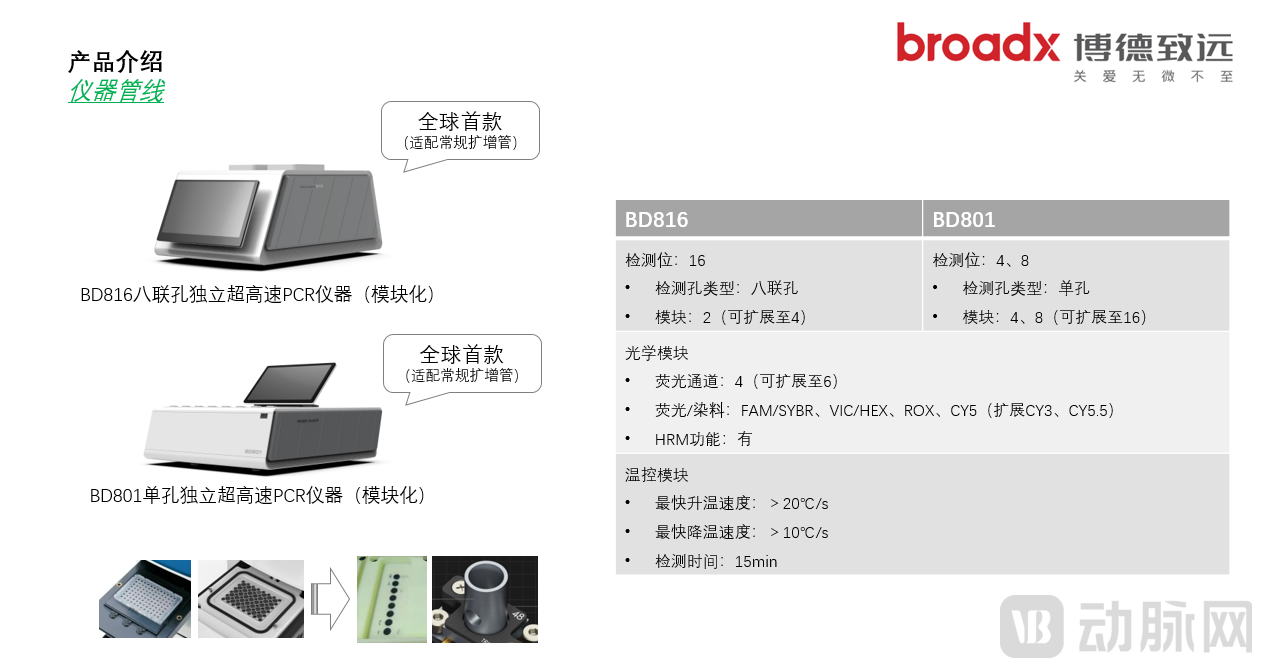
This product is available in two configurations: single-well independent temperature control and eight-well independent temperature control. It utilizes the world’s fastest TEC modules to meet varying throughput requirements. The product is compatible with standard amplification tubes, facilitating widespread adoption.
2. Molecular POCT
For scenarios with strained medical staffing and a need for rapid results, such as in emergency departments, ICUs, inpatient wards, and primary healthcare institutions, broadx has developed molecular POCT products that enable “Sample in, Result out.” Requiring only a single pipetting step, these devices integrate lysis, extraction, washing, amplification, and detection into one system, while maintaining very low production costs.
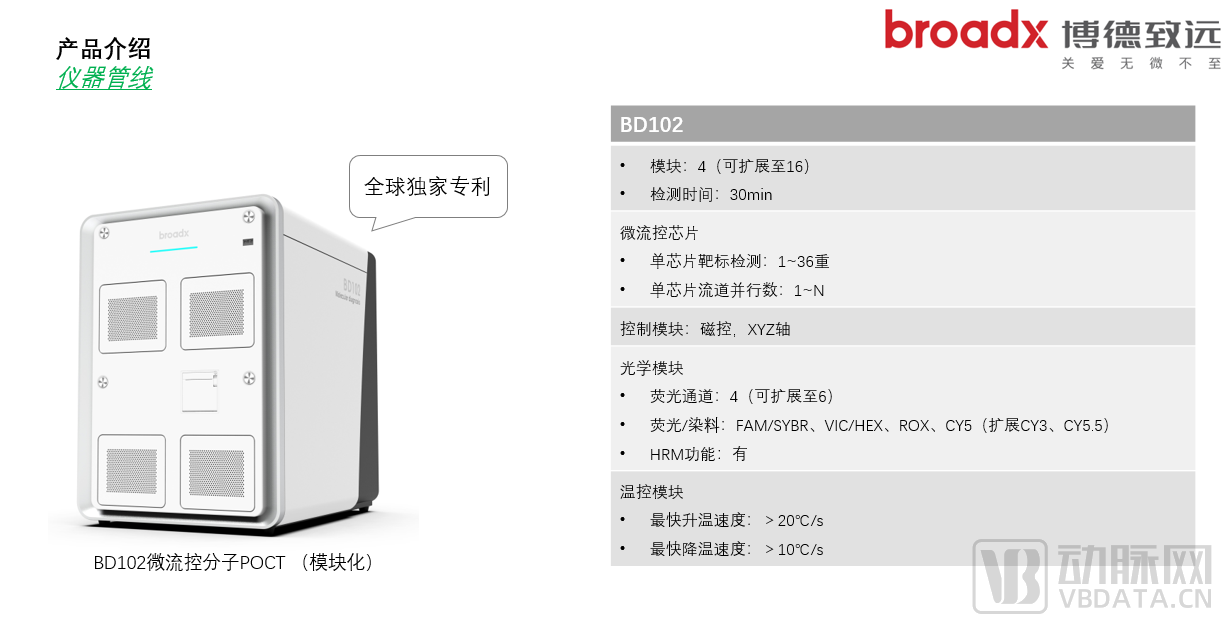
This product is available in domestic and international versions: the domestic version focuses on low-level multiplexing with up to 6 targets, while the international version emphasizes medium- and high-level multiplex detection with 6–36 targets; incorporating HRM functionality enables even higher levels of multiplexing.
3. Fully Automated Nucleic Acid Testing Assembly Line
To meet the demands of tertiary hospitals for random testing, emergency testing, a wide variety of indicators, and large sample volumes, Broadx has developed an automated nucleic acid testing pipeline that integrates the entire molecular detection process, including: primary tube sampling, automatic cap opening and closing, liquid handling and aliquoting, extraction and purification, reaction setup, and amplification detection.
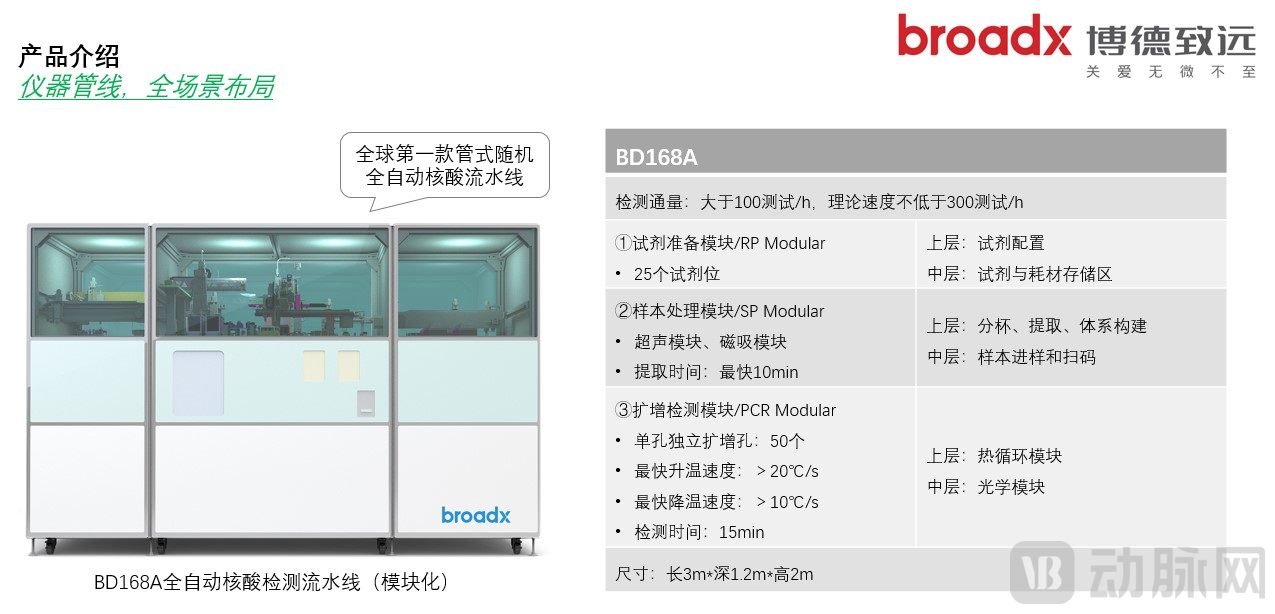
Specifically, the single-tube pipelined workflow features independent extraction and purification for each tube in the extraction module, while the amplification module employs independent temperature control and optical detection for each well: ① The amplification module contains 50 wells, equivalent to 50 single-well PCR instruments, capable of simultaneously running 50 different amplification protocols; ② The core temperature control component of the amplification module, consistent with the previous three compact instruments, utilizes the world’s fastest TEC (Thermoelectric Cooler) module.
In addition to conventional contamination control measures such as negative pressure and UV lamps, aerosol contamination is minimized through three-dimensional, zoned design: ① All experimental procedures—including lid opening/closing, pipetting and aliquoting, extraction and purification, reaction setup, and amplification—are managed in separate zones. ② The sample loading area, consumables area, and reagent area are each independent, enclosed spaces, segregated from the experimental operation areas to achieve hierarchical management.
Meanwhile, the product features a preset automatic track loading function, enabling connection to laboratory sample transport tracks and integration with other automated testing equipment (hematology/coagulation analyzers, biochemistry analyzers, and chemiluminescence immunoassay analyzers) via track coupling, thereby achieving true Total Laboratory Automation (TLA).
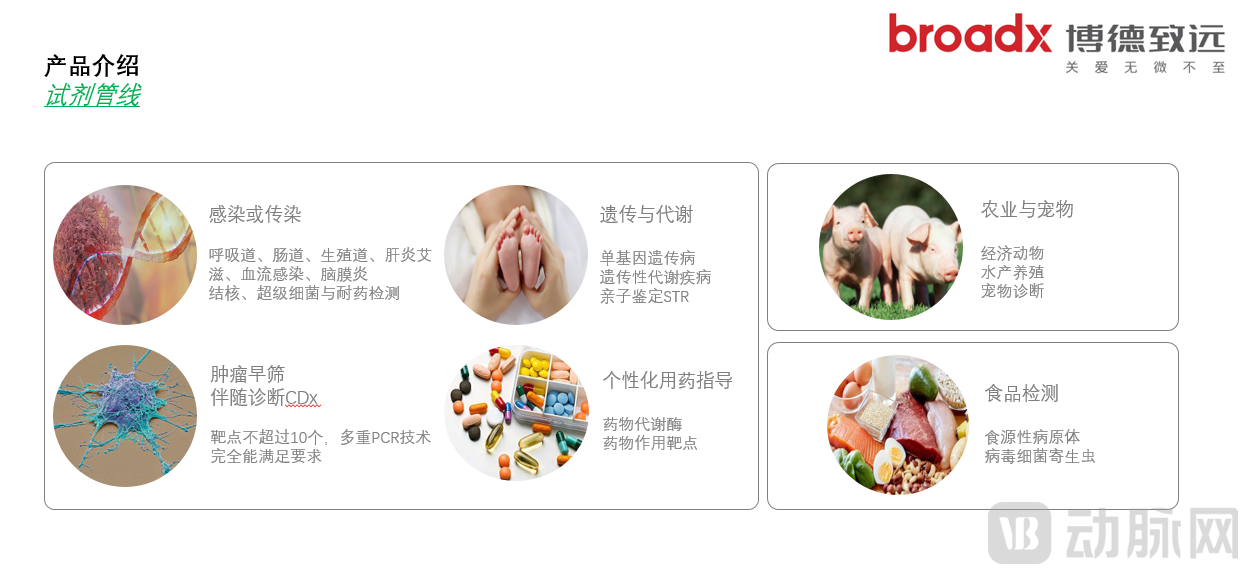
In addition to its comprehensive portfolio of instruments, BroadX has also developed corresponding supportingRoom temperature or4℃ storageLiquid Reagent Kit,Covers infections (bloodstream infections, gynecological and reproductive tract infections, antimicrobial resistance testing, respiratory tract infections, agricultural animal diseases, pet infectious diseases, etc.), oncology (early screening and companion diagnostics), monogenic genetic disorders, and personalized medication guidance.
Guided by the core philosophy of “pursuing advanced technologies and securing the technological high ground,” Broadx has been deeply engaged in technology research and development for many years, committed to addressing the needs of diverse customers and scenarios.Build a comprehensive molecular diagnostics product portfolio to provide the industry with automated solutions for all scenarios.
To date, Shenzhen Broadx has pioneered a comprehensive product portfolio for clinical molecular diagnostics through independent development, while Roche Diagnostics, a global IVD giant, has achieved this through ODM and mergers and acquisitions. Compared with traditional 96-well plate designs, Broadx’s solution is more convenient and efficient, employing single-tube random access testing with integrated single-tube extraction and single-well amplification, thereby better aligning with the scenarios and requirements of clinical molecular diagnostics.
Currently,Broadx has launched its Series A financing round and welcomes investment institutions or CVC funds to engage in discussions.The company stated, “In the new era of ‘co-opetition,’ we are open to exploring collaborations with all industry peers and competitors. Our real-time PCR instruments are available for open access by all enterprises. In the fields of molecular POCT and fully automated laboratory automation lines, given the high technological barriers and product complexity, we seek to establish strategic partnerships with like-minded allies. We aim to jointly develop superior products to better serve end-users in clinical settings and drive the advancement of the industry.”