

Three Harvard PhDs Secure Nearly $100M to Build AI-Driven Stem Cell Factory, File IPO Draft
In a sense, the four characters “Harvard University” shine with their own inherent luster; regrettably, however, this radiance did not initially illuminate Harvard’s innovation ecosystem.
According toMilken InstituteA published study shows that,Between 2000 and 2004, Harvard University ranks among the top in core dimensions such as integrated technology licensing, licensing revenue, and the number of startups createdRanked 18th Only, far from its position as the world’s top university.
Harvard could not simply swallow this slight. In the very year the list was released, namely 2005, HarvardEstablished the Office of Technology Development (OTD), then President of Harvard UniversitySummersHe personally traveled to Tel Aviv University in Israel to invite the former head of the university’s technology transfer office.Isaac KolbergServed as the Director of OTD.
The impact of OTD’s establishment was immediate. According to statistics, over the past decade, OTD has served regions worldwideMore than 145 Harvard-affiliated startupsprovided financial support. Notably, in the past five years alone, incubatedMore than 90Harvard StartupSiin China, raisedOver $4.5 billionequity financing.
This includesCellino. This automated stem cell manufacturer, founded by three Harvard PhDs, secured funding in its early stages.$16 million's seed round of financing, and again at the beginning of this year received$80 millionits Series A financing round, it has already become a “star startup project” at Harvard.
So, how exactly did Cellino stand out from the Harvard system? And how did its three “distinctly different” scientist-founders come together?
Direction: The Transition from Academic Researcher to Biotech Entrepreneur
Surprisingly, the founder of CellinoNabiha SaklayenHe was only in his twenties when he founded the company. Even so, Saklayen’s path to entrepreneurship seemed destined.
 Nabiha Saklayen, Co-founder of Cellino
“I have to admit that I’ve spent most of my life gazing at the stars and pondering space. But two months before coming to Harvard, my grandmother developed severe diabetes, and for this reason,”I have decided to set aside my passion for the cosmos and focus my scientific lens on biology and medicine.”, Saklayen expressed his hope to become a member of the life sciences ecosystem, leveraging physics-based tools to address major medical challenges.
What Saklayen never anticipated at the time was that, as a laser physicist with a passion for the cosmos, he would go on to found a regenerative medicine company poised to disrupt the industry.
While working at Harvard Medical School with Derrick Rossi, Saklayen clearly remembers him sayingLaser-Based Methods “Can Alter Biology”, his words clearly ignited the entrepreneurial spirit hidden within Saklayen.
Therefore, during his doctoral studies, Saklayen collaborated with many distinguished biology groups at Harvard University, including the Rossi, Scadden, and Church laboratories. This close collaboration with research teams also laid the foundation for Saklayen’s establishment of Cellino.
During their scientific research collaboration, Saklayen met her first partner, Marinna Madrid. An applied physicist, Madrid collaborated with Saklayen on research for many years, and the two jointly inventedLaser-Based Intracellular Delivery Technology.
Saklayen has stated on multiple occasions, “If Madrid had not been my partner, I don’t know if I would have come this far, or even started the company.”
It has proven that the combination of these two individuals is highly valuable, as there is a remarkable "chemistry" between them—Madrid’s expertise in nanofabrication and Saklayen’s pulsed laser technology are highly complementary.. It was precisely on this basis that their research proceeded very smoothly, leading to the rapid publication of their paper and the filing of multiple patent applications.
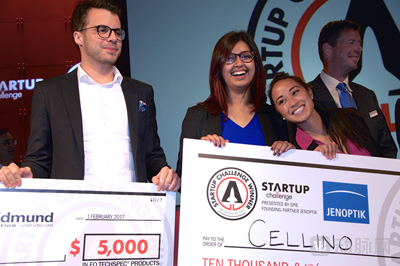
Saklayen and Madrid Win at Startup Challenge
Following this, Saklayen and Madrid jointly participated in the Entrepreneurship Challenge at the 2017 Conference on Lasers and Electro-Optics (CLEO), relying on theirPlatform for Treating Blood Disorders Such as Cancer and HIVThis core technology defeated 130 other startups and won the grand prize of $15,000.
Victory naturally brings joy, but it was this entrepreneurship challenge that made Saklayen realize,She and Madrid need to find a partner who is proficient in corporate operations management and market resource expansion, so as to make up for their shortcomings in business development and enable this startup project to go further.
After the competition, Saklayen met the third co-founder and Chief Technology Officer through a friend.Matthias Wagner。Wagner is not only a physician and scientist but also a successful entrepreneur and founder. He is an expert in photonics, machine learning, and commercializing early-stage hardware technologies. Having established and operated three optical technology companies in the Boston area, he possesses extensive technical and entrepreneurial experience and is now seeking to collaborate with a new team.
It seemed like no coincidence could be more perfect. Thus, after their first meeting, Saklayen and Madrid hit it off with Wagner and officially founded Cellino in 2017, the year they received the award.
Technology: Breaking Free from Constraints, Cellino Aspires to Produce Cells for Everyone
In 2017, Cellino won the championship in an entrepreneurship competition with its photonic gene therapy; in 2021, Cellino further secured$16 millionseed funding, with participation from well-known investors including The Engine, Khosla Ventures, Humboldt Fund, and 8VC.
What is the magic of Cellino that makes industry leaders so optimistic about it?
At its core, it is technology.
As a company developing an automated stem cell production platform, Cellino possesses a unique technology,AI-Guided Laser Editing of Stem Cells for Personalized Therapy.
In other words, Cellino’s platform combines label-free imaging and high-speed laser editing with machine learning to automate cell reprogramming, expansion, and differentiation in a closed cassette format, enabling the parallel processing of thousands of patient samples within a single facility.
So, what challenges has Cellino encountered in the development of autologous cell therapies? And how did the three founders address them?
Generally, autologous therapies are safer for patients because they do not require immunosuppression. The next iteration of cell therapy will utilize patient-specific stem cells stored in advance. Whenever the patient requires new cells, such as blood cells, neurons, or skin cells, these will be generated from the stem cell bank.
Currently, the generation of patient-specific stem cells remains a manual, hands-on process in which a highly skilled scientist sits at a benchtop, visually inspects cells under a microscope, and removes unwanted cells using a pipette tip. Many upcoming clinical trials are employing this manual process to produce stem cells for approximately 10 to 20 patients.
In contrast, Cellino has made this complex process more automated by integrating multiple disciplines.Using an AI-based laser system to remove any unwanted cells, thereby manufacturing stem cells for each individual in an automated and scalable manner.
Cellino’s technology enables the modification and manipulation of individual cells in close proximity. This capability has the potential to pave the way for creating “biological nanomachines,” which constitutes both Cellino’s competitive advantage and its mission.
Value: From a $16 million seed round to an $80 million Series A financing
In early 2022, Cellino announced that it had completed$80 Million Series A Financing, this funding will be used to enhance Cellino’s software, machine learning, and hardware capabilities for manufacturing autologous (made from the patient’s own cells) and allogeneic (made from donor cells) stem cell therapies, significantly increasing patient access to these treatments.
As for why it has garnered favor in the capital markets, Cellino clearly has a say.
“Alex Morgan, M.D., Partner at Khosla Ventures and a seed-round investor, said: “Companies that disrupt entire industries and processes typically do not originate from a single discipline.“By leveraging single-cell laser processing and AI-guided automation to engineer cells at scale, Cellino is poised to lead the next generation of personalized regenerative medicines.”
Dr. Juergen Eckhardt, head of Leaps by Bayer, the lead investor in the Series A round, stated, “We believe thatAI-Driven Manufacturing Is the Next Major Inflection Point for the Industrialization of Cell Therapies“, this is undoubtedly one of the core technologies driving biotechnology from treatment to prevention or reversal of diseases. Cellino’s truly transformative approach to the autonomous manufacturing of stem cell-based therapies aligns perfectly with our ambition to restore lost tissue function for millions of patients.”
Undeniably, over the past two decades, drug development has shifted from creating small molecules and chemicals that can impact biology (such as aspirin) to producing biologics like proteins, antibodies, and more recently, RNA vaccines. The next frontier in development is using human cells as the drugs themselves. Cellino possesses the core capability to reliably produce stem cells at scale.
Saklayen once outlined his vision for Cellino’s future,“Our vision is to establish a Gigafactory. I envision it looking much like a server room, but with each rack holding a battery pack manufactured in an autonomous manner.”
It is reported that this plan will be realized in 2025, when Cellino will establish the first autonomous human cell foundry.
Key Takeaways: Growth Mindset, Complementarity, and Low Ego
Success is contingent on chance, yet it also embodies inevitability.
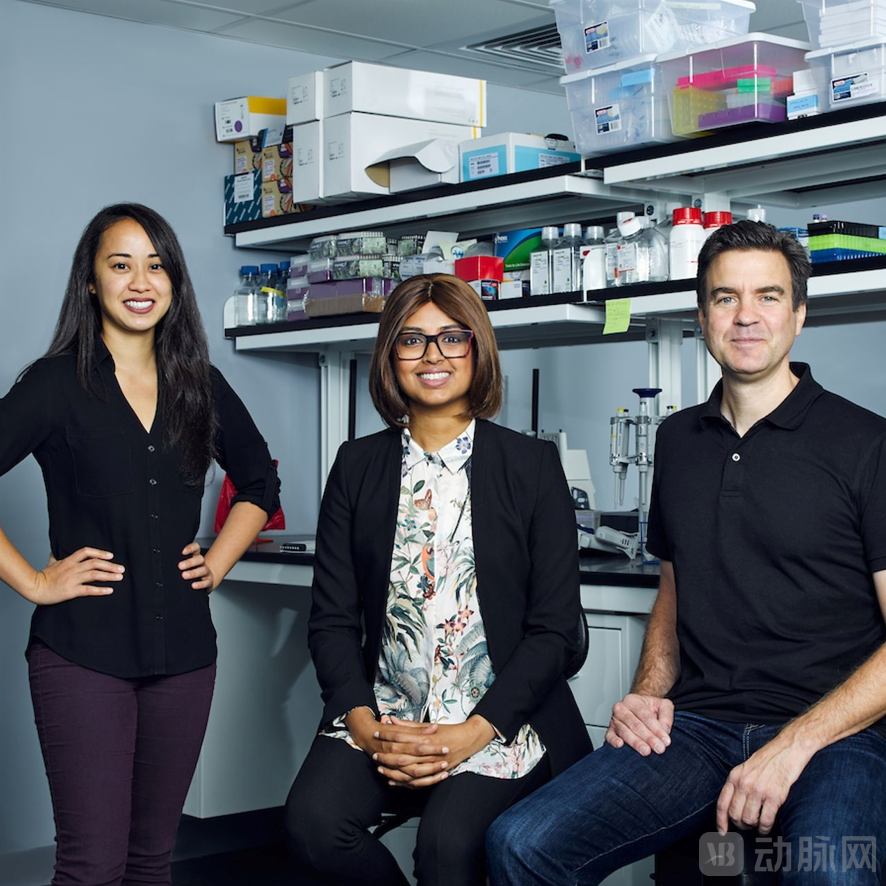
Cellino co-founders Marinna Madrid, Nabiha Saklayen, and Matthias Wagner. (From left to right)
Cellino is a startup founded by three Harvard Ph.D. candidates. Within the first two years of its establishment, the three founders were named to the 2019 Forbes “30 Under 30” list in the healthcare category. In the past two years, Cellino has completedNearly $100 millionfinancing has propelled the enterprise to new heights.
All of this may sound easy, but in reality it is a process of “survival of the fittest.” According to statistics from Bastille, a world-leading technology transfer company based in the United States,The Failure Rate of Startups Founded by U.S. University Professors Is as High as 97%Therefore, what sets Cellino apart is not only its robust technical advantages but, more importantly, the personal qualities of its three scientist-founders.
So, what exactly is it?
First is the growth mindset.
You can’t have your cake and eat it too; the same holds true for entrepreneurship and scientific research.For three Harvard elites, a decisive choice between scientific research and entrepreneurship is inevitable.
Thus, starting in 2018—the second year after Cellino’s founding—all three founders stepped away from their original scientific research roles to devote themselves fully to the development of core products and company operations. By intentionally breaking free from fixed mindsets and adopting a growth mindset, they embraced challenges as opportunities for learning and growth.
Thus, when the COVID-19 pandemic brought unprecedented chaos to the world in 2020, it also cast significant uncertainty over Cellino’s future. However, the three founders made a bold decision to secure the company’s survival by enabling seamless scale-up from preclinical process development to commercial-scale manufacturing of autologous iPSC-based therapies.
Second is the complementarity among the founding team members.
The founding team of Cellino resembles a triangular magnet with an inherent “magnetic” pull, having built and attracted a diverse, world-class multidisciplinary team composed of physicists, computational biologists, machine learning scientists, and engineers. This diverse team structure makes Cellino highly cohesive and strongly complementary.
In fact, more than one company has applied laser technology to the core concept of cells, but Cellino’s model is markedly different. This is primarily because the unique backgrounds of its three founders have enabled them to integrate their expertise in optics, biology, and machine learning, thereby creating a convergent biotech enterprise.
Specifically, the speed, precision, and reliability of the Cellino platform are attributable to the intentional integration of seemingly disparate disciplines, including physics, nanofabrication, machine learning, photonics, synthetic biology, and stem cell biology.
Finally, high goals and a low self.
Great ideas and innovations often stem from a blend of knowledge, people, and technology, all united by a compelling mission. Such is the case with Cellin.
Guided by this core objective, Cellino is always on the lookout for thoseExperts Who Value Diversity of Perspectives and Professional Expertise, which can effectively help Cellino integrate multiple technological trajectories. Therefore, what the team truly needs are members who are willing to adjust their positions upon receiving new information; that is, only when everyone is willing to set aside their ego for the greater good can flexible decisions be made in the best interest of the company.