

Aier Eye Hospital Reports RMB 15 Billion Revenue and RMB 4.6 Billion Goodwill Amid Strategic Expansion
Aier Eye Hospital
Ophthalmology Medical Chain Institution
On the afternoon of May 9, the stock price of Aier Eye Hospital “plunged.”
Three versions of the reasons behind the stock price decline have been circulating, with “Aier Eye Hospital’s second-quarter performance falling short of expectations” being one of them. In response to this rumor, Aier Eye Hospital stated, “We have only just entered May, and more than half of the second quarter remains; this claim is baffling.”
As the trading day neared its close, Wu Shijun, Board Secretary of Aier Eye Hospital, also posted on social media: “Why the decline? There are reportedly three versions circulating, but I haven’t heard any of them.” He accompanied the post with a meme featuring the caption “Not sure why either,” adding a touch of humor.

Image source: Xueqiu
On the evening of May 11, just three days after its stock price “plunged,” Aier Eye Hospital Group Co., Ltd. announced that it had received the “Letter of Notification of the Review Center’s Opinion on the Application for Issuance of Shares to Specific Objects” issued by the Listing Center of the Shenzhen Stock Exchange. The Shenzhen Stock Exchange deemed that Aier Eye Hospital met the conditions for issuance and listing as well as the information disclosure requirements, and would submit the matter to the China Securities Regulatory Commission for the relevant registration procedures in accordance with regulations.
In short, Aier Eye Hospital’s private placement plan to raise no more than RMB 3.54 billion from specific investors for the construction and expansion of seven key flagship hospitals has passed regulatory review.
As Wu Shijun remarked that the capital market’s “shutdown” narrative regarding private hospitals had collapsed on its own, the stock price of Aier Eye Hospital gradually rebounded.
This somewhat “dramatic” scene occurred just half a month after Aier Eye Hospital released its 2021 annual report and first-quarter financial report for 2022.
In fact, in recent years, there have been occasional voices questioning Aier Eye Hospital, but what is the truth? Using data to answer this question is clearly the most appropriate approach.
For Aier Eye Hospital, revenue growth is no longer a novelty; the key lies in the magnitude of the increase.
In 2020, the outbreak of the COVID-19 pandemic had a certain impact on domestic private medical services, and Aier Eye Hospital was no exception. According to Aier Eye Hospital’s 2020 annual report, its revenue growth rate during the reporting period was 19.24%, representing a decline compared to the 24.74% revenue growth rate recorded in 2019.
Therefore, taking the outbreak of the COVID-19 pandemic in 2020 as a watershed moment, the following section directly compares the financial data from 2021 with that from 2019 to examine the performance of Aier Eye Hospital against the backdrop of pandemic prevention and control measures.
According toAier Eye Hospital’s 2021 Annual Report: In 2021, the company achieved operating revenue of RMB 15 billion, representing a 50.16% increase compared to 2019; it realized an operating profit of RMB 3,493,998,000, up 72.81% from 2019; and attained a net profit of RMB 2,469,903,200, a 72.58% year-on-year increase over 2019.
Furthermore, according to Aier Eye Hospital’s financial report for the first quarter of 2022, severe outbreaks in certain regions during March led to temporary closures or patient flow restrictions at local hospitals, thereby impacting the revenue growth rate for the first quarter. Nevertheless, even under such circumstances,Aier Eye Hospital’s revenue in the first quarter of 2022 still achieved a year-on-year growth rate of 18.72%.
Regarding the primary drivers of performance growth, Aier Eye Hospital attributed them in its 2021 annual report to “the gradual enhancement of public awareness of eye health, the steady upgrade of medical consumption, the promotion and implementation of national policies on myopia prevention and control as well as blindness prevention and treatment, the continuous increase in the Company’s brand influence, and the ongoing expansion of its operational scale and talent pool. Meanwhile, with the overall effective containment of the domestic pandemic, all business segments of the Company recovered rapidly, jointly contributing to the growth in performance.”
Simply put,Aier Eye Hospital attributed its performance growth to several factors: favorable industry development, prominent economies of scale, and the broader social context of effective COVID-19 containment.
Based on relevant data and information, Aier Eye Hospital’s statements are not false.
From the demand side, according to the Statistical Communiqué of the People's Republic of China on the 2021 National Economic and Social Development, the number of people aged 60 and above in China reached 267 million by the end of 2021, and the elderly population is projected to exceed 400 million by 2050. It is foreseeable that age-related eye diseases, such as cataracts and diabetic retinopathy, driven by population aging, will continue to rise.
According to the 2020 National Survey on Myopia among Children and Adolescents released by the National Health Commission, the overall myopia rate among children and adolescents in China was 52.7% in 2020. Furthermore, the myopia rate among 6-year-olds exceeded 9% across all regions in 2020, reaching a maximum of 19.1%. Among 6-year-old children in kindergartens, 1.5% had high myopia, while the prevalence of high myopia among high school students reached 17.6%.
From a policy perspective, the state has been continuously introducing policies in recent years to support the healthy development of non-public hospitals.
From the "Outline of the 'Healthy China 2030' Planning" issued by the Central Committee of the Communist Party of China and the State Council in October 2016, which proposed optimizing the policy environment for private healthcare and encouraging the development of specialized hospital management groups, to the "Notice on Issuing the Guiding Principles for the Planning of Medical Institution Establishment (2021-2025)" released by the National Health Commission in January 2022, which explicitly encouraged private healthcare and expanded its scope, stating that there would be no planning restrictions on the total volume and spatial distribution of private medical institutions in any region, the policy orientation supporting private healthcare has not only remained unchanged but has become more specific and detailed.
Against this backdrop, private ophthalmic hospitals in China have been developing rapidly, with Aier Eye Hospital as a leading player, followed by rising stars such as Huaxia Eye Hospital, He’s Eye Hospital, and Chaoju Eye Hospital.
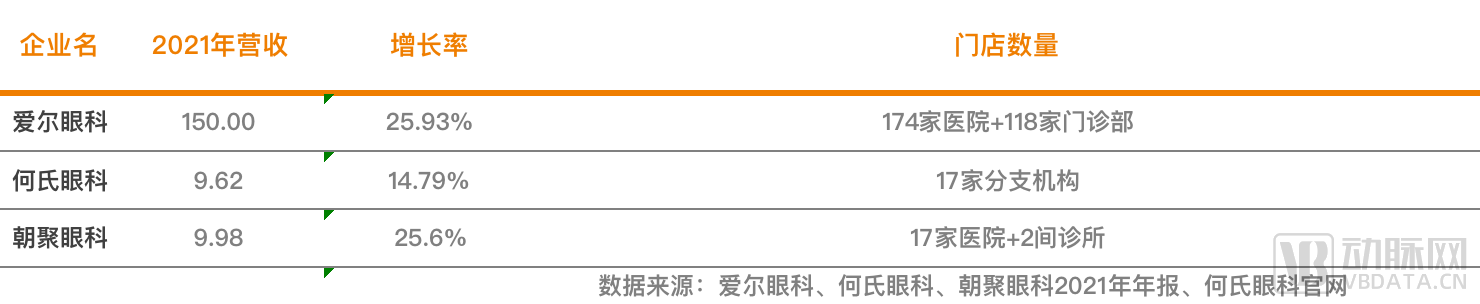
However, whether in terms of operating revenue or scale, Aier Eye Hospital is clearly “in a league of its own.”
However, reviewing the development history of Aier Eye Hospital, its expansion pace before 2014 was far less rapid than it is today.
From the submission of its prospectus in 2009 to the end of the reporting period in 2013, Aier Eye Hospital expanded from 19 hospitals to 49, an increase of 30 hospitals over four years.
The acceleration point occurred in 2014.
In 2014, Aier Eye Hospital fully implemented the “Partner Plan,” under which core technical and management personnel meeting specific eligibility criteria act as partner shareholders to jointly invest with Aier Eye Hospital in establishing new hospitals (including newly established, acquired, and expanded facilities). Once a new hospital reaches a certain profitability level, the company acquires the equity interests held by the partners at a fair price through issuing shares, paying cash, or a combination of both. (Source: Aier Eye Hospital’s April 2014 announcement)
In addition to the “Partner Plan” fully implemented in 2014, Aier Eye Hospital announced a “Provincial Capital Hospital Partner Plan” in April 2015. This plan adopts the structure of a limited partnership, wherein the partnership holds 10%–20% equity in the provincial capital hospitals, with a typical duration of 4–6 years.
Undeniably, the implementation of the two partnership programs has propelled Aier Eye Hospital’s scale to take off.
Using 2014 as a “watershed” year, Aier Eye Hospital had 49 hospital outlets by the end of 2013. According to data released on Aier Eye Hospital’s official website in September 2018, its “Partner Plan” covered a total of 129 hospitals over the subsequent four years—more than four times the number of hospitals added between 2009 and 2013. As of the reporting period for the 2021 annual report, Aier Eye Hospital operated a total of 174 hospitals and 118 outpatient clinics.
Moreover, these two figures do not include stores operated under licensed brands. This is attributable to another well-known strategy employed by Aier Eye Hospital: participating in the establishment of merger and acquisition funds.
It is reported that after acquiring newly built hospitals through merger and acquisition (M&A) funds, Aier Eye Hospital allows these acquired hospitals to operate outside its consolidated financial statements. Only after achieving initial profitability does Aier Eye Hospital proceed with the acquisition, integrating them into its listed company structure. This approach enables Aier Eye Hospital not only to meet the information disclosure requirements for listed companies—thereby avoiding adverse impacts on performance reports from poor financial data during the incubation period of new and acquired hospitals—but also to leverage limited capital to mobilize multiples of funding.
Behind the simultaneous surge in scale and revenue, what further insights can be gleaned from a close examination of Aier Eye Hospital’s 2021 annual report?
By breaking down the relevant data from Aier Eye Hospital's 2021 annual report, VCBeat focused primarily on two metrics: revenue by product and revenue by region.
Let's first look at the revenue data by product,During the reporting period, Aier Eye Hospital’s optometry services recorded the fastest growth among its medical service offerings, although refractive surgery services remained the largest contributor to its operating revenue.
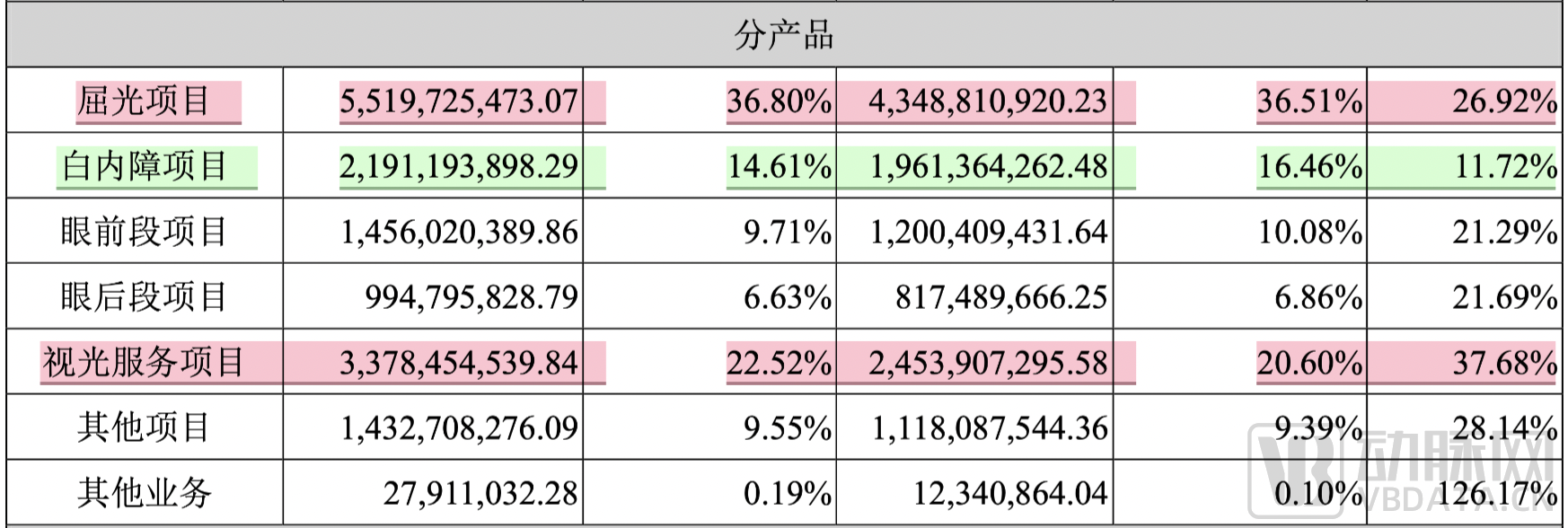
It is reported that refractive surgery, cataract surgery, and optometry services have consistently been the three main revenue drivers for Aier Eye Hospital's medical services.
Among these, the volume of cataract surgeries has been affected by medical insurance settlement policies, leading to a slowdown in growth rate. However, Aier Eye Hospital believes that with the consumption transformation, there is a trend of upgrading from vision-restoring cataracts to high-quality refractive cataracts. The cataract services provided by Aier Eye Hospital are gradually becoming more diverse to meet the high-quality visual needs of cataract patients at different levels, thereby ensuring continuous revenue growth for this service line.
Refractive surgery, also a major revenue driver, saw its growth primarily fueled by two factors: a further increase in the proportion of premium procedures, and Aier Eye Hospital’s increased investment in building up refractive surgery departments at its municipal and county-level hospitals during the reporting period.
Let’s focus on the optometry services offered by Aier Eye Hospital.
Optometry services have long been regarded as the second growth curve for Aier Eye Hospital. In 2013, Wu Shijun revealed to the public that Aier Eye Hospital aimed to explore and innovate the optometry outpatient clinic model, “making optometry business the company’s largest business segment, with its revenue share gradually increasing to over 20%–30%.”
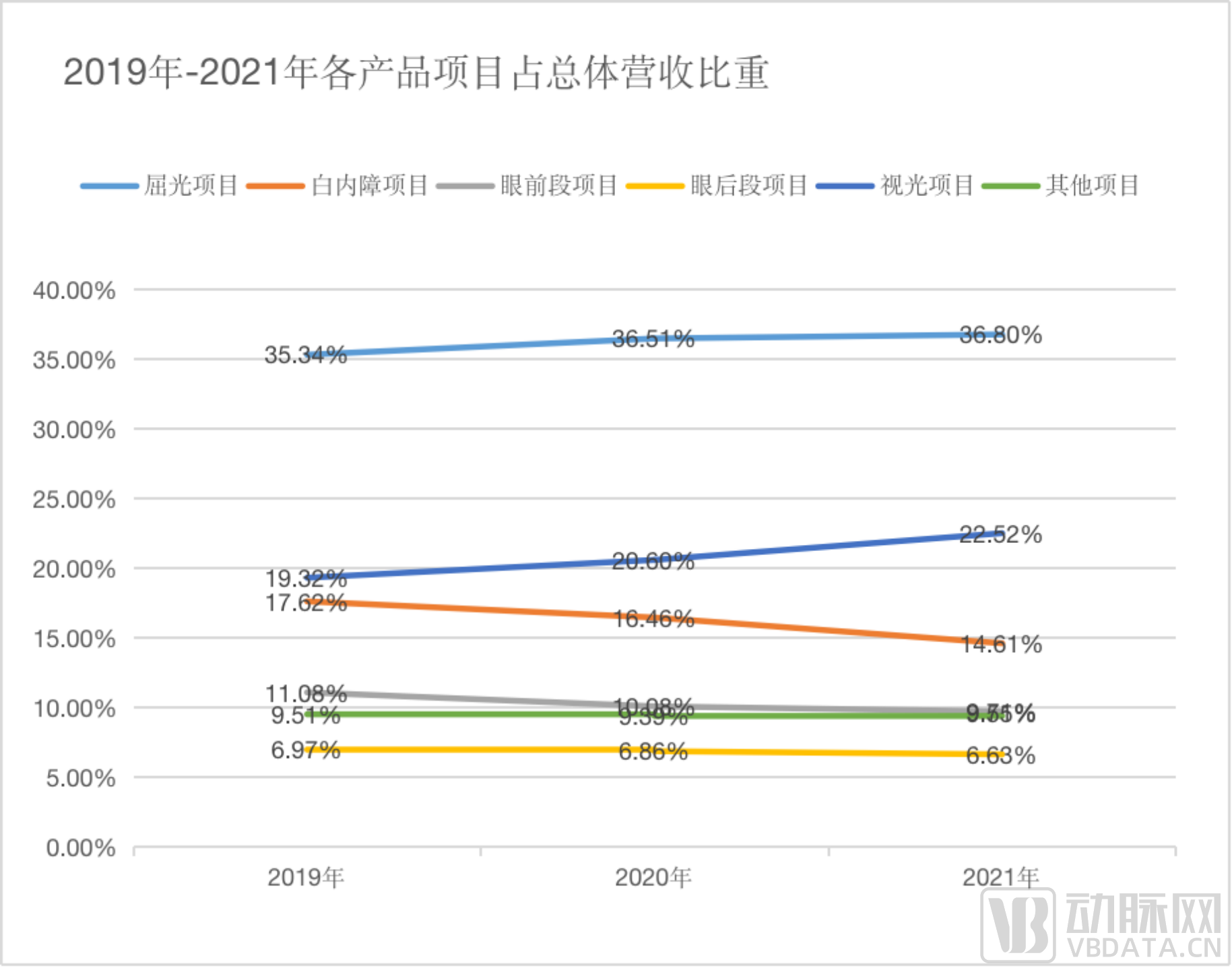
Looking back now,Although optometry services have not become the largest business segment for Aier Eye Hospital, their revenue contribution has exceeded 20%, making them one of the fastest-growing medical service offerings over the past three years.
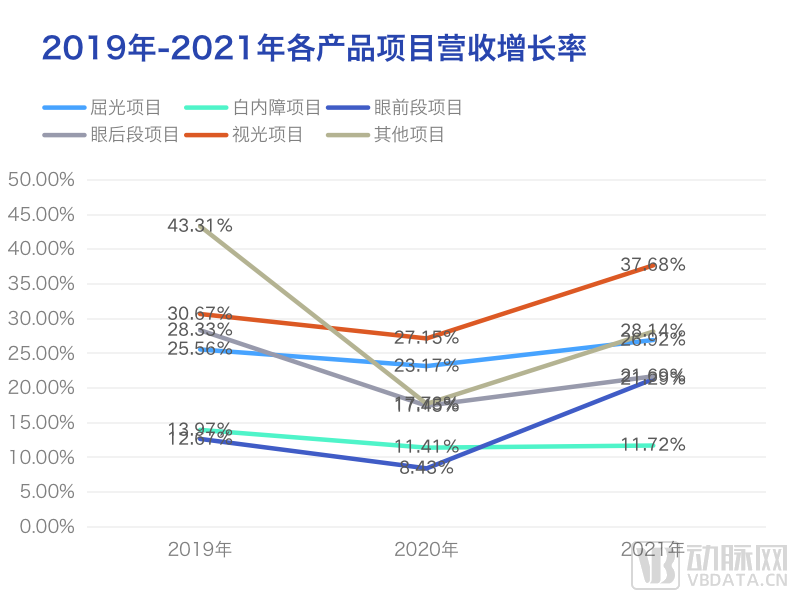
Regarding the 37.68% year-on-year growth in revenue from optometry services, Aier Eye Hospital stated:On one hand, the substantial human and material resources invested in myopia prevention and control among adolescents have yielded initial results;On the other hand, the quality of optometric examinations and fitting services, as well as service quality, at its affiliated hospitals have been continuously improved, and the product categories for optical solutions have been constantly optimized, which has promoted steady growth in the volume of eyeglass fittings.
From this interpretation, we can infer that the growth of Aier Eye Hospital's optometry services may still be driven by its optometric fitting services.
In response to an investor inquiry regarding the “Proportion of Orthokeratology Lens Revenue in Optometry Services for the First Three Quarters of 2021,” Aier Eye Hospital stated that its optometry business constitutes a comprehensive system encompassing prevention, control, and treatment. In addition to orthokeratology lenses, Aier Eye Hospital offers a variety of myopia control products, including atropine, defocus soft contact lenses, and defocus spectacle lenses.
This was reflected in the 2021 annual report.During the 2021 reporting period,Aier Eye Hospital aims to improve the efficiency of cross-departmental diagnosis and treatment for patients with relevant eye diseases, reducing delays in care caused by patients’ lack of disease-related knowledge.Five specialized eye disease clinics have been successively established, notably including the Adolescent Myopia Prevention and Control Clinic and the High Myopia Clinic.
Not only that,During the reporting period, the 0.05% Atropine Sulfate Eye Drops, jointly developed by Changsha Aier Eye Hospital and Hunan Maiou Medical Technology Co., Ltd., obtained the "Medical Institution Preparation Registration Approval" issued by the Hunan Provincial Medical Products Administration and entered into production.。
With further advancements in market education, a more diversified product pipeline, enhanced service quality, and an increasingly comprehensive network of service outlets, Aier Eye Hospital’s optometry services may indeed become its largest business segment in the future.
Let's take another look at the revenue data by region.
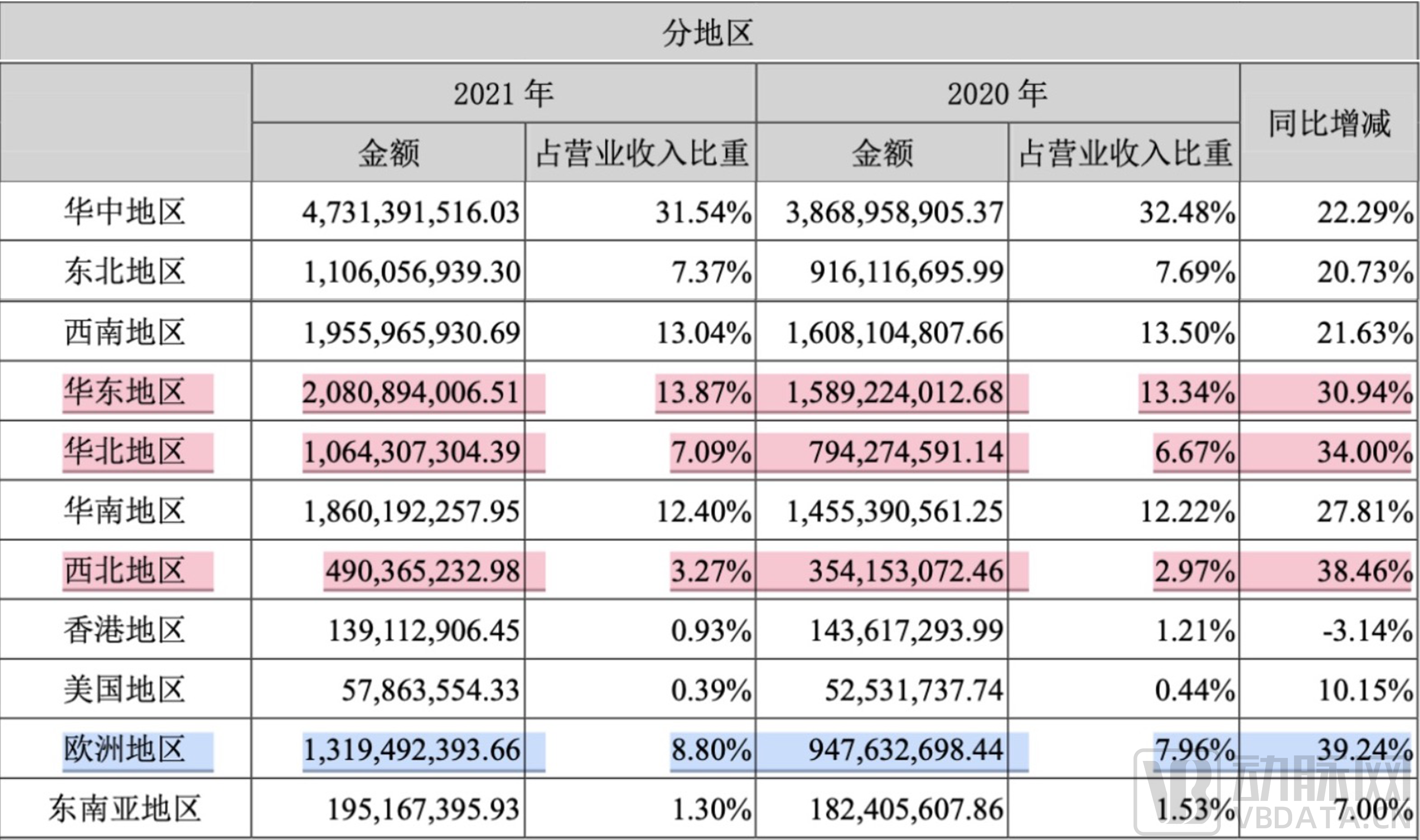
According to Aier Eye Hospital’s 2021 annual report, revenue in the domestic market increased to varying degrees in all regions except for Hong Kong, where it experienced a slight decline.Among them, the Northwest region recorded the fastest revenue growth at 38.46%, followed by North China at 34%, and East China at 30.94%.
Revenue in the Hong Kong region declined, which Aier Eye Hospital attributed to the pandemic. As for revenue growth in other parts of mainland China, Aier Eye Hospital’s explanations varied slightly: some were attributed to the steady revenue growth of its hospitals, while others added “and increased mergers and acquisitions” on top of that. However, there is one commonality:The rapid revenue growth in the Northwest, North, and East China regions is attributed to “the steady increase in income from subsidiary hospitals and increased mergers and acquisitions,” indicating that M&A has become a key growth driver for Aier Eye Hospital.
When viewed over a longer timeframe, the ranking of revenue shares by region has undergone slight changes.
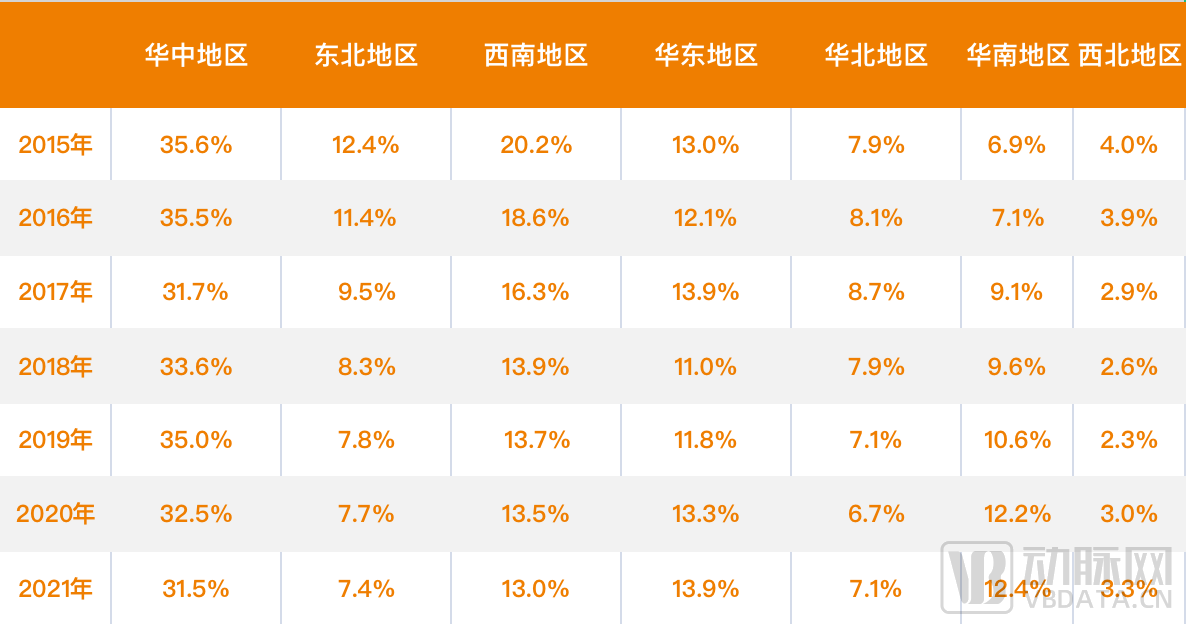
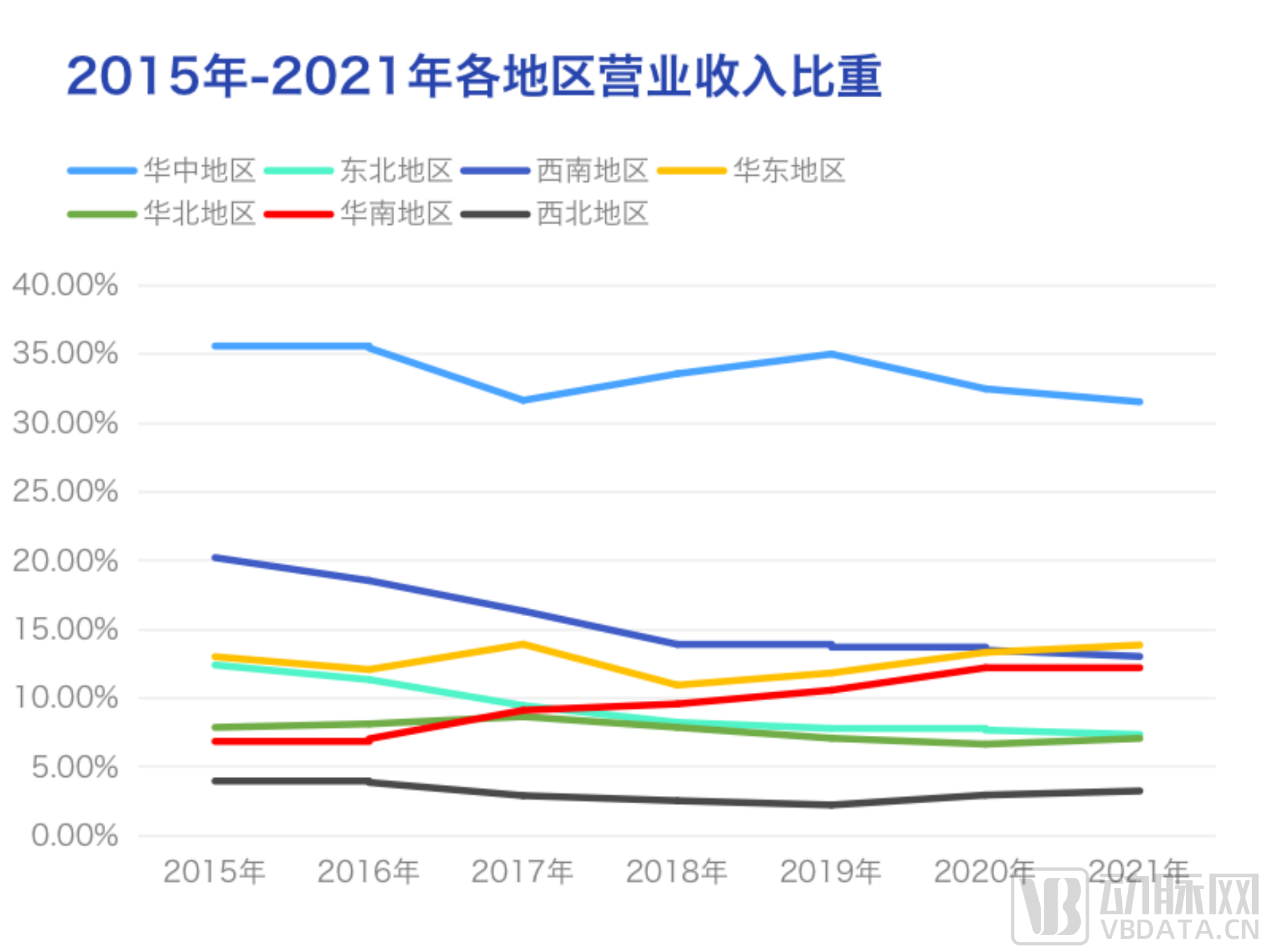
It can be seen that from 2015 to 2021, the revenue share of South China and East China gradually increased.As stated by Chen Bang, Chairman of Aier Eye Hospital, at the company’s 2021 performance briefing held on May 6, 2022, “The medical needs of patients with eye diseases may be delayed due to the impact of the pandemic, but they will not be lost.”"South China and East China will be the key regions for our future business development."
In Aier Eye Hospital’s 2021 annual report, there is a set of data that is “quite interesting.”
During the 2021 reporting period, Aier Eye Hospital had a total of 573 R&D personnel, representing a near doubling compared to the 291 employees in 2020. Among them, the number of R&D staff with bachelor’s degrees nearly tripled to 268; researchers with master’s degrees increased by 36.08% to 253; and R&D personnel with doctoral or postdoctoral qualifications rose by 44.44% to 52.
According to previous reports by VCBeat, Aier Eye Hospital has been committed to refining and upgrading its talent strategy to cultivate, attract, and incentivize professionals in the ophthalmic healthcare market, which has long suffered from a scarcity of specialized talent.
For example, Aier Eye Hospital has launched the “Global Talent and Intelligence Attraction” series of talent programs to recruit and cultivate a cohort of high-level ophthalmic medical and management professionals from around the world, including international leaders, industry pioneers, and young elites. It is actively building a global development platform for ophthalmologists, integrating internal and external resources, deepening university-enterprise collaborations, and exploring personalized training mechanisms for diverse types of talent.
During the 2021 reporting period, Aier Eye Hospital cultivated core medical management personnel through programs such as the Dean’s Advanced Training Workshop, the Yuelu Program, the Xiangjiang Program, the Talent Excellence Program, and the Kunpeng Program. A total of 25 sessions were conducted, covering 870 participant instances.
More importantly, during the reporting period, Aier Eye Hospital signed strategic cooperation agreements with Tianjin University, Sichuan University, Henan University, and other institutions to engage in deep collaboration in areas such as talent development, faculty team building, teaching and research, multi-site practice, and the construction of standardized residency training programs.Aier Eye Hospital’s national-level “Postdoctoral Research Workstation” has also been officially accredited, establishing a full-chain talent development and incubation system spanning from undergraduate to postdoctoral levels;It has also signed a “Cooperative Agreement on Joint Postdoctoral Training” with the Institute of Computing Technology, Chinese Academy of Sciences, under which both parties will jointly recruit and train postdoctoral fellows in interdisciplinary fields focusing on ophthalmology, visual science, and computational science.
However, in stark contrast is Aier Eye Hospital's R&D expenditure as a percentage of revenue.2From 2019 to 2021, Aier Eye Hospital’s R&D intensity stood at 1.52%, 1.38%, and 1.48%, respectively—indicating virtually no change. (Note: While the company’s total annual R&D expenditure increased slightly, its proportion of revenue remained relatively stable.)This also indicates that, to maintain its innovation and leadership in ophthalmic treatments and services, Aier Eye Hospital needs to place greater emphasis on research and development.
Moreover, accompanying Aier Eye Hospital’s aggressive M&A spree has been its rising goodwill.
As of the 2021 reporting period, Aier Eye Hospital’s book goodwill reached RMB 4.317 billion, accounting for 38% of its net assets. According to its first-quarter 2022 financial report, Aier Eye Hospital’s goodwill amounted to RMB 4.6 billion.
In response, Wu Shijun also addressed this during the 2021 annual performance online briefing, stating, “In mergers and acquisitions, goodwill arises when the project valuation exceeds the identifiable net book assets, which is a normal financial phenomenon. There is no need for investors to demonize goodwill across the board. The majority of hospitals acquired by Aier Eye Hospital from its merger and acquisition funds are relatively new. Given the characteristics of the healthcare industry, it is normal for newly opened hospitals to incur losses in their initial operational phase.”
Furthermore, Wu Shijun disclosed the key considerations Aier Eye Hospital takes into account when making hospital acquisition decisions: First, the target hospital must have been established and in normal operation for more than two years, having built a certain brand presence locally. Second, its management standards and quality of medical care must meet the relevant management and healthcare quality requirements applicable to listed companies. Third, the hospital is evaluated based on factors such as its specific positioning, geographic location, and scale, with the general requirement that it has already turned profitable or is near the break-even point. Fourth, there must be no major legal or regulatory violations or medical malpractice incidents with unrectified issues or significant negative impacts still pending, nor any major ongoing litigation or disputes. Fifth, upon receiving brand authorization, the hospital must be capable of operating in accordance with the medical quality and management standards set forth by Aier Eye Hospital.
Amid the instability caused by the COVID-19 pandemic, stakeholders appear more concerned with whether Aier Eye Hospital can withstand the shock of the outbreak. In response, Chen Bang, Chairman of Aier Eye Hospital, stated, “In the short term, the pandemic has significantly impacted Aier Eye Hospital’s performance, with hospitals in several provinces and regions suspending consultations or limiting patient flow. Meanwhile, we have deployed a large number of medical personnel to support frontline epidemic control efforts. We believe this impact is only temporary; as long as hospitals genuinely strengthen their operations and enhance their capabilities, they will naturally possess the strength and resilience to withstand the pandemic’s impact.”