

Peripheral Intervention Market Surges with 229.12% Average Growth: Is the Harvest Phase Here?
Full-text Summary: The domestic peripheral intervention market in China holds immense growth potential. However, peripheral intervention encompasses numerous niche segments, with many unmet clinical needs. Recently, VCBeat learned that an emerging medical technology company“Genesis Medical” Receives Consecutive Approvals for Two Innovative Peripheral Intervention Products: In-Depth Interviews with Industry Insiders, Medical Experts, and Genesis Medical Yield the Core Insight of This Article—Companies Must Not Only Develop Unique Innovative Products but Also Implement a Platform-Based Product Strategy, While Jointly Cultivating the Market and Conducting Patient-Physician Education to Ensure More Patients Receive Timely Treatment.
The full text is nearly 6,000 words and takes about 10 minutes to read.
According to the latest annual reports of listed companies, the peripheral intervention sector began to scale up in 2021, with related companies entering a harvest period.
Data show that relevant listed companies experienced substantial revenue growth in the peripheral intervention sector in 2021. For instance, JetMed reported revenue of RMB 65.64 million, a year-on-year increase of 752.5%; MicroPort Endovascular reported revenue of RMB 52.65 million, up 222.15% year on year; Huitai Medical reported revenue of RMB 119 million, representing an 80.95% year-on-year increase; Acotec reported revenue of RMB 304 million, a 56.6% year-on-year rise; and LifeTech Scientific reported revenue of RMB 548 million, with a 33.4% year-on-year growth.
The average growth rate of the aforementioned five companies was 229.12%, far exceeding market expectations. Such a rapidly expanding blue-ocean market has naturally attracted numerous innovative enterprises, including Genesis Medical, InnoCare Medical, and Kossel Medical.
On the other hand, the peripheral intervention market has begun to experience large-scale volume growth, which inevitably accompanies intensified market competition. Therefore,How do companies currently view the peripheral intervention sector? How do they assess the opportunities and risks within it?
Public data indicate that there is a large patient population with peripheral interventional diseases in China, including approximately 40 million patients with lower extremity arterial disease and around 100 million patients with varicose veins. As living standards continue to improve, a significant number of patients have demonstrated a markedly increased willingness to seek treatment for peripheral vascular diseases that affect their quality of life.
Meanwhile, as numerous domestic companies have intensified their marketing efforts and the government has strengthened policy support, the number of vascular surgeons treating peripheral vascular disease in China has grown from nearly 1,500 in 2012 to over 10,000 today. The number of hospitals with dedicated vascular surgery departments has also increased from approximately 230 in 2012 to 1,000 currently, and this figure continues to rise rapidly.
Influenced by the aforementioned factors, the peripheral intervention market holds significant growth potential. Research institutions predict that China’s peripheral intervention market will continue to grow at a rate of 15%–20% in the coming years.
However, unlike other fields of vascular intervention,Peripheral interventions encompass numerous niche segments, with a highly diverse product portfolio.For example, the field of peripheral interventions covers diseases affecting multiple vascular segments, including the aorta, lower extremity arteries, carotid arteries, and the venous system. It involves a wide range of products such as drug-coated balloons, PTA balloons, stents, thrombectomy catheters, intravascular lithotripsy catheters, atherectomy devices, radiofrequency ablation systems, and peripheral guidewires.
It is worth noting that the peripheral intervention field has two other major characteristics. First, unlike the cardiac intervention field, where a single product can achieve a surgical volume of one million procedures, the peripheral intervention field has limited surgical volumes applicable to any single product due to the nature of the diseases and the specificity of the affected blood vessels. Consequently, the market for a single product is also insufficient to support the long-term development of companies.
Second, there is vast room for product innovation in peripheral interventions. Taking lower extremity arterial disease as an example, current mainstream therapeutic products include plain balloon angioplasty catheters, bare-metal stents, and drug-coated balloons (DCBs). However, due to the complexity of the disease, their clinical efficacy is limited or their indications are restricted. Therefore, there is an urgent clinical need for additional solutions, such as technologies for managing vascular calcification, thrombus management products, treatment options for infrapopliteal arterial disease, and clearer and more convenient intravascular imaging devices.To address these unmet clinical needs, peripheral intervention companies must strengthen their R&D efforts, and domestic innovative enterprises that are the first to develop high-quality related devices will enjoy a significant first-mover advantage.。
For these two reasons, the barrier to entry in the peripheral intervention field is relatively high. It requires not only continuous product innovation capabilities but also a platform-based product portfolio; otherwise, achieving scalability is difficult.
Overall, the key terms in the peripheral intervention field are “blue ocean market, numerous niche segments, unique innovative products, and high barriers to entry,” while the unavoidable descriptors for related companies are “platform-based layout, diverse product portfolio, and scale.”
Although companies such as Genesis MedTech and Acotec saw substantial revenue growth in their peripheral intervention businesses in 2021, China’s peripheral intervention sector remains in its early stages of development, with the majority of the market still dominated by foreign brands.
Fortunately, domestic companies in the peripheral intervention field have entered a stage of completing their product portfolios, with innovative products from various companies having been approved or nearing approval; commercialization has already commenced or is planned to begin in 2022.
For example, Genesis Medical, an emerging medtech company, entered the peripheral intervention field in 2020 and achieved breakthroughs in multiple areas within two years: its independently developed Chocolate Touch® drug-coated balloon has been approved by the Center for Medical Device Evaluation (CMDE) of China’s National Medical Products Administration and included in the Green Channel for Innovative Medical Devices; it partnered with Shockwave Medical to introduce intravascular lithotripsy (IVL) technology for calcification treatment into China; and it collaborated with Penumbra, a leading U.S. vascular intervention company, to introduce the Indigo thrombus aspiration catheter.
Notably, while accelerating the commercialization of introduced technologies such as IVL and thrombus aspiration, Genesis has simultaneously transferred these global innovative medical technologies to China to expedite their localization.。
Nowadays,After two years of development, Genesis has built a robust portfolio of peripheral interventional products. Its intravascular lithotripsy catheters and peripheral thrombectomy catheters have recently received regulatory approval, while drug-coated chocolate balloons, a full range of peripheral balloons, and peripheral guidewires are slated for imminent launch, marking the commencement of their commercialization.。
Currently, China’s peripheral intervention market is in the early stages of rapid development. On one hand, driven by aggressive marketing efforts from domestic innovative enterprises, the volume of peripheral intervention procedures has increased significantly, and the trend of domestic substitution is gradually emerging. On the other hand, although there is a large population of patients with peripheral vascular disease in China, the procedural penetration rate remains low; for instance, the volume of aspiration thrombectomy procedures is projected to reach only approximately 142,700 cases by 2024.
In the treatment of deep vein thrombosis (DVT) in China, Professor Liu Jianlong, Director of the Department of Vascular Surgery at Beijing Jishuitan Hospital, advocates four key principles: first, proactive diagnosis; second, effective anticoagulation; third, thrombus removal; and fourth, resolution of the underlying cause.
Professor Liu Jianlong stated, “In the United States, it takes an average of four days from symptom onset to confirmed diagnosis of thrombosis. In China, this process averages nine days. Although the difference is only five days, during this period patients may experience thrombus detachment leading to pulmonary embolism and death, or thrombus organization, which increases the difficulty of clinical management.”Therefore, we aim to promote the concept of “proactive diagnosis” to identify patients with deep vein thrombosis at an early stage and initiate timely intervention, thereby preventing the occurrence of fatal pulmonary embolism.”
“Currently, it is clinically recognized that effective anticoagulant therapy can inhibit the progression of deep vein thrombosis and the occurrence of pulmonary embolism. Studies have shown that effective anticoagulant therapy can reduce the incidence of fatal pulmonary embolism by 50%.”Therefore, we advocate the concept of “effective anticoagulation” to ensure patient safety.”
“However, anticoagulant therapy cannot eliminate thrombi, and the persistence of thrombi poses significant risks. For instance, in the early stage of deep vein thrombosis (DVT), it may lead to fatal pulmonary embolism; in the intermediate stage, manifestations of chronic post-thrombotic syndrome may occur; and in the late stage, the probability of developing pulmonary embolism increases substantially.”Therefore, we advocate that physicians should promptly remove the thrombus following early diagnosis.”
“In recent years, clinical practice has revealed that iliac vein stenosis or occlusion plays a significant role in the pathogenesis of deep vein thrombosis.Therefore, we advocate for the removal of the underlying cause following thrombus clearance., iliac vein stenosis is treated with methods such as balloon angioplasty and stent placement, thereby reducing thrombus recurrence, improving mid- to long-term patency rates, and decreasing the incidence of post-thrombotic syndrome.
It is evident that adopting the aforementioned therapeutic approach can significantly improve patients’ quality of life. However, achieving this goal requires collaborative efforts among hospitals, physicians, and enterprises. Specifically, hospitals need to strengthen their vascular surgery departments and train more specialists; physicians must focus on early diagnosis and timely thrombus removal; and enterprises should leverage mass-production advantages to promote products at more affordable prices, ensuring that patients have access to and can afford these innovative medical devices.
As a result, not only will the penetration rate of peripheral interventional procedures rise rapidly, but more patients with peripheral vascular diseases will also receive timely treatment.
In fact, enterprises also highly endorse the four core concepts advocated by Professor Liu Jianlong. Industry insiders believe:In the field of peripheral interventions, domestic companies should place greater emphasis on market cultivation and expansion, work together to enlarge the overall market, strengthen differentiated product competition, and meet the diverse treatment needs of more patients in China.。
This understanding has gradually become a consensus among industry players. For instance, companies are actively educating physicians on the concepts of calcification management to cultivate the vascular calcification market; training more physicians in below-the-knee (BTK) interventional procedures to foster the peripheral drug-coated balloon (DCB) market; and launching simpler, equipment-free solutions such as the Indigo thrombectomy catheter to facilitate the decentralization of peripheral interventions to primary care settings, thereby expanding the market potential for peripheral interventional therapies.
As many companies ramp up market education efforts, the peripheral intervention market is poised for rapid growth. As this “pie” continues to expand, a growing number of patients with peripheral vascular disease in China will benefit accordingly.
Currently, a variety of products have been launched in China’s peripheral intervention field, such as PTA balloons, hydrophilic-coated angiographic catheters, drug-coated balloons for the lower extremities, and inferior vena cava filters. However, there is still a lack of innovative devices on the market for treating conditions such as pulmonary embolism and vascular calcification.
Among them, a research report released by CICC shows that in 2021, the total number of patients with pulmonary embolism, deep vein thrombosis, and peripheral arterial embolism in China exceeded 3 million, but fewer than 20,000 received mechanical thrombectomy treatment. Specifically, there were 230,000 new cases of pulmonary embolism annually in China, yet only 100 mechanical thrombectomy procedures were performed in 2021.
In this regard, the Indigo Thrombectomy Catheter from Genesis MedTech, which has just received NMPA approval, is one of the few products globally that can be widely used for pulmonary embolism, deep vein thrombosis, and peripheral arterial thrombosis. Featuring its proprietary thrombus separation technology and atraumatic curved-tip circumferential aspiration, it provides an ideal solution for the treatment of massive pulmonary embolism.
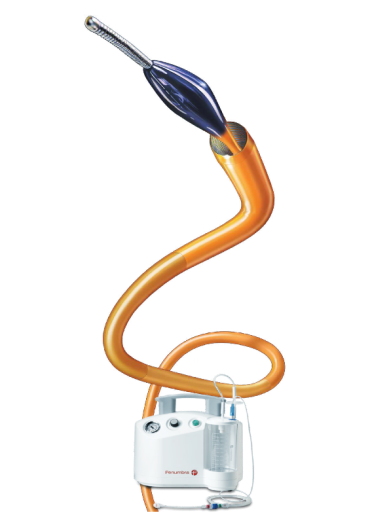
The image shows the Indigo thrombus aspiration catheter, which was launched by Genesis in April.
Each year, 100,000 to 180,000 patients die from acute pulmonary embolism. Currently, the mainstay of treatment for acute pulmonary embolism is anticoagulation; although thrombolysis carries a certain risk of bleeding, even among survivors, there remains a risk of serious late complications such as pulmonary hypertension and heart failure. For massive and submassive pulmonary embolism, aggressive thrombus removal can reduce mortality and the incidence of severe long-term complications.
Professor Zhang Hongkun, Director of the Department of Vascular Surgery at The First Affiliated Hospital, Zhejiang University School of Medicine, has stated: “The Indigo thrombectomy catheter demonstrates a high level of safety and efficacy in the treatment of pulmonary embolism and deep vein thrombosis. It provides immediate mechanical relief through continuous aspiration, enabling timely intervention for patients with acute pulmonary embolism.”
According to data released by Frost & Sullivan, the market size of peripheral mechanical thrombectomy in China was RMB 120 million in 2020 at ex-factory prices, and is expected to reach RMB 240 million in 2022, with a compound annual growth rate (CAGR) of 43% during this period. Currently, in addition to Genesis Medical, domestic innovative enterprises such as Acotec Scientific, JetMed, and Leo Med are all developing peripheral thrombus aspiration systems. It is foreseeable that innovative devices in this niche sector will enter a phase of market cultivation and collaborative development.
In addition, the incidence of peripheral vascular calcification is high, with approximately 60% of patients with peripheral artery disease (PAD) presenting with calcified lesions; however, there are few innovative products in China capable of effectively managing moderate to severe peripheral vascular calcification.
The joint venture established by Genesis and the U.S.-listed company Shockwave focuses on localizing Shockwave’s intravascular lithotripsy (IVL) technology in China. Within the global medical community, Shockwave’s IVL technology is regarded as a “game-changer” for vascular calcification, being currently the only technology effective in treating superficial, moderate, and deep calcification. Recently, the Shockwave product series received marketing approval from the National Medical Products Administration (NMPA), marking the first time the NMPA has approved an intravascular lithotripsy medical device. The approved products include the console system and various models of catheters indicated for the treatment of calcified lesions in coronary and peripheral arteries.
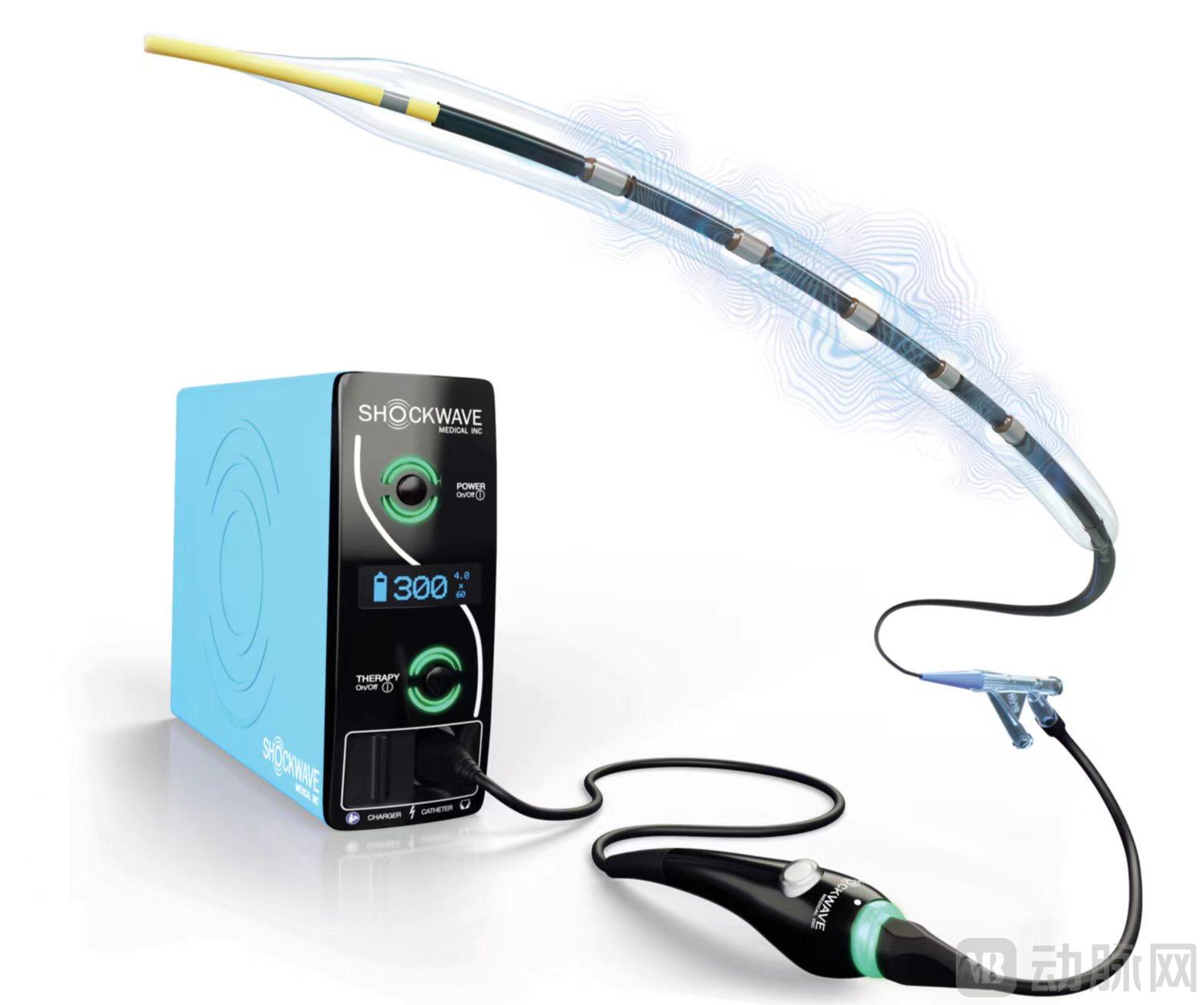
Figure: Shockwave Intravascular Lithotripsy System and Catheter
Clinical trial data released by Shockwave demonstrate that intravascular lithotripsy (IVL) catheters offer a high safety profile, with low rates of adverse events and complications, in the treatment of calcified vascular lesions. The technology also exhibits strong efficacy, achieving substantial immediate post-procedural luminal gain. Notably, Shockwave is the first and currently the only company worldwide to commercialize intravascular lithotripsy technology. Driven solely by this IVL technology, Shockwave has achieved a market capitalization of approximately $7 billion.
In addition, Genesis has independently developedDrug-Coated Chocolate Balloon, this product combines the dual advantages of drug-coated balloon technology and chocolate balloon technology, providing safer and more effective treatment for patients with peripheral vascular disease.
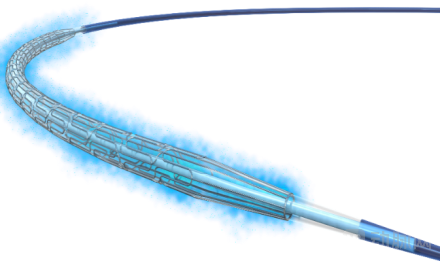
Figure: Genesis’ drug-coated chocolate balloon
Among these, drug-coated balloon technology enables the balloon to deliver medication; the chocolate balloon, through specialized manufacturing techniques, creates a textured surface with raised and recessed structures that provide a cushioning effect during dilation, thereby reducing injury to the vascular intima, minimizing arterial dissection, and improving both short- and long-term patency.
On April 4, at the 71st Annual Scientific Session of the American College of Cardiology, Professor Mehdi Shishehbor from University Hospitals Cleveland Medical Center delivered a presentation on “Head-to-Head RCT Study of Drug-Coated Chocolate Balloon versus Lutonix Drug-Coated Balloon.”
Clinical data showed that at 12 months of follow-up, 78.8% of patients in the drug-coated chocolate balloon group maintained vessel patency (defined as a peak systolic velocity ratio [PSVR] <2.4 on ultrasound and no clinically driven target lesion revascularization), compared with 67.7% in the Lutonix drug-coated balloon group, demonstrating superiority (P=0.04).Drug-Coated BalloonNon-inferiority endpoints were met for both the primary efficacy and primary safety endpoints, with superior efficacy at 12 months compared to Lutonix DCB in the treatment of femoropopliteal artery lesions. Professor Shishehbor stated, “For me, this study demonstrates thatDrug-Coated Balloons Will Become the Preferred Device for Patients Requiring Drug-Coated Balloon Therapy。”
At the Vascular Innovation Forum on April 23, Professor Guo Wei from the Chinese PLA General Hospital shared for the first time with domestic vascular surgeons the “U.S. IDE Data on Drug-Coated Chocolate Balloons,” affirming the efficacy and safety of drug-coated chocolate balloons.
According to Genesis, the drug-coated chocolate balloon was approved by the National Medical Device Technical Evaluation Center in September 2021 and entered the green channel for innovative medical devices.。
In fact, even after addressing challenges such as pulmonary embolism, vascular calcification, and reducing vascular injury, peripheral artery disease (PAD) still presents numerous unmet clinical needs, including the demand for innovative tools to treat below-the-knee arterial stenosis and novel stents. For domestic companies to achieve a “leapfrog” advancement, the fundamental approach lies in actively investing in product research and development and fostering innovation through medical-engineering collaboration.
The sustained optimism regarding future market growth serves as the external driver for Genesis’s expansion into the peripheral intervention sector; while the company began to show its strength within approximately two years, this progress has been inseparable from the internal drive of “leveraging a global perspective to boost local innovation.”
Since its inception, Genesis has been strategically building a global innovation network. Currently, it is leveraging its established expertise in neurointervention and minimally invasive surgery to expand into the peripheral intervention sector. On one hand, Genesis Medical employs a global perspective to introduce cutting-edge innovative technologies from around the world. On the other hand, the company has established R&D centers worldwide, recruiting talented engineers from diverse countries to strengthen its independent research, development, and innovation capabilities.
In introducing the world's top innovative technologies, Genesis has established R&D centers in China, the United States, Singapore, Japan, and other regions, and collaborates with top-tier R&D teams worldwide to facilitate the commercialization of innovative products. For instance, Genesis’s U.S. R&D team has successfully overcome key technical challenges in developing drug-coated chocolate balloons; additionally, Genesis has partnered with leading Japanese medical device companies to customize peripheral guidewire products for Chinese physicians.
In terms of the R&D team, Genesis recruits outstanding engineers from around the world. In early 2022, Dr. Eitan Konstantino, an Israeli medical device R&D engineer, joined Genesis Medical to serve as Chief Technology Officer of its Vascular Intervention Business Unit.
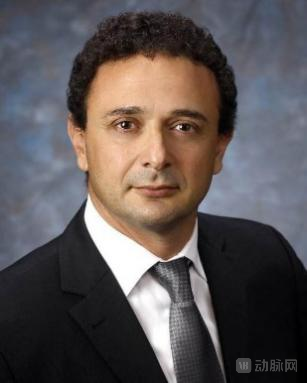
Pictured is Eitan Konstantino, an Israeli medical device R&D engineer.
Public information indicates that Dr. Eitan possesses extensive experience in the research, development, and management of medical devices. He holds over 170 U.S. and international patents and patent applications, and has made several breakthrough inventions in the field of vascular intervention. Previously, he led teams in the development of products such as vascular stents, specialized angioplasty balloons, and nitinol-based vascular devices, some of which have been acquired or commercialized by renowned multinational medical device companies including Medtronic, Teleflex, Philips, and Boston Scientific.
Genesis Medical Introduction:In addition to its global innovation network layout based on a global perspective, it also places great emphasis on localized advantages.For example, in the process of developing a full range of products including peripheral balloons, peripheral guidewires, and vascular closure devices, Genesis’s R&D team in China collaborated with domestic clinical experts, incorporated their suggestions for product optimization, and developed innovative products specifically tailored to Chinese patients.
Last year, Genesis collaborated with Professor Fu Weiguo’s team to complete the first nationwide application of an intravascular shockwave catheter for peripheral vessels, and initiated clinical trials in China at renowned medical institutions including Zhongshan Hospital, Shanghai Ninth People’s Hospital, Huashan Hospital, Renji Hospital, and Hangzhou First People’s Hospital.
In fact, unlike other cardiovascular and neurovascular diseases, peripheral vascular disease is characterized by prominent calcification, lesions spanning joints, and significant exposure to external forces such as bending and compression. Consequently, there is an urgent clinical need for peripheral interventional companies to develop innovative products tailored to the peripheral vasculature.
However, innovation in the field of peripheral interventions requires not only in-depth communication between physicians and engineers and active interdisciplinary collaboration, but also substantial technical accumulation and a global perspective (to inspire innovation and avoid falling behind global technological advancements).
In this regard, Genesis, with its global vision and R&D teams both in China and overseas, may bring unique surprises to innovation in the peripheral interventional field at home and abroad.