

Booming Sports Rehabilitation Sector Struggles to Recruit Talent Despite Offering $85,000 Annual Salaries
“The end of the ski slope leads to orthopedics.” This was a popular online quip during the Beijing Winter Olympics. In fact, it is not limited to the Winter Games; with the growing participation in various sports among the general public, sports-related injuries have become increasingly common. The specialists responsible for diagnosing and treating these injuries are not traditional orthopedic trauma surgeons, but rather practitioners of sports medicine—a discipline that integrates sports science with clinical medicine.
Unlike other disciplines, in the diagnosis and treatment of sports medicine, a successful surgery only marks half the completion; the remaining rehabilitation work must be carried out by professional physical therapists. “Rehabilitation training is difficult for patients to complete independently, and non-standard exercises will not yield effective results,” Liu Xinyu, a physical therapist at a certain institution, told VCBeat.
As public demand for rehabilitation services grows, the rehabilitation departments of public hospitals are struggling to meet the need. Private institutions have targeted this gap, attempting to attract patients requiring sports rehabilitation. However, they face the dilemma of being unable to recruit rehabilitation therapists even with high salaries of 600,000 yuan.
Talent is the foundation of industry development. If high salaries fail to attract talent, where does the problem lie?
Since the Chinese government issued the “Several Opinions on Accelerating the Development of the Sports Industry and Promoting Sports Consumption” in 2014, the number of sports rehabilitation clinics has risen year by year. According to data from Yiou.com, this figure reached 370 by 2020. Along with the increase in the number of institutions, demand for talent has also heated up.
From a business perspective, private institutions are not seeking direct competition with public hospitals; rather, they aim to share the provision of rehabilitation services across different stages. Consequently, these private entities collaborate with sports medicine physicians to receive referrals for patients requiring rehabilitation, while simultaneously recruiting rehabilitation therapists to deliver care.
From the demand side, private rehabilitation institutions do not require top-tier specialists from leading rehabilitation hospitals; rather, they need a large number of rehabilitation therapists with clinical experience.
Experienced rehabilitation therapists require a dual academic background in both medicine and kinesiology, yet few institutions offer such specialized programs. According to data from the China Higher Education Student Information and Career Center (CHESICC), only 79 institutions nationwide offer majors in sports rehabilitation. Although many medical schools offer rehabilitation therapy programs, their training models remain relatively traditional, aligning more closely with the needs of rehabilitation departments in public hospitals. Furthermore, medical school graduates demonstrate a stronger willingness to pursue employment in public hospitals.
Although there is currently no standardized statistical framework for data on rehabilitation therapists in China, based on the figure of 16,400 rehabilitation physicians nationwide reported in the "China Health and Family Planning Statistical Yearbook," and applying a staffing ratio of 1:3 for rehabilitation departments, the total number of rehabilitation therapists in China is estimated to be no more than 50,000.
The proportion of them willing to give up their jobs in public hospitals is not high, and even fewer meet the requirements of private institutions.
As private rehabilitation institutions predominantly adopt a staffing model comprising multi-site practicing physicians and rehabilitation therapists, with physicians solely responsible for prescribing rehabilitation protocols while rehabilitation therapists oversee the entire process—from protocol formulation to implementation—there are stringent requirements for the comprehensive competencies of rehabilitation therapists.
This is precisely why, as mentioned at the beginning of this article, private rehabilitation institutions are offering annual salaries of RMB 600,000 to recruit rehabilitation therapists capable of leading teams. Nevertheless, there remains a scarcity of qualified candidates in the market.
Currently, there are three main training pathways for rehabilitation therapists in China: medical schools, sports universities, and overseas study. Of course, a small number of normal universities and comprehensive universities also offer similar specialized programs, but they account for a very small proportion.
Rehabilitation therapy programs at medical schools adopt a relatively traditional training model, prioritizing the needs of rehabilitation departments in public hospitals, with a focus on neurological, geriatric, cardiopulmonary, orthopedic, and pediatric rehabilitation. Graduates also prefer employment in public hospitals as their first choice.
The sports rehabilitation major at the College of Physical Education is an emerging discipline, having been offered for only a decade or so. Its talent development aims to integrate sports and medicine, yet its training model remains under optimization and exploration. Early graduates, constrained by the employment landscape, failed to achieve significant breakthroughs in their professional careers.
Taking the United States as an example, overseas study in physical therapy—a discipline that is clinically oriented from the outset of training—places high demands on practitioners’ comprehensive competencies. Due to a favorable employment environment, graduates are able to pursue further advanced training in their respective fields.
In terms of quantity, domestic universities produce enough graduates, but there is a shortage of true talent.
"Neither the training systems of medical schools nor those of sports colleges produce graduates whose competencies meet the requirements of rehabilitation institutions."
Therefore, the high salaries offered by rehabilitation institutions are currently more targeted at overseas talent with stronger clinical capabilities.
“Institutions are offering high annual salaries and even recruiting experienced professionals as technical partners, not primarily for their clinical treatment skills, but rather in the hope that these seasoned rehabilitation therapists can mentor and develop their teams, placing greater emphasis on their training capabilities,” Zhao Qingyi, CEO of Fudong Musculoskeletal, told VCBeat. “For private institutions, standardization forms the foundation of corporate services and development. Since industry-wide standards have yet to be established, companies must take the initiative to implement them internally.”
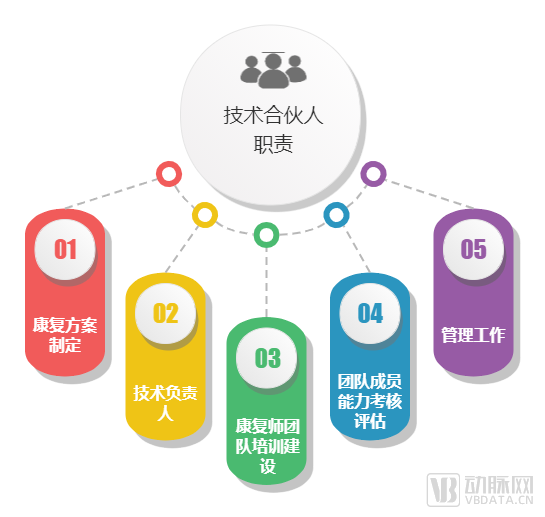
High-Paying Rehabilitation Therapist Job Responsibilities | VCBeat Infographic
Fudong Musculoskeletal currently has two such expert-level rehabilitation therapists. “With technical partners like these, we can confidently recruit many fresh graduates, provide them with training, standardize the technical system across the entire organization, and ensure a consistent patient experience. This also lays the foundation for the institution’s future expansion,” Zhao Qingyi told VCBeat. “Even fresh graduates who excel in the training program and quickly integrate into the institutional framework can earn salaries significantly higher than those offered by public hospitals.”
In addition to international students, institutions have also set their sights on overseas rehabilitation experts. For instance, U-Rehab Clinic has introduced several senior rehabilitation medicine specialists from the United States and Europe. It has also established the U-Rehab Research Institute, with two primary objectives: first, to train newly recruited graduates through these experts, helping them adapt to the institution’s technical system; and second, to conduct regular training programs to enhance the overall technical proficiency of the institution.
Due to the highly positive feedback, Youfu Clinic’s training programs have expanded beyond business units to include functional departments, covering roles in operations and management. Furthermore, in terms of customer acquisition, the arrival of senior foreign experts has not only elevated Youfu Clinic’s technical standards but also attracted numerous expatriate clients in Shanghai.
Furthermore, through its collaboration with professional sports universities, Ranran Sports Rehabilitation established the “Beijing Sport University–Ranran Sports Rehabilitation Research Center” to expand talent acquisition channels. It also leverages academic teaching resources to provide professional rehabilitation training to the public.
Since China has established training pipelines, why are private institutions still compelled to offer high annual salaries to recruit talent for secondary training? What has been the career trajectory of graduates in related fields in recent years? VCBeat interviewed several industry practitioners, and their experiences may help shed light on some underlying issues.
In 2005, driven by her love for sports and longing for university life, Liu Xinyu enrolled at Beijing Sport University. At the time, she had no clear idea of what she would study or what the career prospects of her major might be; she simply made the straightforward choice to attend a university she liked.
One year ago, in 2004, the Ministry of Education approved Sports Rehabilitation as an out-of-catalog major for pilot programs at a select few universities. In 2005, the Ministry of Education formally authorized universities to offer the major in Sports Rehabilitation and Health. By 2012, it was renamed Sports Rehabilitation.
Liu Xinyu inadvertently became one of the first students in China’s sports rehabilitation program.
More than a decade later, Liu Xinyu reflects with emotion on his choice at the time: “In fact, I didn’t give it much serious thought; back then, I didn’t really understand these things. I was assigned to this major through the university’s adjustment process. At the time, I simply liked Beijing Sport University and was content just to be admitted.”
His subsequent academic life at Beijing Sport University was both as Liu Xinyu had anticipated and filled with unexpected surprises.
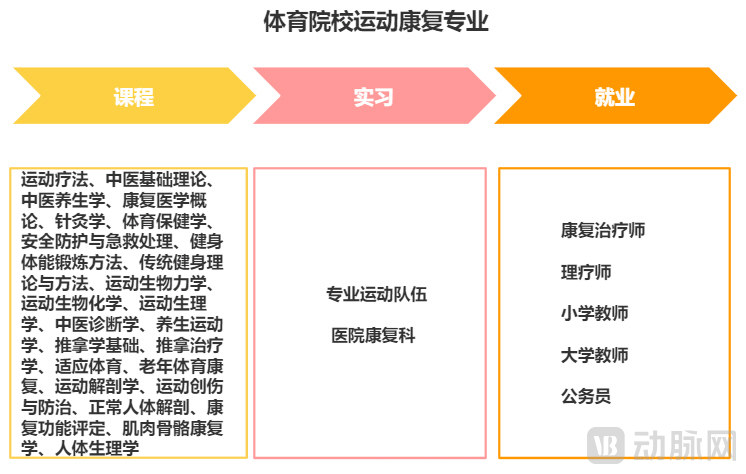
Training Pathway for Sports Rehabilitation Majors; Data Source: CHSI | Graphic by VCBeat
As expected, the campus atmosphere was just as imagined: sports enthusiasts gathered together, filling the entire campus with youthful vitality. This sunny and upbeat ambiance was precisely what Liu Xinyu had been seeking. What came as a surprise, however, was that in addition to sports-related subjects such as exercise anatomy and exercise physiology, there were also many medical-related courses, including immunology, pharmacology, and pathology.
Although I was highly interested during the learning process, I sometimes felt lost.
“Sports universities like Beijing Sport University are practice-oriented. At the time, senior students from other majors all went to professional sports teams for their practical training. However, as the inaugural cohort of the Sports Rehabilitation program, we had limited access to aligned resources within the university. Our practical courses were conducted in hospitals, primarily in the rehabilitation departments, which fell far short of our expectations,” Liu Xinyu told VCBeat.
It was not until she joined the Department of Rehabilitation Medicine that Liu Xinyu realized her patients would primarily be those suffering from hemiplegia, stroke, and paraplegia. The physicians in this department specialized mainly in neurological rehabilitation, whereas sports rehabilitation programs at sports universities tend to focus more on musculoskeletal conditions. This significant mismatch in professional specialization gave rise to Liu Xinyu’s sense of confusion and uncertainty.
However, this situation did not last long. Beijing Sport University subsequently adjusted its teaching strategy by leveraging its advantages in sports resources to actively establish collaborations with various professional sports teams and, later, with specialized rehabilitation clinics, thereby making students’ practical training more targeted.
After seven years of study, Liu Xinyu successfully completed her master’s degree in Sports Rehabilitation at Beijing Sport University in 2012. However, to practice professionally, she still needed to clear one hurdle: obtaining the Therapist Qualification Certificate in Rehabilitation Therapy issued by the Ministry of Health (now the National Health Commission). As a graduate of a sports university, Liu was required to be affiliated with a medical institution for a certain period before becoming eligible to take the examination, whereas graduates from medical schools could take the exam directly.
At that time, the rehabilitation industry in China was underdeveloped, with few rehabilitation specialties or clinics available for new graduates to choose from.
The field of sports rehabilitation requires extensive clinical practice to accumulate experience, making it a discipline that demands lifelong learning. Hospital rehabilitation departments tend to recruit graduates from medical schools, largely overlooking students from sports universities.
Among Liu Xinyu’s classmates, some have continued their studies due to the lack of a favorable job market, others have chosen to stay at their university as faculty members, and some have embarked on careers in medical device sales. In short, their career paths are diverse, yet few are working in fields directly related to their major.
Fortunately, Liu Xinyu joined the Institute of Sports Science (hereinafter referred to as the “Sports Science Institute”) by virtue of his professional expertise. The Sports Science Institute is an affiliate of the General Administration of Sport of China, primarily engaged in basic and applied research to provide support and services for the development of mass sports, competitive sports, and the sports industry.
Upon joining the Institute of Sports Science, Liu Xinyu found herself in her element, much like a whale returning to the sea or a bird taking to the forest. There, she was responsible for the rehabilitation of swimmers and badminton players, as well as conducting physical assessments for each athlete to evaluate their risk of injury. If any risks were identified, she would alert the coaching staff to enable timely intervention.
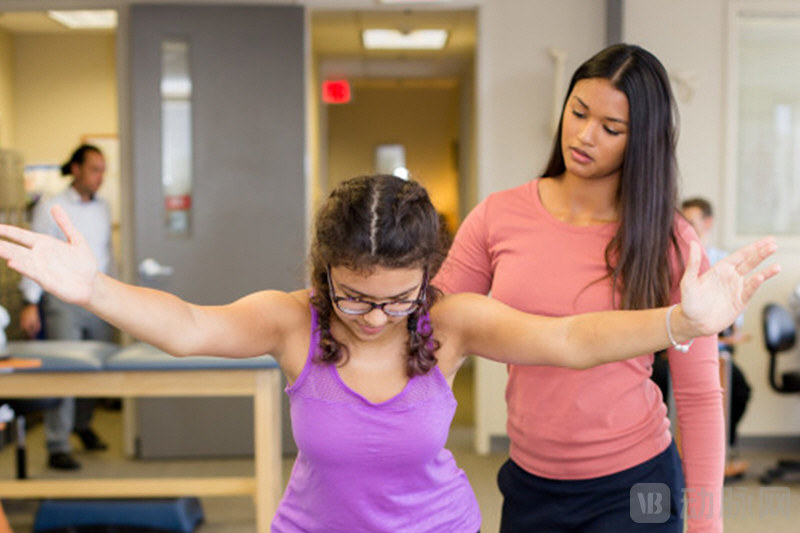
Rehabilitation therapists are undervalued in sports teams. Image source: APTA (American Physical Therapy Association)
“Although the job was a good fit, the process was far from smooth,” said Liu Xinyu. “There were differing perspectives among team members. The coaching staff designed training programs based on the competition schedule and made minimal adjustments in response to our suggestions. As service providers, we had less influence within the sports team than the coaching staff, which made it quite difficult to carry out our work.”
In addition, serving sports teams is only part of Liu Xinyu’s work; the other part is research. The Institute of Sports Science where Liu Xinyu works obtains research projects from the General Administration of Sport of China, and then conducts experimental design, data collection, report writing, and other tasks. Each project cycle lasts approximately two to three years.
“For those who graduated from medical schools, this might be nothing, but as a graduate of a sports university, I really struggled to adapt to this kind of research work.” Liu Xinyu still looked fearful when recalling the research work at that time.
Physical education institutions tend to produce rehabilitation therapists who prefer direct patient interaction—assessing patient conditions, developing rehabilitation plans, and guiding patients through training exercises. They derive professional fulfillment from witnessing the restoration of patients’ functional abilities. Desk-based research has never been a focal point of their academic training.
In 2017, Liu Xinyu resigned from the Institute of Sports Science, returned home to get married and raise children, became a full-time homemaker, and ended her five-year career as a rehabilitation therapist.
Summary
Liu Xinyu’s experience reflects the development status of China’s sports rehabilitation industry in recent years—acknowledged as effective, yet lacking professional recognition.
It takes time for an emerging specialty to gain recognition. Even today, in cities outside the first- and second-tier categories, many physicians still lack a clear understanding of rehabilitation medicine. If even doctors hold such views, it is hardly surprising that the general public remains largely uninformed.
Zhang Xin, who currently serves as a technical partner at a private rehabilitation institution and concurrently holds a teaching position at a university, never imagined that the career he is passionate about today stemmed from an inadvertent choice made in the past.
After completing his undergraduate studies in clinical medicine, Zhang Xin naturally progressed to the master’s level. At that time, the university offered an international collaborative program that allowed students to pursue a Doctor of Physical Therapy (DPT) degree at the University of Nebraska Medical Center in the United States. Although the program was not particularly popular in China, Zhang Xin decided to go abroad after careful consideration.
Physical Therapy (hereinafter referred to as PT) in the United States differs significantly from sports rehabilitation in China. PT is a branch of rehabilitative therapy, which is subdivided into PT, Occupational Therapy (OT), and Speech Therapy (also known as Speech-Language Pathology, SLP), representing physical therapy (also translated as kinesiotherapy), occupational therapy, and speech therapy, respectively. In terms of patient volume, PT accounts for the largest proportion.
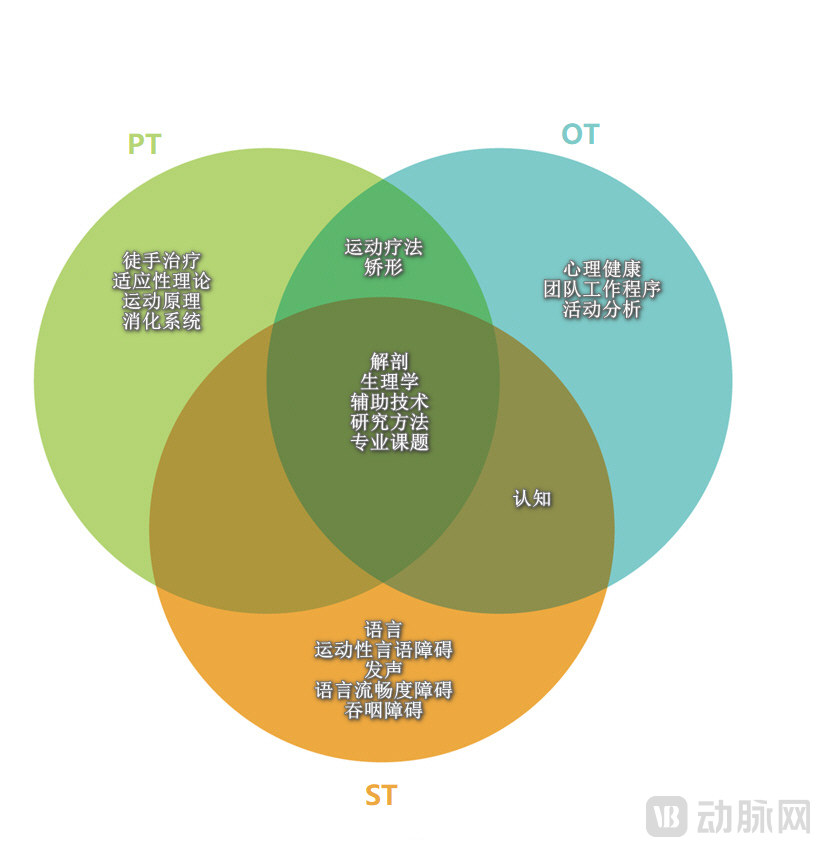
Key Differences in Curriculum Design Among PT, OT, and ST | Graphic by VCBeat
In the United States, rehabilitation therapy is a discipline that has been established for many years, with university programs dating back to the 1940s. Initially, the training for physical therapy (PT), occupational therapy (OT), and speech-language pathology (ST) was integrated, but it later diverged into specialized tracks. Previously, PT education included both bachelor’s and master’s degree programs. Since 2015, however, physical therapy education in the U.S. has been predominantly centered on the Doctor of Physical Therapy (DPT) clinical doctoral degree program.
Licensed physical therapists (PTs) holding bachelor’s or master’s degrees can also earn a doctoral degree by completing the transition Doctor of Physical Therapy (t-DPT) program, which typically takes just over one year. This further underscores the high value placed on the PT profession in the United States.
To Zhang Xin’s surprise, her classmates in the Doctor of Physical Therapy (DPT) program came from diverse undergraduate backgrounds, including not only medicine but also finance, IT, and law. In the United States, admission to DPT programs requires only a bachelor’s degree from an accredited university, with no specific major mandated. Of course, applicants must complete prerequisite courses such as biology, chemistry, introductory psychology, anatomy, and exercise physiology.
Zhang Xin stated to VCBeat, “For students in China, certain subjects in the prerequisite courses are rarely covered in other majors; most of these courses are typically only available to medical students or those majoring in rehabilitation therapy.”
DPT programs in the United States place greater emphasis on comprehensive professional development, encompassing physical therapy education, clinical practice, and scientific research. Students are required to complete dozens of courses, including Evidence-Based Physical Therapy, Cellular and Human Systems Physiology, Musculoskeletal Anatomy, Introduction to Patient Management, and Motor Control Theory.
After completing the Doctor of Physical Therapy (DPT) program, one must obtain a corresponding license to practice, which is similar to the system in China. Although physical therapists (PTs) are not physicians and their role is more technical in nature, without prescriptive authority, U.S. regulations require PTs to complete a specified amount of continuing education courses every two years to maintain the validity of their license.
In other words, although physical therapists (PTs) in the United States are not physicians, the professional standards imposed on them are by no means low. The knowledge base within the sports rehabilitation industry is continuously evolving, requiring PTs to constantly update and refine their expertise in response to emerging research and novel therapeutic approaches.
The DPT program typically lasts three years. During this period, in addition to regular coursework, students complete over nine months of clinical internships across diverse settings, such as inpatient units, nursing homes, orthopedic clinics, and neurology specialty clinics. After graduation, there is a two-year residency period, similar to China’s standardized residency training, after which physical therapists (PTs) are eligible for independent practice.
In China, doctoral programs typically schedule internships during the final one or two years. In contrast, the Doctor of Physical Therapy (DPT) program divides internships into five short phases interspersed throughout the three-year curriculum, typically lasting 1 week, 6 weeks, 6 weeks, 12 weeks, and 12 weeks, respectively.
After completing the first year of the DPT program, students undertake a one-week short-term practicum focused primarily on observing their clinical instructors’ workflows. Six months later, they complete a six-week clinical rotation during which they are expected to handle 50% of their instructor’s workload and independently manage simple cases. The most challenging phase is a 12-week clinical internship, which requires students to independently conduct patient evaluations and treatments.
The entire training process for the Doctor of Physical Therapy (DPT) program emphasizes a step-by-step approach. It does not involve two years of rigid theoretical study followed by immediate placement in a hospital. Instead, it integrates learning with exposure: students acquire knowledge, gain clinical insight, and gradually increase their participation. Ultimately, they apply what they have learned through 12 weeks of independent hands-on practice.
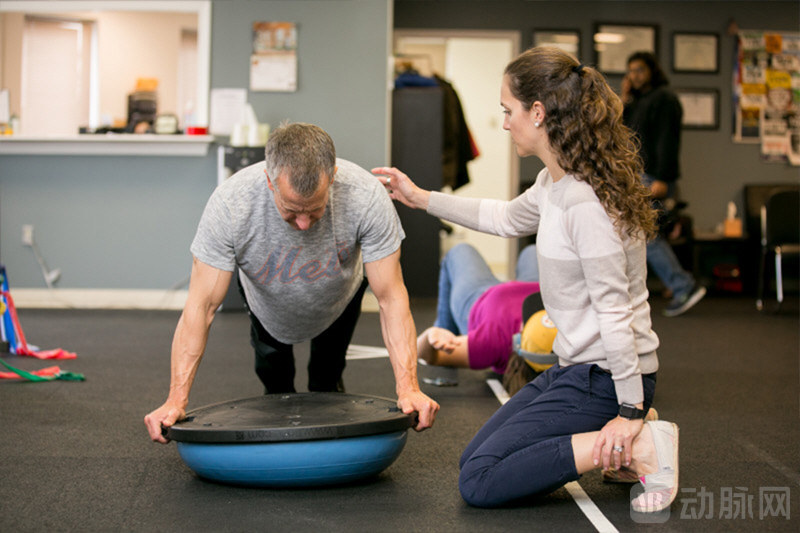
PT interns are required to complete independent practical operations under the guidance of a mentor. Image source: APTA (American Physical Therapy Association)
“The most profound impression the DPT program left on me was its excellent integration of knowledge and practice. In the United States, there are high expectations for the comprehensive competencies of physical therapists (PTs), including strong social skills. For PTs, the ability to motivate patients and encourage them to open up, along with psychological insight, is also crucial,” said Zhang Xin, reflecting on his experiences in the DPT program.
In the United States, physical therapy (PT) is a skilled profession, making employment relatively accessible. PTs are in demand across various settings, including large hospitals, rehabilitation hospitals, outpatient rehabilitation clinics, and nursing homes. Rehabilitation clinics are prevalent in most communities, and public acceptance of physical therapy is generally high. Consequently, securing employment as a PT poses little difficulty.
Nevertheless, Zhang Xin chose to return to China. “I felt an urgent impulse to bring back what I had learned!”
During his DPT program in the United States, Zhang Xin not only witnessed the vibrant vitality of this niche field but also recognized the future development trends of rehabilitation medicine in China, where relevant disciplines remain insufficiently prepared.
Upon returning to China, Zhang Xin joined the faculty of the Rehabilitation Therapy program at Tongji University. While applying his expertise in clinical practice at the affiliated Rehabilitation Hospital, he introduced the World Confederation for Physical Therapy’s guidelines on physical therapy education into the department, striving to closely integrate theoretical instruction with practical training.
Summary
It is evident that the training for Doctor of Physical Therapy (DPT) programs in the United States places significant emphasis on integrating theoretical knowledge with practical skills. Although physical therapists (PTs) are also considered technical professionals, they assume certain roles typically associated with physicians, unlike nurses. Consequently, there are exceptionally high demands on their comprehensive competencies. It is precisely these rigorous professional requirements that hone the capabilities of PTs, making them highly sought-after talents in the eyes of private rehabilitation institutions.
According to data from the U.S. Bureau of Labor Statistics, the median annual income for physical therapists (PTs) in 2019 was $89,440, which is approximately RMB 600,000 at current exchange rates. It can be said that the annual salary of RMB 600,000 offered by private institutions is intended to compete for top-tier Doctor of Physical Therapy (DPT) talent.
Amid the puzzled gazes of his colleagues, Wu Yuzhi left the rehabilitation department of a public hospital to join a private rehabilitation institution. This mirrored the earlier lack of understanding from his family when, despite having been admitted to medical school, he chose to pursue a major that did not lead to a Bachelor of Medicine degree.
At the time, Wu Yuzhi simply did not want to become a physician. However, as his family insisted that he attend medical school, he casually applied for the Rehabilitation Therapy program at a medical college.
“To be honest, I was muddled for the first two years and had no idea what my future career in this major would entail,” Wu Yuzhi recalled, speaking to VCBeat. “It wasn’t until my junior year, when I began taking core professional courses, that I finally had a moment of clarity.”
Leveraging its affiliation with hospital resources, the rehabilitation therapy program prioritizes meeting clinical demands, with a particular emphasis on neurological and geriatric rehabilitation. During clinical internships, students rotate through various hospitals and departments. Starting in their junior year, Wu Yuzhi balanced coursework with internships, gaining frequent exposure to patients. This experience gradually clarified his future career path and its underlying significance.
Unlike sports universities, which tend to place their clinical observation sites within athletic teams, medical schools’ rehabilitation programs conduct nearly all such placements in hospital rehabilitation departments or specialized rehab units under various clinical specialties. As the rehabilitation major awards a Bachelor of Science degree and does not confer prescribing privileges akin to those of physicians, practice within rehabilitation departments is carried out through interdisciplinary team collaboration.
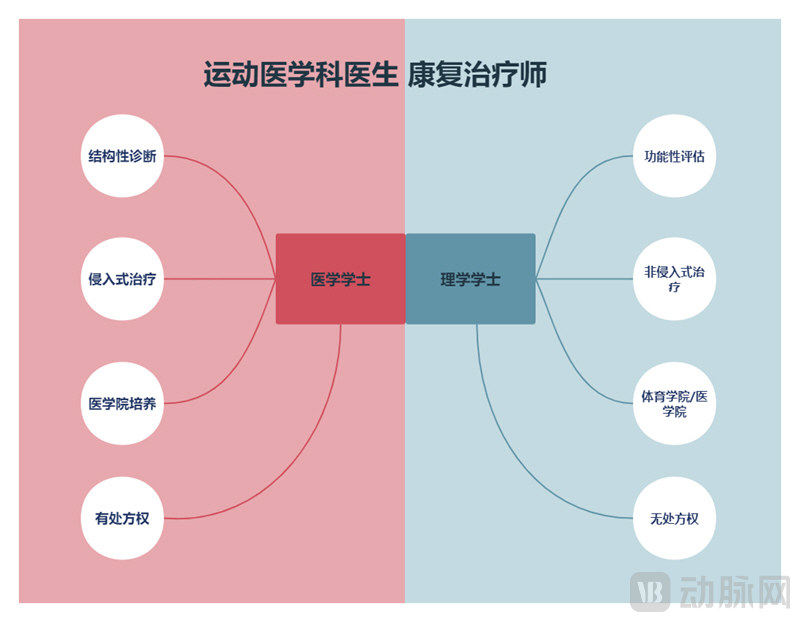
Differences Between Doctors and Therapists | Graphic by VCBeat
A treatment team comprises roles such as physicians, rehabilitation therapists, nurses, and caregivers. The physician provides the diagnosis, the rehabilitation therapist develops the rehabilitation plan, and the team collaborates to implement it. After becoming accustomed to this workflow, Wu Yuzhi naturally joined the rehabilitation department of a public hospital upon graduation.
“In the end, I still haven’t gotten used to the working style of public hospitals,” Wu Yuzhi told VCBeat. “Public hospitals do not worry about patient inflow, especially large Grade-A tertiary hospitals in the region. As a result, many processes are handled rather crudely. For example, rehabilitation therapy encompasses specialized subfields such as neurology, orthopedics, and cardiopulmonary care. In public hospitals, however, practitioners are expected to be generalists capable of handling all areas. There is no emphasis on developing deep expertise in any specific area; instead, the primary requirement is meeting workload quotas. Furthermore, public hospitals impose research obligations, requiring staff to conduct studies and publish academic papers.”
What truly wearied Wu Yuzhi was the workflow of rehabilitation therapy in public hospitals, which diverged significantly from his educational background.
In public hospitals, rehabilitation therapists simply wait in the treatment room for patients to arrive and conduct approximately 30 minutes of rehabilitation training based on the patient’s condition. Afterward, the patients leave, and the therapists are not responsible for any follow-up care, remaining entirely unaware of the patients’ subsequent progress or status.
Although Wu Yuzhi studied rehabilitation in China, the university’s educational system was based on PT-model training.
The training model for physical therapists (PTs) is patient-centered. It begins with obtaining a comprehensive medical history and making a preliminary assessment of the patient’s issues based on information provided at the time of appointment scheduling, thereby establishing the overarching framework for the treatment plan. Upon the patient’s arrival, the details of the treatment regimen are refined according to their specific clinical presentation. Following each treatment session, home exercise programs are prescribed, and regular follow-up visits are scheduled. Based on follow-up assessments, phase-specific summaries are conducted, and subsequent treatment plans are formulated. Each step is closely interconnected, with meticulous attention paid to every detail.
For a rehabilitation therapy session, the energy expended by physical therapists can vary significantly.
Furthermore, rehabilitation plans vary significantly to address patients’ diverse needs. For instance, even if an athlete aiming to return to competition and an elderly woman who simply wishes to go grocery shopping and walk her dog present with similar initial conditions, their rehabilitation protocols will undoubtedly differ substantially.
These personalized needs cannot be met in public hospitals. It is not that rehabilitation therapists are incapable of providing such services, but rather that they lack the necessary environment and conditions to do so.
Perhaps as a final act of defiance befitting an idealist, Wu Yuzhi resigned from his position at a public hospital. This decision came as a great surprise to his classmates, who believed that given the tremendous effort required to secure a position in the public hospital system, certain compromises in work practices were acceptable.
Whether graduates come from sports universities or medical schools, the current job market only enables them to perform basic job duties; their capabilities are still insufficient to meet the demands of higher-level private institutions. How to continuously enhance their professional competencies to align with market needs is a question every student must consider.
Compared with sports universities offering majors in sports rehabilitation, there are more medical colleges offering majors in rehabilitation therapy. Logically, this should have led to a greater emergence of talent. However, the reality is that many practitioners, upon entering public hospitals, feel they are not physicians. Since rehabilitation therapists lack a clear career advancement path comparable to that of doctors, many become professionally complacent. This complacency has led many to settle for the status quo, contributing to the current shortage of qualified professionals in the field.
For private rehabilitation institutions, what they need is not merely a technician, but a professional capable of working independently and solving problems.
For rehabilitation therapists who are ambitious and courageous in embracing challenges, now is the best of times. For students currently pursuing professional studies, the key lies in seizing every opportunity to enhance their skills; only by aligning personal capabilities with industry demands can they position themselves at the forefront of development.
After spending several years as a full-time homemaker, Liu Xinyu joined a private rehabilitation institution. When asked about her reasons for returning to practice, she responded with two words: “passion.” Indeed, only passion can withstand the test of time; only perseverance can do justice to that passion.