

Tencent Medical ME Conference: Digital Health Literacy as a Long-Acting Prescription Against Disease
The 3rd Tencent ME Conference, compared to previous editions, featured less of a cutting-edge technological aura and more emphasis on patient care and reflections on medical science popularization.
At the conference, Professor Qiao Youlin, Distinguished Professor at the School of Population Medicine and Public Health, Chinese Academy of Medical Sciences and Peking Union Medical College, addressed cervical cancer, a common malignancy, conveying unwavering determination to win the battle against cancer. Professor Huo Yong from Peking University First Hospital elaborated on the treatment of acute myocardial infarction, noting that each year, up to 2 million patients who die from disease could potentially be saved through interventions at hospital chest pain centers or by automated external defibrillators available in public spaces. Professor Li Zhanguo, Director of the Clinical Immunology Center and the Department of Rheumatology and Immunology at Peking University People’s Hospital, discussed debilitating rheumatic diseases, explaining how an immunological perspective may help patients achieve long-term relief from the persistent pain exacerbated by damp and rainy weather.
Here, every expert is striving to disseminate effective medical knowledge to a broader patient population, bridging the asymmetry in medical information and empowering patients to actively engage in their own disease management.
The Tencent ME Conference serves as an amplifier, continuously amplifying the voices of experts to enable more patients to benefit from authoritative insights, thereby promoting public health at its source.

Three major arteries, also known as coronary arteries, supply blood to the heart. Influenced by factors such as age, diet, and disease, plaques can form within the blood vessels. When these plaques accumulate to a certain extent, they may suddenly lead to thrombus formation, causing narrowing of the vessels or even complete interruption of blood flow, which results in myocardial ischemia or myocardial infarction.
Typically, if there is only ischemia without sudden vascular occlusion, it is referred to as angina. When angina progresses to a severe stage, it can easily lead to acute myocardial infarction, which is currently the most dangerous condition observed among these diseases.
Prior to the onset of an acute myocardial infarction, patients typically experience a sensation of pressure or tightness in the precordial region and chest, which may even extend to the abdomen and pharynx. This discomfort is not purely pain but is often described as the most distressing symptom experienced in one’s lifetime, commonly referred to as a sense of impending doom. These symptoms tend to persist for a prolonged duration, typically lasting from 15 to 30 minutes or even longer. During an episode, patients frequently present with profuse sweating, altered consciousness, generalized weakness, and collapse, significantly impacting their overall physical condition.
More importantly, the outcome of acute myocardial infarction (AMI), namely mortality, remains a critical concern. To date, AMI is the leading cause of death worldwide. Statistical data indicate that 2 million people die from AMI each year globally, averaging 5,000 deaths per day and 3 deaths per minute. Furthermore, unlike in China, Europe, and the United States, where trends may differ, the mortality rate from AMI continues to rise.
Therefore, today I will place particular emphasis on the recognition, treatment, and prevention of acute myocardial infarction.
When an acute myocardial infarction occurs, patients may experience severe chest pain, or they may succumb to sudden cardiac death before chest pain even develops. In the event of a sudden heart attack, it is crucial to know what to do before medical help arrives.
When a myocardial infarction occurs, the patient must immediately lie down and rest; however, a myocardial infarction will not resolve on its own with rest alone. Targeted treatment at a qualified medical institution is essential. Therefore, while the patient remains at rest, emergency services (120) should be called immediately, as the golden window for treating acute myocardial infarction is 120 minutes.
Some patients may present with sudden cardiac death as the primary manifestation. If this occurs in a public place, an automated external defibrillator (AED) should be located immediately for resuscitation. Therefore, personnel such as shopping mall staff and firefighters should be trained in cardiopulmonary resuscitation (CPR) skills.
Next is in-hospital treatment. With current scientific and technological advancements, both pharmacological thrombolysis and surgical intervention with stents can effectively save patients. To date, 5,500 hospitals in China have established Chest Pain Centers, and over 2,000 hospitals have received certification from the Chinese Chest Pain Center program, initially forming a national network for the treatment of acute myocardial infarction.
However, prevention of acute myocardial infarction is more important than treatment after onset. On one hand, everyone is the primary person responsible for their own health; we should adopt a healthy lifestyle, including appropriate exercise, smoking cessation and limited alcohol consumption, a healthy diet, adequate rest, and maintaining a positive mood. On the other hand, we should seek medical assistance, undergo timely examinations, and manage blood pressure, lipid levels, and blood glucose as indicated.
May every Chinese person have a healthy heart.
Cervical cancer is the most common gynecologic malignancy occurring in the cervix of women, with over 85% of new cases and deaths worldwide occurring in developing countries. In China, there are 110,000 new cases and 60,000 deaths from cervical cancer.
Whether in rural or urban areas, the incidence and mortality rates of cervical cancer have been on the rise since the late 1990s, with the age of onset becoming younger. Current domestic surveys indicate that the HPV infection rate among adult women in China is approximately 12%, showing two peak periods of infection: adolescence and the perimenopausal period.
It is reassuring that, thanks to the continuous advancement of medical technology, we now have modern weapons against HPV—HPV vaccines and nucleic acid/protein screening technologies.
There are two lines of defense for preventing cervical cancer. First, vaccination before viral exposure enables the body’s antibodies to neutralize the virus. Second, adult women should undergo regular screening; detection at the precancerous lesion stage allows for curative treatment. The combination of prophylactic HPV vaccination and screening represents the optimal strategy for cervical cancer prevention.
In November 2020, the World Health Organization released the “Global Strategy to Accelerate the Elimination of Cervical Cancer,” with 194 countries worldwide, including China, jointly committing to eliminate cervical cancer. The strategy sets ambitious targets for member states to achieve by 2030: 90% vaccination coverage among girls aged 9–14; screening with a high-performance test for 70% of women by age 35 and again by age 45; and treatment for 90% of women diagnosed with cervical disease.
However, at present, China still has a long way to go to achieve the goal of eliminating cervical cancer, and continued efforts are required. The call to final battle has been sounded; we must take proactive action by prioritizing HPV vaccination for adolescent girls and cervical cancer screening and treatment for adult women, so as to eliminate cervical cancer in China at an early date.
In conclusion, first, the World Health Organization’s global initiative to eliminate cervical cancer requires active participation from all responsible member states. Second, the incidence and mortality rates of cervical cancer among Chinese women are on the rise, with the age of onset decreasing, making prevention and control efforts urgently needed. Third, HPV vaccination is most effective when administered at a younger age; priority should be given to girls aged 9–14 years, followed by adult women aged 15–45 years. Fourth, women aged 35–64 years should undergo regular high-precision cervical cancer screening. Consequently, cervical cancer is poised to become the first human malignancy that can be comprehensively prevented and even eliminated through vaccination, screening, and early diagnosis and treatment.
Rheumatism is a common disease that can cause limb disability, visceral damage such as chronic nephritis and pulmonary interstitial fibrosis, as well as complex systemic internal medicine conditions of rheumatic origin.
A national survey conducted in China on the current status of limb disability caused by various diseases revealed that two categories had the highest disability rates: cerebrovascular diseases and joint diseases, each accounting for 20%. In other words, one out of every five patients suffered from cerebrovascular disease, while the others were affected by joint diseases. Therefore, we need to pay additional attention to rheumatic diseases.
Rheumatoid arthritis, as a common disease, can achieve complete remission. However, achieving this goal requires consideration of two aspects: first, possessing sound treatment concepts and strategies; second, emphasizing early intervention, aggressive therapy, and standardized medication use.
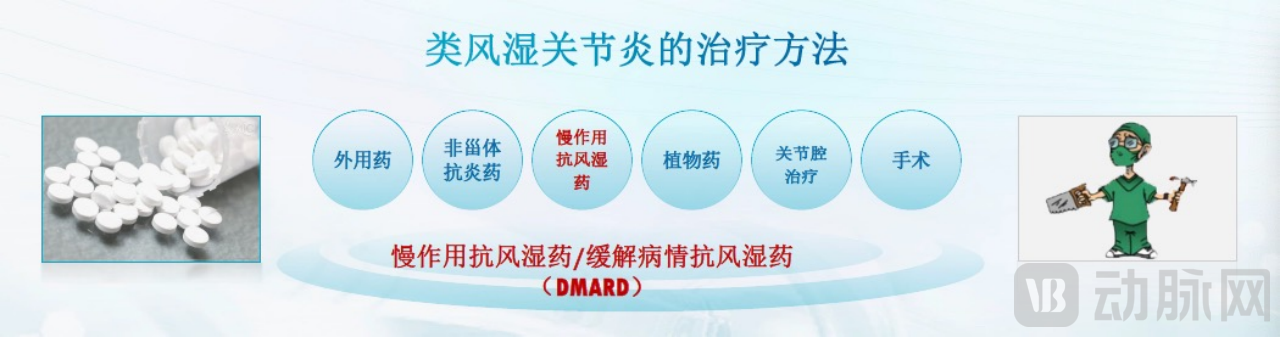
Treatment for rheumatoid arthritis comprises six major components. Topical agents and nonsteroidal anti-inflammatory drugs (NSAIDs) are typically used for symptomatic relief, whereas disease-modifying antirheumatic drugs (DMARDs) address the underlying disease process. Many patients receive only symptomatic treatment aimed at temporary improvement, without incorporating these disease-modifying agents. Consequently, their condition remains uncontrolled, leading to years of recurrent flare-ups and ultimately resulting in joint deformity and disability.
Surgery is reserved as a last resort because the majority of patients with rheumatoid arthritis can achieve favorable outcomes without surgical intervention, unless severe deformity has already occurred. Therefore, if pharmacological treatment can effectively manage the condition, surgery should not be pursued prematurely; this is one of my core therapeutic principles.
Active treatment can induce remission in rheumatoid arthritis, particularly with continuous medication. The figure on the left illustrates a study published by our team. With an optimal regimen and strict adherence to medication, patient remission rates can gradually increase by 20–30 percentage points every three months. Consequently, many patients experience significant improvement. This approach has been implemented in clinical practice, benefiting numerous patients. Furthermore, this regimen has been incorporated into the European guidelines for the management of rheumatoid arthritis as a recommended strategy. Worldwide, certain patients are suitable for this treatment protocol, which yields positive and sustained outcomes.
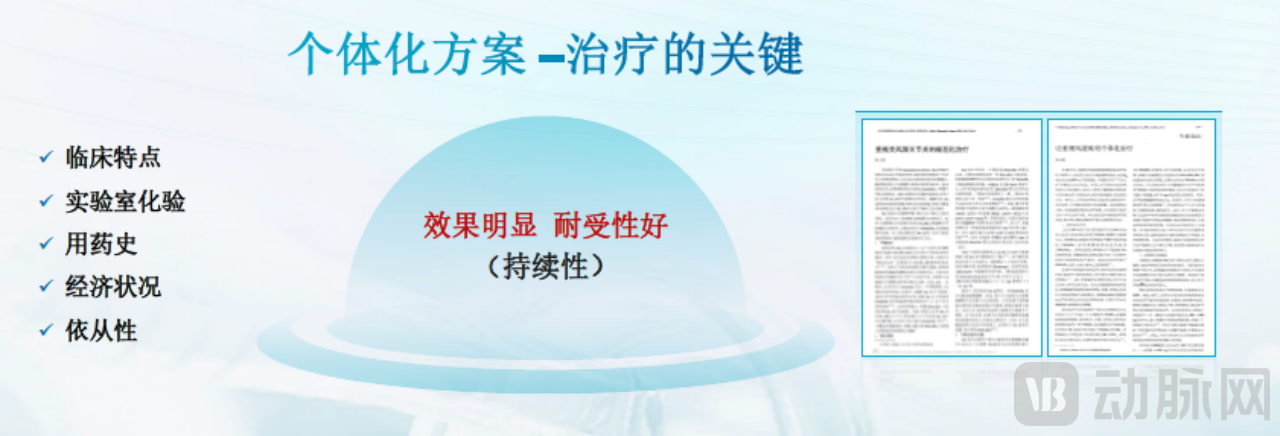
The key to patient remission lies in personalized treatment, which is the cornerstone of effective therapy. Physicians must tailor medication regimens based on each patient’s clinical presentation and individual characteristics, prioritizing treatments that demonstrate significant efficacy and a favorable safety profile. Such regimens should be maintained consistently; gradual remission will follow with sustained adherence. In contrast, discontinuing treatment prematurely upon initial improvement may prevent patients from achieving complete remission.
Another related condition is systemic lupus erythematosus (SLE). Patients may present with multi-organ involvement, including vasculitis, facial rash, visceral damage, and vascular occlusion, which can even lead to lupus nephritis. The disease often follows a relapsing-remitting course. As the condition progresses, visceral damage in many patients becomes increasingly severe; addressing this issue requires concerted efforts from both physicians and patients.
There are numerous regimens and approaches for the treatment of lupus. While many medications can be employed in lupus management, some may cause significant adverse reactions. Therefore, careful selection of drugs and treatment regimens is essential to provide patients with a safe and effective therapeutic plan, thereby achieving optimal disease remission.
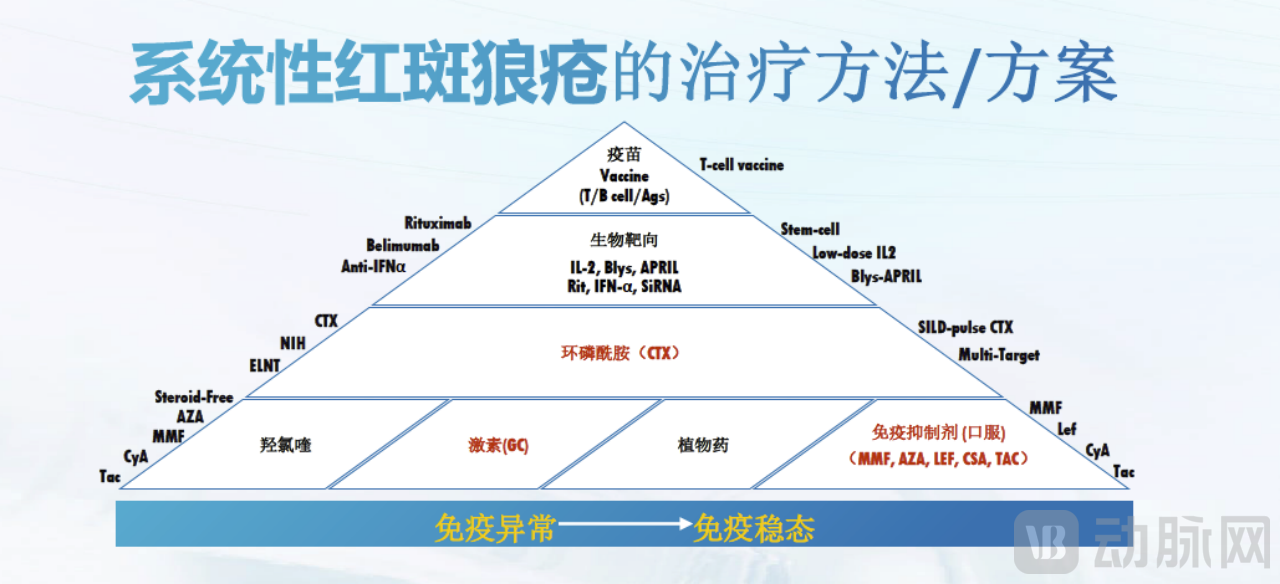
The most prominent manifestation of systemic lupus erythematosus (SLE) is immune dysregulation, characterized by dysfunctional immune cells that produce numerous cytokines and autoantibodies. Interleukin-2 (IL-2) is a key cytokine; defects in this molecule lead to immune system abnormalities, resulting in disease onset and more severe clinical manifestations. This represents a crucial immunological mechanism in the pathogenesis of SLE.
For the treatment of such diseases, we may consider low-dose interleukin-2, which can restore immune balance in patients. As illustrated in the figure on the right, a balance between healthy T cells and abnormal T cells is achieved, leading to natural improvement of the condition.
However, a single medication cannot be used throughout the entire course of treatment. It is crucial to emphasize “immune homeostasis.” Clinicians should administer different classes and dosages of medications tailored to patients at different disease stages, thereby restoring balance to the dysregulated immune system and correcting T-cell depletion. This approach helps control and stabilize the condition, ultimately achieving complete remission.
Overall, patients with rheumatic and autoimmune diseases, including rheumatoid arthritis and lupus, can achieve long-term remission. During treatment, it is essential for patients to maintain confidence and cooperate closely with their physicians; through effective disease management, they can ultimately overcome the disease.
Why the ME Conference Featured Expert-Led Medical Science Popularization Talks: Wu Wenda, Senior Vice President of Tencent Health and Head of Tencent Yidian, Provided a Clear Answer in His Closing Remarks
In his keynote address titled “Digital Medical Science Popularization: A ‘Potent Prescription’ for Enhancing Public Health Literacy,” he stated that while technology drives the advancement of medicine, public perception is shifting from treating existing diseases to preventing them before they occur. Disseminating medical knowledge through digital technologies and the internet not only plants the seeds of health literacy in people’s minds but also translates health management into concrete actions, making science popularization a “reassurance pill” for individuals, a “long-acting prescription” for physicians, and a “safety net” for society.
“However, medical science popularization is also fraught with challenges: it encompasses all aspects of daily life, has a long latency period for tangible results, and runs counter to innate human preferences. As such, it has long persisted as an intractable problem.” To address this challenge, Tencent Medical Dictionary has adopted a three-pronged approach, focusing on the development of authoritative content, social-based user engagement, and integration with service systems.
Wu Wenda stated: “We hope to seize the opportunity presented by the Tencent Medical ME Conference to collaborate with more institutions and organizations, jointly exploring the integration of internet technology and medicine, and providing an effective ‘prescription’ for improving public health literacy. Only when each individual ‘I’ converges into a collective ‘we’ can we work together to facilitate the transition from ‘illness’ to ‘wellness,’ thereby realizing the vision of a Healthy China.”