

ArteryTech's Scalable Algorithm for Hemodynamic Simulation Enables Personalized Diagnosis of Cardio-Cerebrovascular Diseases

artery technology
Medical Software Developer
Cardiovascular and cerebrovascular diseases rank first in mortality and disability rates, creating significant demand. Assessing lesion risk during the pre-clinical phase before disease onset, evaluating plaque severity, and implementing continuous monitoring are key to effectively reducing the incidence of these conditions and preventing their progression.
In the field of cardiovascular imaging diagnosis, coronary CT angiography typically assesses the anatomical degree of coronary artery stenosis but cannot accurately determine whether the stenosis causes corresponding myocardial ischemia.CT-based Coronary Flow Fractional Reserve (FFRCT) As a novel diagnostic approach, this measurement method represents a significant application for enhancing the precision of diagnosis and treatment for this disease.
It not only enables functional assessment of the coronary arteries, but also evaluates from a physiological perspective whether the degree of coronary stenosis causes myocardial ischemia. This further assists physicians in making diagnoses, reduces unnecessary coronary angiography, and helps patients save on medical expenses.
Analysis reveals that this diagnostic approach enables functional assessment of patient lesions solely through non-invasive imaging. By avoiding unnecessary contrast enhancement, it effectively reduces patients’ undue medical expenses, thereby embodying the value of “returning to the essence of healthcare.”
Meanwhile, FFRCTIt can also streamline prior diagnosis and treatment processes in a more efficient and cost-effective manner, thereby improving medical efficiency and outcomes while reducing healthcare expenditures, which facilitates rapid adoption by hospitals.
Currently, FFRCTMeasurement has been recommended in the “2021 AHA/ACC Guideline for the Diagnosis of Chest Pain” and the “2022 Chinese Guidelines for Percutaneous Coronary Intervention of Left Main Coronary Artery Bifurcation Lesions.” With advances in algorithms and their widespread application in medical imaging, both academia and industry have demonstrated considerable confidence in this technology. Research on this technology and image-based FFRCTThe number of newly established companies is rising year by year, with Hangzhou Artery Technology Co., Ltd. (hereinafter referred to as “Artery”) being one of them.
Unlike most companies, Artery Technology has applied FFRCTAs one of the company’s product series, other products developed based on its core technologies may hold far greater future value than FFR.CT, which is also one of the reasons why many investment firms are optimistic about Artery Technology.
“The core algorithm adopted by the company has a distinct feature: it can dynamically allocate the required number of CPU cores for computation as needed. For instance, when time constraints are not stringent, computation can be performed using a single CPU core on a standalone computer. However, when rapid processing is required, the algorithm can leverage thousands, tens of thousands, or even millions of CPU cores on supercomputers. This type of algorithm is professionally referred to as a ‘scalable algorithm.’”Co-founder Chen Rongmin emphasized.
“FFRCTThese technologies can be broadly categorized into three types: artificial intelligence (AI), simplified fluid dynamics, and high-fidelity fluid dynamics. AI offers advantages in morphological analysis but lacks a theoretical foundation for functional assessment. Fluid dynamics methods are based on classical physical laws, providing high accuracy and strong interpretability. However, fluid simulation is a highly complex problem that requires mature, efficient algorithms and high-performance computing, making it difficult to enhance computational efficiency when applying this technology. Consequently, many companies are compelled to simplify calculations, at the cost of reduced accuracy.
However, after more than a decade of applied research, high-fidelity computational fluid dynamics (CFD) technology has become highly mature in industrial applications. HeartFlow began its applied research in blood flow simulation as early as the 2000s. Currently, this technology is widely recognized by international experts. Among domestic competitors, Artery Technology employs high-fidelity CFD simulation techniques, leveraging thousands of cores on supercomputers for rapid computation, whereas other companies are limited to using single-core or multi-core computers for their calculations.Chen Rongmin, Co-founder of Artery Technology, explained.
It is reported that Artery Technology’s high-fidelity fluid simulation algorithm code runs on world-class supercomputers such as Sunway and Tianhe-2, enabling the simultaneous utilization of thousands to tens of thousands of cores for computation. This approach ensures both high-fidelity fluid simulation and rapid solution speed, reducing computational turnaround time to under ten minutes.
Artery Technology’s ability to achieve technological breakthroughs is closely tied to the background of its team. The company’s research team is built around renowned international scientists in the field of computational science, with over three decades of research experience in fluid dynamics, biomedical engineering, and high-performance computing.
The team has led multiple projects funded by the U.S. National Science Foundation, China’s National Key R&D Program under the Ministry of Science and Technology, and the National Natural Science Foundation of China, and has published over 100 papers in top-tier journals in computational mathematics, biomedical engineering, and medicine. Since its establishment, the company has obtained two medical device certifications for hemodynamic simulation software, enabling the detection of multiple hemodynamic parameters in cerebrovascular and cardiovascular systems. By integrating mathematics, physics, and medicine, the team achieves cross-disciplinary applications in fluid dynamics and has developed a proprietary high-performance numerical simulation algorithm.
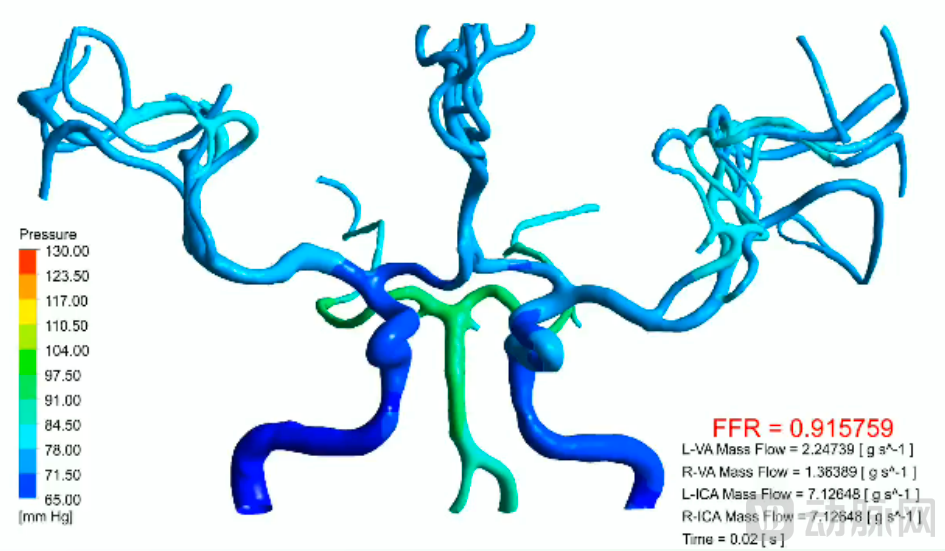
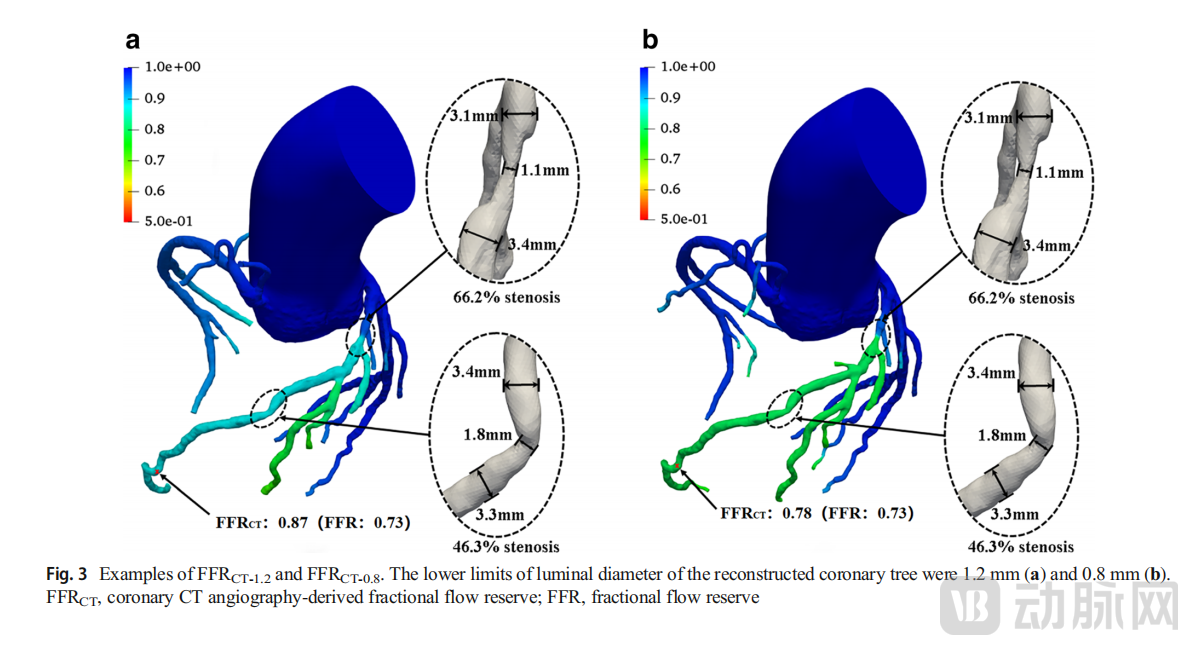
According to Chen Rongmin, solving the Navier-Stokes equations is one of the "Millennium Prize Problems." After more than 30 years of research, the Artery Technology team has developed its own software suite that enables hemodynamic calculations in a greater number of smaller vessels with equal or improved computational efficiency, without simplifying models or compromising accuracy. This approach brings simulation results closer to actual blood flow patterns, thereby enhancing diagnostic accuracy. Furthermore, to address issues such as the impact of elastic deformation of large vessel walls on simulation outcomes, Artery Technology has incorporated fluid-structure interaction (FSI) models into its computational framework. Currently, the system can calculate hemodynamics in vessels with diameters as small as 0.8 mm. Through four years of collaborative research between Artery Technology’s founding team and the scientific research team at the Second Affiliated Hospital of Zhejiang University School of Medicine, it was found that including more and finer vessels in the calculations improves both accuracy and sensitivity. These findings were published in the European Radiology journal in 2021.
Currently, the company has launched two products, with multiple others having completed R&D or currently under development. These products are applicable to cardiology, neurology, hepatobiliary surgery, thoracic surgery, and other specialties.
Its product pipeline includes a non-invasive auxiliary diagnostic system for coronary artery disease (Artery Score), a stent implantation surgical planning system (FFR-Planner), an auxiliary diagnostic system for microcirculatory disorders (CT-IMR), a dynamic FFR (Dynamic FFR) monitoring system, a stroke risk assessment system, a hemodynamic analysis system for aneurysms, portal hypertension detection software, a hemodynamic analysis system for abdominal aortic aneurysms, and vascular health prescriptions.
Among these, the non-invasive auxiliary diagnostic system for coronary heart disease received approval as an innovative medical device from Zhejiang Province in 2019, and clinical trial enrollment has been completed under the leadership of Academician Ge Junbo. The stent implantation surgical planning system has completed development and entered registrational clinical trials. The microcirculation disorder auxiliary diagnostic system, jointly developed with Hangzhou First People’s Hospital, enables non-invasive diagnosis of microcirculation based on coronary CT angiography; it was selected as a key provincial R&D project and has completed validation with nearly 100 real-world cases. The stroke risk assessment system was jointly developed by the Artery Technology research team and multiple renowned domestic institutions and experts, and was selected as a national key R&D project. Key consumables for Angio-FFR have preliminarily completed development; the intracranial aneurysm analysis software is nearing completion of development; and the hepatic arterial hypertension detection system has overcome key technical challenges and entered the phase of validation with real-world cases.
It is worth mentioning that Artery Technology first proposed the concept of dynamic FFR, integrating FFR measurement into wearable devices to enable continuous monitoring of FFR values under varying physiological conditions. Artery Technology believes that only products incorporating personalized parameter calculation methods and designed for portable, user-friendly large-scale application can maximize their value and effectively reduce the rate of sudden cardiac death. It is reported that the dynamic FFR project has currently entered the trial phase.
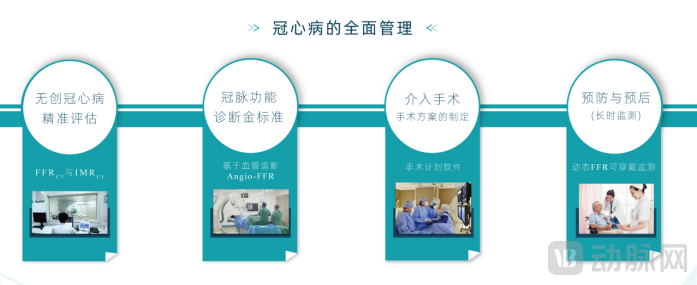
Regarding product line planning, Chen Rongmin stated:“In product design and development, our principle is to create only the single best and most valuable product for each application scenario, striving to achieve full-cycle coverage for a given disease. For example, in the preventive screening phase of coronary heart disease, we focus exclusively on CT-based FFR. We also have a corresponding product for the diagnostic confirmation phase of coronary heart disease, tentatively named Angio-FFR, which outperforms FFR”CThigher accuracy. During the stent implantation phase for patients with coronary heart disease, we offer FFR-Planner, a surgical planning product that assists physicians in pre-selecting stents and determining their implantation locations and quantities. In the postoperative period and daily life of these patients, we provide Dynamic FFR to monitor myocardial ischemia status in real time, serving as an early warning system for prevention. These products cover the entire continuum of care for patients with coronary heart disease. Similarly, we will develop products for cerebrovascular diseases following this same approach.”
In the future, Artery Technology will continue to focus on cardiovascular and cerebrovascular products, gradually expanding to other organs, such as hepatic, renal, and pulmonary vasculature.
Cardiovascular diagnostics company HeartFlow has validated the commercial value and market prospects of FFR. The Artery Technology team, leveraging its industry insights, has developed corresponding solutions by integrating mathematics, physics, and medicine.
Although there is slight overlap in products among various companies, their specific focal points and strategies each have distinct characteristics. They continue to explore precise diagnostic methods for cardiovascular diseases from different perspectives, resulting in a diverse range of products that enhance the accuracy and efficiency of medical diagnosis across multiple dimensions.
At the end of the conversation, Chen Rongmin discussed his views on FFRCTand an understanding of the company’s core solutions: "Fluid simulation calculations require two types of foundational data: mathematical physical models and the corresponding boundary conditions. First, we recognize that each individual's 3D vascular map is unique and personalized. Additionally, boundary conditions encompass physiological parameters such as blood pressure, heart rate, and blood viscosity, which are also personalized and dynamic over time. Therefore, the algorithm must employ personalized parameters for computation."
At the core of Artery Technology lies its fluid simulation technology, which employs a unified algorithm to resolve fluid states across diverse morphologies and shapes. Our algorithm incorporates these personalized parameters, enabling the prediction of hemodynamic parameters under varying physiological conditions and at different time points. I believe this approach offers greater value than invasive methods or products based on mean-value algorithms. While many peers are simplifying models and parameters to enhance computational efficiency, Artery Technology takes the opposite approach by leveraging its advanced software suite. We strive to incorporate a more extensive and detailed network of blood vessels and account for a broader range of real-world parameters, thereby ensuring that our simulation results closely mirror actual physiological conditions.