Innovative Medical Device Development and Manufacturer
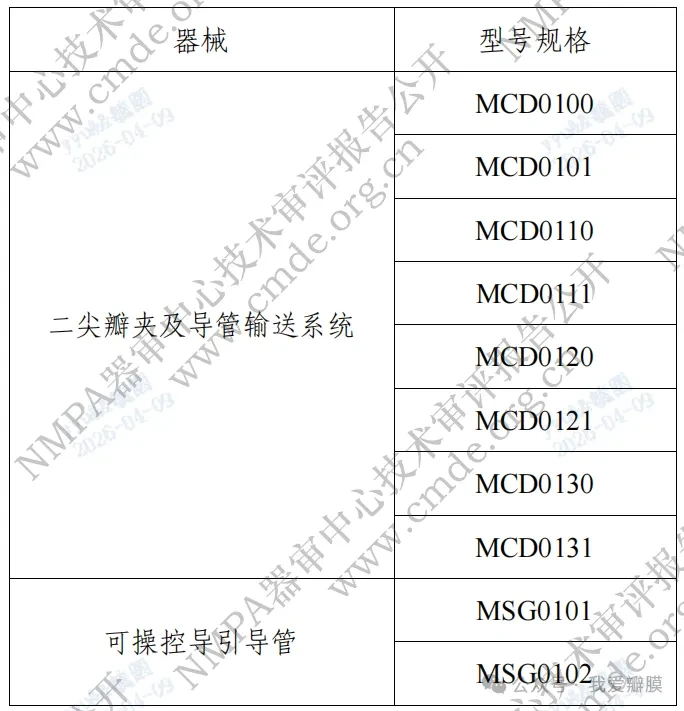
Acceptance No.: CQZ2401887Technical Review Report for Medical Device Product RegistrationProduct English Name: Transcatheter Mitral Valve Clip SystemProduct Management Category: Class IIIApplicant Name: Enlight Medical LimitedNational Medical Products AdministrationCenter for Medical Device Evaluation 01Basic Information 1. Name of the ApplicantEnlight Medical Limited 2. Applicant's AddressNo. 35, Lane 100, Banxia Road, Pudong New Area, Shanghai, 1st-2nd Floor 3. Production AddressBuilding 35, No. 100, Banxia Road, Pudong New Area, Shanghai, China 02Technical Review Overview 1. Product Overview(1) Product Structure and CompositionThis product is composed of a mitral clip and catheter delivery system, and a steerable guiding catheter. The mitral clip and catheter delivery system consist of a mitral clip, delivery catheter, and steerable sheath. The materials of the mitral clip components include cobalt-chromium alloy, nickel-titanium alloy, titanium alloy, pure titanium, and PET. The steerable guiding catheter consists of a guiding catheter, dilator, securing screw, and silicone pad. The mitral clip and catheter delivery system are divided into Type I and Type II catheter delivery systems based on the synchronized control clip or independently controlled clip functions. The steerable guiding catheter is divided into Type I and Type II steerable guiding catheters according to handle differences. The product is sterilized with ethylene oxide, for single use only, with a shelf life of 2 years.(2) Product Application ScopeThis product is administered via a percutaneous approach and is intended for patients with degenerative mitral regurgitation (MR≥3+) who are assessed by the heart team as being at high surgical risk and whose mitral valve anatomy is suitable. The underlying conditions of these patients should not affect the clinical benefits gained from reducing mitral regurgitation. Members of this type of heart team must include a cardiac surgeon experienced in mitral valve surgery and a cardiologist experienced in treating mitral valve disease. The product is to be used by clinicians trained in interventional cardiac catheterization techniques (including transseptal puncture) and in the proper use of this device system, with the support of an echocardiography specialist.(III) Model/Specification(4) Working PrincipleThis product consists of a steerable guiding catheter, a mitral clip, and a catheter delivery system, with the mitral clip mounted on the catheter delivery system. The steerable guiding catheter enters the right atrium through the femoral vein and then accesses the left atrium via the atrial septum. The mitral clip and catheter delivery system pass through the steerable guiding catheter into the left atrium, where the catheter and mitral clip angles are adjusted to position the mitral clip perpendicular to the mitral valve closure line. Following this, the procedure involves crossing the valve, retracting, capturing the valve leaflets, closing the mitral clip, and achieving edge-to-edge repair to treat mitral regurgitation. 2. Overview of Preclinical Studies(1) Product Performance Research
Product Technical Requirements Research The research items of product technical requirements are shown in Table 1. Table 1 Summary of Product Technical Requirements Research
Product Performance Evaluation
In addition to the research projects on product technical requirements, the performance evaluation of the product includes research data on fatigue durability of the mitral valve clip, finite element analysis, fluid dynamics analysis, magnetic resonance imaging (MRI) compatibility, nickel ion release, visibility, adjustable bending repetitions, and hydrophilic coating performance. The results indicate that the product meets the design input requirements.(II) BiocompatibilityIn the composition of this product, the mitral clip is an implant that has prolonged contact with circulating blood; the catheter delivery system (delivery catheter and steerable sheath) and the steerable guiding catheter (guiding catheter and dilator) are external interventional devices that have short-term contact with the body's circulatory blood; the silicone pad and locking screw do not come into contact with the human body. The applicant conducted biocompatibility evaluations in accordance with the GB/T 16886 series of standards, and the biocompatibility risks of the product are acceptable. Among these, the biological evaluation items selected for the mitral clip include: cytotoxicity, delayed hypersensitivity, irritation/intradermal reaction, acute systemic toxicity, genotoxicity (AMES, mouse lymphoma cell proliferation assay), pyrogenicity, subacute systemic toxicity, subchronic systemic toxicity, chronic systemic toxicity, implantation reaction, hemocompatibility (hemolysis, PTT coagulation, platelet count, hematology, complement activation, in vivo thrombosis), and carcinogenicity. The biological evaluation items selected for external interventional devices include: cytotoxicity, delayed hypersensitivity, irritation/intradermal reaction, acute systemic toxicity, pyrogenicity, and hemocompatibility (hemolysis, PTT, in vivo thrombosis). The biocompatibility risks of the product are acceptable.(III) SterilizationThe sterile state of the declared product is provided using ethylene oxide sterilization. The applicant has provided a sterilization validation report, demonstrating a sterility assurance level of 10^-6. Residual levels of ethylene oxide and 2-chloroethanol are controlled.(IV) Product Validity Period and PackagingThe shelf life of this product is 2 years. The applicant conducted validity verification through accelerated aging and real-time aging studies, including verification of product stability, packaging integrity, and simulated transportation.(5) Animal StudiesThe applicant conducted animal experimental research using a pig model. Through acute and chronic grouping studies, the feasibility, operability, and safety of the product were verified. Evaluations were performed on the device's hemodynamic performance, functional disorders such as displacement, detachment, and damage, operational performance, histopathological reactions, and thrombosis formation via gross anatomical observation, ultrasonic hemodynamic examination, and histopathological section observation. The results of the animal experiments indicated that the product met the anticipated design requirements. 3. Overview of Clinical EvaluationThe product adopts a clinical trial pathway for clinical evaluation, with the aim of assessing the safety and effectiveness of the submission product. The clinical trial design is a prospective, multi-center, single-group target value trial. This clinical trial was conducted across 19 clinical institutions, with a planned enrollment of 102 cases and an actual enrollment of 104 subjects.The primary endpoint of the clinical trial is the treatment success rate at 360 days post-surgery, with treatment success defined as surgical success and mitral regurgitation maintained at moderate or below (≤2+) for 360 days post-surgery without major adverse events or secondary interventions (interventional or surgical). Secondary endpoints include immediate technical success rate post-surgery, surgical success rate, treatment success rates (at 30 and 180 days post-surgery), and improvement in New York Heart Association (NYHA) functional class (pre-discharge, 30, 180, and 360 days post-surgery). Safety endpoints include all-cause mortality (immediately post-surgery, pre-discharge, 30, 90, 180, and 360 days post-surgery), device/surgery-related mortality (immediately post-surgery, pre-discharge, 30, 90, 180, and 360 days post-surgery), and incidence of major adverse events (immediately post-surgery, pre-discharge, 30, 90, 180, and 360 days post-surgery).Clinical Trial Results:
Main Efficacy Evaluation Criteria The success rate of treatment at 360 days post-surgery was 91.8%, with the lower limit of the 95% confidence interval [84.6%, 97.0%] exceeding the pre-specified target value, and the study achieved its primary endpoint.
Secondary Efficacy Endpoint The technical success rate of the trial product immediately after surgery was 97.3%; the surgical success rate was 95.9%; the treatment efficacy rates at 30 days and 180 days post-surgery were 94.8% and 93.5%, respectively; the percentages of subjects with NYHA Class III+IV heart function before surgery, before discharge, and at 30 days, 180 days, and 360 days post-surgery were 45.9%, 31.2%, 10.7%, 8.1%, and 1.1%, respectively.
Safety Evaluation Index
The all-cause mortality rates immediately after surgery, before discharge, and at 30, 90, 180, and 360 days post-surgery were 0%, 1.0%, 1.0%, 1.0%, 1.0%, and 1.0%, respectively.The device/surgery-related mortality rates immediately after surgery, before discharge, and at 30 days, 90 days, 180 days, and 360 days post-surgery were 0%, 1.0%, 1.0%, 1.0%, 1.0%, and 1.0%, respectively.The incidence rates of major adverse events at immediate post-operation, before discharge, 30 days post-operation, 90 days post-operation, 180 days post-operation, and 360 days post-operation were 0%, 1.0%, 2.0%, 2.0%, 2.0%, and 2.0%, respectively.In summary, the clinical evaluation data provided by the applicant meet the current clinical review requirements. 4. Product Benefit-Risk AssessmentThe main benefit of this product for the applicable population in clinical use is: It is suitable for patients with degenerative mitral regurgitation (MR≥3+) who are assessed by the cardiac team as having a high surgical risk and whose mitral valve anatomy is suitable, achieving a reduction in the degree of mitral regurgitation.The main risks that may be brought to the applicable population by the clinical use of this product are: inappropriate ultrasound guidance or clipping operation, as well as indication selection, which may lead to adverse events such as mitral valve leaflet damage, unilateral detachment of the mitral clip, mitral stenosis, and referral to surgical mitral valve procedures.Based on the application materials provided by the applicant, after comprehensive evaluation, and at the current level of understanding, it is believed that the benefits of this product’s market entry outweigh the risks for the target population. However, to ensure the safety of device use and based on the mitigation of major residual risks, the following information needs to be included in the instructions.(1) Product Scope of ApplicationThis product is administered via a percutaneous approach and is intended for patients with degenerative mitral regurgitation (MR≥3+) who are assessed by the heart team as having a high surgical risk and whose mitral valve anatomy is suitable. The underlying conditions of these patients should not affect the clinical benefits gained from reducing mitral regurgitation. Members of this type of heart team must include a cardiac surgeon experienced in mitral valve surgery and a heart disease specialist experienced in treating mitral valve disease. The product is to be used by clinicians trained in interventional cardiac catheterization techniques (including transseptal puncture) and specifically trained in the accurate use of this device system, with the support of a cardiac ultrasound specialist.(II) Warnings and Precautions1. Warning Information
Do not use the transcatheter mitral valve clip system beyond its approved indications. Treatment should be performed according to the latest transcatheter mitral valve edge-to-edge repair (TEER) standards in China and internationally.
The transcatheter mitral valve clip system is a novel minimally invasive interventional device for treating mitral regurgitation. It is recommended that the patient's condition be comprehensively assessed by an experienced cardiac team prior to the procedure. TEER surgery should only be performed if it is confirmed that the expected MR can be reduced to 2+ or lower after using the mitral valve clip. If MR is not successfully reduced to 2+ or lower, the anticipated therapeutic effects—such as symptom relief from MR, shorter hospital stays, improved quality of life, and reversal of left ventricular remodeling—may not be achieved.
The procedure should be performed in a medical center equipped with X-ray fluoroscopy and echocardiography (including transesophageal echocardiography [TEE] and transthoracic echocardiography [TTE]) and staffed by a cardiac surgery team. The operation must be arranged in a hybrid operating room that allows for conversion to open chest surgery, or a cardiac surgery transfer green channel must be established to ensure timely surgical intervention for various intraoperative complications.
Carefully read all instructions. Failure to follow these guidelines, warnings, and precautions may result in equipment damage or injury to the physician or patient.
When recycling and destroying the transcatheter mitral valve clip system, implement general measures for the destruction of biohazard devices and sharps to prevent injury to relevant personnel.
The Transcatheter Mitral Valve Clip System is restricted to use by professional physicians who have received training in minimally invasive interventional procedures. Physicians must possess extensive experience in interventional surgeries and atrial septal punctures, and they are required to complete the relevant training for the correct use of this system.
The transcatheter mitral valve clip system is a single-use, sterile medical device. Cleaning, repeated sterilization, and/or reuse may lead to infection, device failure, or other serious injuries, and even patient death.
The Transcatheter Mitral Valve Clip System contains a hydrophilic coating, and failure to comply with the warnings in this instruction manual may lead to device coating shedding, resulting in serious adverse events. Potential adverse events related to coating shedding may include but are not limited to: sterile inflammation or granulomas at the site of coating embolism, pulmonary embolism, pulmonary infarction, myocardial embolism, myocardial infarction, thromboembolic stroke, cerebral infarction, additional surgical intervention, tissue necrosis, and even death.
Do not allow any component of the transcatheter mitral valve clip system to come into contact with organic solvents, such as alcohol or antimicrobial agents.
Patients with known or suspected unstable angina or myocardial infarction are at risk of increased surgical complications and mortality due to hemodynamic changes induced by general anesthesia during the operation.
Patients suspected of anesthesia allergy should be considered with caution.
Patients using steerable guiding catheters may have an increased risk of serious adverse events if the following conditions exist, which can be avoided through preoperative evaluation and reasonable instrument use.
a. Previous atrial septal patch or atrial septal defect (ASD) occluder may affect visualization or pose technical challenges during atrial septal puncture and/or advancement of a steerable guiding catheter into the left atrium.
b. Patients with active infections are at increased risk of developing intraoperative and/or postoperative infections (e.g., sepsis or soft tissue abscesses).
c. Patients with known or suspected left atrial myxoma may experience thromboembolism and tissue damage due to difficult instrument positioning.
d. Recent cerebrovascular events (CVA) may increase the surgical morbidity associated with catheter-based interventions, such as recurrent stroke.
2. Precautions(1) Patient SelectionDue to the presence of one or more of the following surgical risk factors, a high risk from surgery is determined based on the clinical judgment of the heart team (including cardiac surgeons with experience in mitral valve surgery and cardiologists with experience in mitral valve disease):
30-Day STS Predicted Operative Mortality Risk Score for Patients; ≥8% Considered Potential Candidates for Mitral Valve Replacement, or ≥6% Considered Potential Candidates for Mitral Valve Repair
Calcification of the aorta or extensive calcification of the ascending aorta;
Physical weakness (personally assessed by a cardiologist through consultation);
Renal dysfunction (Chronic Kidney Disease, Stage 3 or above);
Surgery-related obstacles (e.g., chest wall deformity, pericardial adhesion, history of thoracotomy, etc.);
Abnormal alleviation conditions, such as right ventricular dysfunction with severe tricuspid regurgitation, malignant tumor chemotherapy, massive bleeding diathesis, immobility, AIDS, severe dementia, high risk of aspiration, patients at high risk of internal mammary artery (IMA) damage, etc.
(2) For high-risk DMR patients with LVEF<20% or LVESD>60mm, there are no evaluable data related to safety or efficacy. The mitral clip can only be used when the indications for DMR mitral clip are met.(3) General Precautions
The Transcatheter Mitral Valve Clip System is restricted to use by professional physicians who have received training in minimally invasive interventional procedures. Physicians must possess extensive experience in interventional surgeries and atrial septal punctures, and they are required to complete relevant training on the proper use of this system.
The multidisciplinary team should include a cardiac surgeon with extensive experience in mitral valve surgery, an expert with extensive experience in the diagnosis and treatment of mitral valve disease, and a team of cardiac imaging specialists responsible for evaluating heart failure and valve anatomy.
The surgical team should determine whether a consultation with a surgical expert is necessary to refine the assessment of contraindication risks. When making the final assessment of patient risk, the surgical team should comprehensively consider the results of the surgical consultation. In assessing patient risk, full consideration should be given to the latest recommendations from clinical guidelines and consensus, with the cardiac team making an integrated judgment.
To ensure the effectiveness of the device, it is necessary to use echocardiography (TTE and TEE) to evaluate the anatomical structure of the mitral valve before and during the surgery.
Note the product's expiration date on the packaging.
Check all products before use. Do not use if the packaging is opened, damaged, or if the product is defective.
The transcatheter mitral valve clip system should be handled with care when removed from the packaging. When removing the mitral valve clip and catheter delivery system, prevent the catheter from springing out of the package or becoming kinked. Avoid any external force that may squeeze and damage the implant, including but not limited to manually squeezing the clip arms.
When using a transcatheter mitral valve clip system through tortuous or calcified vessels, care should be taken when handling vascular interventional devices with lubricious coatings to avoid causing the coating to peel off and remain in the vascular system.
Multiple captures may cause damage to the device or valve leaflets. If recapture is necessary, assess the risk of damage to the device and valve leaflets in real time based on intraoperative imaging, especially when the number of repeated captures exceeds 10 times.
(III) ContraindicationsThis product is contraindicated for the following patients with degenerative mitral regurgitation (DMR):
Mitral stenosis, severe mitral valve calcification, abnormal morphology such as vegetations or masses in the intended clipping area;
Patients with bleeding disorders or coagulation disorders, or those who cannot tolerate anticoagulant or antiplatelet drugs during or after surgery;
There is an active infection in the mitral valve;
Rheumatic mitral valve disease;
Patients with thrombosis in the cardiac chamber, inferior vena cava (IVC), or femoral vein;
Patients with inferior vena cava filters or at risk of conditions such as vena cava malformations that may affect catheter delivery;
Patients with intracardiac space-occupying lesions, vegetations, or masses;
Patients who are allergic to known MitraClip components (nickel, titanium, cobalt, chromium, and polyester, etc.);
Patients with contraindications for transseptal puncture;
Patients with contraindications for transesophageal echocardiography;
Patients with anesthesia contraindications.

03Comprehensive Evaluation Opinion The applicant's registration application materials are complete and meet the current requirements. According to the Regulations on the Supervision and Administration of Medical Devices (Decree No. 739 of the State Council of the People's Republic of China), the Measures for the Administration of Medical Device Registration and Filing (Decree No. 47 of the State Administration for Market Regulation), and other relevant medical device laws and supporting regulations, after systematic evaluation, it is recommended to approve the registration.March 18, 2026Source: CMDEClick the following link to directly access the original text:1775697905611089289.pdf