

Vanmul Health Files IPO Prospectus Following Angel Round, Pioneering 'Engine-Driven' Patient Education and New B2B Service Model
Wanmu Health is very “new.”
On the one hand, it is a new company that has just completed its first year of operation; on the other hand, unlike some current medical science popularization platforms that ultimately evolve into traffic gateways, Wanmu Health has adopted a newer strategy.
This approach ultimately enabled the company, which has been in operation for just over a year, to secure a robust client portfolio. This includes internet platforms such as Douyin and Tencent; digital health companies like Gaoji Medical, Ping An Health, and Xiaohe Doctor; pharmaceutical and medical device manufacturers including Roche, Merck, and GeneScience Pharmaceuticals; private healthcare institutions such as Jinxin Fertility Medical Group and Panacea Medical Imaging; as well as departments within top-tier public tertiary hospitals that rank prominently on the Fudan University Hospital Specialty Rankings.
What business model is supporting Wanmu Health’s expansion? VCBeat interviewed Cheng Jin, founder of Wanmu Health, to uncover the answers through their conversation.
Leveraging Medical Science Popularization to Target Content Marketing in the Era of Converged Media
While others shied away from “entrepreneurship” due to the pandemic, Cheng Jin and his partner chose to found Wanmu Health in 2021, leveraging digital science popularization and patient education services as their entry point.
The underlying reasons are as follows:There is optimism regarding the development trends of popular science and patient education, as well as insights into the pain points of digital marketing in the current healthcare industry.
Most importantly, Wanmu Health remains firmly convinced that the ecosystem for medical science popularization is on a sustained upward trajectory.On the one hand,, the pandemic has further heightened people’s awareness of their own health, and the demand for professional, authoritative, and high-quality science popularization content has driven the development of the supply side of the medical science popularization market;On the other hand, the rise of text-and-image platforms, short-video platforms, and live-streaming platforms has ushered information dissemination into the era of media convergence; with further advancements in virtual reality technology, internet-based medical science popularization will exhibit greater diversity through various communication channels;Meanwhile, both at the national and local government levels, efforts are still being made to further promote and support the development of medical science popularization. For example, the Shanghai Municipal Health Commission has incorporated health science popularization into the performance evaluations, awards and recognitions, and professional title promotions of medical personnel; the Sichuan Provincial Health Commission stipulates that science popularization works can be submitted as representative achievements for review when medical personnel apply for senior professional titles in health; and the Henan Provincial Department of Human Resources and Social Security requires participation in health science popularization activities as a mandatory condition for promotion to senior professional titles.(See the index link at the end of the article for details)
Favorable policies and prospects do not mean that the development of medical science popularization has been smooth sailing. Many pioneers in this field have previously “waded across the river” step by step, revealing some common issues along the way. The inherent seriousness of the healthcare industry makes it more prone to being “conservative.” For the field of medical science popularization, the rise of short videos and live streaming is indeed changing the industry, but the impact may be “limited”—
On the one hand, with serious homogenization of medical science popularization content, the appeal of imprecise educational materials to users is increasingly declining;On the other hand,, the seriousness of medicine and the busy schedules of doctors themselves have kept many authoritative physicians outside the medical science popularization system. Moreover, doctors who are willing to engage in creating medical science popularization content often experience only sporadic bursts of enthusiasm, failing to ensure sustained content output.
Payers within the industry chain have inherent content needs; however, given the current state of investment in medical science popularization, it is possible thatDifficulty in Establishing a Comprehensive Value System。How to transform the existing model so that creators of popular science and patient education content (physicians), users (patients or health-conscious groups), and the industry chain (demand side) can all benefit has become a key focus for Wanmu Health.
After developing an initial concept, Cheng Jin, together with partners Yang Di and She Ying, co-founded Wanmu Health. Their accumulated experience has also helped Wanmu Health better avoid various pitfalls commonly encountered in entrepreneurship.
Cheng JinHe served as a Director and VP of Operations at Medlinker, as well as COO of Puhua Life. He has been deeply involved in the “mobile health” era, witnessing its evolution from 2014 to the present. During his tenure at Medlinker, he was primarily responsible for offline promotion and online operation of the physician community, as well as collaborations with pharmaceutical companies and industry chain partners. Under his leadership, the company’s pharmaceutical-related business achieved a breakthrough from zero to annual revenues of hundreds of millions of RMB, and established strategic partnerships with multiple Fortune 500 pharmaceutical companies.
COOYang Di, a clinical attending physician at West China Hospital. The seriousness of popular science and patient education requires support from a medical background, and Yang Di's identity signifies control over the professionalism and seriousness of Wanmu Health's popular science content. Partner at Wanmu HealthShe Ying, and possesses extensive experience in pharmaceutical enterprise operations. Previously served as the Sales Operations Manager for South China at a Fortune 500 foreign pharmaceutical company, where he built the team from the ground up and led new product launches that generated RMB 500 million in terminal revenue.
Currently, Wanmu Health has established a professional team of dozens and deployed over 100 medical editors. The team brings together top-tier talent from various fields, including clinicians from West China Hospital, executives from multinational pharmaceutical companies, SCI journal editors, CCTV directors and producers, medical illustrators, and internet operations specialists. The inherent strengths of the founding team have also led many former colleagues and clients of Wanmu Health’s current executives to choose collaboration. Building on these partnerships, Wanmu Health has established regional operation centers in eight cities across China and co-built a business development team of more than 200 members, aiming to create a nationwide ecosystem for collaborative science popularization services.
Building a Win-Win Ecosystem for Doctors, Patients, and the Industry Chain to Address Core Marketing Pain Points
Identifying the payer for popular science and patient education content is key to addressing the core issue. We may classify such content based on its inherent characteristics.
On the one hand, in terms of content alone, authoritative and high-quality popular science and patient education materials remain relatively scarce.From this perspective, Wanmu Health serves as a “content service provider.” While some practitioners in the medical science popularization industry target consumer audiences to build traffic channels for future monetization, Wanmu Health focuses on producing, distributing, and operating content based on its understanding of the demand for patient education materials. It delivers high-quality content to various entities, including internet healthcare platforms seeking to attract traffic and hospitals.
On the other hand, there is marketing content with a certain degree of directionality., Cheng Jin stated that the first step in this process is to clearly identify the end customers of pharmaceutical companies. He believes that customer segmentation can be primarily divided into three levels: first, the information flow level, where decisions impact physicians and patients; second, the logistics flow level, which affects various stakeholders including hospitals, pharmacies, distributors, and patients; and third, the payment level, which involves payers such as basic medical insurance and commercial health insurance. The complex classification of customer groups has posed significant challenges for some practitioners when assisting companies with medical content marketing. And this is only the first step.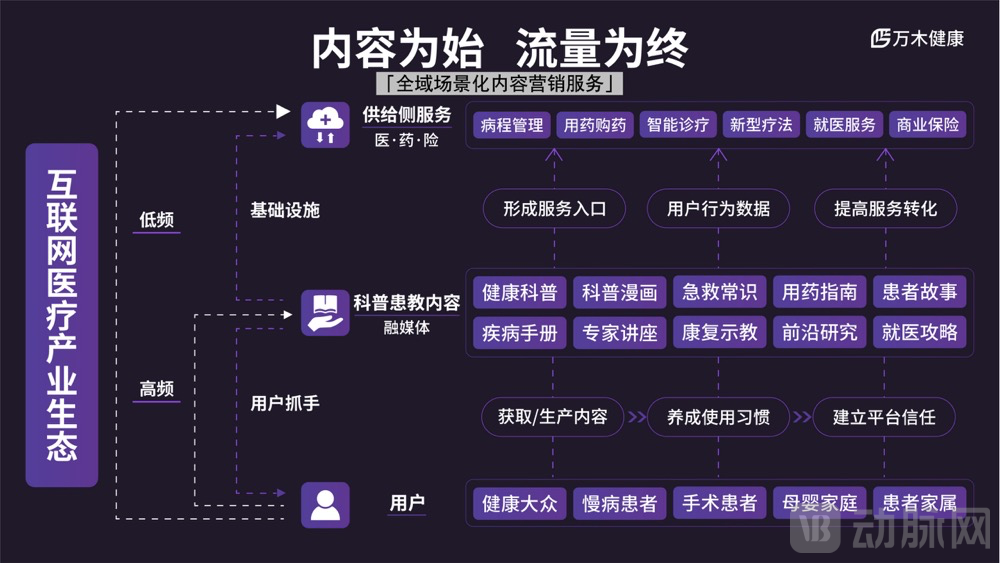
In Cheng Jin’s view,Today, popular science and patient education represent an upgraded strategy for pharmaceutical marketing (and even broader healthcare marketing),By leveraging physicians as hubs and professional, rigorous health education content as the key driver, high-frequency information flows are used to stimulate low-frequency sales of products and services, ultimately improving public health outcomes and further enhancing patient prognoses. He pointed out that content marketing is not built on the buying and selling of traffic, but rather on the creation and review of professional, rigorous content. It begins with high-value content and culminates in the provision of products and services, forming a virtuous cycle.
To address the pain points in science popularization and patient education content marketing, Wanmu Health has ultimately chosen to systematically cultivate doctors as digital asset managers and foster co-creation and mutual benefit with physicians, leveraging cutting-edge medical research evidence and extensive healthcare collaboration resources. Through its “Wanmu Engine,” Wanmu Health provides “omni-channel scenario-based content marketing services” to supply-side healthcare enterprises, including pharmaceutical companies, medical institutions, and internet platforms. By precisely matching copyrighted content or customizing content in collaboration with doctors, it systematically and efficiently delivers high-quality science popularization, patient education, and integrated marketing solutions in the era of convergent media.
Traditional content marketing suffers from numerous pain points.On the one hand,In previous efforts to create popular science and patient education content, the value of physicians was not effectively demonstrated. Platforms, physicians, and patients alike failed to achieve long-term benefits, making it difficult to sustain the ecosystem for such content creation. A co-created content ecosystem offers a better solution to this problem. By providing high-frequency, structured popular science and patient education materials, this approach addresses the repetitive educational tasks physicians face with different patients during treatment, thereby improving physician efficiency; it also helps improve patient prognosis. Furthermore, the content can generate additional returns for physicians in terms of knowledge output. Through precise, personalized, and authoritative popular science and patient education content, the quality of medical popularization is significantly enhanced compared to previous efforts.
On the other hand, previously, content marketing rarely paid attention to the impact of content and user acceptance. Wanmu Health attempts to create personalized content for patients in different scenarios inside and outside hospitals, achieving precise content output targeted at patients, helping them better accept popular science patient education materials, including the adoption of AR technology, which will help the industry chain build "full-domain scenario-based content marketing services".
Guided by this strategic vision, Wanmu Health has developed the “Wanmu Engine” marketing service platform for the supply side of the industry chain, the “Wanmu Creator Service Account” for physicians, and the “Zhilia AR” app for patients.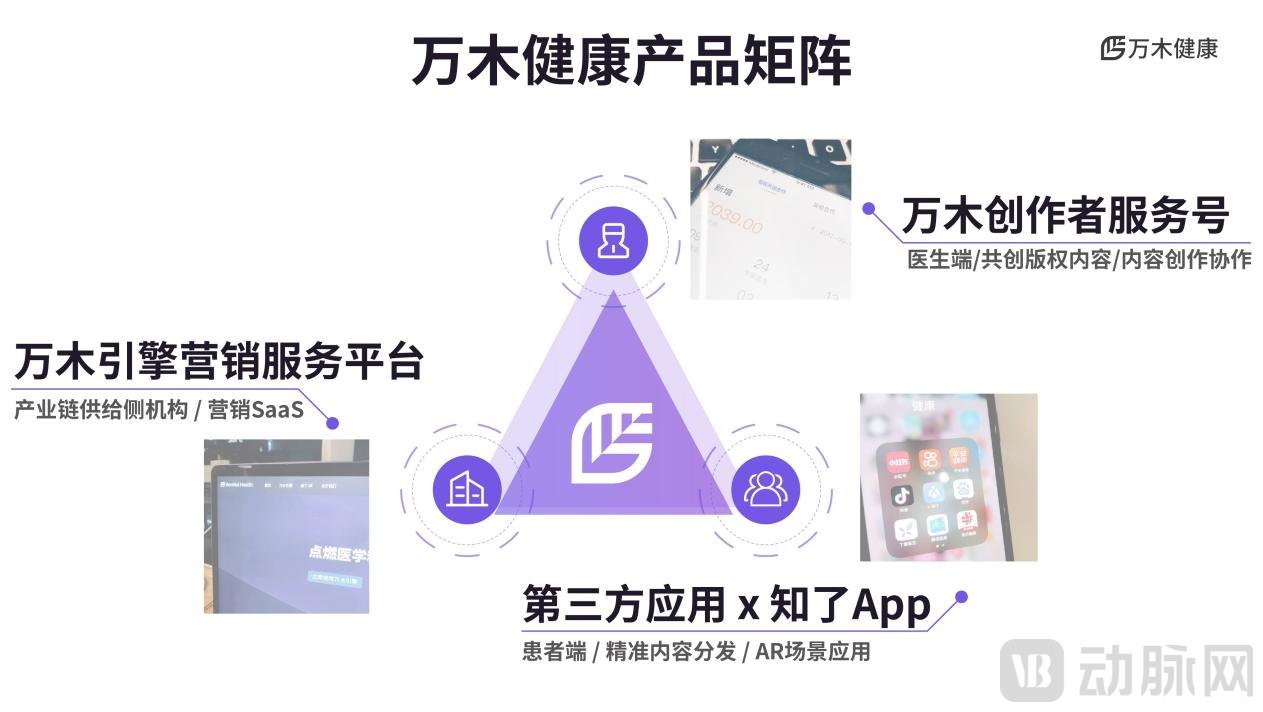
When industry chain partners approach Wanmu Health for content marketing solutions, Wanmu Health first provides professional marketing planning consultations and collaborates with clients to develop science popularization and patient education promotion strategies. Subsequently, by logging into the Wanmu Engine, partners can perform five types of matching for content production and designate four categories of precise distribution channels, thereby achieving efficient execution of professional content marketing strategies. Based on the client’s selections, Wanmu Health fulfills their needs by providing licensed content or offering customized content creation, followed by dissemination and ongoing operational support, thus forming a closed-loop service encompassing “planning–production–distribution–operation.”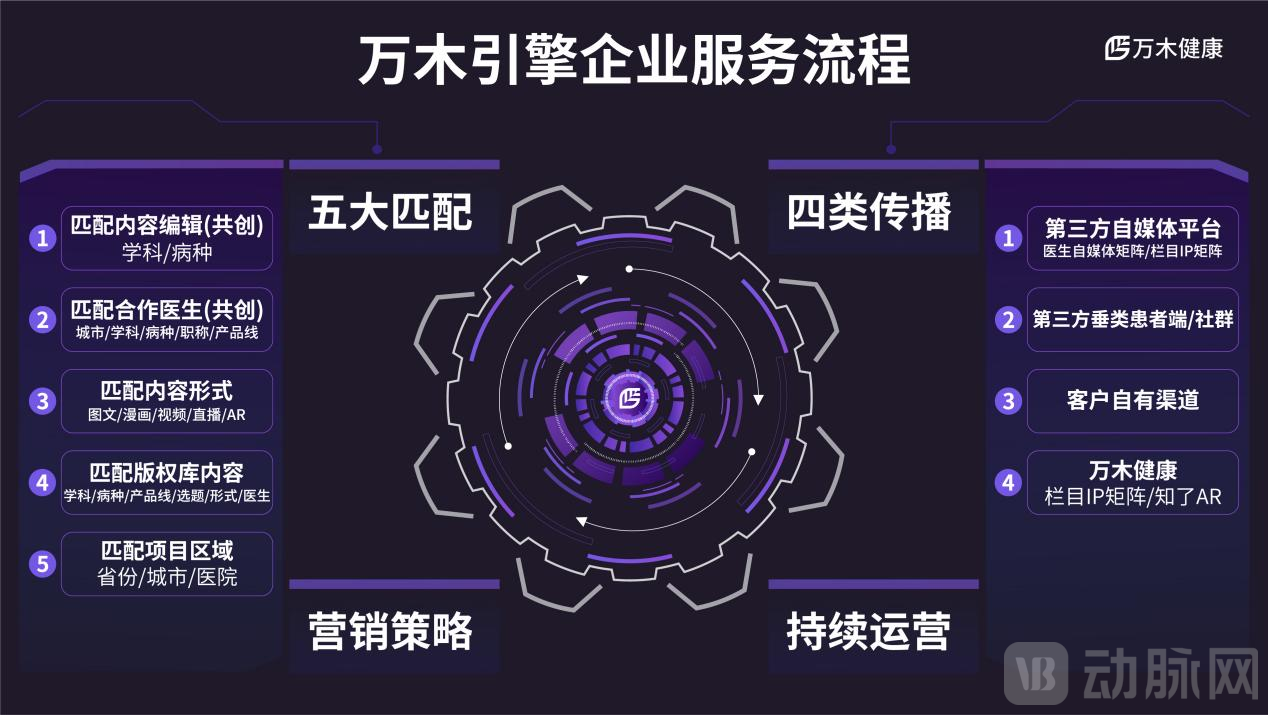
Recently, Wanmu Health entered into a strategic partnership with Qinglei Technology, a high-tech enterprise in China with 17 years of expertise in millimeter-wave radar R&D. Leveraging millimeter-wave radar technology, Qinglei Technology’s Class II medical device products have developed clinical-grade vital signs monitoring solutions, breaking through traditional technical bottlenecks and addressing significant unmet needs in clinical diagnosis, health management, and smart elderly care. Within the Wanmu Engine service framework, Qinglei Technology precisely matches expert physician teams for patients suffering from insomnia caused by primary conditions such as mental disorders, pain, geriatric diseases, and occupational illnesses. It conducts integrated media science popularization and marketing across the entire patient journey—“prevention, detection, diagnosis, treatment, and rehabilitation”—while simultaneously accumulating research-grade data insights through doctor-patient collaboration to continuously optimize marketing strategies. These initiatives have received widespread acclaim from both the collaborating expert physicians and patients, further enhancing brand promotion and directly driving sales growth of its products in relevant regions.
Behind Its Core Strengths, How Is Wanmu Health Strategizing?
For Wanmu Health, “omni-channel scenario-based content marketing services” meet the marketing needs of diverse healthcare industry clients by comprehensively covering every touchpoint in the patient journey. By leveraging professional, structured health education and science popularization content to facilitate conversion at each stage of the patient pathway, and by matching suitable talent for content creation and review, these services deliver greater precision and personalization while deeply integrating into medical application scenarios. Through high-value content, they help build trust between clients and the doctor-patient community, transcending mere connectivity via internet infrastructure, and ultimately fostering a win-win ecosystem among “healthcare providers, patients, and the industry chain.”
AndThe realization of “omni-channel scenario-based content marketing services” is primarily attributable to the following key factors:
First is the pool of physician resources that Wanmu Health has accumulated and which continues to grow.Wanmu Health currently covers nearly 10,000 physicians, over 80% of whom are associate chief physicians or above at core tertiary (Grade 3A) hospitals. These experts hail from top-tier specialized departments at prestigious institutions such as Peking Union Medical College Hospital, West China Hospital of Sichuan University, the Chinese PLA General Hospital, Peking University People’s Hospital, and Beijing Anzhen Hospital affiliated with Capital Medical University, including many leading specialists who serve as chairpersons of academic associations. To date, more than 1,000 physicians have participated in co-creation projects, with collaboration models encompassing personal IP account development, co-creation of copyrighted patient education and popular science content, and specialty-specific content review. As the physician resource pool expands and partnerships deepen, the number of physicians involved in co-creation projects and the volume of copyrighted popular science content are poised for significant growth.
Secondly, Wanmu Health has established a medical editorial system with multidisciplinary expertise focused on science communication.Currently, most medical editing teams established within the industry are engaged in physician education or journal editing and review, while there is a notable scarcity of such systems in the realm of popular science and patient education. In building its medical editing team, Wanmu Health places greater emphasis on the core competencies of medical editors, requiring them not only to grasp professional medical knowledge but also to effectively translate it into language accessible to the general public.
Furthermore, Wanmu Health possesses the capability for digital visual presentation in the specialized medical field.Amid the development trend of media convergence, Wanmu Health has moved beyond the traditional presentation of text-and-image and video content, further expanding in-depth into AR and VR technologies within the virtual reality domain. Meanwhile, Wanmu Health has already cultivated a team of professionals specializing in the medical vertical.
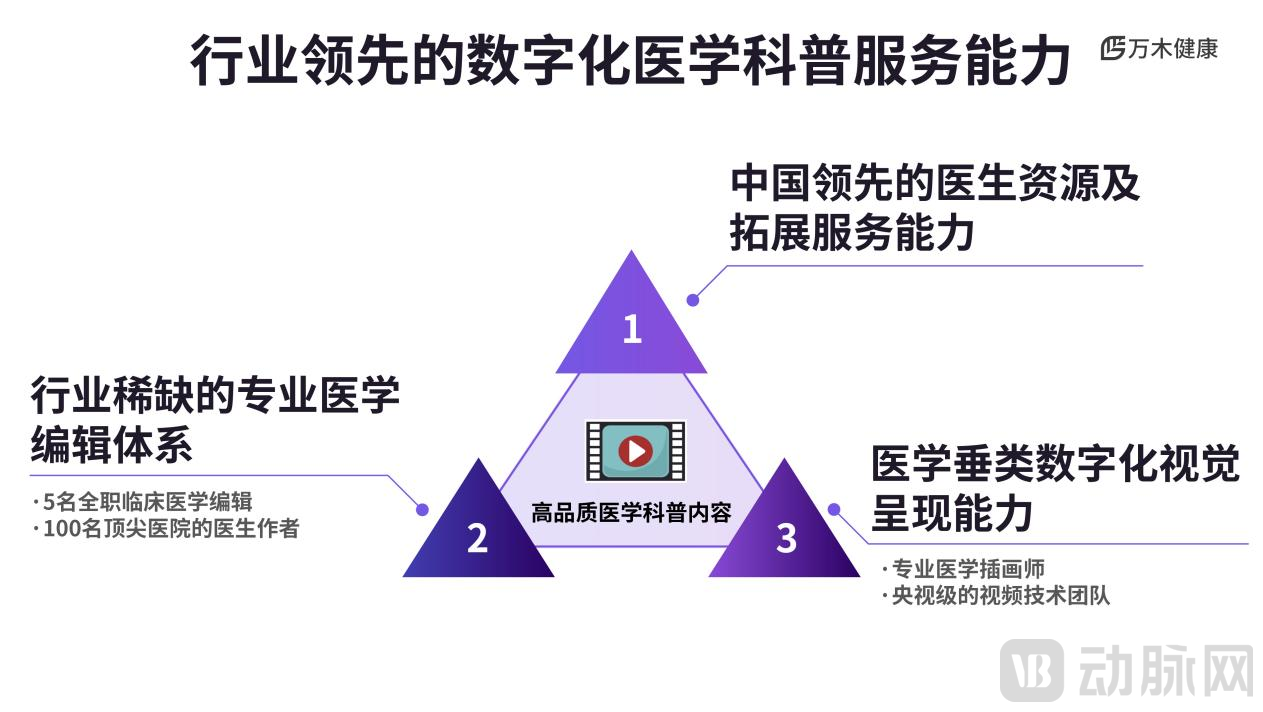 Finally, one of the most critical capabilities is the productization capability enabled by the Wanmu Engine.Leveraging its repository of physician-authored content and customized marketing materials, Wanmu Health is now capable of meeting clients’ marketing needs and enabling multi-channel, multi-scenario content distribution and reach. Cheng Jin also noted that within less than a year of its establishment, Wanmu Health has gained recognition from a large number of clients. Since last August, the company has been consistently generating cash flow, further underscoring its market validation.
Centered on Continuous Innovation in Wanmu Engine, Long-Term Bullish on Content Marketing
Cheng Jin stated that Wanmu Health garnered significant attention from the outset of its founding. After launching its fundraising efforts following the 2022 Spring Festival, the company swiftly secured RMB 5 million in angel funding from prominent institutions.Recent, Wanmu Health Initiates New Round of Financing, the funds from the new round of financing will be used for the development and expansion of copyright assets for science popularization content, as well as for product R&D and team building.
Regarding the company's development plans, Cheng Jin candidly stated that they are currently proceeding in accordance withThree-Step StrategyMoving Forward:
In Phase 1.0, Wanmu Health primarily focused on the development and business expansion of the Wanmu Engine, providing clients with “omni-channel scenario-based content marketing,” which has already yielded notable results.
In Phase 2.0, Wanmu Health aims to devote greater efforts to the development of copyrighted content by physicians, structuring its copyrighted content library in accordance with clinical pathways. Meanwhile, for users, Wanmu Health will further deliver structured, precise, and highly targeted content tailored to specific application scenarios.
In Phase 3.0,Wanmu Health will actively embrace the transformative wave of next-generation internet technologies to build a Web3-based healthcare DAO ecosystem.
Amid the recurring waves of the pandemic, Cheng Jin also emphasized the importance of maintaining confidence in the healthcare industry. “The healthcare sector is inherently resilient to economic cycles, and the overall market will continue to grow. The key lies in how innovation is achieved. Currently, competition on the supply side (B2B) of the industrial chain is intensifying. Coupled with the transformations brought by the era of converged media, diverse forms of demand will continue to emerge. How to promote innovative products, technologies, and services to doctors and patients is a question that enterprises must address, and it is also a challenge for the entire digital marketing industry. It is foreseeable that revolutionary innovations in pharmaceuticals and biotechnology will continue to emerge in the 21st century, and the era of virtual reality will eventually arrive. The marketing landscape of the entire healthcare industry will undergo profound changes, presenting historic market opportunities. By going with the flow, putting people first, and returning to our original aspirations,”The second half of the internet healthcare era has only just begun.”
Index Link Reference:
1. Shanghai Municipal Health Commission’s “Guiding Opinions on Strengthening Health Education and Health Promotion Work in Medical and Health Institutions of This Municipality”
https://jds.wsjkw.sh.gov.cn/agwsjkcj2/20201228/68896ebf0dc84ad08eef0e417efc6050.html
2. Sichuan Provincial Health Commission, "Notice of the Sichuan Provincial Health Commission on Doing a Good Job in the 2021 Review and Evaluation of Senior Professional Titles in Health"
http://www.bzszxxz.cn/News/rlzy/202109/720.html
3. Henan Provincial Department of Human Resources and Social Security, “Provincial Department Issues New Standards for the Evaluation of Senior Professional Titles in the Health Series in Our Province”
https://hrss.henan.gov.cn/2022/05-13/2448331.html