

Yang Hongbing of Shiyu Capital: 'We Didn't Make a Single Investment Last Year, But I Still Believe in the Future of China's Innovative Drugs'
“Does the investment thesis for China’s innovative drugs still hold?”
What surprised Yang Hongbing, Founding Partner of Shiyu Capital, was that a top-tier domestic primary market investor recently raised the same question with him, as anxiety has widely spread across both the primary and secondary markets.
Over the past year, the Wind A-Share Innovative Drug Index has fallen by more than 30%. Among the 35 pre-profit biotechnology companies listed under Chapter 18A of the Hong Kong Stock Exchange, 21 have declined by over 40% from their IPO prices, with the steepest drops exceeding 75%. This sharp decline in secondary-market fund net asset values and the growing difficulty for primary-market funds to exit investments stand in stark contrast to the exuberance seen in the previous two years.
Yang Hongbing recalled the frenzied atmosphere at the time: “Every fund was rushing to expand aggressively, with capital pouring in from all quarters. If an investment pace was even slightly sluggish, firms would miss out on innovative drug projects and face questions from LPs about their investment capabilities. Project valuations were driven ever higher, bordering on madness.”“As a pharmaceutical industry veteran with years of experience, I sense a red flag: The company remains unchanged, with the same team and projects. On what basis has its valuation surged by RMB 1 billion in just two months, doubling within half a year?”
Unlike many investors with financial backgrounds, Yang Hongbing is a seasoned “pharmaceutical industry insider.” The Shiyu team he has built comprises many individuals who have previously worked in pharmaceutical companies, bringing a unique perspective to investment that places greater emphasis on entrepreneurs, cash flow, and product commercialization.
Yang Hongbing’s goal for the team is to become the group with the deepest industry expertise in pharmaceutical investment. The word they use most frequently is"Industry Dynamics". Years of deep engagement in the industry have equipped Yang Hongbing with a distinctive industrial perspective and judgment, leading him to hit the emergency brake on Shiyu Capital at a time when countless others were aggressively accelerating into the innovative drug sector.
Throughout last year, Shiyu Capital, which had previously held significant stakes in innovative pharmaceutical companies such as Allist, Mabwell, Lepu Biopharma, and CARsgen Therapeutics, did not make a single investment in its core area of expertise. In 2021, the three-year investment period for Shiyu’s Phase II healthcare fund, with a total size exceeding RMB 3 billion, was nearing its end, and a new round of fundraising would normally have been initiated. However, with the support of its limited partners (LPs), Yang Hongbing decided to suspend fundraising for a new fund and tighten its investment strategy in innovative drugs.
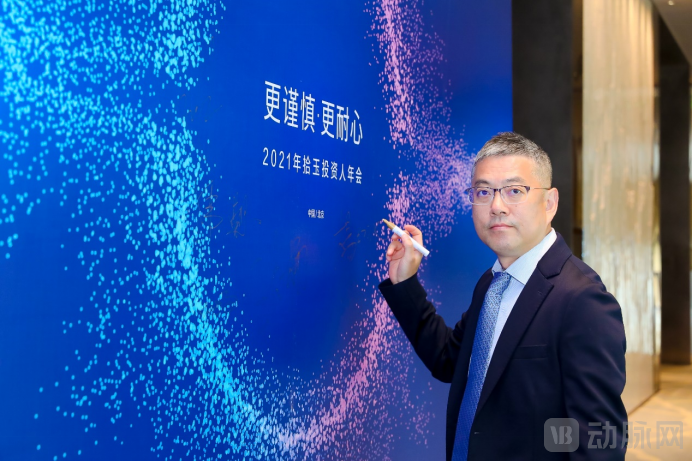
May 2021 Shiyu Annual Conference Image source: Provided by the company
At Shiyu Capital’s Investor Annual Conference held in May of the same year, Yang Hongbing proposed an eight-character theme: “Extreme Caution, Special Care.” Such a conservative theme was rare in China’s investment community at the time; peers worried it might appear overly pessimistic and thus inappropriate for an investor conference. Persuaded by colleagues, Yang softened the theme to “More Cautious, More Patient.”
These “brake-tapping” measures have greatly surprised industry peers, many of whom failed to understand them. Younger team members also grew increasingly anxious as they watched others continuously launching new projects. Yang Hongbing continually explained the rationale to the team, repeatedly emphasizing “industry dynamics”:Investing in biopharmaceuticals requires respecting the objective laws of industrial development. New drugs are not created overnight, nor are they built by simply piling up capital; rather, they are developed step by step by outstanding entrepreneurs. If a pharmaceutical investment no longer aligns with industrial logic, it must be firmly rejected!
In his view, investing in the pharmaceutical industry is akin to long-distance driving; a good driver is not one who overtakes on curves once or twice, but one who never crashes when navigating all kinds of bends.
As it turned out, Yang Hongbing’s prediction came true. Over the past year, enthusiasm for innovative drugs has taken a 180-degree turn, shifting from bustling activity to near-deserted conditions, with market confidence plummeting to rock bottom. Not only in the secondary market, but even investors in the primary market have begun to question the investment rationale for innovative drugs.
Everyone is asking: What’s happening with China’s innovative drug industry? Is there still a future for biopharma investment?
After being “pessimistic” for more than a year on this issue, Yang Hongbing now holds an “untimely” optimism, believing that the long-term prospects for China’s innovative drug development are bright. His reasons for optimism remain the same as when he hit the pause button a year ago—those four words:Industry Patterns。
“Just as wheat is sown in autumn, stored in winter, cultivated in spring, and harvested only in summer, the innovative drug industry also follows a natural rhythm. It requires a gradual process, from early discovery through Phase I, II, and III clinical trials to eventual commercialization,”Merely accumulating sufficient capital cannot resolve a decade’s worth of problems in five years.“This is also the biggest lesson learned from innovative drug investment over the past period. In recent years, China’s innovative drug investment has experienced dramatic fluctuations, swinging from euphoria to despair. The secondary market has plummeted like a roller coaster, and competition around therapeutic targets has become fiercely overcrowded. This is the consequence of excessive capital greed, for which the market has paid a heavy price. Overly aggressive capital will be shuffled out during this downturn,” said Yang Hongbing.
“But we should not give up eating for fear of choking, nor should we completely negate the progress made by China’s innovative drug sector over the past few years, discarding investments in Chinese innovative drugs as if they were worn-out shoes. Some of the most fundamental common sense and logic underpinning China’s innovative drug industry remain unchanged. Once this is clearly understood, investors may well regain their long-term confidence in Chinese innovative drugs,” Yang Hongbing continued.
Yang Hongbing believes that the current pessimism toward innovative drugs stems from two factors. First, innovative drugs represented by PD-1 inhibitors have faced intense market saturation after their launch, with prices dropping significantly following national medical insurance negotiations. This has severely undermined market confidence in the growth potential of China’s innovative drug sector, leading to a broad downward revision of commercialization expectations across the entire innovative drug segment.
Furthermore, the U.S. FDA has recently rejected several innovative drugs that relied on Chinese clinical data for their U.S. market approval applications. This elevation in regulatory standards has made the path for Chinese innovative drugs to enter global markets more distant and uncertain.
“The superposition of two factors has led to a sharp decline in the valuation of the entire innovative drug sector. The market was previously overly optimistic about the commercialization and internationalization of innovative drugs, prompting capital and enterprises to ‘rush ahead aggressively.’ However, when products actually reached the market, it became evident that commercialization targets in both domestic and international markets were difficult to achieve. The long-term logic underpinning industry development could not be reversed in the short term, ultimately resulting in the current situation,” summarized Yang Hongbing.
“To be honest, the market is currently facing structural issues, and I am not overly optimistic about a short-term bottoming-out and rebound. The future market trajectory will not follow a ‘deep V-shaped’ recovery but rather a deep ‘L-shaped’ one, with the market remaining sluggish for a period while the industry gradually recovers according to its own inherent dynamics.”However, when viewed through the lens of the 5- to 8-year investment cycle for innovative drugs, I believe the fundamental outlook for China’s innovative drug sector remains sound, and outstanding entrepreneurs will surely navigate their way out of the current gloom..” Yang Hongbing added.
In Yang Hongbing’s view, as long as industry dynamics are respected, Chinese innovative drugs stand a chance in both overseas expansion and domestic commercialization.
The optimism surrounding the global expansion of China’s innovative drugs is based on two core advantages: high efficiency and low cost.
Yang Hongbing analyzes that Chinese innovative drugs already possess significant advantages across the industrial chain. From early-stage R&D to clinical trials, a substantial talent pool has been accumulated, enabling high-quality clinical studies at relatively low costs. As long as Chinese innovative drugs can generate robust clinical data, they will be able to capture overseas markets, for “patient needs know no borders.” Investors supporting such enterprises are also poised to reap substantial returns.
“Why has China’s pharmaceutical industry failed to produce global companies like Huawei and Xiaomi in the past? On one hand, there was little incentive, as companies could reap substantial profits in the Chinese market without needing to innovate or go global. On the other hand, many lacked the capability, focusing on ‘China-specific miracle drugs’ rather than universally applicable products, thereby failing to gain international recognition,” said Yang Hongbing.
As the landscape shifts and previous profit-making paradigms become obsolete, outstanding companies focused on globalization and innovative drugs are poised to stand out.In Yang Hongbing’s view, China already has a reserve of such enterprises, and their integration into the global mainstream is only a matter of time.
“Today, Chinese innovative pharmaceutical companies have aligned their talent, management, and technology with international standards. From founders and executives to R&D and commercialization professionals, they possess extensive overseas experience and a global perspective. They develop universal products that are not fundamentally different from those in Europe and the United States. Moreover, compared to Japanese and South Korean companies that went global earlier, Chinese enterprises have the world’s second-largest pharmaceutical market as a backdrop and a pillar for industrial development, allowing them greater flexibility and ease in exploring the international expansion of innovative drugs,” said Yang Hongbing.
Indeed, despite the slump in financing and investment for innovative drugs since 2022, Chinese innovative drugs have continued to secure major overseas business development (BD) deals. Data from PharmaCube’s NextPharma pharmaceutical transaction database shows that from early 2022 to May 26, there were 21 BD transactions involving the out-licensing of pharmaceutical assets from China to foreign companies, with disclosed upfront payments totaling $166 million and total disclosed transaction values amounting to $4.302 billion.
“It is not that going global is problematic; rather, in the past, there was blind optimism that overlooked the inherently long development cycles and high risks of the innovative drug industry.“As long as we return to industry fundamentals and logic, China will have significant advantages and opportunities in the long run, whether through business development (BD) partnerships or by directly expanding sales globally,” said Yang Hongbing.
He also emphasized that going global should not focus solely on the European and American markets, but also consider market opportunities in emerging developing countries. “Taking PD-1 as an example, China has reduced the cost of large-molecule drugs to the lowest level globally. Just as Chinese mobile phones can be sold in Latin America and Southeast Asia, as long as they offer high cost-performance ratio, the market opportunities for Chinese innovative drugs will surely grow larger with the aging population and increasing purchasing power in these populous countries.”
Turning to the issue of domestic commercialization of innovative drugs, Yang Hongbing stated that while the fierce competition and significant price reductions for products such as PD-1 inhibitors have indeed highlighted the payment pressures on the national medical insurance system, stakeholders’ perceptions of commercialization should not be constrained by a single product category. The challenges associated with PD-1 inhibitors stem primarily from the supply side.
“Frankly speaking, the fact that so many PD-1 inhibitors are on the market today itself demonstrates that the industry’s moat is not as high as perceived. Projects with serious homogenization should not enjoy high premiums over the long term, which is in line with basic market principles,” said Yang Hongbing.
“From a macro perspective, China remains the world’s second-largest pharmaceutical market after the United States. In recent years, the Chinese market has seen commercially successful locally developed innovative drugs, such as Anlotinib from Chia Tai Tianqing, which was included in the National Reimbursement Drug List just a few years ago and has already become a product with annual sales exceeding RMB 5 billion.”Only differentiated products that truly meet unmet needs, combined with strong commercialization capabilities, can give rise to ‘blockbuster drugs’“I believe that among this cohort of innovative drug entrepreneurs, some will undoubtedly prove that innovative drugs can be profitable and achieve commercial success. The emergence of just one or two blockbuster products would suffice to restore market confidence,” said Yang Hongbing.
Yang Hongbing provided a special review of U.S. history and case studies.
“Just as the U.S. innovative drug sector experienced a devastating crash starting in 1993, with prolonged stagnation lasting several years. Today’s industry giants Amgen and Genentech emerged as hundred-billion-dollar pharmaceutical companies precisely due to the successful commercialization of blockbuster products: Amgen relied on biologics such as EPO, while Genentech depended on products like Herceptin. Once these enterprises achieved successful commercialization of their blockbuster drugs, market confidence in innovative medicines gradually recovered,” said Yang Hongbing. “These historical precedents remind us not to be pessimistic about the future of China’s innovative drug industry. By adhering to industrial principles, there is an opportunity for counter-trend growth and standing out from the competition.”
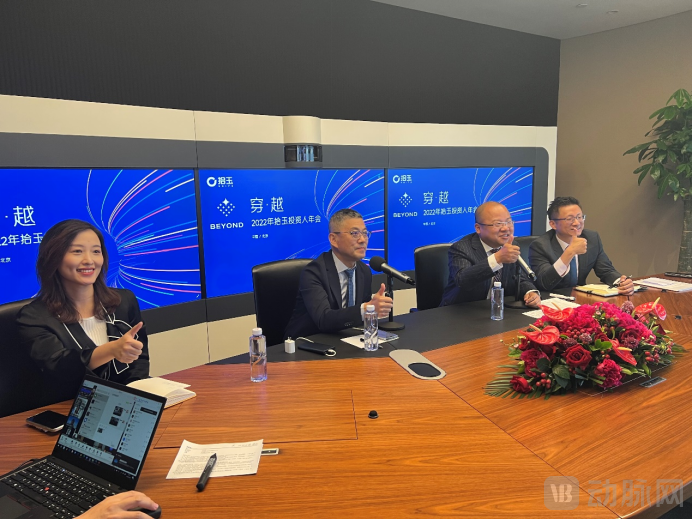
Shiyu Capital Annual Conference, May 2022. Image source: Provided by the company.
Guided by this rationale, Yang Hongbing set the theme of this year’s Shiyu Capital Annual Conference as “Navigating Through.” The intent is to convey that, amid the darkest hour for innovative drugs in China, Shiyu Capital will take a proactive approach, working alongside entrepreneurs to seek opportunities to navigate through industry cycles despite headwinds.
Yang Hongbing believes that for Chinese innovative drug companies to navigate economic cycles and grow into internationalized biopharmaceutical enterprises, they need not only talented scientists capable of developing products that truly address differentiated clinical needs, but also skilled entrepreneurs.
“In the past, any company could raise funds, and everyone grew accustomed to good times.Excellent Entrepreneurs Assess the Situation: The Second Half of Innovative Drug Development Is a Knockout Stage“, it is crucial to remember that innovative drug companies survive by burning cash, and securing the next round of financing will be extremely difficult. Cash is king. How many companies have secured enough cash flow to cover the next three years?” Yang Hongbing asked rhetorically.
“The companies we invest in are helmed by outstanding entrepreneurs with extensive experience in commercialization, and they currently maintain cash reserves sufficient to cover more than three years of operations. Many of these companies have already launched or are on the verge of launching their flagship products, which will enable them to generate stable cash flows independently. These strengths position them to weather economic cycles and evolve into globally competitive innovative pharmaceutical enterprises. Our limited partners (LPs) strongly endorse our investment philosophy and have full confidence in the portfolio companies we back,” said Yang Hongbing.
“Shiyu Capital is a fund dedicated to investing in the pharmaceutical industry. We neither strive for contrarianism nor blindly follow trends; instead, we respect the long-term patterns and trends of the industry, forming our own judgments through independent thinking. It is out of respect for fundamental industry principles that we chose to wait for an extended period in the past, and it is based on our insight into industrial dynamics that we are now optimistic about the future.”
“We believe in Chinese entrepreneurs and in the future of China’s innovative drug industry,” said Yang Hongbing.