

China-Germany-Australia MedTech Firm Zhongdeao Files IPO Prospectus After Empowering Hundreds of Healthcare Institutions with Smart Ward Solutions
“High costs and limited access to medical care” are perennial challenges in the healthcare industry.
Amid ongoing societal shifts such as urbanization and population aging, coupled with the implementation of new healthcare reforms centered on “patient-centric care,” the healthcare system is confronting challenges in hospital operations, service quality enhancement, and regional interoperability.
Since 2015, a series of policies have been successively introduced, including the Comprehensive Evaluation Indicators for Smart Hospitals (2015 Edition), Guidelines for Application Functions of Hospital Information Platforms, and the Graded Evaluation Standard System for Hospital Smart Services (Trial). These policies established an evaluation indicator system for smart hospitals, encompassing infrastructure, smart patient services, smart medical care, smart nursing, smart medical technology, smart management, smart logistics, smart support, smart research, and smart teaching, thereby further promoting the intelligent transformation of hospitals. In response, hospitals have embarked on a new chapter in smart hospital construction aimed at enhancing their service capabilities and competitive viability.
As national policies on medical informatization assessments continue to increase year by year, the value of smart nursing is becoming increasingly prominent. Among these policies, medical and nursing management ranks first in the hospital smart management grading evaluation items. For hospitals, nursing is not only key to implementing smart hospitals but also a particularly important aspect in smart hospital ratings.
However, the development of smart nursing within hospitals remains relatively weak. Many hospitals still rely on outdated paper-based workflows, burdening healthcare professionals with heavy, repetitive tasks that keep them in constant rotation. This leads to nursing errors caused by human oversight, frequent inconvenience and anxiety for patients during hospitalization, and recurring intensification of conflicts between medical staff and patients. Therefore, the core challenge lies in leveraging effective technological solutions to reshape the patient environment and, consequently, enhance the overall medical experience.
By intensifying optimization and upgrades in this area, hospitals can not only “score points” but also tangibly improve the quality of nursing care, thereby achieving a win-win outcome.
To address this issue, electronic medical records, clinical quality control platforms, nursing interaction systems, IPTV live broadcasting systems, mobile ward round systems, queue management systems, and internet hospitals have emerged one after another, giving rise to numerous healthcare IT innovation enterprises. Guangdong Deao Intelligent Medical Technology Co., Ltd. (hereinafter referred to as “Zhongdeao”) is one of them.
“What left the deepest impression on me was the scene in the ICU, where patients were covered with tubes, monitor alarms went off one after another, and bright lights stayed on day and night, while family members could only wait outside. In my view, hospitals are a microcosm of life’s joys and sorrows.”
“Beyond this, we observed that many patients and their families have to run up and down the hospital to make payments, undergo examinations, print test reports, and settle medical insurance claims. Furthermore, due to the multitude of hospital departments and the lack of information interoperability, patients are forced to queue in various locations for inquiries, enduring significant mental and physical exhaustion. It is precisely to address these real-world challenges that we are eager to leverage technological solutions to transform the healthcare experience from ‘frustrating’ to ‘reassuring.’”Mr. Wang Hongping, Chairman of Zhongdeao, recalled.
Improving work efficiency is the most urgent need for hospitals, medical staff, patients, and patients' families. As technology continues to permeate the healthcare sector, hospitals have shown a markedly increased willingness to leverage technology to enhance operational efficiency. Digital applications such as AI-assisted imaging diagnosis, Personal Digital Assistants (PDAs), and online video consultations can effectively help medical staff improve work efficiency and alleviate work pressure, thereby boosting the overall operational efficiency of hospitals and ensuring that patients receive better medical services.
Taking the China-Germany-Australia Smart Nursing Interaction System as an example, data shows that after its implementation in a hospital, nursing handover time was reduced by 54%. Meanwhile, the time nurses spent on infusion management, health education, fee notifications, and the transcription and verification of nursing records decreased significantly by two-thirds. Questionnaire surveys indicated that nurses’ work stress and occupational fatigue scores were significantly lower than those under conventional nursing practices. For patients, the upgrade to smart nursing led to significant improvements in health knowledge awareness and nursing satisfaction.
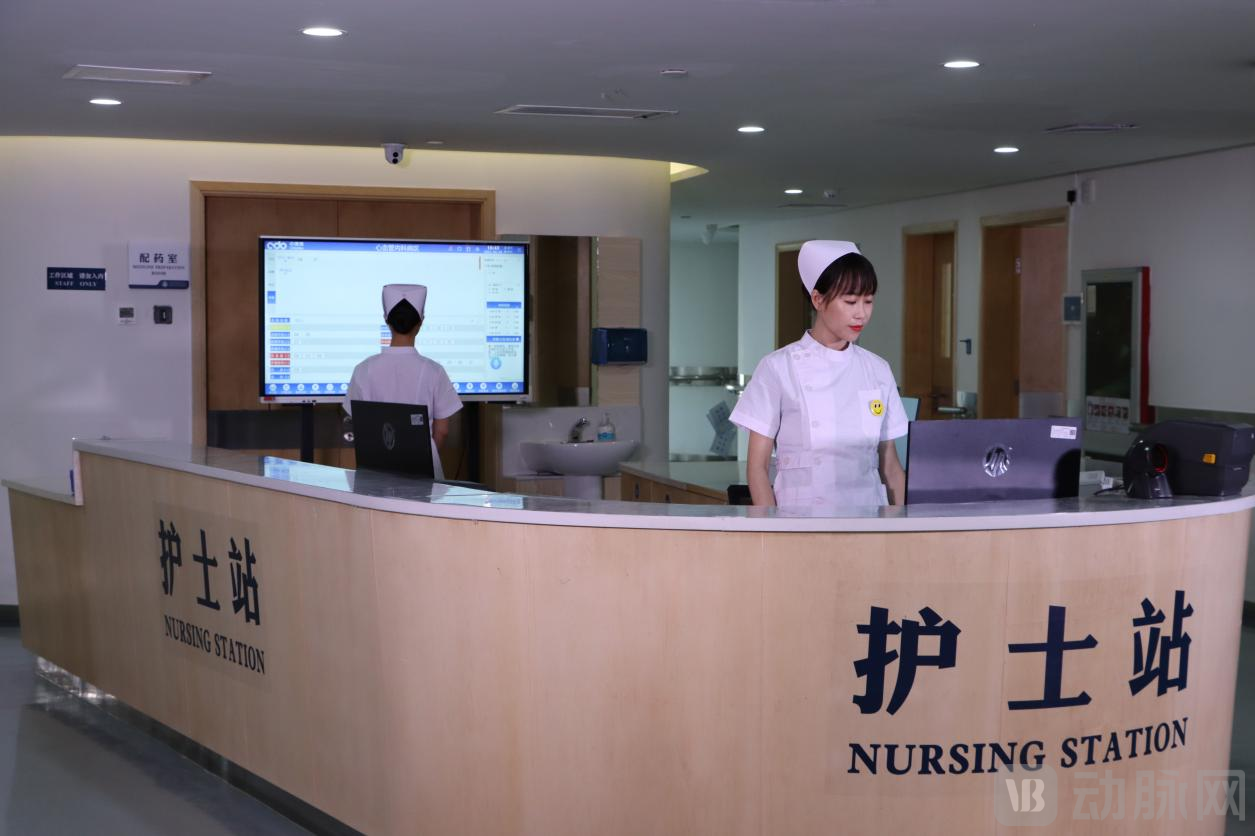
Shenzhen Samii International Medical Center
Discussing the smart healthcare industry, Wang Hongping remarked with emotion:“In the smart ward industry, it is widely recognized by enterprises and the medical community that the entry barriers are relatively low. The sector frequently experiences malicious competition among projects, difficulties in project implementation, or situations where projects are implemented but fail to pass acceptance checks. Regardless of the specific scenario, these issues result in significant losses for both enterprises and healthcare institutions. Nevertheless, as an integral component of smart hospital development, smart wards continue to hold critical value. It requires professionals with specialized expertise to perform specialized tasks within their respective domains. This has consistently been the operational standard upheld by Deao in the field of intelligent healthcare.”
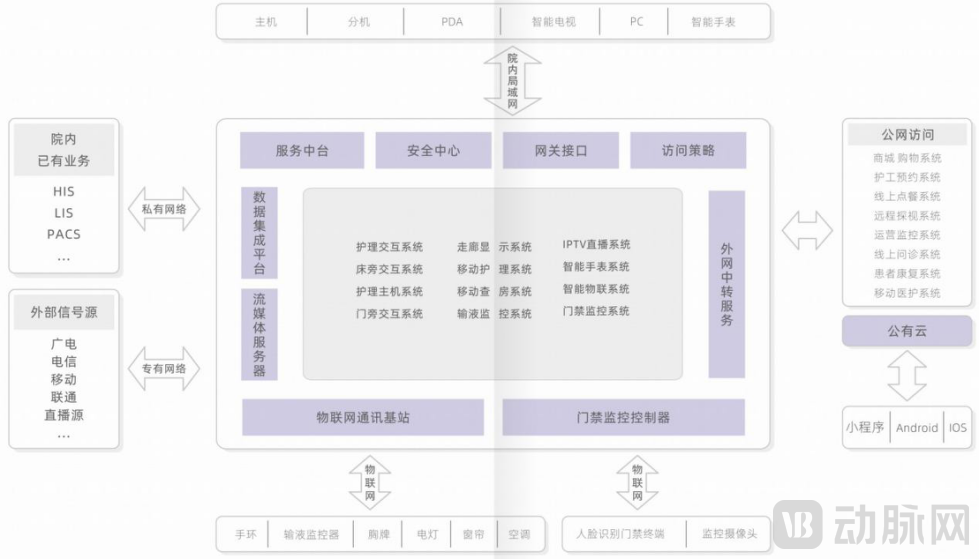
Currently, Deao has achieved intelligent, platform-based, and specialized management across hospital wards. Its product ecosystem enables multi-space interconnected applications in four key scenarios: nurse stations, doctors’ offices, patient rooms, and corridors. All products interact based on a unified platform (comprising messaging, instant communication, IoT, and operations platforms), deployed using a microservices architecture and supporting integration with third-party systems. Meanwhile, the products meet hospitals’ personalized design requirements to facilitate future iterative upgrades. The service coverage extends across major regions throughout China, providing products and technical services to more than 100 medical institutions of various types, including over 100 Grade A tertiary hospitals such as Shenzhen Samii Medical Center, Shenzhen Bao’an District People’s Hospital, and Shenzhen Longgang District Orthopedic Hospital.
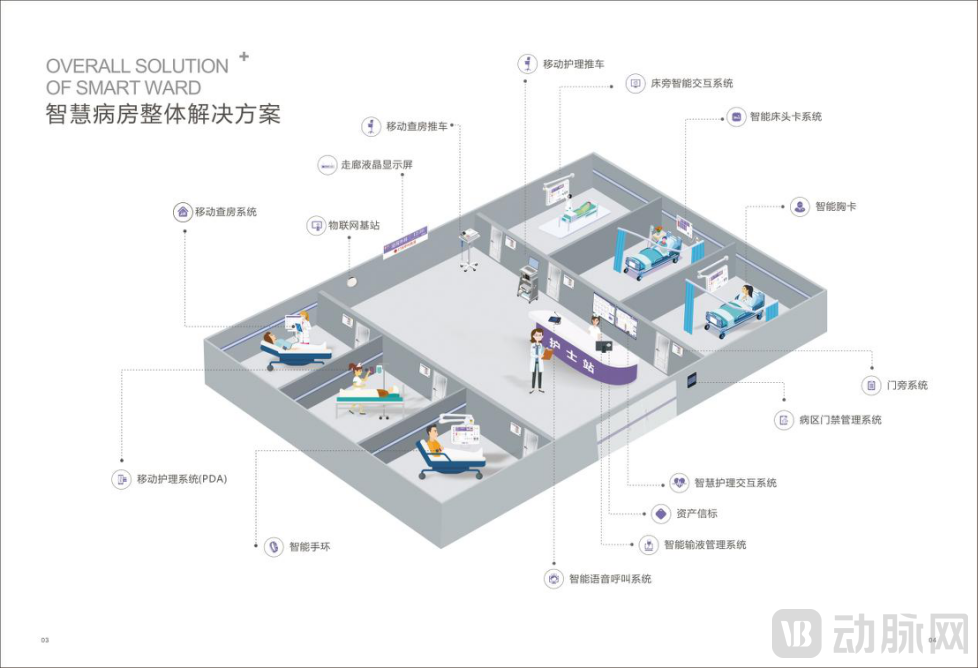
China-Germany-Australia Smart Ward Integrated Solution
“The primary concerns of Zhongdeao’s entry into the healthcare industry are whether patient care services can be guaranteed, whether diagnosis and treatment quality and practices can be efficiently monitored and traced, whether a multi-dimensional, high-efficiency, and high-quality communication platform can be provided for doctors, nurses, and patients, and whether multi-faceted intelligent decision-making tools can be offered to decision-makers.”Wang Hongping emphasized.
Nowadays, with the continuous improvement of economic standards, society has entered a new era of “patient-centered” medical services, and providing comfortable healthcare experiences for the public has become an inevitable trend.
With the application of 5G technology, the continuous development of intelligent technologies, and people’s pursuit of better medical services, the development of the smart hospital industry has become an inevitable trend. Hospital settings will also transform into a completely new form amid the wave of intelligent transformation in healthcare institutions. Meanwhile, disparities in medical service levels across regions will gradually narrow, and the reach of smart hospitals will expand to cover various types of healthcare facilities. Healthcare will no longer be confined within hospital walls; it will extend outward to meet growing demands for precision medicine, personalized care, and family doctor services, thereby creating a broader market landscape.
Amid clear demand, policies have also demonstrated significant momentum in promoting the development of smart healthcare. From the Healthy China initiative to the 14th Five-Year Plan, the policy framework for the smart healthcare industry has become increasingly comprehensive. Over the past five years, a substantial number of policies related to the healthcare industry have been successively introduced, emphasizing the critical supportive role of informatization and next-generation information technologies in the healthcare sector, thereby ushering in a period of intensive policy support for smart healthcare.
Regarding future plans, Wang Hongping stated:“In the future, we will continuously delve into the multifaceted needs of the nursing business line, optimize smart ward construction to the fullest extent, and expand into ward logistics, medical big data, and smart healthcare products covering the entire lifecycle.”