

Domestic Bioabsorbable Magnesium Alloy Stent Breaks Through 'Neck-Bottleneck' Technologies and Set for Clinical Trials

Amsino
R&D, production, and sales of medical devices in the field of cardiac intervention
Absorbable materials represent a frontier in medical device research. Bioabsorbable metals are the most prominent and active area of investigation within the field of medical absorbable materials. Currently, absorbable metal materials have evolved into several major categories, represented by magnesium-based, zinc-based, and iron-based alloys.
Among the many absorbable materials, magnesium alloys were once hailed as “revolutionary metallic materials” due to their well-balanced functionality, biocompatibility, stability, and processability. Studies have shown that they can be used in cardiovascular stents, bone fixation devices, and dental implants, and are fully degradable within the human body.
Over the years, significant achievements have been made in the research of medical-grade magnesium alloys, their in vitro biological evaluation, and animal studies. However, the majority of these efforts have focused on animal experiments, with relatively few clinical studies conducted.
On May 28, the First Strategic Summit on Biomedical Magnesium Alloy Materials was held online. The organizers included the National Engineering Research Center for Magnesium Alloy Materials, the International Magnesium Association, and the Journal of Magnesium Alloys. The summit was co-chaired by Academician Pan Fusheng and Academician Zhang Xingdong of the Chinese Academy of Engineering.The joint R&D team for the “Bioabsorbable Magnesium Alloy Stent,” led by them, announced at the conference that the domestically produced bioabsorbable magnesium alloy stent will officially enter the clinical stage this year.
Academician Pan Fusheng stated: “China is a major country in magnesium resources, a powerhouse in magnesium alloy material research, and a leading producer of magnesium products. In the past, the production of absorbable magnesium alloy stents relied heavily on imported tubing.”Now, the entire industrial chain—covering the production of absorbable magnesium alloy materials, rough machining of rods, precision machining of tubes, and stent manufacturing—has been fully established and implemented. This marks a significant milestone in the history of China’s stent industry development.
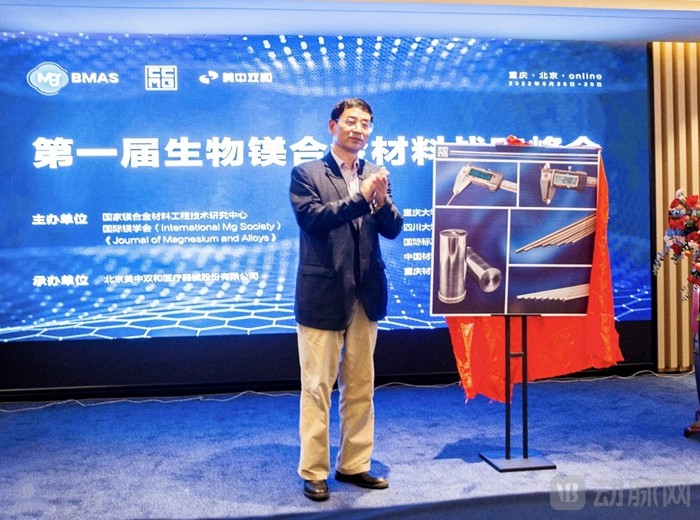
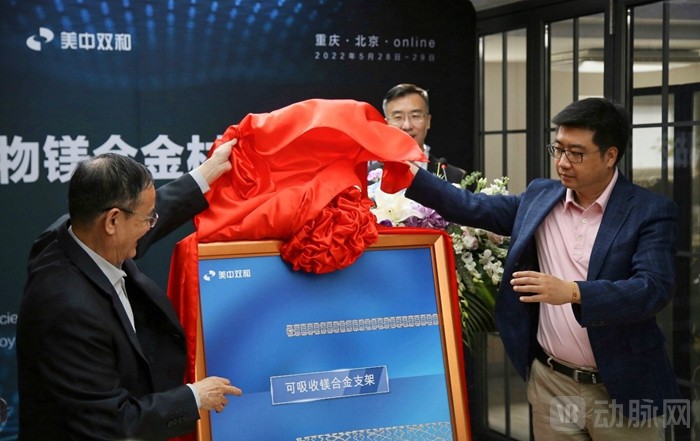
The summit brought together renowned experts from the fields of materials science, engineering, and clinical medicine to share the latest advances in China’s research on bio-magnesium alloys, including material development, modification, manufacturing, animal studies, and clinical trials. Shao Mingli, former Director of the State Food and Drug Administration and former Vice Minister of Health; Cui Yuting, Executive Deputy Secretary of the Party Committee of the Ministry of Science and Technology; and Academician Ge Junbo of the Chinese Academy of Sciences delivered addresses at the conference. Attendees engaged in extensive discussions on the research and application of bio-magnesium alloy materials, with relevant experts presenting the most recent developments in this field.
From a materials science perspective, common medical-grade metallic materials such as stainless steel, titanium and its alloys, and shape memory alloys exhibit bioinertness in vivo and are non-degradable. In contrast, magnesium is an essential trace element for the human body. Magnesium alloys demonstrate excellent biocompatibility and can degrade within the human body. Their degradation products are non-toxic and do not induce inflammatory or allergic reactions. Excess magnesium ions are metabolized by the kidneys and excreted via urine, without any cumulative effects. Therefore, magnesium alloys have become highly ideal materials for medical implants, offering significant potential for innovation in the stent industry.
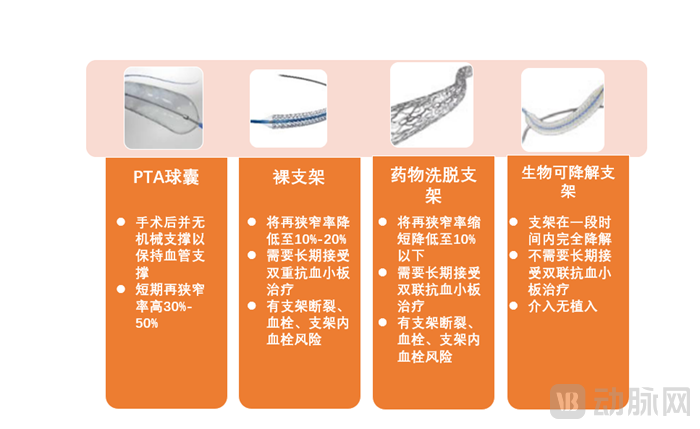
Ge Junbo, an academician of the Chinese Academy of Sciences and a cardiologist, stated at the summit: “The history of interventional therapy for coronary heart disease has evolved from early balloon angioplasty to metal stents, and further to drug-eluting stents. However, the fatal drawback of drug-eluting stents is the long-term presence of the metallic body within the human body. Nearly a decade ago, there was a global aspiration to develop bioresorbable scaffolds to replace current metal stents. Regrettably, despite certain achievements over the years—ranging from the poly-L-lactic acid scaffold initially launched by Abbott to the alloy scaffolds developed more recently in China—theThere is no stent that we consider to be an ideal (material) platform. Currently, magnesium alloys appear to be a highly promising platform. We hope that research on magnesium alloy stents will provide us with an effective clinical tool for the treatment of heart disease, myocardial infarction, and peripheral vascular disease.”
Currently, permanently implantable stents face numerous challenges, which has essentially become a consensus within the industry.
First, as a permanent foreign body within the vessel, stents can easily induce chronic inflammation, leading to late and very late thrombosis and restenosis; delayed endothelialization or ectopic displacement of stent struts caused by compensatory vascular dilation may further exacerbate the risk of late thrombosis. Second, due to the long-term presence of the stent, the natural angulation and curvature of the vessel, as well as its pulsatile and vasomotor functions, cannot be restored.
Following implantation into the human body, absorbable magnesium alloy stents gradually degrade, allowing blood vessels to progressively restore their natural state and physiological function, thereby significantly reducing vascular risks associated with foreign bodies.Furthermore, the mechanical properties of magnesium alloys are similar to those of bone and significantly superior to polylactic acid, enabling the design and manufacture of thinner stents that promote endothelialization. Additionally, surface treatment of magnesium alloy stents via electropolishing can reduce interference with hemodynamics.In the future, bioresorbable magnesium alloy stents are expected to be applied in multiple fields, including coronary intervention, peripheral intervention, and neurointervention.
Germany’s Biotronik has long been regarded as the most mature company in the field of bioresorbable magnesium alloy coronary stents. Its Magmaris stent received the world’s first CE certification for a magnesium alloy stent in 2016 and was launched in Hong Kong in 2018. According to the 5-year follow-up data from the BIOSOLVE-II trial published by the company, the target lesion failure (TLF) rate was 8%, with zero definite or probable thrombosis cases, demonstrating its potential for superior clinical performance compared to other bioresorbable materials.
Shifting focus to the domestic market, no absorbable magnesium alloy stent products are currently available on the market. According to the results presented at the Strategic Summit on Bio-magnesium Alloy Materials, the forefront of development is led by the joint R&D team for “Absorbable Magnesium Alloy Stents,” headed by Academicians Pan Fusheng and Zhang Xingdong. The team’s technical expertise is primarily derived from the National Engineering Research Center for Magnesium Alloy Materials, the National Engineering Research Center for Biomaterials, and Beijing Amsino Medical Instruments Co., Ltd.
The research, development, and manufacturing of bioabsorbable magnesium alloy stents face three major challenges: rapid and difficult-to-control degradation rates; balancing effective scaffolding duration with degradation time; and reconciling the trade-off between strength and ductility in mechanical properties. Only by resolving these three interrelated issues can clinically approved magnesium alloy products be developed.
Perseverance pays off. Over several years, the joint R&D team conducted intensive research to overcome key technical challenges through material modification and process optimization.
She Jia, an associate professor at Chongqing University and a member of the joint R&D team, stated at the summit: “During the process from manufacturing to clinical use, a stent must first be crimped onto a balloon catheter. During the procedure, the physician delivers it to the target location, where it is then expanded by inflating the balloon. This crimping and expansion process induces significant deformation in the stent; therefore, the stent must not only possess high strength but also exhibit good ductility to avoid fracture under mechanical strain. Currently, magnesium alloys specifically designed for cardiovascular stents are extremely scarce. Industrial-grade magnesium alloys have low purity and fail to meet medical-grade requirements. Stents are fabricated by laser engraving on micro-tubes with wall thicknesses as thin as 200 micrometers. If the alloy contains a high level of impurities, fractures are likely to occur during processing, resulting in very low yield rates. In stent development, it is challenging to simultaneously optimize the strength, ductility, and degradation properties of magnesium alloys. Furthermore, controlling the degradation rate and uniformity of magnesium alloy stents after implantation remains a major technical hurdle.”
To address the purity issue of magnesium alloys, the research team at Chongqing University employed a flux-free, temperature-variable self-purification process for magnesium alloy melts., reducing the Fe content in magnesium alloys to 10 ppm. With improved purity, the corrosion rate is significantly reduced, and corrosion resistance is markedly enhanced, laying an important foundation for the preparation of high-performance medical magnesium alloys. The research team at Chongqing University has also developed a continuous forging and extrusion technology, which achieves continuous cumulative deformation, promotes recrystallization, and realizes the homogeneous preparation of magnesium alloy ingots and billets.
To further control the in vivo degradation rate of the stent, the Amsino R&D team has developed a composite coating for the stent, which allows for better adjustment of the degradation timeline and ensures effective structural support within a specified period.To effectively control the degradation rate, the Amsino team optimized the stent structure design to evenly distribute stent stress, making it better suited to the mechanical properties of magnesium alloys and preventing cracking of the protective coating. Due to the poor radiopacity of magnesium alloys under X-ray, Amsino incorporated dual radiopaque markers at the proximal and distal ends of the stent to assist physicians in accurately positioning the stent during the procedure.
Dr. He Fugui, Chief Scientist at Beijing Amsino Medical Instruments Co., Ltd. and a member of the joint R&D team, stated: “This domestically developed stent utilizes magnesium alloy materials that surpass those used by competitors, with a 15.9% higher tensile strength and improved elongation. The struts of the stent are only 125 microns in thickness and width, making them thinner and narrower than competing products, yet radial support force is increased by 16%. In vitro simulation experiments showed that after two months, the stent retained over 85% of its radial support force, demonstrating the excellent efficacy of our comprehensive degradation control method. Results from large animal studies at one, three, six, and ten months post-implantation indicated good endothelialization of the implanted vessel segment, uniform neointima, and no restenosis or thrombosis.”
The stent is expected to enter clinical trials within the year.
Market data indicate that although the annual volume of percutaneous coronary intervention (PCI) procedures in China has reached the million mark, the procedure rate per million population remains relatively low. According to Frost & Sullivan, China performs 728.5 PCI procedures per million people, compared with 2,950.9 per million in the United States, suggesting substantial untapped potential in China’s PCI device market. The utilization of bioresorbable stents has been steadily increasing, and the Chinese market for bioresorbable stent products is expected to maintain rapid growth.
Beyond stent development, magnesium-based products have garnered widespread attention in other fields due to their excellent biocompatibility. At the inaugural Strategic Summit on Bio-magnesium Alloy Materials, experts from across China shared advances in the medical applications of magnesium alloys. In addition to bioresorbable stents, the development of orthopedic implants represents a area of extensive domestic research on magnesium alloy materials.
Professor Yu Kun from the School of Materials Science and Engineering at Central South University stated, “Among biodegradable metallic materials, magnesium alloys are increasingly widely used. However, the primary challenge with magnesium applications is their excessively rapid degradation rate, making it crucial to control this process. We have developed magnesium-based composites, and experimental results have demonstrated significant efficacy in repairing bone defects, enabling rapid and effective restoration.”
Chen Liang, Director of the Department of Bone and Soft Tissue Tumors at Chongqing University Cancer Hospital, shared the current status and future prospects of magnesium alloy applications in bone tumor treatment. He stated, “There has been extensive research on the application of magnesium alloys in bone tissue engineering. However, in the field of bone tumor treatment, only a limited number of preclinical studies have been conducted to date, while clinical trials and large-animal experiments remain largely unexplored. Given that magnesium-based materials exhibit excellent biocompatibility, osteoconductivity, and osseointegration, they hold significant promise for bone tumor therapy. If future advancements can achieve breakthroughs in mechanical strength, corrosion resistance, and controllable ion release rates—particularly when combined with other core materials—magnesium-based alloys are poised to play a pivotal role in this field.”
Professor Guo Shengfeng from Southwest University shared his research on the application of biodegradable magnesium alloys in bone repair. Compared with traditional bone repair materials, the biodegradability of magnesium alloys eliminates the need for secondary surgery. Furthermore, magnesium alloys exhibit excellent biomechanical compatibility, with mechanical properties closely resembling those of bone tissue, thereby effectively avoiding the stress shielding effect. Magnesium alloys also possess osteoinductive properties, as magnesium ions can induce new bone formation.
In the field of ophthalmology, Dr. Li Xiangji, Associate Chief Physician and Doctor of Medicine in the Department of Ophthalmology at the Third Affiliated Hospital of Chongqing Medical University, shared research on the application of coated magnesium absorbable materials in glaucoma drainage surgery. The study found that coated magnesium-based materials exhibit good biocompatibility, low toxicity to human Tenon’s capsule fibroblasts (HTCFs), and can inhibit HTCF proliferation.
Furthermore, in China, research is also being conducted on magnesium alloys in fields such as oral and intestinal staplers, orbital diseases, and ureteral stents, with certain progress achieved. In the future, this is expected to yield revolutionary products similar to bioabsorbable magnesium alloy stents.

Shao Mingli, former Director of the State Food and Drug Administration and former Vice Minister of Health, stated in his summit address: “Over several decades of development, China’s medical device industry has grown from nothing to a substantial scale, basically establishing a relatively complete system capable of meeting the health needs and medical requirements of the Chinese people. However, frankly speaking, the industry remains in a critical phase of overcoming challenges and undergoing transformation. Due to multiple factors—including technical barriers, foundational development, R&D systems, and the progress of basic disciplines—we still face numerous ‘chokehold’ issues. In a sense, materials constitute the foundation of innovation in medical devices. Magnesium alloys, known as ‘green materials of the 21st century,’ hold enormous market potential across various fields.”
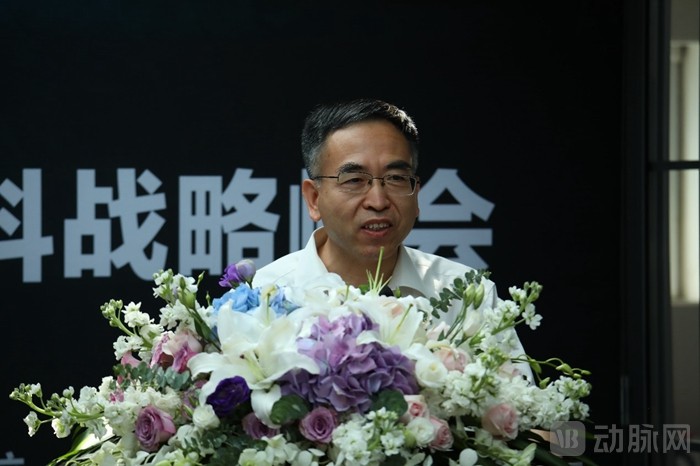
Cui Yuting, Executive Deputy Secretary of the Party Committee of the Directly Affiliated Organs of the Ministry of Science and Technology of China, stated: “China’s 14th Five-Year Plan for Scientific and Technological Innovation prioritizes the research, development, and support of high-end medical equipment such as fully biodegradable vascular stents, advanced alloy composite materials, and new energy polymer products including hydrogen energy storage. It is recommended that relevant enterprises and research institutes integrate resources across industry, academia, and research to establish and improve the magnesium alloy industrial and innovation chains. Original innovations and technological breakthroughs should be pursued in emerging and interdisciplinary fields related to magnesium alloys.”
Fortunately, at the First Strategic Summit on Biodegradable Magnesium Alloy Materials, we have already witnessed the nascent sparks of breakthroughs in material innovation.