Digital Innovation in Neuroscience: Empowering Full-Cycle Management of Neurological Disorders — China Neuroscience Digital Innovation White Paper (2022)

Biogen
Neuroscience Drug Developer
With the intensifying aging of the population, the incidence of neurological disorders in China has continued to rise over the past 30 years. Among individuals aged 40 and above, the number of those with prevalent or prior stroke is approximately 17.04 million; stroke-related mortality and disability rates surpass those of cardiovascular diseases, malignant tumors, and other conditions, ranking first among all diseases.1; meanwhile, the number of patients suffering from severe neurological and neurodegenerative diseases such as epilepsy, Alzheimer’s disease, and Parkinson’s disease remains high; furthermore, rare diseases caused by neuropathies, including spinal muscular atrophy, amyotrophic lateral sclerosis, and multiple sclerosis, have garnered increasing attention in recent years.
These neurological disorders severely impair patients’ quality of life and impose a substantial societal burden, emerging as major public health, social, and livelihood concerns. Overcoming these diseases holds significant importance for improving the health and well-being of the population. However, many neurological disorders originate from pathological changes in neural networks, yet effective treatments remain scarce. A key reason is the considerable difficulty in detecting human neural networks and disease-related neural circuits, which seriously hinders our understanding of the mechanisms underlying neurological disorders, including brain diseases.
Consequently, neuroscience has garnered unprecedented attention worldwide. Taking brain science, with neuroscience at its core, as an example, it was listed for the first time as a standalone key frontier area in China’s 14th Five-Year Plan, securing billions of yuan in funding. The global market size is also projected to surpass $10 billion by 2024, positioning it as the next industry poised to deliver disruptive impacts on human society.
Today, Biogen, a pioneer in the global neuroscience field, and VCBeat jointly released the “White Paper on Digital Innovation in Neuroscience (2022),” which is now available for free download by the industry. The white paper examines the application scenarios, user feedback, and future prospects of cutting-edge technologies in neuroscience through comprehensive research. It also aims to foster collaboration with diverse industry stakeholders to develop more tailored digital health solutions.
Biogen has long been committed to exploring ways to combat severely debilitating neurological diseases. In this process, Biogen has recognized that integrating digital technologies to advance personalized and digital health in neuroscience can better improve patients’ lives, thereby further driving research progress, enhancing clinical care, and empowering patients. The healthcare and technology sectors can join forces to develop more suitable digital health solutions and apply these technological innovations to the healthcare industry, empowering the sector and benefiting patients.
What Is Digital Innovation in Neuroscience? VCBeat Research Institute believes that digital innovation is widespread across various industries and is characterized by its integrative nature. By combining digital infrastructure and technologies—such as artificial intelligence, sensing, communication technologies, big data, cloud computing, virtualization, and simulation—with neuroscience, it holds the promise of achieving cross-disciplinary digital innovation along existing technological trajectories.
Of course, not every subsector within the healthcare industry receives equal attention and development. While numerous factors drive the growth of these subsectors, they can generally be attributed to four core drivers: disease spectrum, policy, capital, and technology.
Disease spectrum dynamics are undoubtedly the fundamental determinant of whether a specialized field receives sufficient attention and momentum. Taking depression as an example, there are approximately 300 million patients worldwide, with about 50 million in China—accounting for one-sixth of the global total—and roughly 1 million deaths annually are associated with depression.2。
Furthermore, the prevalence of Alzheimer’s disease among the global population aged 65 and older is as high as 4–7%, with more than 55 million patients worldwide. In China, the prevalence of Alzheimer’s disease among those aged 65 and older is 5.56%, with approximately 10 million patients, ranking first in the world.3、4。
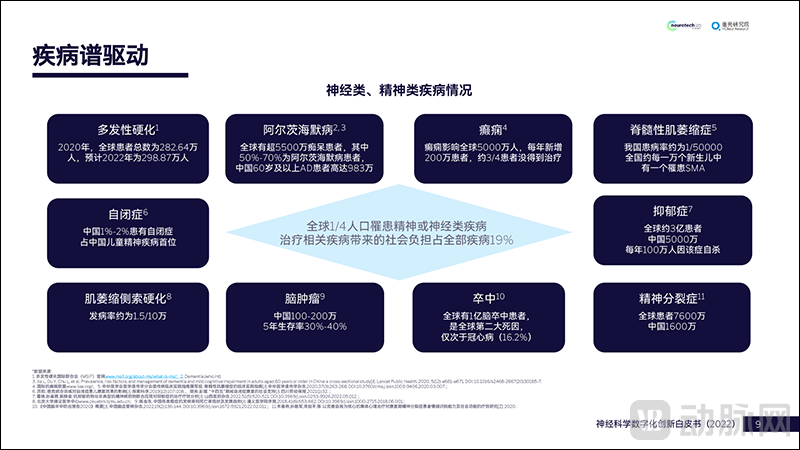
Disease Spectrum-Driven Digital Innovation in Neuroscience
More importantly, the intricate connections between the brain—an organ composed of tens of billions of neurons—the central nervous system (which includes the spinal cord), and even the peripheral nervous system with the human body have not yet been fully elucidated. For instance, although current research has identified more than 30 disease-causing genes associated with Alzheimer’s disease, this knowledge remains insufficient for predicting Alzheimer’s through genetic testing.
This has left neurological disorders in a predicament where the etiology is often unknown and there are no effective treatments, resulting in a substantial unmet need. Continued collaborative efforts across the industry are essential to develop effective pharmaceuticals, medical devices, and therapies.
The limitations of traditional treatment methods have prompted the industry to explore new approaches and strategies to break through the impasse. In recent years, rapidly advancing digital technologies have garnered increasing attention. At the policy level, China has been promoting digital innovation and applications in the healthcare sector since 2009, progressing through an initial phase (2009–2010), a startup phase (2011–2015), a steady advancement phase (2016–2019), and a pandemic-driven surge phase (2020–2021).
Since 2022, China has formulated and implemented its 14th Five-Year Plan, attaching great importance to the application of digital technologies and introducing the concept of the digital economy as the primary economic form following the agricultural and industrial economies. Under the 14th Five-Year Plan, digital technologies will be deeply integrated with healthcare to build an inclusive and convenient digital system for public welfare, advance the development of smart medical insurance, and significantly enhance the level of informatization in medical security.
The substantial unmet medical needs and policy support have driven capital to prioritize and heavily invest in digital innovations in neuroscience. According to statistics from the VCBeat Orange Database, as of the end of March 2022, a total of 63 investment firms had entered the digital neuroscience technology sector in China, including prominent investors such as Sequoia Capital China, Hillhouse Capital, CDH Investments, and Shanlan Capital.
From the perspective of investment round distribution by investment institutions, angel rounds and Pre-A rounds are the most prevalent, accounting for as high as 85% of all investments; furthermore, 68% of the total cumulative investment amounts are below RMB 10 million. This indicates that the digital neuroscience technology industry is in its early stages of development with significant room for growth; on the other hand, the industry holds substantial potential for future investment.
The industry expects digital technologies to integrate with healthcare, playing a comprehensive role in the closed-loop management of neurological disorders encompassing “prevention, diagnosis, control, treatment, and rehabilitation.” During the prevention stage, digitalization not only analyzes health record data but also provides scenarios for disease prevention and control. In the diagnosis phase, digital technologies can facilitate the digital transformation of diagnostic settings, diagnostic tools, and diagnostic results. At the control stage, digital technologies can participate in public health emergency governance, such as integrating localized public health data for infectious disease early warning and source tracing. During the treatment phase, digital technologies can help digitize therapeutic methods and treatment targets. In the rehabilitation stage, digital technologies can be extensively involved in the disease recovery process, demonstrating significant advantages in remote disease management and chronic disease management.
VCBeat Research Institute believes that digital neuroscience represents the intersection of neuroscience and digital technology. Its goal is to deliver scalable solutions by leveraging digital technologies to introduce new applications, processes, products, services, and business models into neuroscience, thereby empowering patients, healthcare institutions, research, and payers.
Like other digital technologies, neuroscience digital technology refers to the technology that converts various analog or digital signals into binary data (0s and 1s) recognizable by electronic computers for computation, processing, storage, transmission, dissemination, and reconstruction. Based on its core functions, neuroscience digital technology can assume one or several roles within the classic data model of “acquisition (input) – transmission – storage – processing – output.”
Following multi-dimensional research, VCBeat has categorized digital neuroscience technologies into seven major groups: sensing technology, communication technology, brain-computer interfaces (BCI), big data and cloud computing, artificial intelligence (AI), virtualization and simulation, and digital therapeutics. Currently, these digital neuroscience technologies are gradually entering the stages of pilot testing and commercial application. Furthermore, emerging technological concepts such as neural mesh, nanoelectrodes, and the metaverse have been continuously proposed and developed in recent years. This exceptionally dynamic technological advancement undoubtedly underscores the broad prospects of digital neuroscience technologies.
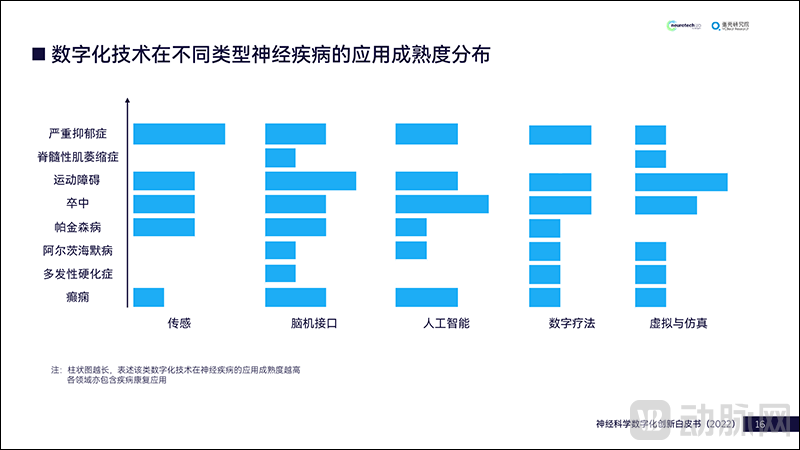
Distribution of Maturity Levels in the Application of Digital Technologies Across Different Types of Neurological Disorders
These digital neuroscience technologies have already been applied in major neurological disease scenarios. Relatively speaking, applications for conditions such as stroke, movement disorders, and depression are more mature. This is closely related to the relatively clear pathogenesis and treatment protocols of these diseases. In other neurological disease areas where pathogenesis and treatment methods remain unclear, the application of digital technologies awaits further exploration.
Specifically, these digital innovations in neuroscience offer distinct advantages in terms of informatization, network connectivity, intelligence, and personalization. For instance, artificial intelligence can assist physicians in rapidly identifying lesions in brain imaging, thereby enhancing workflow efficiency and alleviating professional burden. Furthermore, as AI systems do not suffer from fatigue, they can effectively reduce human oversights or errors. Additionally, AI facilitates the standardization of diagnostic criteria among physicians across different regions, thereby elevating the overall level of diagnostic accuracy.
Among the seven major categories of digital technologies, communication technology, big data, and cloud computing serve as foundational underlying technologies. Communication technology primarily addresses data transmission challenges in the application of technologies such as brain-computer interfaces, artificial intelligence, digital therapeutics, and virtual simulation, acting as the medium that enables data to flow from acquisition to application. Big data and cloud computing technologies process, analyze, and compute various types of large-scale data generated throughout the entire healthcare journey—including patient information, laboratory tests, medical imaging, vital signs, medication records, and consumables usage—thereby assisting physicians in better diagnosing, treating, and facilitating rehabilitation for neurological disorders.
Sensors are among the most widely applied digital technologies today. Effective sensing of human body data relies on various types of sensors, including physical, biological, and chemical sensors. Sensors used for human applications must feature compact size, lightweight design, low power consumption, high reliability, high stability, and ease of integration. Currently prevalent sensors mainly fall into three categories: motion-sensing sensors, environment-sensing sensors, and physiological parameter monitoring sensors. Among these, physiological parameter monitoring sensors are used to detect various vital signs, such as blood glucose, heart rate, and blood pressure, forming the foundation for wearable devices to deliver diverse health and medical services.
Brain-computer interfaces (BCIs) enable the acquisition of brain signals and establish connections with external devices, thereby facilitating information exchange between the brain and these devices. This is currently one of the most heavily scrutinized areas in neuroscience and will be a key determinant of whether the field can achieve further advancement. Based on whether the devices invade the brain, BCIs are currently categorized into invasive and non-invasive brain-computer interfaces.
Artificial intelligence (AI) is a new technological science dedicated to researching and developing theories, methods, technologies, and application systems that simulate, extend, and expand human intelligence. Its research objective is to enable intelligent machines to hear, see, speak, think, learn, and act. AI technologies applied in healthcare primarily process data such as medical images, speech, text, and biochemical information, encompassing technologies including image analysis, natural language processing (NLP), voice assistants, knowledge graphs, drug discovery, AI chips, and brain-inspired intelligence.
Virtualization and simulation are currently dominated by the application of XR technologies. XR is an umbrella term encompassing VR, AR, MR, and subsequent technological pathways. VR, or Virtual Reality, utilizes computing devices to simulate a three-dimensional, realistic environment, providing users with simulated sensory experiences such as vision and hearing. AR, or Augmented Reality, typically captures real-world imagery through devices like cameras, processes it using information technology, and overlays additional information such as sound, animations, and images for presentation to the user. MR, or Mixed Reality, merges the virtual and real worlds to create new visual environments. A key distinction between MR and AR/VR is its ability to enable three-dimensional coexistence and real-time interaction.
Digital therapeutics (DTx) have emerged as a popular technological category in recent years. They refer to treatment or intervention measures provided to patients, grounded in evidence-based medicine. Driven by high-quality software programs, these interventions essentially represent the digitalization of healthcare services, with core functions aimed at preventing, managing, or treating specific diseases. DTx can be used independently or in conjunction with medications, medical devices, or other therapies. The concepts of digital therapeutics, digital medicine, and digital health overlap; in fact, they form a hierarchical inclusion relationship: Digital Health > Digital Medicine > Digital Therapeutics. Specifically, digital medicine targets patients with specific diseases and comprises technologies, platforms, or products that align with the concept of digital health and are supported by evidence, making them suitable for integration into clinical workflows; however, they do not necessarily involve software-driven interventions or treatments. In contrast, digital health addresses both healthy individuals and patients, encompassing the broadest scope of application.
VCBeat Research Institute believes that the integration of neuroscience with digitalization in its development will bring positive impacts to various stakeholders in the healthcare industry. From the perspectives of the four primary participants—major medical institutions, pharmaceutical and medical device companies, governments, and patients—digital innovations in neuroscience demonstrate value empowerment for different stakeholders and across various stages of healthcare delivery.
For healthcare institutions, digital innovation in neuroscience can enhance their engagement in managing patients’ disease courses across the entire care continuum—pre-diagnosis, during diagnosis and treatment, and post-diagnosis—thereby optimizing treatment plans and improving therapeutic outcomes. For pharmaceutical and medical device companies, digital technologies can strengthen collaboration with healthcare institutions, highlighting and amplifying the product advantages and therapeutic efficacy of traditional offerings, thus boosting corporate efficiency. For governments, given that neurological disorders account for a significant proportion of healthcare expenditures, the adoption of digital technologies helps reduce spending on these high-cost conditions, alleviates the overall societal healthcare burden, and encourages further policy support for digital applications in healthcare. For patients, digital technologies complement medical interventions in screening and rehabilitation, providing more comprehensive services, enhancing precision in diagnosis and treatment, and offering greater guidance during out-of-hospital rehabilitation.
VCBeat believes that, in the future, driven by digital innovations in neuroscience, the healthcare pathway for neurological disorders will shift from “assessment and diagnosis” to “disease prevention,” while clinical applications will expand from “acquired diseases” to “congenital diseases.” Furthermore, multi-stakeholder, integrated collaborative innovation will become the mainstream approach.
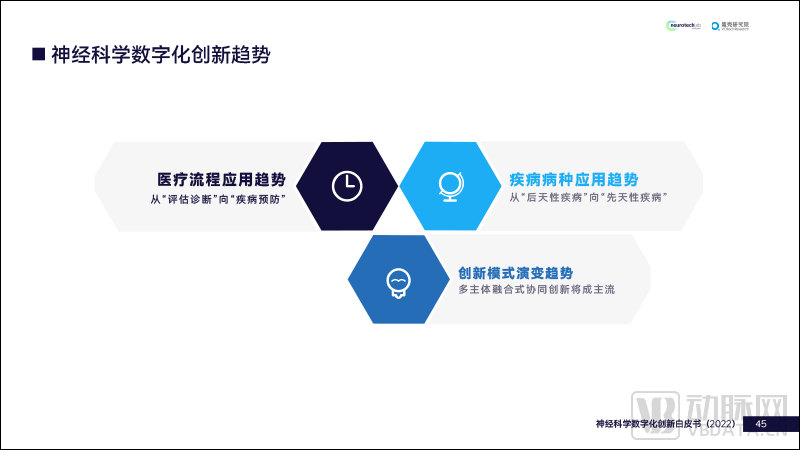
Digital Innovation Trends in Neuroscience
First, the application of digital technologies in the healthcare workflow for neurological disorders will undergo a stepwise innovative evolution from “assessment and diagnosis” to “precision medicine.” In the early stage, digital technologies primarily assist in the assessment and diagnosis of neurological disorders, thereby improving diagnostic accuracy. In the intermediate stage, they will play a significant role in rehabilitation and post-treatment management, enhancing rehabilitation outcomes and facilitating long-term patient follow-up. In the long term, they will address therapeutic challenges by assisting in surgical procedures and supporting the development of new drugs. Through precision medicine, previously unrecognized aspects of neurological disorders will be explored and revealed, enabling efficient prevention, reducing incidence rates, and minimizing healthcare expenditures to the greatest extent possible.
Secondly, the application of digital technologies in neurological disorders will evolve from focusing on “acquired diseases” to “congenital diseases.” Digital technologies have initially provided auxiliary support for diagnosis, treatment, rehabilitation, and management of acquired neurological disorders with well-understood pathogenic mechanisms and existing partial pharmacotherapies. These conditions benefit from abundant clinical data for model training, enabling digital technologies to effectively identify disease characteristics and therapeutic approaches. In contrast, congenital neurological disorders, characterized by limited case numbers and insufficient clinical data, pose higher technical barriers for digital solutions, requiring prolonged efforts to achieve technological breakthroughs.
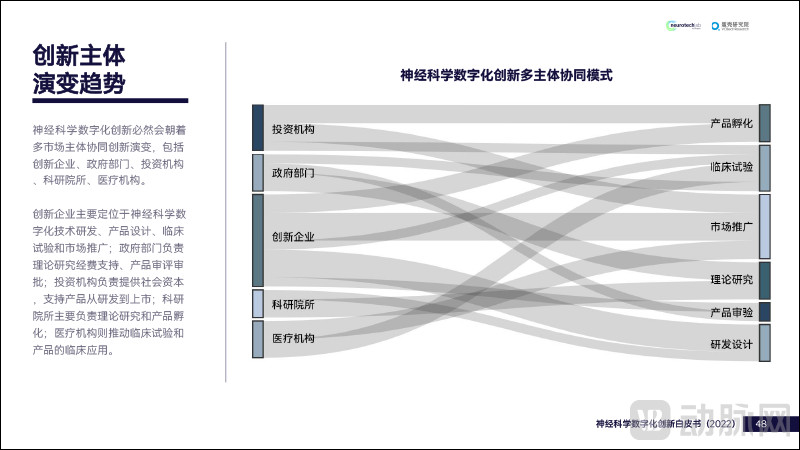
Multi-Stakeholder Collaborative Model for Digital Innovation in Neuroscience
Finally, digital innovation in neuroscience will inevitably evolve toward collaborative innovation involving multiple market stakeholders, including innovative enterprises, government agencies, investment institutions, research institutes, and medical institutions. Innovative enterprises are primarily positioned to conduct R&D of digital neuroscience technologies, product design, clinical trials, and market promotion; government agencies are responsible for providing funding support for theoretical research and for the review and approval of products; investment institutions provide social capital to support products from R&D through to market launch; research institutes are mainly responsible for theoretical research and product incubation; and medical institutions drive clinical trials and the clinical application of products.
Furthermore, for the research and development of pharmaceuticals and medical devices for neurological disorders, the digitalization of neuroscience can provide digital measurement tools for diseases. By leveraging technologies such as sensors, artificial intelligence, virtual reality, and digital therapeutics, it can highlight and amplify the product advantages and therapeutic efficacy of traditional pharmaceutical and medical device companies, thereby enhancing R&D efficiency and contributing to the ultimate conquest of neurological diseases.
References:
1. Summary of the Report on Stroke Prevention and Treatment in China (2020) [J]. Chinese Journal of Cerebrovascular Diseases, 2022, 19(2): 136-144. DOI: 10.3969/j.issn.1672-5921.2022.02.011
2. Ge Yan, Sun Xirong, Chen Xiaojun. Analysis of the therapeutic efficacy of combined use of antidepressants and atypical antipsychotics in the treatment of depression[J]. Shanxi Medical Journal, 2022, 51(5): 520-521. DOI: 10.3969/j.issn.0253-9926.2022.05.012
3、Dementia (who.int)
4、Jia L, Du Y, Chu L, et al. Prevalence, risk factors, and management of dementia and mild cognitive impairment in adults aged 60 years or older in China: a cross-sectional study[J]. Lancet Public Health, 2020, 5(12): e661-e671. DOI: 10.1016/s2468-2667(20)30185-7
Note: The copyright of all content in this white paper (including text, images, audio, video, and layout design, etc.) belongs to Biogen Biotechnology (Shanghai) Co., Ltd. (hereinafter referred to as the "Copyright Holder"), which has authorized Beijing Danhuang Technology Co., Ltd. to publish it. Without the written authorization of the Copyright Holder, no enterprise, individual, or website may reprint, repost, copy, excerpt, publish, or otherwise use all or part of the materials herein.
Biogen-170695
I. Background of Digital Innovation in Neuroscience
1. Disease Spectrum-Driven
2. Policy-Driven
3. Capital-Driven
4. Technology-Driven
II. A Panoramic View of Digital Innovation in Neuroscience
1. Definition and Maturity of Digital Technologies in Neuroscience
2. Digital Technologies Highlight the Advantages of Digital Innovation in Neuroscience
3. Digital Innovation Technologies and Participants in Neuroscience
III. The Value of Digital Innovation Technologies in Neuroscience
1. Analysis of the Value of Digital Innovation in Neuroscience
Scan the QR code to download the report: