

Newland Bio Announces Filing of IPO Prospectus: Pioneering Plant-Derived Exosome Therapeutics via Proprietary ATLaS Synthetic Biology Platform
“Plant-derived exosomes” are a class of naturally occurring, lipid-bilayer extracellular vesicles that facilitate intercellular material and information exchange in plants. With a diameter of approximately 50–150 nm, they can deliver various cargoes, including nucleic acids, proteins, lipids, and small-molecule compounds. Their inherent “delivery” advantage has made them a highly promising drug delivery vehicle. Currently, most exosome-based therapeutics under investigation are derived from human cells, representing the most common and rapidly advancing research direction in this field.
However, in 2018, a company charted a new course in the Torch High-Tech Industrial Development Zone of Weihai, Shandong Province, by focusing on the field of “plant exosomes.” It became the first enterprise in China to deeply engage in the development of “plant exosome”-based drugs: Weihai Newlan Biotechnology Co., Ltd. (hereinafter referred to as “Newlan Bio”). Newlan Bio specializes in key technologies for extracting fungal and plant exosomes, as well as biomedical applications using exosomes as drug-delivery platforms. By loading small-molecule chemical drugs, nucleic acids, and protein therapeutics into exosomes, the company aims to achieve therapeutic effects such as anti-tumor and anti-infective treatments.

Wang Haoran, Founder of Newlan Bio
The company’s founder, Wang Haoran, graduated from Shenyang Pharmaceutical University in 2003 and earned his Ph.D. from the University of Texas Southwestern Medical Center in 2009. From 2009 to 2011, he completed the first academic high-throughput screening of potassium ion channel targets and studied the mechanisms of their inhibitors at the High-Throughput Screening Center of Johns Hopkins University School of Medicine. Driven by strong research interests, he returned to UT Southwestern to investigate the mechanisms and physiological significance of massive endocytosis (MEND). In 2012, he joined Novartis Institutes for BioMedical Research (NIBR) in the United States as a Laboratory Head, where he was responsible for drug screening and cardiac toxicity assessment. From 2017 to 2019, he served as a Senior Investigator at the Broad Institute of MIT and Harvard, where he led the establishment and optimization of a drug development platform for neuronal ion channels.
Regarding the establishment of Newlan Bio, Dr. Wang Haoran stated that this move stems not only from his long-term accumulation of expertise in cellular vesicle transport mechanisms and the MEND (Multifunctional Envelope-type Nano Device) field, but also from the discovery of the immense potential of plant-derived exosomes as drug carriers during previous research. “The exosome sector holds significant potential to give rise to new classes of therapeutics comparable to monoclonal antibodies and mRNA/LNP formulations. Among these, plant-derived exosomes offer particularly distinct advantages in terms of cost and pharmacological activity. The future development of novel drugs will largely depend on advancements in drug development methodologies, upgrades in drug delivery systems, and an enhanced understanding of what constitutes next-generation therapeutics,” Dr. Wang predicted. “Founding Newlan Bio allows us to focus dedicatedly on the development of innovative drug carriers and therapeutic modalities. In developing plant-derived exosome-based medicines, we are not merely creating a single drug; rather, we are undertaking original development of a novel drug platform capable of continuously generating diverse therapeutics. Since my university days, I have dreamed that one day, consuming a genetically engineered apple could achieve therapeutic effects. With plant exosome technology and synthetic biology, this dream is becoming increasingly attainable.”
Plants, animals, and microorganisms universally possess the ability to secrete exosome-like nanovesicles. Similar to those in animals, plant exosomes are rich in various types of RNA, proteins, lipids, and small molecules, providing essential intercellular communication during physiological processes such as plant development. Furthermore, exosomes may serve as the first line of defense for plants’ self-protection, playing a crucial role in anti-infection responses and cross-species communication. “Plants lack cellular and antibody-based immune systems like humans, as well as CRISPR defense systems that microbes use against bacteriophages. So why haven’t plants been wiped out by pathogens such as plant viruses, bacteria, and fungi? In 2018, researchers in the United States discovered for the first time that plant exosomes and their bioactive contents (including small nucleic acids) might be one of the key mechanisms by which plants resist pathogenic infections,” continued Dr. Wang Haoran. “So why can’t we learn from and leverage this plant defense strategy to develop drugs for treating human diseases?”
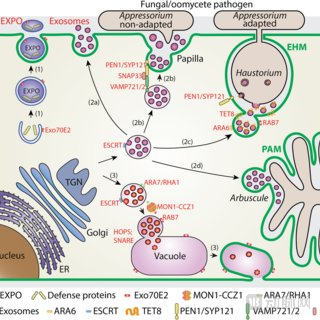
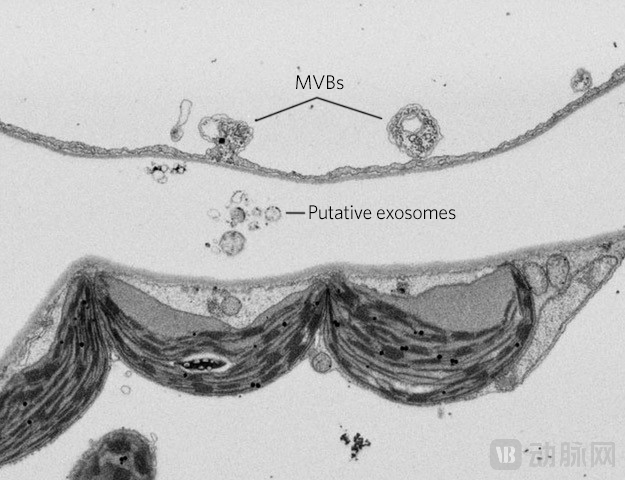
Biosynthetic Pathways, Functions, and Electron Microscopy Images of Plant Exosomes
Compared with animal-derived exosomes, the advantages of plant-derived exosomes are mainly highlighted in the following aspects:
I.Lower Cost: Producing 1 g of high-purity exosomes requires less than 300 g of plant material, whereas producing the same weight from mammalian cells necessitates more than 300 L of cell culture volume, resulting in a cost difference of over three orders of magnitude;
II.Low immunogenicity: Edible plant-derived exosomes exhibit extremely low oral immunogenicity, whereas exosomes from specific plants demonstrate stronger immune-activating capabilities following intratumoral injection;
III.Flexible Administration Routes: Drug delivery can be achieved via oral administration, transdermal delivery, intratumoral injection, and intranasal administration;
4. Enhanced Stability: Plant exosomes exhibit exceptional stability, remaining viable for several years when frozen and for over one year at room temperature in lyophilized form. They demonstrate high oral bioavailability due to their ability to withstand gastric acid and intestinal fluids for extended periods.
V.: Specific exosomes have been demonstrated to possess tissue-penetrating capabilities across the intestine, skin/mucosa, and the blood-brain barrier;
VI.High Natural Medicinal Value: Exosomes derived from ginseng, ginger, and honeysuckle possess natural medicinal value in areas such as anti-tumor activity, gut microbiota modulation, viral inhibition, and anti-inflammation.
As the potential of plant-derived exosomes as therapeutics and drug delivery vehicles continues to be explored, Flagship Pioneering incubated and launched Senda Biosciences in 2017 to develop inter-organ biological medicines based on plant exosomes. In 2020, Senda merged with Kintai Therapeutics, FL51, and FL62 to form the current Senda Biosciences, securing investment from multiple internationally renowned venture capital firms.
As the first company in China to focus on the mass production and commercial translation of plant-derived exosomes, Newland Bio has established the ATLaS platform for plant exosome APIs and synthetic biology, as well as the SMDiS exosome drug-loading platform tailored for drugs with varying properties and administration routes. By leveraging the robust drug-loading capacity of exosomes combined with the powerful manufacturing capabilities of synthetic biology, the company enables the production, loading, and delivery of exosome-based combination therapeutics—including small-molecule drugs, proteins, and nucleic acids—ultimately realizing high-value-added pharmaceutical products.
Due to variations in properties such as tissue penetration, cellular targeting, and native bioactive content among different plant-derived exosomes, appropriate plant-derived exosome active pharmaceutical ingredients (APIs) are selected based on specific functional requirements for exosome drug development. Leveraging its ATLaS platform, Newland Biotech has purified and developed hundreds of distinct plant- and fungus-derived exosomes, establishing the industry’s largest searchable exosome library.
It is reported that Newlan Bio’s ATLaS platform has established a pilot production line capable of purifying exosomes from over 100 kilograms of plant raw materials per batch. The facility can produce kilogram-scale quantities of high-purity, highly stable exosome powder weekly for use as an active pharmaceutical ingredient (API) or as a nanocarrier, at approximately one-thousandth the cost of cell culture-derived exosomes.
Following the identification of suitable plant-derived exosomes, engineering modifications are a necessary step to enhance their therapeutic potential. These engineered plant-derived exosomes can be designed to express or enrich specific biomolecules, thereby achieving drug-loading capabilities or the desired therapeutic effects.
Newlan Bio further reduces batch-to-batch variability of plant-derived exosomes through standardized plant cultivation processes. The company plans to establish a hydroponic plant production base exceeding 3,000 square meters and plant cell culture equipment with a capacity of over 1,000 liters, thereby achieving GMP-compliant plant cultivation and exosome production lines, as well as standardized, stable, controllable, and high-quality production of plant-derived exosome active pharmaceutical ingredients (APIs).
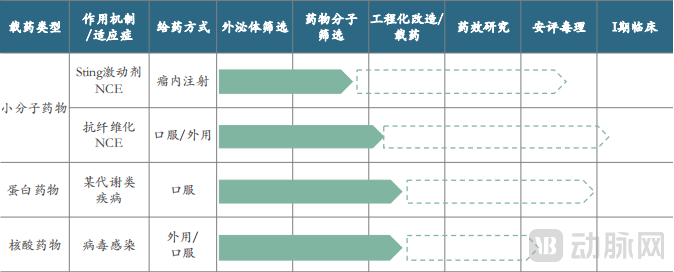
Newland Biotech Exosome Therapeutic Pipeline
The founding team of Newlan Bio possesses extensive experience in small-molecule and large-molecule drug R&D, as well as complex formulation development, gained from years at globally renowned pharmaceutical companies such as Novartis and Merck. By leveraging computer-aided drug design (CADD) tools—including Schrödinger, Discovery Studio, and AutoDock—alongside virtual screening, phenotypic screening, and traditional medicinal chemistry approaches, the team has built a patent portfolio encompassing more than three first-in-class (FIC) small-molecule drug candidates. Additionally, they have developed and validated several unique plant- and fungal-derived protein carrier systems for synthetic biology module integration. Based on Newlan Bio’s proprietary ATLaS and SMDiS platforms, the company has established four core drug pipelines covering tumor immunotherapy (STING agonists combined with exosomes), anti-fibrosis, metabolic diseases, and viral infections. By employing diverse drug delivery modalities, Newlan Bio has overcome the limitations of intratumoral injection associated with extracellular exosome therapeutics, thereby unlocking broader application potential and market opportunities.
On the other hand, plant bioreactors and molecular farming technologies have witnessed significant industrialization progress in recent years. The plant exosome industry remains in its nascent stage globally, characterized by relatively few patent barriers and substantial growth potential. As a pioneer in plant exosome development both domestically and globally, Newlan Bio can fully leverage the mass production advantages of plant exosomes and the policy support for the modernization of Traditional Chinese Medicine (TCM). By collaborating with pharmaceutical companies at home and abroad, the company can accelerate the establishment of standardized production lines and a comprehensive product pipeline, thereby positioning itself as a trailblazer and standard-setter in the plant exosome industry.
In terms of financing, Newlan Biology has completed its angel round and will soon launch its Pre-A round, with Probe Capital serving as the financial advisor. The funds raised will be primarily used to advance its pipeline of plant-derived exosome therapeutics.