

Peijia Medical's Fastunnel®—China's First Delivery Balloon Dilatation Catheter—Receives NMPA Approval, Offering a Better Solution for Intracranial Stenosis Patients
Peijia Medical
Developer of Cardiac and Cerebrovascular Interventional Medical Devices
On May 18, Peijia Medical’s independently developed Fastunnel® Over-the-Wire Balloon Dilatation Catheter received marketing approval from the National Medical Products Administration (NMPA). It is indicated for balloon angioplasty of intracranial arterial stenosis to improve cerebral ischemia, and can also be used to provide access for diagnostic and therapeutic devices.
According to the introduction,FastunnelIt is China’s first delivery-type balloon dilation catheter, featuring an integrated “balloon + microcatheter” design that combines balloon dilation functionality with the capability to deliver diagnostic and therapeutic devices such as intracranial stents.
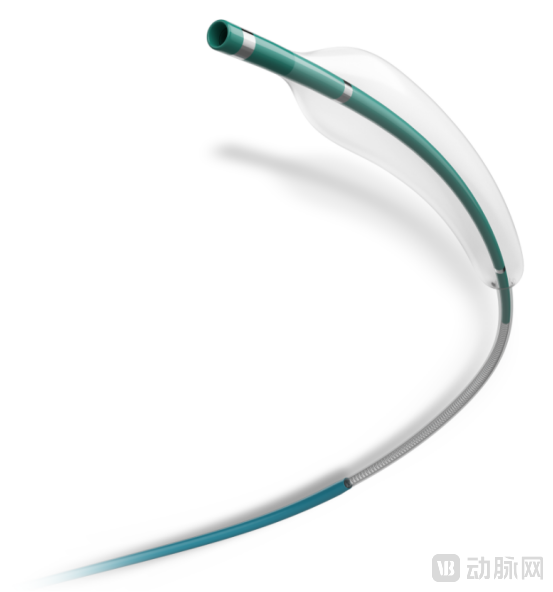
ApprovedFastunnel®Delivery-type balloon dilation catheters will fundamentally transform interventional procedures for intracranial stenosis: shifting from complex, technically challenging interventions to simple, easy-to-perform procedures.
Professor Liu Jianmin from the Cerebrovascular Disease Center at Shanghai Changhai Hospital stated, “The delivery-type balloon dilation catheter, based on zero-exchange technology, will reduce exchange maneuvers during procedures, thereby minimizing complications associated with exchanging guidewires and catheters, ultimately lowering procedural risks and enhancing surgical safety.”
In previous endovascular interventions for the treatment of intracranial atherosclerotic stenosis (ICAS), the procedure typically involved twelve steps, as illustrated in the figure below. After complete stent deployment, if follow-up angiography revealed suboptimal stent expansion, further wire and balloon exchanges were required to perform post-dilation within the stent.
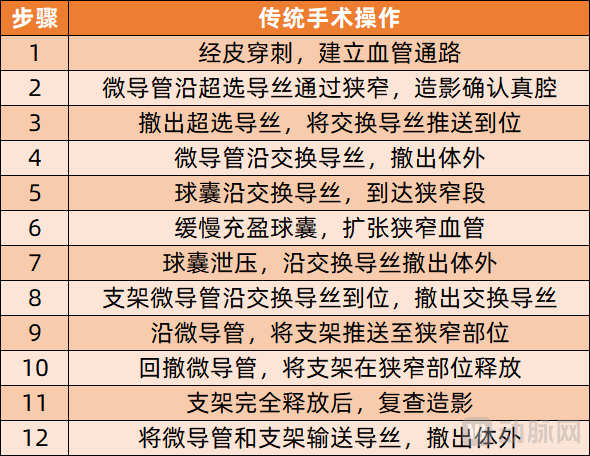
It is evident that this surgical procedure involves multiple exchanges of guidewires, catheters, and balloons, making it highly complex. Meanwhile, clinical studies have shown that during endovascular interventions for intracranial atherosclerotic stenosis (ICAS), physicians are highly prone to causing guidewire-induced vascular perforation when exchanging guidewires, catheters, and balloons, thereby leading to complications.
Fortunately, compared to other products on the market, the Fastunnel® delivery-type balloon dilation catheter integrates the functions of both a balloon catheter and a microcatheter. Using only the Fastunnel®, clinicians can achieve both balloon dilation and the delivery of diagnostic and therapeutic devices, such as intracranial stents. With the Fastunnel® delivery-type balloon dilation catheter, clinicians can eliminate the need for multiple device exchanges during surgical procedures.
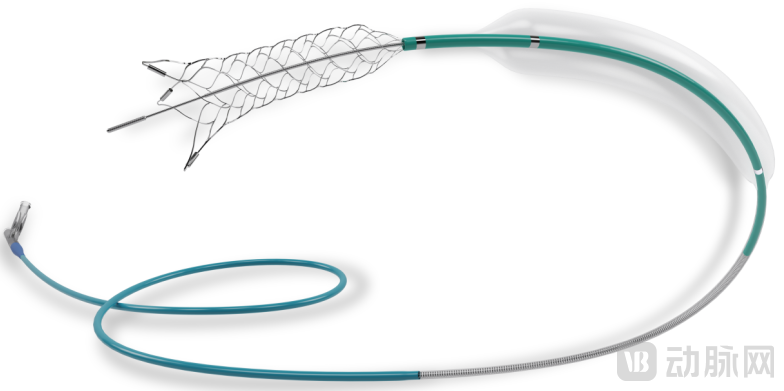
Clinically, the delivery-type balloon dilation catheter significantly simplifies intraoperative procedures, thereby reducing complications associated with surgical manipulation, lowering surgical risk, and enhancing safety. Furthermore, the reduction in procedural steps shortens the learning curve, enabling physicians to master the technique more rapidly and ultimately benefiting a larger number of intracranial atherosclerotic stenosis (ICAS) patients in China.
It is worth noting that integrating the two major functions of balloon dilation and stent delivery into a single catheter is easier said than done.
Wang Chen, Head of the Neurointerventional Business Division at Peijia Medical, stated: “Catheters used to deliver different devices must possess distinct capabilities. For instance, microcatheters designed specifically for stent delivery contain metallic structures within their lumens to provide robust support, thereby ensuring smooth stent deployment. In contrast, the lumen of a balloon dilation catheter is relatively softer to facilitate better access to the lesion site.”
Therefore, dedicated microcatheters for stent delivery require a “stiffer” lumen, while balloon dilation catheters require a “softer” lumen. Balancing this contrast between “stiffness” and “softness” is one of the key challenges in the development of delivery-type balloon dilation catheters.
To address R&D challenges, Peijia Medical has engaged in repeated, in-depth exchanges with clinical experts to design products based on clinical needs; meanwhile, its R&D team has conducted extensive basic research, including studies on materials and manufacturing processes.
Building on Peijia Medical’s foundational research and prior accumulation, the company progressed from project initiation and R&D to clinical registration in less than three years, securing approval for Fastunnel, the first domestically produced delivery-type balloon dilation catheter.
Unlike many devices that imitate overseas products, Fastunnel is the first domestically developed delivery-type balloon dilation catheter in China, representing an innovative medical device entirely originated and researched within the country.
Unlike the disease spectrum observed in European and American populations, the proportion of stroke cases accompanied by intracranial atherosclerotic stenosis (ICAS) in China is as high as 30%–50%. Clinically, ICAS is mostly asymptomatic in its early stages; however, as it progresses to moderate or severe stenosis, patients are highly likely to develop symptoms such as motor impairment, hemianopia, aphasia, and coma. Furthermore, ICAS may lead to complications including stroke, coronary artery stenosis, and lower extremity arterial stenosis.
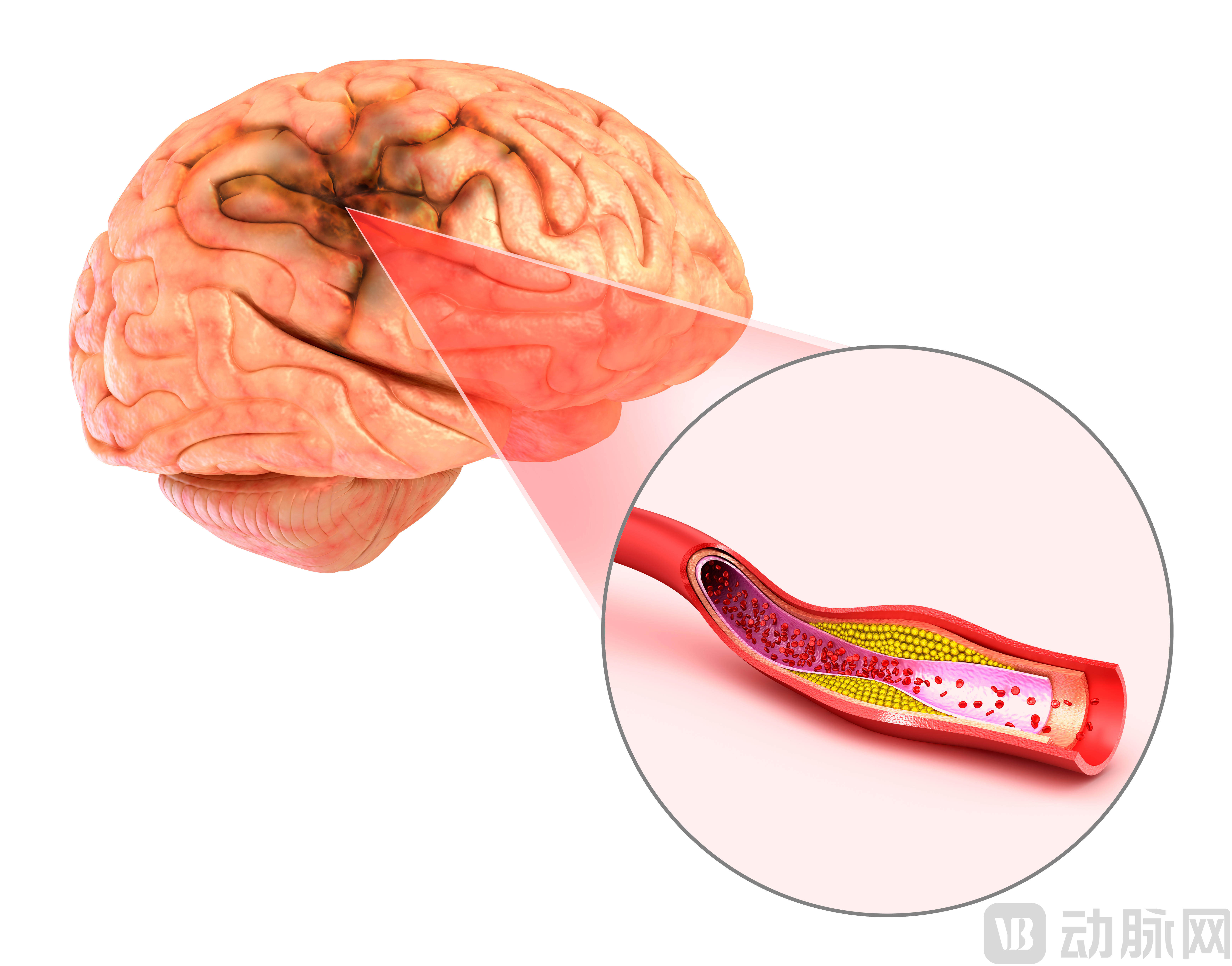
(Intracranial Atherosclerotic Stenosis)
Historically, the treatment for intracranial atherosclerotic stenosis (ICAS) was medical therapy. However, for patients with moderate-to-severe stenosis, the efficacy of medical therapy is extremely limited; these patients remain at significant risk of stroke despite medication, and stroke carries high rates of disability and mortality.
In addition to pharmacological therapy, cerebrovascular disease specialists also consider endovascular interventions such as cardiac stent implantation and angioplasty, aiming to treat intracranial atherosclerotic stenosis (ICAS) through these procedures.
However, endovascular intervention for intracranial atherosclerotic stenosis (ICAS) involves numerous devices and highly complex procedural techniques, requiring multiple exchanges of catheters and guidewires.
Professor Liu Jianmin stated, “The walls of intracranial vessels are thinner than those of peripheral vessels, and they float within the subarachnoid space with insufficient support, making them extremely delicate and soft. During the exchange of catheters and guidewires, physicians can easily perforate cerebral blood vessels, thereby triggering complications. Consequently, the complication rate associated with this procedure has historically remained at a high level.”
Addressing the issue of complications prone to occur during exchange procedures, Professor Liu Jianmin proposed: integrating the functions of the balloon dilation catheter and the stent delivery catheter used in surgery into a single catheter to complete the procedure with one device. This approach would reduce the need for exchanging guidewires, catheters, and balloons, thereby minimizing complications associated with such exchanges.
Professor Liu Jianmin stated, “Physicians are the discoverers of clinical problems, while innovative medical devices serve as solutions to address these issues. Only by identifying the problems can we solve them. From this perspective, clinicians who articulate clinical challenges and distill them into product and technical specifications are at the core of medical device innovation. Furthermore, once clinicians have clearly defined the clinical problems, they must collaborate with teams, enterprises, or research institutions capable of providing solutions, thereby ensuring that clinical needs are effectively addressed.”
Consequently, Professor Liu Jianmin chose to collaborate with Peijia Medical (Jiaqi) to explore the translation of innovative concepts into tangible products.
Wang Chen stated, “Since 2012, Peijia Medical has maintained close contact with Professor Liu Jianmin, while strengthening its internal capabilities and accumulating talent, technology, and capital. Subsequently, after conducting project feasibility analysis, Peijia Medical officially initiated the development of a delivery-type balloon dilation catheter.”
Currently, the delivery-type balloon dilation catheter has been approved for market launch. Next, Peijia Medical needs to conduct post-market clinical studies and product promotion to benefit more patients.
Meanwhile, Peijia Medical plans to use the outcomes of this medical-engineering collaboration as a template to expand the scope of such partnerships, with the aim of developing more original products that meet clinical needs.
Wang Chen stated, “Since its inception, Peijia Medical has placed great emphasis on the integration of medicine and engineering. For instance, the Jasper Intracranial Electrolytically Detachable Coil, the first product launched by Peijia’s subsidiary Jiaqi Biologics, is a testament to this collaborative approach. In the early stages, Peijia Medical’s R&D team frequently consulted clinical experts on coil-related issues and refined the coil design based on their feedback.”
For the vast majority of domestic medical device companies, the integration of medicine and engineering remains an innovative model still in the exploratory stage, with many pain points urgently needing to be addressed. For example, there is a significant disparity between clinical language and engineering language; thus, the primary challenge facing this integration is “translation.”
For instance, when a physician describes a product as “very stiff” during use, it does not necessarily indicate high material hardness; rather, it may reflect poor distal pushability or other factors. Furthermore, the term “very stiff” can carry different meanings among different clinical experts.
In response to this issue, Peijia Medical shared its experience with an innovative model integrating medicine and engineering. First, Peijia Medical established a professional marketing team primarily responsible for communicating with clinical experts to understand physicians’ specific needs and detailed feedback on products, ultimately relaying this information to engineers.
Second, Peijia Medical also arranged for its engineering team to study clinical-related knowledge to better understand physicians’ needs. Meanwhile, clinicians gradually learned or gained an understanding of engineering principles through their interactions with Peijia Medical’s R&D team. In this way, clinicians and engineers can better comprehend each other’s perspectives and jointly facilitate product commercialization.
Today, Peijia Medical has developed a structured process for integrating medical expertise with engineering. Starting from the initial concept proposed by physicians, Peijia conducts feasibility studies and assesses product development complexity. Upon approval, the project is formally initiated. This is followed by product development, during which clinical experts provide support at various stages, including requirements confirmation, product validation, product testing, animal studies, and clinical trials.
It should be noted that in this medical-engineering collaboration model, clinicians may participate in any stage—such as providing feedback on product usage, conducting product testing, performing animal studies, or carrying out clinical trials—rather than being required to engage from the initial ideation phase.
Leveraging an innovative med-tech integration model and the support of its R&D team, Peijia Medical has completed its product portfolio in the field of hemorrhagic stroke. In addition to coil products for embolization, the company offers a range of access products, including intermediate catheters, distal access guide catheters, guide catheters, microcatheters, and microwires. For acute ischemic stroke, Peijia Medical has launched a comprehensive solution comprising thrombectomy stents, intermediate guide catheters, aspiration catheters, and balloon guide catheters. Furthermore, Peijia Medical has refined its series of products for intracranial atherosclerotic stenosis, which includes delivery-type balloon dilation catheters, balloon dilation catheters, intermediate guide catheters, microwires, and microcatheters.
Next, Peijia Medical will conduct post-market clinical studies to provide additional clinical evidence for its delivery-type balloon dilation catheter, while simultaneously initiating physician training to ensure adequate preparation for product promotion.
In conclusion, I would like to share Professor Liu Jianmin’s perspective on the future of China’s neurointerventional field over the next decade: Over the past two decades, China’s healthcare sector has grown from scratch and expanded significantly. However, while China is a major player in neurointerventions, it is not yet a global leader. Therefore, propelling China’s neurointerventional field from “large” to “strong” over the next 10–20 years represents the new responsibility borne by today’s generation of cerebrovascular disease specialists and neurointerventional entrepreneurs.
Note: A search of the NMPA database confirms that the Fastunnel® delivery balloon dilation catheter is currently the first delivery-type balloon dilation catheter in China’s neurointerventional field.