

Shanghai WeDoctor Internet Hospital Advances to Smart Healthcare 3.0 with 'Internet + AI' Upgrade
On June 6, marking the arrival of China’s 27th National “Eye Care Day,” Shanghai Weiyi Hospital Internet Hospital (hereinafter referred to as “Shanghai Weiyi Internet Hospital”) joined hands with multiple hospitals and professional health platforms to launch the “Eye Care Month” public welfare campaign, working together to build a vibrant vision for comprehensive health.
During the event, which lasted for more than half a month, Shanghai WeDoctor Internet Hospital not only convened nearly 100 ophthalmology experts to provide free online consultations and live-streamed science popularization sessions, but also continuously advanced the smart upgrade of its “Internet Hospital 3.0” platform. By exploring the implementation of “AI + Internet Healthcare” and applying cutting-edge digital health technologies such as AI-assisted ophthalmic diagnostic systems, the hospital enabled more patients to access professional, convenient, and intelligent eye care services.
 "Eye Care Month" Public Welfare Campaign Launches
Amid the pandemic, online teaching and remote work have gradually become “essential needs,” leading to increased visual demand and growing public concern over eye health. The White Paper on Eye Health in China shows that the overall prevalence of myopia among children and adolescents in China is 53.6%, exceeding 90% among college students. Meanwhile, age-related eye diseases such as senile cataracts, glaucoma, and age-related macular degeneration present a severe epidemiological situation.
To promote eye health awareness and guide patients with eye diseases to seek medical care scientifically, WeDoctor, in collaboration with the Eye & ENT Hospital of Fudan University, Shanghai Eye Disease Prevention and Treatment Center, Baidu Health, Aier Eye Hospital, and Nanfang Health, has launched a large-scale public welfare campaign for Eye Care Month titled “Health Together, Bright Vision.” The event has attracted enthusiastic participation from ophthalmology experts at major medical institutions in Shanghai and across China. In addition to addressing patient concerns through live video consultations, these experts have also provided free online consultations and advice via the WeDoctor Internet Hospital. Patients can access the Eye Care Month campaign page on the WeDoctor APP or the WeDoctor Health Platform WeChat Mini Program to initiate free consultations with online experts.
In response to the surge in ophthalmic consultation demands among Shanghai residents following the lifting of lockdown measures, Shanghai WeDoctor Internet Hospital, serving as the service platform for this initiative, has intelligently iterated and upgraded its platform services. By deploying advanced digital health products such as an AI-assisted ophthalmic diagnostic system, the platform supports ophthalmology specialists in delivering efficient and high-quality care to a large number of patients.
According to reports, this AI product, named “Computer-Aided Diagnostic Software for Fundus Imaging,” has been approved by the National Medical Products Administration (NMPA) and cleared for market launch. It assists physicians in capturing and analyzing patients’ retinal images, enabling rapid identification of ophthalmic conditions such as age-related macular degeneration, pathologic myopia, and retinal detachment. Additionally, it aids in diagnosing systemic diseases, including diabetes, hypertension, and cardiovascular and cerebrovascular disorders, earning widespread acclaim from both healthcare providers and patients.
Professor Zhang Qunhua, Vice Chairman and Secretary-General of the Internet Healthcare Branch of the China Medical Promotion Association and Honorary President of Shanghai WeDoctor Internet Hospital, stated that ophthalmic AI can serve as a “smart assistant” to ophthalmologists. It particularly helps physicians accelerate the diagnosis and classification of eye diseases, detect abnormalities, and facilitate referrals, thereby reducing clinicians’ workload and lowering the rate of misdiagnosis.
It is reported that the “Computer-Aided Diagnostic Software for Fundus Imaging” was jointly developed by WeDoctor, the Ruiyi Artificial Intelligence Research Center of Zhejiang University, and Beijing Tongren Hospital. Adopting a model of “ocular image data + AI-assisted diagnosis,” the software can be integrated with automated fundus cameras into an all-in-one intelligent device, or provide ophthalmic healthcare professionals with expert-level AI assistants via the cloud-based “Intelligent Fundus Screening Doctor.” Data show that the software achieves both sensitivity and specificity exceeding 90% in detecting diabetic retinopathy, with diagnostic accuracy comparable to that of top ophthalmology experts.
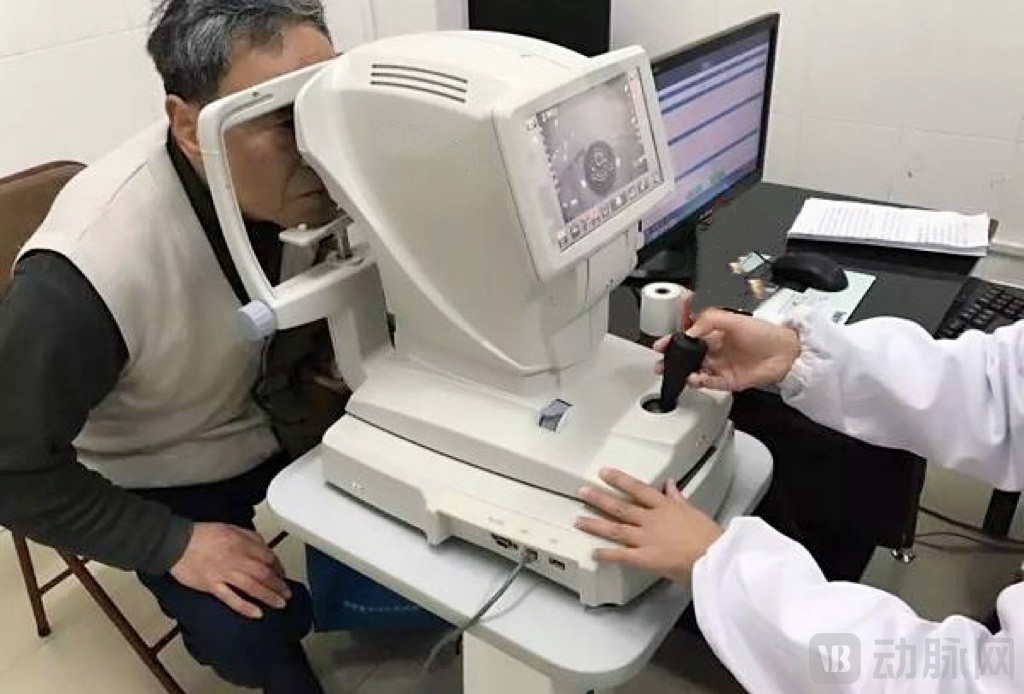 Ophthalmic AI System Assists Physicians in Diagnosing and Treating Patients
This is, in fact, a microcosm of the technological and service upgrades at Shanghai WeDoctor Internet Hospital. Since its launch, the platform has leveraged its multidimensional capabilities in “medical care, pharmaceuticals, insurance, and data” to continuously deepen the integrated application of emerging technologies such as artificial intelligence (AI), big data, and the internet. For instance, it has deployed AI-assisted diagnostic products including ophthalmology AI, the Western medicine “Ruiyi Intelligent Doctor,” and the traditional Chinese medicine “Huatuo Intelligent Doctor.” It also utilizes intelligent prescription review systems to promote rational drug use and employs big data and AI assistance to provide precise, whole-course disease management for patients with chronic conditions. These efforts aim to build an “AI + Internet Healthcare” service ecosystem, thereby enhancing the platform’s medical service standards.
Professor Zhang Qunhua stated that, as a clinical decision support tool, medical AI plays a significant role in enhancing the efficiency and quality of healthcare services. “By integrating with diverse clinical scenarios, AI will bring about substantial changes to the diagnosis, treatment, and prevention of diseases.”
More importantly, in the view of Professor Zhang Qunhua, the extensive application of AI in the health sector is fostering a new health ecosystem. In particular, the deep integration of internet healthcare with technologies such as AI and big data is opening up new avenues for growth in digital healthcare.
In 2015, WeDoctor established China’s first internet hospital, the “Wuzhen Internet Hospital,” pioneering services such as online prescriptions, online follow-up consultations, and remote consultations, thereby ushering in the 1.0 era of internet hospitals. Around 2020, new business models of internet-based medical consortia, represented by the “Digital Health Community,” were rolled out in Tianjin and other regions across China, marking the entry into the 2.0 era of internet hospitals.
As a leading hub for digital healthcare in China, Shanghai may pioneer the era of Smart Internet Hospitals 3.0 by continuously deepening service innovations in “AI + Internet Healthcare.”
It is reported that Shanghai WeDoctor Internet Hospital is the first platform-based internet hospital in Shanghai to provide end-to-end services, including cross-hospital follow-up visits, medical insurance payment, prescription renewal and medication purchase, and home delivery of medicines. By integrating comprehensive resources across healthcare, pharmaceuticals, and insurance, the platform delivers precise medical care and full-course disease management services from major hospitals, departments, and specialists in Shanghai to millions of real-name authenticated users on the WeDoctor platform who seek medical treatment in Shanghai.
Dr. Wang Yang, President and Chief Technology Officer of WeDoctor, stated, “As a platform-based internet hospital, we aim to fully leverage our resource and technological advantages to optimize the allocation of high-quality medical resources while continuously deepening the application of new digital health technologies, such as medical AI, thereby providing patients with more convenient and efficient services.”