

Danjier Founder Fan Yujun: Normalizing Digital Diagnosis as the Foundation for AI-Assisted Pathology
The digital economy and the digital era represent major global development trends, with digitalization and AI technologies permeating every aspect of various industries and disrupting numerous sectors. Focusing on pathological diagnosis, the industry is closely concerned with when AI will arrive and what changes it can bring. Amidst the surging tide of the AI era, what should we prioritize?
Fan Yujun, founder of Danjier, provided the answer: “In the AI wave, digital pathology is the fundamental prerequisite for achieving AI-assisted pathological diagnosis.”
At the 6th Future Healthcare Top 100 Conference held from June 14 to 18, Danjier was selected for the Innovative Digital Healthcare List and won the Annual Innovative Enterprise Award. During the sub-forum on AI-Assisted Diagnostic Innovation held on June 17, Fan Yujun delivered a speech titled “The Cornerstone of Building AI-Assisted Diagnosis Is the Normalization of Digital Diagnostics.” VCBeat has compiled his key insights.

Previously, physicians provided subjective diagnoses based on their personal interpretation of morphological changes. In contrast, AI-driven data analysis and software interpretation offer superior accuracy and timeliness compared to physicians’ subjective assessments.
Digital pathology originated in Hungary and has evolved over more than two decades. The field is now experiencing a peak in global adoption, with application trends shifting from teleconsultation toward digital diagnosis, as well as advancing into computational pathology, intelligent quantification, and AI-assisted initial diagnosis. To date, the U.S. Food and Drug Administration (FDA) has granted regulatory clearance for two AI-based pathology auxiliary diagnostic systems.

Fan Yujun emphasized: “In clinical medicine, pathological diagnosis is one of the specialties most in need of intelligentization. Pathology provides the greatest diagnostic value in clinical diagnosis, yet it also presents the greatest challenges for intelligentization.”
“From a diagnostic perspective, digital healthcare is better suited for AI-assisted diagnosis, provided that all processes are digitized to achieve normalized digital operations. This requires a sufficiently large number of cases, and China happens to possess strong data sources and demographic advantages. Therefore,”A crucial prerequisite for implementing AI-assisted pathological diagnosis is the establishment of a mature, fully digitalized workflow.”
Digital pathology is the process of presenting human tissue as digital images and data by scanning physical slides into high-resolution, highly stable, and cost-effective digital formats, enabling physicians and AI software to interpret these images and provide diagnostic results.
It is worth noting that Professor Bela Molnar of Hungary invented panoramic slice imaging scanning technology in 1999, bringing revolutionary changes to the fields of clinical pathology and scientific research.
Whole-slide imaging (WSI) scanning technology captures 100% of the information on glass slides, leaving no image data points omitted. This facilitates the digitization and networking of pathological resources, enabling permanent storage of visualized data and synchronized browsing and processing unrestricted by time or space. Consequently, it is poised for widespread application across various fields of pathology. Currently, the adoption of digital pathology systems has reached a relatively prevalent level abroad, whereas in China, it remains in its nascent stages.
Fan Yujun believes: “Digital pathology can fully realize its value only when discussed in the context of whole-slide imaging (WSI) scanning technology.Centered on whole-slide imaging (WSI) scanning technology, it extends to a suite of digital pathology technologies—including image analysis systems, information management systems, and digital slide-reading devices—to enable digital pathology diagnosis and transform traditional clinical pathological diagnostic methods.It has created new opportunities for exploring computer-aided clinical pathological diagnosis and enhancing remote pathological consultation as well as academic training and exchange.”
Pathology is the gold standard for clinical diagnosis. In terms of qualitative disease diagnosis, the laboratory medicine department holds a 50% weight, medical imaging holds a 75% weight, while pathological biopsy carries over 90% weight, playing a pivotal role in clinical diagnosis and treatment.
There has always been a certain gap between China and other countries in the development of pathological diagnosis.
The greatest gap lies in the refined specialization and quality of pathological diagnosis.In China, the diagnostic capabilities of large tertiary hospitals are not significantly different from those abroad; however, there remains a substantial gap between small and medium-sized hospitals in China and their counterparts in developed countries. For instance, digital pathology reports in China typically consist of a single page with a few images and brief descriptions, whereas pathology reports in developed countries often span multiple pages, containing extensive data, quantitative metrics, and detailed descriptions.
In recent years, China has seen substantial improvements in the quality of pathological diagnosis and quality control; however, it still faces a rather awkward situation—There is a severe shortage of pathologists, and significant disparities exist in the level of pathological diagnosis between large hospitals and small- to medium-sized hospitals, as well as between economically developed and underdeveloped regions.
Currently, there are fewer than 20,000 registered pathologists in China. Based on the staffing requirement set by the National Health Commission of one to two pathologists per 100 hospital beds, the shortage of pathologists exceeds 90,000. The uneven distribution of pathological resources, prolonged diagnostic turnaround times, low efficiency, and excessive workloads constitute the primary pain points facing the pathology diagnosis industry. Consequently, the quality and level of pathological diagnosis in China are mismatched with the overall development of healthcare and the economy.
Fan Yujun stated,Digital pathology is a key driver in transforming the current landscape and elevating the standards of pathological diagnosis in China.It is a breakthrough in addressing numerous pain points in pathological diagnosis.
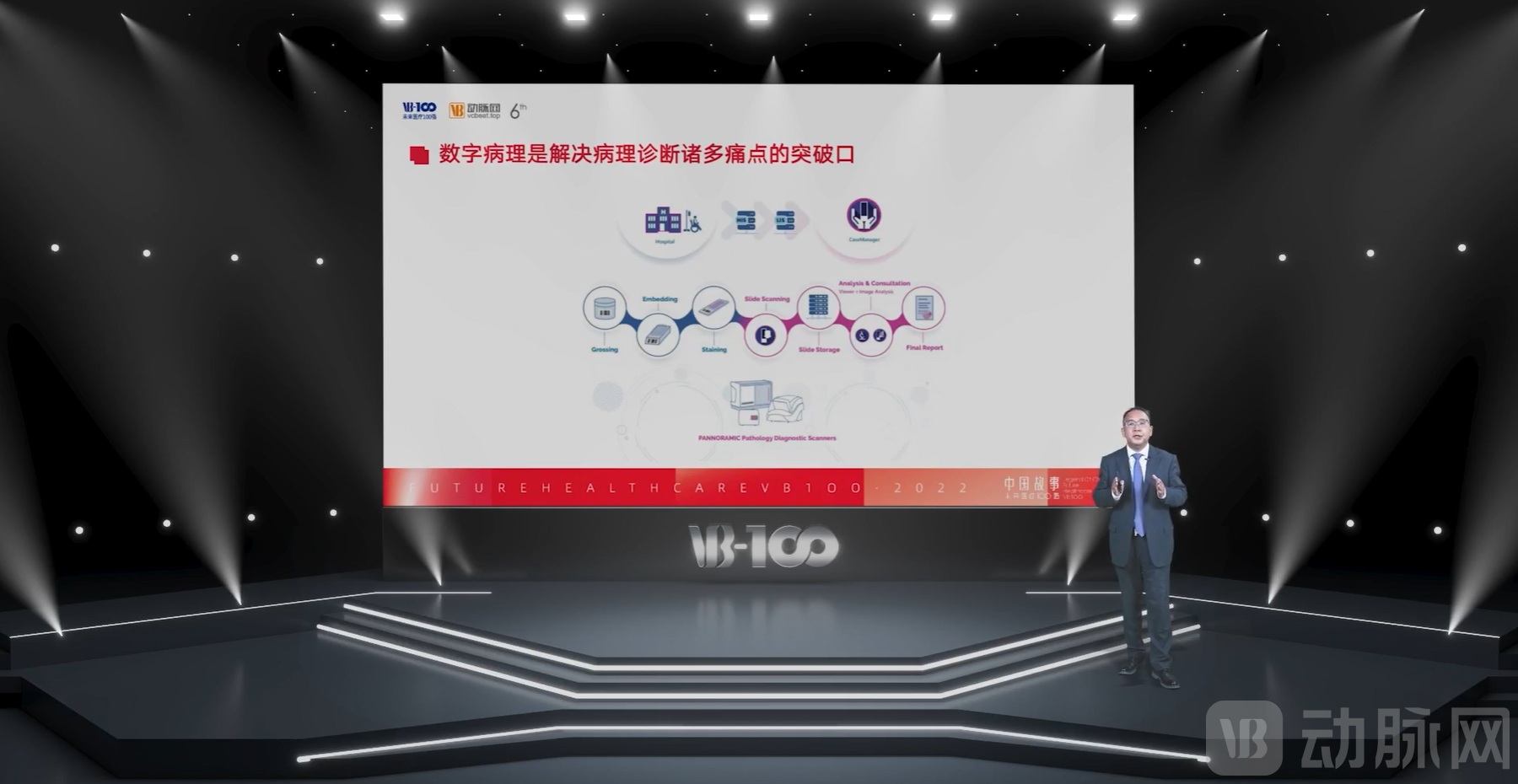
Digital pathology is applied in a wide variety of scenarios. Teleconsultation, big data, internet-based medical services, and smart pathology are all built on a digital foundation, which can improve diagnostic quality and reduce diagnostic errors in the diagnosis process. After more than 20 years of development, China’s digital pathology industry is transitioning from pathology image-and-text reporting systems to point-to-point consultation systems, from informatization to panoramic whole-slide imaging for remote diagnosis, and from digitization of individual slides to full digitalization.
The value of digital pathology is reflected in various aspects, including clinical diagnosis, remote consultation, internet-based healthcare, and teaching and training. Jinan Danjier Electronics Co., Ltd. provides solutions tailored to these application scenarios.Fully Digital One-Stop Pathology Solution, with four brands under its portfolio, including routine pathology product lines from ItalyDIAPATH, with an extremely high market share in China's digital pathology sector3DHISTECHA comprehensive suite of fully digital products and quantitative analysis software; Zhiying Medicine, a domestically developed national brand incubated by Jinan Danjier Electronics Co., Ltd., offering customized digital pathology solutions; and a full-line AI-powered quantitative digital pathology analysis software featuring 158 AI modules.VISIOPHARM。
In the field of clinical diagnosis, Jinan Danjier Electronics Co., Ltd.’s comprehensive digital pathology solution enables physicians to acquire high-quality visualization data, thereby enhancing the efficiency of pathological diagnosis.“Given the severe shortage of pathologists in China, there is an even greater need to leverage AI and fully digital slide reading to reduce physicians’ workload, allowing them to devote more time to in-depth diagnosis of complex cases,” said Fan Yujun.
Furthermore, digital pathology facilitates inter-hospital remote consultations between local hospitals and tertiary referral centers, or even with advanced medical institutions abroad. This helps reduce diagnostic risks, prevents the loss of medical records and data corruption, and saves patients’ time and healthcare costs. “According to a set of research data, the use of digital pathology systems in Taiwan, China, has saved an average of 33% of the time.”
In addition,InInternet Medical Institutions, which also requires the exchange of diagnostic information based on big data, such as digital pathology.In the Education and Training MarketAmid the pandemic, remote teaching has become widespread. Danjier’s digital pathology products with high-quality images enable instructors to conduct online teaching via software, allowing students to access high-resolution images and learn from any location.
More importantly, digital pathology applications are an indispensable cornerstone for achieving AI-assisted pathological diagnosis.Digital pathology provides high-quality, standardized images with long-term archival value, offering robust resources for big data applications and the training of AI-assisted diagnostic models. AI-assisted pathological diagnosis has become the central theme in the development of the pathology field.
What Kind of Digital Pathology Solution Is Required for AI-Assisted Pathological Diagnosis? The Answer Is Full Digitization.
Previously, pathological slides were digitized individually.AI-assisted pathological diagnosis is built on a fully digital foundation, providing the digital infrastructure for AI-assisted pathological diagnosis by achieving full digitization of the pathology department.

Danjier is championing the comprehensive digitalization of pathology departments, integrating registration, embedding, slide preparation, digital scanning, storage, slide review, and reporting to deliver a complete end-to-end digital pathology solution.
In the slide scanning phase, digital slide scanners are available in various models and throughput capacities to suit different budgetary constraints, featuring multifunctional capabilities such as brightfield scanning, fluorescence scanning, and FISH image scanning. In the digital diagnostics phase, these systems leverage information management systems and ultra-high-resolution image quality to assist physicians with digital slide review and diagnosis.
Overall, since the widespread global adoption of digitalization in the early 21st century, a new era of pathology has been emerging. China’s digitalization and AI-enabled initiatives in this field are still in their infancy. To advance the development of China’s pathology industry, meet the diverse needs of the country’s medical and research markets, and build a high-quality, high-level healthcare system, it is essential to adopt a global perspective and an open-minded approach.
“We hope to shape aFully Digital, Intelligent, and Cloud-Basedof the fascinating world of pathology. It is predicted that in the next 10 years, China’s digital pathology market will reach a scale of over RMB 30 billion, sufficient to accommodate more than 10 publicly listed companies.”