

Shanghai's Road to Resumption: Lessons from Lockdown and Recovery
One Week into Shanghai’s Resumption of Work and Production: No Revenge Overtime or Revenge Spending as Time Smooths Out All Turbulence
“Finally unlocked; no more turmoil.” Just past midnight on June 1, 2022, a seasoned healthcare investor posted this reflection on WeChat Moments. The words conveyed exhaustion, but perhaps even more so, anticipation. This Shanghai night, after more than two months of waiting, is likely to be remembered for a long time.
The entire city was celebrating: the Yan’an Elevated Road at late night was jammed with vehicles coming and going, their engines roaring.
Some lamented that during the lockdown, they would count cars on the distant highway from their balconies out of boredom; sometimes, not a single vehicle passed by for half a day. Now, with traffic flowing endlessly on the roads, it feels like a lifetime ago. Others joked that after being isolated for dozens of days, they even felt a bit carsick when going out for a drive. Still others set off fireworks in their towns, with everyone’s mood akin to that of a festive holiday.
“The past few days have been like a battle. ‘Keep going; make up for the nearly 80 lost days. Everything happens for the best.’”
In reality, the healthcare industry could not come to a complete standstill during the pandemic.
During the lockdown, healthcare professionals managed to keep operations running despite cramped physical conditions: some slept on factory floors, sharing meals, lodging, and even haircuts with colleagues, ensuring products were delivered to customers on schedule; others moved their work online, maintaining productivity through intensive roundtable live streams while alleviating anxieties caused by work stoppages. As activities resume, these altered work patterns will undoubtedly require further adjustments.
Early the next morning, many people rushed back to their posts. “Returning to my post after 75 days, I’m in high spirits,” a founder of a Zhangjiang-based pharmaceutical company posted on his WeChat Moments. An investor jokingly remarked that he was working too hard, saying, “Heading straight to the office right after the lockdown lifted.” He replied, “Absolutely necessary. Being able to go to work now feels like a blessing; the experience of being busy is far better than waiting in uncertainty.”
Perhaps more important than excitement is adapting to certain changes and acquiring new knowledge after returning from lockdown.
It was also on this early morning that Li Ping arrived at her company’s office in a certain industrial park. The piles of termites in the corner reminded her of the news from a few days earlier: under citywide containment measures, professional pest control services had not been carried out as scheduled during the peak termite season. This meant that for many people, the first step in returning to work was to eradicate the rampant termite infestation.
Everything needs to be recalibrated. After all, this city is undergoing unprecedented changes, and people and affairs are inevitably transformed. This is especially true for entrepreneurs in the healthcare industry.
“The pandemic taught me that maintaining stable cash flow is the foundation that allows me to speak with you confidently today.” — Sun Xiaoyi, Founder of UP Clinic
“Excitement—the thrill of cheering. Never before have I and all our employees looked forward to work with such anticipation.”
Following the Shanghai Municipal Government’s issuance of the “Notice on the Orderly Resumption of Access to Residential Communities, Public Transportation Operations, and Motor Vehicle Traffic,” Sun Xiaoyi, founder of UP Clinic, excitedly told VCBeat.
As a chain brand specializing in orthopedic rehabilitation and sports medicine, UP Clinic’s business operations are primarily conducted offline. Since the implementation of lockdown measures in Shanghai, UP Clinic, like all other brick-and-mortar brands, has suspended its operations. Under these circumstances, ensuring employee welfare, continuing patients’ rehabilitation treatments, and maintaining corporate operations have all faced significant challenges.
“Talent has always been a company’s core asset, so ensuring employee stability and confidence is crucial,” Sun Xiaoyi candidly stated. Although layoffs can quickly reduce costs, the resulting losses cannot be recovered even after spending several months training new employees. Additionally, patients who underwent surgery in March or April and urgently require rehabilitation therapy are experiencing significant anxiety over missing the critical “golden 100 days” for recovery.
To this end, UP Clinic decided to shift its focus to online live streaming. “During our initial pilot phase, we conducted only a limited number of live sessions, with staff typically broadcasting once or twice a day. By the second week, the management team made a decisive move to involve all employees in live streaming. This decision was driven by three factors: first, patients clearly needed professional rehabilitation guidance; second, the company sought to create work opportunities for its employees and boost their morale during this challenging period; and third, the enterprise aimed to generate greater value.”
According to Sun Xiaoyi’s rough estimate, UP Clinic conducted nearly 1,000 live-streaming sessions during the two-month lockdown period.
For the company’s day-to-day operations, the greatest challenge lies in adjusting the financial budget on a weekly basis. “As a chain organization, all our operational activities are driven by financial models, which necessitates weekly data adjustments, given the inherent uncertainty of what may occur in the coming week. For instance, although the original plan for this year was to achieve 100% revenue growth compared to the previous year, the entire growth strategy now needs to be reformulated.”
Regarding her biggest takeaway from the lockdown period, Sun Xiaoyi attributes it to the company’s consistent profitability and prior fundraising efforts. “Stable cash flow is what gives me the confidence to speak with you so candidly today,” Sun admitted. “Without cash flow, I might not have been able to maintain such a composed and open-minded outlook as I do now.”
As Shanghai resumes work and production, UP Clinic has also restored its offline operations. If all goes well in the second half of the year, the company expects to fully recoup the losses incurred in the first half. Additionally, UP Clinic will continue to advance its recruitment efforts.
Moreover, Sun Xiaoyi revealed that UP Clinic is considering cross-regional acquisitions and mergers, such as in South China, including Shenzhen and Guangzhou. This is because the South China region was not significantly affected by the pandemic, so multi-location operations can help diversify risks. “We believe that eggs should not be placed in one basket, so we may explore other regions.”
In terms of managerial cognitive accumulation, Sun Xiaoyi also summarized the “Four Breaks” experience during this lockdown period.
First, assessment—specifically, an assessment of the epidemic situation. At every critical juncture, company founders and management must maintain an accurate and not overly optimistic understanding of the epidemic to implement appropriate emergency measures. Additionally, they must assess the company’s cash flow by clearly determining current revenue and cash reserves, and projecting how many employees or how long the company can sustain operations if the epidemic persists.
Second, decisiveness. Founders must clearly know what they want, how to achieve it, and what not to do. Sun Xiaoyi stated that when UP Clinic opted for live streaming, it explicitly avoided promotional sales to prevent any negative impact on customers’ perception of the brand image. “We will decisively eliminate exploratory projects. Therefore, one must act with great decisiveness and avoid indecisiveness or hesitation, such as wanting to try this and that simultaneously.”
Third is decisiveness, which means leading the team to accomplish what seems impossible. “During the lockdown period, we managed to conduct over a thousand live broadcasts. Initially, I was uncertain myself, as once this decision was made, there were doubts about others’ willingness to cooperate and whether we could achieve our goals. In the end, we gritted our teeth and pushed through to get it done.”
Fourth, we must persist in our efforts. For instance, by maintaining continuous communication with employees to ensure they remain proactive and do not become disengaged when facing challenges, and by consistently engaging with patients to alleviate their anxiety and help them resolve immediate issues to the best of our ability.
“I have greater faith in the creativity of grassroots employees.” Wang Gang, Founder of Kacare Biosciences
The day before the lockdown was lifted, Wang Gang, founder of Kega Bio, shared a photo on his WeChat Moments: a group picture of colleagues who had remained at the Pujiang and Lingang facilities to maintain closed-loop production. In the photo, these individuals—who had lived under closed-loop management for up to 70 days—did not appear as disheveled as one might have expected.
As a supplier of raw materials for mRNA vaccines, Kaikai Biologics maintained uninterrupted production throughout the pandemic. According to Wang Gang, the first batch of approximately 50 employees began residing at the company facility in mid-March to ensure the steady delivery of products. By the time formal work resumption was announced in late May, nearly half of Kaikai Biologics’ workforce of over 200 employees had already returned to their posts ahead of schedule. This mutual commitment between the company and its employees left a lasting impression on Wang Gang.
As an entrepreneur, Wang Gang did not let the lockdown slow down his life. “The impact of the pandemic was significant: new orders dropped considerably, while additional expenses to maintain the daily lives of employees under closed-loop management increased substantially. However, we chose not to directly cut labor costs.” The sense of mission among employees and the sense of responsibility within the enterprise are reciprocal, especially during difficult times. From the outset, Wang Gang’s approach was to safeguard employees’ quality of life during the lockdown as much as possible. “The company’s overall growth will eventually return to normal. Forcibly reducing labor costs would severely dampen employee morale. It is better to weather the storm together with our employees, thereby strengthening mutual trust.”
But given the sheer number of unknowns at the time, Wang Gang was also highly anxious. He set himself a timeline: if Shanghai’s lockdown and control measures persisted until the end of June, Kaige Biotechnology would continue operating at its normal pace; however, if the situation extended further, he would decide to cut costs. “In fact, I believe every founder experiences significant anxiety,” Wang Gang noted. He did not pass this anxiety on to his employees; he took responsibility for making decisions, leaving the rest to the team. “Only those who remained on site knew the actual conditions. They decided what needed to be done, and I simply provided my support,” Wang Gang stated.
The KaiKa Bio team achieved effective self-governance within the closed-loop management system. During more than 70 days of lockdown, over 100 individuals lived and worked together at peak times, with their daily routines for both life and work meticulously organized. The majority of those remaining on-site were ordinary employees, who demonstrated remarkable initiative at many critical junctures requiring collective decision-making. Among them, group leaders spontaneously emerged to handle the collection of supply needs, group purchasing, disinfection, and distribution, while others took on roles as barbers and chefs.
Interestingly, the gym, originally intended to enrich employees’ leisure time, played a significant role. Through flexible coordination, the gym’s shower facilities operated 24 hours a day, greatly reducing the discomfort faced by employees who remained on site. During the hottest days, even employees from other companies in the industrial park queued up to use the showers.
In this process, company managers chose to step back and fully delegate authority. This bottom-up approach to organizational coordination has made the closed-loop lives of those who remained somewhat colorful, encompassing all essential elements of daily life as well as occasional recreational activities.
Wang Gang has always had his own thoughts on the role of entrepreneurs within their teams. Over the years since founding his company, he has consistently believed that the collective wisdom of frontline employees often leads to unexpected successes. At Kaige Biology, many new ideas that were later proven correct and critical were not directly driven by management but were instead implemented through employees’ suggestions and experiments. “The creativity of frontline employees is vital for maintaining the company’s vitality.”
Facing the resumption of work and production, Wang Gang felt more at ease because his team’s rhythm had not been completely disrupted. He stated that the company had weathered the storm without delaying customer deliveries. “In fact, we never experienced a complete shutdown in the strict sense; we just need to accelerate our production pace moving forward.”
“Pandemic Gave Me Empathy for My Colleagues,” Says Li Ping, Executive at an Early-Stage Cancer Screening Company
Over the past two months, remote work has been the only way for most people to engage in their jobs. After an intensive and immersive experience with technology-driven remote work, the unique appeal of offline office work has begun to emerge. As a result, people have joked that some individuals have started engaging in "revenge business travel."
Li Ping serves as a senior executive at a company specializing in early cancer screening. During the Shanghai lockdown, the company’s public welfare early-screening initiatives and clinical trials continued without interruption. However, restrictions on personnel mobility forced her to take a hands-on approach to numerous tasks. “I’ve never had a day where I made over 200 phone calls just to handle minor issues,” she recalled. Working from home kept Li Ping busier than ever and prompted her to reflect on the management methodologies she had previously employed.
“As our company has grown in scale, we have migrated many of our workflows online,” Li Ping told VCBeat. Online tools have been adopted across multiple stages, including onboarding communications for branch employees, task organization, business process decomposition, and objective management.
During this process, Li Ping discovered that many employees lacked a deep and rapid understanding of the company’s business and products, leading her to briefly question their competence.
It was not until the period of working from home, when she had to join work processes online, that she began to feel overwhelmed. Before the lockdown, based at the Shanghai headquarters, she resolved the vast majority of her daily tasks through efficient face-to-face meetings. “Our work spans multiple domains, including technology, product development, manufacturing processes, medicine, and marketing. It is far more complex than simply drawing a flowchart. Face-to-face communication allows us to lay out all aspects related to business and products in their entirety; if there are overlaps, they can be addressed in real time, making it a multidimensional process,” explained Li Ping. “After shifting online, different facets of the same issue may become fragmented, which indeed hinders proper understanding.”
Mr. Peng Yifei, General Manager of Tigermed Jietong, also shared similar views with VCBeat. As a leading CRO company for innovative medical devices in China, Tigermed Jietong has leveraged digitalization to handle many internal and external processes efficiently and in a standardized manner, in addition to necessary on-site work. “However, the potential creativity sparked by face-to-face brainstorming is irreplaceable,” stated Mr. Peng. Since Tigermed Jietong primarily serves innovation in the medical device sector, the accompanying exploration of process innovations results from the collision of professional knowledge, experience, and inspiration. The full concentration unique to in-person meetings catalyzes this process.
Resuming Work and Production: Reimagining Entrepreneurship
Since June 1, Shanghai has accelerated the resumption of work and production.
VCBeat has learned that companies across the pharmaceutical industry chain, including Fosun Pharma, Shanghai Pharmaceuticals Headquarters, Siemens Healthineers (Shanghai), GE Healthcare, and Haoyuan Chemexpress, have successively resumed full-scale production and operations.
“Shanghai boasts a highly comprehensive biopharmaceutical industry chain and a diverse range of biopharmaceutical products. Its every move often has a ripple effect on the biopharmaceutical industry across China and even globally,” said an industry investor, noting that the recent resumption of work and production has played a significant role in promoting the orderly and stable development of the pharmaceutical industry in China and worldwide.
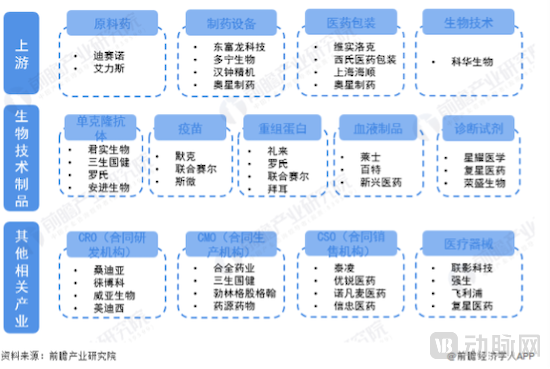
(2021 Layout of Biopharmaceutical Industry-Related Enterprises in Shanghai, Source: Qianzhan Industry Research Institute)
However, resuming work and production also requires adequate preparation. For enterprises, this means ensuring both production and supply continuity while adhering to real-time epidemic prevention and control policies. In other words, as the number of employees returning to work continues to rise, healthcare companies must effectively implement logistical support measures, including employee accommodation and meals, disinfection and epidemic prevention, and materials transportation.
Taking GE Healthcare as an example, employees returning to work were required to undergo a 48-hour self-isolation period, along with one antigen test and two nucleic acid tests, before entering the facility. Only those with negative results were permitted to enter the plant for work. The company implemented closed-loop management for on-site staff and intensified daily disinfection protocols, while conducting regular antigen and nucleic acid testing for returning employees.
“We must also establish early-warning protocols and contingency plans to guard against the severe situations that may arise at any time due to resurgences of the epidemic,” said a marketing executive at a healthcare company. Proactive risk management has become a key topic in recent internal discussions. “Due to work stoppages during lockdowns, delivery timelines for our products—and those of many other companies—have been extended, potentially exposing us to the risk of contract breaches. This serves as a reminder that we should strive to avoid such issues in future collaborations.”
The smoothness of logistics has also become a significant challenge deeply felt by healthcare companies during the lockdown period, and it has turned into a topic of industry concern after the resumption of work and production. In response to this, at the recently held Shanghai Biopharmaceutical Industry Salon, Xin Leifu, Deputy Director of the Economic Operations Division of the Shanghai Municipal Commission of Economy and Informatization, stated that efforts will be accelerated to promote the use of nationally unified and mutually recognized passes, improve the efficiency of cross-province transportation and transit operations, advance contactless logistics methods, and enhance the efficiency of freight traffic.
In addition, many companies have expressed new perspectives and insights on entrepreneurship. For example, they believe that continuously enhancing their own corporate value is more important than rapid development.
According to Sun Xiaoyi, founder of UP Clinic, maximizing corporate value requires calculating the return on investment during the commercialization process to identify the business equilibrium point, thereby ensuring the company maintains healthier vitality.
A representative from Magnesium Health stated, “Expanding our consumer-facing (C-end) platform is a key business priority for us this year. However, we will not adopt the traditional internet platform model of burning cash to acquire customers. Instead, we will place greater emphasis on collaboration with various channels and on delivering valuable services to users. By leveraging our industry resources, we aim to attract and retain users on our platform through scarce, high-quality services.”
Of course, as the transition from strict containment measures to full-scale recovery unfolds, healthcare companies will still need time to adapt, and certain challenges will persist along the way. Yet, as Ren Zhengfei noted in an internal speech at Huawei, “Experiencing setbacks is the best tempering process for our company.”
Therefore, for every healthcare enterprise, each difficulty encountered is not in vain; the experience, insights, and courage derived from these challenges will inevitably become the “nutrients” that fuel their continuous growth into towering trees.