

Mendel.ai Secures $40M Series B Funding to Unlock 80% of Unstructured Clinical Data in the U.S. Using AI

Mendel
Clinical AI Platform Provider

DCM Ventures
An early-stage venture capital firm.
Driven by advances in information technology and the impact of the COVID-19 pandemic, global medical data volume has surged, with increasingly complex data types. Clinical medical data are categorized into structured and unstructured clinical data based on their structural format. Structured clinical data feature clear row-and-column structures, allowing for computer-based identification, organization, efficient storage, and processing; however, they account for only 20% of all data. WhereasUp to 80% of unstructured clinical data: lacks standardized structure, features complex content, and is often unusable by computers, such as doctors' handwritten notes, pathology reports, faxes, or scanned records.
It is often said that humans utilize only 10% of their brain capacity, and if the remaining 90% could be harnessed, human insight and achievements would be nothing short of astonishing. By similar logic, the potential impact of effectively leveraging the 80% of unstructured clinical data is readily imaginable.
Driven by advances in storage technology, increased chip capacity, and growing pressure on medical resources, the application of AI in the healthcare sector has become a hot spot for capital investment.How to Leverage AI to Decipher Unstructured Clinical Data?Let’s take a look at the response from healthcare startup Mendel.ai.

Image source: Mendel.ai official website
Mendel.ai, founded in 2017 and headquartered in San Diego, California, is a clinical AI platform provider primarily serving life science research entities, including real-world data (RWD)/real-world evidence (RWE) vendors, pharmaceutical companies, and contract research organizations (CROs). Mendel.ai specializes in leveraging cloud-based AI solutions to standardize medical records, transforming unstructured electronic medical record (EMR) data and clinical literature into the industry’s most comprehensive and compliant analysis-ready datasets, thereby empowering healthcare systems to enhance patient care and advance clinical scientific research.

Left: Karim Galil, Chairman and CEO Right: Wael Salloum, Founder and CTO
(Image source: Mendel.ai official website)
Karim Galil, Chairman and CEO of Mendel.ai, graduated from the Faculty of Medicine at Ain Shams University and holds a Ph.D. in Surgery. As a physician at El Demerdash Hospital, he grew frustrated with disorganized medical records while treating patients. Karim has long aspired to create an organized artificial intelligence system to help clinical experts provide better diagnostic and treatment plans for patients.
Wael Salloum, Founder and Chief Technology Officer of Mendel.ai, holds a Ph.D. in Computer Science from Columbia University. Prior to founding Mendel.ai, he had already made significant contributions to the digital health sector. In terms of technical expertise, as Chief Scientist at MedTools, he developed a scalable, semantic, real-time search engine for medical device information, built OntoLogic, and created a medical device ontology based on it. During his tenure at EMR.ai, he established the Natural Language Processing (NLP) department, technology stack, and codebase from the ground up. The NLP components he developed were capable of formatting text, predicting punctuation, forecasting report structure, identifying preamble text, and extracting metadata therefrom. In team management, he led a team of over a dozen developers, collaboratively building numerous services tailored for physicians.
During their first meeting, Karim expressed his desire for each clinical expert to have a “Jarvis”—an AI assistant capable of scanning all patient records and helping them deliver more personalized care. To his delight, Wael revealed that he had been researching AI solutions for clinical data since 2005. The two instantly clicked and began creating Mendel.ai.
The leadership team’s specialized academic backgrounds and extensive industry experience have powered Mendel.ai’s positive growth.
Medical Data + AI Applications: Opportunities and Pain Points Coexist
Data in the healthcare industry is characterized by multi-source heterogeneity, which makes data quality issues particularly prominent. Transforming unstructured data from electronic medical records into structured data recognizable by computers is the foundational prerequisite for leveraging the power of big data analytics and facilitating the clinical application of machine learning methods.
Apart from the most time-consuming, labor-intensive, and primitive manual abstraction by humans,Researchers Have Leveraged Natural Language Processing to Process Unstructured Text and Build Intelligent Medical Record Analysis Systems. With the rise of real-world studies, numerous medical AI companies have leveraged healthcare big data to conduct real-world research across various domains, including the evaluation of medical practice processes, treatment patterns, patient migration, disease characteristics, patient adherence, efficacy assessment, and patient prognosis.
Despite the rapid development of data extraction, cleaning, and application technologies in the era of big data, the unique data requirements of clinical research—namely, the high demand for data accuracy—At this stage, the application of medical big data still widely suffers from issues such as low levels of data structuring, patient privacy protection concerns, superficial data mining, and weak practical implementation.。
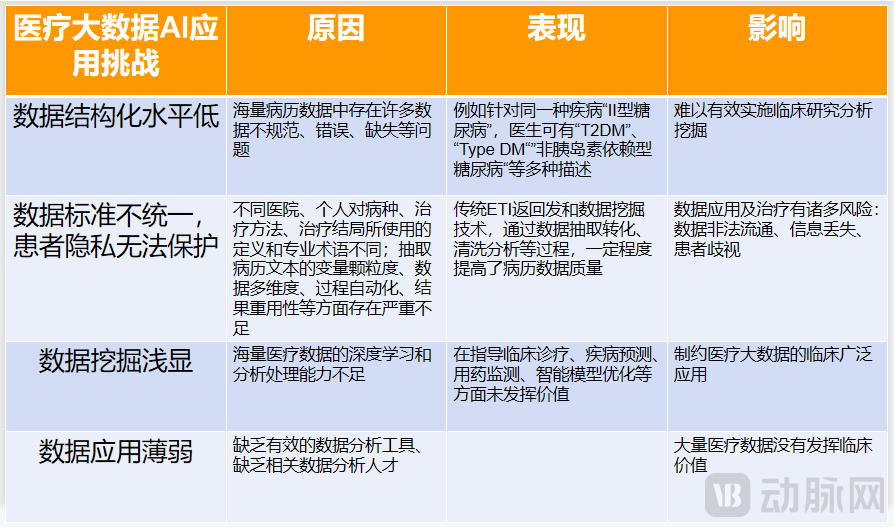
Challenges in the Current Application of AI in Medical Big Data
Mendel System: Multi-Product Synergy
Mendel has developed its own suite of products to specifically address some of the current challenges in medical big data.
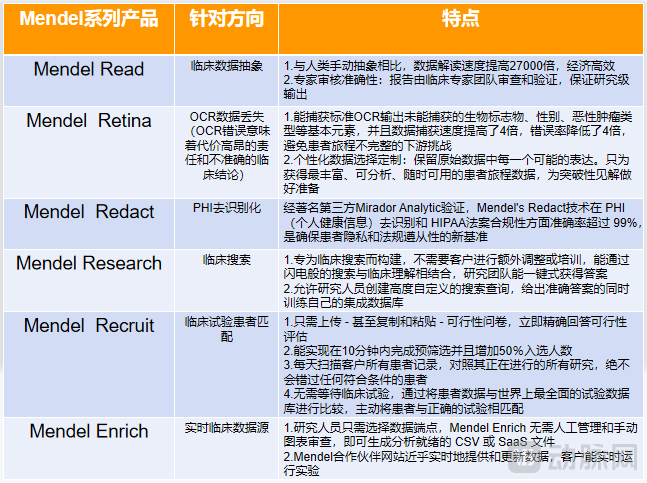
Mendel System Series Products
The Mendel system is dedicated to converting all forms of raw data—including experimental data, physician records, scanned documents, medication prescriptions, imaging reports, handwritten notes, DICOM metadata, and ICD/CPT codes—into text, ultimately performing fact extraction or organizing the data into computer-readable and analyzable formats.
Since open-source technologies such as LUECINE, UMLS, FastText, and BioBERT cannot achieve recognition of all data formats, the Mendel system builds its AI from scratch, combining deep learning with learning from human clinical experts. Researchers can create highly customized search queries using the Mendel Research search engine without additional tuning or training; while providing accurate answers, Mendel Research simultaneously trains its integrated database.
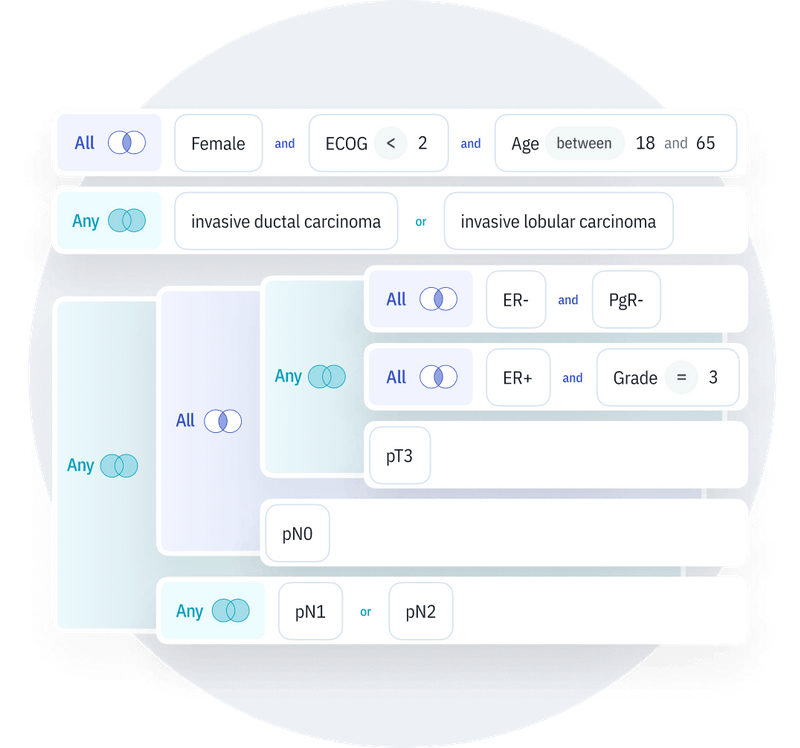
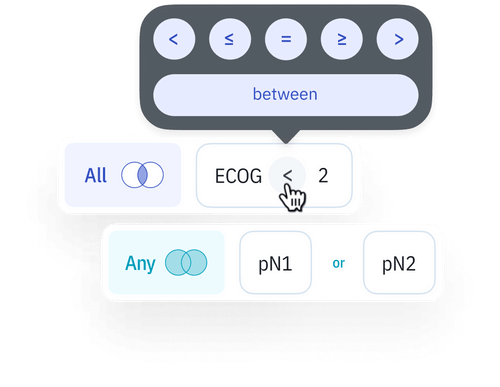
Mendel Research Search Engine (Image source: Mendel.ai official website)
Mendel Read, a clinical data abstraction product, leverages a comprehensive integrated database to scan raw data and generate structured text. Its standout feature is the ability to capture rich details—such as biomarkers, sex, and malignancy types—that are often overlooked by large tech AI companies. While structuring data, Mendel Read incorporates deep clinical context, and its outputs are reviewed and validated by a team of clinical experts to ensure accuracy. Furthermore, it extracts a comprehensive and customizable list of industry-standard data elements to build representative patient journey simulations.

Source document (Image source: Mendel.ai official website)

Competitor Output (Image Source: Mendel.ai Official Website)
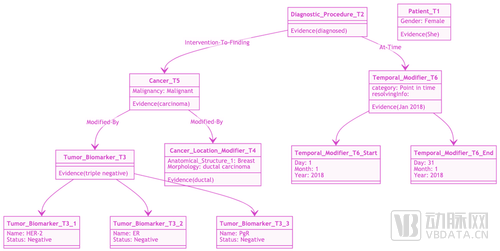
Mendel Read Output (Image Source: Mendel.ai Official Website)
Distinguishing Protected Health Information (PHI) from clinical information during the mid-reporting phase is highly challenging and may lead to the loss of valuable data or compliance risks. Mendel Redact is the only automated PHI de-identification solution that has been independently verified by a third party through statistical analysis to be HIPAA-compliant. Optimized for local installation, Mendel Redact runs on on-premises servers. Without requiring extensive hardware resources, it ensures that patient privacy information remains entirely within the local service environment throughout the robust data extraction process.
Standard OCR (Optical Character Recognition) engines are typically built to understand everyday language and fail to capture essential elements such as clinical biomarkers, sex, and malignancy types. In contrast, Mendel Retina, which is built and trained from scratch, increases data capture speed by fourfold and reduces error rates by fourfold, thereby avoiding downstream challenges associated with incomplete patient journeys. Mendel Retina preserves every possible expression in the raw data to obtain the richest, analyzable, and ready-to-use patient journey data, preparing for breakthrough insights and ultimately enabling personalized, patient-specific research outputs.
Mendel Recruit is an AI solution designed to accelerate patient prescreening, enrollment, and feasibility assessment. It reads all types of written patient records, refreshes patient data daily, and performs real-time matching against the world’s most comprehensive clinical trial database to automate the patient prescreening process.
In terms of data sharing and utilization management, the Partner Research Site Alliance enables Mendel to update over 2 million longitudinal patient records in real time. Based on this, Mendel Enrich provides researchers with a real-time clinical data source; by simply selecting data endpoints, researchers can obtain analysis-ready CSV or SaaS files from Mendel Enrich.
Market Prospects for Medical Big Data
On April 21, 2022, Mendel.ai, a clinical artificial intelligence and natural language processing platform, announced the completion of a $40 million Series B financing round. The round was led by Oak HC/FT, with participation from existing investor DCM. The proceeds will be used to expand its AI engineering team and commercial organization, and will also help accelerate the launch of the company’s new breakthrough product, Resolve. “The capital we have raised demonstrates strong product-market fit and demand,” said Karim Galil, Co-founder and CEO of Mendel.ai. “Our vision is to embed the Mendel system into the fabric of every healthcare data platform, enabling healthcare systems to deliver better care to patients.”
According to a research report by IDC (International Data Corporation), the market size of China’s medical big data solutions reached RMB 1.2 billion in 2020, representing a year-on-year growth of 25.7%. The market is expected to maintain robust growth in the coming years, with a compound annual growth rate (CAGR) of 24.3% from 2020 to 2025. As the world’s largest holder of data resources, China is poised to become one of the central hubs for AI applications in healthcare.
However, there are still many barriers and challenges constraining the development of China’s healthcare big data. At the hospital level, issues include the difficulty of aggregating multi-source heterogeneous data, the fact that the construction of medical big data standards has not yet reached an application-ready level, a lack of big data processing and AI technologies for post-structuring and natural language processing, and the inability to effectively leverage big data. At the government level, it is necessary to gradually stockpile medical big data as a strategic resource, achieve data sharing, and provide effective platforms and tools for regulation and decision-making.