

Nucleic Acid Sampling Kiosks: A Transient Billion-Dollar 'Blue Ocean' Opportunity

Haier Biomedical
R&D and Manufacturer of Biomedical Cryogenic Storage Equipment
In the past, the common greeting was “Have you eaten?” Now, it has become “Have you been swabbed?” Though said in jest, this phrase aptly captures the reality of life under the pandemic in recent years.
As the epidemic comes under control in various regions, two new terms have gradually come into view. One is “normalized nucleic acid testing,” and the other is the “15-minute nucleic acid testing service circle.” The core of these concepts lies in increasing testing frequency while reducing the difficulty for the public to access tests. With this underlying tone, the business opportunities they bring naturally lend themselves to broad imagination.
As the key infrastructure for implementing these two policies, nucleic acid sampling booths have recently garnered astonishing exposure. Some media outlets readily proclaim a trillion-yuan market and a blue ocean amidst the trend, even giving rise to “nucleic acid sampling booth” concept stocks. Can these small booths, occupying only a few square meters, truly sustain such a market size?
On April 5, 2022, Shenzhen announced that residents must present a negative nucleic acid test result obtained within 72 hours to enter public places and use public transportation, thereby initiating routine nucleic acid testing. To contain the spread of the epidemic, Shenzhen implemented citywide lockdowns and conducted three rounds of comprehensive nucleic acid screening.
From early to mid-April 2022, Hangzhou reported sporadic cases. On April 21, the city recorded 35 new cases in a single day. In response, Hangzhou swiftly imposed lockdown measures in Gongshu District and initiated citywide routine 48-hour nucleic acid testing, thereby bringing the rapidly escalating outbreak under timely control.
Subsequently, in cities such as Wuxi, Fuzhou, and Shaoxing, large-scale routine preventive nucleic acid testing was promptly initiated upon the detection of sporadic cases. After approximately one month, no further spread of the epidemic was observed.
Thanks to these successful prevention and control cases, the model of “routine nucleic acid testing” supplemented by the “15-minute nucleic acid testing service circle” has been established. Since April, more than 15 cities across China have announced the implementation of routine nucleic acid testing, with common testing frequencies being once a week, every three days, or every 48 hours.
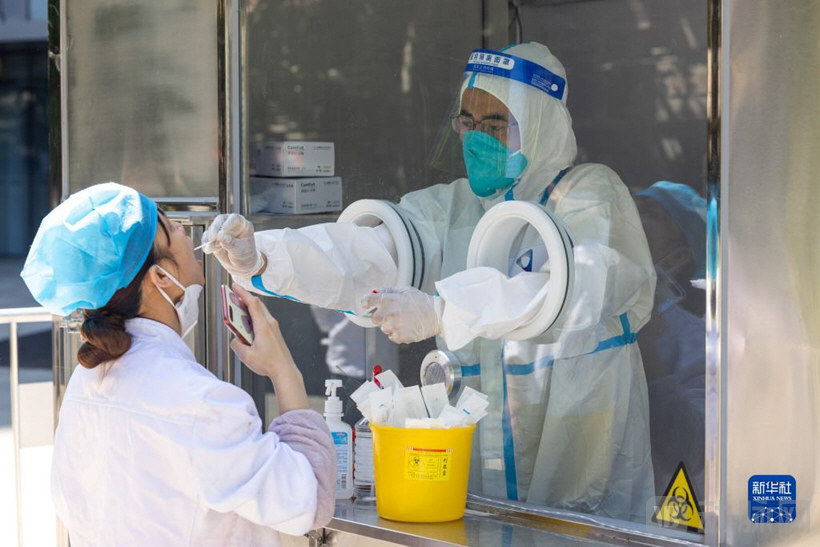
Nucleic Acid Sampling Booths Build a 15-Minute Nucleic Acid Testing Service Circle (Image source: Xinhua News Agency)
To meet residents’ testing needs, nucleic acid testing booths sprang up across China around the May Day holiday, with multiple cities setting the goal of establishing a “15-minute nucleic acid sampling service circle.” Currently, major and medium-sized cities including Shanghai, Taiyuan, Beijing, Linyi, Hangzhou, Wuxi, and Wuhan have constructed and put these facilities into operation.
At the teleconference held by the State Council’s Joint Prevention and Control Mechanism on May 9, it was proposed to enhance the sensitivity of monitoring and early warning systems, with major cities establishing a “15-minute nucleic acid testing circle” for sample collection. This marks the first time at the national level that the construction of a “15-minute nucleic acid testing circle” has been proposed.
It is precisely the national-level endorsement that has completely ignited this highly specialized niche.
How large a market can the 15-minute nucleic acid “sampling circle” actually create? We can do a simple calculation.
According to officials from the National Health Commission at a press conference held by the State Council’s Joint Prevention and Control Mechanism, the placement and layout of sampling sites should comprehensively consider population size, geographical and transportation conditions, and the distribution of nucleic acid testing institutions. A reference guideline is to establish one sampling site for every 2,000–3,000 people.
Based on Shanghai’s permanent resident population of 24.88 million, the theoretical demand for nucleic acid sampling sites is estimated to be between 8,300 and 12,500.
Although there is currently no national standard for the placement of nucleic acid sampling booths, the local standard "Management Specifications for Novel Coronavirus Nucleic Acid Sampling Booths" issued by Wuxi, Jiangsu Province, still holds certain reference value. According to this standard, in addition to routine placement, the density of booths should be appropriately increased at key locations such as passenger transport stations, high-speed railway stations, airports, ports and wharves, traffic checkpoints, tourist attractions, and large enterprises.
According to information released at the 200th press conference on Shanghai’s COVID-19 prevention and control work, Shanghai has currently established approximately 15,000 sampling sites, representing an actual deployment that is about 20% higher than the theoretical target.
Using the same calculation method, we can estimate the approximate market size for nucleic acid sampling booths.
According to data from the National Bureau of Statistics, the total permanent resident population of 36 major cities in China is approximately 295 million. Based on the requirement of one “sampling circle” per 2,000–3,000 people, the estimated demand across these 36 major cities ranges from approximately 98,000 to 147,000 units.
Based on Shanghai’s actual conditions, we increased the demand volume by 20%, yielding a national estimate of 117,600 to 176,400 sampling sites. Furthermore, according to data from the National Bureau of Statistics, China’s urban population has reached 900 million; however, deployment density outside major cities is correspondingly lower. Therefore, we have incorporated this portion of demand at a ratio of 1:0.2.
The final estimate indicates a nationwide demand for approximately 141,200 to 211,700 nucleic acid sampling booths in China.
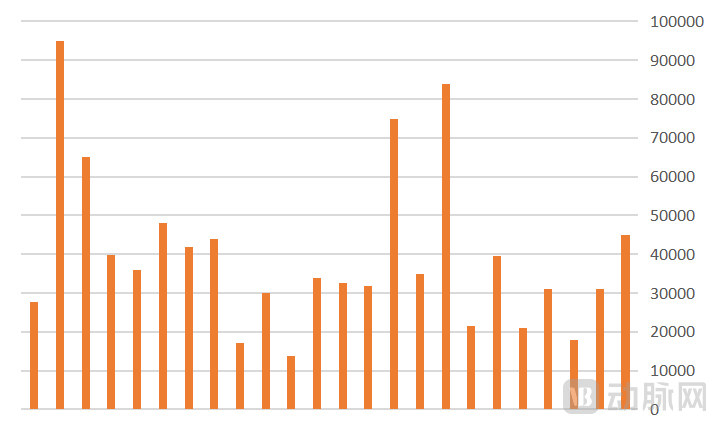
Winning Bid Unit Price for Nucleic Acid Sampling Booths in the Past MonthData sourced from the Qianlima website
According to approximately 30 winning bid notices for nucleic acid sampling booths across China in the past month, as published by Qianlima Bidding Network, the average winning bid price for such booths was around RMB 39,900.
VCBeat’s search for “nucleic acid sampling booths” on Baidu’s Ai Caigou platform yielded 1,619 related products. Based on the comprehensive ranking of verified suppliers and authenticated enterprises on the Ai Caigou website, the unit prices of the top-ranked nucleic acid sampling booths range from RMB 5,000 to RMB 40,000.
Based on the winning bid prices and product information from the AiCaigou website, we adopted a unit price of RMB 35,000 per unit, estimating the market size for nucleic acid sampling booths in China to be between RMB 4.942 billion and RMB 7.409 billion.
This is far from the “hundreds of billions” scale touted by some media outlets; at best, it can be considered a “tens of billions” blue ocean. But is it truly still a blue ocean?
As the initial touchpoint in routine nucleic acid testing infrastructure, nucleic acid sampling booths are not only seeing strong sales but also attracting attention in the secondary market. As of June 7, there were already 15 stocks listed under the nucleic acid sampling booth concept sector on East Money.
Haier Biomedical’s nucleic acid sampling workstations have been deployed in 31 provinces and municipalities, including Shanghai, Chengdu, and Beijing. Tongda Electric stated on its investor interaction platform that its nucleic acid sampling vehicles are currently primarily used to support epidemic prevention efforts in Guangzhou and surrounding areas. Nedfon indicated during institutional surveys that it has developed relevant products for nucleic acid sampling sites, which have already been put into use.
Jingxue Energy Saving stated on the investor interaction platform that it is currently producing nucleic acid sampling workstations, with orders being delivered sequentially. Puni Testing indicated that the company has independently developed and designed nucleic acid testing booths, which are being progressively deployed in cities where its 14 laboratories have been approved to conduct novel coronavirus nucleic acid testing.
In its 2021 annual report, JMC Motor stated that the company had developed a range of specialized vehicles, including nucleic acid sampling and testing vehicles and mobile laboratories for COVID-19 nucleic acid testing. In its previous year’s annual report, Tianrui Instruments also announced that its wholly-owned subsidiary, Bayside Bio, had developed products such as nucleic acid sampling booths, mobile nucleic acid sampling vehicles, P2+ vehicle-mounted mobile laboratories, and prefabricated cabin laboratories. Traditional home appliance giants such as Midea and Aucma have also announced their entry into this business sector.
If listed companies are already behaving this way, small and medium-sized enterprises will only become even more frenzied.
A search on 1688 using the keyword “nucleic acid sampling booths” yielded results in which most of the top 20 listings were from companies whose primary businesses include guard booth manufacturing, advertising agencies, and electric sightseeing vehicles. Similar results were observed on AiCaigou.com, where the majority of vendors specialized in steel structures or environmental protection equipment, with only a small number being medical device companies.
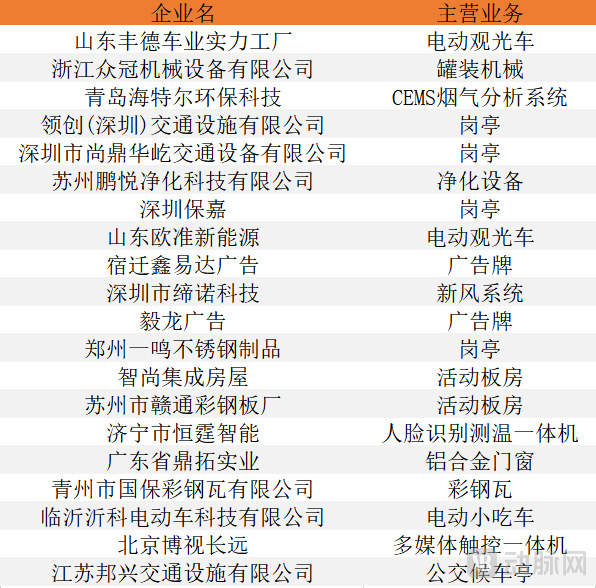
Nucleic Acid Sampling Booth Manufacturers on 1688
VCBeat randomly contacted several vendors to inquire about the situation. Many stores indicated that they noticed a gradual increase in the number of such products listed on e-commerce platforms in mid-April. The manufacturing difficulty is not significantly different from their original products; only a small amount of additional equipment is needed to complete prototyping and mass production, keeping overall costs under control.
Are the products manufactured by these small and medium-sized enterprises (SMEs) reliable? The answer is that it remains uncertain. Determining reliability requires established standards for assessment, yet there are currently no such standards in place for nucleic acid testing booths. If evaluated against stringent medical and healthcare standards, a sampling booth must meet at least the following requirements: positive-pressure protection, pressure differential monitoring, sterile transfer, ultraviolet disinfection, sealed operation, and waste disposal.
From an equipment perspective, in addition to the guard booth itself, items such as fans, air conditioners, filtration systems, intercoms, sterile pass-through windows, disinfection equipment, thermometers, and disinfectant holders are required. It would be difficult for companies primarily engaged in manufacturing gates, billboards, or guard booths to meet these requirements if they were to implement this full suite of equipment.
Precisely because there are no established standards and local authorities are eager to launch these initiatives, companies have been able to seize the first-mover advantage. From an economic perspective, many smaller regions lack the capacity to procure high-quality sampling booths, as these expenses must be covered by local fiscal budgets. While first- and second-tier cities can manage, smaller counties and localities with limited financial resources, yet under pressure to meet targets, have no choice but to lower their requirements.
This has also objectively accelerated the influx of small and medium-sized enterprises (SMEs), as suppliers inevitably strive to meet the substantial demand that has emerged.
Certainly, in addition to the aforementioned companies, IVD enterprises also play an indispensable role. Companies such as Kehua Bio-Engineering, Fosun Diagnostics, Shuoshi Biotech, Boco Biotech, Base Biotech, Shinva Medical, Biotec, Hotgen Biotech, Lepu Medical, Zhijiang Biotech, BioCapital Jingdian, JieNuo Biotech, Tuoren Group, and Zhongke Duling have all participated in the nucleic acid sampling booth business.
If the sudden outbreak of an epidemic necessitates emergency measures, the requirements for setting up nucleic acid sampling sites may be relatively relaxed. However, as a semi-permanent facility and a public service initiative, nucleic acid sampling booths should adhere to national standards, such as specifications for various functions and internal configurations.
Even in the absence of formal standards, basic dimensions such as spacing and height should still be determined through proper design and calculation. However, practical feedback indicates that the design of some nucleic acid sampling booths is highly unreasonable. Sampling personnel find standing too high and sitting too low, ultimately forcing them to squat on chairs to perform procedures. The hardship is not borne by the samplers alone; residents coming for testing are equally disadvantaged, with horse-stance positions and semi-squatting becoming the norm.
Even for ordinary people, sample collection is uncomfortable; for the elderly and children, it is even more distressing. Not only are the height and spacing unreasonable, but the placement of many items is also ill-conceived. For instance, disinfectant and test tubes in some sampling booths are positioned awkwardly, inadvertently slowing down the sampling process. As one netizen jokingly remarked, “The designer did nothing except install an air conditioner.”
Some sampling booths were taken out of service after being exposed for their fundamentally flawed designs, which consequently increased the workload at remaining sampling sites. As summer temperatures rise, queuing for sample collection has become a significant challenge in residents’ daily lives.
In addition to long waiting times, another ensuing issue is crowd congestion. Theoretically, a 2-meter distance should be maintained between individuals; however, due to site constraints, this is difficult to achieve in practice. Sampling booths, originally introduced to prevent people from gathering in clusters, have instead become hotspots for crowd accumulation.
The current chaotic landscape, characterized by a mix of reputable and substandard providers, stems primarily from the absence of national standards for nucleic acid sampling booths. As of June 1, only product-category standards such as the “Biosafety Nucleic Acid Sampling Cabin” had been developed under the leadership of organizations including the Shandong Provincial Center for Disease Control and Prevention, the Qingdao Municipal Center for Disease Control and Prevention, and Qingdao Haier Biomedical Co., Ltd.
This standard was developed with reference to relevant product testing standards for biosafety protection facilities. It provides the first definition of biosafety nucleic acid sampling booths and specifies product classification, technical requirements (working environment, appearance, materials, structure, functions, and performance), test methods, and inspection rules. It also establishes requirements for marking, packaging, transportation, and storage.
However, this set of standards clearly fails to keep pace with the market.
Progress in establishing 15-minute “sampling circles” varies across regions, but participants are well aware that the current nucleic acid sampling booth market resembles the mask market in early 2020—a sudden business opportunity. Driven by emergency procurement from local governments, the sampling booth market has experienced an abrupt surge. Failure to enter the market quickly and capitalize on this window of opportunity will make future operations increasingly difficult.
If masks are consumables with recurring purchase demand, sampling booths are one-time infrastructure investments, representing an abnormal short-term need. The market size is limited; the key question for many is how to quickly capture a larger share.
Several small and medium-sized manufacturers told VCBeat that although “nucleic acid sampling booths” have recently garnered significant attention, the sector is not highly profitable. These manufacturers lack the capability to reach end-users directly and can only serve intermediaries with the channels to participate in bidding, capitalizing on current market hype. For them, this is merely a short-term profit opportunity, and they may exit the business within a few months.
Based on the winning bid data from Qianlima Bidding Network for April and May, a total of 25 winning bid records were identified. The awarded products were widely distributed, with no single company dominating the market. This is also attributable to the recent influx of numerous enterprises into the sector.
A merchant that previously specialized in guard booths told VCBeat, “In early April, a search for ‘nucleic acid sampling booths’ on e-commerce platforms yielded fewer than 100 results, most of which were very basic—some were merely prefabricated mobile houses. At that time, ‘epidemic prevention booths’ sold better; these were simply shelters providing wind and rain protection for epidemic control personnel, and they were inexpensive. Now, a search for nucleic acid sampling booths returns numerous results, so many that the page cannot even be scrolled to the bottom.”
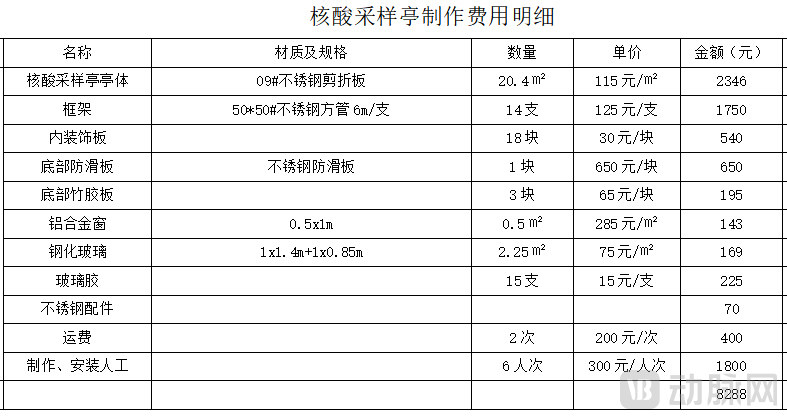
Winning Bid Prices for Some Nucleic Acid Sampling Booths – Data Sourced from Qianlima Website
Furthermore, a close examination of the bid award results reveals that the tendering entities had varying requirements for the products, leading to naturally differing production costs. Some projects were directly developed by advertising agencies at a cost of only a few thousand yuan, while others involved purchases nearing 100,000 yuan. The situation smacks of being forced into action before one is ready: the tenderers were eager to complete their tasks, the winning bidders were keen to close the deals, and the manufacturers were rushed to deliver the products.
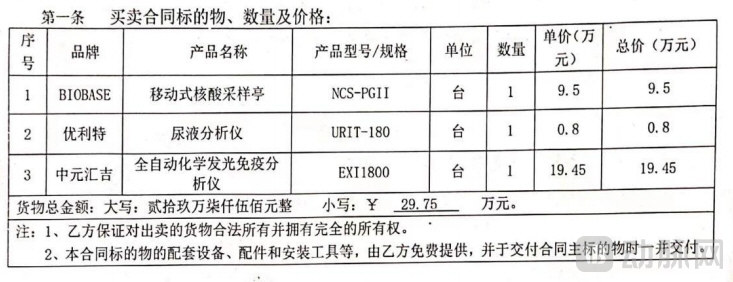
Winning Bid Prices for Some Nucleic Acid Sampling BoothsData sourced from the Qianlima website
For small and medium-sized manufacturers, making quick money is not easy either. An online store owner told VCBeat, “There are currently no standardized production specifications in this industry, but whether it’s fresh air systems or air conditioners, we strive to use qualified products. As for the construction of the booths, that is my area of expertise, so there is actually little difficulty in doing it.”
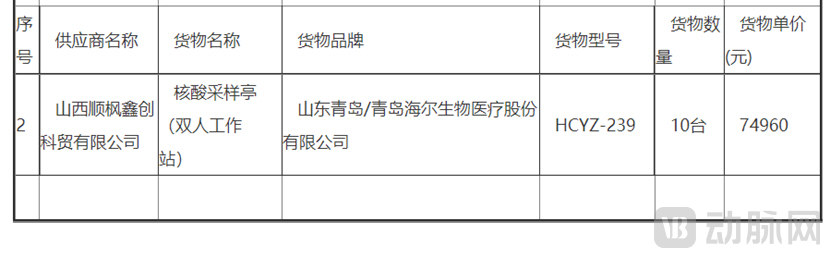
Winning Bid Prices for Some Nucleic Acid Sampling Booths Data Source: China Government Procurement Network
What truly pains these business owners is their inability to accept many orders. In terms of timeline, manufacturing takes approximately one week, and delivery usually requires 2–3 days, so the overall lead time is not lengthy. However, constrained by production capacity, many merchants’ workshops can produce a maximum of only 500 units per month, forcing them to decline orders for thousands of units.
"Some operators said they had hesitated about whether to expand production before, and later decided to slow down first. Unexpectedly, this wave of sales peak passed quickly."
“The real peak in sales occurred in early May, when many customers placed orders for hundreds of units at a time, driving up the price of sterile flanges—the circular fittings that seal the junction between the viewport glass and the glove ports—by threefold. Of course, sales momentum has since cooled, and we are even facing some inventory backlog,” said an online store manager to VCBeat.
Price trends also reflect market shifts. Several manufacturers reported that in early May, the unit price for a nucleic acid sampling booth was quoted as high as RMB 30,000. As more competitors entered the market, prices continued to decline. Within less than two weeks, the average price drop exceeded RMB 2,000 per unit.
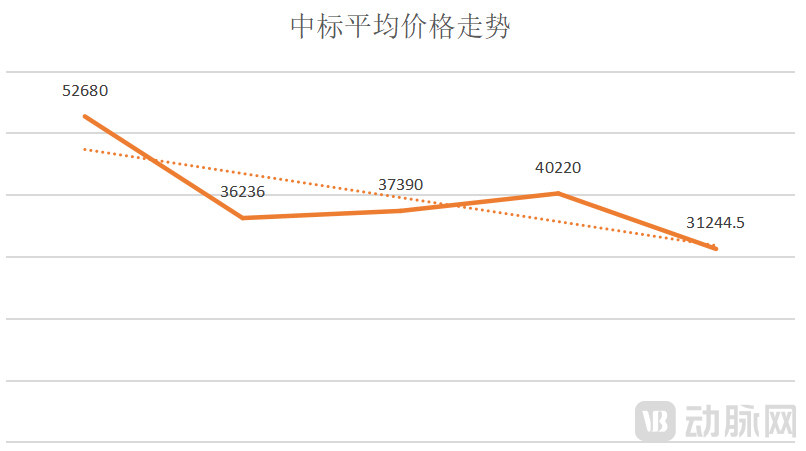
Trend in the Average Winning Bid Prices for Nucleic Acid Sampling Booths Over the Past MonthData sourced from the Qianlima website
VCBeat ranked the unit prices of winning bids for nucleic acid sampling booths on the Qianlima bidding website from late April to early June by time, listing the average winning bid prices across five time periods. It can be seen that the average unit price dropped from RMB 52,000 in late April to RMB 31,000 in early June. It should be noted that the average unit prices for the second and third periods were lowered by booth renovation projects undertaken by advertising companies, with unit prices of only RMB 17,000 and RMB 13,000, respectively.
In response, small and medium-sized enterprises (SMEs) have maintained a calm demeanor. From their perspective, nucleic acid sampling booths are fundamentally functional equipment in public spaces, akin to the bus shelters and security kiosks they originally manufactured, belonging to the category of one-time purchases for long-term use. Although objective factors led to a concentrated surge in demand, this is certainly not the new normal. Some operators also stated that while nucleic acid sampling booths helped factories navigate through difficult periods, they do not intend to make them their core business in the future.
By this point, most people should have formed their own judgment on whether the nucleic acid sampling booth business truly constitutes a “blue ocean.” In fact, sample collection is merely the first link in the entire nucleic acid testing chain. Beyond the sampling sites themselves, cities must address how to strategically plan and layout these sites, balancing locations across commercial districts, residential communities, transportation hubs, and schools. Additional challenges requiring solutions include intelligent management systems for sampling sites, determining the number and optimizing the routes for specimen transport hubs once sampling locations are finalized, and the collection and disposal of medical waste generated at these sites.
The market is a process that constantly moves toward rationality. As more participants enter, natural selection inevitably occurs, and corresponding standards emerge. If the short-term surge in demand addressed the challenge of going from nothing to something, and nucleic acid sampling booths truly became a standard fixture in our daily lives, then the transition from mere availability to excellence would follow. Only companies capable of providing optimal, comprehensive solutions would have the opportunity to emerge as the ultimate winners. This is an advantage that small and medium-sized enterprises relying on basic fabrication techniques such as hammering and welding to produce booths cannot achieve.
Rather than fixating on this so-called billion-dollar blue-ocean market, manufacturers with such capabilities would be better off finding ways to ensure the efficient operation of every link in the nucleic acid testing chain. The greatest value lies in freeing the public from the burdens of nucleic acid sampling and testing, allowing them to return to their daily lives.