Policy and Trend Analysis of Volume-Based Pharmaceutical Procurement in China
On January 1, 2019, the General Office of the State Council issued the Pilot Program for National Centralized Drug Procurement and Use, initially launching pilot centralized drug procurement in four municipalities directly under the central government and seven sub-provincial cities.
After nearly four years of exploration and practice, centralized volume-based procurement (VBP), initially implemented for chemical drugs, has been systematically expanded to include biological products and traditional Chinese medicine (TCM). To date, this initiative has saved over RMB 260 billion in national medical insurance funds. It has also reshaped the development landscape of the pharmaceutical industry, fostering an emerging ecosystem characterized by healthy competition and win-win collaboration among stakeholders in drug research and development, manufacturing, distribution, and clinical use.
Volume-based Centralized Drug Procurement integrates the quality, volume, and price of drugs that have passed the Consistency Evaluation of Quality and Efficacy for Generic Drugs into a centralized purchasing framework, thereby ensuring drug quality and reducing drug prices. In the early stages, China’s generic drug market was characterized by a fragmented competitive landscape. The country officially launched the Consistency Evaluation initiative in 2015, and by 2018, certain drug varieties had already passed the evaluation.
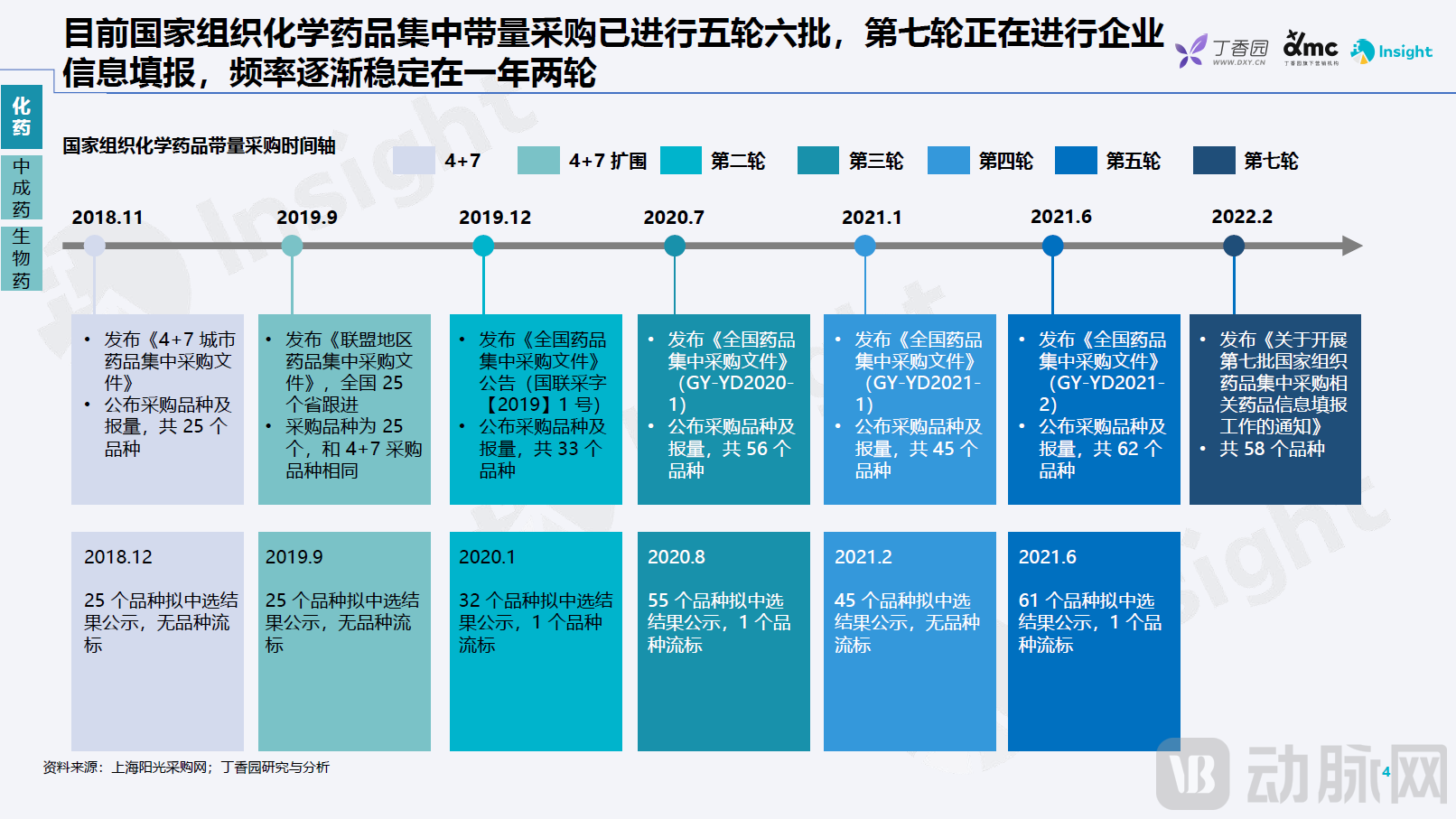
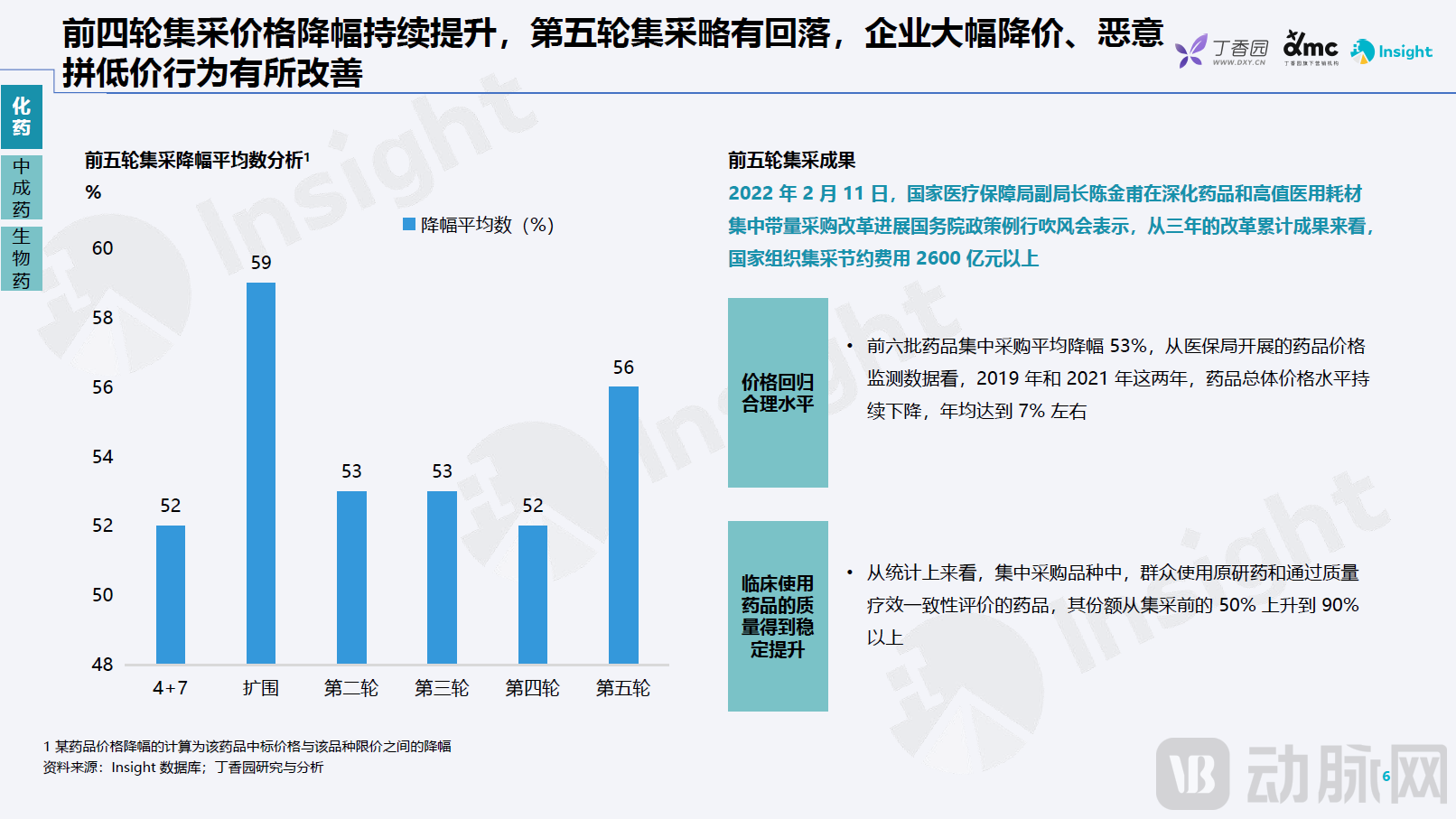
On this basis, the national government launched volume-based centralized procurement. To date, six batches comprising seven rounds have been completed. The seventh batch is currently undergoing enterprise information submission, with the frequency stabilizing at two rounds per year. Data show that the average price reduction for pharmaceuticals in the first six batches of centralized procurement was 53%. Furthermore, in 2019 and 2021, the overall price level of pharmaceuticals continued to decline, with an average annual decrease of approximately 7%, effectively achieving the goal of guiding drug prices back to reasonable levels.
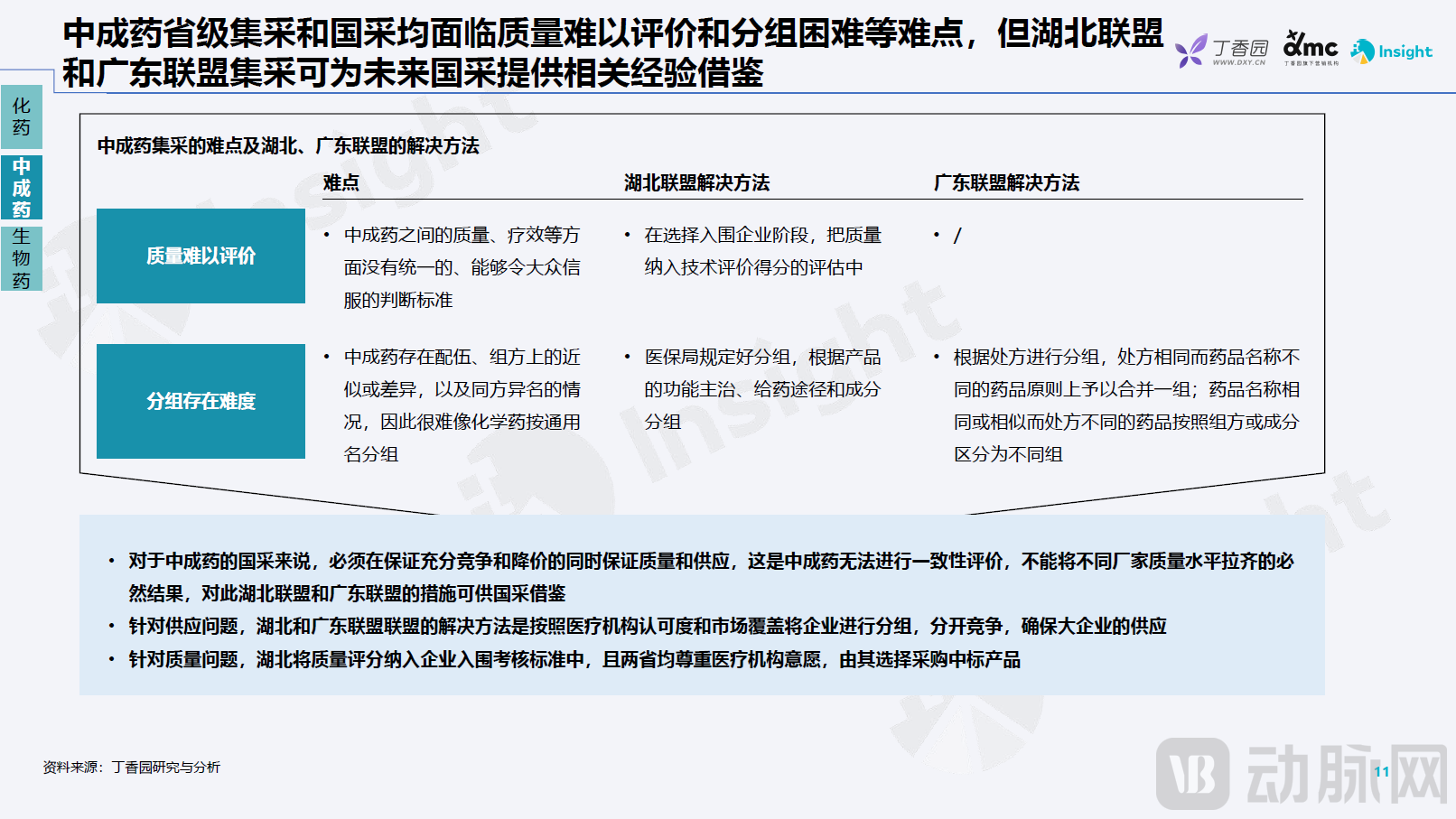
In the field of proprietary Chinese medicines,Provincial (Alliance) Centralized Procurement Has Played a Pioneering RoleSince late 2021, Hubei Province and the Guangdong-led alliance have conducted large-scale provincial-level centralized procurement of proprietary Chinese medicines. The Hubei procurement selects prospective winning manufacturers through a comprehensive evaluation based on both price and technical dimensions, whereas Guangdong determines winning manufacturers solely based on the magnitude of price reductions, while establishing a backup mechanism to provide participating enterprises with a basic guarantee.
Although provincial-level and national centralized procurement of proprietary Chinese medicines both face challenges such as difficulties in quality assessment and grouping,Lessons Learned from Centralized Procurement in Hubei and Guangdong Can Provide Important References for Future National Centralized Procurement。
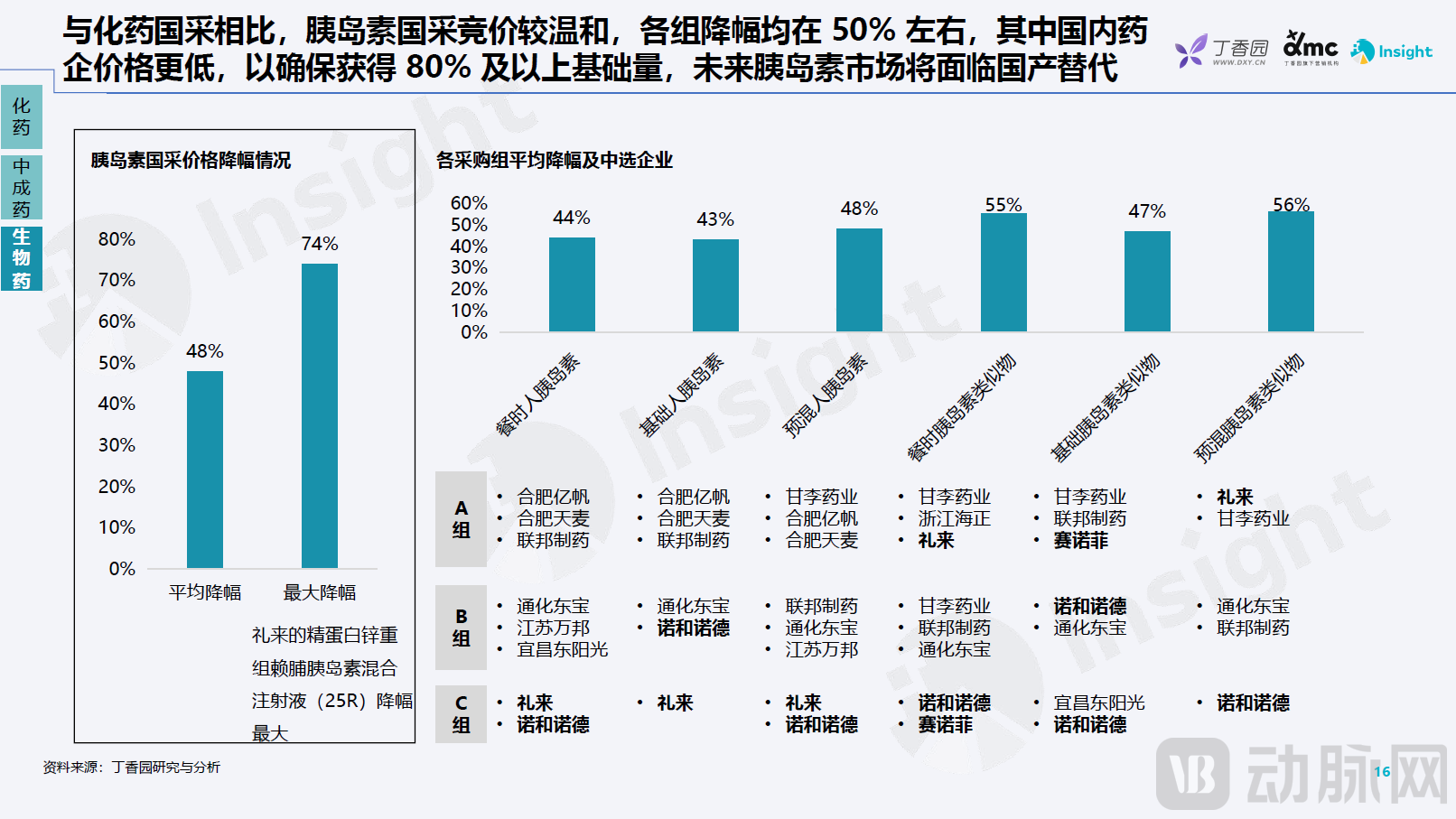
In the field of biologics, following Wuhan’s exploratory efforts with insulin, China’s National Healthcare Security Administration launched a specialized volume-based procurement program for insulin in 2021.Compared with the Wuhan Rules, the national centralized procurement of insulin further encourages manufacturers to significantly reduce prices and adopts a precise volume-reporting method. For new entrants, competing with low prices is essential to secure substantial market growth.
Overall, compared with the national volume-based procurement (VBP) for chemical drugs, the bidding for insulin under the national VBP was more moderate, with price reductions in all groups averaging around 50%. Domestic pharmaceutical companies offered lower prices to secure at least 80% of the base volume. It is foreseeable thatThe Future Insulin Market Will Face Domestic Substitution。
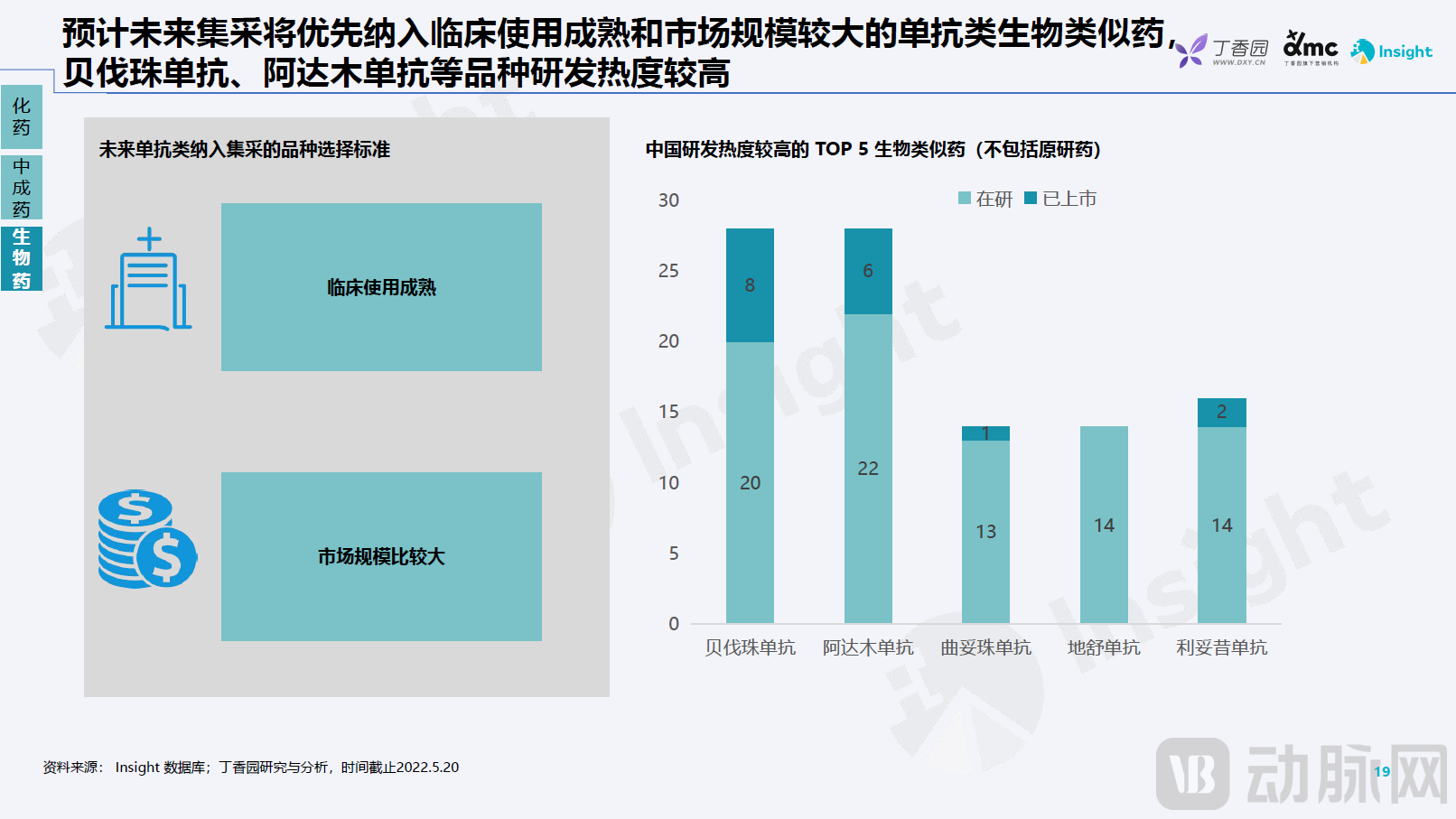
Monoclonal Antibody Biologics Also Achieve Breakthroughs in Provincial Centralized Procurement, the 11-province alliance in Guangdong included rituximab in provincial centralized procurement for the first time. Innovent Biologics was proposed as the winning bidder due to its lowest price, while Roche and Henlius were proposed as alternative candidates.It is expected that future volume-based procurement will prioritize the inclusion of monoclonal antibody biosimilars with established clinical use and large market size., such as bevacizumab and adalimumab.
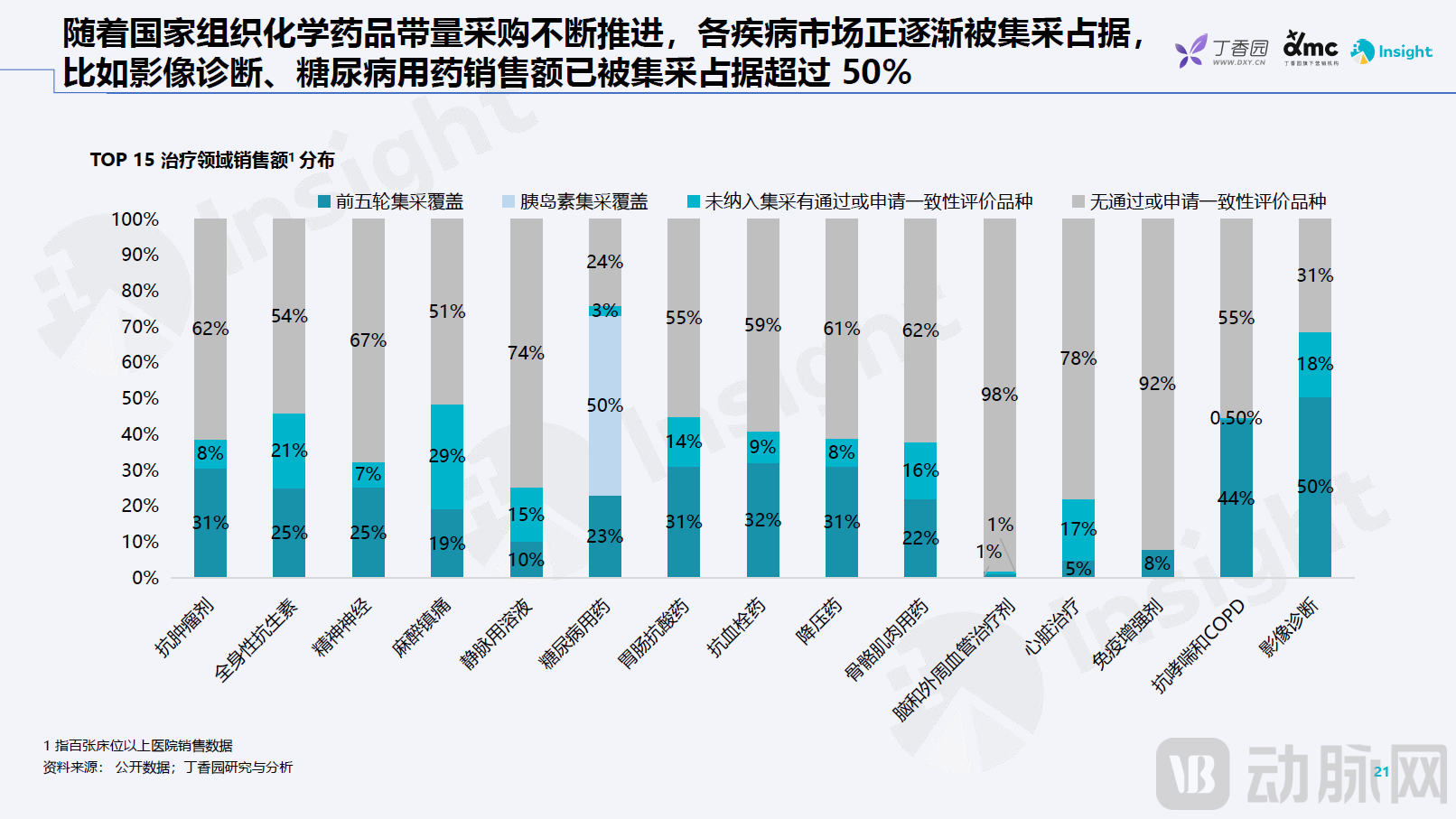
As national centralized procurement enters a normalized phase of continuous expansion, the number of included products keeps growing. To date, six rounds of centralized procurement have covered234 Medicines. The markets for various diseases are increasingly being dominated by drugs included in the centralized procurement program, such as since the launch of the “4+7” pilot program,Lipid-Lowering Drug SectorFieldVBP-listed products have captured 75% of the market, while the overall market size has shrunk by 50%.Imaging Diagnosis, DiabetesSales of drugs subject to centralized procurement have also accounted for over 50% of total pharmaceutical sales.
Regarding the development trends of national centralized procurement,This is evident from a series of landmark documents issued by the General Office of the State Council since 2021, including the “Opinions on Promoting the Normalization and Institutionalization of Centralized Volume-Based Procurement of Drugs,” the “Notice of the General Office of the State Council on Issuing the 14th Five-Year Plan for National Healthcare Security,” and the “Implementation Opinions on Deepening the Promotion of the Sanming Model in Fujian Province to Further Reform the Medical and Healthcare System.”
These documents not only centralize the procurement of pharmaceuticalsInstitutionalization and Normalization, and it is required that by 2025, the number of drug varieties included in national and provincial centralized volume-based procurement in each province (autonomous region, municipality directly under the Central Government) shall reachMore than 500. It is foreseeable that future volume-based procurement will center on 500 drug varieties, rapidly expand to cover all currently clinically used products, and ensure comprehensive inclusion of all eligible items.
Meanwhile, after undergoing an exploratory phase and a period of rapid expansion from 2019 to 2020, provincial-level centralized procurement has entered a stage of steady development and is beginning to assume new missions under the new circumstances.
First, provincial-level centralized procurement must work in tandem with national centralized procurement to achieve the goal of ensuring full coverage of all eligible items.On April 7, 2022, the National Healthcare Security Administration convened its first national working conference on centralized drug and medical consumables procurement, setting a target that by the end of the year, each province (including inter-provincial alliances) must have independently conducted centralized procurement for no fewer than 100 drug varieties cumulatively. These must include chemical drugs, proprietary Chinese medicines, and medical consumables such as orthopedic trauma implants, dental implants, and drug-coated balloons.
Second, the renewal work after the expiration of the national centralized procurement period is organized by each province.Therefore, provincial-level centralized procurement or inter-provincial alliance-based centralized procurement must assume responsibility for the renewal of contracts for drugs included in national centralized procurement. It is essential to adhere to the integration of bidding and procurement with volume-price linkage, stabilize current prices, safeguard the interests of selected enterprises, and ensure the normal supply of pharmaceuticals.
Finally, provincial-level centralized procurement also undertakes exploratory work for special categories such as biosimilars and traditional Chinese medicine proprietary products.The 2019 Wuhan insulin centralized procurement marked the beginning of centralized procurement for biologics. From 2021 to 2022, the Guangdong Alliance and Hubei Province successfully carried out pilot programs for the centralized procurement of traditional Chinese medicine (TCM) proprietary medicines, laying a solid foundation for their subsequent inclusion in national-level centralized procurement.
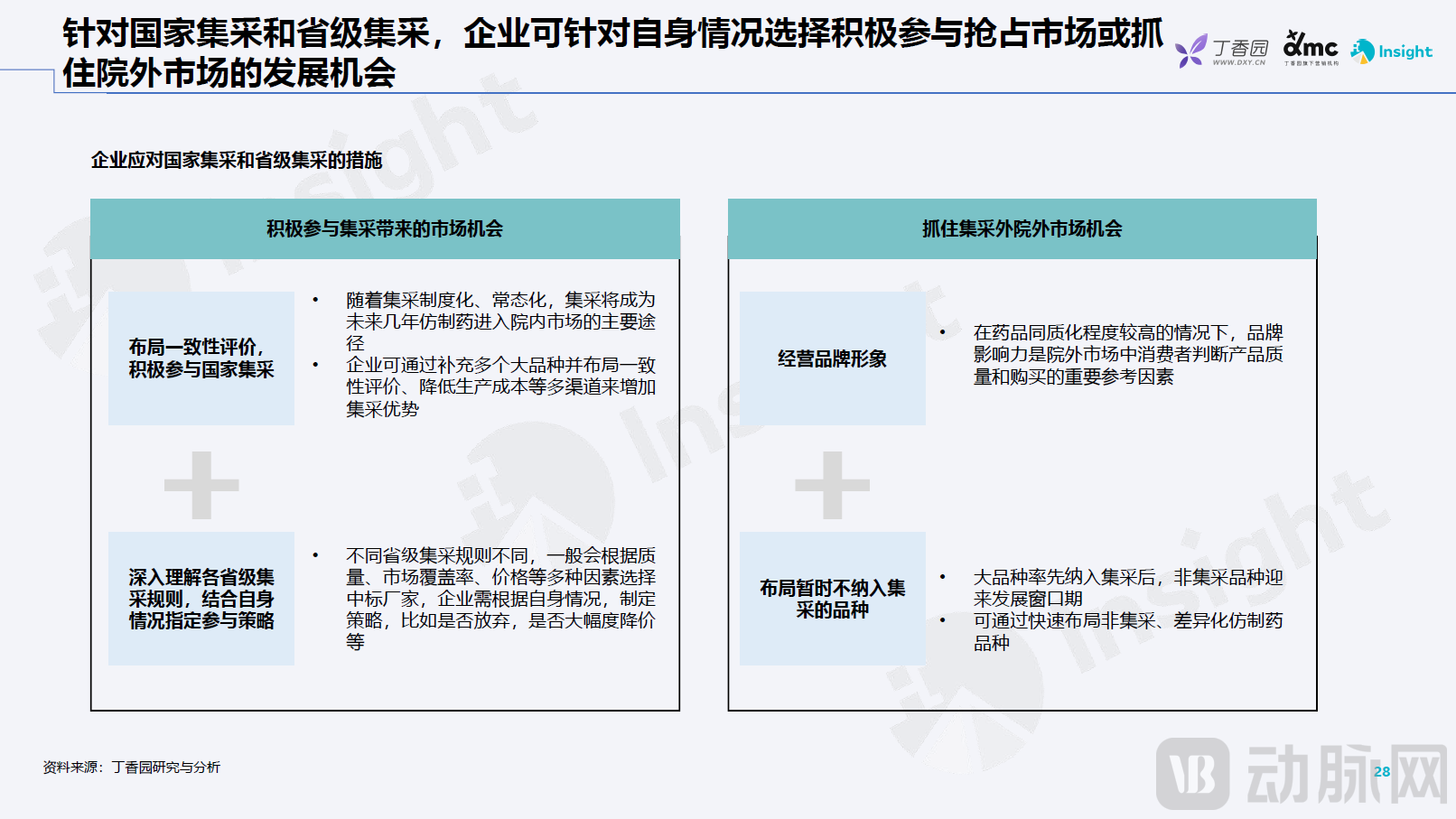
In the face of the disruptive changes brought to the pharmaceutical industry by centralized procurement, companies must respond proactively to navigate the “period of growing pains” as swiftly as possible and chart a path toward breakthrough.In view of this, it is recommended that enterprisesOn one hand, it is possible to supplement with large-volume varieties, conduct consistency evaluations, actively participate in national centralized procurement, and formulate participation strategies for provincial-level centralized procurement based on their own circumstances;On the other hand, it can also focus on the out-of-hospital market not covered by centralized procurement., while building and managing brand image and influencing consumer purchasing preferences, target products temporarily excluded from centralized procurement to seize the window of opportunity for the development of non-centrally procured products.
Amid the new normal of accelerated expansion and broader coverage in centralized drug procurement under China’s national medical insurance scheme, how can stakeholders clearly discern future trends in centralized procurement and better seize first-mover advantages for corporate development?
Limited-Time Free Benefit:For more details on the report, you can download the “Volume-Based Drug Procurement Policy and Market Analysis” report produced by the DXY Insight Database free of charge, and also watch a detailed explanation of the report by Mr. Jiang Peng, Senior Business Analyst at the DXY Insight Database, free of charge.
Long-press to scan the QR code below or click the link to access the report and explanatory video.