

Air Doctor Files for IPO: Scaling Global Traveler-Centric Telemedicine Amid Post-Pandemic Recovery
Air Doctor
Healthy Travel Service Provider
In the post-pandemic era, cross-border travel has become a luxury. According to data from the United Nations World Tourism Organization (UNWTO), international tourist arrivals in 2020 dropped by approximately 1.1 billion, representing a decline of around 70%. Although it may have been a long time since your last trip, what is the most daunting aspect of traveling alone? Missing a flight or losing belongings?
Yam Derfler says his greatest fear is falling ill while traveling. He is the founder of Air Doctor, an internet-based healthcare platform designed specifically to address medical needs during travel.
Air Doctor Was Born from an Unexpected Medical Need Discovered During Travel
Yam Derfler’s entrepreneurial inspiration dates back to 2014, stemming from a medical experience during his travels in Mexico.
At the time, he was traveling around the world and fell ill while in Mexico. Alone in a foreign country with no family or friends nearby and unable to speak the local language, Yam Derfler first experienced a misdiagnosis, then waited at the hospital for re-examination, and finally recovered after numerous twists and turns. He said that even routine matters like seeking medical care become incredibly difficult while traveling. What shocked him even more was that by 2014, many things could be easily found online—such as food delivery services, hotel and restaurant addresses—but not essential survival-related resources like medical care or doctors.
Upon returning home, Yam Derfler shared his experience with friends and discovered that many had encountered similar difficulties in accessing medical care while traveling. He realized that providing healthcare solutions for travelers would be a promising venture.
Having a startup idea is merely the first step on a long journey. How can one turn an idea into a business? Yam Derfler decided to seek a co-founder first. His wife, Jenny Cohen Derfler, holds engineering and operations leadership positions at Intel and has prior successful entrepreneurial experience. After discussing it together, they concluded that the idea was viable.
An appointment scheduling app that enables travelers to receive medical care in their native language while abroad
In 2016, Air Doctor was founded in Beit Nekofa, a small community located 10 kilometers west of Jerusalem, Belgium, with Jenny Cohen Derfler serving as Chief Executive Officer. At that time, Air Doctor did not yet have a clear plan for what kind of traveler healthcare solution to build; it only had a rudimentary concept: to develop an internet-based software application.
They once considered integrating regional healthcare systems into their software, but after analyzing these systems, they found that each local healthcare system was designed specifically for local residents, with entirely different medical access procedures for non-local patients.
Thus, they decided to bypass all intermediate processes and direct patients straight to physicians.
In the summer of 2018, the Air Doctor software was launched. One month after its launch, Air Doctor secured $3.1 million in seed funding.
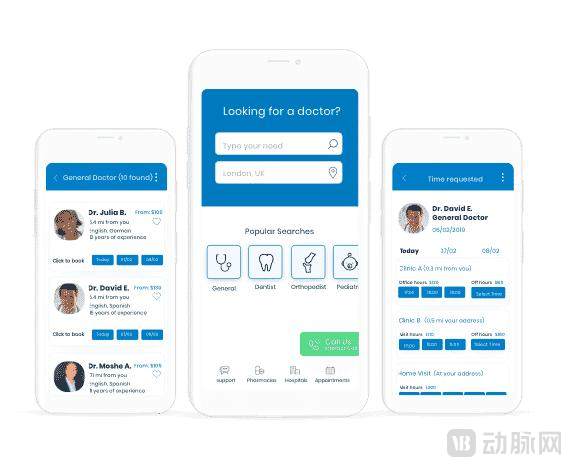
Air Doctor Software Interface | Source: Official Website
This software matches patients with doctors on the platform and provides online appointment services. When patients open the app, it displays information such as profiles and locations of nearby doctors, allowing users to filter by language and medical specialty. Currently, doctors available on the software are categorized into general practitioners and specialists, with specialists including dermatologists, orthopedists, gynecologists, and others. If a patient books an appointment through the Air Doctor software, subsequent offline consultation fees are paid via the app. As a third-party platform, the software retains a certain percentage of the consultation fee as a service charge, and the remaining amount is disbursed to the doctor through the platform.
There are no barriers or fees for doctors to join the Air Doctor platform; however, the platform conducts credential verification, and only duly licensed and compliant physicians are permitted to onboard. Jenny Cohen Derfler stated that they once flew thousands of kilometers to another city solely to verify a physician’s credentials.
Air Doctor did not undergo a phase of expanding from China to overseas markets, as it positioned itself as a global company from the outset. It initially launched its software in Europe, the world’s largest tourism market. Despite accounting for only 6.8% of the global land area, Europe attracts 50% of the world’s tourists.
Following its expansion into Europe, Air Doctor set its sights on Asia and the United States. By the end of 2019, the Air Doctor platform had reached 15 countries and regions worldwide, with more than 2,000 physicians registered on the platform. At this stage, Derfler’s original entrepreneurial vision had become a reality; however, the software remained essentially an online physician appointment-booking tool. Its key differentiator from competing platforms was the availability of multiple language options.
Launched telemedicine services before the pandemic, yet failed to ride the wave of its rapid growth
To expand its business, Air Doctor launched telemedicine services in December 2019. “We found that 30% of offline patients only require brief consultations. By moving these services online, we can reduce costs in a controlled manner,” said CEO Jenny Cohen Derfler. “For patients whose issues cannot be resolved through online consultations, we help them quickly find an offline physician.”
In early 2020, the outbreak of the pandemic spurred rapid development in the telemedicine industry, with overall revenues in 2020 nearly doubling compared to 2019. According to Frost & Sullivan forecasts, the five-year compound annual growth rate (CAGR) for the telemedicine industry surged rapidly from 38% in 2019 to 1,200% by April 2020.
While the entire telemedicine industry was experiencing a boom, Air Doctor was enduring a harsh winter. “COVID-19 was a true low point for us,” said Jenny Cohen Derfler. Although Air Doctor jumped on the telemedicine bandwagon in late 2019, it did not gain the same prominence as other telehealth companies. During the two years of the pandemic, global international tourism came to a near standstill. Without tourists, where would Air Doctor find its users?
Yuval, Marketing Director at Air Doctor, believes that the past two years of the pandemic were not the first time the global economy has fallen into trouble. Based on past experience, most companies that achieved rapid growth after an economic crisis were not those that quickly cut back their operations during the Great Depression. In such times, survival is the core of all strategies, but focusing solely on survival while neglecting development is definitely not the best business strategy.
Rising Demand for Travel Insurance During the Pandemic Expands Insurer Customer Base
As individual travel cooled, Air Doctor shifted its focus to B2B clients. Jenny Cohen Derfler seized the opportunity to engage with insurance companies worldwide. As the saying goes, “When one door closes, another opens.” Even she did not expect that Air Doctor would sign 16 contracts within a year after the pandemic.
In 2019, only half of travelers in Europe purchased travel insurance. However, times have changed; post-pandemic medical procedures are more cumbersome and costly than before. In 2021, the proportion of travelers purchasing health insurance was significantly higher than in previous years. “No one wants to travel without access to medical care solutions,” said Jenny Cohen Derfler.
As travel insurance purchase rates rise, global healthcare costs are also increasing. According to data from the “2022 Global Medical Trends Report” by Willis Towers Watson, 59% of insurers consider overutilization of medical services by insured individuals a significant driver of increased costs for insurers, and telemedicine is an effective means to reduce these costs; more than half of insurers now offer telemedicine services to their customers.
According to Jenny Cohen Derfler, patients can reduce their medical costs by 20%–50% by consulting with Air Doctor, which would save a mid-sized insurance company millions of euros.
The benefits for insurance companies do not end here. Consultation and treatment fees incurred by patients seeing doctors through Air Doctor are paid directly on the platform, eliminating offline transactions. No various receipts or invoices are generated for reimbursement purposes, making the reimbursement process simple and efficient. This saves time for both insurance companies and patients. If a patient’s medical insurance package includes Air Doctor services, the patient will not need to pay out-of-pocket for either in-person visits or remote consultations.
Air Doctor’s insurance partners include ERGO Spain, ERGO Germany, and The Phoenix Travel. Among these, Phoenix reports that 95% of its insured members requiring medical care opt for Air Doctor’s services, which has reduced their claims costs by 40%. In addition to insurance companies, 40% of Air Doctor’s corporate clients are travel agencies, hotels, banks, and other enterprises.
The pandemic dealt a blow to Air Doctor, but it also provided the team with an opportunity to bide its time and strengthen its capabilities. Currently, Air Doctor’s physician network spans 74 countries, with over 20,000 medical professionals onboarded, offering services in 15 languages through both online and offline consultation channels.
In September last year, Air Doctor noted a rise in global travel volume; however, the surge of Omicron at the beginning of this year caused travel to stagnate, with tourist numbers only gradually recovering by March.
According to the World Tourism Economic Trends Report, global tourism is expected to recover to 70% of pre-pandemic levels this year and return to pre-pandemic levels by 2024. As the tourism industry rebounds, Air Doctor has also attracted attention from the investment community. Recently, Air Doctor secured a $20 million Series A funding round, led by Lightspeed Ventures, with participation from Vintage Investment Partners, Munich Re Ventures, and Phoenix, an insurance partner of Air Doctor.
Jenny Cohen Derfler stated that the sudden outbreak was an unexpected variable, but fortunately, they continued to expand new businesses over the past two years. Air Doctor anticipates a significant increase in business volume this summer.
Chinese and foreign telemedicine companies differ in their user bases, service providers, and profit models.
Globally, telemedicine is undoubtedly one of the fastest-growing industries during the pandemic.
According to CB Insights data, telemedicine accounted for less than 0.3% of private medical claims in the United States before the pandemic, peaking at 13% during the April lockdowns. Although it has since declined, it remains more than ten times higher than pre-pandemic levels.
Public acceptance of telemedicine is also significantly higher than it was before the pandemic, particularly among young people and families with children. Globally, more than half of insurance companies offer telemedicine services, and 37% of insurers consider the expansion of telemedicine to be the most important change their organizations have made.
Telemedicine in China emerged in the late 20th century, with some high-tier hospitals establishing telemedicine systems. The sector experienced relatively rapid development during this period, and then accelerated dramatically following the outbreak of the pandemic. Leading companies in China’s telemedicine industry include Ping An Good Doctor and Ali Health, while Amwell is a prominent player internationally.
There are significant differences in business models between telemedicine companies in China and those abroad.
First, the user bases differ: overseas markets primarily target B-end clients, with payments made by enterprises or insurers, whereas the domestic market in China mainly serves individual consumers. Second, the service providers vary: overseas services are predominantly offered by commercial entities, while in China, they are mainly provided by online internet hospitals affiliated with physical hospitals, with only a minority being commercial organizations. Finally, the revenue models diverge: overseas markets largely rely on subscription-based models generating income through membership fees, whereas in China, pharmaceutical sales remain the primary source of revenue.