

DXY Group Addresses Severe Imbalance in County-Level Medical Talent Supply and Empowers Grassroots Healthcare Development
Primary healthcare, serving as the capillaries of “medical services,” bears the diagnostic and treatment burden for nearly two-thirds of China’s population. Effectively addressing the current challenges in primary healthcare is an inherent requirement of the tiered diagnosis and treatment system and the “Healthy China” initiative.
In light of this, at the recently held “Forum on High-Quality Development of County-Level Healthcare,” DXY released a report focusing on the core of county-level healthcare development—“healthcare talent.”"County-Level Medical Talent Development Report": The Industry's First Report Focusing on the Supply and Demand of Talent in County Hospitals, aiming to provide guiding recommendations for the high-quality development of county-level healthcare through an in-depth analysis of this report.

Amid the current pressures on county-level healthcare, what solutions has DXY offered through its professional healthcare talent services platform, DXY Talent? Following the keynote speech by Li Tiantian, Chairman and Founder of DXY, we also spoke with Shuai Yuhuan, Vice President of DXY and Head of DXY Talent.
Serving the healthcare needs of a population of 950 million
The Core Pain Point of County-Level Healthcare Is the Acquisition of Medical Talent Resources
According to relevant statistics, the current population of county-level areas reaches 950 million, accounting for approximately 73% of China’s total population. By the end of 2019, a total of 16,175 county-level hospitals had been established across 1,881 counties (county-level cities) nationwide, alongside more than 10,000 county-level hospitals and over 900,000 primary healthcare institutions. This implies that county-level hospitals must bear the pressure of disease diagnosis and treatment, as well as related health management, for nearly two-thirds of the population, while simultaneously managing a vast and complex network of primary healthcare institutions.
It should be noted that disparities in medical care quality between urban and rural areas, coupled with the convenience of seeking treatment across regions, often lead to a significant outflow of patients from county-level areas, who opt to seek care at “better” large hospitals. This, in turn, results in overcrowding at these major hospitals, exacerbating difficulties in accessing medical care and other related issues.
To address this issue, the ideal approach is to ensure that “major illnesses are treated within the county,” enabling patients to receive care for their conditions close to home. Therefore, enhancing the medical capabilities of county-level hospitals has become key to advancing the “tiered diagnosis and treatment” system.
In fact, to better enhance the level of medical care at the county level, a large number of medical institutions have already conducted extensive explorations of various models.According to the "Report on the Development of Medical Talent in County-Level Areas" published by DXY, initial progress has been made in enhancing medical care capabilities at the county level.For example, in the context of the Sanming healthcare reform, the Youxi County model was exploredTight-Knit Medical Consortium Model, by establishing close-knit medical consortia, improving internal operational mechanisms, and transforming healthcare service delivery models, ultimately achieving the resolution of difficulties in accessing medical care and the establishment of a tiered diagnosis and treatment system.
By leveraging the internet’s model of information connectivity and sharing, to build"Internet Plus Medical Community Model"This represents another distinct development pathway. For instance, the three-tiered hierarchical diagnosis and treatment system spanning county, township, and village levels, led by Gaozhou People's Hospital, was established under this model. By strengthening its own service capabilities, leveraging the "Internet + Medical Consortium" framework to decentralize medical resources, and creating a closed-loop healthcare service system, the initiative has effectively enhanced primary healthcare services. It has basically realized a hierarchical diagnosis and treatment pattern in Gaozhou City where "serious illnesses are treated within the county, common diseases within the townships, and minor ailments within the villages."
Fundamentally, in the aforementioned casesThe Core of Development for County-Level Medical Institutions Remains the Construction and Enhancement of Their Own Medical Capabilities.
In the view of Shuai Yuhuan, Vice President of DXY, the construction and enhancement of primary healthcare capabilities is not merely a matter of medical device and equipment configuration, but more importantly, an issue concerning the acquisition of medical talent resources.
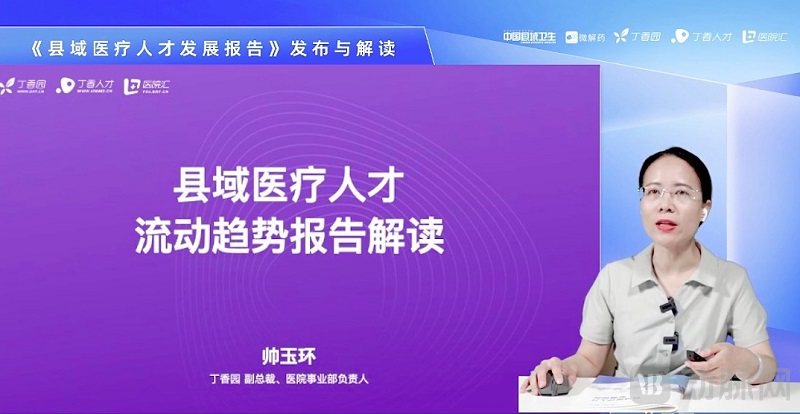
Currently, from the perspective of overall mechanism design, China has different requirements for the medical equipment allocation in hospitals at different levels. Hospitals are also continuously improving and developing their own medical capabilities. However, patients have a more urgent desire to obtain higher-quality medical services. The equipment in some county-level hospitals cannot meet patient demands. But with the implementation of the National Health Commission's "Thousand County Project," relevant shortcomings are being addressed by further improving operational mechanisms and enhancing equipment configuration in county-level medical institutions.
The lagging level of medical care in county-level areas ultimately stems from a shortage of high-quality medical talent.In the absence of relevant medical technical expertise and healthcare professionals, even the deployment of high-end medical equipment cannot effectively facilitate the delivery of medical services. Currently, county-level healthcare systems still lack a favorable “soft environment” for talent attraction. Deficiencies in supporting infrastructure for medical education, compensation packages, research support, and academic exchange continue to fall short of meeting the expectations of high-quality medical professionals.
While acknowledging existing shortcomings, Shuai Yuhuan also pointed out that the future development prospects for county-level healthcare are promising. The state is actively promoting the development of county-level healthcare, and some secondary hospitals have successfully transitioned to tertiary hospitals. The “Thousand Counties Project,” being goal-oriented, is further driving the rapid advancement of county-level healthcare. In this process, enhancing hospitals’ appeal to high-quality medical talent is a key factor influencing their development.
Leveraging DXY’s Talent and Management Systems
“Generating Internal Capacity” and “Providing External Support” to Enhance County-Level Medical Services
Insights into the shortage of medical talent for healthcare development at the county level are closely linked to DXY’s long-standing engagement in the training and recruitment of healthcare professionals.
Dingxiang Yuan itself evolved from a physician community founded in 2000, connecting a vast pool of physicians and medical technical professionals. In 2007, Dingxiang Yuan launched Dingxiang Talents, pioneering online recruitment in the healthcare industry. As medical talent accumulated, Dingxiang Yuan began providing health services to the general public starting in 2014, including science popularization and patient education.
In short, the development over the past two decades,DXY’s long-standing accumulation in the healthcare sector has enabled it to gradually build a comprehensive ecosystem centered on healthcare professionals, encompassing career development support such as training for incumbent medical staff and recruitment services for those transitioning out of clinical roles.
In an interview, Shuai Yuhuan pointed out that, nationwide, county-level medical institutions offer far more healthcare positions than provincial capitals. However, the vast majority of resumes from medical professionals with bachelor’s or master’s degrees are submitted to tertiary hospitals in provincial capitals, rendering most of these applications effectively unsuccessful. In reality, a portion of this talent pool would be better suited for county-level healthcare. Guided by this insight, DXY began dedicating greater resources to the development of county-level healthcare around 2017, helping county-level medical institutions identify suitable healthcare professionals. Building on its initial efforts in talent placement, DXY recognized that county-level medical institutions often lack strong branding, departmental management expertise, and robust management systems. This realization further motivated DXY to intensify its support for county-level healthcare, assisting hospitals in addressing these weaknesses and achieving genuine healthcare empowerment.
In fact, DXY is not the only entity that has recognized the importance of developing healthcare services in county-level areas.Internet giants have also taken note of the vulnerabilities in county-level healthcare and are striving to contribute to its development through their own initiatives.For example:
Alibaba HealthProposing a New Model for Digital Medical Poverty Alleviation: Leveraging Alibaba Health’s Digital Capabilities to Build an Online Platform, Where Professional Physicians Are Deployed by Organizations Such as Chinese Volunteer Doctors to Conduct Online Training and Offline Free Clinic Services for County-Level Hospital Doctors, Focused on Specific Diseases, Thereby Helping Healthcare Professionals in Impoverished and Grassroots Areas Improve Their Clinical Competence.
JD HealthProposed the “New Barefoot Doctor Initiative,” leveraging the platform’s resource-linking capabilities to collaborate with renowned experts such as Hu Dayi in delivering online physician skills training and remote assistance, thereby enhancing the diagnostic and treatment standards and quality at the grassroots rural level and improving the sense of gain among the local population.
Ping An HealthThe “Village Doctor Project” is also being continuously implemented. Through the Ping An Health Village Doctor App, which integrates functions such as AI-assisted diagnosis and treatment, mentorship by renowned physicians, appointment registration, and training for village doctors, renowned physicians serve as consultants to help doctors and patients in remote areas access high-quality medical resources.
Li Tiantian, founder of DXY, mentioned at the “Forum on High-Quality Development of County-Level Healthcare” thatDingxiang Yuan primarily empowers county-level healthcare through the following approaches:
First, targeting physicians, the “Empowering Primary Care Physicians” initiative aims to build sustainable internal capacity among county-level medical practitioners.Enhancing the medical service capabilities of county-level physicians through training and practice.
The training program comprises two components: online and offline training. Online, DXY Open Courses, a medical online education platform under DXY (Dingxiang Yuan) established in 2017, meets the learning needs of healthcare professionals at different career stages through structured and systematic content production. Leveraging platforms such as DXY Open Courses and DXY Broadcast Cafe, DXY has established the “DXY Internet Public Welfare Medical Academy,” offering thousands of medical educational video courses online to help enhance the capabilities of grassroots healthcare providers. Offline, DXY Clinics and platform-affiliated physicians have delivered public welfare lectures to assist grassroots doctors in standardizing their clinical skills. Reportedly, the total number of direct participations in these learning sessions reached 25,126.
In practical application, DXY provides medication support to healthcare professionals through its Medication Assistant app. It is reported that the app usage rate among healthcare workers in primary medical institutions in regions such as Huai’an County, Danzhai County, and Jianshi County has reached 81.3%.
Secondly, targeting hospitals, the "Healthy China County Tour" initiative provides systematic recommendations on issues such as hospital talent management.
Guided by the “Thousand Counties Project,” DXY’s “Healthy China County Tour” initiative has established a presence in county-level hospital clusters across multiple provinces, including Zhejiang, Guangdong, Sichuan, and Henan, with its influence extending nationwide. The program aims to enhance the comprehensive capabilities of county-level hospitals in areas such as talent attraction and discipline development, and has successfully facilitated the recruitment of numerous highly qualified medical professionals for these institutions. For instance, Deqing County People’s Hospital recruited its first doctoral degree holder, who also serves as the leading expert in orthopedics.
Furthermore, DXY is guiding the management of healthcare talent in county-level regions through initiatives such as the Report on the Development of Healthcare Talent in County-Level Areas, and providing guidance on the challenges and practices of county-level healthcare management through programs like “You Yan Zai Xian” and “Expert” Open Courses for Counties. These diversified measures are enhancing the management standards and capabilities of county-level hospitals.
Finally, by leveraging its accumulated medical expertise, DXY addresses the asymmetry of medical information through science popularization and patient education content. This helps patients better understand their conditions, encourages them to seek care for minor ailments within their local counties, and supports the implementation of tiered diagnosis and treatment.
County-level Healthcare Continues to Retain Talent
Three Additional Measures to Enhance Comprehensive Strength
In fact, cultivating and attracting medical talent is merely a starting point,The ultimate focus remains on how to continuously “retain” high-quality medical talent.
According to DXY’s “Report on the Development of Medical Talent in County-Level Areas,” data from job postings released by major county-level hospitals indicate that the demand for medical talent in these regions has increased year by year over the past three years. The number of medical professionals recruited by county-level hospitals surged by 113.8% in the last three years, with a significant rise in the average number of hires per position. Shortages are particularly pronounced in the allocation of county-level medical talent across nursing, anesthesiology, pediatrics, critical care medicine, and pathology. However, it is undeniable that fewer than 10% of medical professionals seeking employment in county-level areas submit their resumes to county-level hospitals.
The confluence of multiple factors has created a situation in which county-level hospitals struggle to retain high-caliber talent. Indeed, even medical professionals extensively trained by these hospitals tend to migrate toward institutions with greater growth potential, such as newly opened campuses of tertiary Grade A (San Jia) hospitals. How county-level hospitals can better “retain” talent is undoubtedly an issue that demands careful consideration from hospital administrators across the board.
Addressing the Challenges in County-Level Medical Development,Li Tiantian pointed out, “Economic development is the foundation, addressing ‘blood loss’ is the key, and the ‘three-pronged approach’ is the method.”
In the process of empowering county-level healthcare, DXY will continue to enhance the “hematopoietic” (self-sustaining) and “transfusion” (external support) capabilities of county-level medical institutions, thereby facilitating their development.
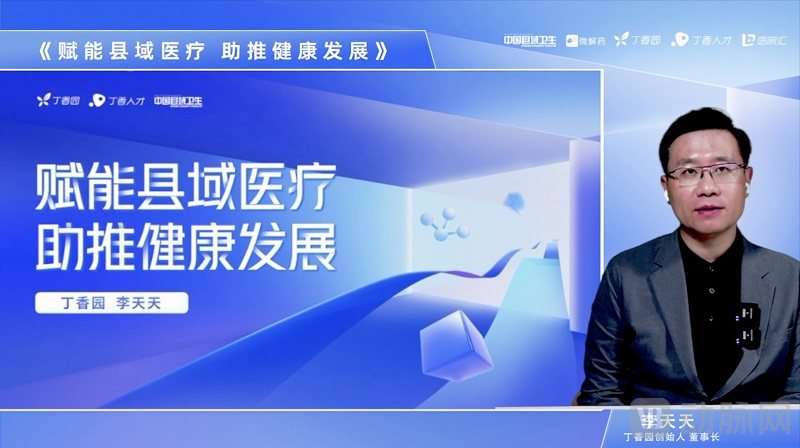
Meanwhile, for county-level healthcare to achieve better development, it may be necessary, as Li Tiantian has stated, to proceed from the following dimensions:
First, strengthen the development of medical talent teams at the county level.Improving the compensation and benefits for medical professionals in county-level areas, including measures for their children’s education and elderly care support, is key to retaining talent. Meanwhile, society and various medical schools should strengthen guidance on employment and career choices for medical professionals. Furthermore, enhancing government-enterprise cooperation will further facilitate the recruitment of medical talent at the county level.
Secondly, strengthen the construction of county-level medical capabilities.Enhancing the platform’s inherent appeal is undoubtedly a critical factor for medical professionals when making career decisions. In this process, it is essential to address existing shortcomings by strengthening infrastructure construction in county-level hospitals and bolstering underperforming specialties, thereby improving the overall quality of medical services. Additionally, adhering to the principle of “tailoring strategies to local county conditions” is necessary to develop distinctive specialty brands for county-level hospitals, which will help retain patients while more effectively attracting talent.
Finally, strengthen patient education and science popularization.By further enhancing public physical fitness and health literacy through popular science education, we can better help patients remain at local hospitals and promote the development of a tiered diagnosis and treatment system, such as ensuring that “serious illnesses are treated within the county.”
In fact, the development of county-level healthcare requires greater engagement from a broader range of stakeholders. The exploratory efforts by leading internet healthcare platforms—such as DXY, Ali Health, JD Health, and Ping An Good Doctor—along with support and investment from other sectors of society, will undoubtedly further advance the cause of county-level healthcare. Ultimately, this will help resolve the difficulty of accessing medical care and facilitate the implementation of tiered diagnosis and treatment.