

Mindray and United Imaging Quietly Enter the Booming Animal Healthcare Market Amid Pet 'Aging' Trend

United Imaging
High-end Medical Device Developer
Ms. Liu’s dog, Tony, is 12 years old this year. Due to his advanced age, he has limited mobility and suffers from poor cardiac health. One night, while sleeping with his nose buried in his bed, Tony suddenly began emitting continuous, weak whimpers due to suffocation in the middle of the night. Panicked, Ms. Liu tentatively applied chest compressions to Tony. The entire resuscitation effort lasted a full two minutes before the puppy’s complexion gradually returned to normal.
Since then, Ms. Liu has frequently taken Tony to a nearby veterinary hospital for check-ups. Over time, the puppy underwent a series of imaging examinations, including full-body X-rays and echocardiography. These tests revealed that Tony’s hip joints were severely worn and his heart was 20% larger than normal. After a month of intensive care, with imaging studies and various therapeutic medications, Tony’s life finally returned to normal. However, the entire process cost Ms. Liu nearly 3,000 yuan.
More expensive than the total of all medical expenses incurred by Ms. Liu in a year.
Like humans, cats and dogs inevitably develop various health issues as they age. It was only during a casual chat with her neighbor that Ms. Liu noticed the significant increase in senior dogs within her residential community in recent years. Many of these dogs require frequent hospital visits for diagnostic examinations and treatments using medical devices; some suffer from cardiac conditions and regularly undergo echocardiography, while others have developed lymphatic tumors and received treatment via linear accelerators.
It is difficult to ascertain whether the surge in imaging requests from a large number of veterinary hospitals spurred the research and development of animal imaging equipment, or whether advances in life science instrumentation for laboratory animals provided the conceptual framework for medical imaging in pets. Nevertheless, it is undeniable that pet owners’ demand for veterinary treatment has served as the primary driver of industry growth, further propelling the discipline of veterinary medical imaging to achieve leapfrog development in recent years.
Song Wenjun became a veterinarian in 1991 and has been practicing veterinary medicine for 31 years, witnessing the full growth trajectory of the discipline.
“When we first entered this field, the only tools at our disposal were stethoscopes, microscopes, and some obsolete, semi-automated biochemistry analyzers. It was not until 2016 that veterinary medicine in China began to experience explosive growth. Pet hospitals across the country started purchasing relatively affordable and straightforward X-ray and ultrasound equipment, while high-end facilities even adopted CT and MRI systems. The advent of medical imaging enabled veterinarians to visually observe abnormal changes within animals’ bodies, allowing for more precise diagnosis and treatment. Since then, veterinary medicine has embarked on a fast track of development. Leveraging the accumulated expertise from human medicine, the field has nearly covered in five to six years the ground that would have taken two decades to traverse,” recalled Song Wenjun.
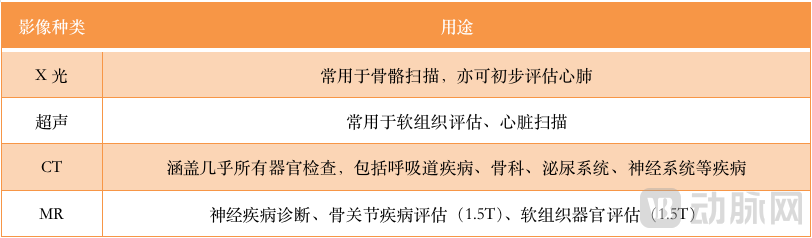
Diagnostic Scope Corresponding to Different Devices
The Development of Veterinary Medicine Is No Accident. Since the turn of the millennium, the role pets play in households has undergone a fundamental shift. In the past, pets were kept for guarding homes and catching mice; they were merely animals. Today, they are friends, children, and family members.
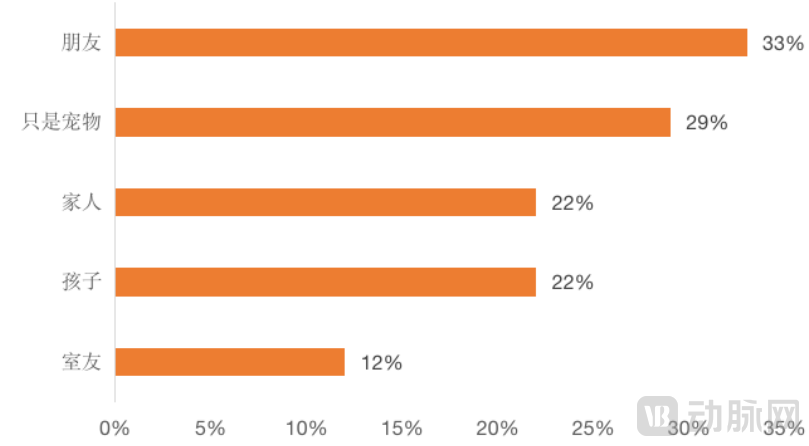 The Role of Pets in Modern Households in 2021 (Data Source: iResearch Report, N=3412)
Concurrent with this shift in roles is the changing willingness of pet owners to spend on their pets. As residents’ economic capabilities have generally risen, people have more disposable income and energy to devote to their pets’ lives. When pet owners invest sufficient love in their companions, their attention to the pets’ health status and their willingness to pay for veterinary care also increase.
In brief, social factors such as economic conditions and lifestyle habits have led to a shift in how people perceive the role of pets, which in turn has made them more willing to invest greater time and financial resources in their companion animals.
Through this logic, we can explain the reasons behind the rise of the pet economy, but we cannot explain: Why did veterinary medicine experience its surge in 2016?
To dissect the key timing of the surge in veterinary medicine, we must focus on a critical metric for the pet industry: the age structure of pets in China.
Two thousand years ago, a dog like Tony, having just reached the age of 12, would have been considered exceptionally long-lived. Today, however, there is a large population of senior dogs over the age of eight, and the average lifespan of pet dogs has increased to 14.17 years. According to 2019 survey data on domestic pet ages released by Ping An Securities Research Institute, dogs aged eight and above accounted for 18.6% of the total, numbering more than 10.23 million.
The current age structure of pet dogs in China indicates that the number of senior dogs will continue to rise in the future. Data shows that the majority of pet dogs in China are relatively young, with ages concentrated between 2 and 5 years, totaling 21.46 million, accounting for 39% of the population. Based on this projection, a large number of pet dogs will enter their senior years between 2022 and 2026. Excluding mortality factors, the number of senior dogs aged 8–14 is expected to reach approximately 32.47 million by 2025, marking the entry of the pet economy into an “aging” era.
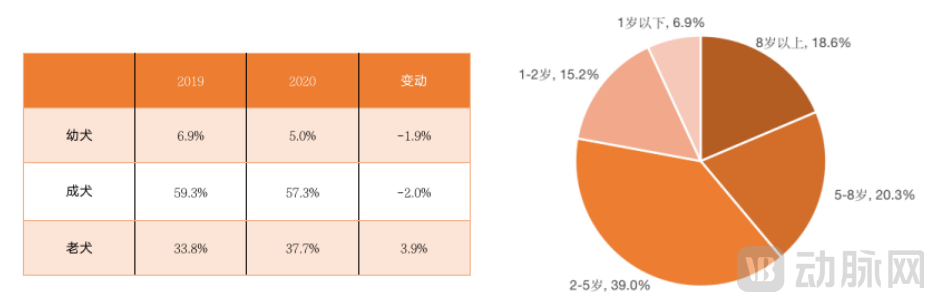
Age Structure of Pet Dogs in 2019 and Changes in Population in 2020 (Data Source: iResearch, Ping An Securities)
The new era corresponds to new demands. Behind the data, a market worth hundreds of billions is quietly emerging.
Pet owners, as the demand-side drivers, are the core force behind contemporary societal shifts. As pets age, their incidence of disease rises significantly, and this growing demand for medical care will further propel the expansion of the veterinary healthcare market. New-generation pet owners, such as Ms. Liu, generally possess strong health-awareness practices—including regular check-ups, timely veterinary consultations, and vaccinations. Consequently, they are naturally willing to pay for evidence-based medical care when their companions enter their senior years.
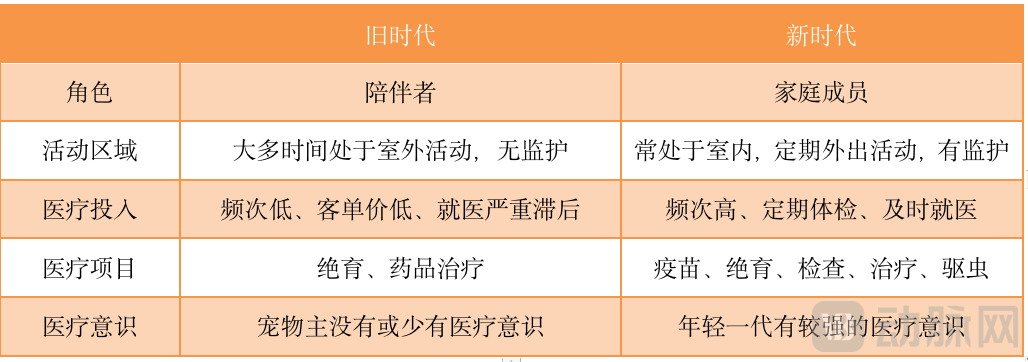
Features Affecting Pet Age
Pet clinics, as service providers, adjust their offerings based on demand. Since cats and dogs cannot articulate their symptoms, veterinarians must rely on experience to prescribe treatments when they fall ill. However, as pets enter their senior years, they may suffer from multiple concurrent conditions. Relying solely on clinical experience makes it difficult to conduct comprehensive disease screening, rendering traditional diagnostic and treatment models no longer competitive.
Under this circumstance, the service positioning of veterinary clinics has shifted from routine auscultation and prescription to precision treatment incorporating diagnostic imaging. Pet owners are willing to pay for "visible" diagnostic examinations, enabling veterinary hospitals to achieve higher average transaction values.
High-end veterinary hospitals are currently showing clear differentiation, with specialized departments established for major diseases such as tumors and neurological disorders. Many premium-positioned hospitals have acquired advanced diagnostic equipment, including 64-slice CT scanners and 1.5T MRI systems, and even offer CT-guided radiation therapy.
Dogs and cats are the primary types of pets kept in China. In 2020, the urban dog and cat population in China exceeded 100 million. According to Industrial Securities, the pet ownership penetration rate among Chinese households reached 22.8%, which remains significantly lower than the rates in the United Kingdom (44%), Australia (62%), and the United States (67%).
The level of penetration is closely linked to the pace of development in the pet healthcare market. Data from Ping An Securities shows that, apart from a small number of Chinese rural dogs and cats, the breed composition in China is largely consistent with that in the United States; therefore, the disease spectra and incidence rates among pets in the two countries are similar. However, while non-medical spending on pets in the U.S. is 2.6 times that in China, medical spending in the U.S. is 4.3 times higher than in China.
Higher costs correspond to a more mature service system and cutting-edge medical technology.In the early stages of the development of China's veterinary medical imaging market, over 50% of the imaging equipment in pet hospitals came from imported manufacturers.
Overseas companies were the first to enter China’s imaging market, primarily supplying veterinary hospitals with relatively affordable, easy-to-operate, and broadly applicable equipment such as X-ray and ultrasound systems. Vetray, focusing on the digital radiography (DR) market, rapidly captured market share by partnering with OR Technology, a German animal imaging equipment company, and serving as the exclusive distributor for Diatron, a long-established German manufacturer of veterinary diagnostic equipment.
Domestic animal imaging equipment followed closely after the surge in market demand in 2016. However, the CT, DR, and ultrasound devices introduced during this period were not custom-developed for pets; rather, they were adapted from human medical imaging equipment for veterinary use.
In fact, the operating principles of medical equipment required for routine pet examinations are largely consistent with those of human medical devices, thus posing limited technical challenges. For traditional manufacturers of human medical devices, leveraging their existing technological expertise to adapt or modify production for animal medical equipment does not constitute a significant technical barrier. Currently, most developers of animal medical equipment in China are leading companies specializing in advanced large-scale imaging systems.
Dibaocang, a subsidiary of the renowned domestic CT manufacturer Kuanteng Medical, is a leader in veterinary imaging medical equipment. Dibaocang relies entirely on independent R&D and achieved DR shipments of 919 units in 2021, capturing approximately 50% of the veterinary DR market. In recent years, Dibaocang has gradually improved its CT and MR product lines but has not yet entered the ultrasound sector.
Mindray Medical officially announced its entry into this market in 2020. In October of that year, Mindray established “Shenzhen Mindray Animal Medical Technology Co., Ltd.” With significant investment, Mindray has launched veterinary versions of its patient monitors, anesthesia machines, surgical lights and operating tables, in vitro diagnostic product lines, and ultrasound systems.
Leading domestic medical imaging equipment manufacturers, including United Imaging, Neusoft Medical, and SinoVision, have recently begun expanding into the field of veterinary imaging. United Imaging is spearheading the research and development of related equipment through its subsidiary, United Imaging MedIT, and collaborating with clinics to optimize and improve these devices. Currently, MedIT primarily supplies clinics with 40-slice/40-row CT scanners, followed by 16-slice and 64-slice CT models. All three types of equipment have already been deployed in numerous hospitals.
Veterinary medical imaging equipment from established manufacturer Siemens Healthineers is also undergoing continuous updates. Currently, Siemens Healthineers offers dedicated scanning sequences for specific pets in CT and MR examinations, providing high-definition imaging tailored to animals of different classes and orders.
Siemens Healthineers told VCBeat:“There are over 20,000 veterinary hospitals in China, one-third of which are equipped with DR systems, while the penetration rates for CT and MRI remain relatively low. Furthermore, compared to human healthcare.”“Veterinary medicine relies more heavily on a variety of diagnostic modalities; therefore, in the future, veterinary medical imaging equipment will also advance toward greater accessibility, precision, standardization, specialization, and intelligence.”
Thus, although there are numerous players in the animal medical imaging sector, the real battle for market share has yet to begin.
Behind the rapid expansion of emerging high-potential markets lie numerous unresolved challenges, and the niche sector of veterinary medical imaging is no exception. Across the entire industry chain, equipment developers, veterinary hospitals, and consumers each face their own pitfalls to avoid.
Let us first discuss the imaging equipment manufacturers at the downstream end of the industry chain, who face the most fundamental technical challenge: the difficulty in developing high-performance specialized animal imaging equipment.
Over his 30-year career, Song Wenjun encountered numerous equipment manufacturers seeking collaborative development of veterinary-specific imaging devices; however, the R&D process was fraught with setbacks, ultimately yielding limited results.
“An overseas manufacturer has already captured a significant share of the animal CT market. Last year, they approached our clinic for collaboration, aiming to redevelop a CT scanner specifically dedicated to veterinary diagnosis and treatment,” Song Wenjun told VCBeat. “The initial concept was promising, but ultimately, the new device’s various performance metrics fell short of those achieved by human medical devices in clinical practice, leading to the project being quietly abandoned.”
Siemens Healthineers briefly highlighted two key challenges: First, exotic animals (such as premium cats and dogs, birds, and reptiles) vary significantly in size, necessitating targeted adjustments to the scan field of view during examinations. Second, due to differences in body size and physiological structure between animals and humans, higher imaging standards are imposed on medical imaging equipment. This requires targeted optimization of scanning parameters, thereby demanding appropriate coordination and optimization of medical imaging devices in terms of both hardware and clinical applications.
Therefore, even today, the issue of specialization in veterinary medical imaging equipment remains unresolved. After all, humans have only one body type, whereas pets vary widely. Rather than seeking a universal model applicable to all animal morphologies, it may be more practical to directly adapt human medical devices for veterinary use.
More challenges are concentrated on the side of veterinary clinics/hospitals. As providers of animal healthcare services and purchasers of veterinary medical imaging equipment, veterinary clinics/hospitals must formulate reasonable procurement plans and allocate funds precisely; otherwise, they risk falling into a fatal trap of endless capital investment and extremely long post-investment payback periods.
One is the limitation of the geographical location of pet hospitals.United Imaging MedInfo told VCBeat: “As a high-power, large-scale medical device, CT scanners have stringent requirements for their operating environment. For instance, the rated power capacity of the power supply for CT equipment typically needs to exceed 65 kVA. This is easily achievable for hospitals but poses significant challenges for veterinary clinics.”
“Many veterinary hospitals do not make independent choices regarding their location and are often situated in office buildings, which cannot provide the power capacity required for CT operation. To increase the power capacity, businesses must apply to the local electric power bureau, a process that involves prohibitively high costs that companies are reluctant to bear.”
Second, the acquisition cost of medical equipment is high.The procurement cost for equipment required to establish a relatively comprehensive veterinary hospital can reach RMB 400,000–500,000. This constitutes the largest portion of direct costs for veterinary hospitals, typically exceeding 20%.
Most veterinary clinics, much like the general practices in our communities, offer only basic consultation and medication services, lacking the manpower and capital for corresponding investments. It was not until recent years, with the influx of capital, that chains such as New Ruipeng and Ruipai began to flourish, thereby alleviating cost pressures and initiating large-scale procurement of medical imaging equipment.
Third, there is a shortage of veterinary professionals.Animal healthcare demand leads, while supply consistently lags behind. Imaging equipment manufacturers trail pet hospitals, which in turn lag in the cultivation of veterinary talent. Without veterinarians experienced in image interpretation, corresponding services cannot be provided.
Fourth, the cost of diagnosis and treatment is excessively high.“Veterinary care is not covered by insurance; a single X-ray costs 400–500 yuan, a CT scan around 2,000 yuan, and an echocardiogram approximately 500–600 yuan. The cost of veterinary treatment is typically 8–10 times that of human healthcare, and relatively few families can afford it.”
“We have compiled statistics on the number of veterinary hospitals, with Chengdu and Beijing ranking first and second, respectively, followed by Chongqing, and then coastal cities. Overall, hospital locations are primarily concentrated in first-tier cities. While there is certainly demand in second- and third-tier cities as well, the market has not yet been fully tapped.”
Finally, there are pet owners in the position of consumers. Unlike human healthcare, which is subject to the strictest regulations, veterinary medicine operates more like a market-driven commodity without standardized pricing under rigid guidelines. Consequently, consumers often encounter varying prices when seeking veterinary examinations, treatments, and medications at different hospitals.
A more serious issue is that the industry has yet to establish a standardized system for accurately assessing the diagnostic and treatment capabilities of veterinarians. While humans may not always promptly recognize errors in their own medical care, pets cannot verbally articulate their suffering. How, then, can they voice their plight when subjected to misdiagnosis or missed diagnosis?
In another month, the Animal Medical Imaging Center established by Song Wenjun in Chengdu will officially open. As part of his plan, he aims to build this imaging center into the “Panorama Medical Imaging Center” for the pet industry.
There have been numerous model innovations similar to that of Song Wenjun. Looking back at the past five years in veterinary medicine, the field has developed rapidly, driven by support from human medical expertise, equipment, care models, and even pharmaceuticals, yet without the same stringent regulatory oversight as human medicine. This rapid pace of development is likely to continue in the future.
Therefore, despite the numerous challenges within the industry chain, there is also substantial room for innovation. In such a promising emerging sector, those who can earliest develop specialized equipment surpassing the performance of human medical imaging devices, those who can most rapidly reduce energy consumption to enable applicability across diverse scenarios, and those who can most quickly establish standardized diagnostic and therapeutic systems with robust quality control, are poised to stand out among competitors and rapidly capture market share.
Of course, regulatory oversight in veterinary medicine must also keep pace. While unbridled growth has expanded treatment access for many small animals, the key to the industry’s robust development lies in eliminating irregular practices and minimizing missed or incorrect diagnoses, thereby enabling these animals to regain their health through every therapeutic intervention.