

Vistel AI Enters the Multi-Disease Era: Revolutionizing Ophthalmic Artificial Intelligence
On June 5, 2022, Sun Yuhui, Founder and CEO of Zhiyuan Huitu, was invited to attend the Ophthalmology Industry Innovation Forum of the Future Healthcare Top 100. He delivered a keynote presentation titled “Ophthalmic AI Enters the Era of Multi-Disease Applications,” systematically analyzing the R&D strategies and current landscape of artificial intelligence in eye health from the perspective of an industry-leading enterprise, and sharing his insights and outlook on the future of ophthalmic AI.
The following is the original speech (edited and compiled based on the actual transcript).
Distinguished leaders, experts, and colleagues in the healthcare industry, I am Sun Yuhui, CEO of Zhiyuan Huitu. It is my great pleasure to share with you today on “Ophthalmic AI Enters the Era of Multi-Disease Applications.”
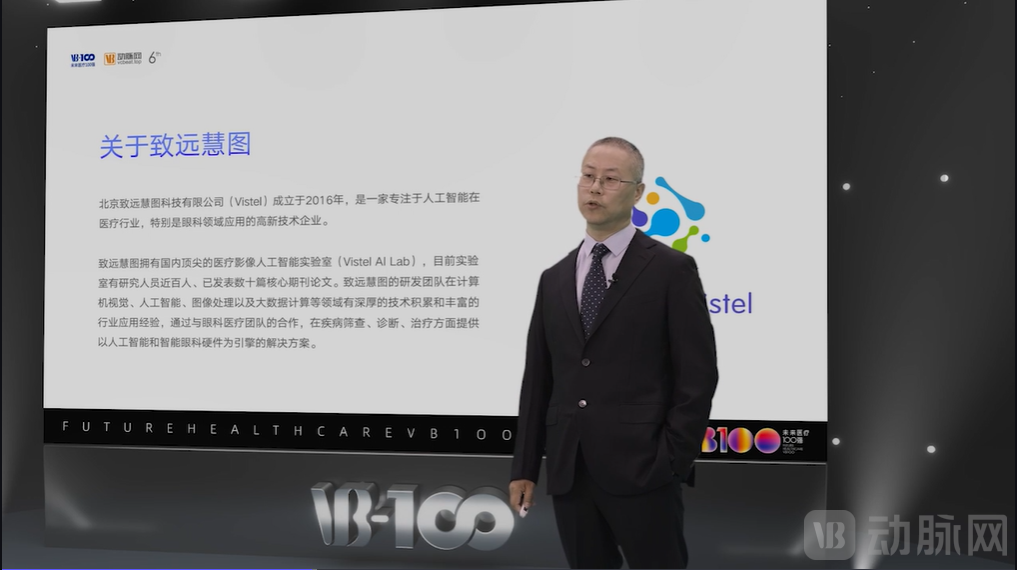
Zhiyuan Huitu, established in 2016, is a high-tech enterprise dedicated to the application of artificial intelligence in the healthcare industry, with a particular focus on ophthalmology. The company is home to Vistel AI Lab, a leading medical imaging AI laboratory in China, which currently employs nearly 100 researchers and has published dozens of papers in core journals.
Backed by robust R&D capabilities, Zhiyuan Huitu collaborates with ophthalmic medical teams to provide AI- and smart ophthalmic hardware-driven solutions for disease screening, diagnosis, and treatment.
In the field of ophthalmology, the current status of visual impairment in China presents alarming figures. There are approximately 600 million people with myopia, 40 million with diabetic retinopathy, 26 million with age-related macular degeneration, 7 million with retinal vein occlusion, and 20 million with glaucoma in China.
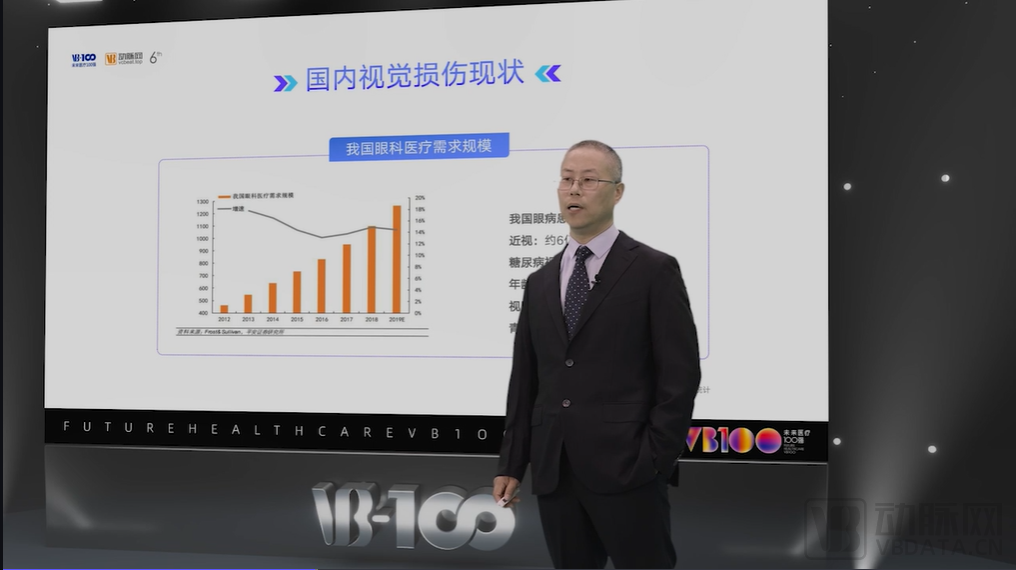
Under the current circumstances, there remains a substantial gap in ophthalmic diagnosis and treatment resources. China has only approximately 40,000 ophthalmologists, with nearly 3,000 specializing in fundus diseases and merely around 400 focusing on glaucoma. Furthermore, these medical resources are unevenly distributed across China’s vast territory: 80% of high-quality medical resources are concentrated in major cities, while 80% of the population resides in small and medium-sized cities. For ophthalmic patients, seeking care across regions is not only costly and inconvenient but also yields suboptimal outcomes.
From the demand side, the patient population is vast, and there is growing public awareness of eye health. In this context, patients require high-quality, highly precise, and personalized medical services that are accessible anytime, anywhere, in a timely and convenient manner. Furthermore, in today’s information society, we observe that ophthalmic information resources—whether imaging data or other types of data—remain fragmented in many silos. How can these issues be addressed?
We aim to empower eye health through artificial intelligence. This can be viewed from several perspectives. First, there have been significant technological advancements in the field of computer science, particularly in computer vision and deep learning. These advances have demonstrated technical possibilities, and we have further validated their feasibility in practice. Second, AI has been proven to possess image interpretation capabilities comparable to those of senior physicians. Third, these services can be deployed on the cloud and brought closer to patients. For primary care physicians, AI software is easy to master with minimal training; aided by such software, junior doctors can rapidly enhance their diagnostic capabilities. Fourth, computers do not suffer from fatigue, enabling them to provide continuous and stable services.
Over the past few years, we have progressed from research focused on single-image, single-disease applications to a more comprehensive approach involving single-image, multi-disease, and full-process analysis. This means that our current AI-assisted diagnostic services can cover a wider range of blinding eye diseases. Meanwhile, through our R&D efforts, we foresee that future AI in eye health will evolve into a multimodal, comprehensive ophthalmic visual health service model, bringing greater convenience to ophthalmologists.
From the perspective of single-disease R&D strategy, referral models for diabetic retinopathy typically provide a binary outcome—refer or do not refer—for physician reference. However, this simplistic approach presents certain limitations. First, while the output is a binary referral decision, physicians cannot discern the underlying rationale for the recommendation from the result alone. Second, physicians are unable to infer the severity of the patient’s condition based solely on this output.
Throughout our R&D process, we have been actively considering how to address these issues. Even for single-disease applications, we have engaged in deep reflection and respected physicians’ recommendations, as our product is designed to serve clinical practice rather than merely provide an algorithm.
Our developed model provides precise grading based on the International Clinical Diabetic Retinopathy Disease Severity Scale. In referral scenarios, this enables physicians to determine the specific stage of diabetic retinopathy, facilitating more accurate referral recommendations. Furthermore, our lesion detection model highlights pathological features, providing clinicians with additional evidence-based support and enabling simpler, more intuitive image interpretation. Through these auxiliary tools, we aim to better assist physicians in delivering enhanced patient care.
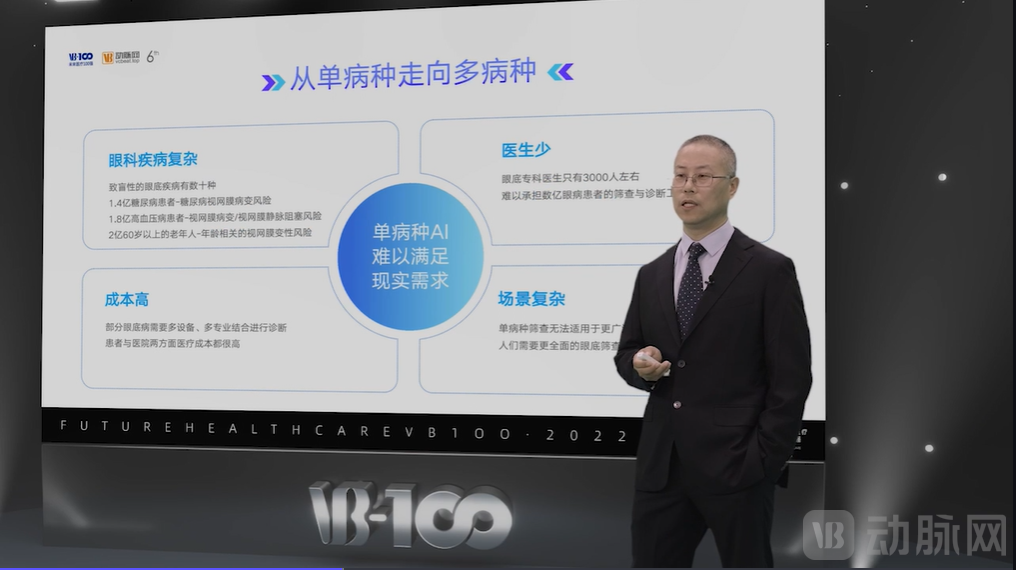
Building on this foundation, it is a natural progression to expand from single-disease to multi-disease applications. Ophthalmic diseases are numerous and complex, with each condition affecting a substantial number of patients. In such circumstances, providing AI-assisted diagnosis for only one disease is far from sufficient. Furthermore, there are currently only around 3,000 fundus specialists in China, making it difficult for them to handle the screening and diagnostic workload for hundreds of millions of individuals at risk of eye diseases. In this context, a multi-disease AI-assisted diagnostic tool is needed to improve examination efficiency and reduce labor costs.
Let us imagine a patient undergoing screening for fundus diseases. Should we provide them with over a dozen single-disease-specific solutions? This is clearly impractical, as in typical screening scenarios, what people need is a simple and effective solution rather than repeatedly undergoing the same tests. Therefore, I believe that not only we but all practitioners in the field of AI-driven healthcare are exploring whether a better solution exists.
In the technological exploration of multi-disease applications, we can identify two implementation pathways. One is a simple incremental approach, where one algorithm identifies Disease A, another identifies Disease B, and yet another identifies Disease C, with these algorithms integrated to form a comprehensive solution. However, from a technical perspective, we consider this approach suboptimal.
Therefore, we have explored a different path. From a physician’s perspective, when interpreting medical images, the first step is to determine whether the patient is healthy. If so, the finding is “no abnormalities detected”; if not, we need to inform the patient that they may be suffering from one or more ocular diseases. Building on this foundation, we have carried out our own research and development. Based on our current progress, the software is already capable of identifying dozens of fundus diseases, including glaucoma. This demonstrates the efforts we have made in our research work.
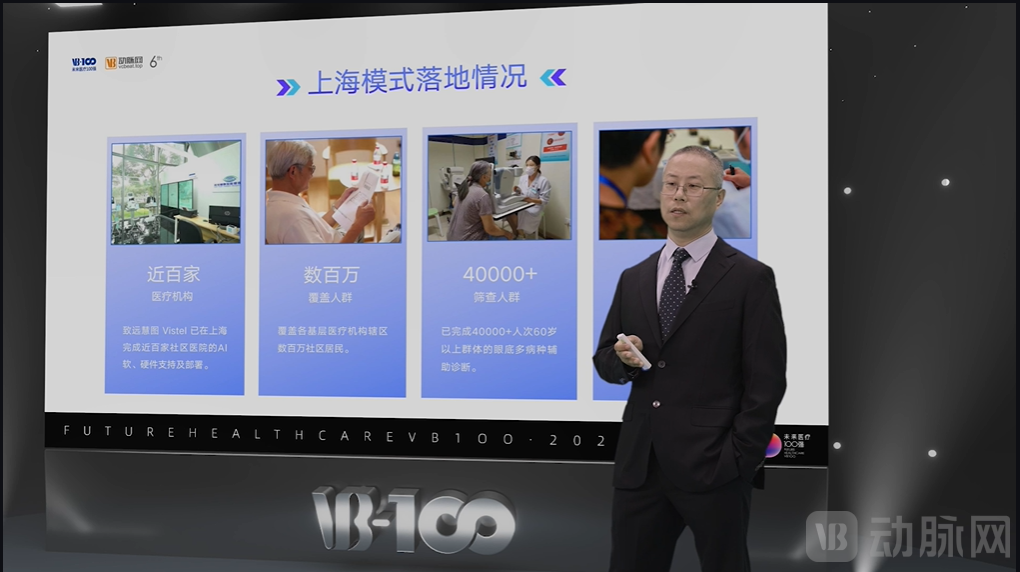
From single-disease to multi-disease management, we need to assess whether the software can truly meet our expected medical scenarios and requirements. Since 2020, under the leadership of the Shanghai Eye Disease Prevention and Treatment Center, we have conducted trials of a multi-disease artificial intelligence system. Throughout the process, primary care facilities capture and upload fundus images using intelligent fundus cameras, cloud-based AI performs the analysis, and then generates reports. If a report is positive, referrals can be initiated with a single click. The entire workflow is highly efficient; our tests showed that it takes less than 20 seconds, including data transmission time.
The implementation of this model has been highly successful, with nearly 100 primary healthcare institutions currently adopting it. These institutions have the theoretical capacity to serve a population of several million. To date, more than 40,000 individuals have undergone screening. Throughout this process, our one-click referral service has facilitated timely referrals for approximately 15,000 patients, preventing the progression of ocular diseases in many cases. This demonstrates the value brought by the application of AI systems in primary healthcare settings in Shanghai.
Our model has also received extensive media coverage online. Professor Zou Haidong, Vice President of Shanghai General Hospital and the lead of this project, aims to leverage new technologies to enhance the prevention and control of eye diseases at the primary care level in Shanghai. From this perspective, we also hope that our technological efforts will provide greater convenience for Shanghai’s eye disease prevention initiatives.
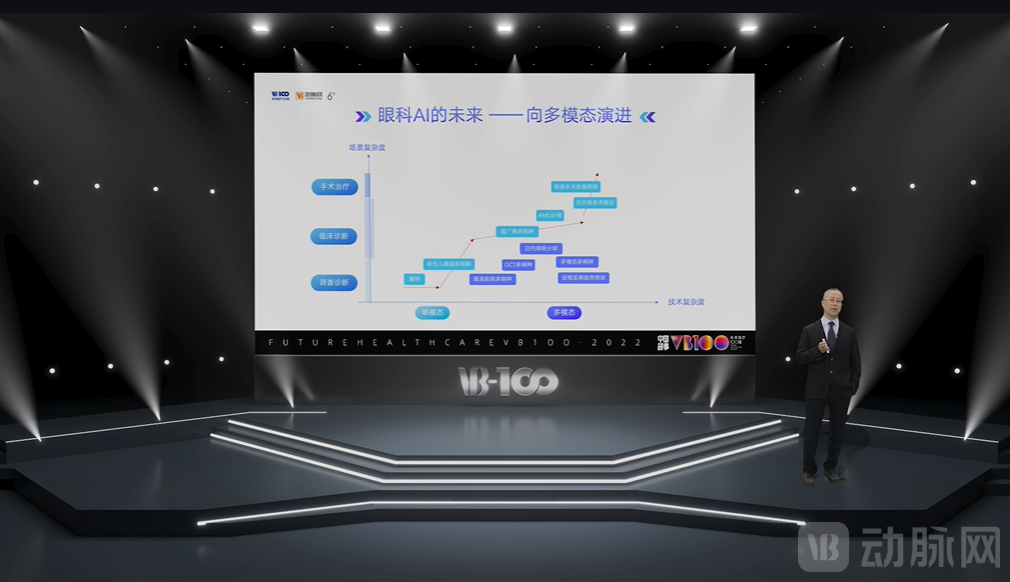
At this point, let us look ahead to the future of artificial intelligence (AI) in ophthalmology. In fact, various application scenarios—including screening, diagnosis, and treatment—require varying degrees of AI support. We have progressed from single-image, single-disease models to single-image, multi-disease approaches, and further to multi-image, multi-disease frameworks. While technical complexity continues to rise, we are confident in our ability to overcome these technological barriers, enabling AI software to deliver optimal support to physicians across diverse clinical settings.
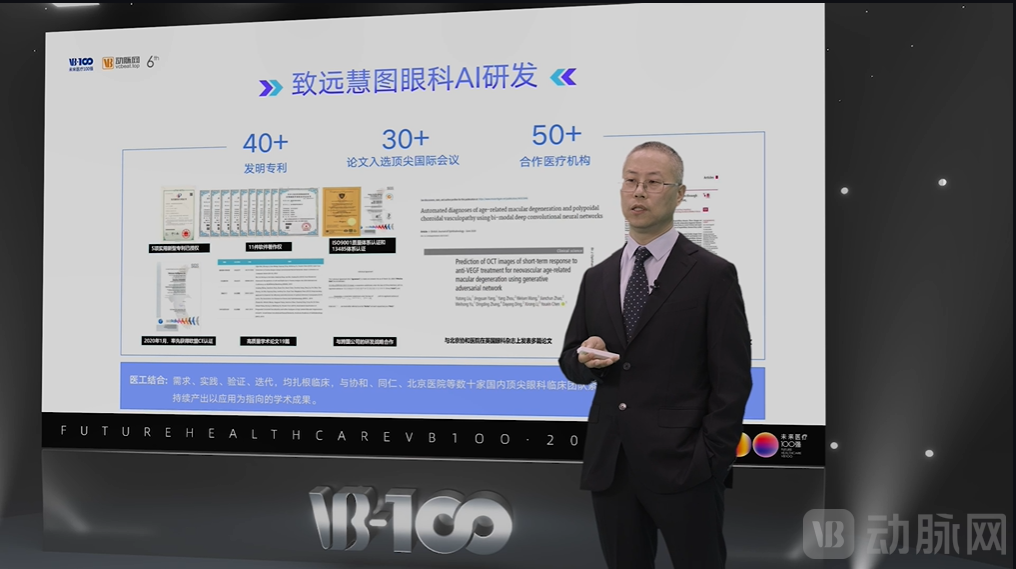
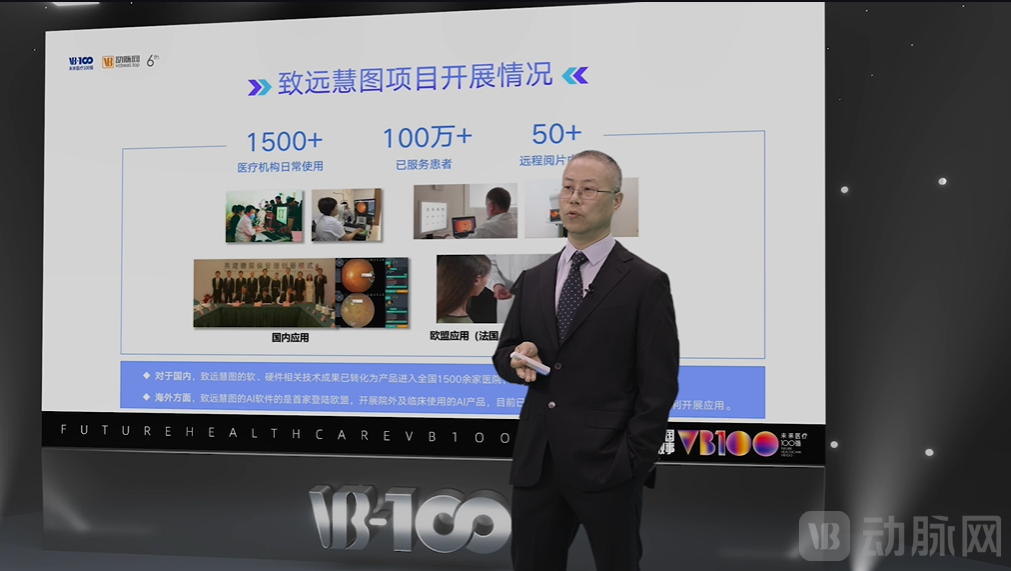
Over the past few years, our R&D efforts have yielded substantial results, including dozens of invention patents, more than 30 academic papers, and collaborations with over 50 medical institutions in joint research and development. To date, we have served more than 1,500 healthcare institutions and over one million patients.
We aim to leverage the R&D philosophy of “medical-engineering integration” to deeply align the needs of real-world clinical settings with artificial intelligence technologies, thereby developing eye health solutions that deliver tangible value to patients. These solutions will support diagnostic and therapeutic workflows in ophthalmology, endocrinology, and primary care departments, helping to reduce healthcare insurance expenditures through early screening, early diagnosis, and early treatment, thus achieving long-term benefits from a health economics perspective.
In January 2022, the national government released the “14th Five-Year Plan” for National Eye Health in China. We aim to leverage artificial intelligence technologies to enhance screening capabilities at the primary care level, enabling the early detection and intervention of irreversible blinding eye diseases at their incipient stages, thereby benefiting patients. Furthermore, we strive to promote the accessibility and inclusivity of medical services in the screening of blinding conditions such as diabetic retinopathy, contributing to the development of China’s new AI-driven healthcare infrastructure.
Finally, we have been advocating for a tiered diagnosis and treatment system. We hope that the introduction of artificial intelligence will help establish an online-to-offline service network for tiered ophthalmic care, thereby benefiting more patients.
It is a great pleasure to have the opportunity to engage with everyone online today. Through our continuous efforts, we aim to advance artificial intelligence technology, develop cutting-edge and diversified products, and integrate them more deeply into medical practice. Our goal is to ensure that our products serve not only users in China but also contribute to global eye health. Thank you all.