

Chengtian Technology's Path to Commercialization: Building an Integrated Exoskeleton Robot Ecosystem for the Next Decade

RoboCT
Exoskeleton Robot and Its Core Component R&D Provider
“Ten years ago, we believed the ultimate form of exoskeletons would resemble Iron Man; today, we aim to develop exoskeleton robots akin to Black Panther. Furthermore, with the convergence of brain-computer interface technology and exoskeleton technology, future exoskeleton robots may achieve a symbiotic relationship with their hosts, much like Venom.”
Using three characters from the Marvel Cinematic Universe, Dr. Wang Tian, founder of RoboCT, outlined the developmental prospects for exoskeleton robots across different stages. In Dr. Wang’s view, current mechanical exoskeleton robots represent merely one phase in this evolution. In the future, exoskeleton robots will be worn like clothing, “utilizing artificial muscle materials rather than the compromised approach of motor-driven cables to address limitations in human mobility.”
The high level of interaction between exoskeletons and the human body requires not only advances in materials, but also the integration of data from physical sensors to electromyographic (EMG) and electroencephalographic (EEG) signals.
Currently, RoboCT’s UGO series of exoskeleton robots, designed for central nervous system disorders (such as hemiplegia, paraplegia, and cerebral palsy), has obtained the NMPA medical device registration certificate. Leveraging “intention detection” technology, the UGO series exoskeleton enables active, passive, and combined active-passive training modes. It assists patients with paraplegia or hemiplegia resulting from central nervous system injuries in undergoing motor rehabilitation, and also serves as an assistive device to help non-ambulatory individuals regain the ability to walk.
However, Dr. Wang Tian believes that these developments are still far from the ultimate vision for exoskeletons. The domestic exoskeleton robot industry has experienced explosive growth over the past decade, completing its first ten years. Following the foundational phase of industrial development, a commercial ecosystem for exoskeleton rehabilitation robots is gradually taking shape in China.
Over the past decade, China’s exoskeleton robot market has faced challenges such as a late technological start, an immature market, and incomplete industrial support systems. Today, the industry is reaching a turning point. With population aging and the deepening of healthcare reforms, the rapidly growing rehabilitation sector is increasingly relying on technological innovation on the supply side, with rehabilitation robots becoming a cornerstone of rehabilitation services. In this new decade for exoskeletons, how will the industry evolve? VCBeat interviewed Dr. Wang Tian, founder of RoboCT.
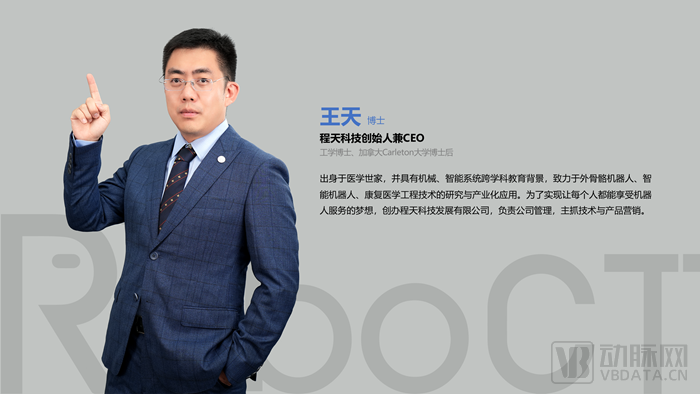
Dr. Wang Tian stated that the development of exoskeleton robots in China over the past decade can be described as explosive growth, completing several stages—including establishing industry awareness, commercial implementation, and market education—within ten years.
Unlike the development trajectory of the U.S. rehabilitation industry, which began to take shape after World War II and reached a watershed moment in the 1980s with the implementation of Diagnosis-Related Groups (DRGs) payment systems—during which period the five major rehabilitation groups emerged—exoskeleton robots only achieved commercialization around 2014. In contrast, China’s exoskeleton industry has developed nearly in parallel with its rehabilitation sector. Therefore, over the past decade, the most significant changes in the exoskeleton industry have occurred in the external environment.
Over the past decade, the most significant change has been the shift in macro-environmental perceptions of rehabilitation. Society has gained a deeper understanding of China’s aging population.Initially, China’s national health insurance system favored clinical medicine. However, with the introduction of healthcare reform policies such as the Two-Invoice System for pharmaceuticals, volume-based procurement, and DRG-based payment, capital and talent are shifting toward rehabilitation therapy, a downstream segment of clinical care. Consequently, China’s rehabilitation industry has reached a watershed moment. For the exoskeleton robot industry,Early industry participants also built industry awareness from scratch in a blank slate market and integrated the industrial chain.
Ten years ago, exoskeleton robots were still a novelty even to Dr. Wang Tian, an expert with extensive experience in robot design. After in-depth research, he found that while building an exoskeleton robot was not difficult, creating a high-quality one was extremely challenging.
To develop high-quality exoskeleton robots, it is essential to conduct in-depth research into user needs, including those of physicians and patients during rehabilitation. Only by thoroughly understanding users can a product be successfully developed. Dr. Wang Tian, who was raised in a prominent medical academic environment and has access to extensive medical resources, enabled RoboCT to engage deeply with clinical users and embrace real-world feedback from an early stage.
To excel in the development of exoskeleton robots, it is essential to master underlying technologies and streamline the supply chain. As key robotic components were once dominated by overseas suppliers, Chinese-made exoskeleton robots designed around foreign supply chains faced not only high costs but also limited room for innovation and optimization.
Dr. Wang Tian stated, “If you aim to build a sophisticated robot, but foreign manufacturers only supply you with outdated, bulky components, you are forced to design an entire system around those parts, resulting in a bloated final product. The logic of product design should be akin to buying shoes that fit your feet; instead, it has become a case of your feet having to grow to fit the shoes provided. This approach is clearly unworkable; it is imperative to integrate and streamline the industrial chain.”
In the early stages, RoboCT remained deeply committed to refining its products and resolving supply chain challenges. Today, RoboCT not only has multiple approved products but also possesses mass-production capabilities for exoskeleton robots, demonstrating significant achievements from its independent efforts to perfect the supporting robotic supply chain.
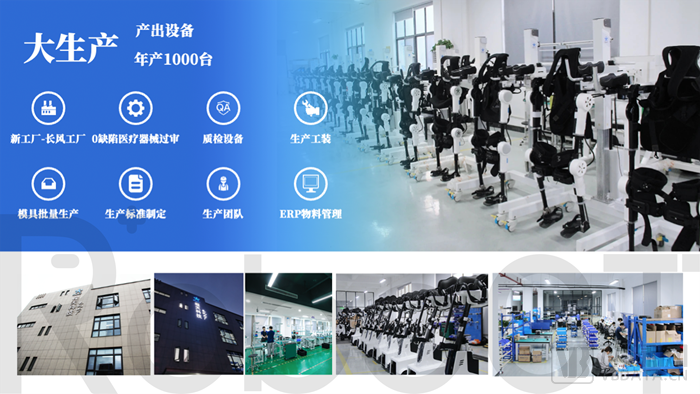
Dr. Wang Tian provided an example, “For instance, with hip joint components, since people swing their arms while walking, the hip joints need to be flat enough so as not to interfere with arm movement. However, typical industrial robot (hip) joints are cylindrical and elongated motors, which would disrupt normal walking motions.” Dr. Wang further illustrated, “With our motor + reducer module system, RoboCT’s motor energy density can reach twice that of the industry standard; the reducer can be integrated into a very compact volume and withstand three times continuous overload. By co-designing and integrating with torque sensors and drivers, we can fully optimize the performance of the entire powertrain. Additionally, the module cost can be reduced to less than one-tenth of international competitors.”
In its initial years, RoboCT focused on strengthening its core capabilities and solidifying its foundation to address two major challenges, thereby overcoming bottlenecks in the exoskeleton robot industry chain.
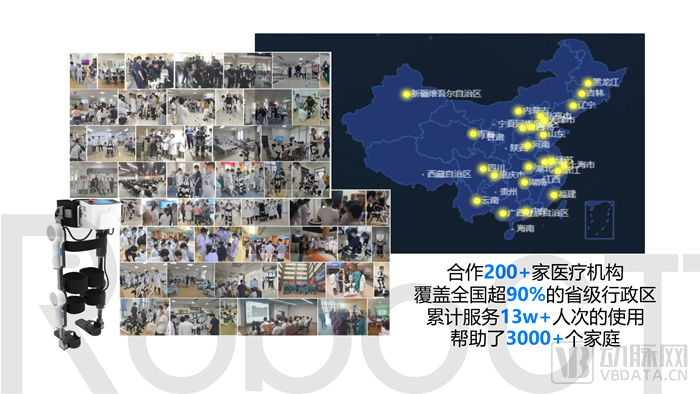
This has not slowed down RoboCT’s development. Dr. Wang Tian stated, “Much like martial arts masters in the wuxia world, we did not start by learning specific moves but by cultivating our internal energy. Once the internal foundation is solid, mastering external techniques becomes rapid and intuitive. We devoted considerable time to developing core components, constructing manufacturing facilities, and establishing training systems for production processes and personnel. With this strong foundational ‘internal energy’ in place, our products entered more than 200 hospitals within six months of their market launch.”
In terms of business models, overseas exoskeleton robot companies encountered commercialization obstacles and took detours over the past decade, while their Chinese counterparts have only just reached the commercialization stage.
Judging from ReWalk’s development trajectory, its stock price has been on a continuous decline since its IPO; however, this does not imply that the commercial validation of the exoskeleton robot market has failed. In essence, ReWalk’s stock performance is influenced by a multitude of factors.
First, in terms of R&D, ReWalk lacks innovation vitality. Although ReWalk was founded in 1998, its products have seen little significant upgrade or iteration over the past decade, and the company has a relatively small R&D team.
In terms of product portfolio, ReWalk’s offerings are primarily targeted at the consumer market, which means its commercialization potential is heavily dependent on insurance reimbursement. Consequently, each rise in ReWalk’s stock price has been accompanied by news of its products being included in insurance coverage lists. However, gaining inclusion in such lists typically requires the accumulation of long-term health economics data to persuade insurers.
Meanwhile, another major hurdle to the commercialization of exoskeleton robots in Europe and the United States is that the rehabilitation markets in developed countries have an ample supply of professional talent, resulting in insufficient momentum for transformation on the supply side.
Unlike overseas markets, the domestic and international skeletal robot market holds greater commercialization prospects. Due to a significant shortage of rehabilitation professionals in China, the supply of rehabilitation services relies more heavily on technological products.China has only one rehabilitation therapist per 100,000 people, whereas most developed countries have 60 therapists per 100,000 people. The substantial talent gap is difficult to fill in the short term.
Regarding medical insurance reimbursement, there are differences between domestic practices in China and those overseas. In China, medical insurance coverage is increasingly favoring rehabilitation services, with exoskeleton robots regarded as key products in this sector. In Beijing, mobile robot-assisted lower-limb gait training has been included in the Class A medical insurance category, with a reimbursable price of RMB 222 per session. In April 2022, the National Health Commission and other relevant departments jointly issued the “Opinions on Accelerating the Development of Rehabilitation Medical Services,” which added 25 new rehabilitation items to the coverage list, including intelligent somatic occupational therapy training and intelligent feedback training for the upper limbs.
Beyond hospital settings, skeletal robots both domestically and internationally are continuously expanding into home-use scenarios.RoboCT has developed the U-Fu robot for patients with limited mobility. In home settings, walking-assist robots are subject to fewer restrictions on medical insurance reimbursement.
In the domestic market, where demand for rehabilitation is gradually being unleashed, the diverse commercialization prospects are progressively opening up as skeletal robots from both China and abroad increasingly obtain registration certificates.
After a decade of development, the domestic and international exoskeleton industry has gradually transitioned from followers to industry leaders. In the new decade for exoskeletons, industry development trends have become increasingly clear.
First, the production and R&D of rehabilitation medical devices for the mass consumer market (C-end) will be a development trend.
Dr. Wang Tian stated, “Clinical medicine prioritizes resolving patients’ issues at the lowest possible cost; whereas rehabilitation focuses on restoring function, facilitating social reintegration, and addressing complications and secondary recurrences. As an adjunctive solution, its primary application scenario is undoubtedly in the consumer (C-end) market, providing companion medical care throughout the patient’s entire life cycle, thereby endowing it with consumer-oriented attributes.”
Secondly, smart rehabilitation has become a trend. Smart rehabilitation forms a network through intelligent methods, and digital systems can align technology, data, clinical pathways, and management standards to achieve the digitization and standardization of rehabilitation therapy.
In the new decade of exoskeleton robotics, RoboCT has launched its “Rehabilitation as a Service” (RaaS) model, covering tertiary rehabilitation endpoints.
Dr. Wang Tian explained, “As rehabilitation medicine still lacks an integrated evaluation system and standardized quantitative assessment criteria, it is difficult to achieve standardization. We aim to leverage robotics to deliver more standardized rehabilitation services, serving as a tool for physicians to issue standardized prescriptions. By providing standardized care through digital systems, we can better connect in-hospital and out-of-hospital rehabilitation scenarios, enabling patients to receive personalized rehabilitation services across hospitals, primary care settings, and their homes.”
Regarding the construction of a digital rehabilitation system, RoboCT has already established a substantial foundation. In the digital cockpit of the RoboCT Rehabilitation Center, the data center aggregates and stores operational data from exoskeleton robot devices, providing a basis for data analysis and data mining to optimize the system. Professional medical personnel annotate the data to establish a rehabilitation knowledge graph.
In 2022, RoboCT will also enhance its consumer-facing product portfolio. Patients can access related products by leasing exoskeleton robots or purchasing rehabilitation services. Penetrating the home-use scenario requires establishing a comprehensive service system and reducing costs; by integrating the industrial chain, RoboCT is able to offer more cost-effective products to consumers.
For exoskeleton robots, five or ten years is merely a small milestone in their development; they should be viewed as a century-long technological endeavor. As solutions continue to mature, the sector is poised for steady growth, ultimately becoming an indispensable “new organ” for everyone.