

From Industrial Decline to Biotech Dominance: How Boston Surpassed Silicon Valley Over Half a Century

Flagship Pioneering
Venture Capital Firms
If Silicon Valley was the technological pinnacle of the IT and internet era, then today’s Boston is the leader in biomedicine.
From land reclamation to its current status as a mecca for biomedicine, the city of Boston boasts a history spanning nearly 400 years. It was the site of the “Boston Tea Party” and the “Battle of Bunker Hill,” and once served as the center of American manufacturing during the Industrial Revolution. Boston previously created the “Massachusetts Miracle” during the Industrial Revolution, but later declined under the dual pressures of the financial crisis and the rise of Silicon Valley.
With the advent of the “Bio-Century,” Boston has once again reached the pinnacle of innovation. Although Silicon Valley remains number one on venture capital rankings, Boston has long surpassed Silicon Valley in total financing within the life sciences sector. In the “Top 10 Biopharmaceutical Clusters in the United States” list for genetic engineering and biotechnology, Boston has topped the chart, defeating Silicon Valley for four consecutive times.
Silicon Valley and Boston have long been regarded as the two shining jewels of technological innovation in the United States. However, unlike Silicon Valley, which is driven by both IT and technology, Boston is playfully dubbed “Genetown.” It is home to more than 2,000 global life sciences research institutions and companies, including AstraZeneca, Thermo Fisher Scientific, Novartis, and Pfizer, ranking first among the top five U.S. destinations for job seekers in the life sciences industry.
A review of Boston’s history reveals that its success is by no means accidental. The city is home to more than 30 higher education institutions, including the Massachusetts Institute of Technology (MIT) and Harvard University, as well as over 40 research hospitals. It has attracted the most leading pharmaceutical and medical device companies in the life sciences sector. Here, technological innovation is seamlessly integrated with the urban fabric. Government entities, venture capital firms, research institutions, large corporations, and innovative startups each play their distinct roles, forming a virtuous ecological cycle that incubates and nurtures innovation.
Boston’s history dates back to 1630, when several missionaries from Boston, England, established the city on the Shawmut Peninsula. In homage to their hometown, they named the new settlement Boston. After centuries of continuous land reclamation, Boston has evolved into a smart city covering an area of 232.1 square kilometers with a population exceeding 600,000.
In the mid-19th century, the rapid expansion of colonial railways spurred industrial development in Boston’s South Bay, with iron foundries, machine shops, shipyards, and oil refineries becoming commonplace. Throughout the 20th century, the shipbuilding and railway industries continued to provide substantial employment for residents of Boston’s South Bay, serving as a primary driver of regional economic growth.
In 1861, the Massachusetts Institute of Technology (MIT) was founded on the banks of the Charles River in Boston. In its early years, the university focused primarily on applied science and engineering, with the aim of promoting regional manufacturing development. During World War II, MIT rose to prominence rapidly by making outstanding contributions to national defense technology. Proximity brought mutual benefits; Boston’s industry also reaped the rewards. MIT encouraged researchers to commercialize their scientific achievements, leading to the subsequent establishment of major industrial-era companies such as Raytheon and Polaroid, both of which originated from MIT.
With the support of the Massachusetts Institute of Technology, Boston’s manufacturing sector experienced rapid growth. This surge led to typical “big city maladies,” such as population overcrowding and traffic congestion. To address these issues, Boston implemented a suburbanization strategy, shifting the focus of its manufacturing industry outward along a semi-circular highway built in 1951. This highway is the renowned Route 128. As thousands of technology innovation companies clustered along both sides of the road, the area became known as the “Route 128 Innovation Corridor.”
More than half a century ago, Route 128 was a hub for minicomputer companies, once surpassing Silicon Valley as a world-renowned center of the electronics industry. Affected by the Great Depression in the United States, government military orders continued to decline, leading to widespread corporate bankruptcies and rising unemployment in the 1970s. However, the industrial foundation along Route 128 helped Boston turn the tide, with electronic firms such as Digital Equipment Corporation (DEC), Olsen, Data General, Wang Laboratories, and Apollo Computer rapidly emerging. Within a decade, Boston achieved a transformation from manufacturing to the electronics industry, earning it the nickname “Silicon Valley of the East.” Against the backdrop of a major shift in manufacturing, Boston realized counter-trend growth in its manufacturing sector, becoming known as the “Massachusetts Miracle.”
This period marked Boston’s heyday. Yet, in a dramatic twist, the “Silicon Valley of the East” failed to sustain its glory during the subsequent PC boom. Boston’s innovation relied heavily on the Massachusetts Institute of Technology (MIT). Entrepreneurs sought to continue the tradition of independent innovation, but this strategy gradually turned them into an “innovation island.” With the rise of the internet wave and Silicon Valley, Boston faded from the public spotlight.
In 2004, Zuckerberg departed with Facebook, marking the end of the “East Coast Silicon Valley.” But did Boston’s story end there? Not at all.

South Bay, Boston; image from 123rf
Entering the 21st century, societal demands began to shift from focusing on quality of life to pursuing quality of health and longevity. During this period, patents for numerous small-molecule drugs expired, and pharmaceutical companies encountered bottlenecks in new drug discovery within the small-molecule sector. They urgently sought new opportunities. Boston, with its high concentration of universities, became their mecca. Leveraging its innovative and intellectual resources in the life sciences, Boston rose to prominence once again. The Boston municipal government firmly seized this historic opportunity, collaborating with research institutions and venture capital firms to attract large corporations and incubate innovative startups. Ultimately, they cultivated an ecosystem that facilitated the flow and circulation of innovative achievements, enabling Boston to return to the pinnacle of technological leadership within two decades.
Although patent legislation in the 1980s helped spur increased investment in biotechnology in the Boston area, the sector’s true industrial rise did not begin until the arrival of Millennium Pharmaceuticals at the turn of the millennium.
In the early 21st century, the completion of the Human Genome Project, often referred to as the “Moonshot of Life Sciences,” marked a significant leap forward in human understanding of genetics. As key participants in this endeavor, the Massachusetts Institute of Technology (MIT) and Harvard University wield unparalleled influence in the field of genetics. Coupled with Boston’s concentration of the nation’s top teaching and research hospitals, this ecosystem has attracted a surge of pharmaceutical companies to the region.
The establishment of a robust research foundation and the presence of major pharmaceutical companies were prerequisites for the rise of Boston’s biopharmaceutical industry, during which the government recognized its strategic advantage.
In 2008, the Governor of Massachusetts announced the enactment of the Massachusetts Life Sciences Act, committing $1 billion in state funding over a decade to advance the development of the biotechnology industry. The act was renewed for an additional five years in 2018, with the state government allocating an extra $500 million to further propel the growth of the biotechnology sector.
Leading the way is, of course, the incubation of Boston’s local innovation resources. Cambridge, a major metropolitan hub and renowned center for education adjacent to Boston, is currently the most concentrated innovation district in the Boston area. Kendall Square in Cambridge, located just across the street from the Massachusetts Institute of Technology (MIT), is home to hundreds of the world’s top biopharmaceutical companies and serves as a base for giants such as Google, Microsoft, and Pfizer.
The Massachusetts Institute of Technology (MIT) is the core driving force behind the development of Kendall Square. At the end of the last century, the City of Cambridge initiated a redevelopment plan for Kendall Square, positioning it as an innovation incubator serving the metropolitan area and providing start-ups with supporting services and an ecosystem for technology commercialization. Improving lifestyle amenities was also a key focus of the redevelopment. Cross-regional subway lines tightly connect Kendall Square and Harvard Square, linking Cambridge to the broader metropolitan area, while the riverside leisure promenade along the Charles River provides a comfortable environment for innovators.

Charles River Esplanade, image from 123rf
In 2016 and 2017, then-Governor Charlie Baker successively unveiled the “Bridge to Innovation” and “Life Sciences 2.0” initiatives to further enhance the innovation and entrepreneurship ecosystem around Kendall Square. The “Bridge to Innovation” primarily fostered collaborative innovation among non-profit organizations, businesses, academic institutions, and government entities through various innovation forums and seminars. Meanwhile, “Life Sciences 2.0” planned to invest $500 million in infrastructure development, research and development, and workforce training within the life sciences sector. The convergence of multiple advantages—including strategic location, entrepreneurial incubation spaces, interconnected innovation hubs, and a high quality of life—has established Kendall Square’s prominence, earning it the reputation as the “Wall Street of Life Sciences.”
Boston remains a hub for the U.S. healthcare industry, with six of the top ten hospitals ranked by federal research funding located there. Since 1995, the Boston government has helped six hospitals secure NIH grants. The state government also provides additional appropriations to support the development of research-oriented hospitals. Behind this substantial investment in research, the Boston government has gained both prestige and economic benefits. These hospitals have become global centers for the research, diagnosis, and treatment of complex and rare diseases. Moreover, Boston’s hospital revenue significantly outpaces the national average for U.S. hospitals.
Moreover, the government’s policy preferences are clearly reflected in its tax regime. In the life sciences sector, not only companies and investment institutions but also individuals working in the industry can enjoy certain tax incentives. In 2018, the state government specifically enacted a tax credit bill for the sector, further enhancing tax benefits for both enterprises and individuals in the life sciences field.
In urban development, the government has virtually infused the soil with an atmosphere conducive to entrepreneurship and innovation. In 2010, Boston launched the “Innovation Boston” strategy. Then-Mayor Thomas Menino advocated transforming the city into a space suitable for incubating innovation and entrepreneurship. This marked the first officially designated innovation district in the United States.
The government has established an Innovation Center at City Hall to serve the entrepreneurial community. Spanning over 1,000 square meters, the facility features open-plan workspaces and meeting rooms, while also offering a range of low-cost or even complimentary services and amenities. By providing comfortable, business-oriented commercial spaces, the center aims to attract and encourage innovation and entrepreneurship.
To address the issue of insufficient funds among entrepreneurs to purchase apartments, Boston has also customized affordable talent housing for them. To this end, the city government even revised housing standards, reducing the original apartment size standard of 50 square meters to a minimum of 28 square meters.
To retain talent, Massachusetts passed a bill in 2016 regulating the application of non-compete agreements, restricting employees from moving to competitors within the same industry. While the original intent of the legislation was to protect corporate talent, it has sparked controversy due to its restrictions on labor mobility. In contrast, California directly prohibits the enforcement of such agreements.
Urban development has created space for innovation and entrepreneurship, but it is the concentration of universities and research institutions in Cambridge and the Greater Boston Area that truly enables the flow of resources within this ecosystem.
The Greater Boston area is home to more than 40 world-class universities, including Harvard University, the Massachusetts Institute of Technology (MIT), Tufts University, and Boston University. It also boasts premium clinical medical resources such as Massachusetts General Hospital, Harvard Medical School, and New England Medical Center, along with numerous leading academic departments and laboratories that are at the forefront of global research in life sciences, molecular biology, new materials, chemistry, and related fields. These institutions not only cultivate talent for biotechnological innovation worldwide through education but also serve as hubs of innovation, shaping the global life sciences industry.
Building a Translational Medicine System Across Half a Century
If we turn back the clock to before 1989, few universities in the United States were actively promoting technology transfer, and the U.S. held little advantage over other regions worldwide. The ability of these scientific and technological innovations to reach the market and even exert global influence was largely dependent on reforms to the U.S. intellectual property system. Following the Bayh-Dole Act, ownership of innovation patents shifted from individual researchers to their institutions. This change had far-reaching implications: university administrators became more proactive in driving the commercialization of technologies, thereby creating a more favorable environment for researchers to translate their innovations into practical applications.
Taking Harvard University as an example, Harvard Business School pioneered entrepreneurship education courses globally in 1947. However, prior to 1984, the program developed slowly and was even considered to be at a low ebb. Encouraged by reforms in the patent system, Harvard Business School revitalized its efforts, ultimately establishing a curriculum system that combines required and elective courses, covering master’s, doctoral, and continuing education programs. The subsequent success of prominent figures such as Bill Gates and Mark Zuckerberg in innovation and entrepreneurship further elevated Harvard’s innovation and entrepreneurship education to a university-wide level.
In 2011, Harvard University invested $20 million to establish an innovation lab aimed at engaging current students, faculty and staff, entrepreneurs, and community members from Allston and Boston in team-based entrepreneurial activities. The lab also hosts entrepreneurial competitions such as the President’s Challenge, the Dean’s Cultural Entrepreneurship Challenge, and the Dean’s Health and Life Sciences Challenge to encourage innovation and entrepreneurship among students and alumni. Vaxess Technologies, a project backed by Bill Gates, was a semifinalist in the 2012 President’s Challenge.
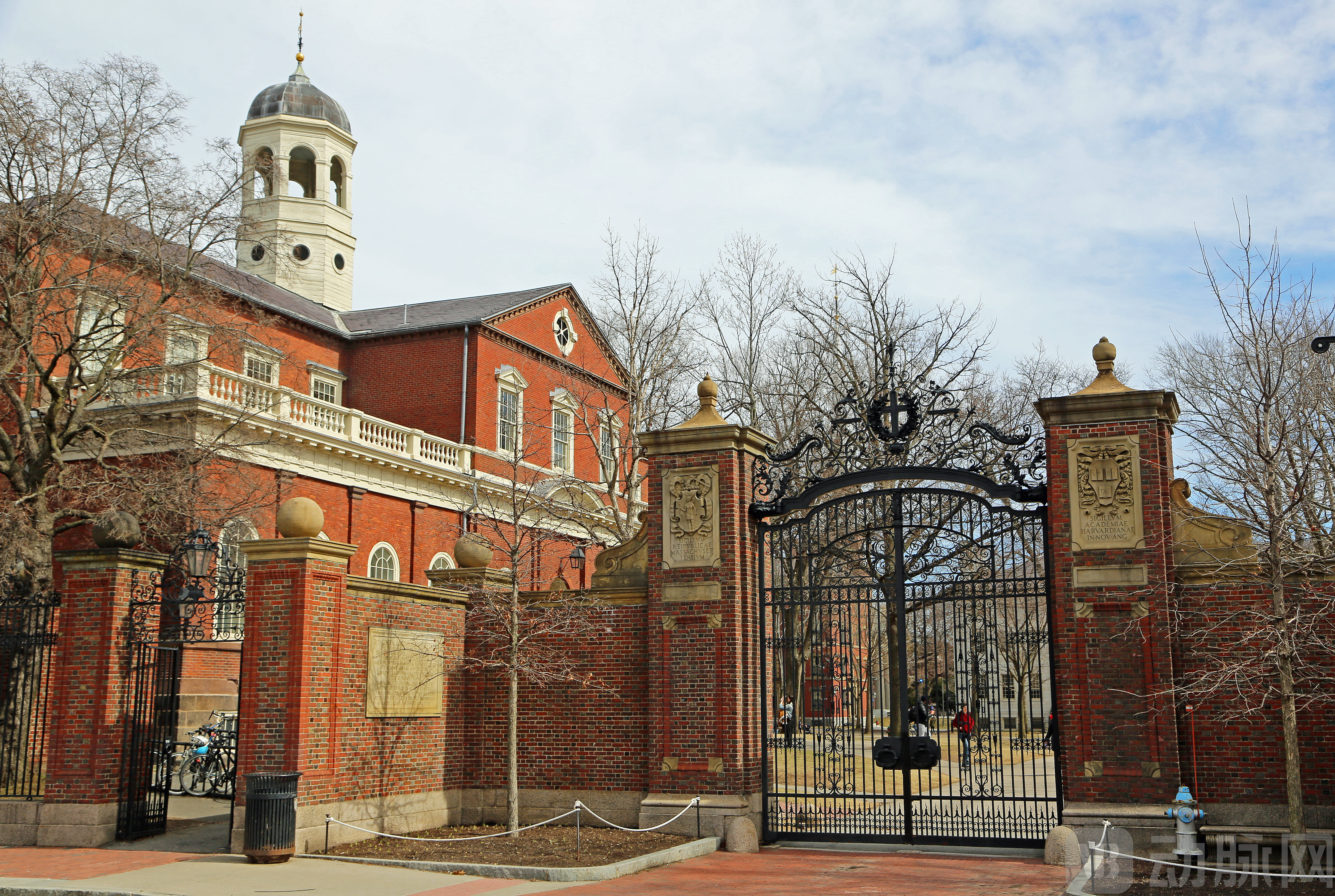
A Gate of Harvard University, image from 123rf
The laboratory comprises three components: i-Lab, Launch Lab-X, and The Pagliuca Harvard Life Lab, with the aim of connecting Harvard University’s innovation resources to industries in Boston and beyond.
Among these offerings, i-Lab is open to all full-time enrolled students, providing them with one-on-one entrepreneurial consulting, human resources, and workspace tailored to their current stage of development, and even assisting them in securing advice from industry experts. i-Lab also runs a 12-week startup incubation program; selected entrepreneurs not only gain access to i-Lab’s laboratory resources but also participate in roundtable discussions and entrepreneur dinners hosted by the lab, while receiving exclusive consultations from industry experts.
Lab-X prioritizes alumni, primarily serving Harvard University graduates and entrepreneurs by providing them with innovation and entrepreneurship support. The lab offers a nine-month training program for alumni, divided into three phases. In addition to early-stage autonomy, the program provides sustainable business support.
The Pagliuca Harvard Life Lab is the third entrepreneurship center established by Harvard University on Western Avenue, funded by a donation from business school alumni Judy and Stephen Pagliuca. This fully equipped laboratory spans 15,000 square feet and primarily provides entrepreneurial space for early-stage startups. Compared to its two predecessors, the Pagliuca Harvard Life Lab has a broader scope, serving students, faculty, scientists, and scholars.
MIT’s influence on Boston’s innovation-driven ecosystem is more enduring. Since 1990, the institute has made entrepreneurship and innovation education a key strategic priority, establishing its own Entrepreneurship Center that year to provide one-on-one, end-to-end mentoring services for all students and faculty. Over several decades of development, MIT has also cultivated a unique technology transfer system.
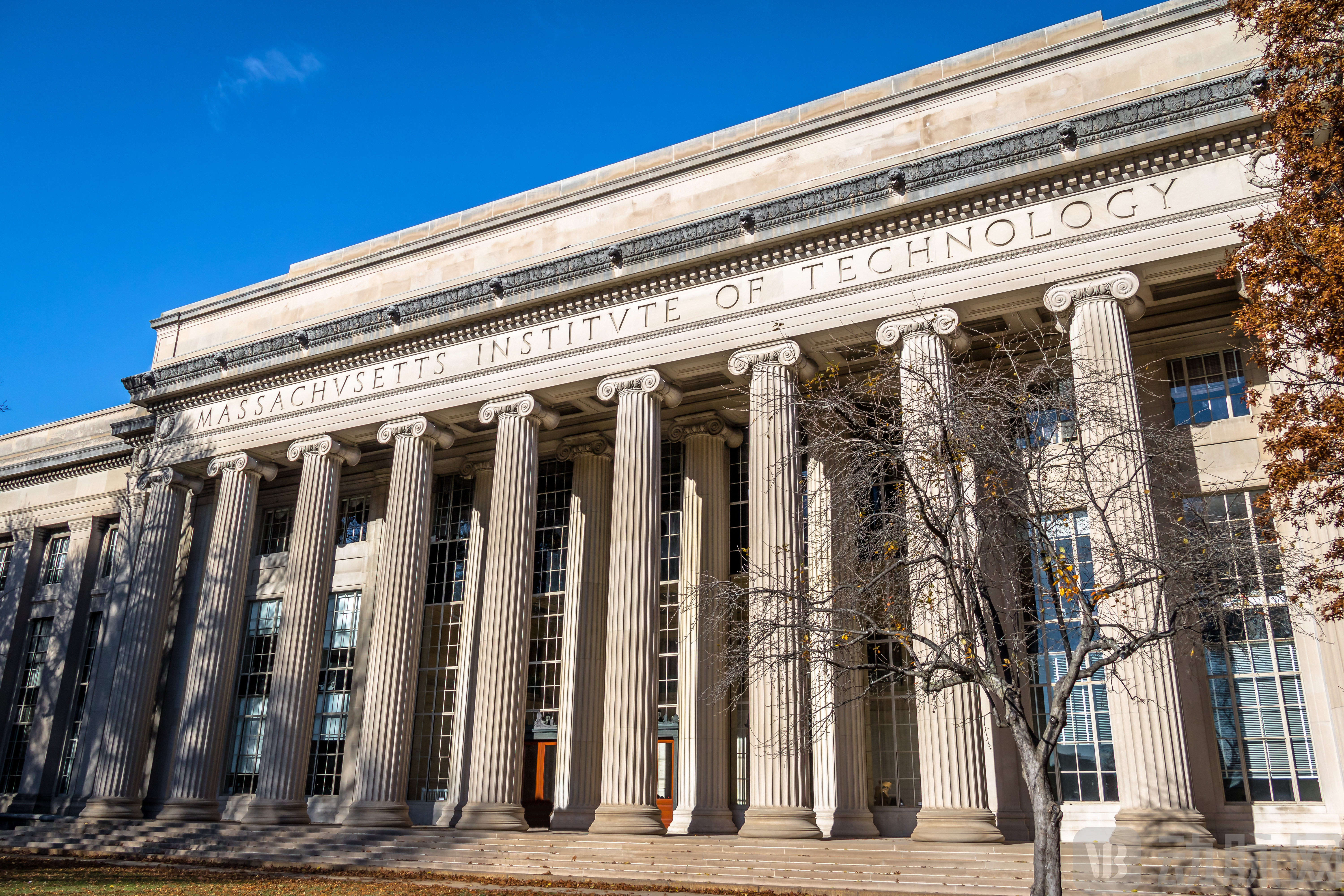
MIT’s McLaughlin Building, image from 123rf
The Massachusetts Institute of Technology (MIT) is home to the Lemelson-MIT Prize, often hailed as the “Oscars for Inventors.” This award recognizes inventors in mid-career who have made significant contributions to improving the world. Initially limited to the MIT community to foster invention and innovation, the prize has since evolved into an influential global scientific accolade. In addition to its standard Technology Licensing Office for technology transfer, MIT has established the Martin Trust Center for MIT Entrepreneurship (commonly referred to as the Grata Center in some contexts) to help scientists refine their business plans and launch startups.
Catering to students, faculty, and alumni, the university has established more than 80 innovation and entrepreneurship organizations, offering customized courses, mentorship, and activities for innovative teams. Furthermore, the university has developed a set of benchmarking principles for innovation, quantifying its starting points and key elements—such as enhancing quality of life, interdisciplinary research content, and originality in direction—to facilitate the practical implementation of innovative ideas. Moreover, the university maintains an open and respectful attitude toward unconventional inventions; for instance, the robotics company iRobot originally emerged from a campus game called “Identify Rod.”
Furthermore, to facilitate the translation of innovations into practical applications, the university has joined forces with the government and enterprises to establish an ecosystem network called the “Industry Liaison Program.” It is reported that this ecosystem network has already connected with more than 1,700 companies, including 800 world-class corporations.
Universities and even enterprises enter into collaborative agreements, with universities proactively facilitating industry engagement in on-campus innovation projects. For instance, the “Molecular Machines” project launched by the renowned MIT Media Lab has received funding from numerous pharmaceutical companies. Through interdisciplinary collaboration involving genome engineering, machine learning, and bioinformatics, the project addresses challenges in drug efficacy design.
It is reported that the university receives an average of 600 collaborative project inquiries annually. For projects with commercial value, enterprises may purchase patents or provide incubation support. This approach also creates opportunities for teams from non-life-science fields to participate in the industry’s development.
“Breaking Down Walls”: Collaborative Innovation Between Harvard University and MIT
Beyond their independent operations, neighboring Harvard University and the Massachusetts Institute of Technology (MIT) have also begun to “tear down the walls,” focusing on interdisciplinary research and collaborative innovation. Since the latter half of the 20th century, interdisciplinary and integrative research has gradually moved from the periphery to the center of academic life, striving to address emerging scholarly questions and major human challenges. This trend toward cross-disciplinary inquiry is also evident among Boston’s higher education institutions, with numerous interdisciplinary laboratories and research institutes being established in succession. The most representative example is the Broad Institute, jointly founded by Harvard University and MIT.
Established in 2004 with funding from Eli and Edythe Broad, the Broad Institute was jointly built by the Massachusetts Institute of Technology (MIT), Harvard University, and its affiliated hospitals. It is dedicated to exploring treatments and preventive strategies for cancer, psychiatric disorders, and infectious diseases through genomic research. In terms of comparative advantages, Harvard University excels in fundamental theoretical research in chemical biology, MIT specializes in bioengineering, and Harvard’s affiliated hospitals lead in clinical medicine. The Broad Institute integrates both discovery-driven and application-oriented scholarship. By combining these complementary strengths, the institute facilitates the mutual conversion of explicit and tacit knowledge, thereby driving breakthrough innovations in biomedicine.
The Broad Institute originated from a virtual network of relationships formed among life science researchers at the Massachusetts Institute of Technology (MIT) and Harvard University during the Human Genome Project. This network facilitates the integration of knowledge, technology, and applications, promoting interdisciplinary cross-pollination, permeation, and convergence, thereby leading to significant inventions and innovations. However, the ambiguity of virtual organizational boundaries and high personnel mobility can adversely affect interdisciplinary collaborative projects that require long-term tracking and fundamental research. Meanwhile, to internalize knowledge spillovers, it is also necessary to establish physical academic organizations to break through the closed nature of interdisciplinary research within universities and form an open organizational innovation network.
Research Culture: What Benefits Can It Bring to Humanity?
University-level initiatives have facilitated the translation of research findings into practical applications; however, the reason these scientific achievements can impact global life sciences is fundamentally rooted in the innovations themselves within the laboratories.
“When conducting research, we first consider what benefits such studies can bring to humanity,” Arlene Sharpe, Co-Chair of the Department of Microbiology and Immunobiology at Harvard University, revealed in an interview, noting that researchers place greater emphasis on societal needs when initiating scientific projects.
Numerous venture capital firms and pharmaceutical companies are clustered around universities, maintaining long-term connections with researchers through initiatives such as “on-campus programs” and “university technology transfer platforms.” When these entities have research needs, they seek collaborations with researchers. For their part, scientists have grown accustomed to a culture of translational innovation; when they recognize that their basic research holds industrial application potential, they proactively engage with industry partners.
By anchoring on “social needs,” the market potential for translated research outcomes is secured. The existence of a technology transfer office addresses information asymmetry between enterprises and laboratories, creating more opportunities for collaboration. In addition to supporting researchers engaged in industry linkages, the technology transfer office monitors and inquires about researchers’ ongoing work and areas of interest, thereby bridging pharmaceutical companies with university research teams. This integration not only advances scientific research but also drives industrial R&D.
Boston is the birthplace of U.S. venture capital. After Massachusetts established its Life Sciences Center, it not only supported the growth of startups but also attracted private capital participation. Accelerated by government demonstration effects, venture capital investment in life sciences startups in the Boston area exceeded $8 billion in 2018. Although still not comparable to Silicon Valley, Boston is home to numerous investment firms. Within Boston’s innovation ecosystem, venture capital (VC) plays a pivotal role. Given the long R&D cycles, high capital requirements, and elevated risks inherent in the life sciences sector, venture capital serves as a catalyst for growth in Boston’s innovation ecosystem.
Boston is the third-largest financial center in the United States and the largest fund management center nationwide. Many top-tier investment firms have their headquarters here, providing critical capital support for innovative research and translation. In 2019, venture capital funding in Boston’s life sciences sector reached $4.7 billion, accounting for 24.6% of the total U.S. life sciences venture capital. This influx generated tens of billions of dollars in gross output and created more than 110,000 jobs, making the health services industry a “booster” for Boston’s economic development.
Compared with Silicon Valley, venture capital firms in Boston are more pragmatic, placing greater emphasis on intellectual property and the degree of technological innovation. Most managing partners at Boston’s VC firms have backgrounds as executives in pharmaceutical companies or are scientists with many years of research experience. This has set the tone for Boston’s venture capital industry. The highly concentrated scientific research resources and professional investors have enabled venture capital to advance into the incubation stage.
The commercialization of scientific achievements generally falls into two categories: technology transfer and self-commercialization. The former involves assigning patents to large pharmaceutical companies or engaging in industry-academia collaborations, while the latter relies heavily on support from venture capital firms. Beyond providing capital, these investors often participate deeply in the establishment of the venture, becoming integral members of the core team, as exemplified by Moderna.
Meanwhile, capital serves as a powerful tool for guiding government industrial policy, with the government acting as a significant limited partner (LP). The hallmark of the Boston biotechnology cluster lies in its robust R&D capabilities and supportive policies, while the presence of venture capital firms connects the entire ecosystem.
Historically, large pharmaceutical companies were the first industry players to recognize Boston’s potential. The establishment of operations by pharmaceutical giants such as Pfizer and Novartis set the tone for the city’s industrial landscape. Facing development bottlenecks, these companies correctly identified the future direction of the life sciences sector, made the right bets, and chose the right location. It was only after observing the influx of these pharmaceutical companies that the government decided to adopt life sciences as a new strategic focus for local development.
On one hand, major pharmaceutical companies serve as the cultural cornerstone of Boston; their clustering has established the city as the “Jerusalem” of life sciences, providing ample employment opportunities for its large pool of graduates. On the other hand, these companies have attracted talent to the region. Many investors in Boston are former executives of pharmaceutical firms, meaning that the city’s current venture capital industry is fundamentally built on the foundation laid by big pharma.
Major pharmaceutical companies select and scale up innovations in Boston, while also providing scientists with direction for innovation and pathways to commercialize their results. Hot investment sectors in the life sciences, such as PD-1 inhibitors, CAR-T therapy, and gene therapy, have transitioned from the laboratory to industry largely through the incubation and involvement of these large pharmaceutical firms. With their participation and support, research outcomes once confined to laboratories have ultimately influenced global trends in the life sciences sector.
With the sources of innovation, innovative talent, and capital all concentrated in Boston, coupled with clear policy support from the local government, what reason would innovative companies have to choose elsewhere? As a result, Boston has developed a comprehensive biopharmaceutical innovation ecosystem that has attracted and nurtured a large number of innovative companies. The clustering of these companies and their successful experiences have ultimately closed the loop of this ecosystem. The abundance of success stories has solidified Boston’s innovative DNA, inspiring more individuals and enterprises to come here and continue writing Boston’s innovation story.
Anchored by universities and research institutions, Boston has integrated government agencies, research entities, venture capital firms, large corporations, and innovative startups into a unique innovation loop. These entities are closely linked through benefit-sharing mechanisms, ultimately forming a collaborative and symbiotic innovation ecosystem:
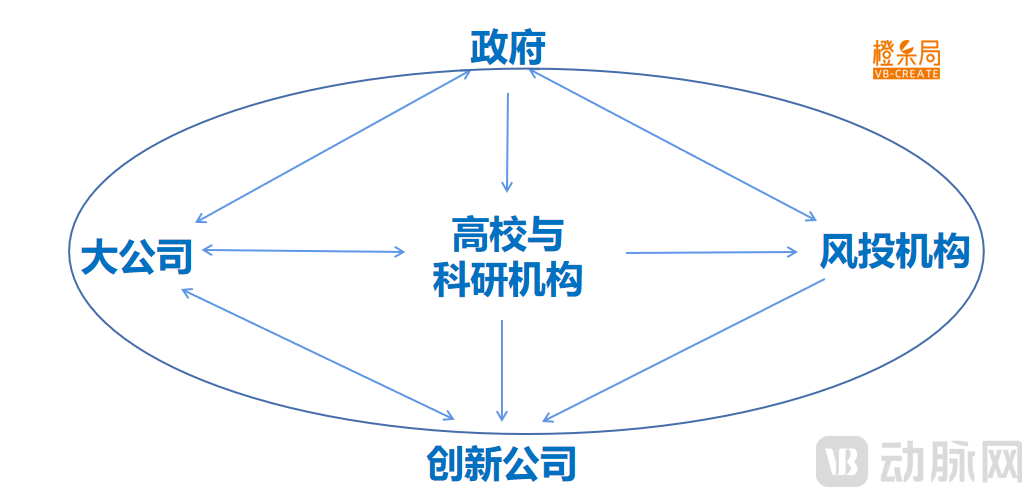
The government provides long-term policy support to create an innovation-friendly atmosphere and urban space; universities supply innovation resources and cultivate talent; venture capital firms provide critical capital support for innovation; large corporations offer opportunities and platforms for realizing the value of innovative outcomes; and innovative startups are the fruitful results of industry guidance and technology transfer, serving as a key indicator of a healthy, self-sustaining ecosystem.
So, what insights can the Boston experience offer for the translation of scientific research achievements in China?
Over the past few months, VBInsight has analyzed the pathways of translational innovation in multiple countries and regions, as well as the translational experiences of overseas universities and hospitals. By deconstructing a wide range of case studies, we aim to identify subtle clues that can drive the translation of scientific achievements in China. In fact, these experiences have long begun to influence the development of technology transfer systems within Chinese research institutions. For instance, the “Incubation Centers” and “Industrial Research Institutes” established by major universities and research organizations in recent years largely reflect models similar to the translational innovation frameworks seen at institutions such as the Massachusetts Institute of Technology (MIT) and Harvard University.
After several years of promotion and exploration, initial results in the translation of domestic scientific research achievements have begun to emerge. However, from an industry-wide perspective, projects and startups stemming from such translations remain merely a spark. Advancing the translation of scientific research is by no means the sole responsibility of universities or the researchers themselves. Beyond exploring single-dimensional institutional frameworks for technology transfer, it requires concerted efforts from local governments, venture capital firms, and leading industry players to foster an ecosystem that enables a virtuous cycle of innovation. Only then can this spark start a prairie fire.