

Digital Therapeutics Achieves Breakthrough Progress, Emerging as a Game-Changer in Ophthalmic Diagnosis and Treatment
On June 15, the 6th Future Healthcare Top 100 Conference · Ophthalmology Industry Innovation Forum, co-hosted by Guangzhou Shijing Medical Software Co., Ltd. and VCBeat, successfully concluded. Meanwhile,Shijing Medical Received the Award Presented by the Conference“Pengcheng Award •Annual Potential Enterprise Award” therebyHonoring Shijing Medical for Its Striving and Innovation in the Field of Ophthalmic HealthAspectmadeContribution!

During the forum, industry leaders shared their insights, engaging in in-depth discussions on innovation trends in ophthalmology, investment opportunities within the ophthalmic industry, and strategies to accelerate the commercialization of ophthalmic products, focusing on three key areas: ophthalmic diagnosis and treatment, optometry, and visual science. They also held lively discussions on trending topics such as digital health, AI-enabled smart healthcare, and the market prospects for domestically produced ophthalmic devices.
As one of the buzzwords at this forum, “Digital Therapeutics” has attracted significant attention. Professor Wang Lejin from Peking University People’s Hospital delivered a presentation titled “Practice of Digital Therapeutics in Clinical Ophthalmology,” while Zhou Mosheng, Founder and Chairman of Shijing Medical, spoke on “How Digital Therapeutics Empower Ophthalmic Diagnosis and Treatment.” From multiple perspectives, they introduced policy support for digital therapeutics in the ophthalmology sector, cutting-edge applications across various diseases, and future possibilities. Their presentations provided high-quality case references for industry practitioners, helping them gain a more comprehensive understanding of industry dynamics and insights. Below is a curated summary of the key points from both speakers; let us take a look back.
Breakthroughs in Ophthalmic Digital Therapeutics Mark the Development and Progress of Future Medical Technology
By definition, the core of digital therapeutics (DTx) is a software-driven, evidence-based intervention designed to treat, manage, or prevent diseases. DTx can be used independently or in combination with medications, devices, or other therapies to optimize patient care and health outcomes. Digital therapeutics offer unique advantages, primarily in four areas: first, scalability; second, lower costs and faster return on investment; third, enhanced accessibility via smartphones and computers; and fourth, improved patient adherence and awareness of health management.
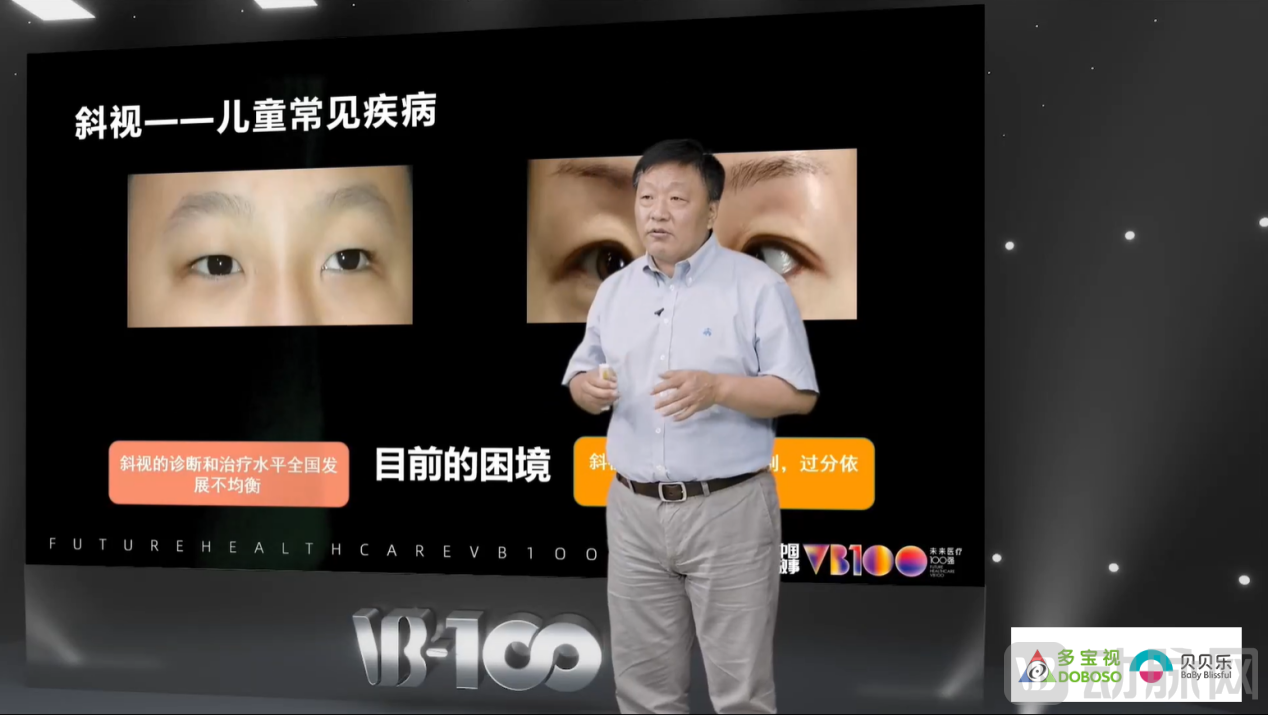
Currently in China, the clinical application of digital medicine in ophthalmology has advanced to a stage where artificial intelligence and medical big data can be leveraged to establish multifunctional intelligent image assessment systems. These systems enable the diagnosis of various ocular and systemic diseases. For instance, the Zhongshan Ophthalmic Center at Sun Yat-sen University has developed the world’s first intelligent technology that screens for hepatobiliary diseases through ocular imaging. Additionally, the center has created an AI-assisted diagnostic product for medical imaging—the Fundus Image Auxiliary Diagnostic Software for Diabetic Retinopathy—which received market approval from the National Medical Products Administration on August 7, 2020.
After years of development, digital therapeutics have become applicable to the screening, diagnosis, and treatment of various ocular diseases, with notable achievements already made in the management of conditions such as glaucoma, amblyopia, strabismus, nystagmus, and cataracts. Meanwhile, an increasing number of enterprises in China are engaging in the digital health sector. Within the ophthalmology industry alone, there are already outstanding companies such as Guangzhou Shijing Medical. It can be said that domestic and international developments in this field are progressing in tandem. Breakthroughs in ophthalmic digital therapeutics signify the future advancement and progress of medical technology.
Digital Therapeutics Empower Ophthalmic Diagnosis and Treatment, Addressing Multiple Pain Points
In China, ophthalmic digital therapeutics are currently empowering clinical diagnosis and treatment, with a primary focus on two areas: pediatric strabismus and amblyopia, and myopia prevention and control in children and adolescents. As a leading digital technology company in the field of digital ophthalmology in China, Shijing Medical keeps pace with the times by leveraging its proprietary patented technologies and supported by a big-data network cloud platform. By integrating perceptual learning based on multimedia bio-information stimulation, the company has developed innovative solutions such as “Duobaoshi” for treating strabismus and amblyopia in children and adolescents, and “Beibeile” for myopia prevention and control. To date, these solutions have provided high-quality, efficient services to tens of thousands of patients, helping them regain healthy vision.

Regarding the treatment of strabismus and amblyopia, patching therapy remains the mainstream approach. Although it improves visual acuity to some extent, it has significant drawbacks. First, children often exhibit poor compliance, making it difficult to maintain consistent patch wear. Second, patching fails to improve binocular visual functions—namely simultaneous perception, fusion, and stereopsis—resulting in unsustainable therapeutic effects and a high risk of recurrence. Furthermore, traditional vision therapy methods are primarily conducted in clinical settings, involving prolonged treatment cycles and monotonous procedures, which also lead to poor patient compliance.
Digital therapeutics applied to the treatment of strabismus and amblyopia can alleviate these pain points to a certain extent. Its mechanism is based on binocular therapy and perceptual learning theory, leveraging computer vision technology to design appropriate perceptual learning tasks tailored to children’s psychological characteristics. During task execution, various bio-informational stimuli enhance patients’ visual information storage, cognition, processing, and handling capabilities, while improving eye–brain–hand coordination, thereby comprehensively improving binocular visual function. Compared with traditional training methods, digital therapeutics significantly improve treatment adherence and convenience by offering rich training content, greater engagement, diverse training modes, and shorter treatment durations, all while meeting efficacy requirements.
Myopia in Children and Adolescents Is Becoming Increasingly Prominent; Digital Therapeutics May Emerge as the Game-Changer
Myopia among children and adolescents in China has become an increasingly prominent issue, and myopia prevention and control has been elevated to a national strategy. According to the "Report on Myopia Prevention and Control for Children and Adolescents in the Information Age" released by Professor Li Ling’s team at Peking University, the prevalence of myopia among children and adolescents in China exceeded 60% in 2021. If left unchecked, China will have at least 1.1 billion people with myopia in the future.
Myopia not only hinders the personal development of children and adolescents in China but also poses significant threats to the country’s socio-economic development and even national defense security. In response, the state has issued multiple mandatory standards. However, numerous challenges have arisen during implementation. For instance, adolescents face academic pressure for school advancement, making it difficult to ensure sufficient outdoor activity time amidst heavy coursework; parents often lack knowledge about myopia prevention and control, and due to busy work schedules, struggle to strictly adhere to medical advice; furthermore, children and adolescents generally have poor self-control and are prone to excessive use of electronic devices, all of which increase the difficulty of myopia prevention and control.
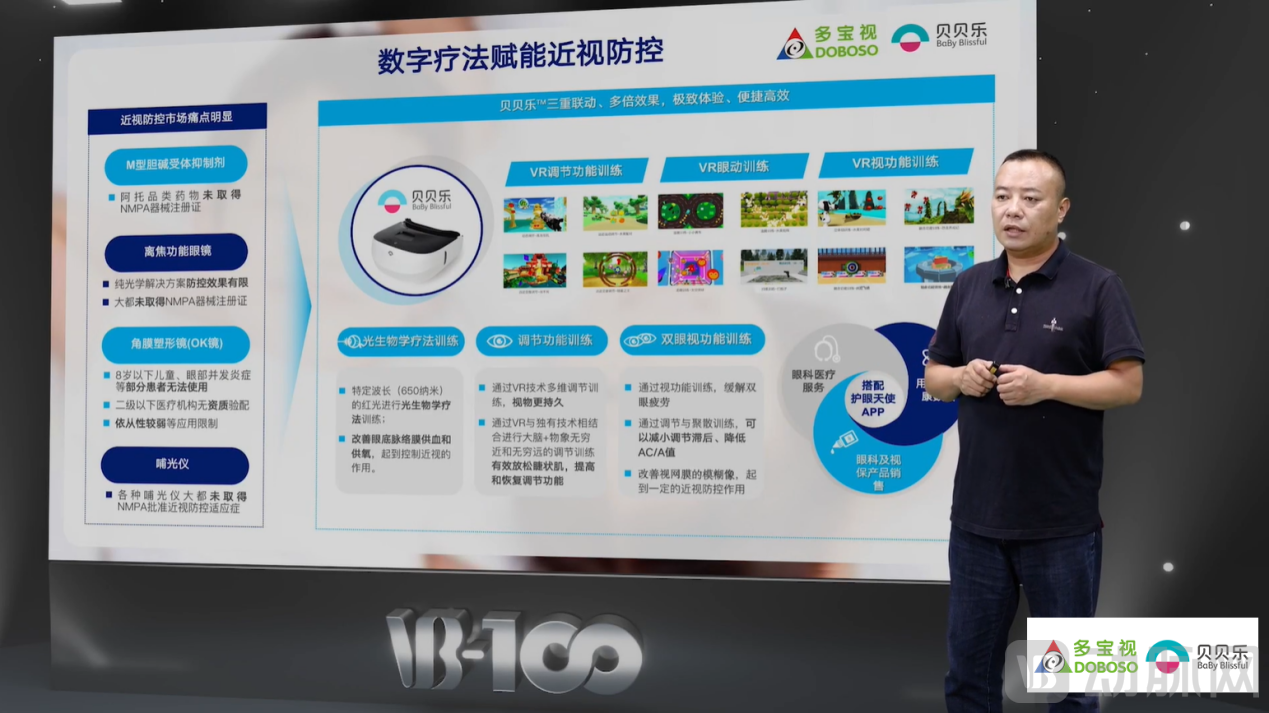
Traditional myopia control methods also have significant pain points. Low-concentration atropine, a commonly used pharmaceutical intervention for myopia control, has not yet been officially launched in China. Peripheral defocus glasses, which are purely optical solutions, offer limited efficacy in myopia control, and most have not obtained medical device registration certificates from the National Medical Products Administration (NMPA). Orthokeratology lenses require high standards for fitting qualifications and care, suffer from poor patient compliance, and are unsuitable for patients with keratitis or allergic conjunctivitis. Red-light therapy devices have garnered considerable attention in recent years as myopia control products; however, the majority of such devices on the market have not received NMPA approval.
To address these industry pain points, the ophthalmology sector has increasingly tended to introduce digital therapeutics into the field of myopia prevention and control in recent years. This shift encourages the advancement of myopia monitoring and prevention through information technology, thereby promoting the upgrading of the optometry industry and the construction of big data platforms. Digital therapeutic products represent a practice that integrates advanced technologies related to design, clinical evaluation, usability, and data security. They offer strong scalability and can be combined with technologies such as AI, VR, AR, and MR. This integration allows for targeted resolution of the pain points associated with traditional treatments during the product development phase, providing myopia patients with convenient and effective treatment solutions. The entry and application of digital therapeutics have seemingly become a game-changer in myopia prevention and control.
In recent years, as research on myopia has deepened, the theories of accommodative spasm, optical defocus, and scleral hypoxia have gradually become mainstream in understanding the mechanisms underlying the onset and progression of myopia. Beibeile, a comprehensive myopia and amblyopia prevention and control device independently developed by Guangzhou Shijing Medical Software Co., Ltd., integrates technologies such as VR, VR+, and the Internet of Things (IoT). By incorporating these medical research theories into its product design, it provides users with an innovative solution for myopia prevention and control.
For instance, Beibeile’s red-light photobiomodulation feature leverages photobiological effects by emitting red light at a specific wavelength (650 nm) from the main unit to irradiate the fundus. This improves blood supply and oxygenation to the choroid and sclera, thereby helping to control myopia. Its accommodative training function combines VR technology with patented techniques to conduct accommodative training for both near and far focal distances, effectively relaxing the ciliary muscle and enhancing or restoring accommodative ability. In addition, Beibeile incorporates visual function training through gamified exercises that involve fixation, pursuit, and saccadic eye movements. These are integrated with fusion and stereoscopic vision training to improve the brain’s coordinated control over the eyes, address visual function deficits, and enhance binocular visual function.
Compared with traditional myopia prevention and control methods, digital therapeutics offer advantages such as simplicity and convenience, low cost, superior user experience, and high adherence. Furthermore, digital therapeutic products can leverage big data-driven intelligent systems for health management. For instance, Beibeile utilizes its smart app, “Eye Care Angel,” to generate personalized training plans, establish visual acuity records, and track and analyze training progress. This approach overcomes the limitations of conventional treatments, providing a feasible intervention strategy for the prevention, management, and control of myopia in children and adolescents.
The integration of digital therapeutics with ophthalmology is highly promising.
Digital therapeutics hold significant potential for development; however, their application in the field of ophthalmology in China is still in its early stages. Both physicians and patients lack a comprehensive understanding of digital therapeutics, necessitating an extended period of education for both parties.
However, digital therapeutics have been flourishing abroad. Statistical data show that over the past seven years, investment in the U.S. digital therapeutics sector has grown at an annual rate of 40%, exceeding $1 billion by 2018, with several leading digital therapeutics companies successfully listed on the NASDAQ.

Although China started late, it has been making strenuous efforts to catch up. In November 2020, the National Medical Products Administration approved the first digital therapeutic product in China. The year 2021 was even hailed as the inaugural year of digital therapeutics in China, and by 2022, the country had achieved breakthrough progress in this field. On January 25, the Hainan Provincial Health Commission released the "Hainan Province Digital Health '14th Five-Year' Development Plan," which listed "exploring pilot trials of digital therapeutics" as one of the key tasks for digital health development during the 14th Five-Year Plan period. This initiative was mentioned alongside artificial intelligence, blockchain, and 5G technologies, underscoring the significant emphasis placed on digital therapeutics. This also marked the first time that digital therapeutics were included in a provincial-level plan.
All of this conveys a positive message: digital therapeutics hold immense potential for development!
The patient population requiring visual function rehabilitation in ophthalmology is substantial, with the theoretical market size for related products projected to exceed RMB 100 billion. In the future, an increasing number of capital investors and enterprises will enter this space. Digitalization will become the core driver of future growth in ophthalmic rehabilitation treatment, leading a new round of changes in the competitive landscape of the industry. Moreover, as digital therapeutics continue to mature, first-mover advantages will enable leading companies to rapidly widen their gap with competitors. The prospects for integrating digital therapeutics with ophthalmology are highly promising.