

Building a Scientific Myopia Control System: Insights from the 2022 Future Healthcare 100 Summit
As eye health becomes a key component of the “Healthy China” initiative, and with the deepening healthcare reforms and increased support for ophthalmology, China’s ophthalmic market is exhibiting a trend of “significant growth within a niche sector.”
Since 2021, more than 40 companies in the ophthalmology sector have secured financing, with total funds raised exceeding RMB 8 billion, setting a new historical high. According to forecasts by third-party securities institutions on the market size of ophthalmology, the market for ophthalmic drugs was expected to approach RMB 20 billion in 2020, while the current market size for diagnosis and treatment of eye diseases has already surpassed RMB 20 billion, indicating at least twofold growth potential in the future.
What are the innovative trends in ophthalmology across the three major domains of clinical diagnosis and treatment, optometry, and visual science? What industrial investment opportunities exist within the ophthalmology sector? How can the commercialization of ophthalmic products be accelerated? On June 15, join us online for the “Ophthalmology Industry Innovation Forum,” hosted byInitiated by VCBeat and VB100, co-organized by Vision Medical. This forum brings together top-tier industry leaders and the most innovative startup projects, aiming to deliver professional and authoritative discussions. It helps practitioners across the industry value chain and investors gain comprehensive insights into industry dynamics—from policy updates and cutting-edge clinical research to the most innovative startup solutions.
Wang Lejin: Application of Digital Therapeutics in Clinical Ophthalmology

Wang Lejin | Chief Physician, Professor, Peking University People's Hospital
Professor Wang Lejin introduced that Digital Therapeutics is an innovative clinical medical intervention. The Digital Therapeutics Alliance defines digital therapeutics as evidence-based therapeutic interventions driven by high-quality software programs, delivered to patients to treat, manage, or prevent medical conditions or diseases. The advantages of digital therapeutics include scalability, greater convenience, lower cost, and improved patient adherence and health management awareness.
In terms of diagnosis, digital therapeutics employ implantable intraocular pressure (IOP) monitoring for glaucoma combined with intelligent micro-drainage diagnostic methods; a mobile app records IOP data in real time and enables real-time IOP regulation.
In terms of treatment, digital therapeutics utilize multimedia bio-stimulation for visual training to achieve complete remediation of amblyopia. In the management of strabismus, artificial intelligence models analyze big data from clinical treatments to construct a strabismus diagnostic system; by inputting patient data into the app, diagnostic reports are generated directly to assist physicians in strabismus treatment.
The field of digital therapeutics is also continuously advancing the development of technologies such as implantable, wearable, smart adjustable intraocular lenses and artificial retinas to address challenging issues in ocular diseases.
Wang Shiyu: A Trillion-Yuan Market, a Golden Track, Winning Through Innovation

Wang Shiyu | Senior Researcher, VCBeat
As a rare “dual-high” sector characterized by high growth potential and high barriers to entry, the ophthalmology industry is hailed as the “golden track” in the capital markets. However, given that ophthalmology addresses non-life-threatening conditions and comprises numerous fragmented subsectors, identifying key focus areas and clarifying the underlying logic of its future development warrant close attention.
Ms. Wang Shiyu first shared an overview of the development of the ophthalmology sector in China and abroad in 2022. The global ophthalmology market is characterized by steady growth and high concentration, while the domestic market has formed a “triune” structure, reaching a market size of RMB 210 billion in 2021. Among the three major segments—devices, services, and pharmaceuticals—the ophthalmic device segment is experiencing strong demand and rapid growth, with the pace of import substitution accelerating. The ophthalmic pharmaceuticals sector holds substantial potential, with a projected five-fold growth over the next decade. Meanwhile, the ophthalmic services market exhibits a pronounced leader effect, with private hospitals expanding at an accelerated rate.
What are the most noteworthy innovation trends in the ophthalmology industry today? Ms. Wang Shiyu believes that, from the perspective of indications, myopia control, dry eye disease, and retinal diseases are currently the hottest areas for innovation. In terms of product types, high-end medical devices designed to improve diagnostic rates and optimize treatment outcomes have also sparked a new wave of innovation. Finally, regarding specific subfields, cell and gene therapies as well as novel drug delivery methods are undoubtedly the biggest hotspots in the field of ophthalmic pharmaceuticals.
Liang Yucheng: Ophthalmology Investment from a VC Perspective

Liang Yucheng | Head of Digital Therapeutics, Danlu Capital
Ophthalmology has garnered significant attention due to its physiological importance, the severity and complexity of associated diseases, and the effectiveness of treatments; meanwhile, it represents a large and continuously growing market. Mr. Liang Yucheng analyzed the ophthalmology market over the past and next ten years. He believes that although the sector experienced a period of rapid growth in the previous decade, China’s share of the global market for ophthalmic devices and pharmaceuticals remains relatively small. With increasing penetration of diagnosis and treatment services and the development of innovative technologies, the ophthalmology sector is expected to maintain high-speed growth over the coming decade. By analyzing changes in the revenue composition of downstream ophthalmology hospital chains, Mr. Liang argues that the core logic driving growth in ophthalmology has also shifted: from a zero-sum game focused primarily on blinding diseases to an emphasis on maintaining or restoring normal ocular physiological function. In the past, the focus was predominantly on addressing the issue of “being able to see.” However, with the introduction of products such as intraocular lenses and angiogenesis inhibitors, along with improved affordability, patient expectations have evolved. There is now greater attention paid to resolving issues related to “seeing clearly” and “ocular comfort.”
Meanwhile, blinding diseases remain a significant concern, and the fight against blindness is an ongoing endeavor. For startups in this field, it is essential to pursue differentiated competition by focusing on specific disease subtypes, demonstrate product advantages through technological upgrades, and establish a positive feedback loop within their commercial ecosystems. With technological advancements and iterations, ophthalmology is poised for five major breakthroughs: disruptive surgical solutions, innovative implantable consumables, novel biotechnologies, digital innovations, and consumer ophthalmology. Danlu Capital, a venture capital firm dedicated to the healthcare sector, was co-founded in early 2018 by Lu Qinchao, former Partner at Sequoia Capital China, and Su Zhenbo, former Managing Partner of Fenxiang Investment Management. The firm continues to deepen its engagement in the early-stage healthcare and wellness sector and has already established a strategic presence across multiple areas of ophthalmology. Entrepreneurs and professionals in the medical field are welcome to connect with Danlu Capital.
Zhou Mosheng: Digital Therapeutics Empower Ophthalmic Care

Zhou Mosheng | Founder and Chairman of Shijing Medical
How Digital Therapeutics Empower the Treatment of Strabismus and Amblyopia? Mr. Zhou Mosheng shared that Duobaoshi pioneered a new concept of binocular treatment models in China. By integrating our core patented technologies for binocular dichoptic stimulation with VR technology, we have transformed traditional, monotonous amblyopia therapy into immersive, game-based training within a virtual world. This approach enhances immersion and enjoyment, stimulates patient interest, improves adherence, and ultimately boosts treatment efficacy.
Mr. Zhou Mosheng shared that digital therapeutics can also be applied to myopia prevention and control. Beibele, a comprehensive treatment device for myopia and amblyopia developed by Shijing Medical, is the first to introduce VR technology into the field of myopia prevention and control, breaking through the limitations of traditional treatments and filling the gap in the application of VR technology in this area. Beibele integrates red-light photobiomodulation therapy, accommodation training guided by digital technology, and visual function training. This approach allows the eyes to undergo timely accommodation training of the ciliary muscles and lens for both distance and near vision, as well as binocular visual function training combining eye movement exercises with fusion and stereopsis training, after red-light exposure enhances choroidal blood circulation. The goal is to slow axial elongation and control the progression of myopia. Additionally, Beibele records training outcomes via an intelligent backend system, leveraging high-quality, safe, and effective data-driven interventions to provide customized myopia prevention and control plans for adolescents. Currently, we are also conducting large-scale real-world studies to clinically validate the product’s value.
Compared with traditional training methods, digital therapeutics offer advantages such as high engagement, diverse training modalities, and shorter treatment duration, significantly improving treatment adherence and convenience for pediatric patients.
Digital therapeutics in China are in the early stages of development, presenting significant room for growth, and the ophthalmology digital therapeutics market holds substantial commercial potential.
Sun Yuhui: Ophthalmic AI Enters the Era of Multi-Disease Applications

Sun Yuhui | Founder and CEO of Zhiyuan Huitu
“In China, there are approximately 600 million people with myopia, 40 million with diabetic retinopathy, 26 million with age-related macular degeneration, 7 million with retinal vein occlusion, and 20 million with glaucoma. Against this backdrop, there remains a significant shortage of ophthalmic diagnostic and treatment resources; China has only about 40,000 ophthalmologists, including nearly 3,000 specialists in fundus diseases and merely around 400 doctors specializing in glaucoma.” At the conference, Mr. Sun Yuhui, Founder and CEO of Zhiyuan Huitu, systematically introduced the rationale and current status of artificial intelligence (AI) development for eye health, and elaborated on his insights and outlook for the future of AI in ophthalmology.
Faced with the uneven distribution of ophthalmic diagnostic and treatment resources in China, as well as the high costs and suboptimal outcomes associated with cross-regional medical care, Zhiyuan Huitu aims to empower eye health through artificial intelligence. As the company transitioned its R&D focus from single-image, single-disease studies to a comprehensive model encompassing single-image, multi-disease, and full-process workflows, it recognized that the future of AI in eye health will evolve into a multimodal, comprehensive visual health service model covering all aspects of ophthalmology, thereby bringing greater convenience to ophthalmologists. Zhiyuan Huitu has jointly piloted a universal screening project with the Shanghai Eye Disease Prevention and Treatment Center, which has already provided diagnostic and referral services to 15,000 patients.
Finally, Mr. Sun Yuhui stated that the future of AI in ophthalmology should leverage a research and development approach centered on “medical-engineering integration,” deeply aligning the needs of real-world clinical settings with artificial intelligence technologies. This will yield eye health solutions that deliver tangible value to patients, support diagnostic and therapeutic workflows across various ophthalmic departments, and reduce medical insurance expenditures through early screening, diagnosis, and treatment, thereby achieving long-term benefits from a health economics perspective. Meanwhile, he expressed hope that the introduction of AI will help establish a tiered diagnosis and treatment service network combining online and offline components in ophthalmic care. This will enhance the accessibility and inclusiveness of medical services, strengthen screening capabilities at primary care levels, enable the early detection and intervention of irreversible blinding eye diseases at their incipient stages, and ultimately empower global eye health.
Hu Haidi: Covering the Full Life Cycle
Development Strategies and Applications of Innovative Ophthalmic Therapies

Dr. Haidi Hu | Founder and CEO of Aurigene
How to Define a “Full-Cycle” Product Development Strategy and Its Application? Dr. Hu Haidi, Founder and CEO of Aurum Bio, an innovation leader in ophthalmology driven by a dual-engine model, shared the core development strategy for innovative therapies—the concept of “Full Lifecycle Management.” He provided a detailed exposition of this concept and its applications from three perspectives: full-cycle strategy, full-cycle product stages, and full-cycle business coverage.
“Full-Cycle Strategy” Fuels Differentiated Innovation—Guided by a Dual-Engine Strategy Centering on “Breakthrough Frontier Technologies” and “Consumer-Oriented Innovative Technologies,” It Defines Boundaries for Product Development, Addressing Unmet Needs in Ophthalmic Treatment While Further Enhancing Public Eye Health.
“Full-Cycle Product Stages” Empower Continuous Pipeline Innovation—Driven by the three pillars of in-house R&D, collaborative development, and in-licensing, we comprehensively support pipeline innovation, encompassing over ten innovative ophthalmic therapies spanning early research, preclinical stages, late-stage clinical development, and commercialization. Covering all phases of the drug development lifecycle, this spectrum of products at various stages constitutes a strategic deployment for Aura Biosciences’ sustainable growth.
“Full-Cycle Business Coverage” Unlocks the Potential of the Ophthalmology Market—By leveraging digital management platforms, including smart connectivity and app integration, Jimu Biology has built an “ecosystem” for eye health management catering to family members of all ages. This creates a closed-loop “product + service” model that meets the eye health needs of diverse age groups, achieves broader and more comprehensive business coverage, and helps patients and the public effectively address eye health challenges, thereby enjoying a visually enriching life.
Tian Bingshi: How to Accelerate the Commercialization of Ophthalmic Products?
 Tian Bingshi | General Manager, Business Channel Management Division, Huatang Dachang
Increased national policy support will drive comprehensive development in the ophthalmology sector and industry. Meanwhile, influenced by factors such as population aging, remote work, home-based learning, and frequent use of electronic devices, the incidence of ophthalmic diseases is showing a trend toward younger demographics and rapid growth. Market demand is expanding swiftly, making the ophthalmology segment a hotbed of opportunities and challenges. For companies seeking to efficiently establish market presence and promote their offerings in China, it is crucial to partner with an experienced collaborator who understands the complexities of the medical device market. Furthermore, given the ophthalmology industry’s substantial import demand for advanced overseas products, technological equipment, and high-value consumables, the traditional distribution model—characterized by high costs and multi-party negotiations—is no longer viable from a product circulation perspective. There is an urgent industry need for end-to-end commercialization services.
Mr. Tian Bingshi stated that the unique advantage of Huatang Dachang lies in providing end-to-end commercialization solutions for high-value medical device products worldwide, including product registration, import and export, warehousing and distribution, channel management, inventory and after-sales management, as well as nationwide distribution channel coverage.
Since launching commercial services in the ophthalmology sector in 2006, Warton Dachang has assisted leading global ophthalmic medical device clients in establishing private chain business partnerships, helping new products rapidly seize market opportunities. With extensive experience and resources in efficiently building a nationwide distribution network and leveraging streamlined processes and informatization services, it has become the preferred partner for the commercialization of ophthalmic medical device products.
Zhang Haozhi: Talent Development and Technological Advancement
Value Upgrade for Private Ophthalmology Providers
 Zhang Haozhi | Vice President, Huaxia Eye Hospital Group
As national policies have been relaxed, investment has slowed, and competition in the healthcare industry has intensified, the number of private medical institutions has risen year by year, with non-public healthcare gradually returning to professionalism, rationality, and its core essence.
Mr. Zhang Haozhi believes that to improve ophthalmic medical services in China, it is essential to first enhance both the quantity and quality of qualified practitioners.Due to the highly specialized and fragmented nature of ophthalmic subspecialties, coupled with limited public awareness and prioritization of eye diseases, China’s diagnosis and treatment rates for ophthalmic conditions have remained persistently low. Although China has a significantly larger patient population than any other country, its market size for ophthalmic devices and pharmaceuticals is only one-eighth to one-fifth that of Europe and the United States. Overall, the penetration rate of diagnosis and treatment in China’s ophthalmology market remains low, indicating substantial growth potential in the future.
Huaxia Eye Hospital Group’s “Rising Stars of Chinese Ophthalmologists” program leverages a standardized OSS clinical training system. Through personalized training plans and an integrated, closed-loop teaching model combining “theoretical instruction, outpatient learning, and surgical observation,” the program enables trainees to acquire solid ophthalmic knowledge and develop proficient clinical practice skills.
To ensure the quality of training, Huaxia Eye Hospital Group has leveraged its group-wide resources, bringing together nearly 80 ophthalmic subspecialty training bases and 120Our team of expert preceptors provides trainees with “three high-quality resources”: a “high-caliber mentor team,” “high-quality training,” and “robust management support.” Each training cohort is guided throughout by senior physicians from the group who possess extensive precepting experience, delivering personalized “one-on-one” mentorship. Meanwhile, we strive to achieve “triple satisfaction”: trainees’ satisfaction with training outcomes, mentors’ satisfaction with training management, and society’s satisfaction with project results.
Huaxia Eye Hospital’s Clinical Skills Training Program Empowers Private Ophthalmic Enterprises with Talent Development and Technological Advancement, Injecting New Vitality and Value!
Roundtable Discussion: The Huge Base of Myopia Patients,
How to Build a Scientific System for Myopia Prevention and Control?
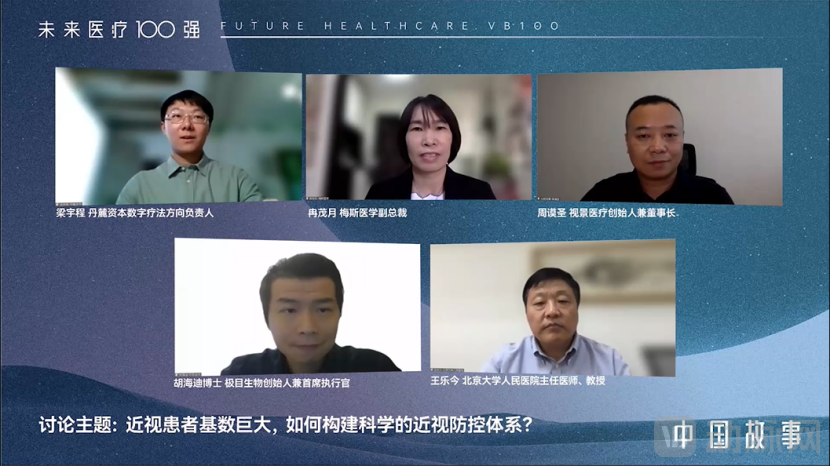
On June 15, at the Ophthalmology Industry Innovation Forum of the 2022 6th Future Healthcare Top 100 Conference,DanluLiang Yucheng, Head of Capital Digital Therapeutics, Zhou Mosheng, Founder and Chairman of Shijing Medical; Wang Lejin, Chief Physician and Professor at Peking University People's Hospital; Ran Maoyue, Vice President of MedSci; and Dr. Hu Haidi, Founder and CEO of Acucela Inc., discussed the aforementioned issues in a session titled “With a Huge Population of Myopia Patients, How Can We Build a Scientific System for Myopia Prevention and Control?”-themed roundtable dialogue, offering valuable insights into how to promote the development of China’s myopia prevention and control industry.
Ms. Ran MaoyueFull of anticipation for the development of myopia prevention and control in China, “I hope that more technological products will serve the vast number of adolescents in the future, which is a very positive direction for development.” The domestic landscape for myopia prevention and control technologies is flourishing, but compared to countries and regions with mature markets, where does China stand? This can be considered from three aspects: first, whether the public attaches importance to myopia; second, whether companies in the industry are fully committed; and finally, whether excellent products have been launched.
Zhou MoshengIt was stated that the current prevalence of myopia among adolescents in China is approximately 53.6%. Myopia prevention and control has been elevated to a national strategic priority. In addition to measures such as establishing refractive health records, implementing the "Double Reduction" policy, encouraging outdoor activities, and fostering good eye-use habits, the development of myopia prevention and control products in China is at the forefront globally. In recent years, Shijing Medical’s newly launched digital therapy product for myopia prevention and control, "Beibele," has gradually gained market share. By leveraging three key mechanisms—red light biostimulation therapy, accommodative function training, and visual function training—it effectively helps children and adolescents slow the progression of myopia. Meanwhile, the company continues to accumulate clinical evidence and real-world data.
Wang LejinHe shared, “In the early days of the telecommunications industry, giants like Cisco and Ericsson dominated the market. Before Huawei’s rise, it faced similar challenges, yet it managed to emerge against the odds by leveraging these challenges and opportunities to secure a place on the global stage. The field of ophthalmology is similar; although foreign countries hold an advantage, we have a vast market and diligent, intelligent Chinese people.” Patients’ complaints are precisely our points of innovation. Consumers, entrepreneurs, and investors should join forces to address these complaints, enabling Chinese products to go global and giving China a voice in the field of myopia care.
Dr. Haidi Hu“He noted that China’s strong emphasis on myopia prevention and control has driven innovation across various treatment modalities, creating a vibrant landscape rarely seen in other countries. The next challenge lies in developing the most suitable products for different myopic populations. Taking adolescent myopia management as an example, it is crucial to ensure that pharmacological interventions are more stable, safer, and more convenient. Jimu Biology hopes to collaborate with stakeholders across sectors to develop innovative therapies tailored to diverse myopic groups, achieve truly valuable innovations, build a diversified ecosystem for myopia prevention and control, and contribute to the advancement and realization of the ‘Healthy China 2030’ initiative.”