

Qingyun Technology and Industry Experts Discuss the Future of Omnichannel Digital Marketing in Healthcare
At the Omnichannel Digital Marketing Forum on the afternoon of June 15,John Xu, CEO of Shanghai Pharma Bokang; Li Yanshu, Partner at PwC Consulting; Yan Guowei, CEO of Qingyun Technology; Shi Guangfan, Head of BMS Digital Marketing Team; Hu Qinxin, Digital Innovation Business Partner at Takeda; Zhang Rui, Digital Transformation Expert; Gao Lei, Senior Channel Director at EverMed; Feng Chun, Deputy Director of Marketing at Johnson & Johnson; Tang Xiaojing, Head of Marketing at CSL BehringAttended the forum to explore the challenges and opportunities of digital marketing models, as well as their future development directions.
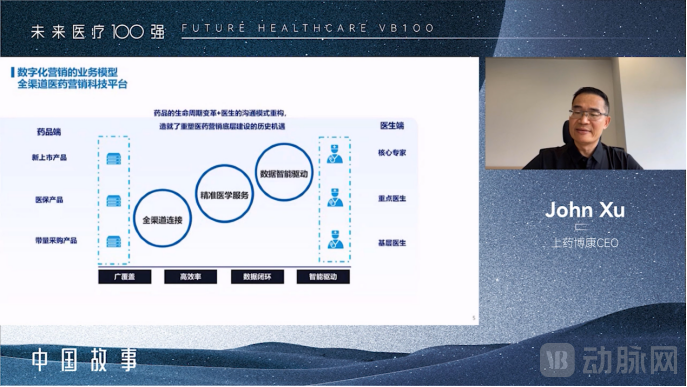
John Xu, CEO of Shangyao BokangIn his speech, he noted that the pharmaceutical industry must align with prevailing trends, and digital marketing currently represents the dominant momentum in the pharmaceutical market. While digital marketing in China’s pharmaceutical sector is still in its early stages, the current focus of national healthcare system development is on improving the efficiency of medical resource utilization. John Xu analyzed the disadvantages of traditional medical marketing, namely its high costs and low efficiency, citing the penetration into lower-tier markets and the emergence of the COVID-19 pandemic as factors that have accelerated the development of digital marketing. The key success factors for the future of China’s pharmaceutical marketing market are: accurate and comprehensive physician data, intelligent marketing channels, and optimized resource allocation. When formulating product marketing strategies, pharmaceutical companies should strive for precise services, personalized content, diversified channels, and intelligent information management.
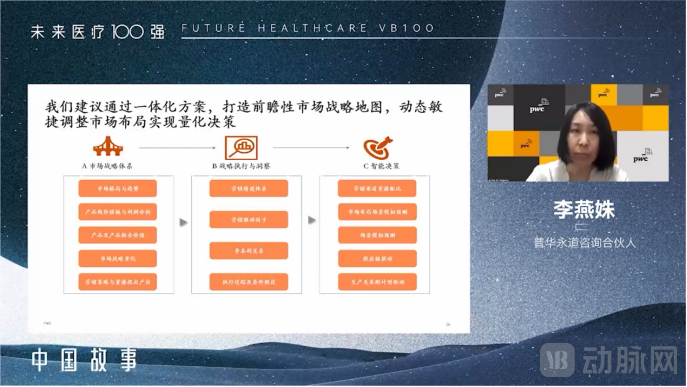
Ms. Li Yanshu, Partner at PwC ConsultingIt was shared in the speech that, under the influence of multiple factors such as the pandemic, policies, demand, and technology, China’s pharmaceutical marketing market is undergoing significant transformation. National medical insurance policies are driving the transformation, optimization, and upgrading of marketing models for healthcare service providers and pharmaceutical and medical device manufacturers. The pandemic, the digitalization demands of physicians and patients, and the emergence of digital therapeutics are all propelling the pharmaceutical market toward digital marketing. Marketing digitalization refers to the application of digitalization as a tool for strategic and business transformation, entailing shifts in business models and market strategies. Digital marketing facilitates precise marketing across multiple online and offline scenarios, enabling the construction of full-cycle disease management and service-oriented marketing models. By promoting forward-looking strategy execution and insights through a comprehensive market strategy system, companies can achieve intelligent decision-making in response to rapid market changes, thereby building an integrated strategic market system.
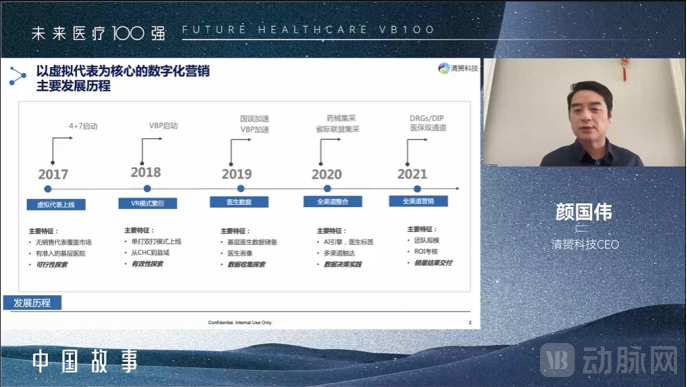
Mr. Yan Guowei, CEO of Qingyun TechnologyIn the speech, by reviewing the historical development of the pharmaceutical industry, it was proposed that digital marketing centered on virtual representatives is one of the typical examples of improving the efficiency of business models in the current pharmaceutical industry, and what truly demonstrates the essence of marketing is the growth in sales volume.
The two pillars of pharmaceutical marketing models are the physician-facing and patient-facing segments. While focusing on the digital transformation of physician-oriented marketing, Qingyun believes it is essential to fully integrate the distinctive characteristics of healthcare marketing with the digital logic of current communication technologies. This perspective is primarily interpreted from two angles: First, centering on physicians’ personalized academic needs as the core touchpoint, an omnichannel marketing platform anchored by virtual representatives leverages accumulated objective data, structured tagging, and active learning to identify patterns. By integrating diverse academic resources, this approach enables precise and effective engagement with physicians, thereby empowering their personalized academic development. Second, the characteristics of grassroots marketing dictate diverse forms of offline teams; the heterogeneity of primary care necessitates different offline functional teams for effective implementation. Through interconnected online-to-offline data flows, the model capitalizes on the strength of omnichannel digital marketing in achieving broad online coverage and driving offline conversions. In practice, this facilitates the construction of a truly data-driven omnichannel marketing platform.
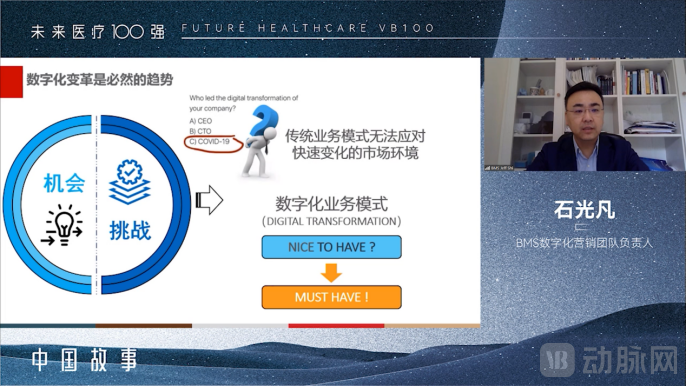
Mr. Shi Guangfan, Head of BMS Digital Marketing TeamThe presentation highlighted that the digital marketing landscape currently presents both opportunities and challenges. In the pharmaceutical industry, there is a significant gap between the ideal scenario—characterized by sound concepts, ample budgets, and support from top-tier talent—and the reality, where digital transformation efforts often fail to link to commercial outcomes, lack measurability, and suffer from insufficient strategic investment willingness. Amidst these challenges, an exploration of three models—digital volume assessment for serious medical products, digital representative coverage for mature products, and patient引流 (traffic generation) via internet hospitals for products with consumer goods attributes—reveals the key factors for successful digital marketing: business strategies tailored to actual operations and market conditions, precise targeting of high-potential hospitals and physicians, establishment of reasonable KPIs, efficient project execution, comprehensive compliance management, and AI-enabled customer service.
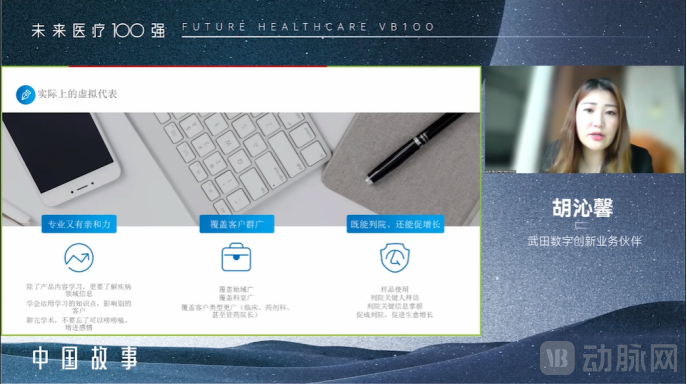
Ms. Hu Qinxin, Digital Innovation Business Partner at TakedaFirst, by reviewing the experiences of virtual representatives and drawing on industry insights, we challenge the prevailing stereotypes that virtual representatives lack disruptive business capabilities and have limited business impact. In reality, they are professional and approachable, boast extensive customer coverage, and possess comprehensive information mastery. During business expansion, virtual representatives leverage their advantage in efficient market coverage to drive early sales growth, while field representatives warm up the market and maintain customer relationships. Through coordinated online and offline interactions, these two groups jointly establish an efficient hybrid marketing model. Under this digital marketing framework combining online and offline channels, virtual representatives identify access requirements, while field representatives facilitate market access; their collaboration enhances sales performance. The key focus areas for virtual representatives vary across product lifecycle stages: conveying concepts and uncovering potential markets for new products, accelerating market access for growth-stage products, expanding distribution channels for mature products, and maintaining existing markets for products subject to Volume-Based Procurement (VBP).
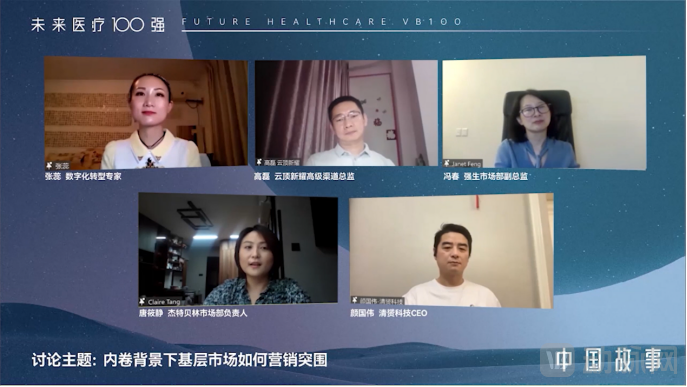
ByMs. Zhang Rui, Digital Transformation ExpertServe as the moderator,Mr. Gao Lei, Senior Channel Director at EverMed; Ms. Feng Chun, Deputy Director of Marketing at Johnson & Johnson; Ms. Tang Xiaojing, Head of Marketing at CSL Behring; and Mr. Yan Guowei, CEO of Qingyun Technologyto launch a roundtable discussion on “How Grassroots Markets Can Break Through with Marketing in the Context of Involution”
Ms. Zhang Rui noted that the penetration of pharmaceutical marketing channels into lower-tier markets will inevitably lead to a low-cost, broad-coverage marketing model. Many companies are exploring more efficient and cost-effective marketing approaches for physician engagement, academic services, and customer relationship management. In this context, virtual representatives have emerged as a solution to help companies manage departmental physicians and achieve effective physician outreach through various means. This raises the question: How should marketing models be selected? Is annual sales volume truly the only key performance indicator (KPI)? These issues warrant further discussion.
Ms. Tang XiaojingThere is no universally correct model, only relatively suitable choices. Each product should select an appropriate model based on current circumstances such as customer needs, business objectives, and product lifecycle. The single-representative model may be the earliest form of virtual representative operational model, aimed at reducing costs and improving efficiency. If limiting factors such as customer acceptance, interactive experience, and last-mile delivery are excluded, the single-representative model is the most efficient and best aligned with initial business requirements.
Mr. Gao LeiIt is believed that the selection of operational models should, in practice, take into account the grassroots market. At this level, maintaining customer relationships and conducting marketing activities are essential to translate awareness into action. Furthermore, given the industry’s lack of product-specific limitations, offline personnel are required to drive behavioral change; therefore, a “dual-play” model (combining online and offline efforts) is adopted. During implementation, online and offline teams collaborate to achieve the ultimate goal of maximizing benefits. This collaboration necessitates effective team management, with efficient team management currently posing the primary challenge.
Ms. Chun FengHailing from a medical device company, she adopted a hybrid sales model due to the unique requirement of training physicians on device operation during market expansion. Through face-to-face interactions, sales representatives conduct product training for physicians and establish long-term collaborative relationships, thereby strengthening offline communication channels with customers and enhancing accessibility to distributors.
Mr. Yan GuoweiAn Analysis of Several Models from the Executor’s Perspective: The solo model primarily evaluates behaviors and processes that can be achieved through the virtual representative’s own efforts, carrying the lowest risk. Both the doubles and mixed-doubles models incorporate sales performance assessments to some extent and are susceptible to external factors such as pandemics, thereby entailing greater risk. Among these, the mixed-doubles model is the most challenging due to its complex online-offline communication mechanisms and high talent requirements.
# Behavioral KPIs Endorsed by Ms. Feng Chun and Mr. Gao LeiActivities such as physician visits, communications with physicians, participation in events, and product training are all behaviors exhibited by sales representatives. These behaviors represent a cumulative process of quantitative changes leading to qualitative transformation, which is essential for achieving sales targets. It is through the accumulation of these actions that final sales volume can be achieved or enhanced. By understanding market demand and adopting a result-oriented approach focused on meeting such demand and driving sales, a closed-loop system is formed where online guidance supports offline execution, thereby improving sales conversion efficiency. In this context, behavioral execution is the key focus of KPI achievement.
Ms. Tang Xiaojing and Mr. Yan Guowei advocate for outcome-based KPIs: While behavioral KPIs should not be overlooked, assessment must be oriented toward business and project objectives to evaluate behavioral outcomes. Throughout our growth, outcome-based KPIs reflect accumulated experience and setbacks, while also measuring communication efficiency to drive the continuous advancement of innovation projects. For Qingyun as the implementing party, outcome-based KPIs offer straightforward actions and clear evaluation criteria; once results are adopted as the primary assessment standard, behavioral execution becomes more direct and efficient.