

Global Healthcare Capital Market Insights: LP-GP Dynamics and Future Investment Trends
LPDriven by the dual forces of deepening industry understanding and strengthening investment practices, direct investment activities are becoming increasingly active; leadingGPFundraising and investment both firing on all cylinders, with news of oversubscription and lead investments frequently topping media headlines; small and medium-sizedGPSurvival and development space is constantly being compressed, choice“Comprehensive and All-EncompassingVSSmall and Specialized”of the development path, far from being a choice“EliminationVSTo Live”Imminent.
On the other hand, from the perspective of financing in the healthcare industry,2022YearQ1The number of healthcare financing deals globally and in China both hit record highs, while capital fervor moderated compared to the same period. A total of56Financing rounds exceeding $100 million were secured; the number of financing deals in the tens of millions of dollars increased year-on-year. The biopharmaceutical sector maintained a significant lead in deals worth tens of millions of dollars, while digital health startups delivered standout performance.
It is evident that during the reshuffling of the capital market and the adjustment period of the startup ecosystem, capital and the healthcare industry continue to integrate deeply. Which high-growth potential sectors will emerge in the future healthcare industry? How should post-investment value-added services for innovative enterprises be carried out? What roles should technology and capital play in medical innovation and the reshaping of the industrial landscape?IPOSlowing Momentum, The Future of Big HealthIPOWhat is the trend in valuation changes?
byVB100, the Third Future Healthcare Fund Partners Conference hosted by VCBeat (LP-GP)The Summit Will Provide the Answers. This summit will focus on value creation and value investment in the global healthcare capital market, extensively connect with partners of global healthcare funds, delve into the investment industry chain, review new discoveries in global healthcare investment, and look forward to future trends.
Wang Ying:Responsibility and Value Behind the Core Driving Force of the Grand Health Fund of Funds
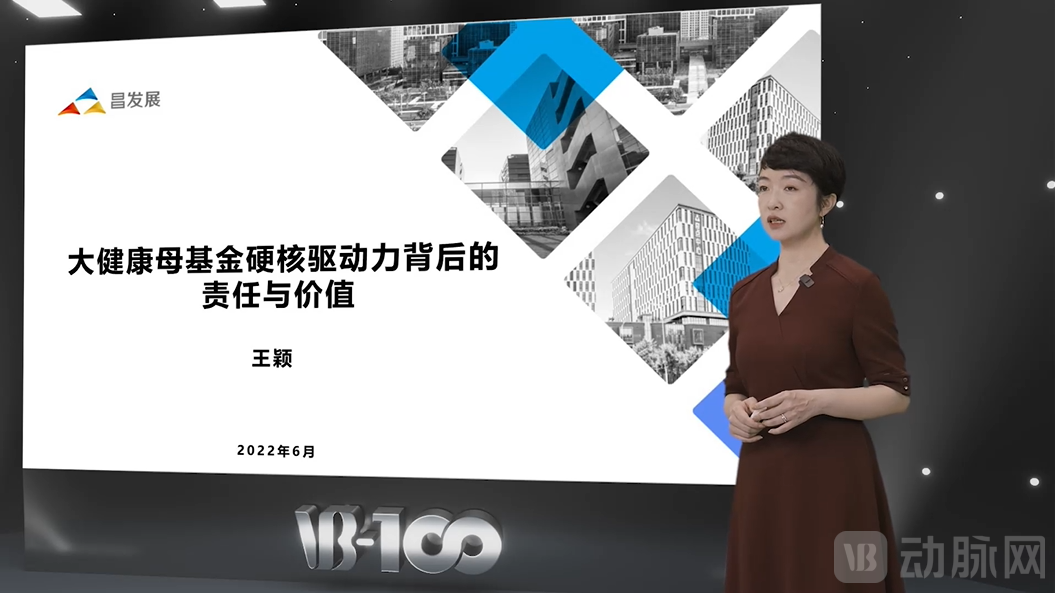
Wang Ying | Chairman of Changfa Development Co., Ltd. and Chairman of Life Science Park Company
In the face of investment opportunities and challenges in healthcare, Ms. Wang Ying believes that the market outlook for the healthcare sector remains exceptionally broad. Continuous technological innovation and iterative upgrades in the healthcare field are creating opportunities for industrial chain development and supply chain relocation. Currently, the core challenges remain macroeconomic uncertainty and the valuation inversion between primary and secondary markets. So, how can investors seek high-quality investments amidst these opportunities and challenges? Ms. Wang Ying suggests that, based on a portfolio strategy of “adhering to fundamentals while pursuing strategic breakthroughs,” ideal projects should feature differentiated clinical value, advantages from hard-core technology platforms, teams with cognitive wisdom and strong execution capabilities, an international perspective, and reasonable valuations. Amidst global macroeconomic shifts, capital has indeed become highly cautious; however, investors need not be anxious but should instead slow down and rethink their strategies. It is precisely during this window period where opportunities and challenges coexist that investors can better maintain discipline and create value.
Hu Huanrui:Connect for Mutual Success: Building Long-Term Partnerships with GPs
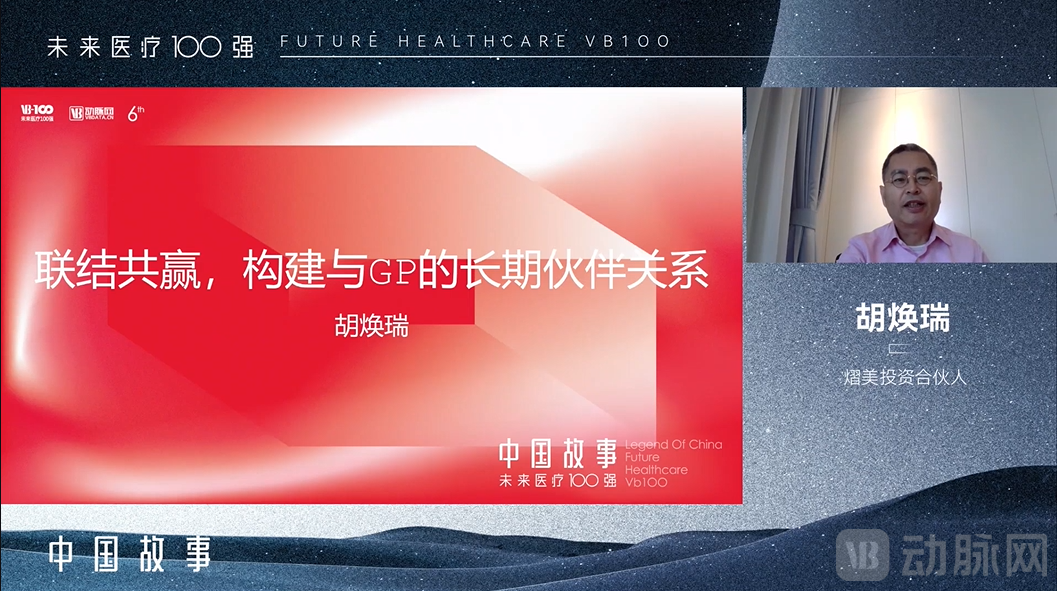
Hu Huanrui | Partner at Yimei Investment
To clarifyGPandLPIt is a “community with a shared future,” not a zero-sum game.GP/LPThe most important aspect of relationships is the creation of long-term value: finding the right people, doing the right things together, and persevering.
ExcellentLPTwo key points should be emphasized:First, to provideGPContinuous funding support and brand endorsement help solve problems while minimizing disruption.LPAdopt a long-term perspective, maintain a focused mindset, andGPlong-term partner, continuously contributing toGPProvided by peersGPandLPLatest information on the group, sharing fund management experience, and connecting resources, becauseLPNot only providing support from behindGPProvide ammunition, and also withGPFighting side by side. Meanwhile, first-classLPIt also serves as a brand endorsement, enabling it to becomeGPOtherLP, and the trust bond with partners such as potential investment projects.
Second,LPTo achieve top-tier financial returns, co-investment opportunities, and ecosystem synergies, one must identify partners with similar genetic traits.GP。Yimei typically evaluates candidates across five dimensions: strategy, independence, team, performance, and synergy.GP: Whether the team is deepening its expertise in investment sectors that align with those of the fund of funds; whether the adopted strategy fits with the targeted industries and major trends both currently and over a considerable period in the future, and matches the team’s experience, resources, knowledge framework, and cognitive capabilities; whether the team can ensure independence in decision-making, organizational structure, and incentives; the level of synergy within the core team and the completeness of its talent pipeline; what are the core drivers behind past performance, and whether they are replicable and sustainable; finally, considerGPandLPCan a consensus be reached on mutual collaboration, with parties endorsing each other?
Liu Yexing:Angel Investment Empowers Biopharma, Fueling Industrial Upgrading and Development
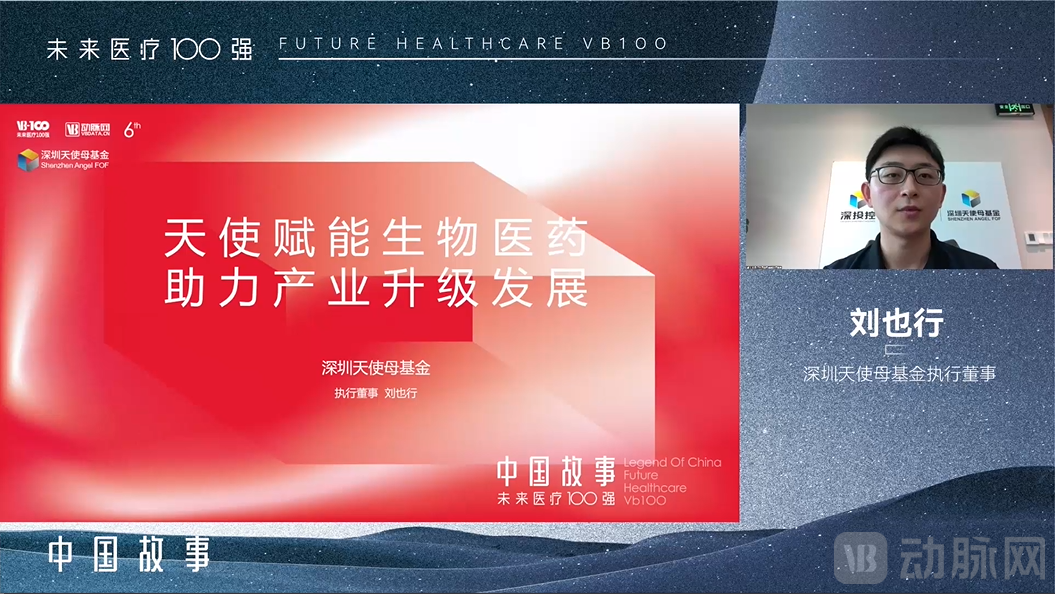
Liu Yexing | Executive Director, Shenzhen Angel Fund of Funds
As a strategic and policy-oriented fund initiated and established by the Shenzhen Municipal People’s Government, the Shenzhen Angel FOF has three missions: to lead the angel investment industry, to nurture outstanding startups, and to drive the development of strategic emerging industries and future industries.
Shenzhen holds significant development potential in the biomedical industry, which has not yet formed ultra-large-scale industrial clusters. The city is promoting a differentiated layout for the biomedical sector to foster industrial agglomeration effects and strive to catch up with leading cities.
Shenzhen Angel Fund of Funds strives to achieve six “good” objectives: attract top-tier institutions, invest in high-quality projects, foster promising industries, build a robust ecosystem, explore effective pathways, and cultivate an excellent team.
Startups require not only capital but also diversified services throughout their development. Currently, the Shenzhen Angel Fund of Funds focuses on three core business segments: fund-of-funds investments, direct investments, and ecosystem operations. Centered on angel-stage projects, it has established a robust innovation service ecosystem that connects government entities, research institutes, industry players, professional investment institutions, and individual angel investors, thereby empowering biopharmaceutical companies to achieve rapid growth.
Song Bo:How Hard-Tech Investors Are Positioning Themselves in the Healthcare Sector Amid a Capital Winter
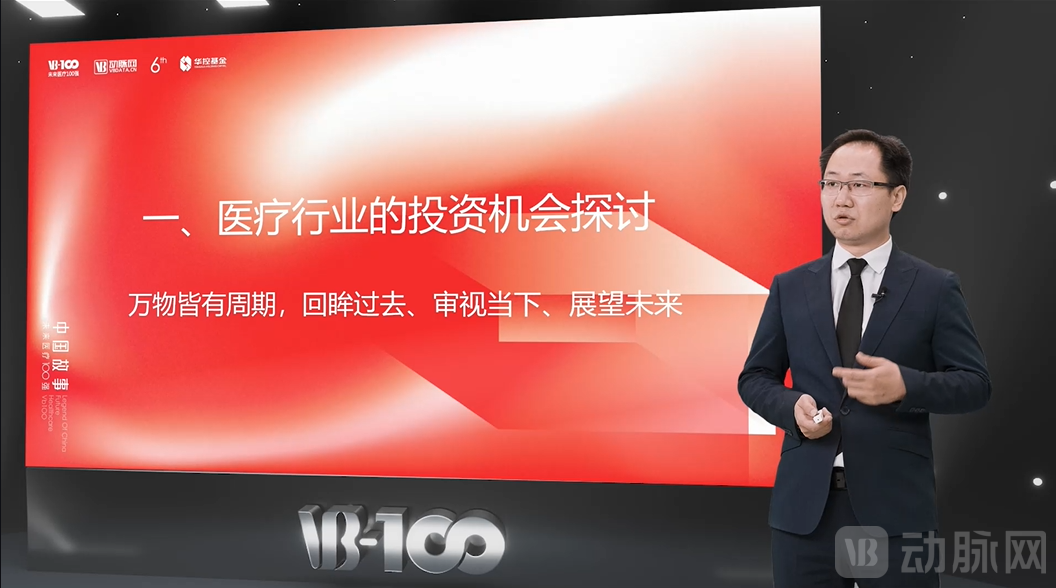
Song Bo | Vice President of Investment, Huakong Fund
2020-2021In that year, the healthcare industry experienced significant growth driven by the dual catalysts of the pandemic and stock market policies.2022Since [year], the investment landscape for China’s biopharmaceutical sector has taken a sharp downturn, with most primary market investors tightening their belts and effectively adopting a hands-off approach.
The underlying reasons include severe homogenization of popular drug targets in China’s healthcare sector, which has intensified competition; the continuous compression of profit margins and market prospects for innovative drugs by volume-based procurement policies; and the emergence of significant valuation bubbles driven by excessive capital hype.
Looking ahead, the risks of intensified Sino-U.S. friction, leading to technological blockades and an overall economic downturn, remain present. However, as China’s population aging deepens, demand continues to rise; meanwhile, new healthcare infrastructure development is enhancing the supply side and fostering innovative therapies/Driven by factors such as the continuous emergence of new technologies, the underlying growth logic of the healthcare industry remains unchanged.
Hard technology refers to the key core technologies that can lead technological revolutions and support economic development. The main growth drivers for China’s healthcare industry in the future will be basic research and the continuous improvement of efficiency in translational medicine, thereby enabling China’s healthcare sector to catch up with international standards, achieve global leadership in certain technologies, and export “Made-in-China” products worldwide.
Dr. Song Bo believes that Huakong Fund, as a hard-tech investment institution, respects industry laws and adheres to “portfolio+“Premium” investment strategy, always focusing on key core technologies that can lead the technological revolution and support economic development.
Zheng Yufen: The Changes and Constants in Healthcare Investment in the Era of Innovation 2.0
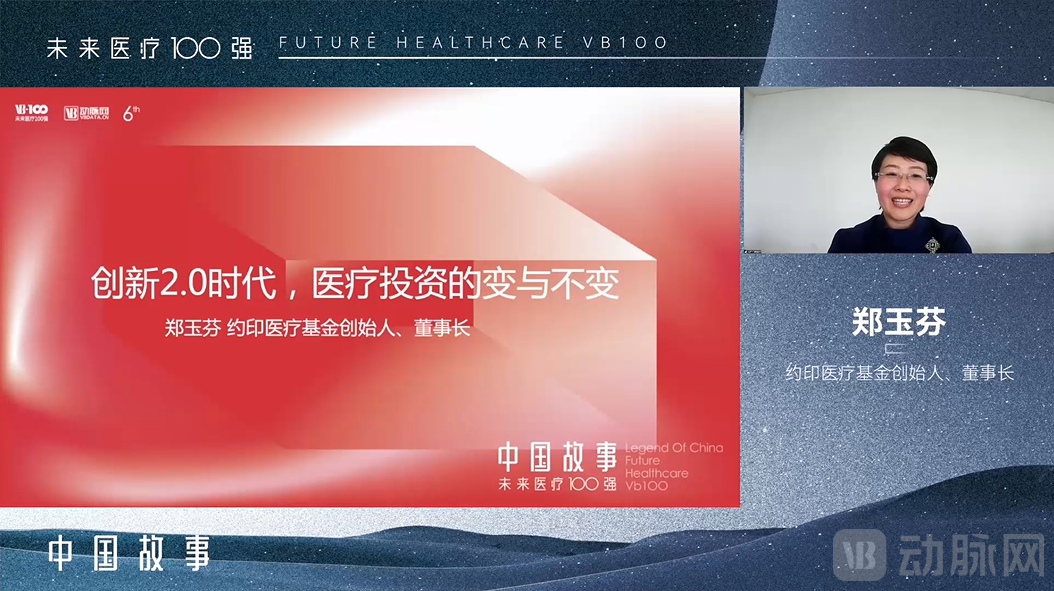
Zheng Yufen | Founder and Chairman of Yueyin Medical Fund
The healthcare services industry has already become a trillion-dollar market, with different sub-sectors experiencing varying development trajectories at different times. Ms. Zheng Yufen believes that while the primary and secondary markets have experienced significant volatility in the past, what changes amidst such fluctuations are public response and industrial policies, whereas investment methodologies remain constant. Meanwhile, one should not resist change; policy shifts, while posing new challenges, also give rise to new opportunities.
Amidst the volatile landscape of international geopolitics and capital markets, the demand for asset preservation and appreciation has surged. The healthcare industry, characterized by inelastic demand and counter-cyclical resilience, can effectively navigate economic cycles and market fluctuations, making it an excellent target for asset allocation. The advancement of centralized procurement has compressed profit margins and dampened incentives for developing me-too products, thereby establishing innovative products as the mainstream. There is an urgent need for domestic substitution in innovative drugs and medical devices, core raw materials, and key components, presenting significant investment opportunities. As population aging intensifies, there is a growing need for innovative service solutions to address age-related challenges, with particular attention to opportunities arising from policies aimed at strengthening primary healthcare. With the declining proportion of pharmaceutical expenditures in total medical costs and shifting public awareness towards equal emphasis on treatment and prevention, new opportunities are emerging in areas such as early disease screening. Meanwhile, as COVID-19 becomes endemic and global economic development faces headwinds, VCBeat continues to prioritize early-stage, hard-tech, and stable investments, focusing on scientist-led startups, integrating industry resources, and empowering corporate growth.
Yueyin Fund’s investment methodology covers core sub-sectors of healthcare, with a strategic focus on blue-ocean stages. It prioritizes early-stage investments and precise value-add support to capture higher returns from potential industry leaders, while also participating in later-stage investments in mature companies to balance risk and return.
Tian Min: Benchmarking and Innovation—Uncovering Value Depressions in China’s Intelligent Healthcare Industry
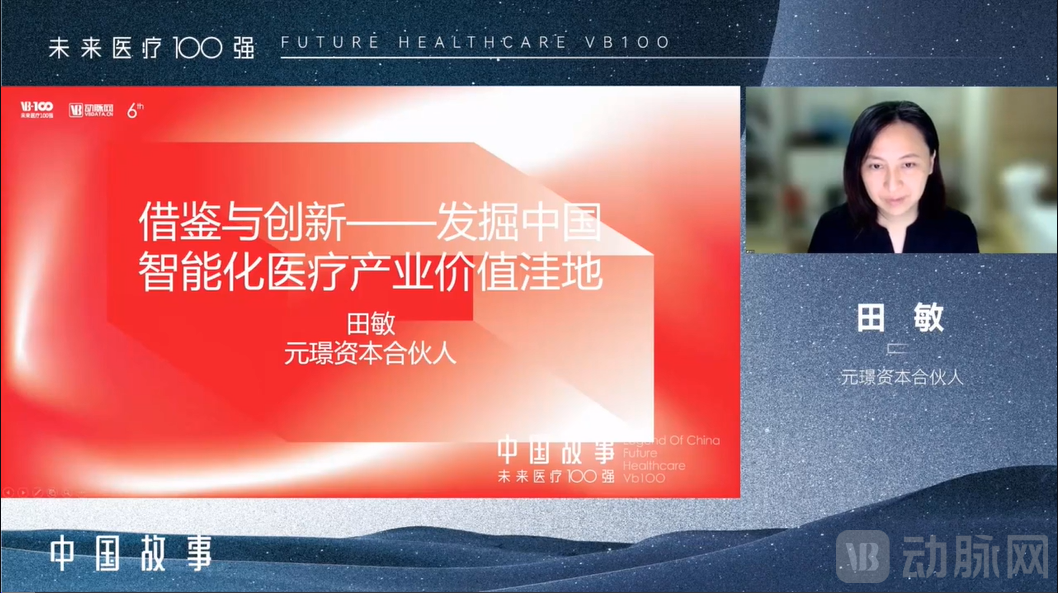
Tian Min | Partner, Yuanjing Capital
Intelligent healthcare can be divided into seven sectors: online consultation platforms, pharmaceutical distribution platforms, and medical informatization platforms,AI+Medical Care, Smart Medical Devices, Digital Health Management, Digital TherapeuticsDTx. CurrentlyAI+Healthcare and smart medical devices have a favorable environment for development in China, offering better investment opportunities compared to other sectors.
At the technological level, “high-tech hardware”+“Smart algorithm”-driven bipedal model is a major trend, with investment hotspots shifting from the previous emphasis on “Internet+"Towards 'Hardware-Software Integration'"+a shift toward a “vertical disease-specific” model. This transformation goes beyond mere innovation through internet-based models, delving into the core segments of the healthcare and medical sector. At the policy level, China is currently keeping pace with overseas developments, with relevant policies gradually becoming more open.
Ms. Tian Min believes that, driven by both technological advancements and policy support, more high-quality intelligent healthcare products will emerge. However, the current penetration rate of commercial health insurance in China remains low, and intelligent healthcare solutions and products face significant challenges in being included in the national basic medical insurance scheme and the centralized volume-based procurement system. Therefore, future developments in intelligent healthcare should closely monitor progress regarding inclusion in medical insurance coverage and the growth of commercial health insurance.
Roundtable Discussion: Decoding the Battle for Investment Behind the “Healthy China” Mission
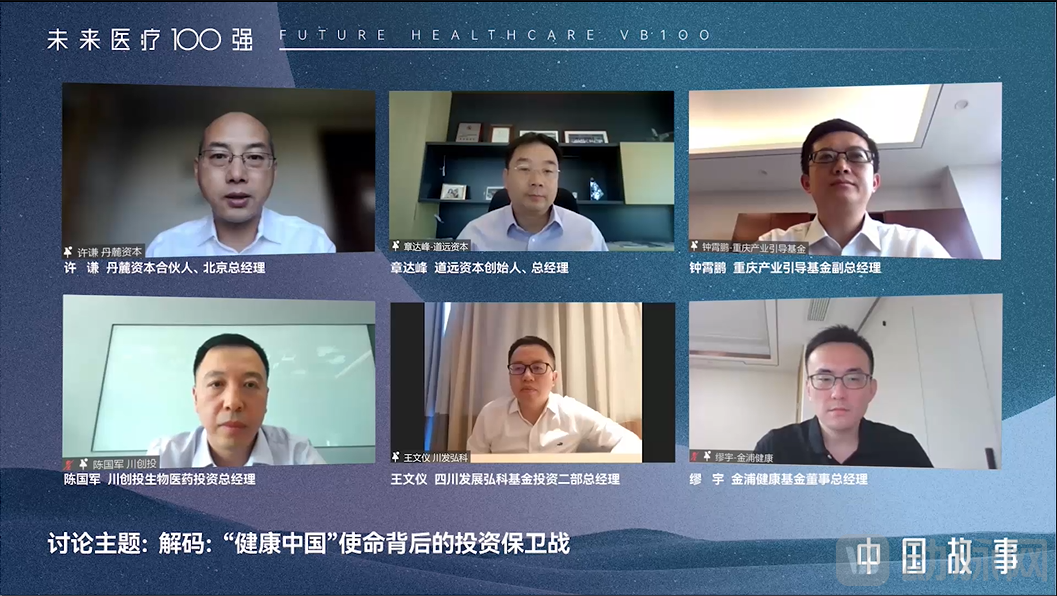
6Month15Day, in2022·The 6th Future Healthcare100Qiang Dahui, Partner at Healthcare Fund (LPGP) summit, Xu Qian, Partner and General Manager of Danlu Capital in Beijing; Zhang Dafeng, Founder and General Manager of Daoyuan Capital; Zhong Xiaopeng, Deputy General Manager of Chongqing Industrial Guidance Fund; Chen Guojun, General Manager of Biopharmaceutical Investment at Sichuan Venture Capital; Wang Wenyi, General Manager of Investment Department II of Sichuan Development Hongke Fund; and Miao Yu, Managing Director of Jinpu Health Fund, conducted aDecoding: The Battle to Safeguard Investments Behind the “Healthy China” Missiona roundtable discussion themed on analyzing how investment institutions should strategically position themselves during a capital winter.
Zhang Dafeng, Founder and General Manager of Daoyuan Capital, began by sharing practical post-investment management experience. He believes that after deeply cultivating a specific industry, synergistic empowerment with innovative enterprises occurs naturally. When strategically mapping out the industrial chain, investments in upstream and downstream segments gradually foster collaboration among these companies, thereby helping portfolio companies accelerate growth and reduce costs. As long as investment efforts remain focused on deepening integration within the industrial chain, the empowering effect on enterprises will follow naturally.
How to Respond to Market Changes? Mr. Zhang Proposes Global Expansion as a Viable StrategyFirst, select teams capable of going global—those that already maintain collaborations with partners in the United States, Japan, and Europe, and whose products are poised for launch in overseas markets. Such global readiness also serves as a testament to a company’s innovative capacity. Second, as enterprises expand internationally, investment institutions can likewise extend their reach abroad, strategically investing in technologies that are relatively underdeveloped yet valuable within China, thereby advancing the overall process of globalization.
Chen Guojun, General Manager of Biopharmaceutical Investment at Sichuan Venture Capital, stated that the biopharmaceutical industry will in the future5To10The sector is a sunrise industry. Recent volatility in the secondary market has significantly impacted the primary market. Previously, valuations in the primary market were based on the listing standards of the STAR Market and the Hong Kong Stock Exchange, resulting in substantial valuation bubbles; this situation is gradually improving. Investment directions will also shift this year, placing greater emphasis on holistic investment across the biopharmaceutical industry chain. Furthermore, with the implementation of national centralized drug procurement, both the proportion and price of drugs in diagnosis and treatment are expected to decline significantly. Consequently, attention should also be directed toward niche segments such as innovative medical devices, novel diagnostic methods, and innovative medical services.
Zhong Xiaopeng, Deputy General Manager of the Chongqing Industrial Guidance Fund, believes that in the long run, as the overall development trends and growth logic of the healthcare industry remain unchanged, the adjustments in the secondary market present an opportunity for primary market investors to return to the fundamentals of value investing and avoid blindly chasing hotspots. For products from innovative companies, the core consideration should be their clinical value. Going forward, we will continue to focus on investment opportunities arising from medical technological innovations and domestic substitution.
Xu Qian, Partner and General Manager of Beijing at Danlu Capital, proposed that the capital market also undergoes cyclical changes akin to the four seasons—spring, summer, autumn, and winter—though these cycles are not as fixed or distinct as natural seasonal shifts. The capital market experiences periodic fluctuations, with rotation occurring across different sectors; at times, certain areas within the primary market become particularly hot. Ultimately, however, healthcare must boil down to clinical value: how to alleviate patients’ suffering and help physicians improve treatment efficiency. As an early-stageVCInvestment institutions maintained a normal pace of investment.
When discussing future investment-worthy sectors, Wang Wenyi, General Manager of Investment Department II at Sichuan Development Hongke Fund, stated: “Regarding the future”5-10Over the years, development has been driven primarily by technological innovation, leading industry growth; in specific subfields, attention will be focused on exosomes.siRNA, high-end medical device consumables utilizing new materials, and clinical applications integrated with artificial intelligence.
Miao Yu, Managing Director of Jinpu Health Fund, believes that this wave of correction in the secondary market is driven by both cyclical and structural factors. Although the current impact on early-stage projects is not as significant as that on those preparingIPOThe projects are large in scale, but the recent pandemic has made it difficult to carry out many tasks offline. If the industry remains sluggish, it will have a significant impact on the development of early-stage projects and their subsequent financing. This also puts considerable pressure on institutions that invest in early-stage projects, as existing projects are hard to advance, leading to greater caution toward new projects.
Roundtable Discussion: “Healthcare + Hard Tech”: Where Lies the Paradigm of Disruptive Innovation in Life Sciences?
6Month15On the day, in2022·The 6th Future Healthcare100Qiang Dahui, Partner at a Healthcare Fund (LPGP) Summit, Song Bo, Vice President of Investment at Huakong Fund,Founding Partner, Bencao CapitalFang Yu, Tao Feng, Founding Partner of Boyuan Capital, Cui Yuan, Founding Partner of Xianfeng Qiyun, and Cai Yujia, Founder and Chairman of Bendao Gene, conducted a“Healthcare+"Hard Tech: Where Is the Disruptive Innovation Paradigm in Life Sciences?"A roundtable discussion themed on analyzing and discussing the biomedical sectorIPOthe current status and made predictions for future development.
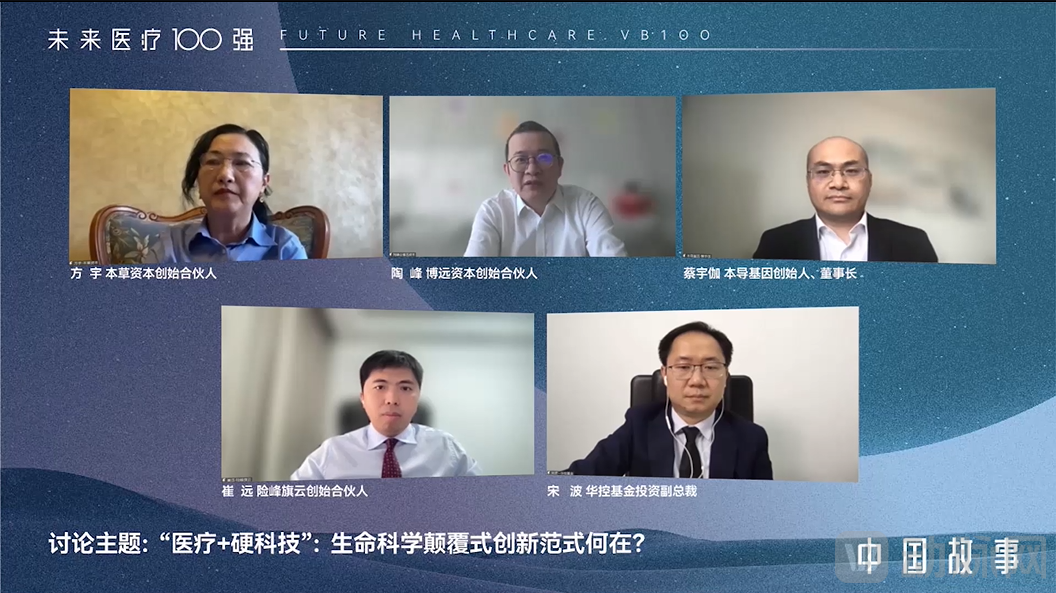
Fang Yu, Founding Partner of Bencao Capital, believes that interdisciplinary collaboration often requires teams composed of individuals from diverse fields to jointly create new products and solve complex problems. This is no easy task; as the saying goes, “interdisciplinary barriers are as formidable as mountains.” Professionals tend to communicate and connect more easily with peers within their own domains, while finding it challenging to engage with those from entirely unrelated fields. Currently, the development of the healthcare industry calls for cross-disciplinary innovation. Medical professionals need to gain insights into industries such as semiconductors and materials, while technical experts outside the medical field must deepen their understanding of various stages of medical innovation. Only through such mutual learning can entire teams achieve efficient communication and collaboration.
Cai Yujia, Founder and Chairman of Ben Dao Gene, highlighted two characteristics of current technological development when discussing the challenges of innovation: refinement and interdisciplinary integration. Refinement requires investment in a specialized niche.10Years of dedicated research are required, while cross-disciplinary integration demands a thorough understanding of each industry. From the perspective of individual capacity, it is difficult to achieve both specialization and cross-disciplinary expertise simultaneously. Therefore, composite talents who possess a solid technological foundation, understand capital operations, and are knowledgeable about the industrialization of the medical sector are currently very scarce.
Cui Yuan, founding partner of Xianfeng Qiyun, believes that as an early-stage investor, Chinese medical innovation enterprises require increasing capital investment in their early development stages, which necessitates continuous relay support from both early-stage and later-stage investment institutions. In the face of a capital winter, founders will act more cautiously, taking longer to make more adequate preparations, while investment institutions can conduct preliminary research more calmly and thoroughly. This is beneficial for early-stage investment, so it can be said that crisis and opportunity coexist at present.
Tao Feng, Founding Partner of Boyuan Capital, believes that incubating startups presents two major challenges: first, how to establish effective collaboration mechanisms with high-caliber teams; and second, startup incubation demands significant energy from investors, requiring them to accompany companies throughout their development. Accordingly, Boyuan’s investment strategy focuses on two key principles: first, prioritizing quality over quantity by making selective, high-quality investments; and second, collaborating with industry partners to jointly incubate startups.
Roundtable Discussion: IPO Slowdown and Valuation Correction—Opportunities and Pathways for Exits in Healthcare Investment
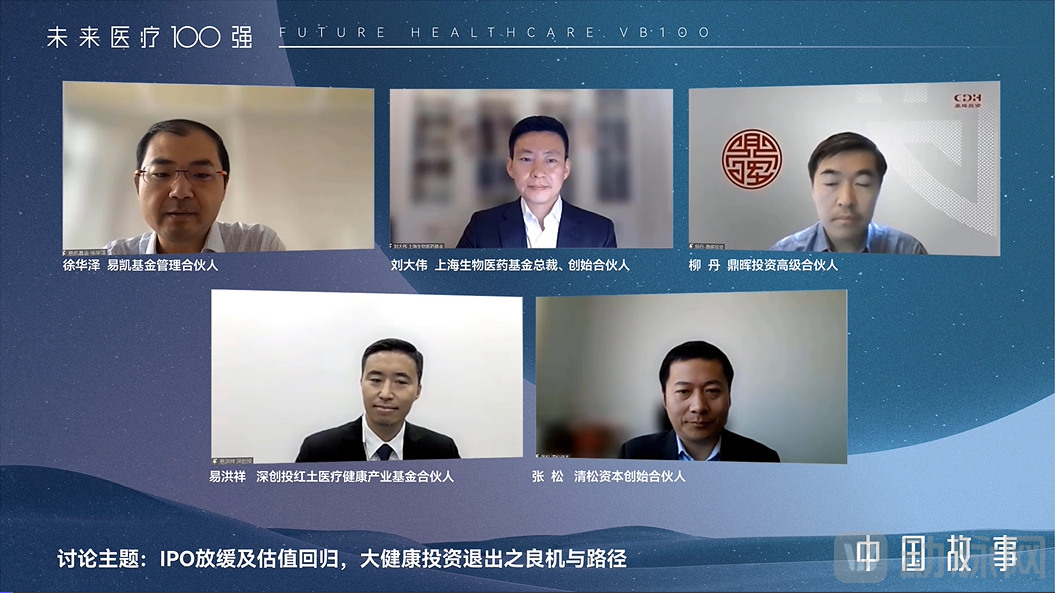
6Month15On the day, at2022·The 6th Future Healthcare100Qiangda Conference,LPGPSummitAbove, Xu Huaze, Managing Partner of Easy Capital; Liu Dawei, President and Founding Partner of Shanghai Biopharmaceutical Industry Fund; Liu Dan, Senior Partner at CDH Investments; Yi Hongxiang, Partner of SCGC Hongtu Healthcare Industry Fund; and Zhang Song, Founding Partner of Qingsong Capital, launched a discussion on “IPORoundtable Discussion on “Slowing Growth and Valuation Normalization: Opportunities and Pathways for Exits in Big Health Investments,” Analyzing and Discussing the Biomedical SectorIPOthe current status and made predictions for future development.
Xu Huaze, Managing Partner of CapitalPlus Partners, introduced the current state of the biomedical and healthcare industryIPOcurrent status. In the past few years, valuations in the biomedical sector have grown rapidly but lacked rationality, leading to the presentIPOSlowing Growth and Valuation Reversion.
Liu Dawei, President and Founding Partner of the Shanghai Biopharmaceutical Fund, analyzed the impact of the current landscape on investors and enterprises, and offered recommendations to investors. The new round of valuation corrections is conducive to helping investors and enterprises gain a clearer understanding of the industry dynamics and the underlying causes of market volatility. In light of the current complex situation, it is advisable for investors to prioritize cash flow as a key metric, evaluate corporate value based on product and technological roadmaps, while also taking into account industry prospects and the company’s own growth trajectory. By balancing risk and return, investors should aim to offer reasonable valuations at appropriate times.
Liu Dan, Senior Partner at CDH Investments, analyzed the reasons behind the current situation and offered insights into the future development of the industry. Due to an influx of excessive capital during the early stages of industry growth, the biopharmaceutical sector is currently undergoing a valuation correction; however, this will not significantly impact its long-term prospects. Investors should recognize this reality, maintain confidence in the industry’s future, and work collaboratively in the coming period to establish a new investment ecosystem conducive to the development of the biopharmaceutical sector.
Yi Hongxiang, Partner at the Shenzhen Capital Group’s Red Earth Medical and Health Industry Fund, has made predictions regarding future industry valuations. Over the next two to three years, valuations are expected to gradually rationalize. In light of this trend, companies need to enhance their management capabilities to mitigate the adverse impacts that current overvaluations may have on their future performance. Furthermore,IPORationalization of valuations will lead some healthcare companies to gradually accept mergers and acquisitions among medical device firms, thereby accelerating the rapid development of China’s domestic healthcare M&A market.
Zhang Song, Founding Partner of Qingsong Capital, offered recommendations to investors and enterprises regarding the industry’s current state and its development in the coming years. The investment market in the biomedical sector experienced a certain degree of bubble in recent years. Since last year, the market has undergone a downward adjustment, at times even overreacting. Currently, some investors hold a pessimistic outlook on the industry’s prospects, and valuations are expected to continue fluctuating and potentially deviating from actual value for some time. In light of this situation, both investors and enterprises should maintain a balanced mindset, conduct rational assessments of enterprise value, and provide appropriate support to high-quality companies. The biomedical industry boasts a bright future, and it is believed that, with further development, valuations and intrinsic values will gradually return to rationality and alignment.