

Yisheng Yiheng Reflects on a Decade of Innovation in Medical Imaging Centers Ahead of IPO Filing
Medical Imaging Diagnosis is an Important Component of Modern Medicine.
To address the challenge of “difficulty in accessing medical care,” China has been continuously advancing a tiered diagnosis and treatment system to guide patients toward orderly healthcare-seeking behavior.However, due to limited financial resources for healthcare and a shortage of professional talent at the primary care level, establishing essential departments such as medical imaging—a critical component of modern medicine—often poses a significant challenge.The existence of independent third-party medical imaging centers can undoubtedly better help primary care institutions address the aforementioned issues, improve their healthcare quality, and further promote the development of tiered diagnosis and treatment.
Since 2013, relevant policies have been continuously introduced to encourage the development of professional medical laboratory centers and imaging centers. In 2016, the National Health Commission issued the Basic Standards for Medical Imaging Diagnostic Centers (Trial), which has served as a regulatory guideline to accelerate the development of the medical imaging diagnostic center industry.
Yishengyiheng, established in 2012 as a company dedicated to medical imaging operational services, detected the “opportunity” for development at an early stage.In 2017, Yishengyiheng (Beijing) Medtech Corp. was listed on the New Third Board.For Ge Dingfu, Chairman of Yishengyiheng(Beijing)medtech Corp., listing on the New Third Board was merely the beginning; their current goal is to list on the Beijing Stock Exchange within a targeted timeframe.
From Siemens Distributor to Medical Imaging Examination Operator
For Ge Dingfu, entering the medical industry was purely a matter of chance.
After graduating from university, Ge Dingfu worked at the Henan Environmental Protection Bureau for one year. By chance, he entered the healthcare industry, where he engaged in sales and marketing at a Siemens distributor company. At the end of 2001, Ge Dingfu officially joined Siemens, embarking on a career spanning more than a decade within its healthcare division.
During his tenure at Siemens, Ge Dingfu served as the General Manager of Channel Sales for MRI products across five provinces in North China. He also held the position of MRI Product Specialist and served as Regional Sales Manager for Henan, Shanxi, and Beijing, respectively.
As the Chinese government intensively rolled out multiple policies to encourage private capital into the healthcare sector, Ge Dingfu also chose to start his own business in 2011, becoming an authorized distributor for Siemens. One of the opportunities was that at that time, Siemens' medical division had not yet established a dedicated team for non-public business. At that time, Ge Dingfu's team focused on the business of non-public medical institutions in the North China region, which was divided by Siemens. Based on this, Ge Dingfu's team completed the accumulation of initial customers.In 2012, leveraging his profound understanding of the healthcare industry and acute insight into imaging-related businesses, Ge Dingfu led his team to establish “Yishengyiheng,” launching operations in medical imaging examination services. Its core business focuses on the investment, operation, and entrusted management of large-scale medical imaging and nuclear medicine equipment.
Ge Dingfu candidly stated that the successful closure of the first project was related to his work experience at Siemens.
During his first three years at Siemens Healthineers’ SMMR division, Ge Dingfu established a strong relationship with a company specializing in the investment and operational management of Siemens’ superconducting MRI products. Through this engagement, he connected with the company’s project managers and medical imaging experts well-versed in operations, thereby gaining extensive experience in investment and operational management, departmental administration, and patient management.
Yishengyiheng’s first collaborative medical imaging operations project was launched in Baiyin, Gansu Province. Leveraging prior operational experience, the company quickly recouped its initial investment. Subsequently, its operational collaborations on the superconducting magnetic resonance imaging (MRI) project at Handan Hospital of Jizhong Energy Fengfeng Group and the MRI project at Beijing Tiantan Puhua Hospital also proceeded smoothly. According to Ge Dingfu,, in the latter project, Yishengyiheng set a record for the highest annual revenue from single-unit MRI operations in China for several consecutive years.Currently, Yishengyiheng (Beijing) Medtech Corp. is engaged in Phase II collaboration with it.
In 2016, with the issuance of the Basic Standards for Medical Imaging Diagnostic Centers (Trial), which further standardized industry development, Yishengyiheng completed its joint-stock reform and successfully listed on the New Third Board in 2017. Since then, Yishengyiheng has focused its business on constructing and operating third-party medical imaging diagnostic centers, while its original businesses—including investment, operation, and entrusted management of large-scale medical imaging and nuclear medicine equipment—serve as supplements to its core operations.
Now, with the launch of the Kangfu Cloud PACS system, which took five years to develop, Yishengyiheng has also unveiled new plans.
From the Regional Medical Imaging Center Model to the Medical Consortium Operational Model
Previously, Yishengyiheng adopted an asset-heavy investment model. Under this model, hospitals typically provided the premises, while Yishengyiheng was responsible for constructing and operating imaging centers to generate revenue. This approach required substantial capital investment in construction and operations, with a relatively long payback period. Furthermore, replicating the model demanded significant additional funding. Over the past several years of construction and operation, Yishengyiheng has established nearly 10 medical imaging centers.
And now, according to Ge Dingfu,Yishengyiheng is transitioning its previous asset-heavy investment and operation business model to an asset-light model based on the consolidated or empowered operation of medical consortia.On one hand, Yishengyiheng can provide medical imaging operational support for medical consortia and medical communities; on the other hand, it can also assist hospitals in building disciplines such as imaging and pathology, thereby better empowering hospitals.
The ability to adjust the business model is attributable to Yishengyiheng’s earlier accumulation. According to Ge Dingfu, this is mainly driven by two factors:
First, Yishengyiheng’s proprietary medical imaging centers have mastered mature operational expertise and are supported by a robust team of experts.Currently, Yishengyiheng employs over 100 staff members across its Market Operations Department, PACS Technology Department, and Imaging Center, with the talent pool in the PACS Technology Department and Imaging Center consisting primarily of individuals holding doctoral and master’s degrees.Second, Yishengyiheng’s Kangfuyun hospital-wide PACS medical informatics system, developed over many years, has recently obtained certification.The imaging centers and partner hospitals under Yishengyiheng are currently utilizing the system. For instance, medical consortiums affiliated with Peking University Cancer Hospital, Puhua Healthcare Group, and healthcare institutions under Gaobo Medical Group are all using the PACS system.
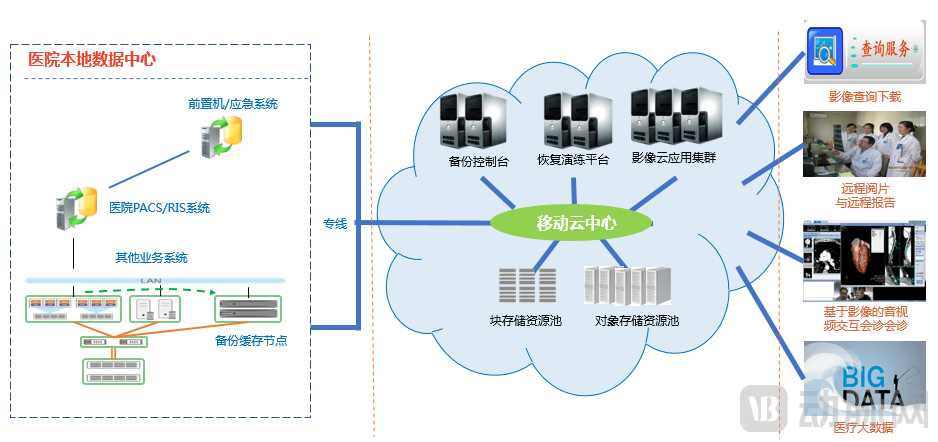
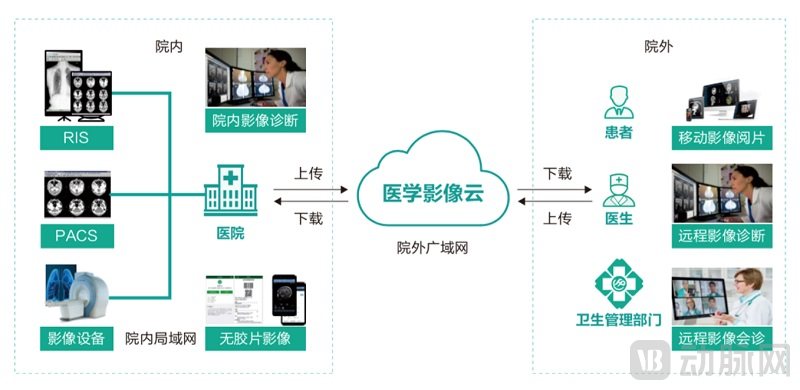
The large-scale, hospital-wide cloud PACS system developed by Yishengyiheng provides medical institutions with comprehensive capabilities, including unified online appointment scheduling and triage for diagnostic and therapeutic services, secure storage of medical images, internet-based digital image distribution and viewing, AI-powered intelligent diagnostic decision support, and operational monitoring and management of imaging equipment. This system delivers informatics technology support for all imaging and nuclear medicine examinations conducted within individual medical institutions or across all hospitals in a designated region.
The drive for model innovation is linked to shifts in China’s broader policy environment, such as the advancement of policies like DRG-based medical insurance cost containment.
Previously, medical imaging centers were a “revenue stream” for healthcare institutions, particularly public hospitals. However, with the implementation of health insurance cost-containment measures, imaging centers are increasingly becoming a cost center for hospitals. Hospitals are further reducing related medical costs. AndIt is a widespread consensus among numerous hospitals that the establishment of medical alliances and medical consortia can further enhance the utilization efficiency of equipment and personnel across medical institutions. This trend has further created favorable conditions for the operation of third-party medical imaging centers within medical alliances.Moreover, primary healthcare institutions themselves face a shortage of professional medical and technical personnel, with related departments encountering inherent difficulties in development. There is an urgent need for support from specialized talent to retain patients and facilitate the implementation of tiered diagnosis and treatment. The existence of such substantial demand presents an opportunity for Yishengyiheng (Beijing) Medtech Corp.
According to Ge Dingfu, Yishengyiheng's current customer base is primarily divided into three categories.
One category comprises for-profit medical institutions, i.e., non-public hospitals, including medical imaging diagnostic centers currently under preparation or in operation; Yishengyiheng can provide investment and operational services or entrusted management services. Another category consists of non-profit medical institutions, i.e., public hospitals, involving the construction or joint establishment of third-party medical imaging centers. Leveraging internet infrastructure and advanced medical imaging technologies, these centers are strategically located in first-tier cities such as Beijing, Shanghai, and Guangzhou, as well as provincial capitals, to develop a regionalized healthcare service network through a hub-and-spoke model. The final category includes its independent medical imaging diagnostic centers or partner hospitals, with primary business activities focusing on the sales of medical devices and consumables.
Bullish on the Development of Regional Imaging Centers, Yishengyiheng Continues to Invest
Ge Dingfu, Chairman of Yishengyiheng (Beijing) Medtech Corp., stated, “The development path of medical imaging diagnostic services in developed countries in Europe and the United States offers valuable lessons. The growth of medical imaging diagnostic centers in China is expected to follow a similar trajectory, with a gradual increase in third-party regional medical imaging diagnostic centers. As society evolves and time progresses, the proportion of services provided by third-party medical imaging centers will also experience rapid growth.
Regarding the development of third-party medical diagnostic centers in China, they believe that imaging examinations at medical institutions in prefecture-level cities will undergo further integration. Newly established medical institutions may de-emphasize the setup of dedicated imaging departments, leading to a greater emergence of medical imaging alliances and healthcare consortia. Consequently, there will be increased demand for unified scheduling of medical technical services, standardized examination service protocols, high-level homogeneous diagnostic quality control, and medical imaging informatics solutions such as multi-functional cloud PACS systems.
This is also seen as the opportunity for Yishengyiheng's future development. Currently, Yishengyiheng, which is listed on the New Third Board, has certain advantages in terms of business compliance and financial compliance. In addition, with the accumulation of experts, technical strength, and mastery of operational SOPs, Yishengyiheng stated that the "new model" will be more suitable for future development.
They are quite confident about their future development. “We (Yishengyiheng) plan to enter the ‘Innovation Tier’ in 2023 and list on the Beijing Stock Exchange in 2024, or at the latest by 2025.” Currently, to achieve these goals, Yishengyiheng is expanding its business volume while also pursuing mergers and acquisitions. To further accelerate the company’s rapid growth, Yishengyiheng has officially launched a financing plan.